Pokédex · Red, Blue, Yellow, Gold, Silver & Crystal
Gengar’s Online Pokédex
One of the first online Pokédexes on the internet, restored. Every Pokémon from Bulbasaur to Celebi, with the Pokédex text, locations, moves, breeding and stats from the original Game Boy games.
- 251 Pokémon
- 8 games
- 17 types
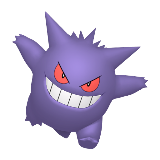


Gengar’s Online Pokédex was the premier Pokédex for Red, Blue & Yellow and Gold, Silver & Crystal, and the reason a lot of people found Pokémon Dungeon in the first place. It has been brought back exactly as it was written: every entry still has its name meaning, Japanese name and pronunciation, the Pokédex text from all eight games, where to catch it, its type matchups in both generations, every move it learns, breeding notes and its stats ranked against the rest of the Pokédex.
Search by name or number, or narrow the list by type or region. New to it? Here’s how to read an entry.
Showing 251 of 251 Pokémon
 #001Bulbasaur
 #002Ivysaur
 #003Venusaur
 #004Charmander
 #005Charmeleon
 #006Charizard
 #007Squirtle
 #008Wartortle
 #009Blastoise
 #010Caterpie
 #011Metapod
 #012Butterfree
 #013Weedle
 #014Kakuna
 #015Beedrill
 #016Pidgey
 #017Pidgeotto
 #018Pidgeot
 #019Rattata
 #020Raticate
 #021Spearow
 #022Fearow
 #023Ekans
 #024Arbok
 #025Pikachu
 #026Raichu
 #027Sandshrew
 #028Sandslash
 #029Nidoran♀
 #030Nidorina
 #031Nidoqueen
 #032Nidoran♂
 #033Nidorino
 #034Nidoking
 #035Clefairy
 #036Clefable
 #037Vulpix
 #038Ninetales
 #039Jigglypuff
 #040Wigglytuff
 #041Zubat
 #042Golbat
 #043Oddish
 #044Gloom
 #045Vileplume
 #046Paras
 #047Parasect
 #048Venonat
 #049Venomoth
 #050Diglett
 #051Dugtrio
 #052Meowth
 #053Persian
 #054Psyduck
 #055Golduck
 #056Mankey
 #057Primeape
 #058Growlithe
 #059Arcanine
 #060Poliwag
 #061Poliwhirl
 #062Poliwrath
 #063Abra
 #064Kadabra
 #065Alakazam
 #066Machop
 #067Machoke
 #068Machamp
 #069Bellsprout
 #070Weepinbell
 #071Victreebel
 #072Tentacool
 #073Tentacruel
 #074Geodude
 #075Graveler
 #076Golem
 #077Ponyta
 #078Rapidash
 #079Slowpoke
 #080Slowbro
 #081Magnemite
 #082Magneton
 #083Farfetch’d
 #084Doduo
 #085Dodrio
 #086Seel
 #087Dewgong
 #088Grimer
 #089Muk
 #090Shellder
 #091Cloyster
 #092Gastly
 #093Haunter
 #094Gengar
 #095Onix
 #096Drowzee
 #097Hypno
 #098Krabby
 #099Kingler
 #100Voltorb
 #101Electrode
 #102Exeggcute
 #103Exeggutor
 #104Cubone
 #105Marowak
 #106Hitmonlee
 #107Hitmonchan
 #108Lickitung
 #109Koffing
 #110Weezing
 #111Rhyhorn
 #112Rhydon
 #113Chansey
 #114Tangela
 #115Kangaskhan
 #116Horsea
 #117Seadra
 #118Goldeen
 #119Seaking
 #120Staryu
 #121Starmie
 #122Mr. Mime
 #123Scyther
 #124Jynx
 #125Electabuzz
 #126Magmar
 #127Pinsir
 #128Tauros
 #129Magikarp
 #130Gyarados
 #131Lapras
 #132Ditto
 #133Eevee
 #134Vaporeon
 #135Jolteon
 #136Flareon
 #137Porygon
 #138Omanyte
 #139Omastar
 #140Kabuto
 #141Kabutops
 #142Aerodactyl
 #143Snorlax
 #144Articuno
 #145Zapdos
 #146Moltres
 #147Dratini
 #148Dragonair
 #149Dragonite
 #150Mewtwo
 #151Mew
 #152Chikorita
 #153Bayleef
 #154Meganium
 #155Cyndaquil
 #156Quilava
 #157Typhlosion
 #158Totodile
 #159Croconaw
 #160Feraligatr
 #161Sentret
 #162Furret
 #163Hoothoot
 #164Noctowl
 #165Ledyba
 #166Ledian
 #167Spinarak
 #168Ariados
 #169Crobat
 #170Chinchou
 #171Lanturn
 #172Pichu
 #173Cleffa
 #174Igglybuff
 #175Togepi
 #176Togetic
 #177Natu
 #178Xatu
 #179Mareep
 #180Flaaffy
 #181Ampharos
 #182Bellossom
 #183Marill
 #184Azumarill
 #185Sudowoodo
 #186Politoed
 #187Hoppip
 #188Skiploom
 #189Jumpluff
 #190Aipom
 #191Sunkern
 #192Sunflora
 #193Yanma
 #194Wooper
 #195Quagsire
 #196Espeon
 #197Umbreon
 #198Murkrow
 #199Slowking
 #200Misdreavus
 #201Unown
 #202Wobbuffet
 #203Girafarig
 #204Pineco
 #205Forretress
 #206Dunsparce
 #207Gligar
 #208Steelix
 #209Snubbull
 #210Granbull
 #211Qwilfish
 #212Scizor
 #213Shuckle
 #214Heracross
 #215Sneasel
 #216Teddiursa
 #217Ursaring
 #218Slugma
 #219Magcargo
 #220Swinub
 #221Piloswine
 #222Corsola
 #223Remoraid
 #224Octillery
 #225Delibird
 #226Mantine
 #227Skarmory
 #228Houndour
 #229Houndoom
 #230Kingdra
 #231Phanpy
 #232Donphan
 #233Porygon2
 #234Stantler
 #235Smeargle
 #236Tyrogue
 #237Hitmontop
 #238Smoochum
 #239Elekid
 #240Magby
 #241Miltank
 #242Blissey
 #243Raikou
 #244Entei
 #245Suicune
 #246Larvitar
 #247Pupitar
 #248Tyranitar
 #249Lugia
 #250Ho-Oh
 #251Celebi
How to read Gengar’s Pokédex
How does the Defence (weaknesses) chart work?
The types on the chart are the types of attack that can be used against the Pokémon you’re looking at. The chart uses multiples (×1, ×2, ×0 and so on) to show how much damage each one does. The bigger the number, the worse it is: the worst is ×4 and the best is ×0.
- ×0: “It has no effect”
- ×0.25 and ×0.5: “It’s not very effective”
- ×1: a normal amount of damage
- ×2 and ×4: “It’s super effective”
This sum may help: Total damage = attack power × the defending Pokémon’s multiple.
Example: your Pokémon is a Bulbasaur and it’s hit by a Fire-type attack. Because Bulbasaur is part Grass-type, the Fire attack does ×2, twice the damage it would do to a Normal-type Pokémon: 160 = 80 × 2.
Another example: your Pokémon is a Gyarados and it’s hit by an Electric-type attack. Gyarados is both Water and Flying-type, so the Electric attack does ×4, four times the damage: 480 = 120 × 4.
To look up an attack’s power, see the Red, Blue & Yellow moves list.
How does the Offence (advantages) chart work?
It works like the defence chart, but the types are the types of the opponent’s Pokémon, and the chart shows how your Pokémon’s attacks will fare against each one. It only applies to attacks of the same type as your Pokémon (some Pokémon have one type, some have two).
Example: your Blastoise (a Water-type) uses Hydro Pump (a Water-type attack) against Charizard (a Fire-type). On Blastoise’s chart Fire is “Good”: in other words, Water has an advantage over Fire.
What is a “Defence Ratio”?
It’s an idea we came up with to compare the number of weaknesses a Pokémon has with the number of resistances. The ratio is always reduced to its smallest form, and comes with an equal (or approximate) percentage. The lower the percentage, the better.
Example: a Pokémon with 3 weaknesses and 4 resistances has a defence ratio of 3:4, so for every 3 weaknesses it has 4 resistances. That’s 75%, which is quite good.
Another example: 6 weaknesses and 2 resistances gives 3:1 (6:2 reduced). That’s 300%, which isn’t good.
What is an “Offence Ratio”?
The same idea the other way round: the number of advantages a Pokémon has compared with its disadvantages, reduced to its smallest form with a percentage. The higher the percentage, the better.
Example: 4 advantages and 10 disadvantages gives 2:5 (4:10 reduced), or 40%, which isn’t very good. 9 advantages and 6 disadvantages gives 3:2, or 150%, which is quite good.
Why are some boxes shaded?
A shaded box (a black one in the original Pokédex) means that piece of information doesn’t apply. It’s mostly used to show the differences between Red, Blue & Yellow, Gold & Silver, and Crystal.
What’s the difference between physical attacks, special attacks and status moves?
In these games an attack’s type decides whether it’s physical or special.
Physical attacks are Normal, Fighting, Poison, Ground, Flying, Bug, Rock, Ghost and Steel-type attacks. Their power depends on the attacker’s Attack stat and the defender’s Defence.
Special attacks are Fire, Water, Electric, Grass, Ice, Psychic, Dragon and Dark-type attacks. Their power depends on the attacker’s Special Attack and the defender’s Special Defence.
Status moves (“stat changers” in the original) don’t always do damage. Instead they change the status of a Pokémon: moves that cause sleep, poison, paralysis or freezing, or raise and lower stats, are all examples.
What do “NRM” and the other abbreviations mean?
“NRM” is short for Normal. The other type abbreviations are FIR Fire, WTR Water, ELC Electric, GRS Grass, FTG Fighting, PSN Poison, GRD Ground, FLY Flying, PSY Psychic, RCK Rock, GHO Ghost, DRG Dragon, DRK Dark and STL Steel. In this restoration the types are shown in full with their colours.
What are “RBY” and “GSC”?
RBY is short for Red, Blue and Yellow. GSC is short for Gold, Silver and Crystal.
How do I know what each TM and HM is?
In the original Pokédex you moved your mouse over a TM or HM to see a tooltip (one of Gengar’s favourite features). Now every TM and HM a Pokémon can learn is listed with the move it teaches, coloured by type.
Could you explain the Stats table?
Base is, more or less, the average of that species’ stat at level 50. Every other number in the table is worked out from it.
Range at Lv. 100 (“Min-Max” in the original) is the lowest to the highest the stat can be at level 100, with all vitamins (HP Up, Calcium, Carbos, Iron and so on) taken and fully trained.
Percentile compares the stat with every other Pokémon: the higher, the better. 65.87% means the stat is higher than 65.87% of the others.
Rank has two numbers. The first is the base stat’s place and the second is how many ranks there are for that stat. 2/35 means it’s the second-highest base stat out of 35 ranks; 35/35 would be the worst in the game.
How do I know if a Pokémon evolves?
Look at the Evolution section. If there’s a Pokémon after the one you’re viewing, it evolves into that Pokémon, and the step between them shows how. If there’s one before it, that’s what it evolved from. Pokémon that don’t evolve say so instead.
Take Haunter: it evolves from Gastly at Level 25, and into Gengar by a Link Cable Trade.
About Gengar’s Pokédex
The Pokédex was created by Curtis Alumbaugh, known as Gengar, who also built the site that became Pokémon Dungeon, Gengar and Haunter’s Dungeon. His brother Ian Alumbaugh, known as Haunter, came up with the idea for the site and helped promote it in its early years. The last version, 4.2, was kept online by Pokémon Dungeon’s owner Luke Hackett (DarkReignn), and this restoration keeps its information as it was. It covers the first two generations only, so newer types, abilities and games aren’t included.
Want it offline? The original downloadable versions of the Pokédex (v3.2 and v4.0, about 5 MB each) are still available: download Gengar’s offline Pokédex.
For more from the same era, the Library’s Red, Blue & Yellow shelf has Gengar’s full move, item and TM tables and his pick of the best movesets.