  |
|
| Titles | Pokémon FireRed Version ポケットモンスター ファイアレッド Pokémon LeafGreen Version ポケットモンスター リーフグリーン |
| Platform | Game Boy Advance · Nintendo Switch and Switch 2 (eShop, 2026) |
| Developer | Game Freak |
| Publisher | Nintendo (The Pokémon Company in Japan) |
| Director | Junichi Masuda |
| Producers | Hiroyuki Jinnai, Takehiro Izushi, Hiroaki Tsuru |
| Composers | Go Ichinose, Junichi Masuda, Morikazu Aoki |
| Art director | Ken Sugimori |
| Players | 1–5 (trades and Union Room battles are two-player; the Joyful Game Corner mini-games and Berry Crush take up to five over the Wireless Adapter) |
| Generation | Generation III – remakes of Pokémon Red & Green |
| New Pokémon | None (Kanto Pokédex of 151, then the National Pokédex of 386) |
| Predecessors | Pokémon Ruby & Sapphire · Red & Green (the originals) |
| Successor | Pokémon Emerald |
| Released (Japan) | 29 January 2004 |
| Released (North America) | 9 September 2004 |
| Released (Australia) | 23 September 2004 |
| Released (Europe) | 1 October 2004 |
| Player’s Choice | 2 October 2006 (North America, US$19.99, without the Wireless Adapter) |
| Nintendo Switch | 27 February 2026 (28 February in most of Australia) – digital, sold per game at £16.99 / US$19.99 / ¥2,000 |
| Bundle | First-run copies came with the Game Boy Advance Wireless Adapter |
| Ratings | CERO A · ESRB E (E10+ on Switch) · PEGI 3 · ACB G8+ (PG on Switch) |
| Cartridge | Game Boy Advance Game Pak with no internal clock; links by Game Link Cable or Wireless Adapter |
Overview
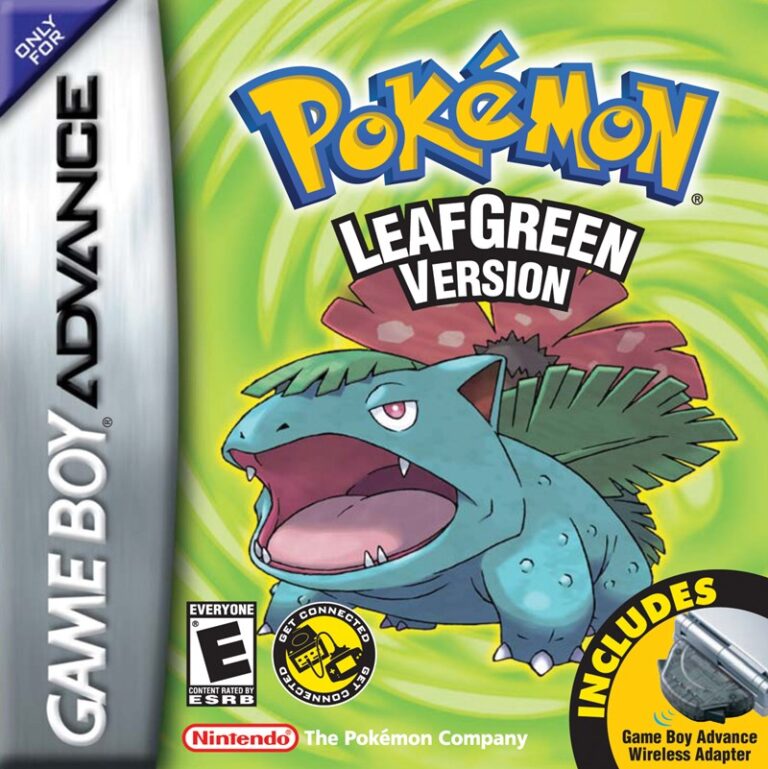
 Pokémon FireRed and Pokémon LeafGreen are a pair of core-series titles that were released for the Game Boy Advance. They count as Generation III, despite being remakes of the popular Gen I titles Pokémon Red & Green. Both games are set in the Kanto region, and both games also feature non-Legendary mascots: Charizard for FireRed and Venusaur for LeafGreen, which made them the last core-series games to go without Legendary mascots until Let’s Go, Pikachu! and Let’s Go, Eevee! in 2018.
These were the first remakes of Pokémon games and follow the stories, characters and adventures of their original versions closely, whilst introducing greatly improved colourful graphics, sounds and functionality, making good use of the power of the Game Boy Advance’s then-new technology. But it doesn’t stop there: quite a lot of changes have taken place, some minor, some major; you can check them out in our What the remakes change section.
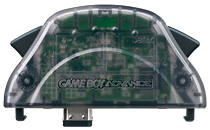
When the games were first released they were bundled with the GBA Wireless Adapter, which meant players no longer needed Game Link Cables to trade. For shipments after the initial release, however, the Wireless Adapter was no longer bundled and was sold as a separate accessory. FireRed and LeafGreen were very successful, one of the reasons for which being, potentially, that we finally had a fully translated English version of Green, which was originally only released in Japan. Pokémon FireRed and LeafGreen sit proudly as the second best-selling titles on the Game Boy Advance, surpassed only by Pokémon Ruby and Sapphire, and even keeping the well-loved Pokémon Emerald at bay in third place. In February 2026 they became the first Game Boy Advance Pokémon games on the Nintendo Switch.
Set off on a grand adventure to fulfil your dreams of becoming a Pokémon Master! Explore the Kanto region and discover wild Pokémon around every corner. Build your Pokémon collection and train and battle your way to success—earn your badges as you develop winning strategies to use against experienced Gym Leaders in every town. Explore every inch to uncover amazing secrets that will help you in your quest to be the very best trainer ever!
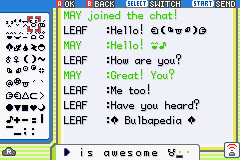
- Trade, battle, and chat wirelessly! All new Wireless Adapter comes packed in every game, so trainers can trade, battle, and chat between their FireRed and LeafGreen versions with no cables!
- Catch loads of Pokémon in never-before-seen island areas!
- Expand your collection when you trade with a friend. Link up with Pokémon Ruby & Sapphire or Pokémon Colosseum to catch them all!
— Official description, from the packaging
Quick Answers
The questions people ask about FireRed & LeafGreen, answered first and explained further down the page.
What is the difference between Pokémon FireRed and LeafGreen, and which should I buy?
Very little: the story, map, characters and post-game are identical, so pick the cover you prefer, Charizard or Venusaur. The real difference is version-exclusive Pokémon. FireRed has 23, including Growlithe, Scyther, Electabuzz and Attack Forme Deoxys; LeafGreen has 24, including Vulpix, Pinsir, Magmar, Azurill and Defense Forme Deoxys. More →


How do I get the National Pokédex in FireRed and LeafGreen?
Enter the Hall of Fame, make sure you have already visited One Island, and own at least 60 species in your Kanto Pokédex. Professor Oak then upgrades it to the National Pokédex at his Pallet Town lab. That lets Kanto Pokémon evolve into their Johto forms and is the first step towards trading with Ruby, Sapphire and Emerald. More →
How do I get to the Sevii Islands and unlock all of them?
Beat Blaine on Cinnabar Island and Bill takes you by Seagallop ferry to One Island, where Celio gives you the Tri-Pass for islands One to Three. After the Hall of Fame and National Pokédex, bring Celio the Ruby from Mt. Ember and he upgrades it to the Rainbow Pass for Four to Seven. Navel Rock and Birth Island need tickets. More →

How do I catch Mewtwo in FireRed and LeafGreen?
Mewtwo waits at Lv. 70 in the deepest chamber of Cerulean Cave, which opens only after the Hall of Fame and Celio’s finished Network Machine, so deliver the Ruby and Sapphire first. Surf down Route 24 to the entrance and bring Strength and Rock Smash. It knows Psychic, Recover, Swift and Safeguard, so put it to sleep or paralyse it. More →

How do I get Raikou, Entei or Suicune in FireRed and LeafGreen?
Only one roams each save, decided by your starter: Bulbasaur brings Entei, Charmander brings Suicune and Squirtle brings Raikou. It appears at Lv. 50 across mainland Kanto once you have cleared the Rocket Warehouse and given Celio the Sapphire. It tries to flee every turn, so trap it with Mean Look or Block. More →
How do I get Deoxys, Lugia and Ho-Oh in FireRed and LeafGreen?
On Game Boy Advance you needed event tickets. The MysticTicket opens Navel Rock, home to Lv. 70 Lugia and Ho-Oh; the AuroraTicket opens Birth Island, where a Lv. 30 Deoxys, Attack Forme in FireRed and Defense Forme in LeafGreen, appears after a puzzle. The 2026 Switch release adds both tickets to your Bag after the Hall of Fame. More →

Why won’t my Golbat, Chansey or Eevee evolve into Crobat, Blissey, Espeon or Umbreon?
Evolutions into Generation II species are blocked until Professor Oak gives you the National Pokédex; before that the evolution simply fails. Afterwards Golbat and Chansey evolve through high friendship as normal. Espeon and Umbreon stay impossible, because they depend on the time of day and these cartridges have no clock, so trade them in from a Hoenn game. More →
How do I trade between FireRed or LeafGreen and Ruby, Sapphire or Emerald?
Finish the post-game Sevii quest first. With the National Pokédex in hand, recover the Ruby from Mt. Ember and the Sapphire from the Rocket Warehouse, then give both to Celio on One Island. His Network Machine then links Kanto with Hoenn and Orre, so trades with Ruby, Sapphire and Emerald work by Game Link Cable, and Emerald also connects wirelessly. More →
Is Pokémon FireRed and LeafGreen on Nintendo Switch?
Yes. Both games arrived on the Nintendo eShop on 27 February 2026, Pokémon Day, sold separately at £16.99 or US$19.99 each rather than through Nintendo Switch Online. They play on Switch and Switch 2, trade over local wireless, give you the Mystic and Aurora Tickets after the Hall of Fame and have linked to Pokémon HOME since 7 October 2026. More →

How long does it take to beat Pokémon FireRed and LeafGreen?
It depends on how much you catch, and there is no official figure. The main quest covers eight Gyms, the Elite Four and the Champion, broken by a short Sevii Islands trip after Blaine. Beating the Champion is far from the end for completists: four more islands, the Ruby and Sapphire hunt, Elite Four rematches and Cerulean Cave follow. More →
Plot / Story
The player begins in Pallet Town, and as they set off to search for a Pokémon, Professor Oak stops them and brings them back to his lab, where their rival is waiting impatiently as Oak gives them both the choice between three Pokémon:
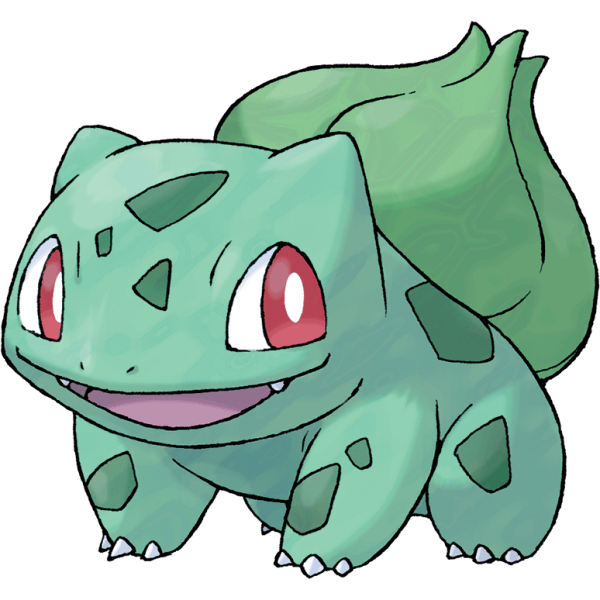
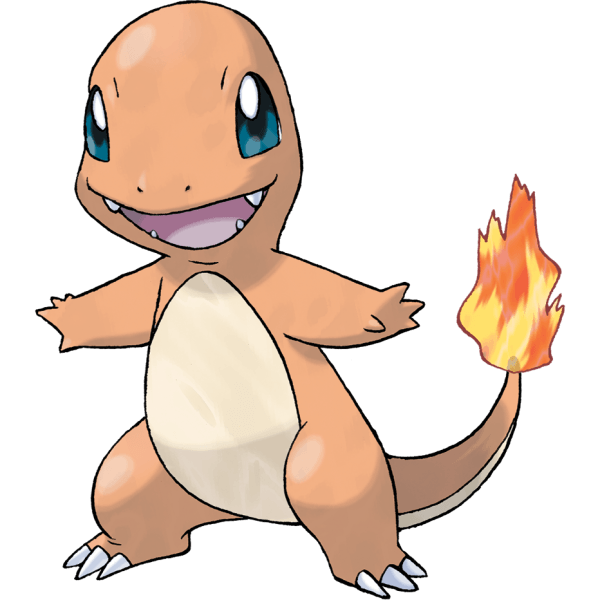

Rushing in, the rival picks the Pokémon with the type advantage and they duke it out, with the battle commentated by Professor Oak. After finishing the fight their journey begins; the player is then asked by the Viridian City Poké Mart staff to send a parcel back to Oak, and after doing so they receive a Pokédex, along with their rival. For now the Viridian City Gym is locked.
The player finds trainers and is able to catch Pokémon from now on; going to Route 2 and into Viridian Forest, after getting to Pewter City they meet up with the Gym Leader Brock, who uses Rock-type Pokémon. After Brock is defeated the player follows Route 3 to head to Mt. Moon, where the player finally meets with Team Rocket, attempting to take rare fossils from the cave. Beating the Super Nerd at the far end of the cave allows the player to take either the Helix Fossil or the Dome Fossil.
Taking their path to Route 4 they finally arrive in Cerulean City, where they meet with Misty. Following Nugget Bridge and defeating the Rocket members, the player is offered a place in Team Rocket but refuses and defeats all the trainers; following this path leads to Bill’s cottage, where the player finally finds out who ‘someone’ is from Someone’s PC Pokémon storage service. After helping Bill to separate himself from the Clefairy, Bill gives them a ticket for the S.S. Anne, a luxury ship in Vermilion Harbor. After taking a shortcut the player arrives on Route 5.
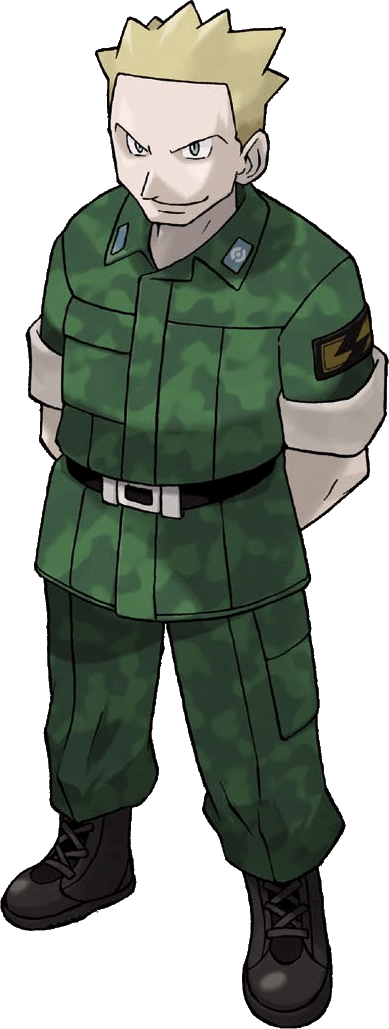
Following Routes 5 and 6, the player may use the Underground Path to get to Vermilion, going under Saffron City. The Vermilion City Gym is blocked by a small bush which may be hacked down with Cut. The Hidden Machine is on the S.S. Anne; the player may get on board and meet the Captain after facing their rival again and many other trainers. After getting access to the Gym the player meets Lt. Surge, the Lightning American who uses Electric Pokémon.
The player then follows Route 11, where they may get back to Route 2 through Diglett’s Cave to get the Hidden Machine Flash; not vital, but it makes walking through Rock Tunnel easier. After following Rock Tunnel the player arrives in Lavender Town, where they meet with Team Rocket, who have Mr. Fuji in the Pokémon Tower. Unable to pass or save Mr. Fuji, they get to Celadon City, west of Saffron, where they challenge Erika, the Gym Leader who uses Grass-type Pokémon.
In Celadon there is a Game Corner, which is none other than the Rocket Hideout, a place where many Rocket Grunts will challenge the player; after defeating them they will face the Rocket Boss, Giovanni. After being defeated he drops the Silph Scope, which is required to navigate the Pokémon Tower and defeat the Rocket Grunts that are holding Mr. Fuji hostage.
The ghost that was keeping the player from getting to the top of the tower was the spirit of a Marowak, killed by Team Rocket when they captured its Cubone child. After saving Mr. Fuji the player is given a Poké Flute by him, henceforth being able to wake and capture the Snorlax that block Route 12 and Route 16; the player may also take an alternate route on Route 16 to get another Hidden Machine, Fly.
The player may now get to Fuchsia City either by going down where the Snorlax was blocking the path or by following the Silence Bridge. Once arriving in Fuchsia City, the player discovers there is a Pokémon Gym there, home of Koga, master of Poison, and is able to get to the Safari Zone, where they meet the Warden; after finding his gold teeth the Warden rewards the player with the Hidden Machine containing Strength. And finally, hidden in the Safari Zone, the player finds the final Hidden Machine, containing Surf.
After defeating Koga the player goes back to the Celadon Mansion to get some tea for the guards, and from here on the player may get to Saffron. Saffron is overrun by Rocket Grunts who are trying to take control of Silph Co.! The player then infiltrates the Silph building and, after defeating all the grunts, they confront Giovanni for a second time; defeating him makes all the grunts leave and the President gifts the player the Master Ball, guaranteed to catch any Pokémon.
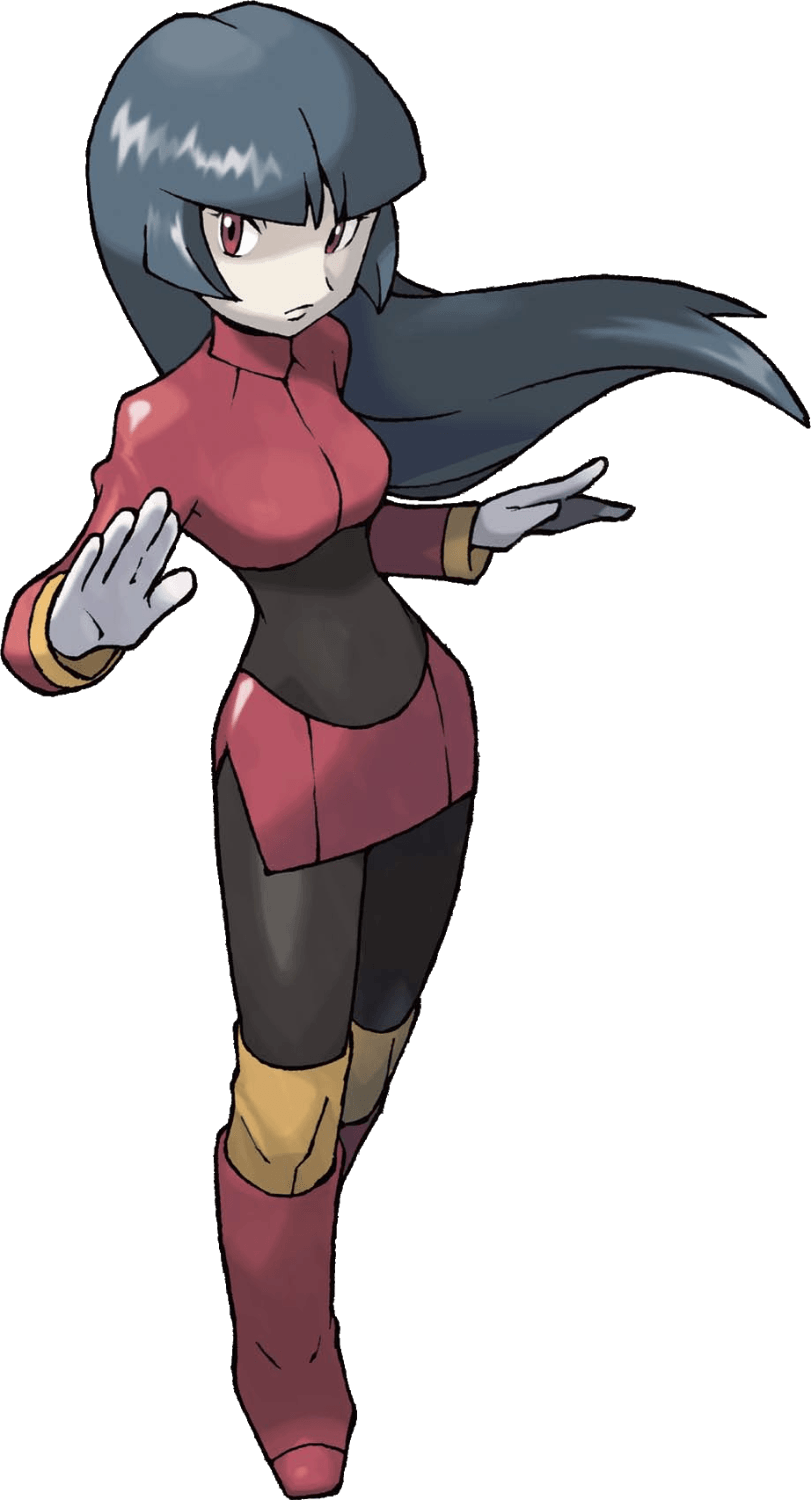
The player is then able to challenge the two gyms in Saffron: the Fighting Dojo, with Fighting-type Pokémon, and the official Saffron Gym, where Sabrina is. After defeating the Dojo the player may choose between Hitmonlee and Hitmonchan, and after defeating Sabrina they may continue on their task to get all the badges of the region.
Now it is time to use the power the badges give the player: being able to Surf from Route 19 or 20, there is a minor obstacle, the Seafoam Islands. After passing through them the player may get to Cinnabar Island. There is a lot for the player to do here: there is the Cinnabar Gym, where the player’s Pokémon knowledge will be put to the test, and finally they will confront Blaine, the fire head.
After defeating Blaine, Bill arrives, asking the player to help him solve something in a small region south of Kanto known as the Sevii Islands. Once they accept, they get on the Seagallop ferry and arrive there; Celio is attempting to connect the islands’ PC system to Kanto’s. There is a crisis on Two Island, where the daughter of the owner of the Joyful Game Corner is missing, and on Three Island there is a group of invading Bikers causing trouble. After defeating them and finding Lostelle, the lost girl, in the Berry Forest, the player and Bill return to Kanto, where the Viridian Gym awaits.
After defeating all the other trainers, conquering the Sevii Islands and being ready to get one more badge and face the Elite Four, the player finds out that the Gym’s leader was none other than the Rocket leader Giovanni, who uses Ground-type Pokémon of many kinds. After defeating him he admits full defeat and disbands Team Rocket, providing the player with the last badge.

With a sense of bravery, full of energy and Pokémon, the player may now go to the Indigo Plateau through Victory Road to face their final challenge, the Elite Four. The Elite Four are much as they were in the original games, and you can read all about them and their teams on our Red & Blue page:
- Lorelei, who uses Ice Pokémon
- Bruno, who uses Fighting Pokémon
- Agatha, who uses Ghost Pokémon
- Lance, who uses Dragon Pokémon
After defeating them… the player would be the Champion; however, their rival beat them to it, and now the player has to face the rival for a final Pokémon battle. After defeating the rival, Professor Oak arrives and tells the player that their victory is because they care about their Pokémon, and the party is added to the Hall of Fame.
The story is over, but the game is not: back in Pallet Town, Professor Oak checks the player’s Pokédex, and if they have caught at least 60 Pokémon the Dex is upgraded to the National Pokédex! Oak then asks the player to further fill it by going to the Sevii Islands to check on Pokémon that he has not studied before.
Once on the Sevii Islands, Celio has to do more work on his Network Machine to link another region, needing to find a Ruby and a Sapphire. The Ruby is deep inside Mt. Ember, where Team Rocket Grunts are guarding the way.
The Sapphire is in the Dotted Hole in Ruin Valley. The Ruby is given to Celio without a problem; however, the Sapphire is stolen by Gideon, a scientist who takes it back to the Rocket Warehouse on Five Isle Meadow.
The player infiltrates the Warehouse and, after the Rocket Admins realise that Giovanni has disbanded Team Rocket, they promise to return one day and bring Team Rocket back to its former glory. The Sapphire is taken from Gideon, and after this the player may trade with Ruby, Sapphire and Emerald game owners.
The Elite Four have been training throughout all of this time: their Pokémon are 12 levels higher and their strategy changes slightly; Cerulean Cave is open and the player may find Mewtwo. Entei, Suicune or Raikou will now be roaming Kanto, depending on which was the initial Pokémon choice of the player.

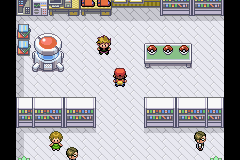


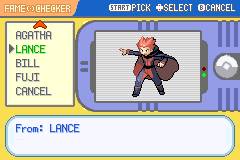
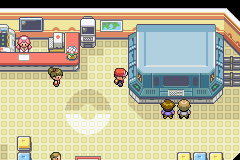
Screenshots from our FireRed & LeafGreen screenshot gallery.
The Sevii Islands quest, step by step
The remakes’ one big addition to the plot, in the order it happens:
- Cinnabar Island, after the Volcano Badge: Bill invites you aboard a Seagallop ferry to One Island.
- One Island: at the Pokémon Network Center Bill introduces his friend Celio, whose machine cannot yet link with Hoenn, and Celio gives you the Tri-Pass for islands One, Two and Three.
- Two Island: the owner of the Joyful Game Corner is frantic because his daughter, Lostelle, has gone missing.
- Three Island: a gang of Bikers is bothering the town; beat them, cross Bond Bridge to the Berry Forest and rescue Lostelle from a wild Hypno. She gives you an Iapapa Berry, the Joyful Game Corner opens and Seagallop Hi-Speed 7 starts running from Vermilion City.
- Kanto: the main quest resumes with the Viridian Gym, Victory Road, the Elite Four and the Champion.
- Pallet Town, after the Hall of Fame: with One Island visited and at least 60 species owned, Professor Oak upgrades your Pokédex to the National Pokédex.
- One Island: Celio explains that a Ruby and a Sapphire are needed to complete his link with Hoenn.
- Mt. Ember: Rocket Grunts challenge you; one lets slip the first warehouse password, ‘Goldeen need log’, and once beaten they flee, opening the way down the Ruby Path to the Ruby beneath a Braille inscription.
- One Island: Celio fits the Ruby and upgrades your pass to the Rainbow Pass, with a Town Map covering islands Four to Seven.
- Four Island: in the back of Icefall Cave you help Lorelei and her Lapras drive off Team Rocket, who retreat to their base on Five Island.
- Six Island: Gideon follows you into the Dotted Hole in Ruin Valley, steals the Sapphire and blurts out the second password, ‘Yes, nah, Chansey’.
- Five Island: both passwords open the Rocket Warehouse in Five Isle Meadow. Beat the Grunts, the two Admins and Gideon to recover the Sapphire; the last Admin closes the branch and swears to rebuild Team Rocket.
- One Island: Celio completes the Network Machine, opening trades with Hoenn and Orre. The legendary beast tied to your starter begins roaming Kanto, Cerulean Cave opens and the Elite Four can be rematched.
- Optional extras: Selphy in the Lost Cave, the Togepi Egg in the Water Labyrinth, Trainer Tower, the Tanoby Key puzzle and, with event tickets (built in on Switch), Navel Rock and Birth Island.
Your rival’s battles
Teams depend on the rival’s starter, which is always the one strong against yours (you pick Bulbasaur, he takes Charmander; Charmander, Squirtle; Squirtle, Bulbasaur).
- 1. Pallet Town, straight after choosing starters: his starter, Lv. 5.
- 2. Route 22, west of Viridian City, early on: Pidgey Lv. 9, starter Lv. 9.
- 3. Cerulean City, at Nugget Bridge on the way to Bill’s Sea Cottage: Pidgeotto Lv. 17, Abra Lv. 16, Rattata Lv. 15, starter Lv. 18.
- 4. S.S. Anne: Pidgeotto Lv. 19, Raticate Lv. 16, Kadabra Lv. 18, Ivysaur, Charmeleon or Wartortle Lv. 20.
- 5. Pokémon Tower: Pidgeotto Lv. 25, Kadabra Lv. 20 and his second-stage starter Lv. 25, plus Gyarados Lv. 23 and Growlithe Lv. 22 (Ivysaur team), Exeggcute Lv. 23 and Gyarados Lv. 22 (Charmeleon team) or Growlithe Lv. 23 and Exeggcute Lv. 22 (Wartortle team).
- 6. Silph Co.: Pidgeot Lv. 37, Alakazam Lv. 35 and his final-stage starter Lv. 40, plus Gyarados Lv. 38 and Growlithe Lv. 35 (Venusaur team), Exeggcute Lv. 38 and Gyarados Lv. 35 (Charizard team) or Growlithe Lv. 38 and Exeggcute Lv. 35 (Blastoise team).
- 7. Route 22, before Victory Road: Pidgeot Lv. 47, Rhyhorn Lv. 45, Alakazam Lv. 47 and starter Lv. 53, plus two at Lv. 45: Gyarados and Growlithe (Venusaur), Exeggcute and Gyarados (Charizard) or Growlithe and Exeggcute (Blastoise).
- 8. Indigo Plateau, Champion: Pidgeot Lv. 59, Alakazam Lv. 57, Rhydon Lv. 59 and starter Lv. 63, plus Gyarados Lv. 59 and Arcanine Lv. 61 (Venusaur), Exeggutor Lv. 59 and Gyarados Lv. 61 (Charizard) or Arcanine Lv. 59 and Exeggutor Lv. 61 (Blastoise). He carries four Full Restores.
- Post-game meetings on Four Island and in the Six Island Pokémon Center involve no battle; on Four Island he points out that the Pokédex cannot be finished without breeding and hatching Eggs.
- 9. Indigo Plateau rematch, after the Sevii quest: Heracross Lv. 72, Alakazam Lv. 73, Tyranitar Lv. 72 and starter Lv. 75, plus Gyarados Lv. 73 and Arcanine Lv. 73 (Venusaur), Exeggutor Lv. 73 and Gyarados Lv. 73 (Charizard) or Arcanine Lv. 73 and Exeggutor Lv. 73 (Blastoise).
Team Rocket’s return

Giovanni’s defeat in Viridian City has not reached every corner of his organisation. A Sevii branch has been working on the islands on a scheme involving Pokémon evolution, framed as a prelude to Team Rocket’s Johto plot three years later. Grunts on Mt. Ember give away the first password to their hideout, ‘Goldeen need log’; the second, ‘Yes, nah, Chansey’, comes from Gideon, a hired scientist hoping to sell them the Sapphire. Both read the same backwards. The Rocket Warehouse stands on Five Isle Meadow, once a family’s field, and two Admins run it. They go unnamed in these games; they are the pair later known as Archer and Ariana. When the last Admin learns that Giovanni has disbanded the team, he shuts the branch, vows to find his boss and restore Team Rocket, and the Pokémon they stole escape.
Red and Leaf
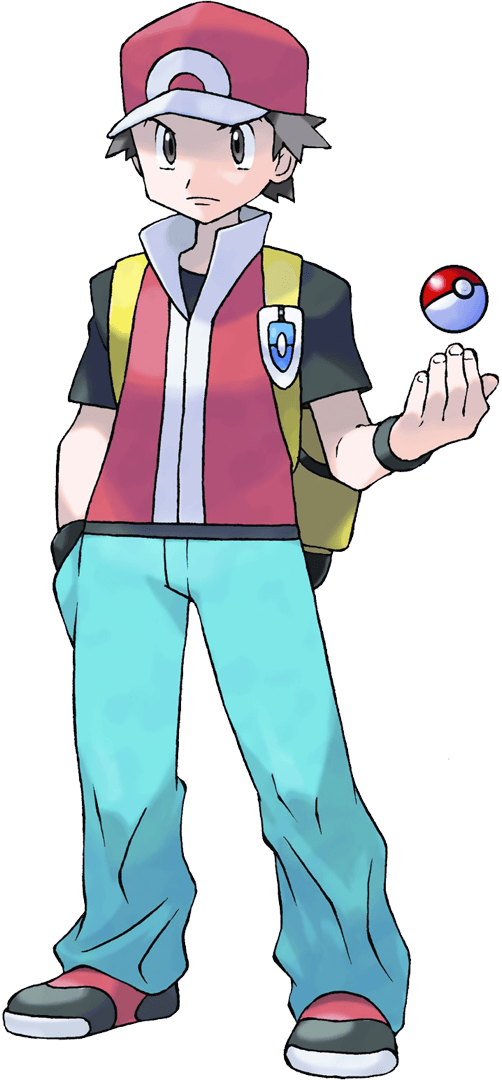
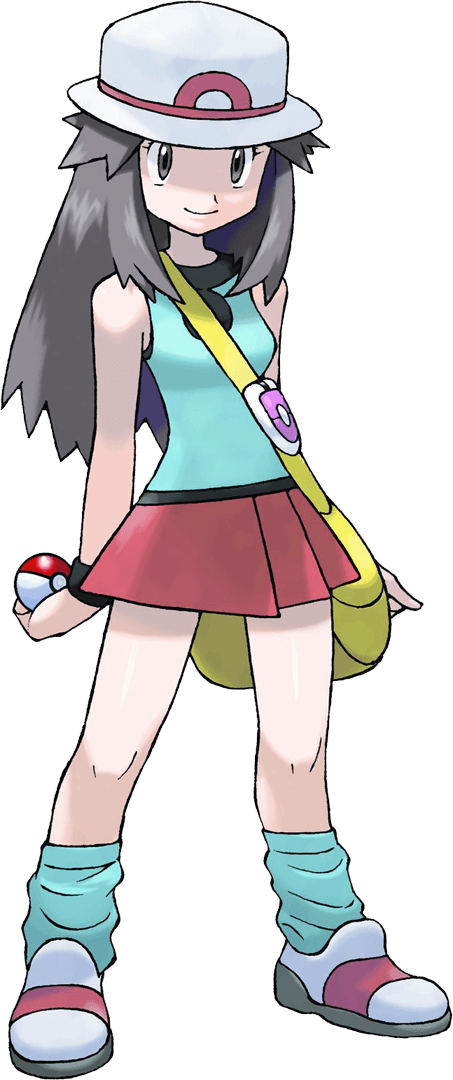
The remakes let you choose between Red and a new girl, Leaf, both drawn by Ken Sugimori. Leaf is never named in normal play: ‘Leaf’ surfaced in the E3 2004 trailer and placeholder data and only became official with 2019 figures and Pokémon Masters EX in 2020. Her Japanese name is also Leaf (リーフ). Sugimori had in mind an unnamed girl trainer he painted for a 1996 Red and Green strategy guide cover, a character he never planned as a hero.
In the anime and movies
FireRed & LeafGreen rebuild the Kanto of the anime’s first two seasons, and their Sevii Islands have an echo in the Orange Islands.
In the anime
Anime seasons which loosely tie in with FireRed & LeafGreen (in terms of locations, NPCs such as Gym Leaders and Pokémon):
 Season 1: Indigo League1997–1999Ash’s first journey runs through the towns and Gyms that FireRed and LeafGreen rebuild, from Brock’s Pewter City Gym in Showdown in Pewter City to the Viridian Gym for his final Badge in The Battle of the Badge. The remakes’ Kanto, with its familiar leaders, is the same map the series introduced on television.
 Season 2: Adventures in the Orange Islands1999The anime’s own island chain came first. The Sevii Islands are a similar idea in game form: a string of warm islands beyond the Kanto mainland, each with its own sights and Pokémon.
 Season 8: Advanced Battle2004–2005The Right Place and the Right Mime (AG133), whose Japanese title promises everyone assembling at Professor Oak’s laboratory, aired in Japan on 30 June 2005 and in the US on 15 April 2006, bringing the series back to Pallet Town the year after the remakes reintroduced Kanto.
In the movies
 Pokémon: The First Movie1998Mewtwo, the post-game prize waiting at Lv. 70 in Cerulean Cave.
 Pokémon: Destiny Deoxys2004Released in Japanese cinemas on 17 July 2004, the year of the remakes, and starring Deoxys, the Birth Island encounter that FireRed and LeafGreen offered through the AuroraTicket.
 Pokémon: Lucario and the Mystery of Mew2005Mew, the one Kanto Pokémon you can never meet in FireRed and LeafGreen.
The Kanto episodes
The episodes that line up with the remakes:
- EP001Pokémon – I Choose You! – The anime’s first episode, first aired in Japan on 1 April 1997, sets out from Pallet Town, the remakes’ starting point too.
- EP005
 Showdown in Pewter City – Ash’s battle at the Pewter City Gym, home of Brock, the first leader in FireRed and LeafGreen.
- EP063
 The Battle of the Badge – Ash’s last Kanto Badge comes at the Viridian Gym, the Gym the remakes give to Giovanni.
- AG133The Right Place and the Right Mime – A gathering at Professor Oak’s laboratory in Pallet Town, first aired in Japan on 30 June 2005.
- HS18The Search for the Legend – A Pokémon Chronicles episode in which Ritchie follows a trainer named Silver up Mt. Ember on One Island to find Moltres.
What the remakes change
Pokémon FireRed and LeafGreen are remakes of the original Red and Green games, but this doesn’t simply mean it’s the old games back with better graphics and sounds: quite a lot has been added and changed, considering they’re remakes.
Gameplay
- Gender selection is introduced. The original Gen I games defaulted to a male protagonist, but in the remakes you can choose.
- The Resume feature was added: this feature remembers the four most significant milestone things the player did the last time they played, and allows them to resume from those points.
- A new area of Kanto has been discovered since the originals: the Sevii Islands are now accessible, and several Gen II Pokémon can be found there.
- Some moves have changed types – for example, Bite, Gust, Karate Chop and Sand-Attack have all been modified.
- In the original games, defeating Giovanni in the final Gym of Kanto resulted in him disbanding the team and a general respite from their antics. In FireRed and LeafGreen it doesn’t end there, however, as Team Rocket found the Sevii Islands before you did and already have a base there.
- The Vs. Seeker item allows you to have rematches with the trainers you bumped into on your travels.
- The Fame Checker item is added, allowing the player to read information about important NPCs, Gym Leaders and so on.
- Four Island’s Pokémon Day Care centre allows the breeding of Pokémon.
- The previous Day Care Centre found on Route 5 is still open for business, but this time they’ll only look after one Pokémon at any one time.
- There’s a new NPC in one of the houses in Cerulean City. He gives you the Powder Jar; play Berry Crush with friends in the Pokémon Center and he will exchange the Berry Powder you make for rare items.
- Professor Oak still has his original three assistants, but three more have now been added. All of his aides reward the player with items for completing certain tasks. Many of these items are from Generations II and III. The Route 15 aide will give the player an Exp. Share, which is an upgraded version of the Exp. All he would’ve given you in the original games.
- Pokémon movelists now include moves which were added in Gens II and III and wouldn’t have existed yet in the original versions.
- Move Tutors are introduced, teaching moves which could previously only be learned by use of TMs in the original games.
- There is a Move Tutor on Two Island, at Cape Brink, who can teach Blast Burn, Frenzy Plant and Hydro Cannon. However, she will only teach the moves to your starter Pokémon’s final evolved form, and only once it adores you.
- Once you complete your quests in the Sevii Islands you can have rematches against the Elite Four and Champion, who will have stronger teams; said teams will even include Gen II Pokémon.
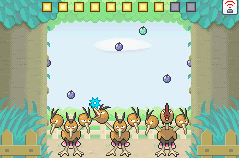
- A new game corner has arrived, this time in the form of Two Island’s ‘Joyful Game Corner’. This place enables players to connect with other FireRed, LeafGreen or Emerald carts and play multiplayer mini-games such as Dodrio Berry Picking or Pokémon Jump. These games are played via the Wireless Communication System.
Graphics
It’s fairly obvious that the main change is bringing these titles from the classic black and white of the Game Boy and using the 32-bit power of the GBA to inject vibrant colours and visually pleasing environments. Let’s take a look at some of the more subtle specifics that were changed graphically:
- In Japan the font used in dialogue with NPCs varies depending on their gender: male NPCs have a neat hand-lettered font, where female NPCs have a looser, more handwritten look to their dialogue. Other in-game text, such as that on computers and in menus, uses a separate typed-looking font.
- In other global releases the font remains constant, but there is again differentiation between the NPCs’ genders, this time with female NPCs having pink text and male NPCs having blue text.
- When you enter landmark locations like the Game Corner or Diglett’s Cave, for example, an image of the location appears.
- In the original Red and Green there was a boy who stopped you from leaving Pewter City until you had defeated Brock. He’d keep taking you back to the Gym if you tried to leave. He’s still in the games, but in the original games he’d leave Pewter City to the east and disappear, with the player unable to follow. This time he’ll just walk straight back to where you found him.
Pokémon

- All Pokémon now have Abilities, genders and Natures, as well as the ability to hold an item. All of these are features present in all Gen III titles.
- There have been a few changes made to the game-exclusive Pokémon of each title. In the original games Mankey and Meowth were game-exclusive but can now be obtained in either title, whereas Psyduck, Shellder, Slowpoke and Staryu are now exclusive to specific versions. The knock-on of this is that the in-game trade to get Lickitung is now a little bit different: in LeafGreen you can trade a Slowbro for him, and in FireRed he can be received if you trade a Golduck.
- Since the original versions there have been other generations which included evolutions of Gen I Pokémon which didn’t exist yet at the time of Red and Green’s release. These post-Gen I evolutions can still occur – for example, Golbat can become Crobat – BUT not until you have obtained the National Pokédex. The Eevee evolutions Espeon and Umbreon, however, cannot be obtained and must instead be traded from other Gen III titles (this is due to the lack of a system clock in FireRed and LeafGreen carts).
- Magnemite and its evolved form Magneton were simply Electric types in the original games, but they now class as Electric/Steel types.
- In the original games Ponyta and Magmar could be found in the Pokémon Mansion on Cinnabar Island, but they have since been relocated to Kindle Road and Mt. Ember on One Island. Mansion Health & Safety must have moved them along? Magmar is also only available in Pokémon LeafGreen, which is a curious choice for a Fire type.
- Where Moltres used to reside on Victory Road, it’s now moved to Mt. Ember. Additionally, Mewtwo’s dwelling, Cerulean Cave, now requires the use of Rock Smash to gain full access; the cave is also locked until the player completes their ‘post-game’ mission in the Sevii Islands.
- You will get to encounter one of the Legendary beasts of Johto once you’ve done everything, specifically once you’ve done the Sevii Islands missions. The Legendary beast that appears will be the one that is a direct counter to the starter you chose; for example, if you chose a Fire-type starter, you’ll encounter Suicune, and so on.
Musical changes
The potential audio output quality of the GBA was much greater than its predecessors’, so the classic tunes were modified and remixed a little to sound better – they are still, for the most part, the themes you’d remember from the originals, though. With a few amendments and additions as follows:
- The Power Plant’s background music was previously the same as that of the Rocket Hideout; it now plays the tune you’d recognise from the Pokémon Mansion.
- During the battles with the Elite Four in the original games, the first three battles would play the standard Trainer battle theme, where in the battle against Lance you’d get the Gym Leader battle theme. Now, during every battle against the Elite Four, the Gym Leader theme will play.
- During Professor Oak’s congratulations speech when you become the Pokémon League Champion you’ll now get a more upbeat remix of the original Pallet Town theme. In the original games this played a slowed-down version of the music from Viridian City.
Help for new trainers
Some help features were added to make the games more user-friendly for novice Pokémon Trainers; here’s what they were:
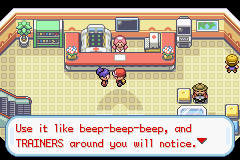
- A general introduction to the basic controls, a help feature that would become commonplace in Gen IV.
- Teachy TV was added; this is an item given to the player by an old man. The TV airs programmes which offer advice to Pokémon Trainers.
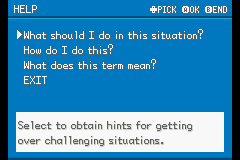
- Pressing the L and R buttons will activate a new in-game help feature.
In depth: the remakes’ new systems
Here is each of the new systems in more detail, with the fine print.




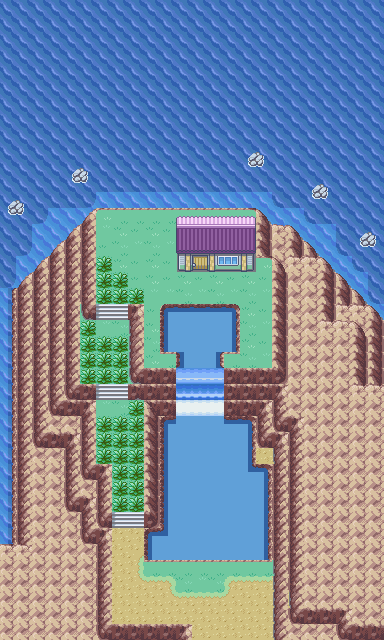

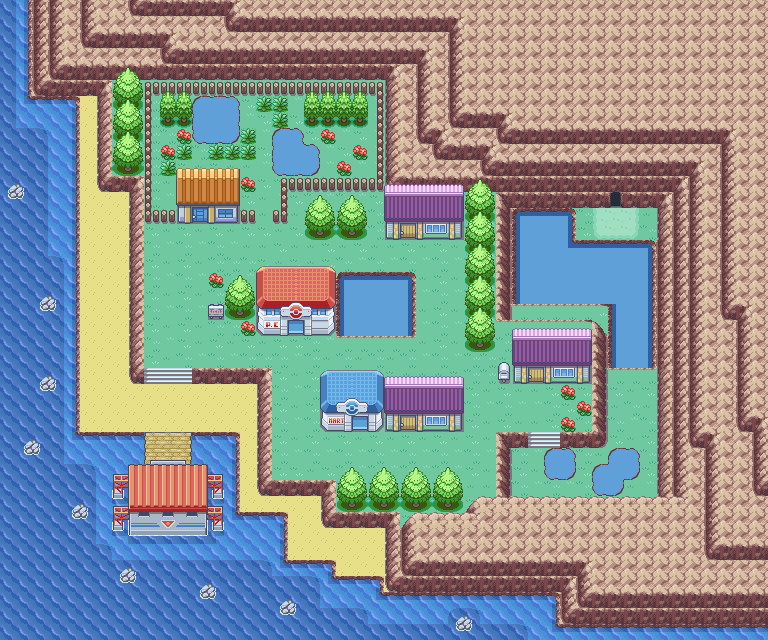

The Sevii Islands
The Sevii Islands are the remakes’ own region: nine islands south of Kanto, reached only by Seagallop ferry. The first three open during the main story, the next four after the National Pokédex, and the last two needed event tickets on the Game Boy Advance. Their routes have names instead of numbers, their music reworks Gold & Silver, and their grass holds dozens of Johto Pokémon that Kanto never had.
Island by island

One Island (Knot Island)
The north-western Sevii island, Knot Island, is where the archipelago begins. Celio runs the Pokémon Network Center in the small southern town, the machine that will eventually trade with Hoenn and Orre. Kindle Road climbs the coast past the Ember Spa, a hot spring that restores your Pokémon and where an old man gives you HM06 Rock Smash, to Mt. Ember at the northern tip. Treasure Beach washes up fresh valuables as you walk, and young islanders here dream of moving to the big cities.
Pokémon of note: Ponyta (Kindle Road), Moltres (Mt. Ember), Slugma (Mt. Ember), Magmar (Mt. Ember, LeafGreen only). Items: HM06 Rock Smash (Ember Spa), The Ruby (Mt. Ember), Star Piece and Big Pearl (Treasure Beach).

Mt. Ember
A dormant volcano on One Island, named for the embers that glow on its slopes at night, and Moltres’s new home now that Victory Road no longer holds it. A Strength boulder puzzle guards the Lv. 50 firebird at the summit, which returns if you run. After the National Pokédex, two Rocket Grunts on the lower slopes battle you and reveal the first warehouse password; their retreat opens the Ruby Path, a six-floor descent to the Ruby, set in a chamber with a Braille message. A tutor near the Ember Spa teaches Explosion.
Pokémon of note: Moltres (Lv. 50, summit), Magmar (LeafGreen only), Slugma and Magcargo (Ruby Path), Ponyta and Rapidash, Machoke. Items: The Ruby, Two Fire Stones, Two Ultra Balls, Dire Hit.
Two Island (Boon Island)
Boon Island is the quietest settlement, with the fewest residents of the seven, and its eastern waters are too rough to Surf. Its market stall sells goods you cannot buy in Kanto, and the town’s move relearner charges mushrooms rather than Heart Scales, since no Luvdisc live here. Lostelle’s father owns the Joyful Game Corner, which opens its wireless mini-games once his daughter is safe. North at Cape Brink, an old woman teaches the ultimate starter moves to a fully evolved Kanto starter that adores its Trainer.
Pokémon of note: Venusaur, Charizard or Blastoise (Cape Brink tutor), Dodrio (Dodrio Berry Picking). Items: Frenzy Plant, Blast Burn or Hydro Cannon (Cape Brink), Hidden Rare Candy behind the tutor’s house, PP Max (Surf and Itemfinder).
Three Island (Kin Island)
Kin Island is a parent island tied by Bond Bridge to a smaller one, with a sleepy town and a separate ferry port. When you first arrive, a gang of Bikers is making life miserable and must be beaten. Across the bridge, the Berry Forest is the one place in the game whose trees keep producing Berries, and the spot where Lostelle is found cornered by a Hypno. The east of Three Isle Port opens after the National Pokédex, where patient players can find Dunsparce in a stubborn patch of grass.
Pokémon of note: Hypno (Berry Forest), Dunsparce (Three Isle Port, post-game). Items: Iapapa Berry (Lostelle’s thanks), Renewable Berries (Berry Forest), Hidden Pearl and Stardust (Bond Bridge).

Four Island (Floe Island)
Floe Island is Lorelei’s home town, and her house is crammed with Pokémon dolls. It also holds the full Day Care, where an elderly couple raise two Pokémon and may find an Egg, and a tutor who teaches Body Slam. Icefall Cave is the one frozen place in these warm islands: thin ice cracks underfoot, slick floors send you sliding, and HM07 Waterfall waits on the first floor. Climb the waterfall to find Lorelei confronting Team Rocket, then search the back pool for the only wild Lapras in Generation III.
Pokémon of note: Lapras (Icefall Cave, back pool), Swinub (Icefall Cave), Delibird (FireRed only), Sneasel (LeafGreen only). Items: HM07 Waterfall (Icefall Cave), Never-Melt Ice (Icefall Cave), Pokémon Eggs (Day Care).
Five Island (Chrono Island)
Chrono Island hides most of the Rocket plot. Team Rocket built its warehouse on Five Isle Meadow, a family’s field, and abandoned it once Giovanni’s fall was known. Resort Gorgeous belongs to Selphy, a rich socialite you first meet lost in the Lost Cave, a looping maze whose Japanese name means a cave of no return. In the Water Labyrinth an old man offers a Togepi Egg to a Trainer whose lead Pokémon loves them, and the Memorial Pillar marks the grave of a cherished Onix.
Pokémon of note: Togepi (Egg, Water Labyrinth), Murkrow (Lost Cave, FireRed only), Misdreavus (Lost Cave, LeafGreen only), Sentret and Hoppip (Five Isle Meadow), Qwilfish (FireRed) or Remoraid (LeafGreen) on the Super Rod. Items: Togepi Egg, TM42 Facade (leave Lemonade at the Memorial Pillar), Sea Incense and Lax Incense (Lost Cave), The Sapphire and an Up-Grade (Rocket Warehouse).

Six Island (Fortune Island)
Fortune Island boasts fine stargazing away from city lights. Water Path leads north to a woman who measures Heracross horns from nearby Pattern Bush, whose bare patches of ground puzzle the locals. Ruin Valley, home to ruin-loving Natu, holds the Dotted Hole: Cut the Braille-marked door and solve the floor puzzle to reach the Sapphire, just before Gideon snatches it. Green Path runs east to Pattern Bush, and from Outcast Island you reach Altering Cave, whose planned changes were never distributed, leaving only Zubat.
Pokémon of note: Heracross (Pattern Bush), Ledyba and Spinarak (Pattern Bush), Natu, Yanma and Wobbuffet (Ruin Valley), Wooper (FireRed) or Marill (LeafGreen) in Ruin Valley. Items: The Sapphire (Dotted Hole), Sun Stone (Ruin Valley, the only one), Dragon Scale (Water Path), Nest Balls for record Heracross.
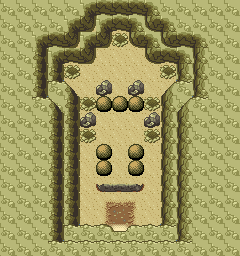
Seven Island (Quest Island)
Quest Island is the last of the settled islands. Trainer Tower crowns its northern tip, and a tutor near the port teaches Swords Dance. Beyond the town, Canyon Entrance gives way to Sevault Canyon, rugged ground with the only wild Larvitar in Generation III and a house where a Chansey’s dance fully heals your team. The Tanoby Key cave in the canyon holds a puzzle that awakens the seven Tanoby Ruins chambers, which then fill with Unown. An old woman claims the islands were made in seven days.
Pokémon of note: Larvitar (Sevault Canyon), Phanpy (Sevault Canyon and Canyon Entrance), Skarmory (FireRed only), Unown (Tanoby Chambers). Items: King’s Rock (Sevault Canyon), Lucky Punch (Sevault Canyon), Heart Scales (Tanoby Ruins), Trainer Tower prizes.
Navel Rock
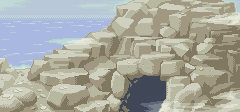
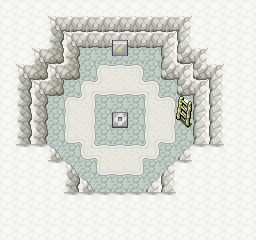
A lone rock south-east of Four Island, reached only with the MysticTicket on Seagallop Hi-Speed 10. Inside, the path splits: the right-hand route plunges deep underground to Lugia, while the left climbs a long stair to the open summit where Ho-Oh waits, both at Lv. 70. The Itemfinder turns up Sacred Ash where Ho-Oh stood. The cave is silver here and gold in Emerald, and it is the one Sevii location that Pokémon Adventures never visited. On Switch the ticket arrives after the Hall of Fame.
Pokémon of note: Lugia (Lv. 70), Ho-Oh (Lv. 70). Items: Sacred Ash (hidden at Ho-Oh’s perch), MysticTicket (event item on GBA).
Birth Island
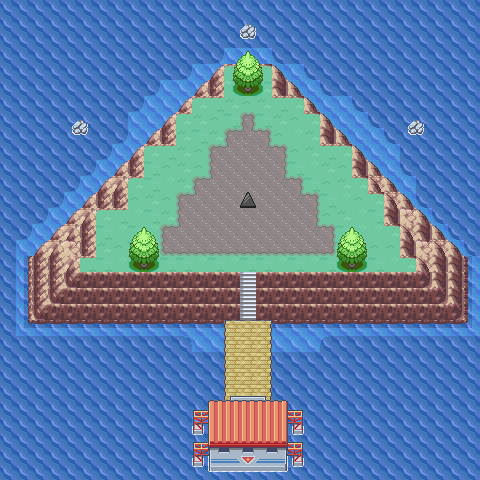
A tiny island south of Six Island, reached with the AuroraTicket on Seagallop Hi-Speed 12 once you hold the Rainbow Pass. A black triangle sits on the ground; touch it and it jumps away, and you must take the shortest route to each new spot until it glows red. Touch it then and it shatters, summoning a Lv. 30 Deoxys, Attack Forme in FireRed and Defense Forme in LeafGreen. One wrong path resets the puzzle. The island appears to be modelled on Minamitorishima, a remote Japanese coral atoll.
Pokémon of note: Deoxys (Lv. 30). Items: AuroraTicket (event item on GBA, built in on Switch).
Back in Kanto

Cerulean Cave
Kanto’s last secret now stays shut until the very end: a guard admits only Trainers with all eight Badges and a Hall of Fame entry, and only after Celio’s machine is working. Surf down Route 24 to reach it. Inside, the remakes bring back the Red and Green floor plan rather than Red and Blue’s, adding breakable rocks that guard several items. Mewtwo waits at Lv. 70 on the lowest floor, and the post-game crowd includes Ditto, Kadabra and Wobbuffet. Its Japanese name is Hanada Cave.
Pokémon of note: Mewtwo (Lv. 70), Ditto, Wobbuffet, Kadabra, Electrode. Items: Max Revive, PP Up (needs Rock Smash), Max Elixir, Nugget.


Cinnabar Island
The volcanic island still holds Blaine’s Fire Gym and the Pokémon Lab, where your Mt. Moon fossil and Pewter’s Old Amber are revived and three scientists offer trades. The remakes add the turning point of the Sevii story: once you hold the Volcano Badge, Bill finds you here and invites you to One Island. The Pokémon Mansion is quieter, as Ponyta and Magmar have moved to the islands, but Ditto now lurks inside, as in Yellow. A Metronome tutor works in the island’s research building.
Pokémon of note: Ditto (Pokémon Mansion), Omanyte or Kabuto (revived fossil), Aerodactyl (Old Amber), Electrode, Tangela and Seel (Lab trades). Items: TM38 Fire Blast (Blaine), Volcano Badge.
Can I catch them all?
Pokémon FireRed and LeafGreen between them enable the capture of all Gen I Pokémon except for Mew; this of course relies upon trading between games to get the game exclusives (or trading from a compatible Gen III title). There are also a couple of Gen III Pokémon you can obtain in FireRed and LeafGreen: Azurill, Wynaut and Deoxys. FireRed has 23 version-exclusive Pokémon where LeafGreen has 24 (how unfair!); here’s what each version has:
Exclusive to FireRed (23)
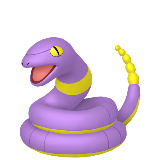 Ekans#023
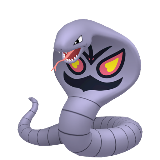 Arbok#024
 Oddish#043
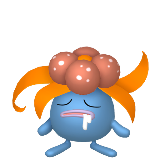 Gloom#044
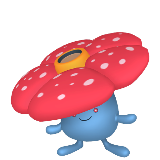 Vileplume#045
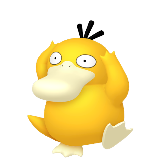 Psyduck#054
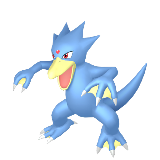 Golduck#055
 Growlithe#058
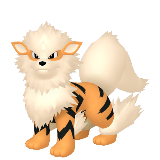 Arcanine#059
 Shellder#090
 Cloyster#091
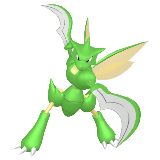 Scyther#123
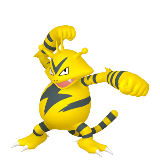 Electabuzz#125
 Bellossom#182
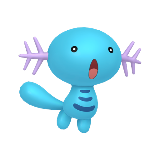 Wooper#194
 Quagsire#195
 Murkrow#198
 Qwilfish#211
 Scizor#212
 Delibird#225
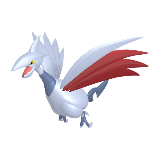 Skarmory#227
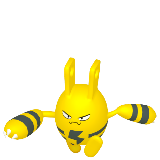 Elekid#239
 DeoxysAttack Forme
Ekans and Arbok, the Oddish line (and Bellossom), Psyduck and Golduck, Growlithe and Arcanine, Shellder and Cloyster, Scyther and Scizor, Electabuzz and Elekid, Wooper and Quagsire, Murkrow, Qwilfish, Delibird, Skarmory – and Deoxys in its Attack Forme.
Exclusive to LeafGreen (24)
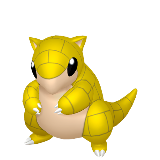 Sandshrew#027
 Sandslash#028
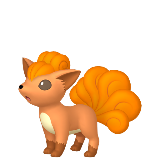 Vulpix#037
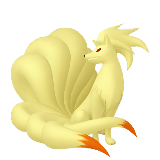 Ninetales#038
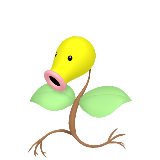 Bellsprout#069
 Weepinbell#070
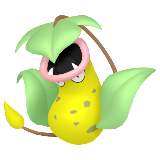 Victreebel#071
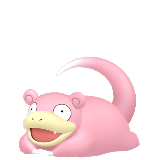 Slowpoke#079
 Slowbro#080
 Staryu#120
 Starmie#121
 Magmar#126
 Pinsir#127
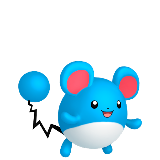 Marill#183
 Azumarill#184
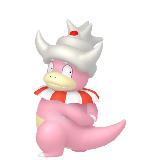 Slowking#199
 Misdreavus#200
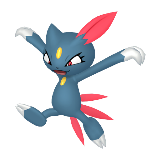 Sneasel#215
 Remoraid#223
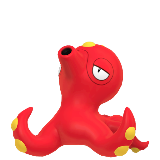 Octillery#224
 Mantine#226
 Magby#240
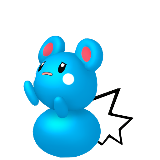 Azurill#298
- DeoxysDefense Forme
Sandshrew and Sandslash, Vulpix and Ninetales, the Bellsprout line, Slowpoke, Slowbro and Slowking, Staryu and Starmie, Magmar and Magby, Pinsir, Marill, Azumarill and Azurill, Misdreavus, Sneasel, Remoraid and Octillery, Mantine – and Deoxys in its Defense Forme.
Compared with Red and Blue, Mankey and Meowth are now in both games, while Psyduck, Shellder, Slowpoke and Staryu became exclusives. Scizor and Slowking still need a trade to evolve even in their own version.
What the remakes leave out
Using both versions and trading between them, but no events and no Hoenn games, 212 National Pokédex species can be registered: 150 from Kanto (everything but Mew), 60 from Johto and 2 from Hoenn (Azurill and Wynaut). The MysticTicket and AuroraTicket add Lugia, Ho-Oh and Deoxys for 215, and on Switch those tickets are part of the game. Johto species present: 60 obtainable without events, 62 with them.
Mew is the one Kanto Pokémon you never meet. Espeon and Umbreon are impossible because the cartridges have no clock, and eight Johto species coded for the Altering Cave (Mareep, Aipom, Pineco, Shuckle, Teddiursa, Houndour, Stantler and Smeargle) were never switched on by any distribution. The rest of Johto’s absentees – the Chikorita, Cyndaquil and Totodile lines, Hoothoot, Chinchou, Flaaffy, Sudowoodo, Sunkern, Girafarig, Forretress, Gligar, Snubbull, Ursaring, Corsola, Houndoom, Miltank and Celebi – and every Hoenn Pokémon bar Azurill, Wynaut and Deoxys have to be traded in.
New since Red & Blue: the Johto and Hoenn Pokémon you can get
Where the Sevii Islands and the National Pokédex put Generation II and III species within reach:
- Sentret and Furret – Sentret lives in the grass on Five Isle Meadow, Water Path and Canyon Entrance.
- Ledyba and Ledian – Pattern Bush on Six Island; much commoner in LeafGreen.
- Spinarak and Ariados – Pattern Bush on Six Island; much commoner in FireRed.
- Crobat – Golbat evolves with high friendship once you have the National Pokédex.
- Pichu, Cleffa and Igglybuff – Breed Pikachu, Clefairy or Jigglypuff at the Day Care.
- Togepi and Togetic – The Togepi Egg comes from the old man in the Water Labyrinth on Five Island; Togetic follows through friendship.
- Natu and Xatu – Natu lives in Ruin Valley on Six Island.
- Bellossom – FireRed only: use the Sun Stone from Ruin Valley on a Gloom.
- Marill and Azumarill – LeafGreen only: Ruin Valley and the water at the Icefall Cave entrance.
- Azurill – LeafGreen only: breed Marill while it holds the Sea Incense from the Lost Cave.
- Hoppip, Skiploom and Jumpluff – Hoppip floats over the grass and water of Five Isle Meadow, the Memorial Pillar, the Water Labyrinth and Resort Gorgeous.
- Yanma – Ruin Valley on Six Island.
- Wooper and Quagsire – FireRed only: Ruin Valley and the water at the Icefall Cave entrance.
- Murkrow – FireRed only: Lost Cave on Five Island.
- Misdreavus – LeafGreen only: Lost Cave on Five Island.
- Unown – The Tanoby Chambers off Seven Island, once the Tanoby Key puzzle is solved.
- Wobbuffet – Ruin Valley and Cerulean Cave.
- Wynaut – Breed Wobbuffet while it holds the Lax Incense from the Lost Cave.
- Dunsparce – A slow-to-trigger patch of grass in the east of Three Isle Port, open after the National Pokédex.
- Qwilfish – FireRed only: Super Rod in the waters around Five and Six Islands.
- Remoraid and Octillery – LeafGreen only: Super Rod in the waters around Five and Six Islands.
- Heracross – Pattern Bush on Six Island; show big ones to the horn collector on Water Path.
- Sneasel – LeafGreen only: Icefall Cave on Four Island.
- Delibird – FireRed only: Icefall Cave on Four Island.
- Swinub and Piloswine – Swinub is common in Icefall Cave.
- Slugma and Magcargo – The Ruby Path inside Mt. Ember; Magcargo also turns up under smashed rocks.
- Mantine – LeafGreen only.
- Skarmory – FireRed only: Sevault Canyon on Seven Island.
- Phanpy and Donphan – Phanpy lives in Sevault Canyon and Canyon Entrance on Seven Island.
- Larvitar, Pupitar and Tyranitar – Larvitar is a rare find in Sevault Canyon, its only wild home in Generation III.
- Tyrogue and Hitmontop – Breed Hitmonlee or Hitmonchan; Tyrogue can grow into any of the three.
- Smoochum – Breed the Jynx from the Cerulean City trade.
- Elekid – FireRed only: breed Electabuzz.
- Magby – LeafGreen only: breed Magmar.
- Blissey – Chansey evolves with high friendship once you have the National Pokédex.
- Raikou, Entei or Suicune – One per save, chosen by your starter, roaming Kanto at Lv. 50 after the Sevii quest.
- Steelix, Scizor, Kingdra, Politoed, Slowking and Porygon2 – Trade evolutions with held items found in the Sevii Islands; Scizor is FireRed only and Slowking LeafGreen only.
- Lugia, Ho-Oh and Deoxys – Event tickets on Game Boy Advance; built in after the Hall of Fame on Switch.
Starter Pokémon
The three Kanto starters, with what each choice decides:
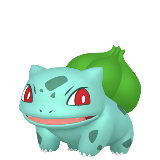 BulbasaurGrass/Poison · Ivysaur (16) → Venusaur (32)
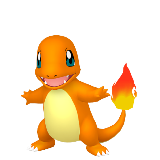 CharmanderFire · Charmeleon (16) → Charizard (36)
 SquirtleWater · Wartortle (16) → Blastoise (36)
- Bulbasaur: Choose it and your rival takes Charmander and Entei roams Kanto later. A fully evolved Venusaur with maximum friendship can learn Frenzy Plant at Cape Brink.
- Charmander: The FireRed cover star. Your rival takes Squirtle, Suicune becomes your roaming beast, and Charizard can learn Blast Burn at Cape Brink once it adores you.
- Squirtle: Your rival takes Bulbasaur and Raikou becomes the roaming beast. A fully evolved Blastoise with maximum friendship can learn Hydro Cannon at Cape Brink.
Legendary and Mythical Pokémon
 ArticunoSeafoam Islands
 ZapdosPower Plant
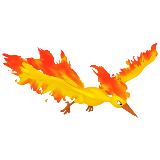 MoltresMt. Ember
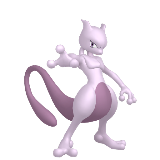 MewtwoCerulean Cave
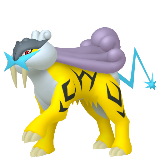 RaikouRoams (Squirtle)
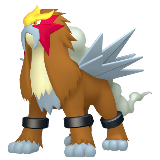 EnteiRoams (Bulbasaur)
 SuicuneRoams (Charmander)
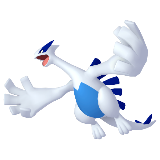 LugiaNavel Rock
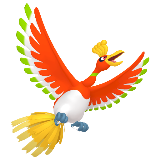 Ho-OhNavel Rock
- DeoxysBirth Island
Articuno – Lv. 50, Seafoam Islands, bottom floor. Solve the boulder puzzle with Strength and Surf.
Zapdos – Lv. 50, Power Plant, near the far end. Waiting near the far end of the Power Plant; no special trigger.
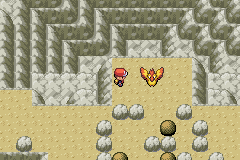
Moltres – Lv. 50, Mt. Ember summit, One Island. Reach the summit by solving a Strength boulder puzzle; it reappears if you run.
Mewtwo – Lv. 70, Cerulean Cave, lowest floor. After the Hall of Fame and Celio’s finished Network Machine; needs Surf, Strength and Rock Smash. It reappears if you run.
Raikou – Lv. 50, Roaming mainland Kanto. Only if you chose Squirtle; appears once the Sapphire is delivered. Trap it; on Western GBA copies a successful Roar loses it for good.
Entei – Lv. 50, Roaming mainland Kanto. Only if you chose Bulbasaur; appears once the Sapphire is delivered. Trap it; on Western GBA copies a successful Roar loses it for good.
Suicune – Lv. 50, Roaming mainland Kanto. Only if you chose Charmander; appears once the Sapphire is delivered. It cannot learn Roar, so it never vanishes.
Lugia – Lv. 70, Navel Rock, deep in the right-hand path. MysticTicket (event on GBA, automatic after the Hall of Fame on Switch).
Ho-Oh – Lv. 70, Navel Rock summit, via the left-hand stairs. MysticTicket; afterwards the Itemfinder reveals Sacred Ash where it stood.
Deoxys – Lv. 30, Birth Island. AuroraTicket; chase the black triangle by the shortest route until it glows red. Attack Forme in FireRed, Defense Forme in LeafGreen.
Gift Pokémon, in-game trades and trade evolutions
Pokémon you are simply handed:
- Bulbasaur, Charmander or Squirtle (Lv. 5) – Professor Oak’s Laboratory, Pallet Town. Choose one at the start.
- Omanyte or Kabuto (Lv. 5) – Pokémon Lab, Cinnabar Island. Take the Helix or Dome Fossil from the Super Nerd at the end of Mt. Moon and have it revived.
- Aerodactyl (Lv. 5) – Pokémon Lab, Cinnabar Island. Revive the Old Amber from the back of the Pewter Museum of Science, reached with Cut.
- Eevee (Lv. 25) – Celadon Mansion, via the rooftop. Collect the Poké Ball waiting there.
- Hitmonlee or Hitmonchan (Lv. 25) – Fighting Dojo, Saffron City. Beat the Karate Master and choose one.
- Lapras (Lv. 25) – Silph Co. 7F, Saffron City. A grateful employee hands it over after you beat your rival there.
- Togepi (Egg) – Water Labyrinth, Five Island. The old man gives it if your lead Pokémon has maximum friendship; show him the hatched Togepi afterwards and he talks about Daisy Oak.
Kanto’s nine in-game trades, several of them version-dependent:
| You give | You get | Where |
|---|---|---|
| Abra | Mr. Mime (MIMIEN) | Route 2 |
| Nidoran♂ (FireRed) / Nidoran♀ (LeafGreen) | Nidoran♀ (MS. NIDO) / Nidoran♂ (MR. NIDO), holding a Tiny Mushroom | Underground Path between Routes 5 and 6 |
| Nidorino (FireRed) / Nidorina (LeafGreen) | Nidorina (NINA) / Nidorino (NINO) | Route 11 gate |
| Golduck (FireRed) / Slowbro (LeafGreen) | Lickitung (MARC) | Route 18 gate |
| Poliwhirl | Jynx (ZYNX), holding Fab Mail | Cerulean City |
| Spearow | Farfetch’d (CH’DING), holding a Stick | Vermilion City |
| Raichu | Electrode (ESPHERE) | Pokémon Lab, Cinnabar Island |
| Venonat | Tangela (TANGENY), holding Stardust | Pokémon Lab, Cinnabar Island |
| Ponyta | Seel (SEELOR) | Pokémon Lab, Cinnabar Island |
There are no in-game trades in the Sevii Islands.
Ten evolutions only happen through trading, six of them with the Pokémon holding an item that the Sevii Islands now supply: Kadabra into Alakazam, Machoke into Machamp, Graveler into Golem, Haunter into Gengar, Onix into Steelix (Metal Coat (Memorial Pillar, or the Trainer Tower Knockout prize)), Scyther into Scizor (Metal Coat (FireRed only)), Seadra into Kingdra (Dragon Scale (Water Path, or the Trainer Tower Double prize)), Poliwhirl into Politoed (King’s Rock (Sevault Canyon, or the Trainer Tower Mixed prize)), Slowpoke into Slowking (King’s Rock (LeafGreen only)), Porygon into Porygon2 (Up-Grade (Rocket Warehouse, or the Trainer Tower Single prize)).
170 in FireRed and 171 in LeafGreen on a single save, with no link trades and no events. Kanto gives 125 in either version: the 151 minus Mew, the 13 Gen I species exclusive to the other version, the four trade evolutions (Alakazam, Machamp, Golem, Gengar), the two starter lines you did not pick and the fossil line you did not take. Breeding fills the other gaps, since Ditto lets you hatch more Eevee and Tyrogue gives both Hitmonlee and Hitmonchan. Johto adds 44: 35 species common to both versions, eight version exclusives and one roaming beast. Hoenn adds Wynaut, plus Azurill in LeafGreen. With the event tickets, built in on Switch, Lugia, Ho-Oh and Deoxys bring the totals to 173 and 174.
Compatibility: the Wireless Adapter, the Link Cable and the GameCube
Pokémon FireRed and LeafGreen acted to bridge the gap between generations, due to Ruby and Sapphire lacking compatibility with Gen I and II.
FireRed and LeafGreen can use the standard Game Link Cable to connect, battle and trade with each other, with Ruby and Sapphire and with Pokémon Emerald. The games also make use of the GBA Wireless Adapter, which enables them to trade with other FireRed and LeafGreen carts or Pokémon Emerald.
You can also trade with Pokémon Colosseum and its sequel Pokémon XD: Gale of Darkness on the GameCube. A GameCube to Game Boy Advance link cable is used to connect to the game, and from there party Pokémon can be traded – this feature, like the Hoenn trades, is only unlocked by meeting certain requirements, specifically once the player has handed Celio the Ruby and Sapphire. FireRed and LeafGreen are not directly compatible with later games such as Diamond, Pearl, Platinum, HeartGold or SoulSilver, though Pokémon can be moved forward, one way, using the Pal Park feature.
The headline was the Game Boy Advance Wireless Adapter, packed with first-run copies. It fits the GBA and GBA SP (the Game Boy micro needs its own version) but cannot talk to DS wireless. With it, the Union Room on the upper floor of every Pokémon Center hosts card swaps, trades, chats and two-player battles, and the Joyful Game Corner and Berry Crush take up to five players, including Emerald owners. The Game Link Cable still works between FireRed, LeafGreen and the Hoenn games, and the GameCube’s Pokémon Box Ruby & Sapphire and Colosseum also connect. Hoenn and Orre trades stay locked until Celio’s Network Machine has the Ruby and Sapphire, and Generation II and III species can only be traded in once you hold the National Pokédex. On Switch, wireless play emulates the adapter but trading is local only, with no online option. From 7 October 2026, Pokémon HOME accepts Pokémon from the Switch versions, one way only, and rewards a completed Pokédex with a Lv. 50 Celebi.
Characters
The remakes’ cast: two heroes to choose from, the usual suspects of Kanto, and the new faces of the Sevii Islands.

Red
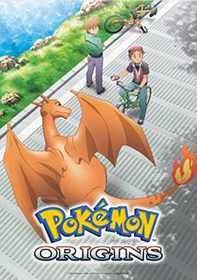
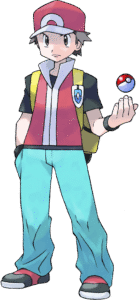
Red is the boy hero of the remakes and the default name in the game’s data, with Ash among the alternatives on offer. Ken Sugimori’s FireRed and LeafGreen art gives him brown hair and eyes in place of the black of the Game Boy era; he is 11 and 1.40 m tall. This version became his standard look for years: Pokémon Origins borrows it, Pokémon Masters EX made him a sync pair on 28 February 2020, and his outfit reached Pokémon GO for Pokémon Day 2018. Colosseum and XD let you use him in Battle Mode with a FireRed or LeafGreen cartridge linked.


Leaf
Leaf is the alternative to Red, a Pallet Town girl with brown hair and a hat that faintly resembles a Premier Ball. Her roots reach back to 1996, when Ken Sugimori painted an unnamed girl trainer for the cover of a Red and Green strategy guide; she was never meant to be playable, but he had her in mind when designing the remake’s heroine. The name Leaf appeared in the E3 2004 trailer and in placeholder data yet is never used in normal play, and it became official only with 2019 figures and Pokémon Masters EX, where she joined as a sync pair with Eevee on 22 January 2020. She is the female Pokémon Trainer in Super Smash Bros. Ultimate, her outfit came to Pokémon GO for Pokémon Day 2018, and Pokémon Adventures dresses its Green in her FireRed and LeafGreen clothes. Let’s Go, Pikachu! and Let’s Go, Eevee! instead gave Sugimori’s 1996 girl to their Green.

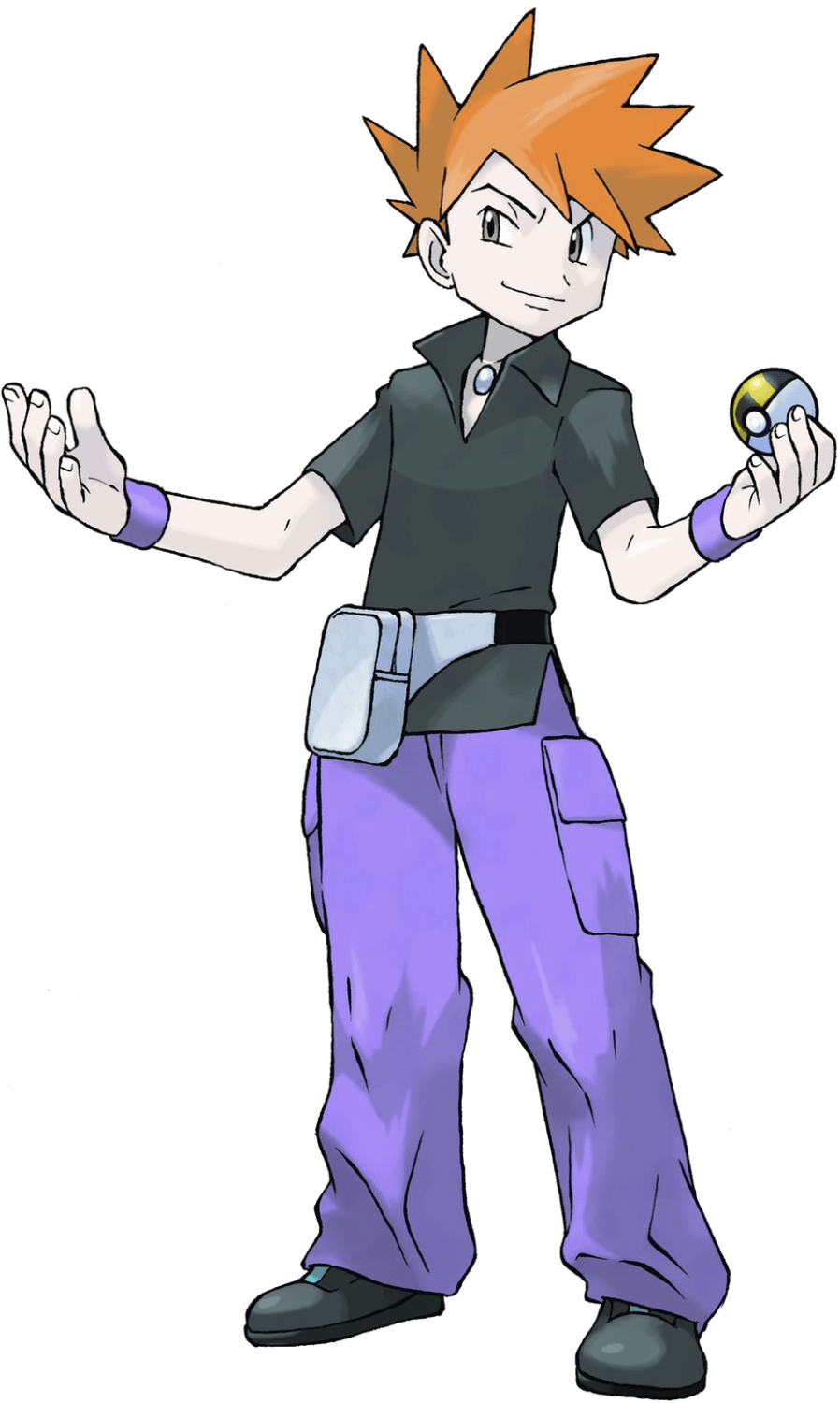
Blue, your rival
Professor Oak’s grandson, called Green in Japan, always chooses the starter that beats yours and turns up across Kanto to test you, from Route 22 to Silph Co. He reaches the Indigo Plateau first and is waiting as Champion; after you beat him, Oak tells him he has not learned to care for his Pokémon. In the post-game Oak sends him to the Sevii Islands to find new Pokémon, which explains the Heracross and Tyranitar in his rematch team. In Generations II and IV he runs the Viridian Gym, and he joined Pokémon Masters EX on 3 September 2019.
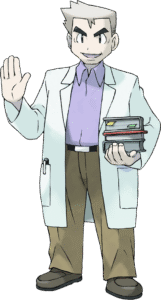
Professor Oak
Kanto’s Pokémon professor hands out the starters, now talks you through your first rival battle and grants the National Pokédex after the Hall of Fame. Six aides now work for him, three more than before, rewarding catch milestones with HM05 Flash, an Everstone, the Itemfinder, an Amulet Coin and the Exp. Share, plus Running Shoes in Pewter City.
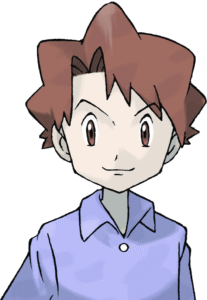
Bill
Bill lives in the Sea Cottage north of Cerulean City, beyond Nugget Bridge, and the remakes give him a bigger part. Once you hold the Volcano Badge he finds you on Cinnabar Island and invites you on a Seagallop ferry to One Island to meet his friend Celio, a fellow storage-system programmer. That trip is your introduction to the Sevii Islands, and Bill earns his own Fame Checker file. In Pokémon Adventures, Celio helps him raid the Rocket Warehouse.


Celio
Celio is a Pokémon Storage System programmer and good friend of Bill who runs the Pokémon Network Center on One Island. He is building a machine to move Pokémon between Kanto and distant regions, and a Ruby and a Sapphire are the missing parts. He gives you the Tri-Pass on your first visit and the Rainbow Pass, with an updated Town Map, once you bring the Ruby. With the Sapphire fitted, his machine opens trading with Hoenn and Orre. Ken Sugimori drew his official art.
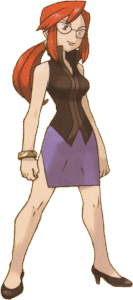
Lorelei
The Ice-type opener of the Elite Four, Lorelei (Kanna in Japanese) grew up on Four Island and has had her Lapras since she caught it as a small child in Icefall Cave. In the post-game she returns home to protect that cave, where you find her facing Team Rocket; together you send the Grunts running to Five Island. Her house is full of Pokémon dolls, a rare glimpse into an Elite Four member’s home life. Her rematch team swaps Slowbro for Piloswine and tops out at Lv. 66.

Lostelle
Lostelle is the young daughter of the man who runs the Joyful Game Corner on Two Island. She wanders into the Berry Forest on Three Island and is cornered by a wild Hypno. Rescuing her reunites the family, earns you an Iapapa Berry and opens the Game Corner. In Pokémon Adventures she goes looking for her lost Dunsparce.

Gideon
Gideon, a scientist, works with Team Rocket’s Sevii branch without truly belonging to it, hoping to sell them the Sapphire. He shadows you into the Dotted Hole, grabs the gem, lets slip the second warehouse password and is beaten inside the base. Later he wonders if you are Giovanni’s child, then recalls that the boss’s child has red hair.

Giovanni
Team Rocket’s boss is fought three times: in the Rocket Hideout (Onix, Rhyhorn and Kangaskhan), at the top of Silph Co. (now with Nidorino and Nidoqueen) and finally as Viridian Gym Leader, where his Ground team is led by a Lv. 50 Rhyhorn rather than Red and Blue’s Rhydon. Victory earns the Earth Badge and TM26 Earthquake, and he disbands Team Rocket while hinting at a comeback. That news later takes the fight out of the Sevii branch.
Gym Leaders
The eight Gym Leaders of Kanto, with the teams they use in the remakes and what changed since Red & Blue. For a full profile of each leader see our Red & Blue page, and for tactics our guide to the FireRed & LeafGreen Gym Leaders and how to beat them.
The Kanto badge route – the order the game expects, with each leader’s ace, a sensible team level and the TM they hand over:
- Boulder BadgeBrock · Pewter CityRock · ace Onix Lv. 14Aim for Lv. 14 · TM39 Rock Tomb
- Cascade BadgeMisty · Cerulean CityWater · ace Starmie Lv. 21Aim for Lv. 21 · TM03 Water Pulse
- Thunder BadgeLt. Surge · Vermilion CityElectric · ace Raichu Lv. 24Aim for Lv. 24 · TM34 Shock Wave
- Rainbow BadgeErika · Celadon CityGrass · ace Vileplume Lv. 29Aim for Lv. 29 · TM19 Giga Drain
- Soul BadgeKoga · Fuchsia CityPoison · ace Weezing Lv. 43Aim for Lv. 43 · TM06 Toxic
- Marsh BadgeSabrina · Saffron CityPsychic · ace Alakazam Lv. 43Aim for Lv. 43 · TM04 Calm Mind
- Volcano BadgeBlaine · Cinnabar IslandFire · ace Arcanine Lv. 47Aim for Lv. 47 · TM38 Fire Blast
- Earth BadgeGiovanni · Viridian CityGround · ace Rhyhorn Lv. 50Aim for Lv. 50 · TM26 Earthquake
The eight Kanto Gym Leaders in the remakes

Brock
Team: Geodude Lv. 12, Onix Lv. 14
Since Red & Blue: Same Pokémon and levels as Red and Blue; the prize changes from TM34 Bide to TM39 Rock Tomb.
The first Gym is gentle for Bulbasaur and Squirtle players, who hit both of his Rock and Ground Pokémon hard. Charmander players have it tougher. Beating him also unlocks Professor Oak’s aide in Pewter City, who hands over the Running Shoes. Reward: TM39 Rock Tomb. Badge: Lets you use Flash outside battle.


Misty
Team: Staryu Lv. 18, Starmie Lv. 21
Since Red & Blue: Same Pokémon and levels; the prize changes from TM11 BubbleBeam to TM03 Water Pulse.
Starmie is fast and hits hard for this stage, so Grass and Electric moves are the safe answer. Staryu and Starmie are LeafGreen exclusives in the wild, but she uses them in both versions. Reward: TM03 Water Pulse. Badge: Traded Pokémon up to Lv. 30 obey; lets you use Cut outside battle.


Lt. Surge
Team: Voltorb Lv. 21, Pikachu Lv. 18, Raichu Lv. 24
Since Red & Blue: Same Pokémon and levels; the prize changes from TM24 Thunderbolt to TM34 Shock Wave.
You need Cut from the S.S. Anne to reach his Gym. Ground-type Pokémon shrug off his Electric attacks entirely, which makes Diglett’s Cave nearby worth a visit before the fight. Reward: TM34 Shock Wave. Badge: Lets you use Fly outside battle.


Erika
Team: Victreebel Lv. 29, Tangela Lv. 24, Vileplume Lv. 29
Since Red & Blue: Same Pokémon and levels; the prize changes from TM21 Mega Drain to TM19 Giga Drain.
Fire, Flying, Ice and Poison moves all work well here. Her team mixes the FireRed-exclusive Vileplume line with LeafGreen’s exclusive Victreebel, so she shows off the Grass families of both versions. Reward: TM19 Giga Drain. Badge: Traded Pokémon up to Lv. 50 obey; lets you use Strength outside battle.


Koga
Team: Koffing Lv. 37, Muk Lv. 39, Koffing Lv. 37, Weezing Lv. 43
Since Red & Blue: Same Pokémon, levels and TM as Red and Blue.
Psychic and Ground attacks are the best answers to his gas-filled team, though Koffing and Weezing are immune to Ground moves through their Levitate ability. His Fame Checker file misnames his daughter Janine as ‘Charine’. Reward: TM06 Toxic. Badge: Lets you use Surf outside battle.


Sabrina
Team: Kadabra Lv. 38, Mr. Mime Lv. 37, Venomoth Lv. 38, Alakazam Lv. 43
Since Red & Blue: Same Pokémon and levels; the prize changes from TM46 Psywave to TM04 Calm Mind.
With Bite now a Dark-type move, you finally have a proper answer to her Psychic team. Beating the Fighting Dojo next door first earns a free Hitmonlee or Hitmonchan to help. Reward: TM04 Calm Mind. Badge: Traded Pokémon up to Lv. 70 obey; lets you use Rock Smash outside battle.


Blaine
Team: Growlithe Lv. 42, Ponyta Lv. 40, Rapidash Lv. 42, Arcanine Lv. 47
Since Red & Blue: Same Pokémon, levels and TM as Red and Blue.
Water, Ground and Rock moves dominate. His Badge is the trigger for the Sevii Islands: once you have it, Bill turns up on Cinnabar Island to take you to One Island. Reward: TM38 Fire Blast. Badge: Lets you use Waterfall outside battle.

Giovanni
Team: Rhyhorn Lv. 45, Dugtrio Lv. 42, Nidoqueen Lv. 44, Nidoking Lv. 45, Rhyhorn Lv. 50
Since Red & Blue: His Lv. 50 ace is a Rhyhorn instead of Rhydon, and the prize changes from TM27 Fissure to TM26 Earthquake.
The Viridian Gym is the last stop, after the first Sevii trip. Water attacks tear through his whole team, and Grass hits his Rhyhorn and Dugtrio hard. The English manual hides his identity by listing the leader as ’???’. Reward: TM26 Earthquake. Badge: All Pokémon obey regardless of level; opens the way to the Indigo Plateau.
The Elite Four & the Champion
The Elite Four are fought twice: once on the way to the Hall of Fame, and again, twelve levels stronger and with Johto Pokémon in their teams, after the Sevii Islands quest. Our Elite Four strategy guide has the tactics.

Lorelei
Team: Dewgong Lv. 52, Cloyster Lv. 51, Slowbro Lv. 52, Jynx Lv. 54, Lapras Lv. 54
Rematch: Dewgong Lv. 64, Cloyster Lv. 63, Piloswine Lv. 63, Jynx Lv. 66, Lapras Lv. 66
She carries two Full Restores in both battles. After the first Hall of Fame she heads home to Four Island to guard Icefall Cave, and the rematch adds the Johto Piloswine.

Bruno
Team: Onix Lv. 51, Hitmonchan Lv. 53, Hitmonlee Lv. 53, Onix Lv. 54, Machamp Lv. 56
Rematch: Steelix Lv. 65, Hitmonchan Lv. 65, Hitmonlee Lv. 65, Steelix Lv. 66, Machamp Lv. 68
His two Onix become Steelix in the rematch, so Grass attacks lose their edge, while Water, Fire and Ground moves still hit hard.

Agatha
Team: Gengar Lv. 54, Golbat Lv. 54, Haunter Lv. 53, Arbok Lv. 56, Gengar Lv. 58
Rematch: Gengar Lv. 66, Crobat Lv. 66, Misdreavus Lv. 65, Arbok Lv. 68, Gengar Lv. 70
Her rematch adds Crobat and Misdreavus. Psychic attacks punish her Poison-types, and Dark moves such as Bite, now a Dark-type attack, hurt her Ghosts.

Lance
Team: Gyarados Lv. 56, Dragonair Lv. 54, Dragonair Lv. 54, Aerodactyl Lv. 58, Dragonite Lv. 60
Rematch: Gyarados Lv. 68, Dragonite Lv. 66, Kingdra Lv. 66, Aerodactyl Lv. 70, Dragonite Lv. 72
Ice moves are the classic answer. In the rematch a second Dragonite and the Johto Kingdra, which takes only neutral damage from Ice, replace his Dragonair.

Blue
Team: Pidgeot Lv. 59, Alakazam Lv. 57, Rhydon Lv. 59, then by his starter: Venusaur Lv. 63 with Gyarados Lv. 59 and Arcanine Lv. 61; Charizard Lv. 63 with Exeggutor Lv. 59 and Gyarados Lv. 61; or Blastoise Lv. 63 with Arcanine Lv. 59 and Exeggutor Lv. 61
Rematch: Heracross Lv. 72, Alakazam Lv. 73, Tyranitar Lv. 72, then Venusaur Lv. 75 with Gyarados and Arcanine at Lv. 73; Charizard Lv. 75 with Exeggutor and Gyarados at Lv. 73; or Blastoise Lv. 75 with Arcanine and Exeggutor at Lv. 73
He uses four Full Restores in both battles and pays ₱6,300, rising to ₱7,500 in the rematch. Heracross and Tyranitar come from his Sevii Islands research trip.
Glitches, exploits and oddities
FireRed & LeafGreen are tidy games by Kanto standards – no MissingNo., no Mew trick – but they have a few famous faults of their own, two of them inherited from Ruby and Sapphire.
The roaming beast IV bug
Raikou, Entei and Suicune inherit a flaw from Ruby and Sapphire. The game stores a roaming Pokémon’s individual values as a full 32-bit number, but when the encounter begins it copies only the lowest eight bits into the Pokémon you actually fight. Its HP IV survives intact, its Attack IV can be no higher than 7, and every other IV is zero. As a side effect its Hidden Power is always Fighting-type with a power of 30 or 31. Emerald fixed the problem, but on FireRed and LeafGreen cartridges every roaming beast you catch is noticeably weaker than a normal legendary.
The roaming Roar bug
On Western copies, a roaming beast that ends the battle with Roar disappears from your save for good. The game checks how the battle ended with a bitwise AND instead of a straight comparison, so the result code for Roar also matches the check meant to remove a defeated roamer. Only Raikou and Entei know Roar, so Suicune is safe. Trapping it with Mean Look does not help on its own, because a trapped roamer stops fleeing and starts attacking, Roar included. Encore, Taunt, Ingrain, Soundproof or Suction Cups prevent it, and the 2026 Switch release fixes the bug.
The endless Nugget Bridge Grunt
At the end of Nugget Bridge a Team Rocket Grunt hands you a Nugget and then picks a fight. In Red and Blue a loss was simply a loss, but in FireRed and LeafGreen an unset flag before the battle means the scene repeats if you lose. You can come back, beat him and collect another Nugget, then lose and repeat, so a deliberate losing streak turns him into a steady source of cash. It works in the Japanese and English versions but was fixed in the other European translations.
The Help System silences the Poké Flute
Play the Poké Flute, or let a Jigglypuff sing, and then open and close the Help System with L or R before the tune finishes. The music cuts out completely and stays silent until the melody would have ended on its own. The most likely explanation is that the Help menu’s jingle borrows the same sound channel as the melody and never hands it back. It affects every language version, and since nothing breaks beyond the silence, it is a harmless curiosity, but a strange one to hit while waking a Snorlax.
The English version 1.0 slips
The first English cartridges carry two small text oversights. The Game Freak logo in the opening sequence is missing the word ‘Presents’, even though its graphics are in the game’s data. The Pokédex also cuts every two-word category down to its first word, so Beedrill becomes the ‘Poison Pokémon’ rather than the Poison Bee Pokémon, because the code treats a space as the end of the text, a habit inherited from the Japanese release. Version 1.1, used for the Player’s Choice reissue, puts both right.
The Celadon meeting-place mix-up
A Pokémon’s summary normally records where you met it. For anything obtained in Celadon City, the game gets confused: if you open the summary while standing in the Celadon Department Store, the location reads ‘Celadon Department Store’, and anywhere else it reads ‘Celadon City’. It affects the gift Eevee from the Celadon Mansion, every Pokémon bought with Game Corner coins, and anything caught or hatched in the city. The data is unharmed; only the label changes with where you happen to be standing.
Mail corruption and arbitrary code execution
Mail is not supposed to leave a Pokémon during battle, but oversights allow it, for example by combining Knock Off and Recycle in a Double Battle. The resulting corruption is far more serious in FireRed and LeafGreen than a garbled letter: it can overwrite parts of the Pokémon Storage System data, and that damage can be steered into arbitrary code execution, letting skilled players run their own instructions on the cartridge. It is the kind of deep glitch that dedicated glitch hunters exploit, not something a normal playthrough is likely to meet.
Japanese Safari Zone bait and rocks
In the Japanese releases only, the Kanto Safari Zone’s bait and rocks do half their job. They change the chance of a catch but not the chance that the Pokémon runs away. Bait is supposed to make Pokémon less likely to flee at the cost of a harder catch, so in practice it only hurts you; rocks, meant to make a catch easier but a flight likelier, lose their downside entirely. Western versions behave as intended, so the oversight matters only to players importing the original Japanese cartridges.
Videos & media
Check out these videos of Pokémon FireRed & LeafGreen, including trailers, glitch compilations, TV commercials and intros.
The trailer for Pokémon FireRed and LeafGreen from E3 2004.
A Japanese TV commercial for FireRed & LeafGreen.
The intro video for Pokémon LeafGreen Version on the GBA.
A video of lots of weird glitches in Pokémon FireRed & LeafGreen by YouTuber ohnickel.
Nintendo UK’s trailer for the February 2026 Nintendo Switch release.
Trivia & facts
- After the player completes the main storyline and gets their National Pokédex, they’ll be able to encounter Entei, Raikou or Suicune roaming the wilds. Even if a player uses Mean Look, when Raikou or Entei uses Roar it’ll end the battle. On the Western Game Boy Advance releases this results in the Pokémon disappearing entirely and the player being unable to encounter it again on that save file; Suicune can’t learn Roar, and the 2026 Switch release fixed the bug.
-

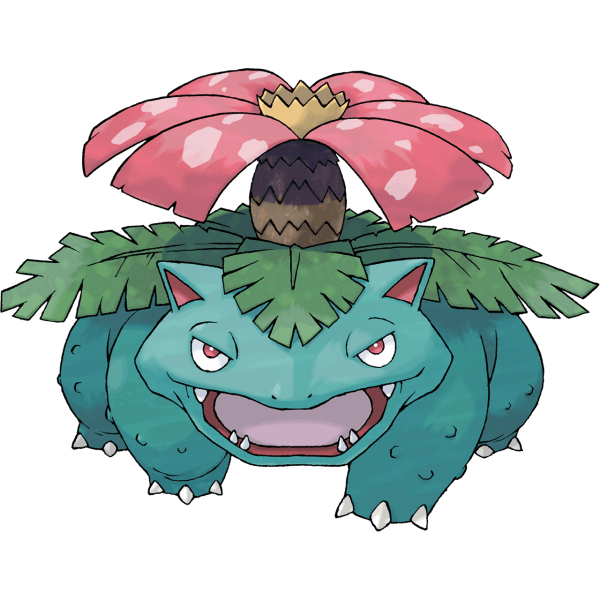
Venusaur, the cover Pokémon of LeafGreen. Junichi Masuda has explained why the West got LeafGreen rather than a ‘Blue’ to match the old English names: he wanted the game to represent peace, which a leaf does, instead of using water, the element that directly conflicts with fire; ‘leaf’ was also easier to translate, and the team wanted the Bulbasaur family on the box. A bit unfair on Leaf really, being weak against Fire… but if only two of the three were going to release it was always going to be a little unfair in that respect!
- The gender selection of the player influences what is shown on the downstairs TV in the player’s house. Playing as a male character will result in “a movie about four boys walking down railroad tracks” (a reference to the movie Stand by Me), whereas if the player is playing as a girl the TV will be showing “a movie about a girl in pigtails walking down a yellow brick road” (a reference to The Wizard of Oz).
- In the Japanese version of the games the player has a Famicom in their bedroom, whereas in Western releases it’s a NES.
- LeafGreen takes its Pokédex entries from the original Red and Blue versions, whereas FireRed gets its entries from the original versions of Red and Green, making it the first time the Pokédex entries from those titles have been available in English.
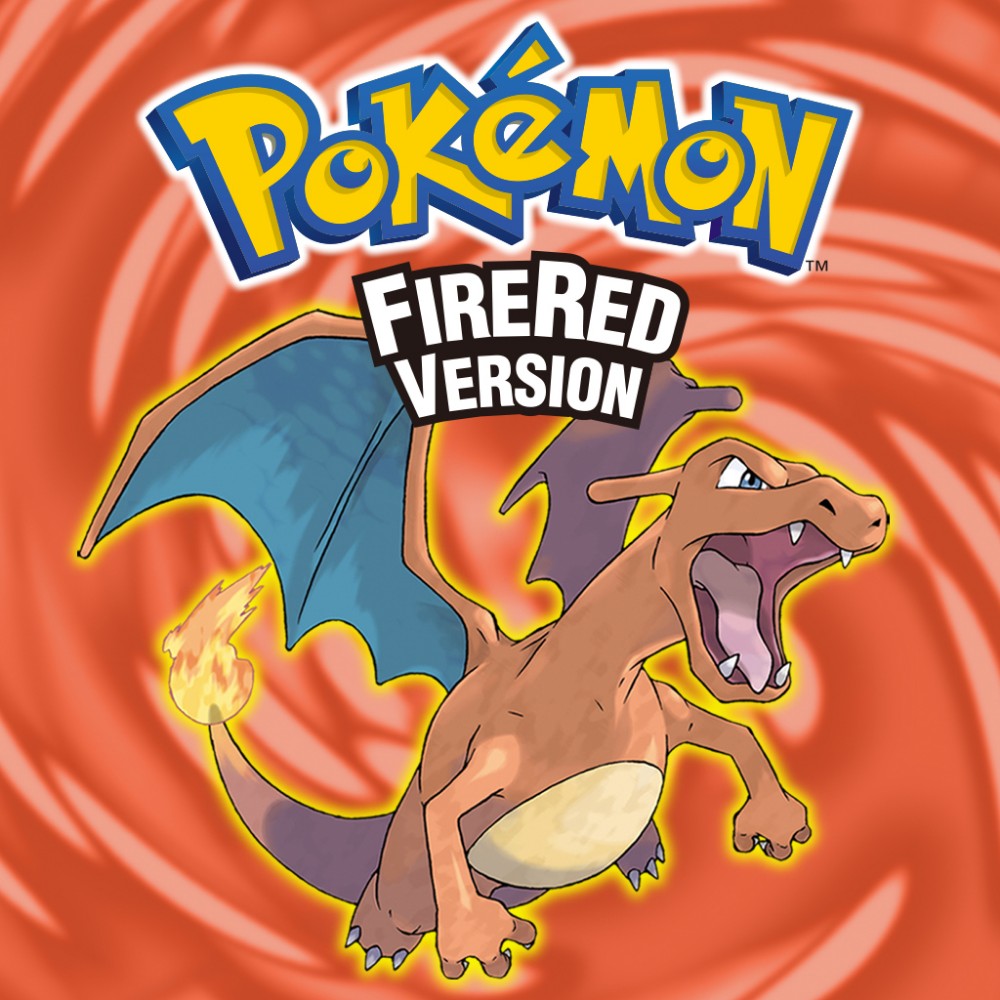
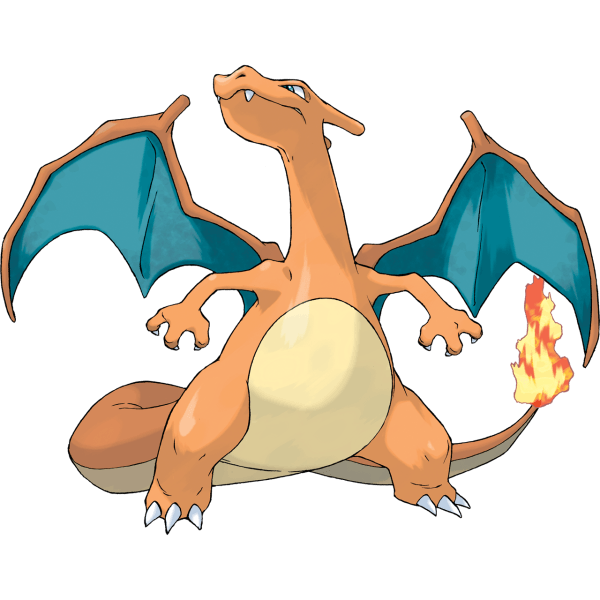
- The shape of Charizard’s wings is different on the front cover of FireRed to the way it looks in its official artwork for the game.
Charizard on the front cover of FireRed. 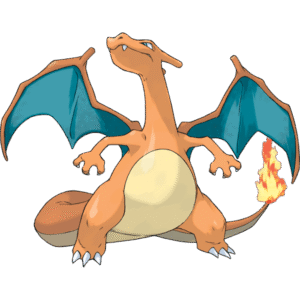
The official Charizard artwork for FireRed. - LeafGreen and FireRed are the last core-series games that don’t have any time-based features (day and night, Berries respawning after a certain time, etc.). This is because neither the console nor the cartridges have internal clocks. They are the only titles post-Gen II which don’t have time-based features.
- These were the last core-series Pokémon titles not to feature Legendary Pokémon as their mascots until Let’s Go, Pikachu! and Let’s Go, Eevee! fourteen years later.
- The passwords used to enter Team Rocket’s Warehouse on Five Island are “Yes, nah, Chansey” and “Goldeen need log”, and they read exactly the same backwards as they do forwards!
Further trivia
- Pattern Bush on Six Island has exactly 386 tiles of short grass, matching the number of species in the Generation III National Pokédex.
- Tanoby is an anagram of ‘botany’, and the Japanese name comes from nanakusa, Japan’s seven spring herbs.
- Koga’s Fame Checker entries call his daughter ‘Charine’ instead of Janine.
- Icefall Cave holds the only wild Lapras in Generation III and Sevault Canyon the only wild Larvitar, while the Water Labyrinth Egg is the only Togepi in the Generation III core games.
- Two Island’s move relearner takes mushrooms instead of the Heart Scales used in Ruby and Sapphire, because no Luvdisc live in the Sevii Islands.
- Gideon asks whether you are Giovanni’s child, then remembers that the boss’s child has red hair, a nod to Silver from Gold and Silver.
- FireRed and LeafGreen were the first core games to give every item its own icon.
- The 2026 Switch release made a Shiny Deoxys possible in a core game without an event or trade for the first time, because the AuroraTicket no longer depends on a distribution.
Legacy
Re-releases
- Player’s Choice (North America) – 2 October 2006. Reissued at US$19.99 without the Wireless Adapter. These copies run version 1.1, which restores the missing ‘Presents’ in the opening and the full Pokédex category names.
- Nintendo Switch digital release – 27 February 2026. Revealed on 20 February 2026, a little early after eShop listings went live, and released on Pokémon Day after that day’s Pokémon Presents, as part of the 30th anniversary; most of Australia got it on 28 February. Each game and each language is sold separately on the eShop at £16.99, US$19.99 or ¥2,000, outside Nintendo Switch Online, and it plays on Switch and Switch 2. Wireless play emulates the GBA adapter, trading is local only, the Mystic and Aurora Tickets appear after the Hall of Fame, the roaming Roar bug is fixed and censored nicknames revert to defaults. Version 1.0.1 (15 July 2026) touched only the German, French, Spanish and Italian releases. Pokémon HOME support followed on 7 October 2026. Over four million copies sold in about six weeks. Japan also got a boxed Special Edition: a download code with reproduction Game Boy Advance boxes and three laser-engraved glass Poké Balls for Charmander, Squirtle and Bulbasaur, with light-up stands and a display case.
Where to play FireRed & LeafGreen today
The easy route is the Nintendo eShop, where each game costs £16.99 and runs on both Switch and Switch 2; it is not part of Nintendo Switch Online. The Switch versions add the event tickets and link to Pokémon HOME, so your team can move on to newer games, though trading is local only. Original cartridges still play on Game Boy Advance hardware, but the Wireless Adapter fits only the GBA and GBA SP, the Game Boy micro needs its own model and DS wireless cannot talk to it.
How the remakes were made
Game Freak announced the remakes in September 2003 as Game Boy Advance versions of Pocket Monsters Red and Green. Junichi Masuda directed and said the team built them around simplicity. They run on a lightly modified Ruby and Sapphire engine, which is why they trade freely with the Hoenn games, letting Kanto’s Pokémon cross into the Generation III era. The Wireless Adapter was the headline: Satoru Iwata praised it for livening up battles and communication, and Tsunekazu Ishihara told IGN at E3 2004 that the team saw the project as a new game with wireless play rather than a remake. Satoshi Tajiri oversaw the whole process, including the new script. Western releases kept LeafGreen rather than switching to Blue to match the old English names. Masuda explained that a leaf stands for peace while water felt like it clashed with fire, that the word was easier to translate, and that the team wanted the Bulbasaur family on the box. In Japanese, male and female characters speak in different hand-lettered fonts, which other languages replace with blue and pink text. Go Ichinose arranged the music from the Game Boy originals.
FireRed & LeafGreen in other media


Sales & reviews
Sales figures
Pokémon FireRed & LeafGreen sold a combined total of 12 million units. Following their first week of release in Japan they had sold a combined total of 885,049 units (another count puts them past a million within four days), falling short of the sales achieved by Ruby & Sapphire in the same time period. It was largely assumed that this was because FireRed and LeafGreen were remakes, where Ruby and Sapphire were original titles.
In the United States, however, FireRed and LeafGreen had been pre-ordered over 150,000 times, which was more than twice as many as Ruby & Sapphire got. Within the first month of release FireRed and LeafGreen had sold over a million units in that region alone. By the end of March 2008 a total of 11.82 million units of LeafGreen and FireRed had been sold. Nintendo would later remarket the remakes as part of their Player’s Choice selection in the U.S., this time without a Wireless Adapter and at a much lower retail price.
The 12 million figure dates from 2013 and makes FireRed and LeafGreen the second best-selling Game Boy Advance games, behind Ruby and Sapphire. Japan’s first production run was capped at 500,000 copies, and the country had bought 2,909,961 by the start of 2011 (1,619,109 FireRed, 1,290,852 LeafGreen). The 2026 Nintendo Switch release added more than four million copies in about six weeks, taking the combined total to roughly 16 million.
- 12mGame Boy Advance copies worldwide, both versions (2013)
- 885,049sold in Japan in the first week
- 150,000+North American pre-orders, twice Ruby & Sapphire’s
- 4m+Nintendo Switch copies in about six weeks (2026)

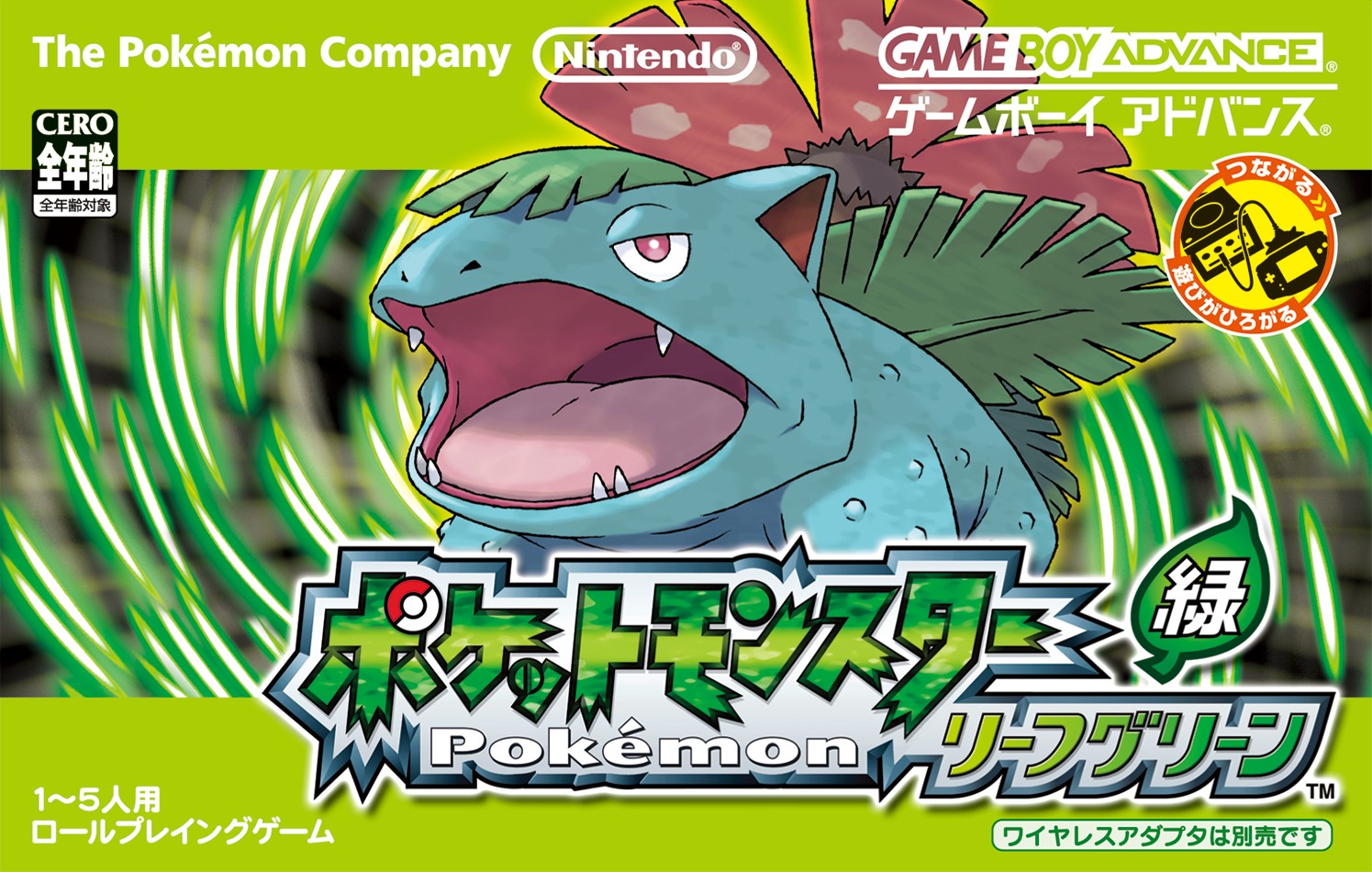
Review scores
The remakes of the original Pokémon games were widely praised by players and critics alike; they didn’t score quite as highly as Ruby & Sapphire, which released before them, but nonetheless got very good scores in their own right. Let’s take a look:
- Craig Harris from IGN scored them 9 out of 10, which equates to “Outstanding” on the IGN scale, and commented: “FireRed/LeafGreen, even with its ‘remake’ status, stands on its own as an original product that fits the Pokemon franchise extremely well.”
- Greg Kasavin reviewed the remakes on behalf of GameSpot, scoring them a strong 8.4 out of 10 and stating: “though Pokémon could probably use a few new twists after all these years, FireRed and LeafGreen are great role-playing games on their own merits, filled with lots more content and more challenges than last year’s Ruby and Sapphire, and offering up plenty of addictive gameplay that can be a lot of fun for players of all ages.” Nintendo Power rated the games 4.5 stars out of 5.
- FireRed & LeafGreen held aggregate scores of 82.14% at GameRankings and 81/100 at Metacritic.
Critics welcomed the remakes warmly, if not quite as highly as Ruby and Sapphire. IGN’s Craig Harris rated them outstanding and argued they stand up as games in their own right, though he found the visuals basic. GameSpot’s Greg Kasavin praised the sheer amount of content and challenge, and the bright graphics, while GameSpy’s Phil Theobald enjoyed the simple but gripping play. The commonest complaint was the look: Game Informer found the graphics thoroughly unremarkable, and others felt the remakes added little visually over Ruby and Sapphire. Eurogamer marked them down for not moving the series forward. Almost everyone liked the new extras, from the contextual tutorial and save recaps to wireless multiplayer, and the New Zealand Herald praised the way they patched over Ruby and Sapphire’s connectivity gaps. The 2026 Switch versions sold strongly but drew criticism for their price and lack of online features.
Awards and honours:
Media & artwork
- Official artwork gallery from Pokémon FireRed & LeafGreen – a gallery featuring many of the Pokémon and characters
- Supporting artwork from Pokémon FireRed & LeafGreen – characters, items and supporting artwork
- Box art from Pokémon FireRed, including numerous regional variations and editions
- Box art from Pokémon LeafGreen, including numerous regional variations and editions
- Screenshots from Pokémon FireRed and LeafGreen
Further reading
Our FireRed & LeafGreen guides, plus the games either side of the remakes: