  |
|
| Titles | Pocket Monsters Red ポケットモンスター 赤 (Aka) Pocket Monsters Green ポケットモンスター 緑 (Midori) Pocket Monsters Blue ポケットモンスター 青 (Ao) |
| Platform | Game Boy (Super Game Boy enhanced); Nintendo 3DS Virtual Console (2016) |
| Developer | Game Freak |
| Publisher | Nintendo |
| Director | Satoshi Tajiri |
| Producers | Shigeru Miyamoto, Takashi Kawaguchi, Tsunekazu Ishihara; executive producer Hiroshi Yamauchi |
| Composer | Junichi Masuda |
| Artist | Ken Sugimori, with Atsuko Nishida |
| Programmers | Takenori Ōta, Shigeki Morimoto, Tetsuya Watanabe, Junichi Masuda |
| Players | 1–2 (Game Link Cable) |
| Generation | Generation I – the originals |
| New Pokémon | All 151 |
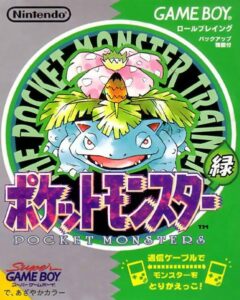
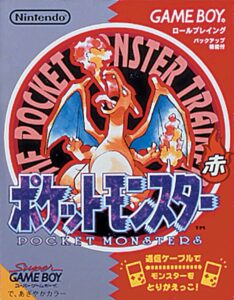
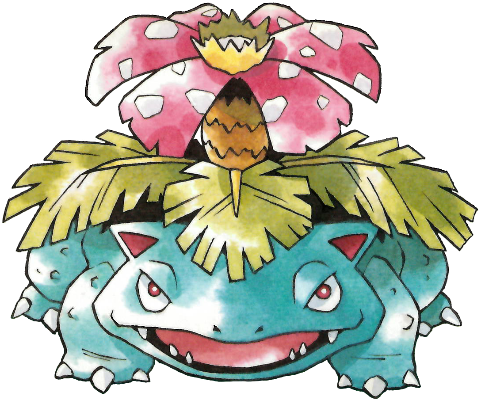
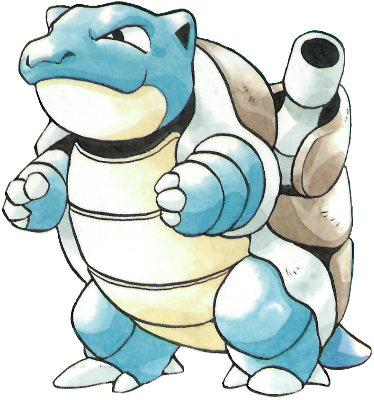
| Box art | Red: Charizard (Lizardon) · Green: Venusaur (Fushigibana) · Blue: Blastoise (Kamex) |
| Released (Japan) | 27 February 1996 (Red & Green) |
| Japanese Blue | Mail order from 15 October 1996 (CoroCoro Comic); in shops 10 October 1999 |
| International Red & Blue | North America 28 September 1998 · Australia 23 October 1998 · Europe 5 October 1999 |
| 3DS Virtual Console | 27 February 2016 (Green: Japan, Hong Kong and Taiwan only) |
| Rating | None in 1996 (before CERO); the 2016 Virtual Console releases are CERO A |
| Successors | Pokémon Red & Blue (international) · Pokémon Yellow · FireRed & LeafGreen (remakes) |
| Sales | 10.23 million in Japan (Red, Green and Blue); 31.38 million for every Generation I release worldwide |
Overview
 Pokémon Red & Green were the first Pokémon games ever released. The Green version was released only in Japan, where it is also known as Pokémon Midori. Both titles were developed by Game Freak.
Many years later the original Pokémon Green finally reached the West in the form of Pokémon LeafGreen for the GBA – a full remake of the original Japanese game rather than a port – and we finally got to play it in English.
The original Pokémon Green was released alongside the original Pokémon Red in Japan, whereas it was Red and Blue that were released internationally. Many assumed that Pokémon Blue was in fact Pokémon Green with a different name, but this wasn’t the case. All three versions (Red, Blue and Green) were eventually released in Japan.
The three Japanese versions, side by side:


Pocket Monsters is the game that gets the very most out of the Game Boy’s great appeal: the ability to link up. You travel across the map, capturing Pocket Monsters. You raise the monsters you catch to be the strongest, and complete the Pokédex. But there’s a hurdle… The truth is, this software comes in two kinds: ‘Red’ and ‘Green’. The story is the same, but some powerful monsters appear in only one of them. In other words, unless you gather friends and trade with a link cable, your Pokédex will never be complete.
To complete the Pokédex, you have to play out another game outside the game: gathering information with your friends. And so, before you know it, you make more friends too.
— Official description (Nintendo Japan, Game Boy software page, 1996; translated from the Japanese by Pokémon Dungeon)
Quick Answers
The questions people ask about Red & Green, answered first and explained further down the page.
Is Pokémon Green the same as Pokémon Blue?
No. Green is one of the two original 1996 Japanese versions, sold alongside Red. Japanese Blue was a separate third edition with redrawn graphics and fixes. The Blue sold abroad uses Japanese Blue’s engine and artwork, but its wild Pokémon and exclusives are Green’s, so it is a blend of the two rather than Green renamed. More →


Why was Pokémon Green never released outside Japan?
Because the overseas games were built from Japanese Blue, not from Red and Green. Blue’s newer code, script and artwork became the base for the localisation, so the pair sold abroad was named Red and Blue, with Blastoise as Blue’s mascot. A February 1999 Pokémon.com FAQ confirmed there were no plans for an American Green. More →
Can you play Pokémon Green in English?
Not officially. Green has never had an English release, and its 2016 Nintendo 3DS Virtual Console edition was sold only in Japan, Hong Kong and Taiwan, in Japanese. The closest official option is LeafGreen, the 2004 Game Boy Advance remake of Red and Green, which arrived on Nintendo Switch on 27 February 2026. More →
What is different between Japanese Red and Green and the Red and Blue released abroad?
The international games use Japanese Blue’s redrawn front sprites, Pokédex text, tile sets and Cerulean Cave layout, and sell HP Up in Celadon. They keep Red and Green’s wild Pokémon and in-game trades. The Select-button glitches were removed, Blizzard’s freeze chance dropped from 30 to 10 per cent, and Swift was made to always hit. More →


Which Pokémon are exclusive to Red, Green and Japanese Blue?
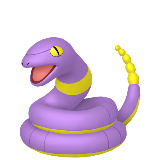
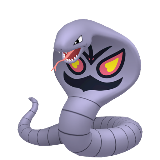
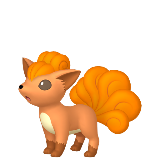
Red has Ekans, Arbok, Oddish, Gloom, Vileplume, Mankey, Primeape, Growlithe, Arcanine, Scyther and Electabuzz. Green has Sandshrew, Sandslash, Vulpix, Ninetales, Meowth, Persian, Bellsprout, Weepinbell, Victreebel, Magmar and Pinsir. Japanese Blue has no species of its own: it mixes lines from both and lacks the Ekans, Vulpix, Mankey and Bellsprout families, Electabuzz and Magmar. More →
How did people get Mew in 1996?
Only through Nintendo. Programmer Shigeki Morimoto slipped Mew into the game at the last minute, and CoroCoro Comic’s April 1996 issue announced the Legendary Pokémon Offer: 20 winners, drawn from about 78,000 entrants, had Mew added to their cartridges. More Japanese events followed from summer 1996, and a glitch found in 2003 later let players catch one. More →

What is Pokémon Origins?
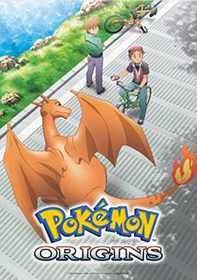
A four-episode anime special from 2013 that retells Red and Green’s story far more faithfully than the TV series. It follows Red, his rival Green (Blue in English) and Professor Oak across Kanto to Giovanni and Mewtwo. All four episodes, called Files, aired in Japan on 2 October 2013, and in English on Pokémon TV from 15 November. More →
How much did Pokémon Red and Green sell?
Red, Green and Japanese Blue sold 10.23 million copies in Japan, and no official per-version split exists. Counted together with the international Red and Blue, the first games reached 31.38 million by March 2024, the best-selling Pokémon games of all. Sales started slowly: about 1.04 million in 1996, then 3.65 million in 1997. More →
Are Pokémon Red and Green on Nintendo Switch?
Not the originals. Their last official release was the 2016 Nintendo 3DS Virtual Console edition, sold in Japan until the 3DS eShop closed on 27 March 2023. Switch has the remakes instead: FireRed and LeafGreen went on sale on 27 February 2026 as separate purchases, outside Nintendo Switch Online, with Pokémon HOME support. More →
How long did Pokémon Red and Green take to make?
About six years. Satoshi Tajiri pitched the idea, then called Capsule Monsters, to Nintendo in 1990; the games were finished in October 1995 and launched in February 1996. The project nearly bankrupted Game Freak: five staff left and Tajiri took no salary, until investment from Creatures Inc. helped it reach the finish line. More →
Plot / Story
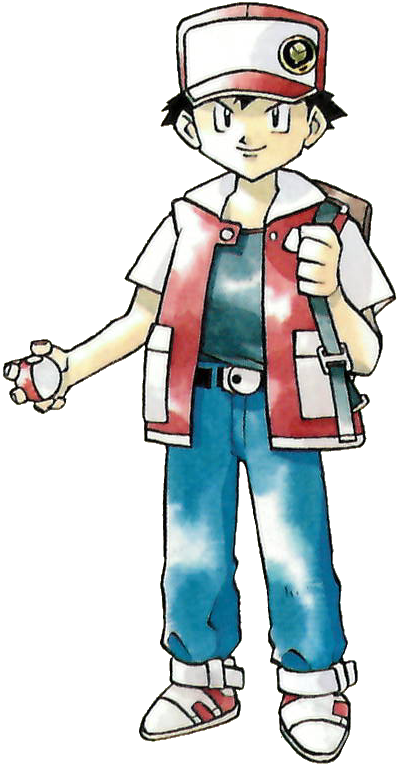
Both Pokémon Green and the Japanese version of Red begin their stories in the Kanto region, and the player takes on the role of Red, the main protagonist of the games. Red is a boy who has just become old enough to get his first Pokémon and start his journey as a Pokémon Trainer. Like Ash Ketchum did in the anime, Red also starts out from Pallet Town and follows a similar path.
Red heads down to collect his first ever Pokémon from Kanto’s leading Professor, Prof. Oak, who allows him to choose between Bulbasaur (Grass type), Charmander (Fire type) and Squirtle (Water type). Once Red chooses his starter, Green (Blue in the West), his lifelong rival and the grandson of Professor Oak, will choose his first Pokémon – and regardless of what you pick he’ll choose the counter to it (i.e. if you choose Fire he’ll choose Water, and so on, to gain an advantage in the battles to come). Once Red and his rival have their first Pokémon, Professor Oak hands them both a Pokédex and asks that they record information on all the Pokémon they encounter during their adventures to help him with his research – ultimately setting one of the main goals of the game: to catch ’em all.
As Red travels across the Kanto region he’ll run into the criminal organisation Team Rocket, who are known to use Pokémon for their own evil purposes: to attack trainers and steal other Pokémon, and to bully anyone who gets in their way! The way they treat their own Pokémon is also questionable, utilising them as tools and never truly befriending or bonding with them.
When Red finds out about Team Rocket’s worst wrongdoings – which include a Marowak being killed, Mr. Fuji being taken hostage, and the takeover of Silph Co. to try and steal the Master Ball plans – he takes it upon himself to help defeat them, foil their evil plans and avenge the Marowak.
But if collecting information on every Pokémon in the Kanto region, whilst also single-handedly trying to stop a criminal organisation’s plans, wasn’t enough, Red will constantly have his rival popping up and challenging him to battle. On each encounter, the rival’s team will have grown stronger.
Red’s tasks don’t stop there. He has always dreamed of becoming a Pokémon Master, and there is only one way to truly achieve that – it begins with challenging all the Gym Leaders in Kanto and winning their Gym Badges. This includes encounters with Brock, Misty, Lt. Surge, Erika, Koga, Sabrina and Blaine, and eventually the leader of Team Rocket, Giovanni, who acts as the eighth and final Gym Leader. His defeat will mean Red has all the badges he needs to enter the Pokémon League and take on the Elite Four, and will also cause Giovanni to disband his villainous organisation (for now).
Red arrives at the Indigo Plateau and takes on the Elite Four, which is comprised of Lorelei, Bruno, Agatha and their leader, Lance. Once the Elite Four are defeated the player will be able to take on the Champion. Red enters the Champion’s chamber only to find that his rival has beaten him to it (just like Gary always getting where Ash is going before him in the anime) and is already the Champion.
When Red defeats his rival in battle and becomes the Champion he is congratulated by Professor Oak, who states his admiration for the player’s bond and friendship with their Pokémon. Now the Pokémon League Champion, the player will be able to enter the previously inaccessible Cerulean Cave – the Unknown Dungeon – and take on the powerful Pokémon within, including the Legendary Mewtwo.
The same story, in Japanese
The hero, Red, leaves Masara Town (Pallet Town) with a first Pokémon from Dr Ōkido, the Professor Oak of the English games. Ōkido’s grandson then picks whichever starter beats Red’s; he is the rival, Green in Japan and Blue in the West, and he keeps reappearing with a stronger team each time. Both boys are handed a Pokédex and asked to record every species they find, which sets up the goal of catching them all. The road runs through eight Gyms, from Takeshi in Nibi City (Brock in Pewter City) to Sakaki in Tokiwa City (Viridian City), and pits Red against the Rocket-dan again and again, from the ghost-haunted Pokémon Tower to a showdown inside Silph Company. Sakaki turns out to be both the gang’s boss and the last Gym Leader.
At the Indigo Plateau Red beats the Elite Four, only to find that his rival has become Champion first. Winning that final battle opens the cave beside Hanada City (Cerulean City), marked on the Japanese Town Map as Nanashi no Dōkutsu, the ’Nameless Cave’, where Mewtwo waits. In Red and Green this cave has its own floor plan: Japanese Blue and the international games replaced it, and FireRed and LeafGreen later brought the original back.



Who’s who: the Japanese names
Every name a Japanese player saw in 1996, next to the one we know. The rival is the one to watch: he is Green in Japan and only became Blue when the games came West.
| In the West | In Japan | Notes |
|---|---|---|
| Red | レッド Red | The Japanese manuals name the hero after the version being played; Satoshi, after Satoshi Tajiri, is one of the preset names. |
| Blue (rival) | グリーン Green | The rival is Green in Japan and Blue in the West; Shigeru, after Shigeru Miyamoto, is a preset alternative. |
| Professor Oak | オーキド博士 Dr Ōkido | The rival’s grandfather. |
| Pallet Town | マサラタウン Masara Town | |
| Team Rocket | ロケット団 Rocket-dan | |
| Giovanni | サカキ Sakaki | Rocket-dan boss and Tokiwa (Viridian) Gym Leader. |
| Brock | タケシ Takeshi | Nibi (Pewter) Gym. |
| Misty | カスミ Kasumi | Hanada (Cerulean) Gym. |
| Lt. Surge | マチス Matis | Kuchiba (Vermilion) Gym. |
| Erika | エリカ Erika | Tamamushi (Celadon) Gym. |
| Koga | キョウ Kyō | Sekichiku (Fuchsia) Gym. |
| Sabrina | ナツメ Natsume | Yamabuki (Saffron) Gym. |
| Blaine | カツラ Katsura | Guren (Cinnabar) Gym. |
| Lorelei | カンナ Kanna | Elite Four. |
| Bruno | シバ Shiba | Elite Four. |
| Agatha | キクコ Kikuko | Elite Four. |
| Lance | ワタル Wataru | Elite Four. |
| Mr. Fuji | フジ老人 Fuji-rōjin | Literally ’old man Fuji’. |
| Bill | マサキ Masaki | |
| Silph Co. | シルフカンパニー Silph Company | |
| S.S. Anne | サントアンヌ号 Saint Anne (Santo Annu-gō) | |
| Cerulean Cave | ななしのどうくつ Nanashi no Dōkutsu | ’Nameless Cave’ on the Generation I Town Map; characters call it Hanada Cave, and today’s name is ハナダの洞窟 (Hanada Cave). |
In the anime and movies
Red & Green gave the anime its map, its rival and its first two seasons; seventeen years later they got a retelling of their own.
In the anime
Anime seasons which loosely tie in with Red & Green (in terms of locations, NPCs such as Gym Leaders and Pokémon):
 Season 1: Indigo League1997–1999The first anime season sets Ash’s journey in the Kanto of Red and Green, beginning with EP001, ’Pokémon – I Choose You!’, and reaching his first Gym battle, against Brock in Pewter City, in EP005. Ash and his rival Gary are Satoshi and Shigeru in Japanese, the games’ preset names, and Gary sets out with a Squirtle.
 Season 2: Adventures in the Orange Islands1999The second season finishes Ash’s travels through Kanto and then moves to the Orange Islands, an arc created to allow time for Gold and Silver, the sequels to Red and Green, to be developed.
Pokémon Origins

In the movies

The episodes
Where the anime’s Kanto begins:
- EP001Pokémon – I Choose You! – Opens the anime’s version of the Kanto journey from Red and Green.
- EP005Showdown in Pewter City – Ash’s first Gym battle, against Brock for the Boulder Badge, mirroring the games’ first Gym.
What’s different in Red & Green
The Japanese versions of Red and Green were the original Pokémon games, and Nintendo drew on the lessons learned in Japan and modified the games before their international releases. They also made a handful of other tweaks and changes.
- The wild Pokémon in Red & Green are the same ones we got in Red & Blue; it was Japanese Blue that reshuffled things, making Jynx and Lickitung wild catches and moving Kangaskhan and Tauros to in-game trades.
- There is a smaller range of items at the Poké Marts: HP Up can’t be bought anywhere in Red or Green, which makes them the only core games with no repeatable source of it. Japanese Blue put it on sale in Celadon, and the international games kept it.
- Pokémon Green has different sprites compared to Red and Blue – check out the comparisons below:
Spot the difference: Green’s sprites against the ones we got
Every front sprite was redrawn for Japanese Blue, and those redrawn pictures are what the West saw in Red & Blue. The back sprites, the Trainer portraits and the Pokémon Tower ghost were kept. Left: Red & Green, 1996. Right: Japanese Blue, and the Red & Blue we got.


- The sprites were redrawn for Japanese Blue, which is where the Red and Blue we got took their artwork from. Personally I don’t really see the problem with the originals.
- A major difference from Red/Blue is the composition of the Unknown Dungeon – it’s an entirely different cave, in fact – but Mewtwo still resides there.
- Green alone can’t fill the Pokédex: Red’s eleven exclusives and the four trade evolutions need a second player, and Mew was never unlocked by completing it – it only ever came from Nintendo’s own events (and, years later, a glitch).
Every difference, one by one
Fourteen ways the Japanese games differ from each other and from the Red & Blue sold abroad.

Japanese Blue, the third version
Japanese Blue began as a celebration. With Red and Green past a million sales, CoroCoro Comic’s November 1996 issue, on sale from 15 October, carried an order form for a third edition that could only be bought by post. Orders ran until 27 December, each form covered up to two copies at 3,000 yen including tax and postage, payment was due after delivery, and cartridges reached readers between December 1996 and January 1997.
A second postal offer from 13 June to 31 August 1997 marked four million combined sales, and Blue finally reached shops on 10 October 1999, a year after Pikachu (Yellow). Blue changed far more than its colour. Every Pokémon received a new front sprite and Pokédex entry, the doors, signs and town tiles were redrawn, the message windows changed, Cerulean Cave was rebuilt and every in-game trade was replaced.
Jynx and Lickitung became wild Pokémon, Kangaskhan and Tauros moved to trades, HP Up went on sale in Celadon, and bugs such as surfing off a cliff top were fixed. Its newer code, script and artwork then became the starting point for the international Red and Blue. The box features Blastoise.
Not in Japanese Blue
 Ekans#023
 Arbok#024
 Vulpix#037
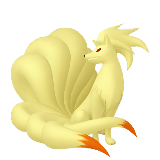 Ninetales#038
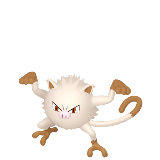 Mankey#056
 Primeape#057
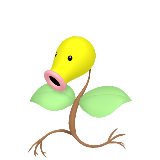 Bellsprout#069
 Weepinbell#070
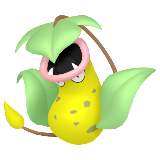 Victreebel#071
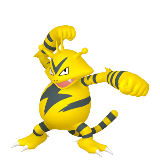 Electabuzz#125
 Magmar#126
Japanese Blue has no species of its own: everything in it can also be found in Red or Green. It combines the Oddish and Growlithe lines and Scyther (otherwise Red-only) with the Sandshrew and Meowth lines and Pinsir (otherwise Green-only).
Japanese Blue replaced every in-game trade; two of its new ones hand over a Pokémon that evolves on arrival:
| You give | You get | Where |
|---|---|---|
| Jigglypuff | Mr. Mime | Route 2 |
| Rattata | Poliwag | Underground Path (Routes 5–6) |
| Rhydon | Kangaskhan | Route 11 |
| Persian | Tauros | Route 18 |
| Machoke | Haunter (evolves into Gengar) | Cerulean City |
| Pidgey | Farfetch’d | Vermilion City |
| Kadabra | Graveler (evolves into Golem) | Cinnabar Lab |
| Seel | Slowpoke | Cinnabar Lab |
| Growlithe | Krabby | Cinnabar Lab |
Can I catch them all?
If you had Pokémon Green (the Japanese original version) as a standalone game, you couldn’t catch all 151. But you could get the vast majority of them – 139 of the 151 without an event Mew, and 124 of those without ever trading with another player (our count is below). You’d have to trade with the Japanese release of Pokémon Red if you wanted to complete your Pokédex. Each version had 11 exclusives – check them out below:
Exclusive to Red (Japan)
- Ekans#023
- Arbok#024
 Oddish#043
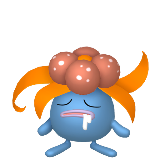 Gloom#044
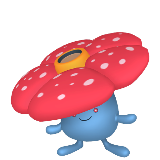 Vileplume#045
- Mankey#056
- Primeape#057
 Growlithe#058
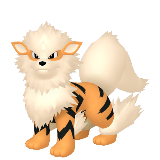 Arcanine#059
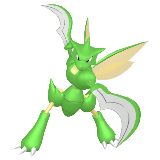 Scyther#123
- Electabuzz#125
023 Ekans (Poison type) and its evolved form 024 Arbok; 043 Oddish (Grass/Poison type) and its evolution chain, 044 Gloom and 045 Vileplume; the Fighting type 056 Mankey and its evolved form 057 Primeape; 058 Growlithe (Fire type) and its evolved form 059 Arcanine; 123 Scyther (Bug/Flying type) and 125 Electabuzz (Electric type).
Exclusive to Green (Japan)
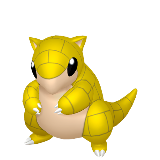 Sandshrew#027
 Sandslash#028
- Vulpix#037
- Ninetales#038
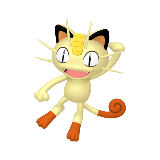 Meowth#052
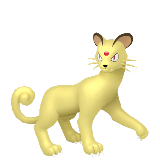 Persian#053
- Bellsprout#069
- Weepinbell#070
- Victreebel#071
- Magmar#126
 Pinsir#127
027 Sandshrew (Ground type) and its evolved form 028 Sandslash; 037 Vulpix (Fire type) and its evolution 038 Ninetales; 052 Meowth (Normal type) and 053 Persian; 069 Bellsprout (Grass/Poison type) and its evolution chain, 070 Weepinbell and 071 Victreebel; as well as 126 Magmar and 127 Pinsir.
In-game trades
Red & Green’s in-game trades (the same ones we got, bar the Underground Path swap, which the international games reversed):
| You give | You get | Where |
|---|---|---|
| Abra | Mr. Mime | Route 2 |
| Nidoran♀ | Nidoran♂ | Underground Path (Routes 5–6) |
| Nidorino | Nidorina | Route 11 |
| Slowbro | Lickitung | Route 18 |
| Poliwhirl | Jynx | Cerulean City |
| Spearow | Farfetch’d | Vermilion City |
| Raichu | Electrode | Cinnabar Lab |
| Venonat | Tangela | Cinnabar Lab |
| Ponyta | Seel | Cinnabar Lab |
Mew

Mew cannot be caught in normal play in Red, Green or Japanese Blue. It was handed out by Nintendo, starting with CoroCoro Comic’s Legendary Pokémon Offer in spring 1996 and continuing at Japanese events until Nintendo Space World ’99, with Western events in 1999 and 2000 and Virtual Console distributions in 2016. Shigeki Morimoto has recalled that an unexpected bug also made Mew appear in some players’ games, and a glitch discovered in 2003, the Mew glitch, later let players meet one without an event.
How many can one copy of Green register?
124. Start from 151. Mew is event-only (minus 1) and Red’s eleven exclusives need a trade (minus 11), which leaves 139; Alakazam, Machamp, Golem and Gengar evolve only by trading (minus 4). Only one starter is given, so the other two three-stage lines are lost (minus 6). Only one Mt. Moon fossil can be taken, losing either Omanyte and Omastar or Kabuto and Kabutops (minus 2). The Fighting Dojo gives Hitmonlee or Hitmonchan, not both (minus 1). There is one Eevee, which can become only one of Vaporeon, Jolteon or Flareon (minus 2). That leaves 124 species registrable in a single copy of Green without trading with another player. The in-game trades (Mr. Mime, Jynx, Lickitung, Farfetch’d and the rest) are counted, since they need no second Game Boy.
Kanto, as it was in 1996
Like the international releases of Red and Blue, Pokémon Green is set in the Kanto region, and the landmarks, towns and cities are much the same. Read the Red & Blue section about Kanto for the full tour.
The places below are the ones that actually differ between Red & Green, Japanese Blue and the games we got.

The Unknown Dungeon (Cerulean Cave)
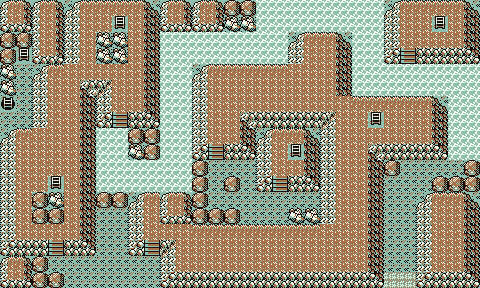
Kanto’s post-game cave opens once the player is Champion, and Mewtwo waits inside. In Generation I its Japanese name is ななしのどうくつ, the ’Nameless Cave’, as printed on the Town Map, while townsfolk call it Hanada Cave; the name ’Unknown Dungeon’ never appears in the games themselves. Every Generation I version gives it three floors, 1F, 2F and B1F, but Red and Green use their own layout. Japanese Blue rebuilt the cave completely, the international Red and Blue copied Blue’s version, and FireRed and LeafGreen later restored the Red and Green plan. Item placements differ too, so Red and Green players hunt for the same prizes in different spots.
Maps: Left: Red & Green’s 1F. Right: the 1F that Japanese Blue, and the West, got instead.
Pokémon of note: Mewtwo, Kadabra. Items: Nugget (1F), Full Restore (1F, 2F), Max Elixer (1F), Rare Candy (1F, hidden), PP Up (2F), Ultra Ball (2F, B1F), Max Revive (B1F).
Celadon Department Store
The department store in Celadon City has one notable gap in Red and Green: there is no HP Up for sale, and these are the only core-series games without a repeatable source of it. Japanese Blue added the item to the store’s shelves and the international Red and Blue kept it there, so the scarcity is something only Red and Green players ever experienced.
Items: HP Up (not sold in Red and Green; sold in Japanese Blue and international Red and Blue).
Celadon Game Corner
Celadon’s slot-machine hall looks and pays out differently depending on the Japanese version. Japanese Blue introduced new-look slot machines with a different prize list, the third slot design to appear across Red, Green and Blue, so the reels and rewards a player remembers depend on which cartridge they owned. Like the redrawn doors, signs and town tiles elsewhere in Kanto, it is part of Blue’s wider visual refresh.
Rock Tunnel
Rock Tunnel is one of the places where Japanese Blue’s reshuffled encounter tables show. In Blue, Ditto can be caught inside the tunnel, which is not the case in Red and Green; the international Red and Blue kept Red and Green’s wild lists, so Western players never met Ditto here either. It is a small change, but a telling sign of how thoroughly Blue reworked the wild Pokémon.
Pokémon of note: Ditto (Japanese Blue).
Seafoam Islands
In Red and Green, Psyduck and Golduck can be met on foot inside the Seafoam Islands. Japanese Blue removed them from the land encounters there, leaving fishing as the way to find Psyduck. The international Red and Blue follow Red and Green’s tables, so this is a quirk only Japanese Blue players will know, and another example of Blue’s wholesale reshuffle of where Pokémon live.
Pokémon of note: Psyduck, Golduck.
Cinnabar Lab
The research lab on Cinnabar Island hosts three in-game trades, and they change completely between versions. Red and Green offer an Electrode for a Raichu, a Tangela for a Venonat and a Seel for a Ponyta, the same deals players abroad found. Japanese Blue swaps in a Graveler for a Kadabra, a Slowpoke for a Seel and a Krabby for a Growlithe. Because the Graveler evolves into Golem on arrival, Japanese Blue is the only Generation I game where Golem can be had without linking up.
Pokémon of note: Electrode, Tangela, Seel, Graveler (Japanese Blue).
The Unknown Dungeon, floor by floor:


Team Rocket, the Gym Leaders and the Elite Four
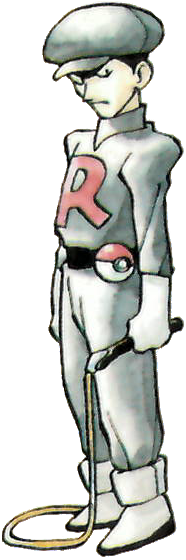
The bad guys – Team Rocket. The activities and evil actions of Kanto’s criminal team are much the same as in Red and Blue’s international releases; learn all about their wretched deeds here.
Gym Leaders. The Gym Leaders and their teams are largely the same as in the international releases of Red and Blue. You can read all about them and their teams by clicking here.
The Elite Four & the Champion. The Elite Four and their teams again mirror those of Red and Blue’s international releases; find out more on the Elite Four of Kanto here.
Characters
Three faces from the games and five from the studio: the hero, the rival the West renamed, the professor, and the people who spent six years making Red & Green.

Red, the player
The hero of Red and Green is a boy from Masara Town whose Japanese name, レッド, is simply ’Red’. The Japanese manuals name the player after whichever version is being played, and Satoshi, a nod to Satoshi Tajiri, is among the preset names; the anime’s Ash shares that Japanese name. Ken Sugimori drew his artwork for the 1996 games, and his title-screen and profile sprites echo designs that date back to Capsule Monsters. Red later became a recurring legend: the final opponent on Mt. Silver in Gold, Silver, Crystal, HeartGold and SoulSilver, a Battle Tree boss with his rival in Sun and Moon, a post-game challenger in Let’s Go, a sync pair in Pokémon Masters EX, and the lead of Pokémon Origins and Pokémon Adventures.

Green, the rival (Blue in the West)
Dr Ōkido’s grandson is グリーン, Green, in Japan and Blue in the English games, where the version paired with Red was Blue; the Japanese games give him no surname. Shigeru, after Shigeru Miyamoto, is among his preset names, and the anime’s Gary carries the same Japanese name. Once Red’s childhood friend, he has grown unpleasant with age, always takes the starter with the type advantage and stays a step ahead until he is found waiting as Champion. His final team depends on the player’s choice, ending with Charizard, Blastoise or Venusaur. He went on to run the Viridian Gym in Gold and Silver, joined Red at the Battle Tree in Sun and Moon, and is a sync pair in Pokémon Masters EX.

Professor Oak (Dr Ōkido)
Professor Oak is Dr Ōkido (オーキド博士) in Japan: the Masara Town researcher who hands the hero his first Pokémon and a Pokédex, and the rival’s grandfather. In his opening talk the Pokémon on show is a Nidorino that cries like a Nidorina, a slip carried into every Generation I release. In Pokémon Origins he is voiced by Katsuji Mori in Japanese and Kyle Hebert in English.
The people who made it
How Red & Green were made
Pokémon grew out of Satoshi Tajiri’s childhood in Machida, on the edge of Tokyo, where his insect hunting earned him the nickname ’Dr Bug’. As a young man he wrote and edited Game Freak, a hand-stapled fanzine about arcade games; Ken Sugimori found a copy, became its illustrator, and in 1989, the year the Game Boy launched, the pair turned the name into a development studio.
Tajiri pitched his monster-collecting idea to Nintendo in 1990. Staff there were unsure what to make of it, but Shigeru Miyamoto saw its promise, mentored Tajiri and suggested selling more than one cartridge, each with different Pokémon, to give players a reason to trade over the Game Link Cable.
Tajiri himself traced the trading idea to his frustration at being unable to swap items in Dragon Quest II. The project took about six years and almost sank Game Freak: there was often barely enough money for wages, five employees left, and Tajiri took no salary, living on his father’s income.
Investment from Creatures Inc., in return for a third of the franchise rights, kept it alive, and producer Tsunekazu Ishihara tuned the encounter rates and exclusives to encourage swapping. The games were complete by October 1995 but held back until late February 1996, missing the Christmas season, and Ishihara feared they had missed the last train as the Game Boy aged.
Late in debugging, programmer Shigeki Morimoto used about 300 spare bytes to hide Mew. Sales began quietly before word of mouth, CoroCoro Comic and the Mew giveaway lifted Pokémon to Japan’s best-selling game of 1997, and the pair reached North America in September 1998 and Europe in October 1999.
Capsule Monsters
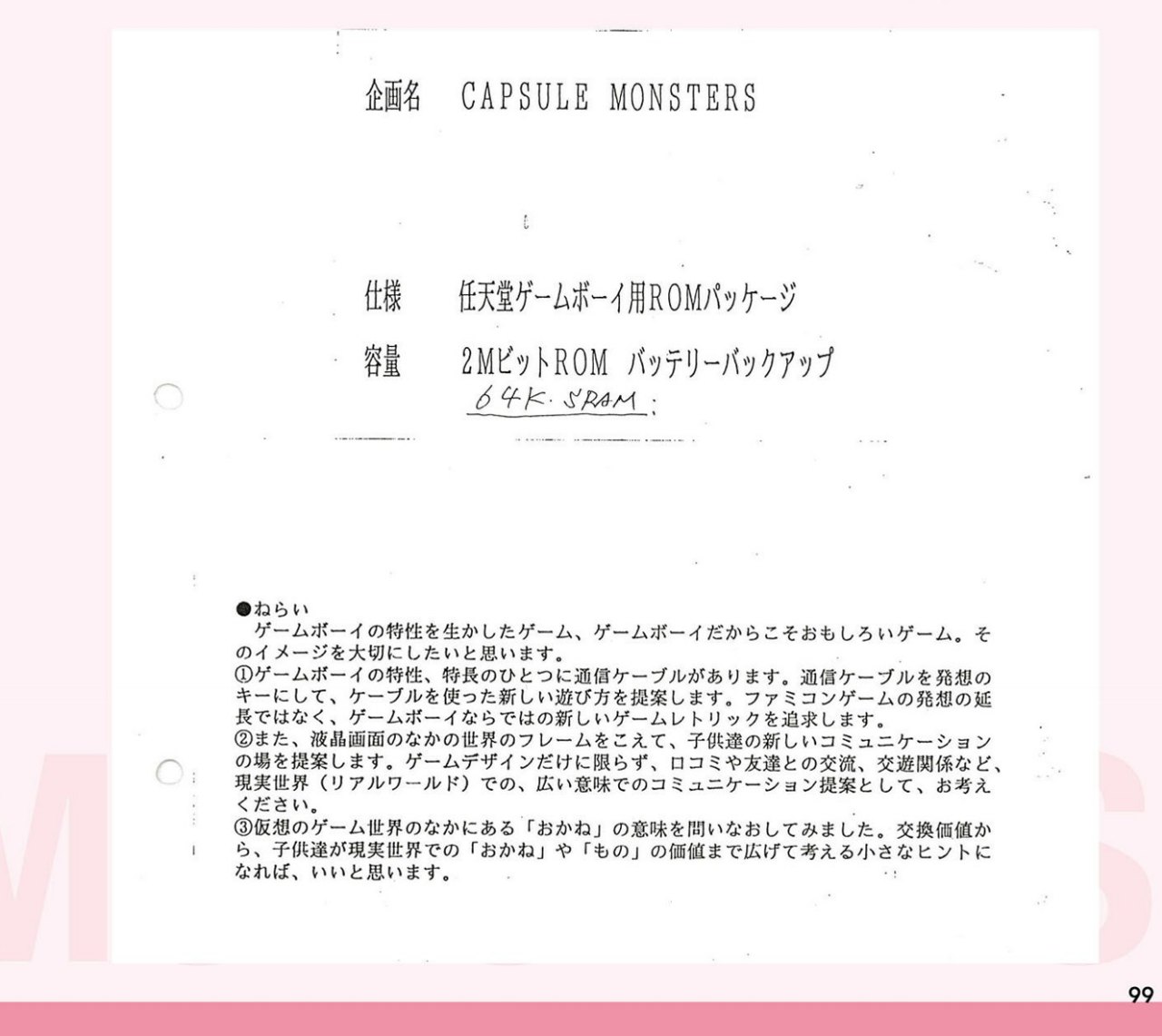
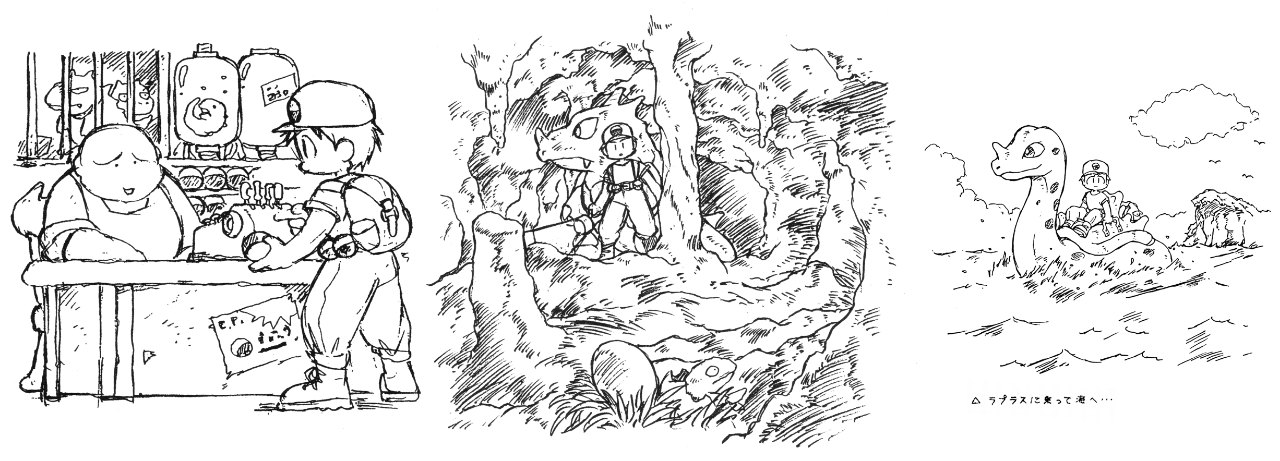
Before it was Pokémon, Tajiri’s project was Capsule Monsters, a name inspired by gashapon capsule-toy machines, and Tajiri also credited the capsule-housed monsters of the 1960s series Ultraseven as the spark for the Poké Ball. He took the concept to Nintendo as early as 1990. Trouble registering the trademark forced a rethink, first to CapuMon and then to Pocket Monsters. Surviving concept pages show a different game in places: monsters lured with a Charisma stat instead of being beaten, healing at hotels, and ultra-rare ’Mirage Monsters’ to spur trading.
The Mew giveaway
Mew was never meant to be caught in normal play. CoroCoro Comic’s April 1996 issue announced the Legendary Pokémon Offer: twenty readers would have Mew written onto their own cartridges, and around 78,000 people applied, with the distribution running from 15 April to 14 May 1996. Mew was formally revealed in the May issue. More Japanese events followed, including one marking the start of work on a Pokémon sequel in summer 1996, the Next Generation World Hobby Fair in August 1996 and again over the winter of 1997–98, CoroCoro’s 20th anniversary in 1997, and Nintendo Space World in 1997 and 1999. In the games, Mew remains number 151, the ’New Species’, obtainable only through such events.
Glitches, exploits and oddities
Red & Green shipped with a family of bugs that no later version has, and Japanese players turned them into tools. Here are the ones worth knowing, plus what Japanese Blue fixed and what survived all the way to the Virtual Console.
The Select glitches (セレクトバグ)
The family of tricks Japanese players call セレクトバグ, ’Select bugs’, exists only in Japanese Red, Green and Blue. Pressing Select on an item highlights it for swapping, and these versions forget to clear that highlight when the menu closes. If the player then reaches the Pokémon list or the Fight menu without going through the start menu, for example from a battle or by talking to the Day Care man or the Name Rater, a swap goes ahead with whatever data sits at that position. Moving entries beyond the sixth slot overwrites unrelated memory. Version 1.1 of Red and Green blocked the in-battle route, but the underlying fault remained in Japanese Blue and was finally removed in Japanese Yellow and every localisation.
Dokokashira door glitch
The best-known Select trick takes its name from どこかしら, roughly ’somewhere’, and invites comparison with Doraemon’s ’anywhere door’, though whether that was intended is unclear. After setting up the stuck cursor with Oak’s Parcel and swapping a Pokémon in a wild battle, the routine that handles poison damage outside battle starts eating into memory, and from then on the next door the player uses leads somewhere that depends on the steps taken, changing every four steps. With careful counting it can drop the player into Lance’s room or straight into the Hall of Fame, which the game accepts as beating the League before rolling the credits. A viral video by the player Giginet spread the name; English Red and Blue can only imitate it through heavier corruption.
Item creation and other swap tricks
Because the Select swap can reach far beyond the six party slots, Japanese players mapped out a menu of effects by choosing which entries to exchange. Swapping particular list positions can change a Pokémon’s second type, convert fossils into Pokémon or create items from nothing; on the Fight menu, exchanging moves beyond the fourth slot can rewrite a Pokémon’s experience points or even its level. Only a byte or two changes at a time, so the tricks demand patience, but they gave Red and Green players tools that no later version allows.
Lift and badge-list corruption
A second branch of the Select bugs lives in two unusual menus: the floor list inside a lift and the list of badges described by a resident of Cerulean City. Pressing Select on one entry and then another swaps them, and the game can lose track of what kind of list it is showing. The resulting memory damage can scramble the player’s name, party Pokémon and items, which makes these the riskiest Select tricks to experiment with. Like the rest of the family, they were removed from Japanese Yellow and the versions released abroad.
Ketsuban (MissingNo.)
The glitch Pokémon English players know as MissingNo. is けつばん, Ketsuban, in Japan, a term for a missing number, and the English name follows the same idea. Japanese Blue gave it an unfinished Pokédex entry reading ’Comment to be written’, whereas the English entry is blank. Red and Green have their own version of its scrambled sprite. It still exists in the 2016 Virtual Console releases, where Poké Transporter shows an error if it is sitting in Box 1, and Nintendo’s support pages once waved it away as a programming quirk.
Full Box loop and empty Pokémon list
Two quirks catch out early players of Red and Green versions 1.0 and 1.1. With six Pokémon in the party and a full Box, the old man’s Weedle-catching demonstration gets stuck repeating the full-Box message, and the only escape is a reset. Separately, a Potion withdrawn from the PC before receiving a starter can be used on an empty Pokémon list, to no effect. Both were tidied up in Japanese Yellow and the international releases, where the Potion attempt simply produces a message saying the player has no Pokémon.
Fixed in Japanese Blue: cliff surfing and the phantom Sabrina win
Japanese Blue closed two loopholes that Red and Green players could exploit. One allowed surfing from the top of a cliff. The other could award a victory over Natsume (Sabrina) at the Yamabuki Gym even after the player had lost to her. Because the international games were built from Blue’s code, neither problem reached players abroad. Both fixes show that Blue was a debugged edition as well as a cosmetic refresh, although some slips, such as Ōkido’s Nidorino with a Nidorina’s cry, survived every Generation I release.
Mew bugs and the 2016 Virtual Console
Mew sat hidden in the code, and Shigeki Morimoto has recalled that an unexpected bug made it turn up in some players’ games, which caused headaches at the time but did the legend more good than harm. A separate trick discovered in 2003, the Mew glitch, later let players obtain Mew without attending an event. When Red and Green came to the 3DS Virtual Console in 2016, the changes concerned presentation and linking: the flashing in fifteen move animations, including Psychic, Thunderbolt and Hyper Beam, was toned down, wireless play replaced the cable, and MissingNo. was still there to be found.
Videos & media
Check out these videos related to Pokémon Red & Green (Japan) for the Game Boy.
The very first TV commercial for the Japanese version of Pokémon Red and Green.
The intro video for Pokémon LeafGreen, the 2004 remake of the original Green that was released globally.
The trailer for Pokémon Origins, the 2013 retelling of Red & Green.
Nintendo UK’s trailer for the 2016 Virtual Console release (Red, Blue and Yellow in the West; Green stayed in Japan).
Trivia & facts
- A Nintendo of Japan pre-release flyer gave the original date as 21 December 1995; the games were held back to 27 February 1996.
- The finished games use about 373 KB of a 512 KB cartridge; Mew was squeezed into roughly 300 spare bytes freed up when the debugging tools were removed.
-
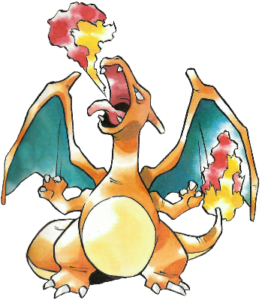
Charizard, Red’s mascot – red for Mario. Shigeru Miyamoto suggested a set of differently coloured versions; red and green were picked, inspired by Mario and Luigi, and Satoshi Tajiri has said blue was passed over because it is a cold colour.
- The preset names Satoshi and Shigeru honour Satoshi Tajiri and Shigeru Miyamoto, and the anime’s Ash and Gary carry the same names in Japanese.
- At one stage staff were polled on whether to spend memory on nicknames or on more species; nicknames won, the roster briefly fell below 100, and it was later brought back up to 151.
- The hero’s bedroom console is a Famicom in the Japanese games and a Super Nintendo in the English ones.
- Red and Green are the only core-series games where HP Up cannot be obtained repeatedly, because no shop sells it.
-

Capsule Monsters, 1990. The Capsule Monsters sprite sheet from 1990 already shows designs very close to Rhydon, Kangaskhan, Slowbro, Lickitung and Gengar.
- In 1999 a Pokémon.com FAQ stated that there were no plans for an American release of Green.
- Professor Oak’s password in the film The Mastermind of Mirage Pokémon is ’REDGREEN’.

Legacy
From CoroCoro mail order to the Switch
- Japanese Blue (mail order) – 15 October 1996. Orders opened with CoroCoro Comic’s November 1996 issue and closed on 27 December; copies arrived between December 1996 and January 1997.
- Japanese Blue (second mail-order offer) – 13 June 1997. Open until 31 August 1997, marking four million combined sales.
- International Red & Blue – 28 September 1998. North America; Australia and New Zealand followed on 23 October 1998 and Europe from 5 October 1999.
- Pocket Monsters Pikachu (Yellow) – 12 September 1998. Japan.
- Japanese Blue retail – 10 October 1999. 3,000 yen before tax.
- FireRed & LeafGreen – 29 January 2004. Japan; Game Boy Advance remakes of Red and Green, released in North America on 9 September 2004 and Europe on 1 October 2004.
- 3DS Virtual Console – 27 February 2016. Red, Green, Blue and Yellow in Japan; Red, Blue and Yellow in the West. 20th anniversary; 3DS wireless replaced the link cable, and Poké Transporter could send Box 1 to Pokémon Bank. On sale until the 3DS eShop closed on 27 March 2023.
- Let’s Go, Pikachu! and Let’s Go, Eevee! – 16 November 2018. Nintendo Switch; a Kanto reimagining.
- FireRed & LeafGreen on Nintendo Switch – 27 February 2026. Switch and Switch 2; sold separately (£16.99 each) rather than through Nintendo Switch Online.
Where to play Red & Green today
Red and Green are no longer sold anywhere new. Their 3DS Virtual Console editions, released in Japan on 27 February 2016, left sale when the 3DS eShop closed on 27 March 2023, so a second-hand Game Boy cartridge is now the way to own one. The remakes are far easier to find: FireRed and LeafGreen arrived on Switch and Switch 2 on 27 February 2026 as standalone purchases at £16.99 each, outside Nintendo Switch Online, with Pokémon HOME support but no online play.
Red & Green in other media


The 20th anniversary
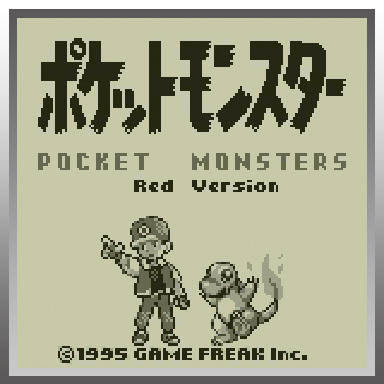
Red and Green turned 20 on 27 February 2016, and the celebrations leaned on them. A ’Train On’ commercial ran during Super Bowl 50 on 7 February. On the anniversary itself, Red, Green, Blue and Pikachu (Yellow) arrived on the Japanese 3DS Virtual Console at 1,111 yen each, with a special download card boxed like a Game Boy game, plus a cartridge-shaped magnet and a town map, while limited-edition 2DS consoles came with a game pre-installed. Japanese Pokémon Centers also sold Red Team and Green Team shirts from Splatoon’s Splatfest.


Sales & reviews
Sales figures
Pokémon Red, Blue and Green versions sold a combined total of 31.38 million copies on the Game Boy. Unfortunately there is no breakdown as to how many units of each colour were sold. Green was never released outside Japan, so a good majority of those sales were from Red and Blue, but it would still be nice to know which was the most popular. If anyone does know, please get in touch!
Red, Green and Japanese Blue together sold 10.23 million copies in Japan. The pace built slowly: first shipments of Red and Green were about 230,000 copies combined, about 1.04 million copies of the Japanese versions sold in 1996 and 3.65 million in 1997, roughly 7 million by the end of 1997 and 10 million by 1998. No official figure splits Red from Green. The 31.38 million worldwide figure (Guinness World Records, March 2024) covers every Generation I release together. Of that, about 10.23 million were Japanese copies and 9.85 million were sold in the United States (Red 4.83 million, Blue 5.02 million).
- 10.23mJapan (Red, Green and Blue)
- 31.38mevery Generation I release, worldwide
- 230,000first shipment of Red and Green, combined
- 3.65msold in Japan in 1997, the year it all took off
Reception and review scores
There were no Western reviews of Green, of course, so here is how Japan took to the originals – and, for context, how the West later scored Red & Blue:
Red and Green slipped into Japanese shops on 27 February 1996, a quiet point in the year, with first shipments of roughly 230,000 copies between them, and for weeks they hovered around the edge of the top ten. Then playground talk, CoroCoro Comic’s coverage and, above all, that spring’s Legendary Pokémon Offer turned things round: Satoru Iwata later recalled that a single week’s sales came to match what had been a month’s, before growing three or four times over. More than eighteen months after launch the games finally topped the weekly chart. Famitsu’s reviewers had been only moderately impressed, scoring them 29 out of 40, yet by 1997 Pokémon was Japan’s best-selling game of the year, ahead of Final Fantasy VII, and the three Japanese versions went on to sell 10.23 million copies.
In the West, IGN’s Craig Harris gave Red 10/10 in June 1999, calling the games masterful, and GameSpot’s Peter Bartholow gave Blue 8.8/10 in January 2000. Nintendo Power scored the pair 7.2/10, Electronic Gaming Monthly’s reviewers gave 9, 8, 8 and 9, Game Informer 9/10 and GamePro 4.5/5, while GameRankings averaged 88 per cent.
Awards and honours:
Media & artwork
- Official artwork gallery from Pokémon Green (Japan) – a large gallery featuring many of the Pokémon from the game
- Official artwork gallery from Pokémon Green (Japan) – characters, items and supporting art
- Box art from Pokémon Green Version
- Screenshots from Pokémon Green Version
- Screenshots from Pokémon Red Version
Further reading
The games either side of the originals, plus The Library’s Generation I lists: