 |
|
| Titles | Pokémon Trading Card Game Online Pokémon TCG Online (PTCGO); the 2011 browser beta was called Pokémon Trainer Challenge |
| Platform | Windows · Mac · iPad · Android tablets (never phones); a browser game in 2011–2012 |
| Developer | Electrified Games · Sleepy Giant Entertainment · Dire Wolf Digital (final developer); website by Plexipixel, chat filter by Inversoft |
| Publisher | The Pokémon Company International |
| Official site | pokemon.com/us/pokemon-tcg/play-online (closed with the game in 2023) · Pokémon TCG Live today |
| Players | 1–2 per match (online) |
| Genre | Free-to-play digital collectible card game |
| Generation | IV–VIII (card sets from HeartGold & SoulSilver, 2010, to Crown Zenith, 2023) |
| Game modes | Trainer Challenge (36 AI Trainers in 3 Leagues) · Versus · Events · Friend Battle · Play Testing |
| Currencies | Trainer Tokens · Event Tickets · Gems (Canada only, 2013–2018) · Tournament Keys (2020–2023) |
| Released | 24 March 2011 (North America, Europe & Australia; browser beta) · 15 May 2012 (Windows) · November 2012 (Mac) · 30 September 2014 (iPad) · April 2016 beta, 10 May 2016 full release (Android tablets) · never released in Japan |
| Shut down | 5 June 2023 (removed from download; servers switched off) |
| Rating | ESRB E · PEGI 7 · ACB PG · OFLC (NZ) G |
| Predecessor | Pokémon Trading Card Game (Game Boy Color, 1998) – the earlier video game version of the card game |
| Successor | Pokémon Trading Card Game Live (8 June 2023) |
| Sales | Free to play; no download or revenue figures published |
Overview
 Pokémon Trading Card Game Online was a free-to-play, downloadable MMOTCG version of the Pokémon Trading Card Game, where players could test their skills in solo modes or in multiplayer modes against each other. They could form powerful decks by collecting cards through various methods and reward systems.
The game offered a great experience for both experienced players and rookies. It started out with a tutorial in which all the game’s basic mechanics were demonstrated in a simple and effective way, while also giving more experienced players the ability to bypass the tutorial by disabling the “New User Experience” option. Pokémon Trading Card Game Online (Pokémon TCGO) featured many fun mechanics and event systems, with cards from every expansion from HeartGold & SoulSilver (2010) to Crown Zenith (2023). The game received several updates a year, introducing new features and cards, until new sets stopped arriving on 1 March 2023. It closed on 5 June 2023 and was replaced by Pokémon TCG Live.
PLAY, TRADE, AND CHALLENGE OTHER PLAYERS AROUND THE WORLD
Have fun learning and mastering the Pokémon Trading Card Game Online! Practice against the computer or go head to head with your friends or other players from around the world. Unlock cards and decks as you play to build up your collection and make truly unique decks. Your decks and card collection are stored as a part of your Pokémon Trainer Club account, allowing you to switch between iPad and desktop with ease.
- EASY TO START: Choose from Grass, Fire, or Water decks, step right into a game, and learn as you go in an easy play experience.
- EXPAND YOUR COLLECTION: Earn cards, open booster packs, trade with other players, and build the perfect deck around your favorite cards. Your collection grows with you!
- CUSTOMIZE YOUR EXPERIENCE: Build your own decks, customize the look of your cards, deck boxes, and avatar, and join your friends online.
- HONE YOUR SKILLS: Play against the computer until you are ready to challenge other players.
- CHALLENGE THE WORLD: When you feel your deck design is ready, challenge other players or join a tournament to show your skill and knowledge.
— Official App Store description (iPad version, September 2014)
Quick Answers
The questions people ask about Pokémon Trading Card Game Online, answered first and explained further down the page.
Can you still play Pokémon TCG Online?
No. Pokémon TCG Online was withdrawn from download and its servers were switched off on 5 June 2023, so it cannot be played in any form. Its replacement, Pokémon TCG Live, launched worldwide three days later on 8 June 2023 and is free on Windows, macOS, iOS, iPadOS and Android. More →

Can I move my old PTCGO collection to Pokémon TCG Live?
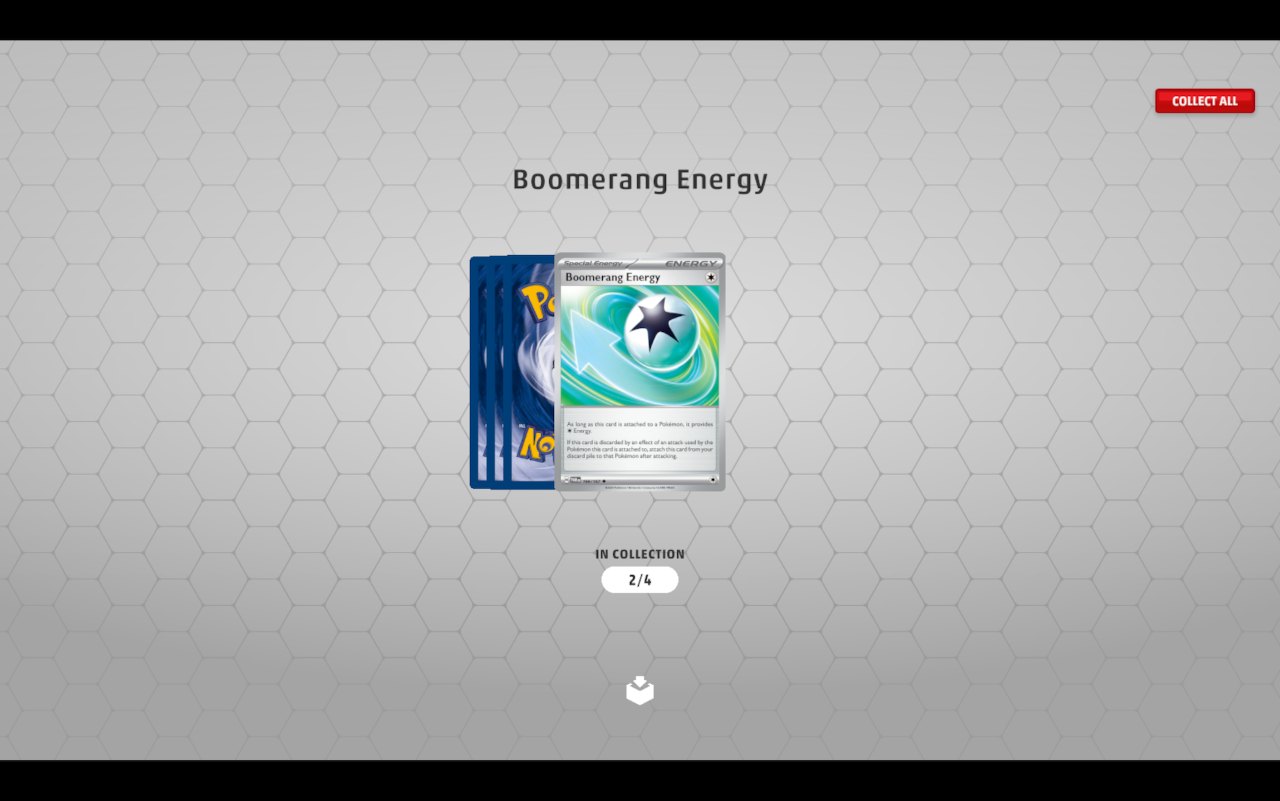
Yes. Sign in to Pokémon TCG Live with the same Pokémon Trainer Club account and the collection transfers automatically; there is still no deadline. Cards from Black & White onwards move across, capped at four copies (one for ACE SPEC and Prism Star cards), while HeartGold & SoulSilver cards, avatar items and Trainer Tokens are lost. More →
Can you trade cards in Pokémon TCG Live like you could in PTCGO?
No. Player-to-player trading ended with Pokémon TCG Online. Live hands out more cards and packs directly instead, and lets you turn duplicate cards into Trade Credits, which can be spent on specific cards you want. The old split between tradeable and trade-locked items stopped mattering once the collection moved across. More →
Which expansions were in Pokémon TCG Online?
Every international expansion from HeartGold & SoulSilver (February 2010) up to Crown Zenith (January 2023). New sets stopped arriving on 1 March 2023, so Scarlet & Violet and everything after it are only in Pokémon TCG Live, and code cards from those sets could never be redeemed in the old game. More →
Which was the first set you could unlock with a code card in Pokémon TCG Online?
Black & White. The first code cards came in the three Black & White Theme Decks, Green Tornado, Red Frenzy and Blue Assault, sold from 6 April 2011; each unlocked the same deck in the Pokémon Trainer Challenge. Black & White boosters followed on 25 April, though early print runs had no codes. HeartGold & SoulSilver products never had any. More →

How did code cards work in Pokémon TCG Online?
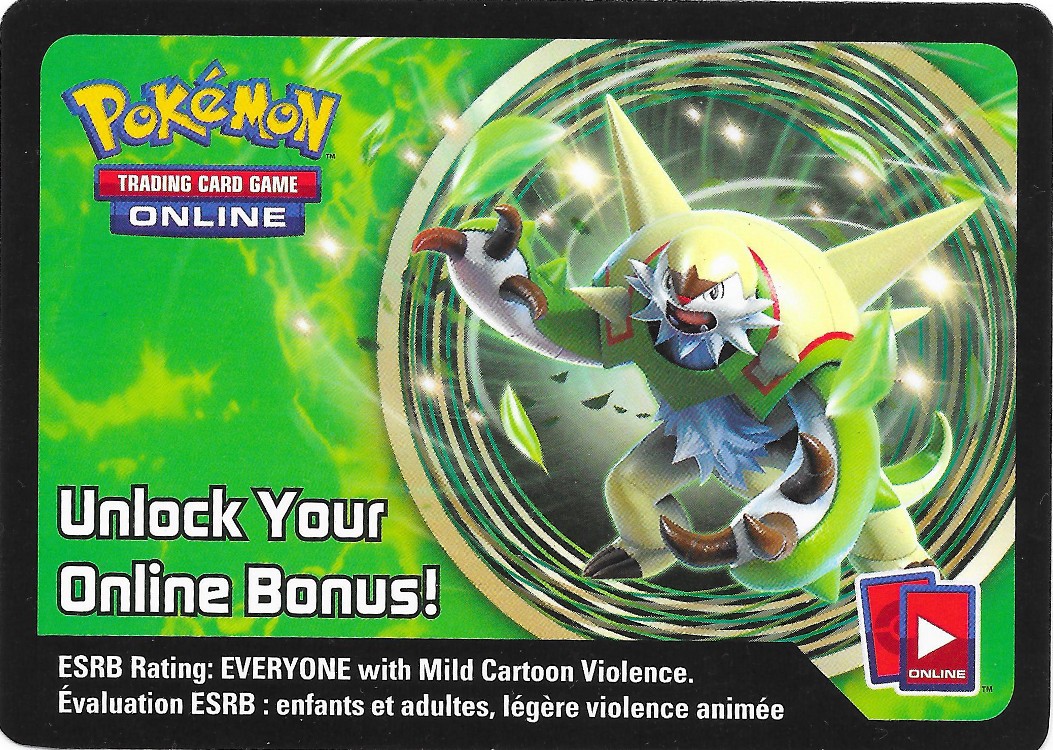
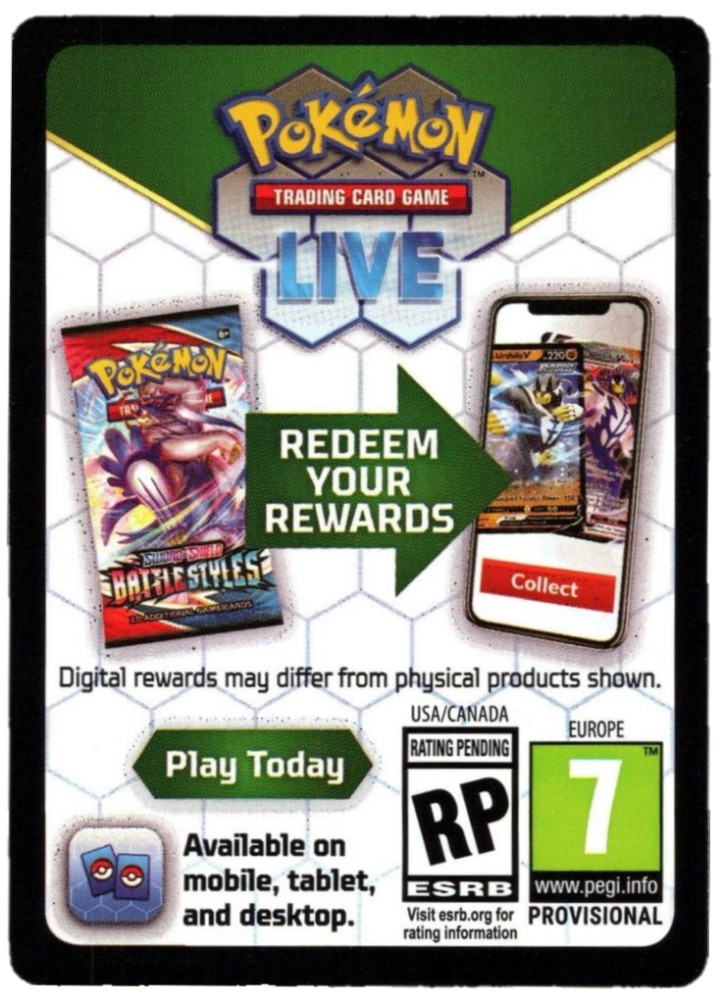
Most physical products, including booster packs, Theme Decks, tins and Elite Trainer Boxes, contained a code card. Entering the code in the game or on the Pokémon website unlocked the matching online item, such as a virtual booster pack of the same set or the same Theme Deck. The scheme carries on in Pokémon TCG Live today. More →
Was Pokémon TCG Online available in Japan or on phones?
Neither. The game launched in North America, Europe and Australia and was never released in Japan. It started as a browser game and then ran on Windows, Mac, iPad and Android tablets only, never phones. Pokémon TCG Live is the first official version of the full card game that also runs on smartphones. More →
Basic Game Mechanics
Battle Mechanics

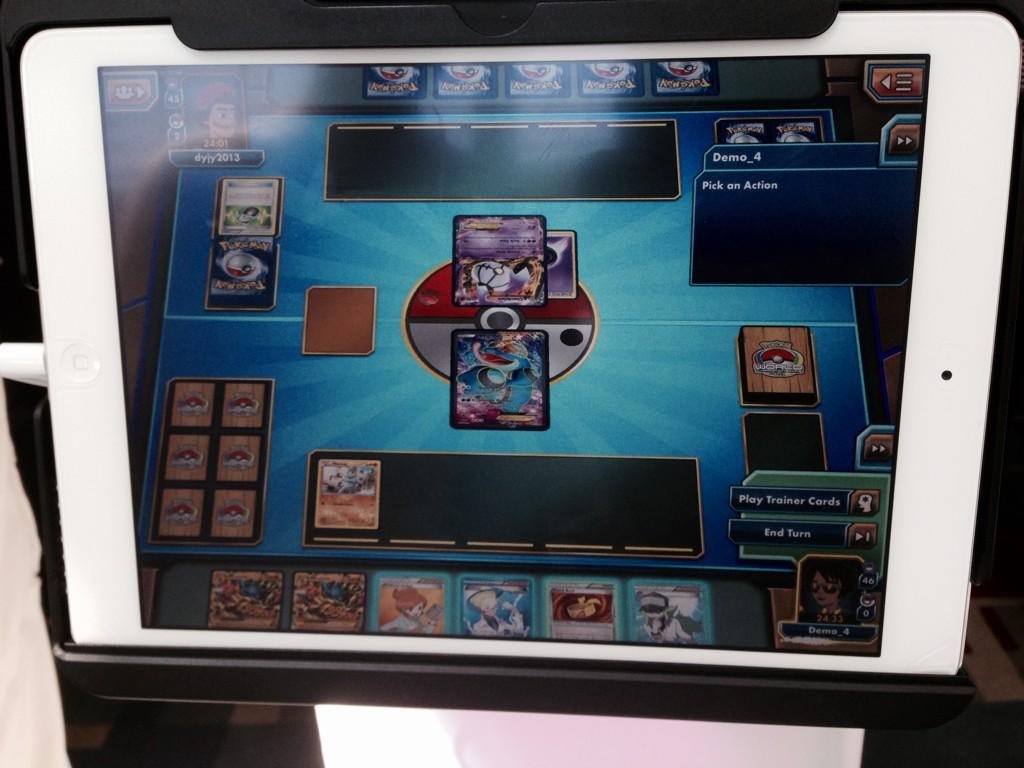
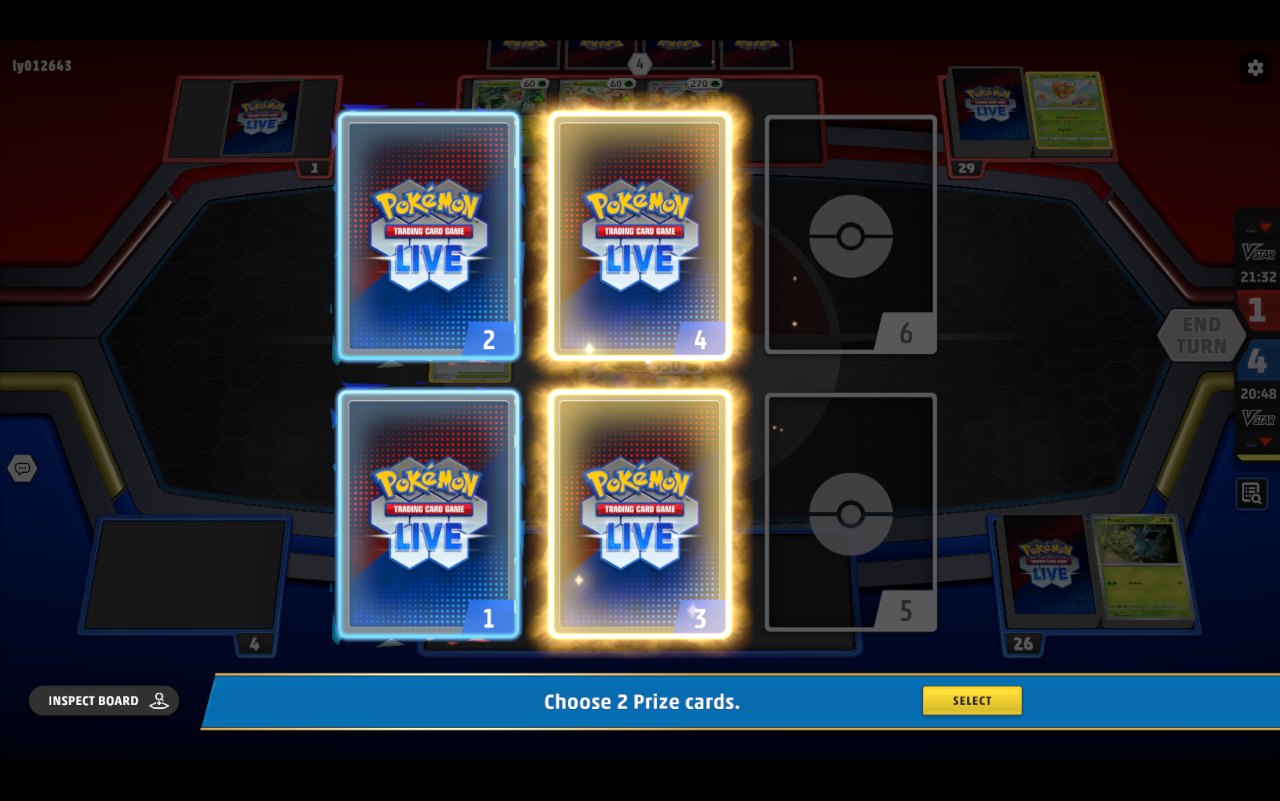
At the start of the battle, a coin will be flipped and the player who guesses the right side of the coin decides who plays first. Both players’ Decks are then shuffled and both of them draw 7 cards. If a player has a Basic Pokémon in their Hand, they’ll put it face down as their Active Pokémon, with the ability to put the other Basic Pokémon they have face down too, on the Bench. Each player then sets aside the top 6 cards of their deck as Prize Cards, which the opponent can take after defeating their Pokémon. Players then flip their Active Pokémon face up and the battle starts. Each turn has 3 basic phases: the Draw Phase, the Action Phase and the Attack Phase.
- Draw Phase: During the draw phase, the player draws a card from their deck. If a player is out of cards during this phase and has no card to draw, they automatically lose.
- Action Phase: During this phase the player can perform a wide range of actions, in any order they want, including:
- Evolving Pokémon.
- Replacing the Active Pokémon (a player can retreat only once per turn).
- Putting an Energy on a Pokémon (only one per turn).
- Placing Pokémon Cards on the Bench.
- Using Abilities.
- Playing Trainer Cards (Item Cards can be used several times per turn, while Stadium and Supporter Cards can only be used once).
- Attack Phase: During this phase the player picks which attack their Pokémon will use to inflict damage on the enemy Pokémon. After the attack, they end their turn and the opponent gets theirs.
Card Types
There are 3 Card Types in the game: Pokémon Cards, Energy Cards and Trainer Cards.
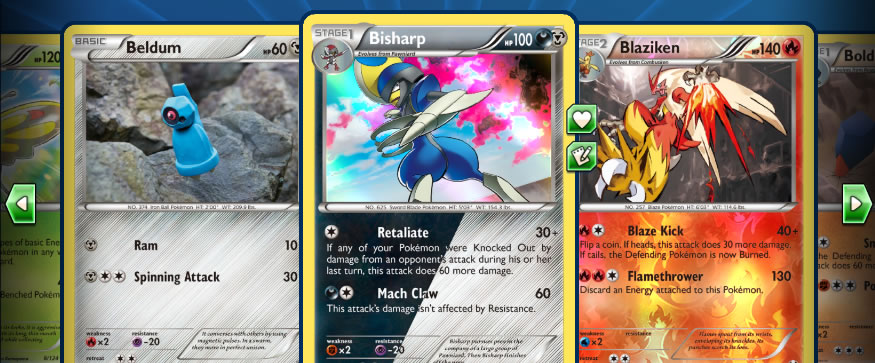
- Pokémon Cards: These mainly contain Basic Pokémon, Stage 1 Pokémon and Stage 2 Pokémon Cards. The cards from Stage 1 and 2 are Evolution Cards, featuring stronger and more powerful Pokémon that evolve from the stage below.
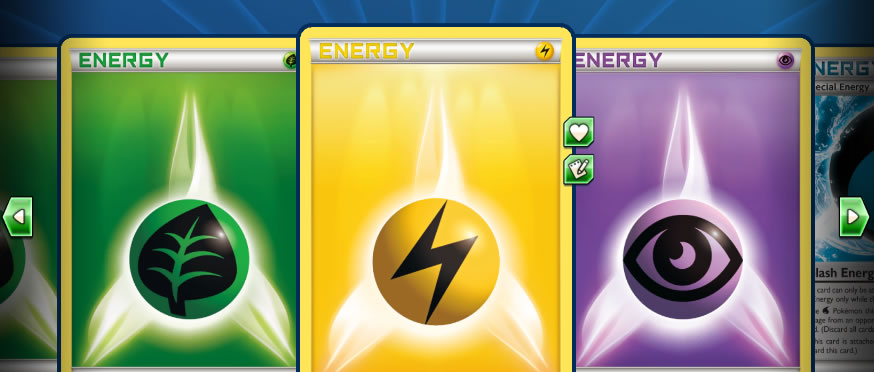
- Energy Cards: Before a Pokémon can attack, the player first needs to put Energy Cards on it, matching the Energy types displayed on the Pokémon’s attack. For example, to use the Flamethrower attack, available on some Fire Pokémon and requiring 2 Fire Energy and 1 Colorless Energy, the player may use 3 Fire Energy, or 2 Fire Energy and 1 Energy of any other type, such as Water or Grass, since a Colorless cost can be paid with any type of Energy. There are 11 Pokémon types, each with attacks that have their own unique features, but only 9 basic Energy types: Grass, Fire, Water, Lightning, Psychic, Fighting, Darkness, Metal and Fairy. Dragon and Colorless Pokémon have no basic Energy of their own and use the other types.
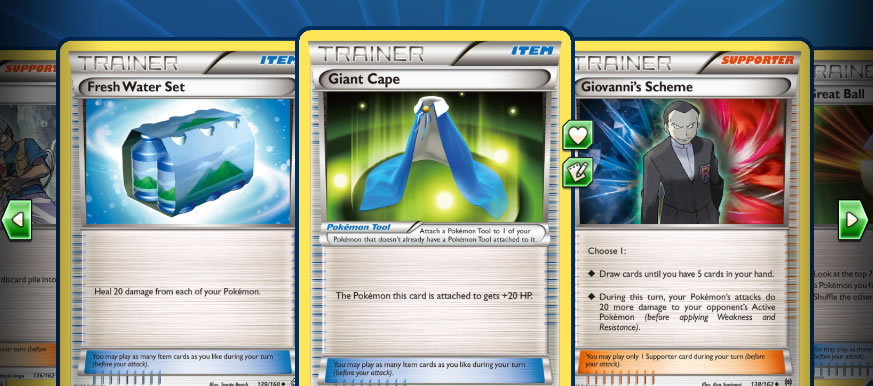
- Trainer Cards: These fall into three subcategories: Supporter Cards, Stadium Cards and Item Cards. Supporter Cards allow the player to trigger an action such as drawing cards. Stadium Cards are cards that affect the Pokémon on the battlefield, with different effects, such as healing a specific type of Pokémon. As for Item Cards, they also trigger several effects, like healing a Pokémon or removing a harmful status from them. Pokémon Tools, which are attached to a Pokémon, are a kind of Item, and ACE SPEC cards are especially powerful Trainer cards limited to one per deck.
Pokémon types and their attacks
| Type | Attack description |
|---|---|
| Grass | Grass-type attacks might poison the enemy Pokémon or heal the Pokémon using them. |
| Fire | Fire-type attacks inflict a lot of damage and may cause the enemy Pokémon to be Burned. These attacks have a cooldown. |
| Psychic | Psychic-type attacks may inflict harmful status effects on opponents, including Poison, Sleep and Confusion. |
| Water | Water-type attacks offer the possibility to switch the opponent’s Pokémon around. |
| Lightning | Lightning-type attacks can bring back discarded Energy Cards and apply Paralysis to enemy Pokémon. |
| Dragon | Dragon-type attacks are devastating, but they require two Energy types to be used. |
| Darkness | Darkness-type attacks may cause the enemy to discard random cards from their hand. |
| Fighting | Fighting-type attacks use the coin feature, which is a risky process, allowing the player’s Pokémon to do extra hits or receive damage. |
| Fairy | Fairy-type attacks have a chance to make enemy attacks less effective. |
| Metal | Metal-type attacks make the player’s Pokémon more resistant to enemy attacks. |
| Colorless | Colorless-type attacks have a wide range of effects. |
Fairy was only a type in the card game from XY (2014) to Sun & Moon. From the Sword & Shield series (2020), Fairy Pokémon were printed as Psychic types, and Fairy Energy was no longer made.
Winning a battle or a match
In order to win a battle, the player has to fulfil one of the following conditions:
- Defeat all the Pokémon the enemy player has in play: Knock Out their Active Pokémon when they have no Benched Pokémon left to replace it.
- Make the enemy player run out of cards, so that they cannot draw a card at the start of their turn.
- Earn all the Prize Cards of the enemy player. There are 6 Prize Cards in total, on each side. One to three Prize Cards can be earned after defeating an enemy Pokémon: one for most Pokémon, two for Pokémon-EX, GX and V, and three for VMAX and TAG TEAM cards.
Deck Formats
Deck formats first arrived in the game on 12 December 2012, and there were five play types over the years:
Theme Decks
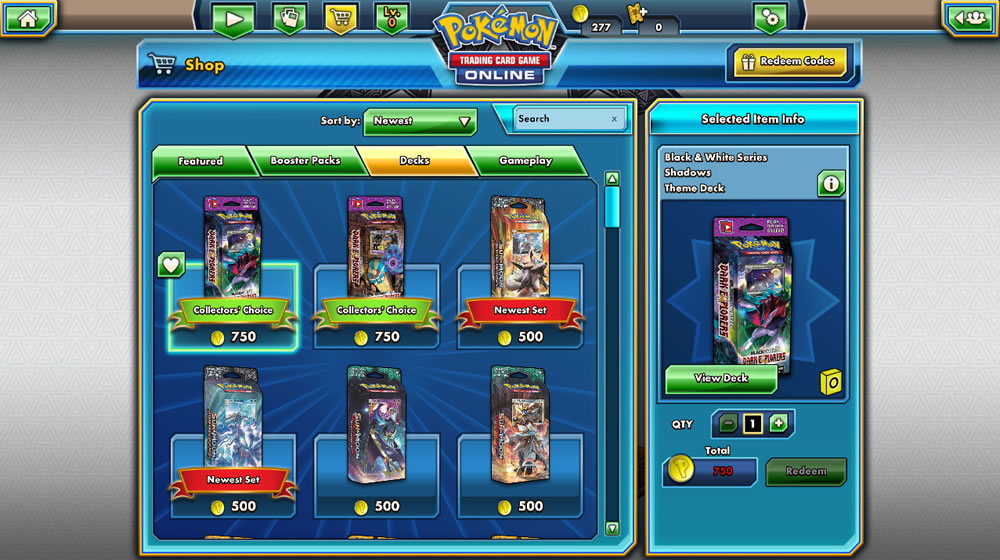
This play type allowed only the use of pre-constructed Theme Decks. At the start of the game, the player was given around six free Theme Decks, and could unlock more through the Shop using Trainer Tokens or, in Canada, Gems. Furthermore, if the player used the same Theme Deck to beat 12 Trainers in the Trainer Challenge Mode, they’d earn a free 10-Card Booster Pack, once for each Theme Deck. If they beat all 36 Trainers of the Trainer Challenge Mode with the same deck, they’d earn 1 Trainer Token, once for each Theme Deck. There were three sub-types of Theme Decks, as follows:
- Non-Exclusive Theme Decks: These were the Theme Decks sold in shops for each expansion, from Black & White onwards. They could be unlocked by redeeming the code card packed with the physical deck (in 2011 the only way) or bought in the Shop for 500 Trainer Tokens, and the player could only have one copy of each per account, while it was possible to have several copies of other Theme Decks.
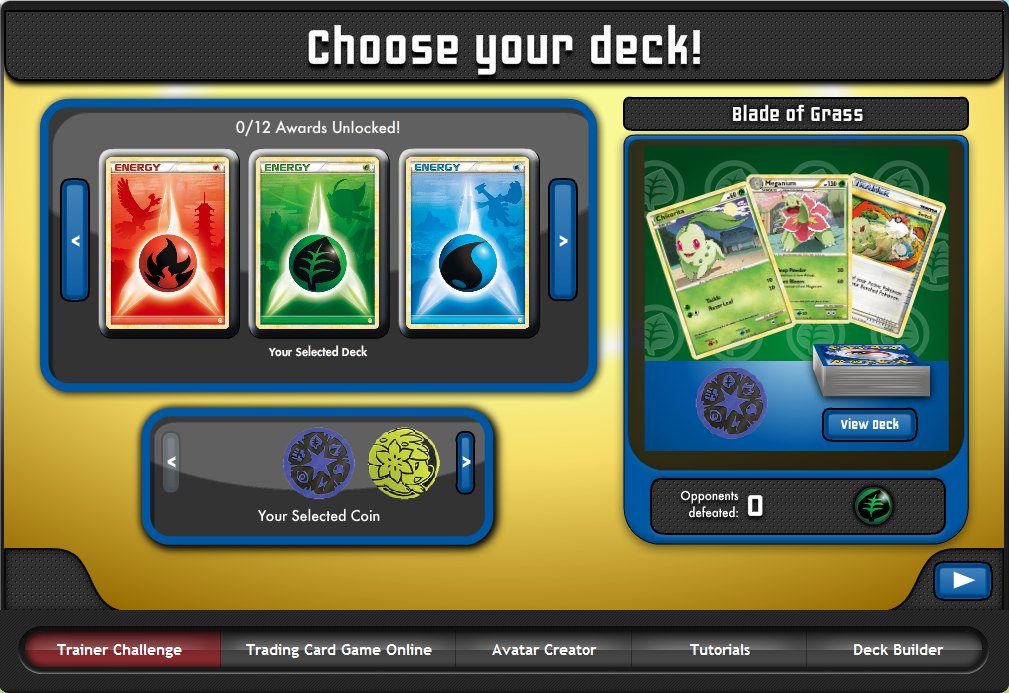
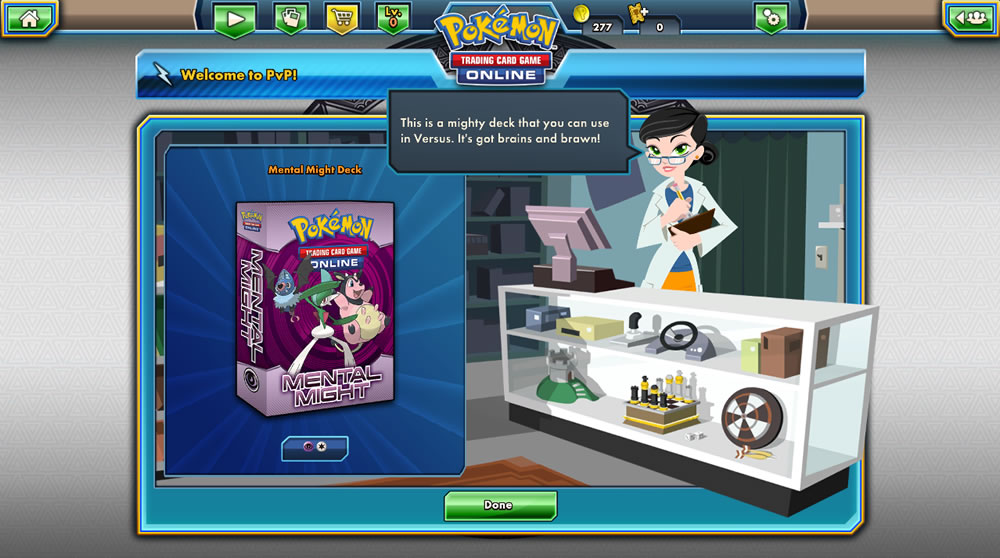
- Online-Exclusive Theme Decks: These included the XY Basic Blue, Green and Red decks, each of which became fully usable in Versus Mode after winning 7 Trainer Challenge matches with it. The XY Basic Yellow Theme Deck was unlocked once the final Tutorials were complete. A few decks in this category could not be used in the Trainer Challenge Mode, like the Mental Might deck.
- Rotated Online-Exclusive Theme Decks: These were starter decks from earlier years, including the old classic Basic Blue, Green, Red, Yellow and Orange, the BW Basic Blue, Green and Red, and the Power Relay deck. Most of these were no longer obtainable, but they could still be used by the players who already had them.
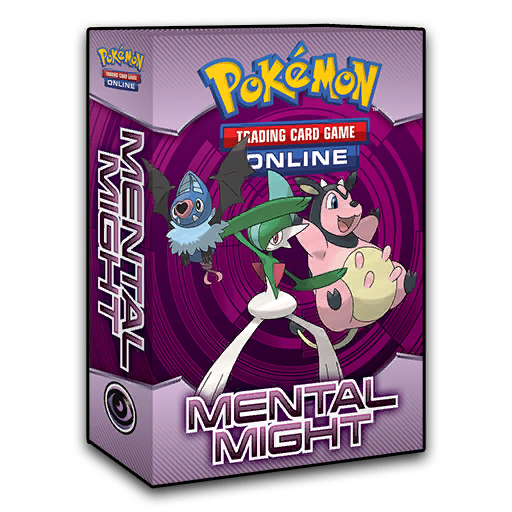
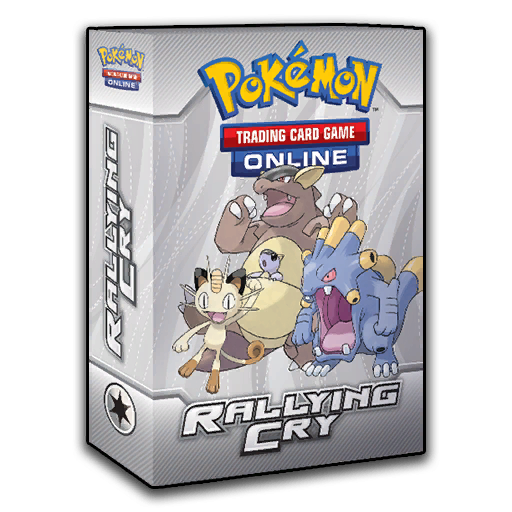
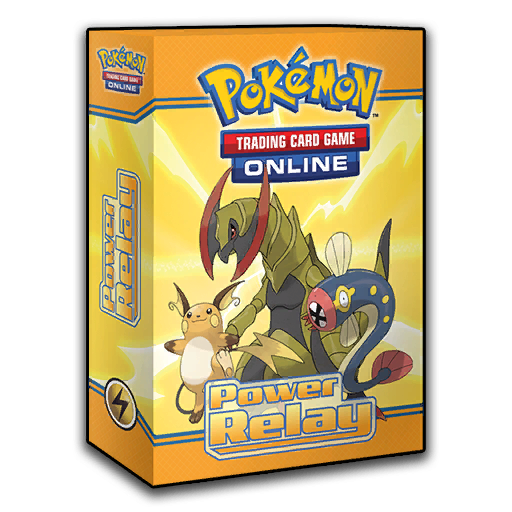
Every premade deck the game ever offered, from the 2011 starter decks to the last League Battle Decks, is listed with its box art in our complete guide to Pokémon TCG Online decks.
Standard Decks
These decks could contain only the cards authorised for official play and events in the Standard Format. As many expansions were released each year, new cards rotated in and out of the allowed card list, and consequently in and out of Standard Decks.
Expanded Decks
The Expanded play type, added for the 2014–15 season as a middle ground between Standard and Unlimited, was similar to Standard, with a wider range of authorised cards that could be used in the Expanded Format. Several new cards were added to the Expanded card list, as others were banned.
Unlimited Decks
As its name suggests, this play type allowed the use of all the cards in the game, creating devastating and overpowered decks. It was removed from Versus Mode and Tournaments on 30 March 2016, but could still be used in Friend Battles.
Legacy Decks
Only decks from Black & White, along with HeartGold & SoulSilver (including Call of Legends), could be used in this play type. Since HeartGold & SoulSilver cards could create very powerful and unbalanced decks if combined with the right cards from the other expansions, this play type was introduced to counter that, while allowing players to still enjoy using the cards from the HeartGold & SoulSilver expansions. Legacy was unique to TCGO, and on 30 March 2016 it took Unlimited’s place in Versus Mode.
Game Modes
Trainer Challenge Mode
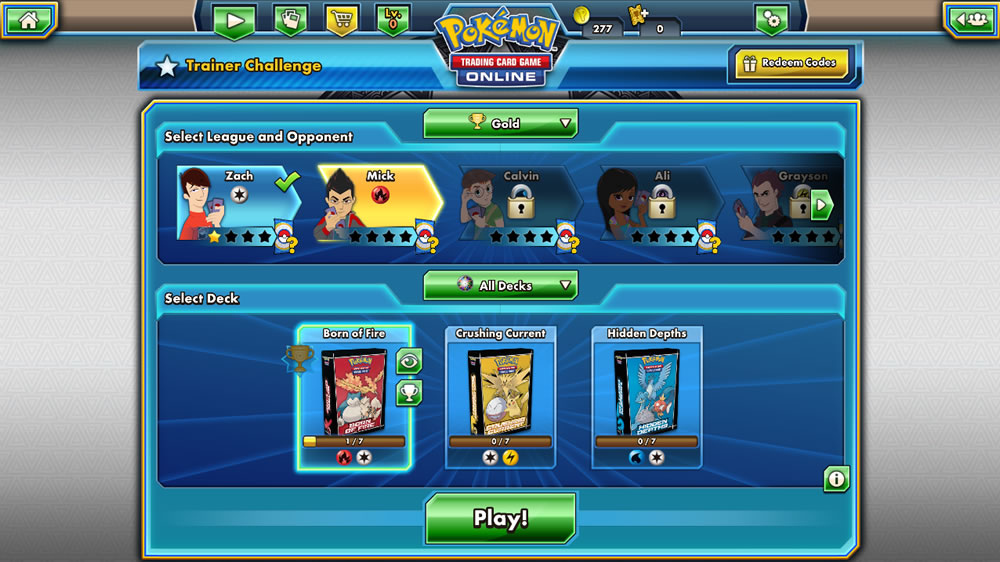
It was a solo mode where players could only use Theme Decks to battle different AI-controlled Trainers. The Theme Decks that could be used included the basic free ones, those bought by the player from the Shop and the Theme Decks unlocked through Tutorials. There were three Leagues within the Trainer Challenge mode: the Gold League, the Platinum League and the City Championship (a fourth, the Diamond League, existed until 7 February 2014). The player started out in the Gold League, where they had to defeat all 12 Trainers in order to advance to the Platinum League.
Moving up to the City Championship required repeating the same process in the Platinum League. Since the Leagues worked as a ladder system, the player unlocked one new Trainer at a time, as each could only be accessed after the player defeated the one before. Unlike in other games, no penalties were applied when the player lost against one of the AI opponents (they even got a few points), while scoring a win, on the other hand, was very rewarding. Each time the player defeated an opponent, they earned Trainer Challenge Points with that specific one. Earning enough points by battling the same Trainer many times unlocked a star under the Trainer’s picture. Up to 4 stars could be gained for each Trainer, with every star unlocking rewards that increased in value as the number of stars increased. The rewards could be earned only once per Trainer.
Trainer Challenge stars and their rewards
| Star | Reward |
|---|---|
| First star | 1 Trainer Token |
| Second star | 3 Trainer Tokens |
| Third star | 10 Trainer Tokens |
| Fourth star | 1 non-tradable 10-Card Booster Pack |
| All 12 Trainers of a League at four stars | 3 more Booster Packs |
One must note that losing against one of the AI opponents also granted a very small amount of points, but it was irrelevant compared to the amount gained through winning. Whether it was a win or a loss, this amount was affected by the opponent’s difficulty, which went up from Easy to Medium once the first star was earned, and to Hard at the third. The harder the difficulty, the more points the player could earn.
Versus Mode
It was a multiplayer mode where the player faced another random online player, after selecting a play type from the four Deck Formats (Theme, Standard, Expanded and Legacy). Whether they won or lost, both players earned 1 Trainer Token and a free Bonus Wheel spin, as long as the match lasted at least two minutes. If the player won against another who had the advantage over them (the advantage was determined by the game, for example for a more experienced player with a lot of matches played), they earned 2 extra Trainer Tokens. Moreover, scoring a win earned the player 10 Versus Points, and an extra 5 points if they won against a player who had the advantage.
Winning several consecutive games triggered the streak rewards. The Versus Points were added to the player’s points on the Versus Ladder. Over the course of 21 days, players had to earn as many Versus Points as they could, since these points unlocked many valuable prizes and advanced them further on the Versus Ladder, which reset after the 21 days had passed, resetting the rewards along with it. The ladder ran in these three-week seasons from 14 July 2015 until the game closed in June 2023.
Versus Mode win streak rewards
| Win streak | Bonus |
|---|---|
| Win 2 consecutive games | Earn 5 extra Versus Points |
| Win 3 consecutive games | Earn 10 extra Versus Points |
| Win 4 consecutive games | Earn 15 extra Versus Points |
| Win 5 or more consecutive games | Earn 20 extra Versus Points each time |
Versus Ladder rewards, 2015–2018
| # | Versus Points needed | Reward |
|---|---|---|
| 1 | 10 | 25 Trainer Tokens |
| 2 | 30 | 1 Uncommon Chest |
| 3 | 50 | 2 Pokémon or Trainer Cards |
| 4 | 70 | 50 Trainer Tokens |
| 5 | 100 | 1 Event Ticket |
| 6 | 130 | 2 to 3 Pokémon Cards |
| 7 | 170 | 1 10-Card Booster Pack of the latest expansion |
| 8 | 210 | 1 Pokémon-EX Card |
| 9 | 270 | 4 Uncommon Chests |
| 10 | 330 | 100 Trainer Tokens |
| 11 | 410 | 2 to 3 Pokémon Cards |
| 12 | 490 | 5 Event Tickets |
| 13 | 590 | 225 Trainer Tokens |
| 14 | 690 | 1 Pokémon-EX Card |
| 15 | 820 | 1 Holo Treasure Chest |
| 16 | 980 | 3 10-Card Booster Packs of the latest expansion |
| 17 | 1,170 | 10 Event Tickets |
| 18 | 1,400 | 600 Trainer Tokens |
| 19 | 1,670 | 5 10-Card Booster Packs of the latest expansion |
| 20 | 2,000 | 1 Full Art Supporter Card |
The track was reshuffled on 15 May 2018: from then on, for example, 30 points gave 50 Trainer Tokens, 50 points an Uncommon Chest, 100 points 2 Event Tickets, 270 points 150 Trainer Tokens and 590 points 2 Booster Packs. The featured Pokémon became GX and later V cards, but the top prize was always a Full Art Supporter.
The cards earned on the Versus Ladder changed each time it reset. These are the cards that were available from the first season in July 2015 to September 2017:
| Season | First Evolution rank | Second Evolution rank | Third Evolution rank | Pokémon-EX card | Full Art Supporter |
|---|---|---|---|---|---|
| 14 July – 7 August 2015 Grass |
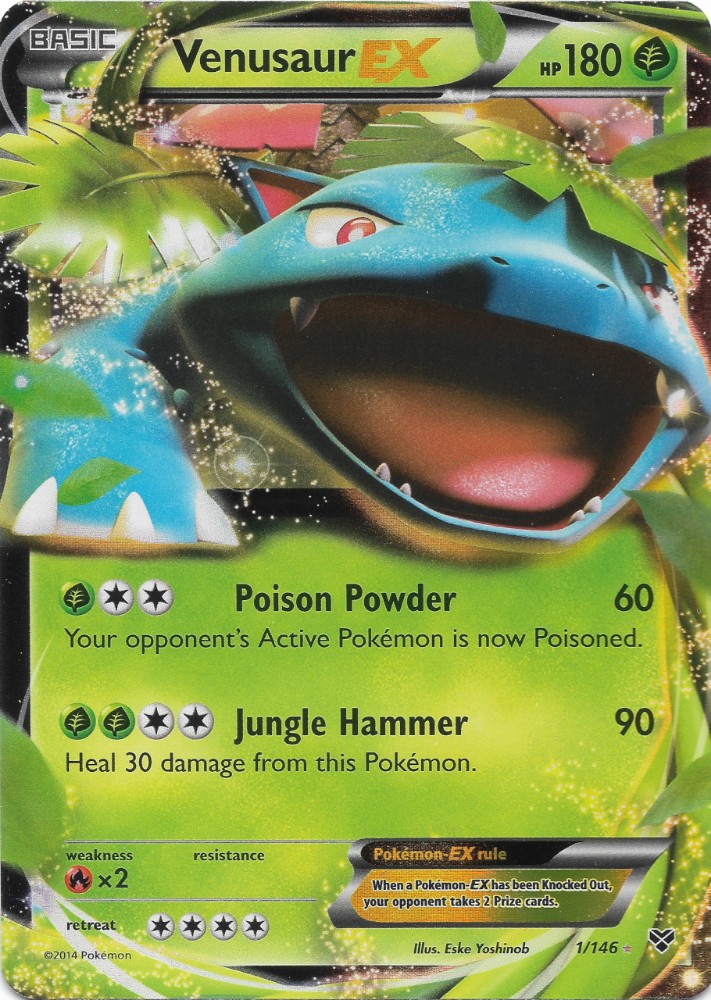
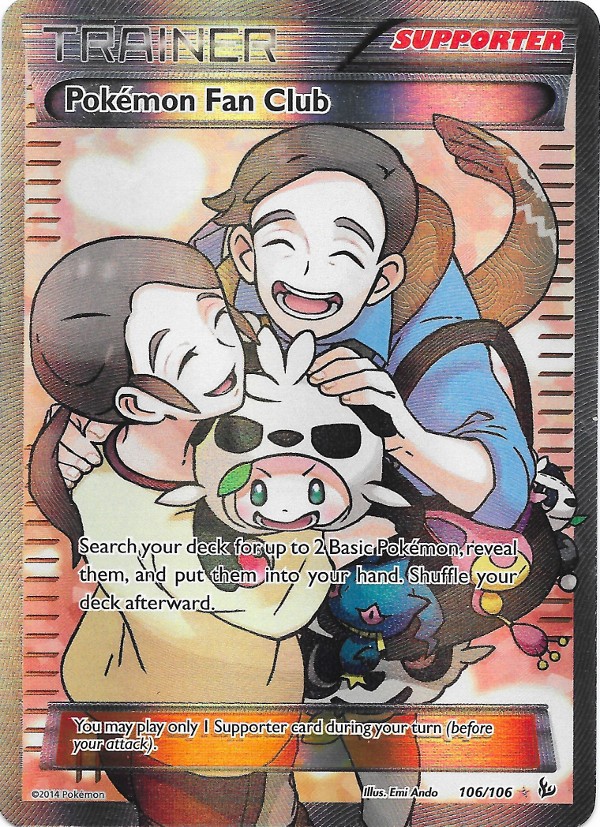
Shelmet / Accelgor | Caterpie / Metapod / Butterfree | Seedot / Nuzleaf / Shiftry | Venusaur-EX | Pokémon Fan Club |
| 7–28 August 2015 Water |
Barboach / Whiscash | Poliwag / Poliwhirl / Politoed | Froakie / Frogadier / Greninja | Blastoise-EX | Archie’s Ace in the Hole |
| 28 August – 18 September 2015 Fire |
Ponyta / Rapidash | Fletchling / Fletchinder / Talonflame | Fennekin / Braixen / Delphox | Charizard-EX | Pokémon Center Lady |
| 18 September – 9 October 2015 Darkness |
Pancham / Pangoro | Sandile / Krokorok / Krookodile | Zorua / Zoroark | Yveltal-EX | Lysandre |
| 9–30 October 2015 Fairy |
Clefairy / Clefable | Spritzee / Aromatisse (non-holo) | Flabébé / Floette / Florges | Xerneas-EX | Battle Reporter |
| 30 October – 20 November 2015 Fighting |
Diglett / Dugtrio | Timburr / Gurdurr / Conkeldurr | Machop / Machoke / Machamp (non-holo) | Lucario-EX | Korrina |
| 20 November – 11 December 2015 Colorless |
Amaura / Aurorus | Tyrunt / Tyrantrum | Slakoth / Vigoroth / Slaking | Kangaskhan-EX | Fossil Researcher |
| 11 December 2015 – 1 January 2016 Lightning |
Voltorb / Electrode | Shinx / Luxio / Luxray | Helioptile / Heliolisk (non-holo) | Manectric-EX | Xerosic |
| 1–22 January 2016 Dragon |
– | Trapinch / Vibrava / Flygon | Deino / Zweilous / Hydreigon | Dragonite-EX | AZ |
| 22 January – 12 February 2016 Metal |
Pineco / Forretress | Bronzor / Bronzong | Honedge / Doublade / Aegislash (reverse holo) | Dialga-EX | Professor Birch’s Observations |
| 12 February – 4 March 2016 Psychic |
Munna / Musharna | Trubbish / Garbodor | Duskull / Dusclops / Dusknoir | Mew-EX | Ghetsis |
| 4–25 March 2016 Grass |
Nincada / Ninjask | Hoppip / Skiploom / Jumpluff | Snivy / Servine / Serperior | Celebi-EX | N |
| 25 March – 15 April 2016 Metal |
Bronzor / Bronzong | Aron / Lairon / Aggron | Klink / Klang / Klinklang | Jirachi-EX | Bianca |
| 15 April – 6 May 2016 Fairy |
Swirlix / Slurpuff | Flabébé / Floette / Florges | Togepi / Togetic / Togekiss | Florges-EX | Teammates |
| 6–27 May 2016 Darkness |
Minccino / Cinccino | Eevee / Umbreon | Deino / Zweilous / Hydreigon | Darkrai-EX | Cheren |
| 27 May – 17 June 2016 Water |
Manaphy | Vanillite / Vanillish / Vanilluxe | Oshawott / Dewott / Samurott | Kyurem-EX | Professor Juniper |
| 17 June – 7 July 2016 Fighting |
Mienfoo / Mienshao | Meditite / Medicham | Rhyhorn / Rhydon / Rhyperior | Groudon-EX | Maxie’s Hidden Ball Trick |
| 7–28 July 2016 Grass |
Foongus / Amoonguss | Sewaddle / Swadloon / Leavanny | Oddish / Gloom / Vileplume (reverse holo) | Shaymin-EX | Skyla |
| 28 July – 18 August 2016 Lightning |
Electrike / Manectric | Electabuzz / Electivire | Tynamo / Eelektrik / Eelektross | Emolga-EX | Wally |
| 18 August – 8 September 2016 Fire |
Eevee / Flareon | Growlithe / Arcanine | Tepig / Pignite / Emboar | Victini-EX | Iris |
| 8–29 September 2016 Colorless |
Bidoof / Bibarel | Swablu / Altaria | Porygon / Porygon2 / Porygon-Z | Rayquaza-EX | Winona |
| 29 September – 20 October 2016 Water |
Slowpoke / Slowbro | Magikarp / Gyarados | Squirtle / Wartortle / Blastoise | Keldeo-EX | N |
| 20 October – 10 November 2016 Psychic |
2 Teammates | Gothita / Gothorita / Gothitelle | Duskull / Dusclops / Dusknoir | Toxicroak-EX | Pokémon Fan Club |
| 10 November – 1 December 2016 Grass |
Petilil / Lilligant | Foongus / Amoonguss | Bulbasaur / Ivysaur / Venusaur | Genesect-EX | Ghetsis |
| 1–22 December 2016 Psychic |
2 Rare Candy | Litwick / Lampent / Chandelure | Ralts / Kirlia / Gardevoir | Meloetta-EX | Lysandre |
| 22 December 2016 – 12 January 2017 Fire |
Eevee / Flareon | Vulpix / Ninetales | Torchic / Combusken / Blaziken | Camerupt-EX | Pokémon Center Lady |
| 12 January – 3 February 2017 Fighting |
Phanpy / Donphan | Plume Fossil / Archen / Archeops | Machop / Machoke / Machamp | Landorus-EX | Battle Reporter |
| 3–24 February 2017 Darkness |
2 Max Elixir | Pancham / Pangoro | Zorua / Zoroark | Darkrai-EX | Brigette |
| 24 February – 17 March 2017 Lightning |
Eevee / Jolteon | Voltorb / Electrode | Pikachu / Raichu | Thundurus-EX | Colress |
| 17 March – 7 April 2017 Dragon |
2 Puzzle of Time | Dratini / Dragonair / Dragonite | Trapinch / Vibrava / Flygon (reverse holo) | Latios-EX | Giovanni’s Scheme |
| 7 April – 1 May 2017 Psychic |
2 Ultra Ball | Zubat / Golbat / Crobat | Duskull / Dusclops / Dusknoir | Hoopa-EX | N |
| 1–22 May 2017 Dragon |
2 VS Seeker | Goomy / Sliggoo / Goodra | Deino / Zweilous / Hydreigon | Giratina-EX | Professor Juniper |
| 22 May – 12 June 2017 Water |
2 Trainers’ Mail | Poliwag / Poliwhirl / Politoed | Mudkip / Marshtomp / Swampert | Seismitoad-EX | Lysandre |
| 12 June – 3 July 2017 Fighting |
2 Float Stone | Rhyhorn / Rhydon / Rhyperior | Swinub / Piloswine / Mamoswine | Zygarde-EX | Steven |
| 3–24 July 2017 Psychic |
2 Battle Compressor | Nidoran♀ / Nidorina / Nidoqueen | Litwick / Lampent / Chandelure | Alakazam-EX | Team Rocket’s Handiwork |
| 24 July – 14 August 2017 Fire / Water |
2 Acro Bike | Fletchling / Fletchinder / Talonflame | Piplup / Prinplup / Empoleon | Volcanion-EX | Teammates |
| 14 August – 4 September 2017 Colorless |
2 Enhanced Hammer | Doduo / Dodrio | Fletchling / Fletchinder / Talonflame | Lugia-EX | Pokémon Ranger |
| 4–25 September 2017 Grass |
2 Exp. Share | Roselia / Roserade | Sewaddle / Swadloon / Leavanny | Virizion-EX | Bianca |
Seasons carried on in the same way after September 2017, each themed on a Pokémon type, with GX and later V and VSTAR cards as the featured Pokémon.
Tournament Mode
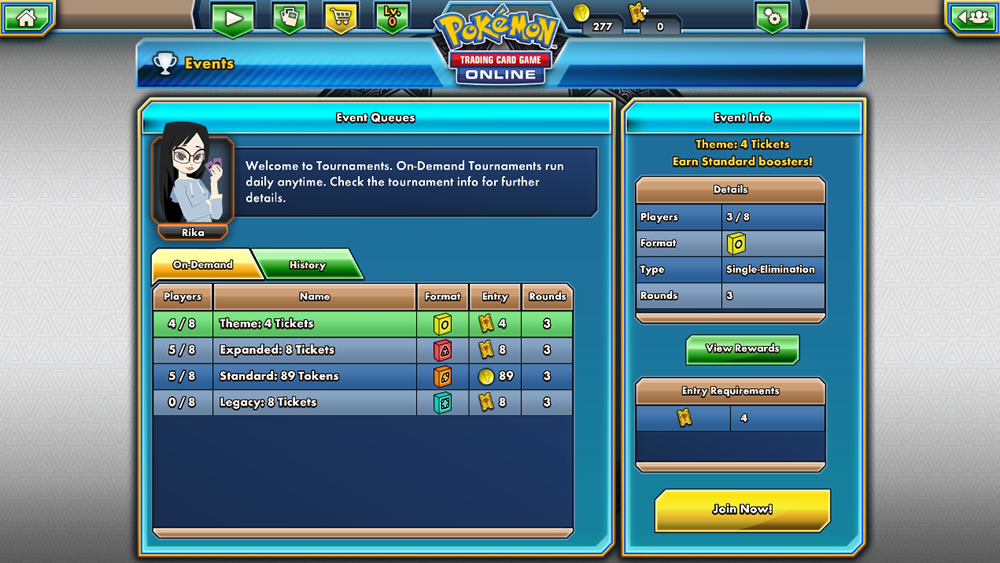
Also referred to as “Event Mode”, it was a player-versus-player mode where players faced each other in 8-player single-elimination tournaments using Theme, Standard, Expanded or Legacy Decks. To join a tournament queue, the player had to pay either 89 Trainer Tokens or 4, 6 or 8 Event Tickets, depending on the tournament. Once the player joined a queue, they had to wait until 8 players had joined, and then the tournament battles started. If the player won the first battle, they advanced to the semi-finals and then to the finals. Afterwards, once the tournament was over, they received certain rewards, depending on their progress within the tournament and the currency they used to participate (Trainer Tokens or Event Tickets).
Usually, one of the tournaments used a specific Deck Format and required players to pay in Trainer Tokens, while there were three other tournaments for each of the other Deck Formats, which required an Event Ticket entry fee. Which Deck Format required which currency changed every week. During the week, the Event Ticket fee for the tournaments was either 4 or 8. But at the weekend, the possibility to pay 6 tickets was unlocked, along with the special weekend tournaments.
| Entry fee | 1st | 2nd | 3rd–4th | 5th–8th |
|---|---|---|---|---|
| 89 Trainer Tokens | 3 Event Tickets | 2 Event Tickets | 1 Event Ticket | 12 Trainer Tokens |
| 4 Event Tickets | 2 Booster Packs of the current expansion and 1 random Booster Pack | 1 Booster Pack of the current expansion and 1 random Booster Pack | 1 random Booster Pack | 1 Uncommon Chest |
| 8 Event Tickets | 4 Booster Packs of the current expansion and 2 random Booster Packs | 2 Booster Packs of the current expansion and 2 random Booster Packs | 2 random Booster Packs | 1 Uncommon Chest |
| 6 Event Tickets (weekend) | 2 Booster Packs of the current expansion, 2 random Booster Packs and 3 Uncommon Chests | 1 random Booster Pack and 1 Uncommon Chest | 1 random Booster Pack | 1 Uncommon Chest and 25 Trainer Tokens |
| 8 Event Tickets (weekend) | 6 Booster Packs of the current expansion | 4 Booster Packs of the current expansion | 2 Booster Packs of the current expansion | 1 Uncommon Chest |
Event Tickets stopped being sold for real money in October 2018, and from 11 August 2020 a third way in arrived: Tournament Keys, which paid for the qualifying events of the online Players Cup.
Tutorial Mode

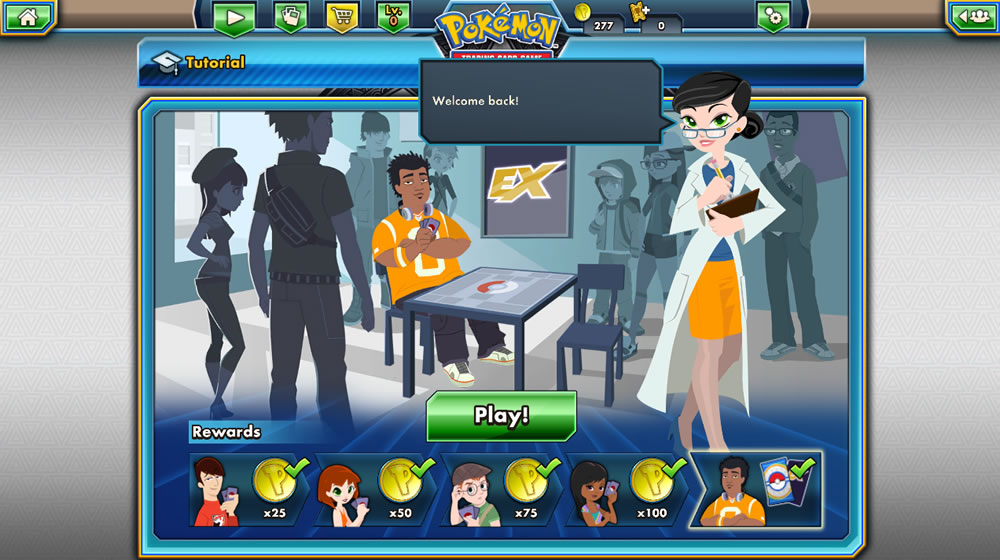
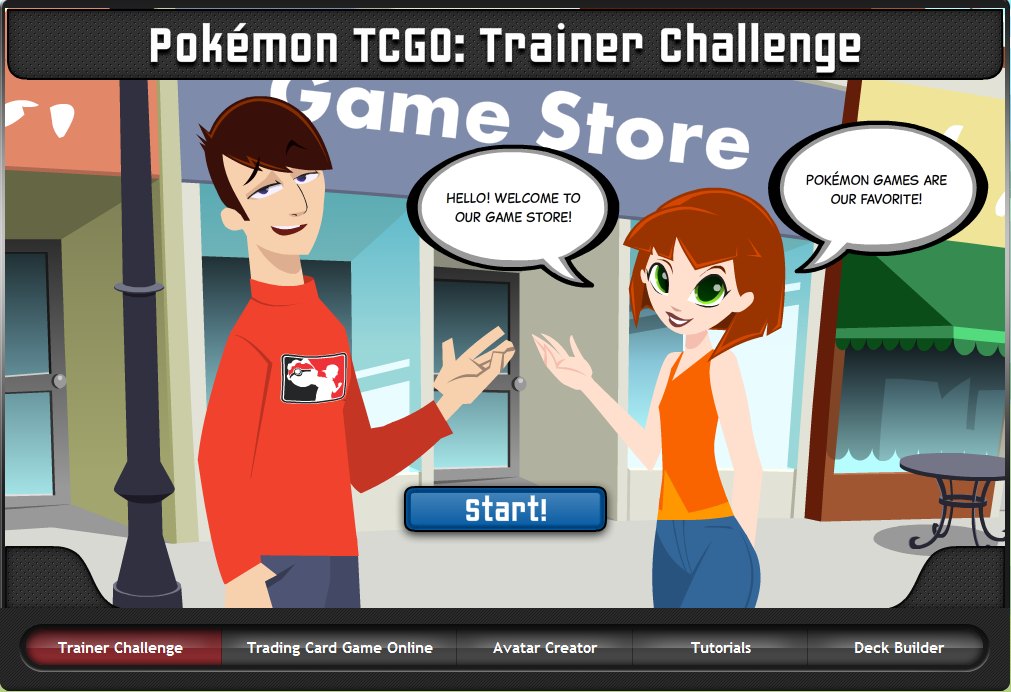
Many tutorials were presented here, offering the player all the guidance needed and teaching them the game’s mechanics and features. As the game started, the player was automatically put through a tutorial within the Trainer Challenge Mode (which could be bypassed through the options menu, as previously stated), where they were welcomed by Professor Holly in a game store decorated with bookshelves and various items. Professor Holly taught the player the game mechanics by making them face several opponents consecutively.
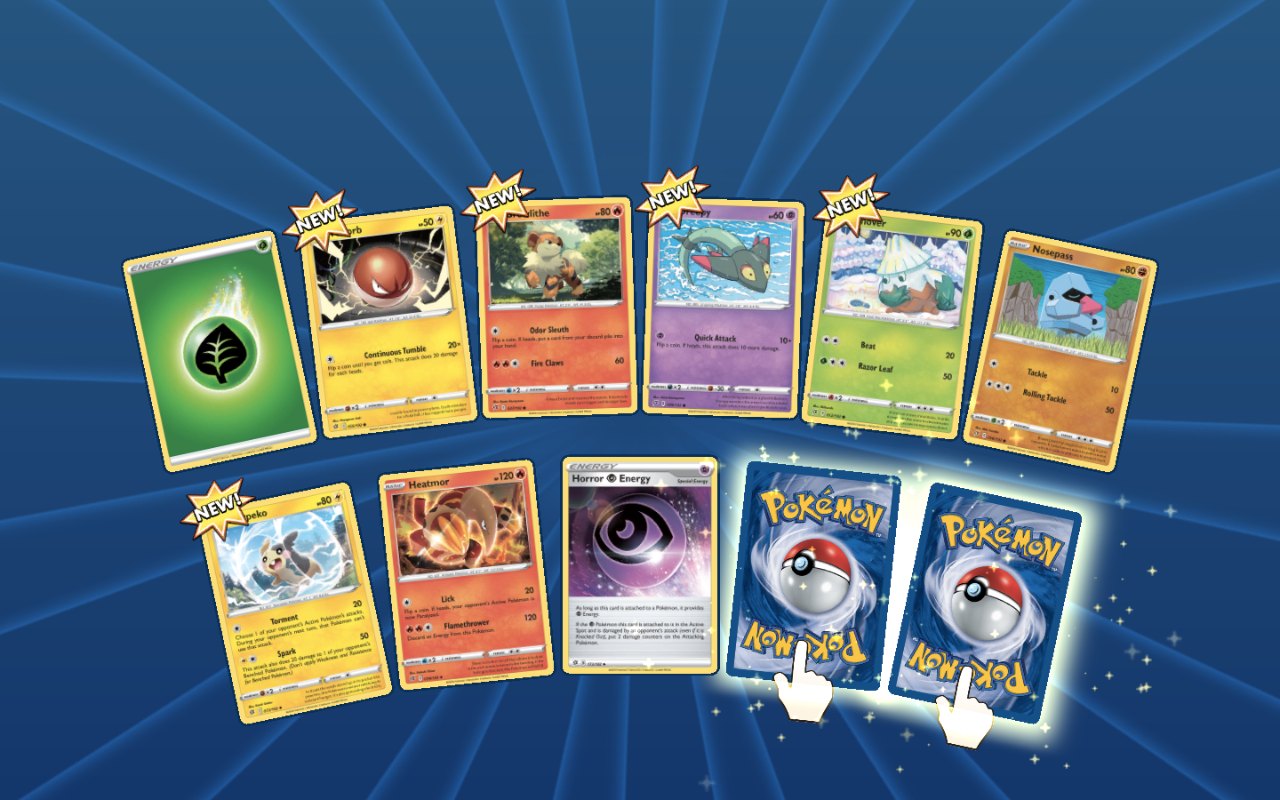
The opponents were as follows: Zach, Ella, Calvin, Ali and Otis. Defeating Otis granted the player a special card along with a booster pack. Additionally, if the player was logged in with their Pokémon Trainer Club account, they were presented with five new additional tutorials after defeating Zach and Ella. These tutorials, added on 14 July 2015 along with the XY Basic Yellow deck, taught the player about Special Conditions like Paralysis or Poison, instead of the beginner game mechanics. They also rewarded the player with 25 Trainer Tokens per tutorial completed, and a final reward of 1 non-tradable card and 1 10-Card Booster Pack once all the tutorials were complete. The rewards changed over the years: in the final version, the tutorial matches paid 25 to 100 Trainer Tokens each (250 in all), with a 10-Card Booster Pack and a Pokémon-GX card at the end.

Professor Holly
The tutorial guide. Professor Holly greets new players in a cosy game store and teaches them the rules over a run of practice matches. In Pokémon TCG Live, Professor Fir has taken over her role, running the Learning Lab tutorials added in January 2026.
Friend Battle
This mode allowed players to battle players from their friend list, by tapping the head icon next to their friend’s name in the list, which issued a challenge request. This mode had no effect on other gameplay features. After March 2016, Friend Battles were the only place where the Unlimited format could still be used.
Play Testing
It allowed the player to pick any deck they wanted and test it out against one of the AI Trainers from the Trainer Challenge. This, of course, had no effect on the player’s progress in the Trainer Challenge Mode, nor any other mode.
Challenges
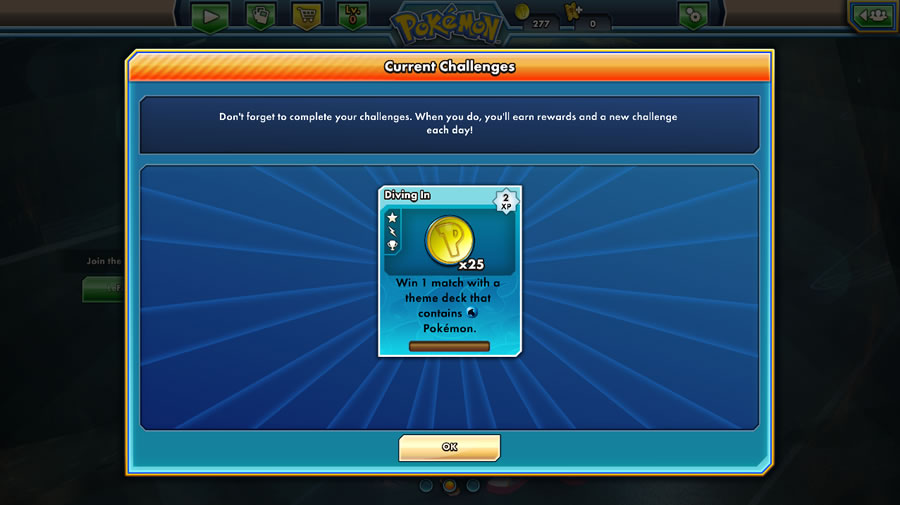
Introduced on 25 March 2015, these challenges were like quests that required the player to complete a certain task, and they came in the form of Daily Challenges and Special Challenges. Each Challenge was related to a Pokémon type, and completing Challenges earned the player Experience Points in their respective Pokémon type. The acquired experience helped the player advance in the Pokémon-type Level, with each level unlocking a specific feature. To reach level 1, which unlocked coins themed on that Pokémon type, the player needed 5 exp points. Level 2 required 10 exp points and unlocked Card Sleeves. As for level 3, which was the final level for each Pokémon type, it required 20 exp points and unlocked Deck Boxes. Each time the player levelled up in a Pokémon type, they gained 1 level in their own Player Level. As the Player Level increased, they were able to choose between up to 3 Challenges daily, but they could only select one.
They were also able to store up to 3 Challenges at high levels, as opposed to a low-level player, who could only have one challenge a day and only got a new one after completing or abandoning that one challenge. One should note that the first four Challenges the player got as they started playing could not be abandoned and had to be completed. Furthermore, some Challenges were rarer than others, with lower chances of popping up when the player logged in, and the rarer the Challenge, the better the reward.
Each Challenge belonged to a Pokémon type, and levelling those types raised the Player Level. The game’s coins came in the same type colours:




The first four Challenges
These could not be abandoned:
| Name | Game mode | Task | XP | Reward |
|---|---|---|---|---|
| Diving In | Any | Use a Theme Deck containing Water Pokémon to win a match | 2 Water | 25 Trainer Tokens |
| Burning Attack | Any | Use a Theme Deck containing Fire Pokémon to win a match | 2 Fire | 25 Trainer Tokens |
| Solid Ground | Any | Use a Theme Deck containing Grass Pokémon to win a match | 2 Grass | 25 Trainer Tokens |
| Mighty Mind | Tournament Mode or Random Battle | Use Psychic Pokémon to defeat 2 enemy Pokémon | 2 Psychic | 5-Card Booster Pack |
These four were later replaced by three introductory challenges: Rampage (deal 200 damage, for Water XP), Knock Out (take 2 Prize Cards, for Fire XP) and Victory Lap (win a match with a Theme Deck, for Grass XP).
Daily Challenges
Daily Challenges came in three rarities, and the tasks grew with the player’s level. Every challenge in a band followed the same pattern for its Pokémon type:
| Player Level | Common | Uncommon | Rare |
|---|---|---|---|
| 0 to 5 | Inflict 500 damage · 1 XP · 25 Trainer Tokens | Put 5 Evolution Cards into play · 2 XP · 50 Trainer Tokens | Defeat 5 enemy Pokémon · 3 XP · a 10-Card or 5-Card Booster Pack |
| 6 to 15 | Inflict 750 damage · 1 XP · 30 Trainer Tokens | Put 7 Evolution Cards into play · 2 XP · 55 Trainer Tokens | Defeat 12 enemy Pokémon · 3 XP · a 10-Card or 5-Card Booster Pack |
| 16 to 30 | Inflict 1,000 damage · 1 XP · 35 Trainer Tokens | Put 10 Evolution Cards into play · 2 XP · 60 Trainer Tokens | Defeat 16 enemy Pokémon · 3 XP · a 10-Card or 5-Card Booster Pack |
In the lowest band the Psychic challenges had to be played in Tournament Mode or a Random Battle, while the others could be completed in any mode; from level 6 upwards, every Daily Challenge had to be done in Tournament Mode or a Random Battle. These were the challenge names:
Levels 0 to 5
| Type | Common | Uncommon | Rare |
|---|---|---|---|
| Grass | Seeds of Destruction | Planting Seeds | Splinter |
| Fire | Combustion | Smoldering | Embers |
| Psychic | Mind Games | Psy Awakening | Brain Drain |
| Water | Little Splash | Narrow Stream | Undertow |
Levels 6 to 15
| Type | Common | Uncommon | Rare |
|---|---|---|---|
| Grass | Dangerous Spores | Taking Root | Forest Flurry |
| Fire | Incineration | Burning Bright | Wildfire |
| Psychic | Bad Dreams | Phantom Power | Terror Strike |
| Water | Tidal Wave | Rising Tides | Whirlpool |
| Lightning | Powerful Jolt | High Voltage | Turbo Laser |
| Dragon | Sharp Claws | Learning to Fly | Dragon Blast |
| Darkness | Shadow Strike | Total Eclipse | Shroud of Pain |
| Fighting | Roundhouse Kick | Training Hard | Rock Slide |
| Fairy | Pixie Punch | Dazzling Sparkle | Dazzling Power |
| Metal | Iron Crash | Reinforcing | Sharp Strike |
Levels 16 to 30
| Type | Common | Uncommon | Rare |
|---|---|---|---|
| Grass | Nature’s Wrath | Growing Strong | Chocking Vines |
| Fire | Fire Storm | Blazing Hot | Inferno |
| Psychic | Nightmare | Superior Mind | Psychic Assault |
| Water | Hurricane | Raging River | Powerful Flood |
| Lightning | Lightning Storm | Turbocharged | Lightning Blast |
| Dragon | Sonic Power | Dragon’s Roar | Dragon Rage |
| Darkness | Total Darkness | Eternal Night | Fade to Black |
| Fighting | Flying Fists | Powered Up | Earthquake |
| Fairy | Sweet Disaster | Brilliant Light | Rainbow Power |
| Metal | Cut Down | Gleaming Steel | Slice and Dice |
Special Challenges
Special Challenges appeared for a limited time after certain updates between 2015 and 2017, and stopped after the Sun & Moon expansion. All of them were Common:
| Time limit | Mode / play type | Task | XP | Reward |
|---|---|---|---|---|
| 3 days | Any | Earn 60 Prize Cards during battles | – | 300 Trainer Tokens |
| 3 days | Any | Use Colorless Pokémon to inflict 3,000 damage on enemy Pokémon | – | 300 Trainer Tokens |
| 3 days | Trainer Challenge Mode | Win 9 matches in Trainer Challenge Mode | – | 300 Trainer Tokens |
| 3 days | Any | Earn 100 Prize Cards during battles | – | 300 Trainer Tokens |
| 3 days | Random Battle | Use Fighting Pokémon to inflict 5,000 damage on enemy Pokémon | 3 Fighting | 2 Fates Collide Booster Packs |
| 3 days | Random Battle | Use non-Basic Pokémon to defeat 30 enemy Pokémon | – | 2 Call of Legends Booster Packs |
| 3 days | Any | Get 100 heads on coin flips | – | 3 Event Tickets |
| 3½ days | Tournament Mode | Win 6 matches in Tournament Mode | – | 1,000 Trainer Tokens |
| 4 days | Any | Use non-Basic Pokémon to defeat 20 enemy Pokémon | – | 200 Trainer Tokens |
| 4 days | Tournament Mode | Use Fire Pokémon to defeat 12 enemy Pokémon | 3 Fire | 750 Trainer Tokens |
| 4 days | Expanded play type | Win 10 matches with the Expanded play type | – | 2 Plasma Blast Booster Packs |
| 4 days | Any | Use Fighting Pokémon to inflict 4,000 damage on enemy Pokémon | 3 Fighting | 2 Sun & Moon Booster Packs |
| 5 days | Trainer Challenge Mode | Win 9 matches in Trainer Challenge Mode | – | 300 Trainer Tokens |
| 5 days | Random Battle | Win 20 matches in Versus Mode | – | 2 10-Card Booster Packs of the current expansion and 1 non-tradable card |
| 5 days | Random Battle | Use 135 Basic Pokémon Cards | – | 2 10-Card Booster Packs of the current expansion and 1 non-tradable card |
| 5 days | Random Battle | Defeat 60 enemy Pokémon | – | 2 10-Card Booster Packs of the current expansion and 1 non-tradable card |
| 5 days | Random Battle | Use 90 Evolution Cards | 3 Dragon | 2 10-Card Booster Packs of the current expansion and 1 non-tradable card |
| 7 days | Random Battle | Defeat 40 enemy Pokémon | – | 2 Black & White Booster Packs |
| 7 days | Random Battle | Defeat 40 enemy Pokémon that are weak to the Water type | 3 Water | 2 Noble Victories Booster Packs |
| 7 days | Random Battle | Use Water Pokémon to defeat 40 enemy Pokémon | 3 Water | 2 Emerging Powers Booster Packs |
| 9 days | Expanded play type | Win 7 matches with the Expanded play type | – | 2 Legendary Treasures Booster Packs |
| 9 days | Expanded play type | Inflict 5,000 damage on enemy Pokémon | – | 2 Legendary Treasures Booster Packs |
| 9 days | Expanded play type | Inflict 3,000 damage on enemy Pokémon using the Expanded play type | – | 2 Boundaries Crossed Booster Packs |
| 9 days | Expanded play type | Earn 42 Prize Cards during battles using the Expanded play type | – | 2 Phantom Forces Booster Packs |
| 9 days | Legacy play type | Win 10 matches with the Legacy play type | – | 2 HeartGold & SoulSilver Booster Packs |
| 9 days | Legacy play type | Inflict 5,000 damage on enemy Pokémon | – | 2 Undaunted Booster Packs |
| 9 days | Random Battle | Use Fairy Pokémon to defeat 40 enemy Pokémon | 3 Fairy | 2 Flashfire Booster Packs |
| 9 days | Random Battle | Use Fairy Pokémon to inflict 4,000 damage on enemy Pokémon | 3 Fairy | 2 XY Booster Packs |
| 9 days | Random Battle | Use Dragon Pokémon to defeat 40 enemy Pokémon | 3 Dragon | 2 Furious Fists Booster Packs |
The Expanded and Legacy challenges first appeared in April and June 2016.
Player Level and Rank
The Player Level, as mentioned earlier, progressed each time the player completed Challenges and levelled up a certain Pokémon type. As the Player Level increased, players unlocked more perks, as demonstrated in the following table:
| Player Level | Challenges a player could hold at a time | Challenges offered to choose from (only 1 could be selected) |
|---|---|---|
| 0–2 | 1 | 1 |
| 3–4 | 1 | 2 |
| 5–7 | 2 | 2 |
| 8–9 | 2 | 3 |
| 10 and above | 3 | 3 |
Reaching Player Level 15 also made the Booster Packs won from Challenges tradable.
As for the Player Rank, it was mainly used to calculate how much experience the player had, based on their decks and their win ratio. This feature was mainly used to match up players with similar stats against each other. Sometimes players with more experience got matched against less experienced players, granting the more experienced player the “Advantage” status, which we mentioned before. If the less experienced player scored a win against the “Advantaged” player, they received bonus rewards. The Advantage status was added on 2 October 2013.
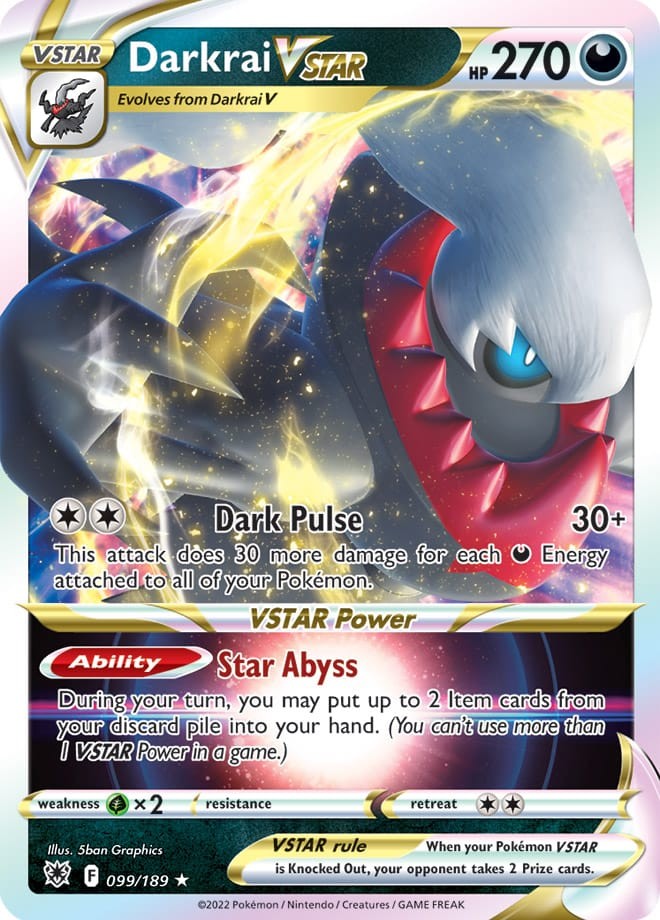
Ranked play had prizes of its own. Each season of the Versus Ladder, from July 2015 until the servers closed, led up to a featured card:
Extra Bonuses and Rewards
Daily First Match Bonus
Each day, the player received 10 extra Trainer Tokens after completing their first Random Battle match of the day, whether they won or lost. The bonus was briefly retired on 25 March 2015 and came back on 23 April 2015.

Daily Login Bonus
Similarly to other online games, players earned rewards for logging in to Pokémon Trading Card Game Online daily. This feature didn’t require the player to log in on consecutive days: players could skip a day or two without losing their progress on the login reward track. New players were put on a 3-day login reward track, and were moved to a 5-day one once they earned the reward of the third day. The 5-day track cycled back to its start once the player earned the reward of the fifth day.
3-day login track
| Day | Reward |
|---|---|
| 1st day | 1 Mental Might Theme Deck |
| 2nd day | 25 Trainer Tokens |
| 3rd day | 5 non-tradable 10-Card Booster Packs from random Standard-format expansions |
5-day login track
| Day | Reward |
|---|---|
| 1st day | 5 Trainer Tokens |
| 2nd day | 10 Trainer Tokens |
| 3rd day | 15 Trainer Tokens |
| 4th day | 1 Event Ticket |
| 5th day | 1 non-tradable 10-Card Booster Pack from a random Standard-format expansion |
Bonus Wheels
Spinning the Bonus Wheel, a feature added on 24 June 2014, allowed the player to test their luck and receive a random reward. There were two types of Bonus Wheel: the Basic Bonus Wheel and the Victor’s Bonus Wheel, which gave more rewards than the first type. Bonus Wheel spins were earned by playing Tournament Mode matches or Random Battles within the Versus Mode, and each spin paid out one segment of the wheel.
| Wheel | Segments |
|---|---|
| Basic Bonus Wheel | 1 Trainer Token (4 segments), 3 Trainer Tokens (3 segments), 5 Trainer Tokens (2 segments) or 1 Mystery Box (1 segment) |
| Victor’s Bonus Wheel | 5 Trainer Tokens (3 segments), 10 Trainer Tokens (2 segments), 15 Trainer Tokens, 25 Trainer Tokens, 1 Event Ticket (2 segments) or 1 Mystery Box |
Mystery Box Rewards
The Mystery Boxes were earned through Bonus Wheel spins, and they offered different rewards, depending on the Bonus Wheel type they were received from. Some of the rewards were fixed, while others changed weekly.
| Mystery Box | Possible rewards |
|---|---|
| Mystery Box from the Basic Bonus Wheel | 25 Trainer Tokens, 1 random 5-Card Booster Pack from the Standard format, Card Sleeves, Coins, Promo Cards or 4 Event Tickets |
| Mystery Box from the Victor’s Bonus Wheel | 50 Trainer Tokens, 1 tradable random 10-Card Booster Pack, tradable cards, Card Sleeves, Coins, Promo Cards or Event Tickets |
The Victor’s Mystery Box was upgraded on 4 February 2015, when prizes such as the 50 Trainer Tokens were added.
Coins, which players used for the coin flip at the start of a match, were among the Mystery Box prizes. Three from the game’s collection:



In-Game Shop
The Shop featured 2 main options: the Shop itself, and the Redeem Code feature.
Shop
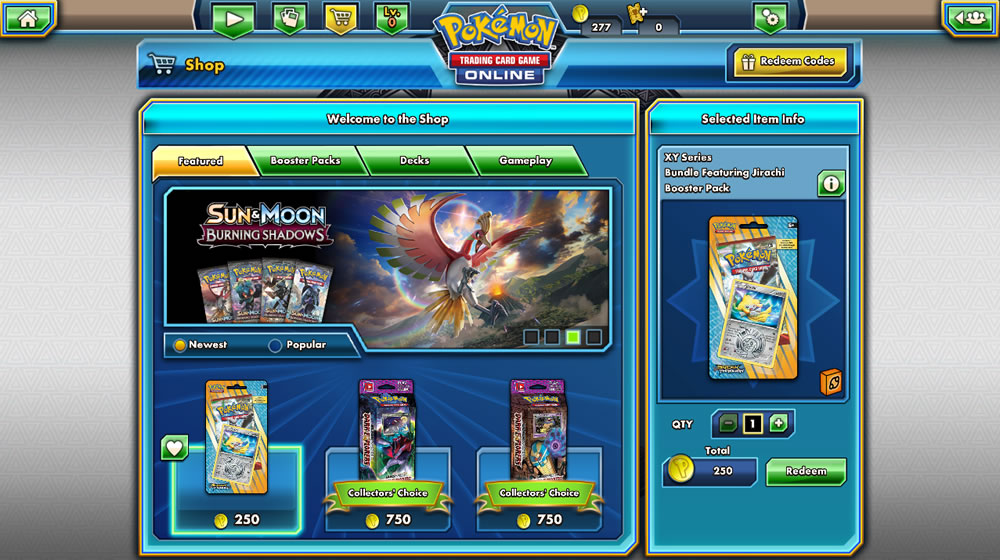
Here the player could buy avatar items to customise their avatar, Booster Packs, Deck Boxes, Card Sleeves and plenty of other in-game items. Some of the items in the Shop changed on a weekly basis. Players could use Trainer Tokens to buy the items they wanted, or they could also use Gems, another currency, which was bought with real money, with each Gem worth 2 Trainer Tokens. Only adult players were allowed to buy Gems and Event Tickets, and Gems were only ever sold in Canada, from 19 April 2013 to 29 October 2018, when Event Ticket sales also ended; leftover Gems were converted into Lost Thunder packs and Trainer Tokens. The whole Shop closed with the game on 5 June 2023.
| Item | Cost |
|---|---|
| Deck Box (available for a limited time) | Around 100 to 150 Trainer Tokens |
| 10-Card Booster Pack | 200 Trainer Tokens |
| Card Sleeves (available for a limited time) | Around 275 to 300 Trainer Tokens |
| Non-Exclusive Theme Deck | 500 Trainer Tokens |
| Weekly random Blister Packs | 200 to 1,265 Trainer Tokens |
| Avatar customisation items | Various costs |
Trainer Tokens, the everyday currency, were added on 25 July 2013.
Redeem Codes
This feature allowed the input of certain codes, from the code cards packed with physical Pokémon TCG products or distributed during certain events, to unlock many in-game rewards like Theme Decks, avatar items or even tradable cards. These are some of the codes that could be redeemed, all long expired, and the rewards they unlocked:
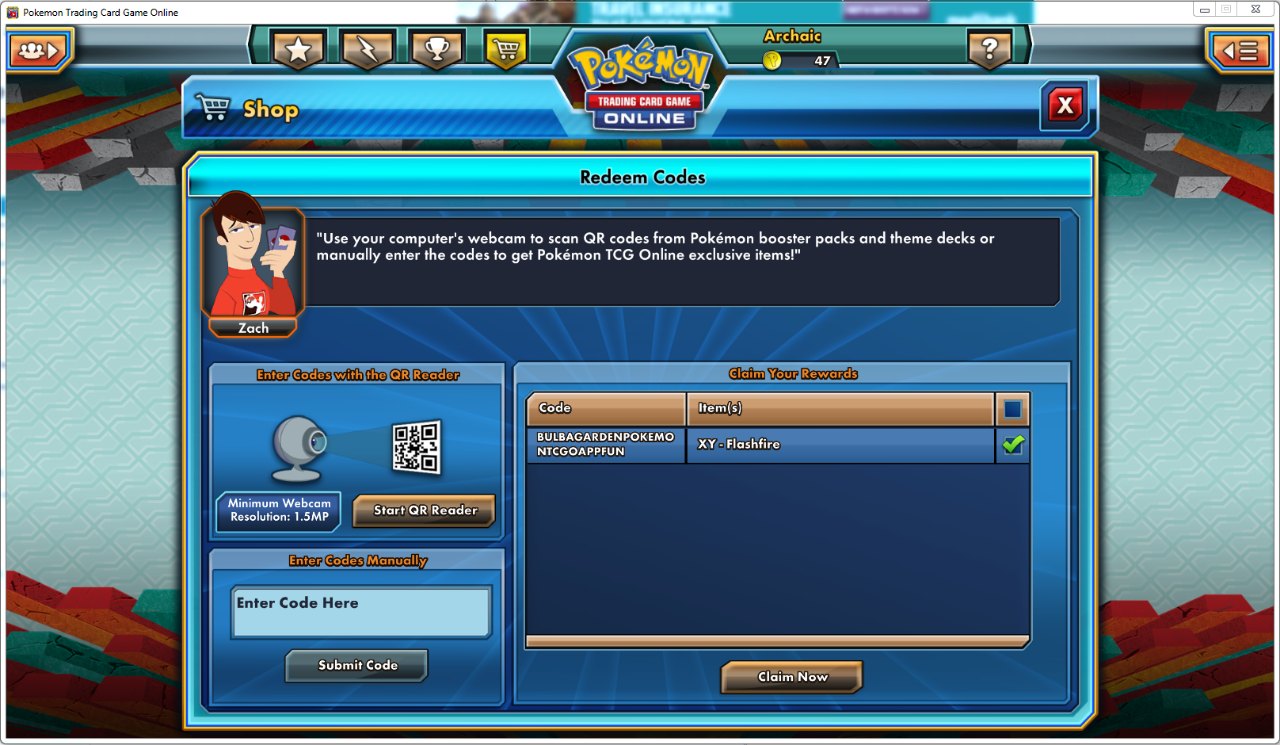
- Codes unlocking the Rallying Cry Theme Deck: AncientOrigins, BoundariesCrossed, FlashFire, FuriousFists, LegendaryTreasures, PhantomForces, PlasmaBlast, PlasmaFreeze, PlasmaStorm, PrimalClash, RoaringSkies
- Codes unlocking the Pokémon-EX Hat avatar item: DarkExplorers, DragonsExalted, NextDestinies
Products whose codes unlocked tradable cards
| Product | Cards unlocked |
|---|---|
| Charizard-EX Box | Charizard-EX |
| Gallade-EX Box | Gallade-EX |
| Hoenn Power Tin: Blaziken | Blaziken-EX and 6 Fire Energy Cards, in the Fiery Focus deck |
| Hoenn Power Tin: Sceptile | Sceptile-EX and 6 Grass Energy Cards, in the Overgrown Forest deck |
| Hoenn Power Tin: Swampert | Swampert-EX and 6 Water Energy Cards, in the Hydro Stomper deck |
| Krookodile-EX Box | Krookodile-EX |
| Legends of Hoenn Tin: Groudon | Groudon-EX and 6 Fighting Energy Cards, in the Earthshaker deck |
| Legends of Hoenn Tin: Kyogre | Kyogre-EX and 6 Water Energy Cards, in the Great Wave deck |
| Legends of Kalos Tin: Xerneas | Xerneas-EX |
| Legends of Kalos Tin: Yveltal | Yveltal-EX |
| Mega Latios Collection | Latios and a Latios Holofoil Card |
| Powers Beyond Tin: Hoopa | Hoopa-EX and 6 Psychic Energy Cards, in the Scoundrel Djinn deck |
| Powers Beyond Tin: Latios | Latios-EX, 3 Water Energy Cards and 3 Psychic Energy Cards, in the Eon Pulse deck |
| Powers Beyond Tin: Rayquaza | Rayquaza-EX, 3 Fire Energy Cards and 3 Lightning Energy Cards, in the Dragon Striker deck |
| Pyroar Box | Blacksmith, Fiery Torch, Pyroar and their Holofoil versions |
| Rayquaza-EX Box | Rayquaza-EX |
| Shiny Rayquaza-EX Box | Alternate (Shiny) Rayquaza-EX |
None of these codes works any more: PTCGO’s code system closed with the game, and the code cards in new products are redeemed in Pokémon TCG Live instead.
Trade Feature
The Trade Feature allowed players to trade cards, Booster Packs and other in-game items. This was done through the creation of private or public trade offers, which could be seen by other players, who would contact the offer poster if they were interested. Many items, though, were trade-locked, which meant they could not be traded, including many free items acquired easily. The trade lock was used to prevent players from having infinite trade options and ruining the in-game trade balance. Pokémon TCG Live has no trading at all, so when collections moved across, tradable and trade-locked copies were simply counted together.
Avatar Customisation
Through the Avatar Creator in the main menu, the player could edit their avatar’s appearance, using many avatar items acquired in the game or through special events. The avatar options included skin and hair colours, hair and facial hair styles, and a wide range of apparel and clothing, from T-shirts, trousers and glasses to much more. Avatar items and unopened Avatar Collection Boxes did not transfer to Pokémon TCG Live.
Pokémon
As a full version of the card game, Pokémon TCG Online featured every Pokémon printed in the international sets from HeartGold & SoulSilver to Crown Zenith, which covers Generations I to VIII. Pokémon appear as cards rather than characters, and the game’s own spotlight fell on the Pokémon-EX, GX and V cards offered as Versus Ladder prizes, the Pokémon on tin and box code cards, and the online-exclusive starter decks.
 Venusaur#003
 Charizard#006
 Kyogre#382
 Groudon#383
 Darkrai#491
 Chesnaught#652
 Pyroar#668
 Hoopa#720
- Venusaur – Venusaur-EX was the featured card of the very first Versus Ladder season, 14 July to 7 August 2015.
- Charizard – Starred in two ladder seasons eight years apart: Charizard-EX in 2015 and Charizard V/VSTAR in March 2023.
- Kyogre – Kyogre-EX headed the Great Wave deck unlocked by the Legends of Hoenn tin code.
- Groudon – Groudon-EX led Earthshaker, the other Legends of Hoenn tin deck.
- Darkrai – Darkrai V/VSTAR was the prize in the last Versus Ladder season, which ended on 5 June 2023 as the servers closed.
- Chesnaught – Its Kalos Power Tin code card had a themed design instead of the usual green back.
- Pyroar – The Pyroar Box code unlocked Pyroar plus Blacksmith and Fiery Torch, with holofoil copies.
- Hoopa – Hoopa-EX headed Scoundrel Djinn, one of three Powers Beyond tin decks.
From PTCGO to Pokémon TCG Live
Pokémon TCG Online lasted twelve years and went through several forms: a browser beta in 2011, a downloadable client for PC and Mac in 2012, then iPad and Android tablet versions. It was replaced by Pokémon TCG Live, which was announced in September 2021, tested country by country through 2022 and launched worldwide on 8 June 2023, three days after PTCGO’s servers closed. Most of a player’s cards could move across, but trading, currencies, avatars and the oldest cards did not.
- 2011browser beta opens, 24 March
- 12 yearsonline, until 5 June 2023
- 3 dayslater, Live launched worldwide
- 4copies of each card carried over
Twelve years of PTCGO

Milestones, 2011–2026
| Date | Milestone |
|---|---|
| 15 February 2011 | Online version of the TCG announced, with a browser beta promised for April |
| 24 March 2011 | Pokémon Trainer Challenge browser beta opens (3 decks, 14 AI Trainers) |
| 6 April 2011 | Black & White Theme Decks go on sale with the first online codes |
| 15 May 2012 | Downloadable Windows client released (relaunch announced 30 March 2012) |
| 8 August 2012 | Original browser version switched off |
| November 2012 | macOS client released |
| 30 September 2014 | iPad version released |
| February 2015 | Game leaves open beta; Tournament Mode premieres on 5 February |
| 14 July 2015 | First Versus Ladder season begins |
| 2016 | Android tablet version released |
| 30 March 2016 | Unlimited format leaves Versus and Events; Legacy takes its place |
| October 2018 | Gem and Event Ticket sales end |
| 11 August 2020 | Tournament Keys introduced for Players Cup qualifiers |
| 20 September 2021 | Pokémon TCG Live announced |
| 4 November 2021 | Live’s Canadian mobile beta and global desktop beta delayed to 2022 |
| 22 February 2022 | Live limited beta opens in Canada (Android, Windows, macOS) |
| 15 November 2022 | Live global beta opens, including the UK |
| 1 March 2023 | No more sets for PTCGO; Crown Zenith is the last |
| 5 June 2023 | PTCGO removed from download and servers shut down |
| 8 June 2023 | Pokémon TCG Live launches worldwide; migration stays open |
| 20 January 2026 | Live update 1.34.0 adds the Learning Lab |
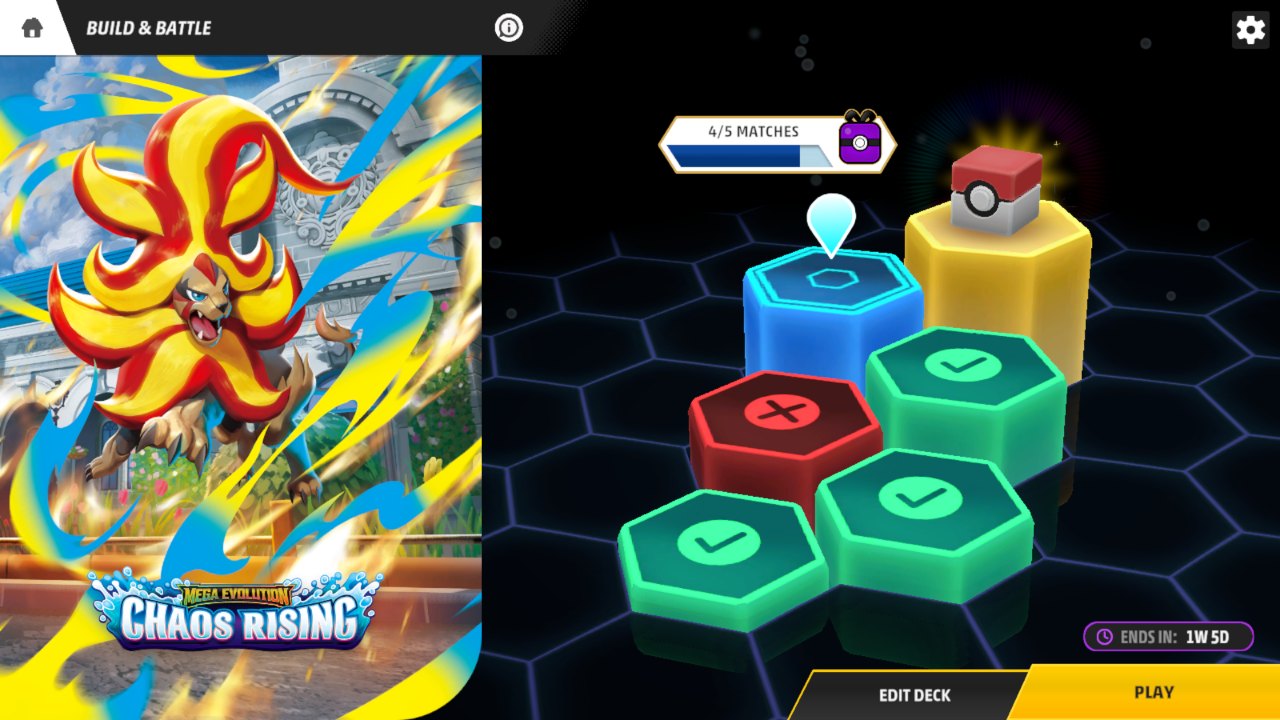
| 21 May 2026 | Build & Battle limited mode added to Live |
The move to Live
Regional Variations
Pokémon TCG Online was made for Western players, and a few things depended on region and language:
- Pokémon TCG Online was never released in Japan; it launched in North America, Europe and Australia and used the international English-language expansions.
- The 2011 Trainer Challenge beta already used the rule changes introduced in the Japanese Black & White sets before the international Black & White expansion was released on 25 April 2011.
- Gems, the real-money currency, were only ever sold to adult players in Canada, from 19 April 2013 to 29 October 2018.
- Code cards were colour-coded by language (green for English, red for German, blue for French, orange for Italian, pink for Spanish, purple for Portuguese, yellow for Russian), but a code worked in any region.
- The XY Vivillon card has two versions in the game, and one of them changes its artwork according to the language of the set.
- Pokémon TCG Live’s beta rolled out country by country: Canada on 22 February 2022, Mexico on 24 May, Australia and New Zealand on 19 July, France, Germany and Italy on 13 September, the Nordic countries and the Netherlands on 18 October, then the rest of the world, including the UK, on 15 November 2022.
Left in the data
- A silhouette of an unknown creature was found next to the Unova first partner Pokémon in the tutorial page’s Flash files in 2011. Serena Robar, a community manager at The Pokémon Company International, explained that it was not a real Pokémon but a placeholder image that had not been removed.
- The game files contain a temporary Dire Wolf Digital logo, plus leftover images for the retired Achievements and Gems.
- Colorless is the only type with no Daily Challenges, although a Colorless challenge graphic exists in the files.
- Until early 2013 the Trainer Challenge AI used Stormfront cards players could never own, such as Voltorb, Charmander, Charizard, Great Ball and Cyclone Energy, and Majestic Dawn and Legends Awakened cards could be searched for in the Collection but never obtained. All such cards were removed from the servers around January 2016.
Videos & media
Two official videos: the trailer for the game’s arrival on iPad, and the grand final of an online championship that was played in Pokémon TCG Online itself.
The official launch trailer for the iPad version (September 2014), showing battles, deck building and trading.
Alex Schemanske against Bruno Sermann in the Players Cup IV grand final (August 2021), an official online championship played in Pokémon TCG Online.
Trivia & facts
- The game spent almost four years in open beta, from March 2011 to February 2015.
- The Undo option was removed on 6 November 2015 to bring play closer to competitive rules, and free-text chat in Versus matches was replaced by canned messages and emoticons on 26 September 2016.
- Every Unown letter is in the files, including ones no language needs; winning through a Lost Thunder Unown’s Ability spells out VICTORY! in Unown.
Further trivia
- Players who moved their account to Pokémon TCG Live during its beta could no longer sign in to PTCGO, even before the shutdown.
- The last Versus Ladder season ran from 16 May to 5 June 2023, so its final day was also the game’s last day online.
Legacy
What came after
- Pokémon Trainer Challenge browser beta opens – 24 March 2011. Flash game on the official TCG website for Pokémon Trainer Club members: three decks, 14 AI Trainers
- Downloadable Windows client – 15 May 2012. Unity relaunch announced on 30 March 2012; the browser version closed on 8 August 2012
- macOS client – November 2012. Mac players could battle and trade with PC players; Boundaries Crossed arrived in the same update
- iPad version – 30 September 2014. First touchscreen client; cross-play with PC and Mac
- Leaves open beta – February 2015. Tournament Mode premiered on 5 February 2015 as the game came out of beta
- Android tablet version – 2016. Tablets only; phones were never supported
- Pokémon TCG Live announced – 20 September 2021. Successor revealed with the promise that collections would carry over
- New sets stop – 1 March 2023. Crown Zenith was the last expansion added; Scarlet & Violet never came to PTCGO
- Pokémon TCG Online shut down – 5 June 2023. Removed from download and servers switched off; the final Versus Ladder season ended the same day
 Pokémon TCG Live global launch – 8 June 2023. Windows, macOS, iOS, iPadOS and Android; PTCGO collections can still be migrated
Can you still play it?
Pokémon Trading Card Game Online no longer exists. It was removed from download and its servers were shut down on 5 June 2023, so the old Windows, Mac, iPad and Android tablet apps cannot connect. The card game is now played in Pokémon TCG Live, a free download for Windows, macOS, iOS, iPadOS and Android that adds each new expansion. Old PTCGO accounts can still be migrated into Live, with no deadline announced, although Live has no card trading.
How it was made
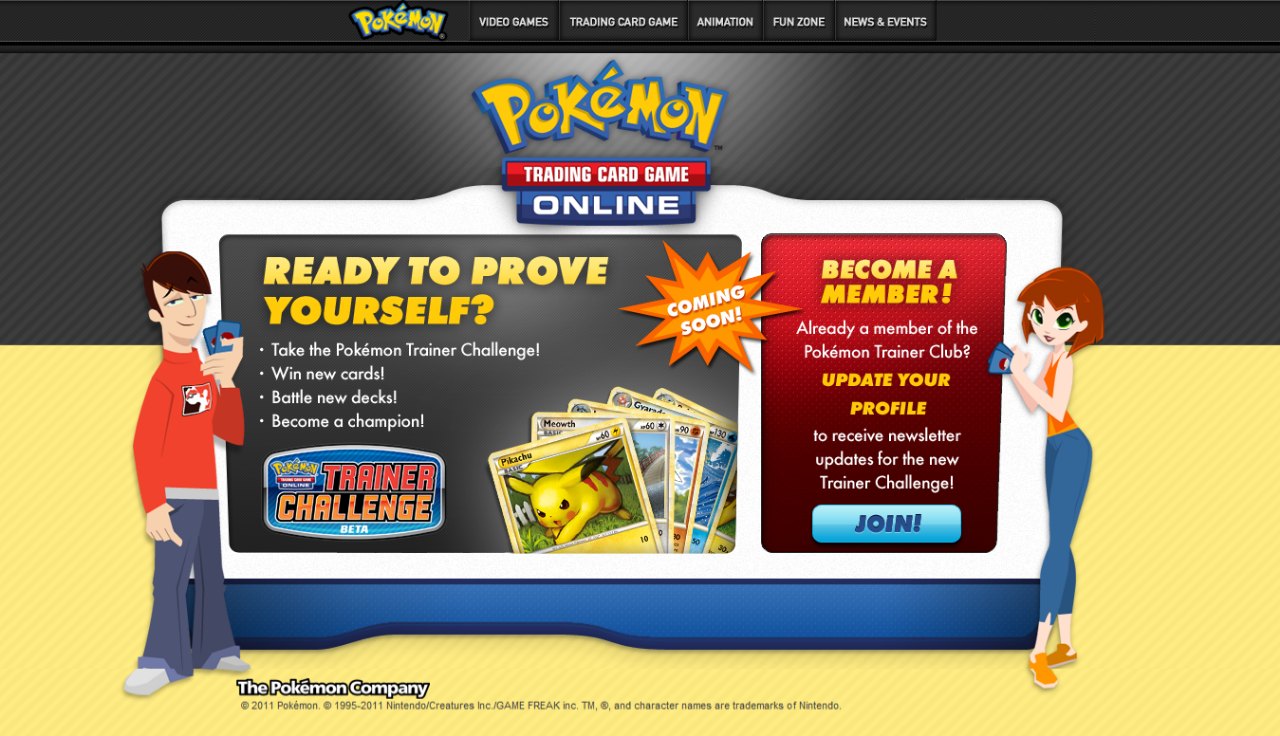
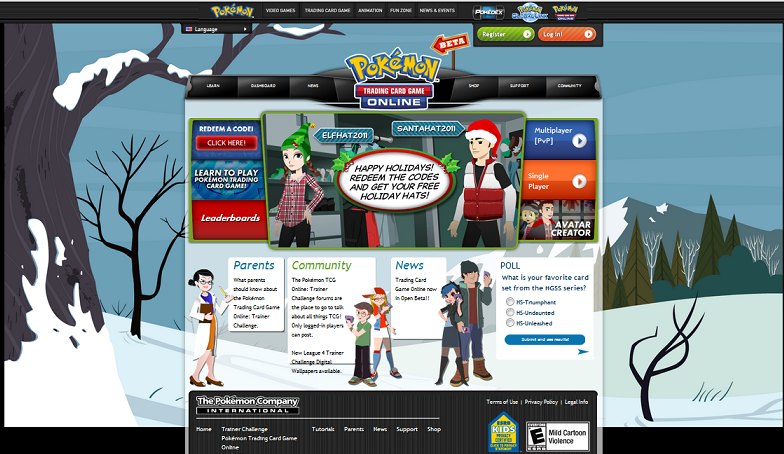
The Pokémon Company International revealed an online version of the card game on 15 February 2011, promising a free browser beta for April. The Pokémon Trainer Challenge, developed by Electrified Games, opened early on 24 March 2011 as a Flash game inside the official TCG website, with Plexipixel designing the site and Inversoft supplying the chat word filter. A relaunch as a downloadable Unity game was announced on 30 March 2012. Sleepy Giant Entertainment is also credited, and Dire Wolf Digital of Denver became the game’s final developer. The Pokémon Company International published PTCGO throughout, and developed its successor, Pokémon TCG Live, itself.
Pokémon TCG Online elsewhere
Sales & reviews
Players and revenue
Pokémon TCG Online was free to download and play, and The Pokémon Company International never published download numbers, player counts or revenue from Gems, Event Tickets or code-card products, so there is no reliable sales figure. The game earned its keep through the physical card game: from 2011 to 2023 almost every booster pack, Theme Deck, tin and Elite Trainer Box sold carried a code card for it.
- Freeto download and play
- 2011–2023online for twelve years
- 4platforms after the browser beta
- 78on Metacritic, iOS (7 critics)
Review scores
Pokémon Trading Card Game Online was well received and managed to get generally favourable scores on major review websites, most of them for the iPad version released in September 2014. Let’s take a look at these reviews:
- Kallie Plagge from IGN liked the game mechanics but was disappointed with the “Unreliable network connections, poor UI, ugly art, and repetitive music”, rating the iPad version 6/10, which equates to ‘Okay’ on the IGN scale.
- Zac Phoenix from TradingCardGames.com enjoyed the fresh mechanics of the game and how it didn’t turn into a pay-to-win game, like most online games, rating it 8/10 for gameplay and 7/10 for both sound and graphics, with the verdict: “This one gets two thumbs up.”
- On GameRankings (which closed in 2019), Pokémon Trading Card Game Online earned a great score of 75%, over 6 reviews, while it scored 78 on Metacritic, over 7 critics, which counts as ‘generally favourable’.
Critics mostly reviewed the September 2014 iPad release, and the verdict was generally favourable. Reviewers who liked it called it a faithful, deep and quick way to play the real card game on the move, praised how much content and how many rewards it gave away free, and 148Apps called it “a collectible card game done perfectly for mobile”. The complaints were about technology and presentation rather than the rules: Pocket Gamer felt technical problems held it back, and Gamezebo thought the iPad launch could have gone more smoothly. IGN, the harshest major outlet, felt a great card game had been recreated in a half-hearted way, and Arcade Sushi advised readers to skip it. TradingCardGames.com rated it one of the best paper-to-digital conversions yet, but regretted that cards could only be bought by first buying physical packs.
Media & artwork
Further reading
More card games and PC & mobile games on the site: