  |
|
| Titles | Pokémon Project Studio Red Version Pokémon Project Studio Blue Version Pokémon Crea e Stampa (Italy) |
| Platform | Windows PC (Windows 95 and 98), CD-ROM – one disc per version; a printer is needed |
| System requirements | 100 MHz Pentium · 16 MB RAM (32 MB recommended) · 800×600 display in high colour · double-speed CD-ROM drive |
| Publisher | The Learning Company (North America) · Mattel Interactive (Europe) |
| Players | 1 |
| Genre | Creativity software (print studio) |
| Generation | Generation I |
| Pokémon | 81 of the 151 on each disc |
| Projects | Over 250 per version in 13 categories, plus blank pages; over 600 graphics |
| Released | 9 November 1999 (North America) · 2000 (United Kingdom) · 22 January 2001 (Germany) · not released in Japan |
| Re-releases | Red & Blue value pack (December 1999) · free with the HP DeskJet 840C printer (UK, December 2000) · no download or modern re-release |
| Rating | Recommended for ages 6 and up |
| Sales | No figures published; both versions made the US top ten PC titles in November 1999 |
Overview
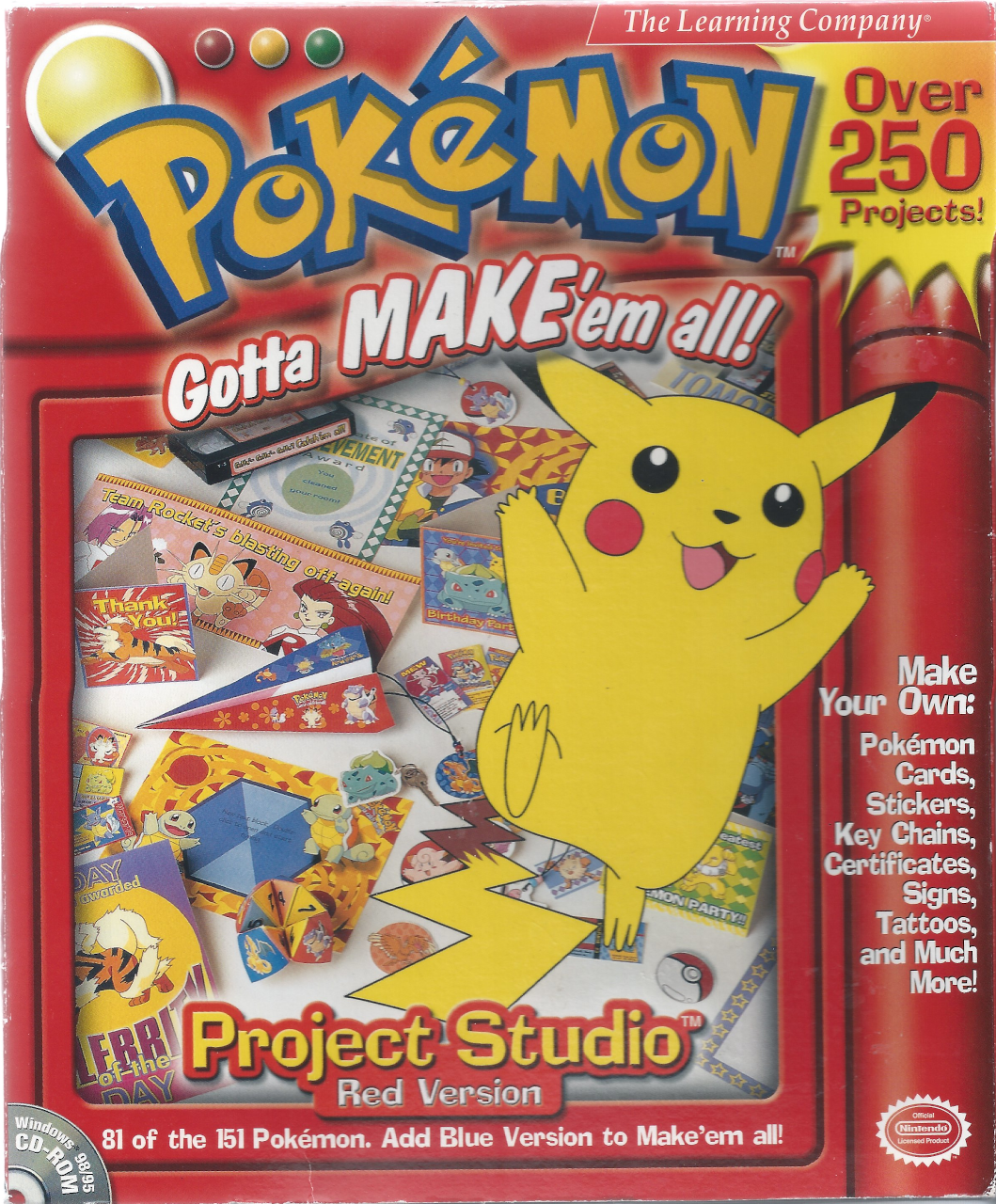
 Pokémon Project Studio is a PC title released on 9 November 1999 in the USA. It was released in two versions, Red and Blue, much like the original core series games. Each of the versions contains 81 Gen I Pokémon, which you can use in the program as artwork to create banners, flyers, certificates, key chains and lots of other fun Poképrintables – the catch being that some Pokémon are version-specific, so if you want to make ’em all, you have to buy both versions!
The program also includes lots of different document templates, patterns, etc. to make it easier for younger users to create things without much or any assistance. There are also some premade printables, such as Pokémon character info cards, which contain pictures and some basic information on Pokémon. Or you can just start projects from scratch if preferred.
Although these titles are primarily aimed at a younger audience, the editor is pretty comprehensive and offers a good range of features, so there’s no reason why really old, really big kids can’t enjoy making Pokécrafts too.
Some time after the US release, Mattel Interactive released these titles across Europe – in Britain during 2000 and in Germany on 22 January 2001 – in English, Dutch, French, Italian, German and Spanish.
Put your favorite Pokémon everywhere!
With over 600 different graphics, 81 of the 151 characters, and 250 different Pokémon projects, you can spend hours building your creativity and imagination.
— Official description
Quick Answers
The questions people ask about Pokémon Project Studio, answered first and explained further down the page.
Which Pokémon are in Pokémon Project Studio Red and which are in Blue?
Each disc has artwork of 81 Generation I Pokémon. Red has 69 exclusives, among them Mewtwo, Articuno, Zapdos, Snorlax, Gyarados and the Dratini line, while Blue’s include Raichu, Moltres, Gengar, Lapras, Alakazam and Machamp. The three starter lines, Pikachu, Meowth and Eevee are on both, and Mew sits in the Stuff folder on each. More →
Do you need both versions of Pokémon Project Studio to get all 151 Pokémon?
Yes. Neither disc holds the full Kanto Pokédex, so collecting every Pokémon means buying Red and Blue, just as with the Game Boy games. Install both on the same PC and the program merges them, giving you all 151 Pokémon and roughly twice as many templates to choose from in each project category. More →
What can you make with Pokémon Project Studio?
Thirteen kinds of printout: greeting cards, signs, birthday party kits, banners, photo frames, stationery, character cards, envelopes, calendars, postcards, paper crafts, certificates and stickers, plus blank pages. Each version promises over 250 ready-made projects and more than 600 graphics, and some projects use sticker sheets, card or shrink sheets for jewellery. More →
Does Pokémon Project Studio work on a Mac or a modern PC?
It was only ever made for Windows. The discs ask for Windows 95 or 98, a 100 MHz Pentium, 16 MB of RAM, a double-speed CD-ROM drive and an 800×600 screen in high colour. Current 64-bit Windows was never a supported setup, so a virtual machine running Windows 98 is the dependable option. More →
Was Pokémon Project Studio released in the UK and Europe?
Yes. After the November 1999 American launch, Mattel Interactive brought both versions to Europe, with British copies on sale during 2000 and the German edition following in January 2001. There were versions in English, Dutch, French, German, Italian and Spanish, and in Italy it was called Pokémon Crea e Stampa. It never came out in Japan. More →
Can you still buy Pokémon Project Studio?
Only second-hand. Neither version has been reissued on a download store or a later system, so used CD-ROMs from auction sites and car boot sales are the only legitimate copies. Loose discs are the easiest to find; boxed copies that still hold the sample sticker and shrink sheets are much rarer. More →
What can I make with Pokémon Project Studio?
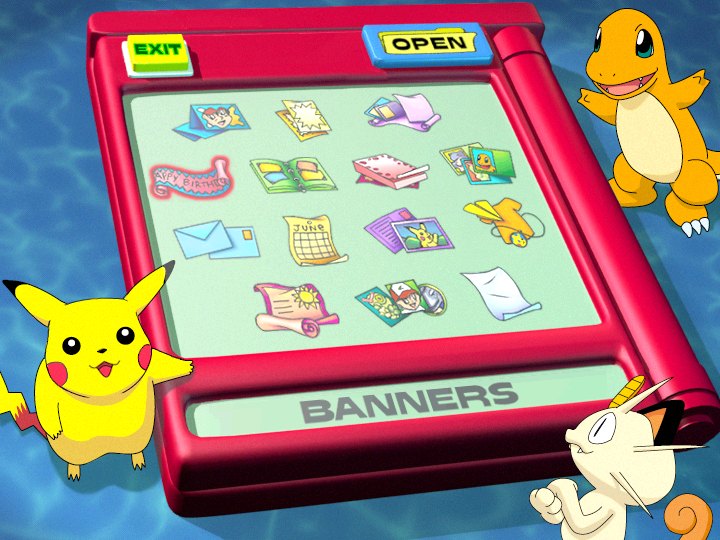
Each version of Pokémon Project Studio enables the user to create a multitude of different projects from pre-made templates, or alternatively the user can choose to start from scratch. There are over 250 things you can create. Here are some examples of what you can make:
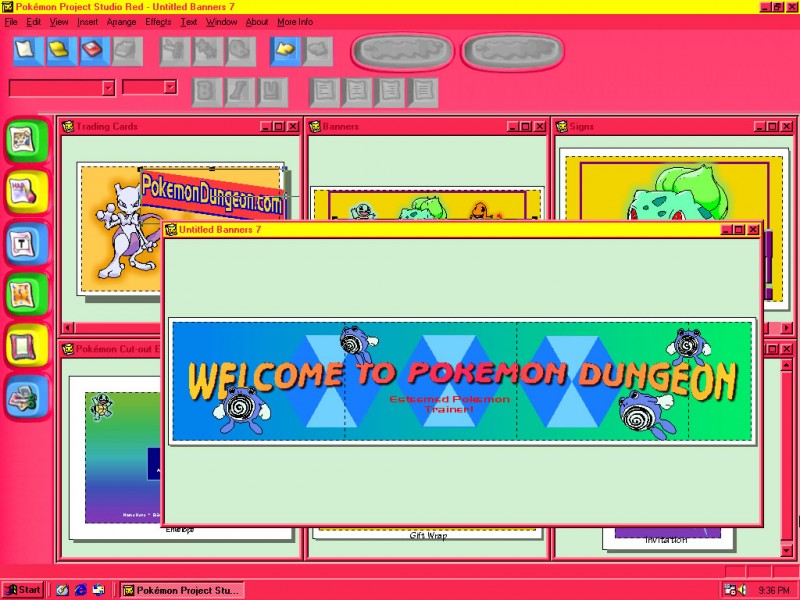
- Banners: Print banners which span across multiple sheets of paper for a variety of uses, from birthdays to Halloween celebrations (Ghost Pokémon!) to Christmas decorations, welcome home signs, yard sales and more. Limited only by your imagination. Each version contains five templated styles of birthday banner and three for other occasions.
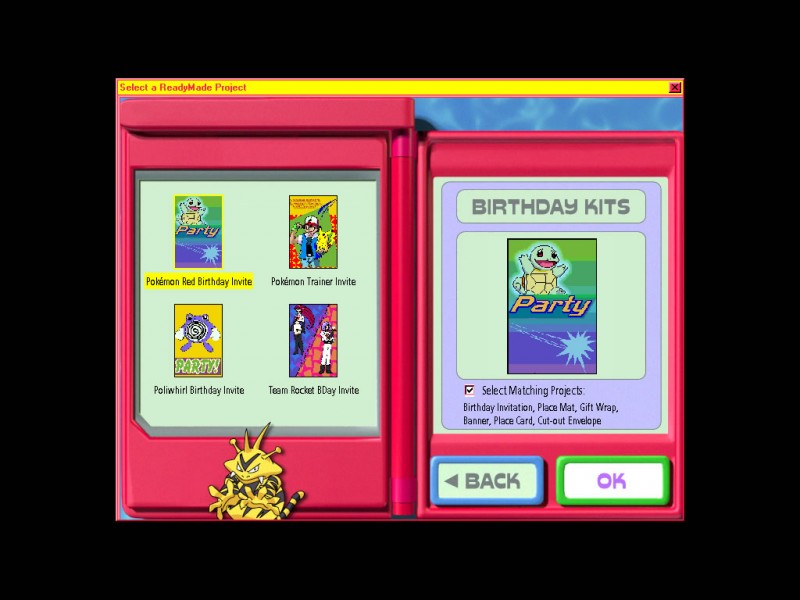
- Birthday Kits: This project enables the user to print off everything you might need for a Pokémon-themed birthday party, including banners, thank-you cards, party invitations, signs and even gift wrap. When you go into the Birthday Kit, you first select the party invite you’d like from four templated versions (more if you have both Red & Blue installed) and have the option to tick ‘select matching projects’, which will automatically open up similarly themed templates for place mats, gift wrap, banners, place cards and cut-out envelopes. This will enable the user to keep to a theme and get everything they need done at once.
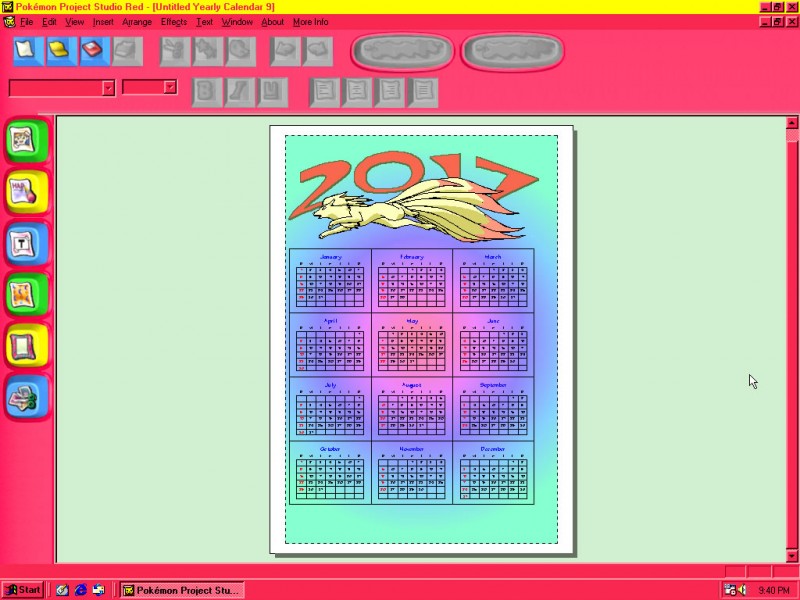
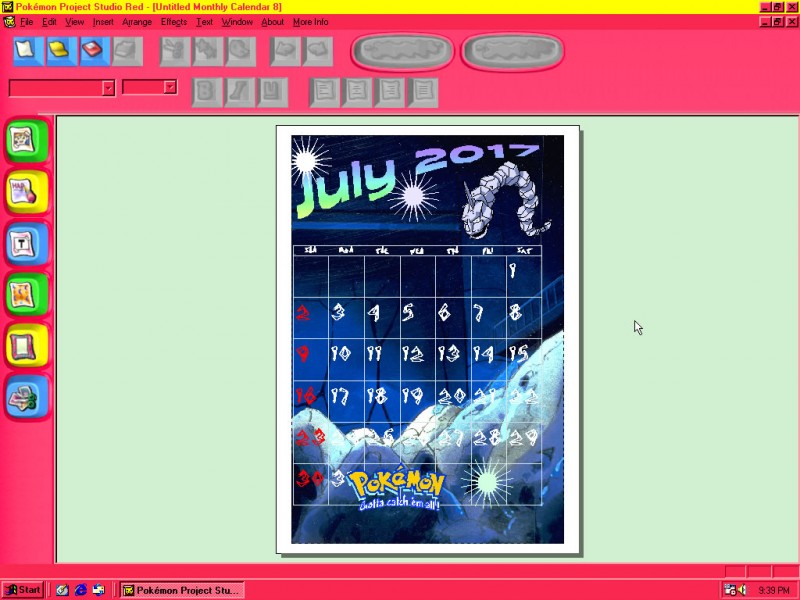
- Calendars: Print off your own Pokémon calendars. You can print off a sheet for a single month to help you get organised, or an entire year’s calendar on one page if you’re not one for detail. First choose a calendar layout format, then choose a preset template, or make your own from scratch.
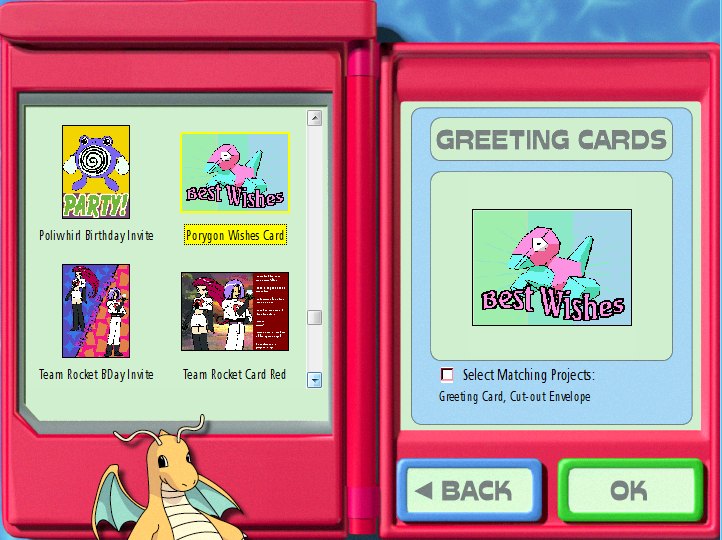
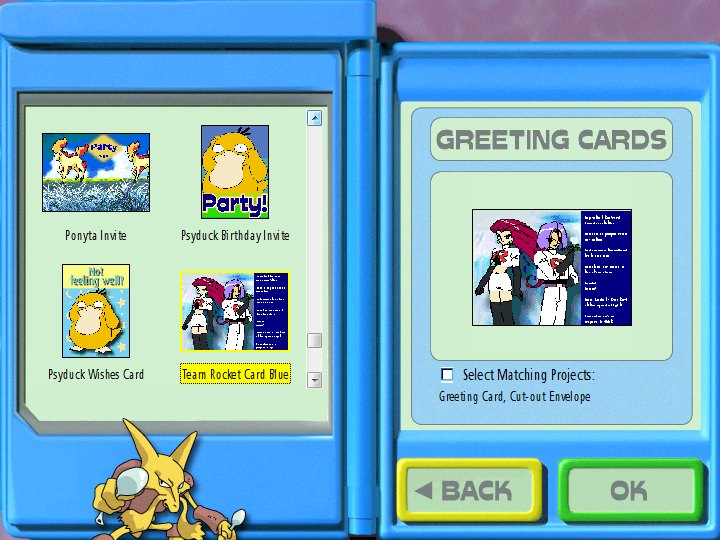
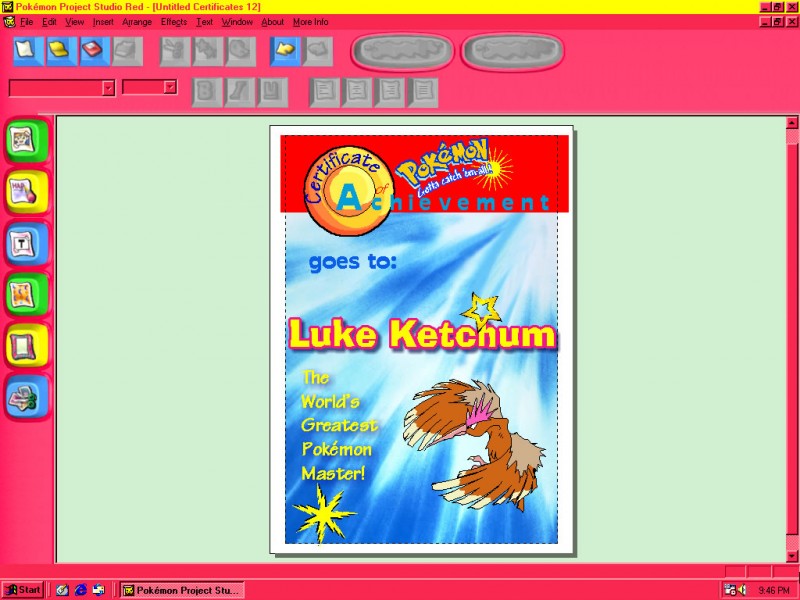
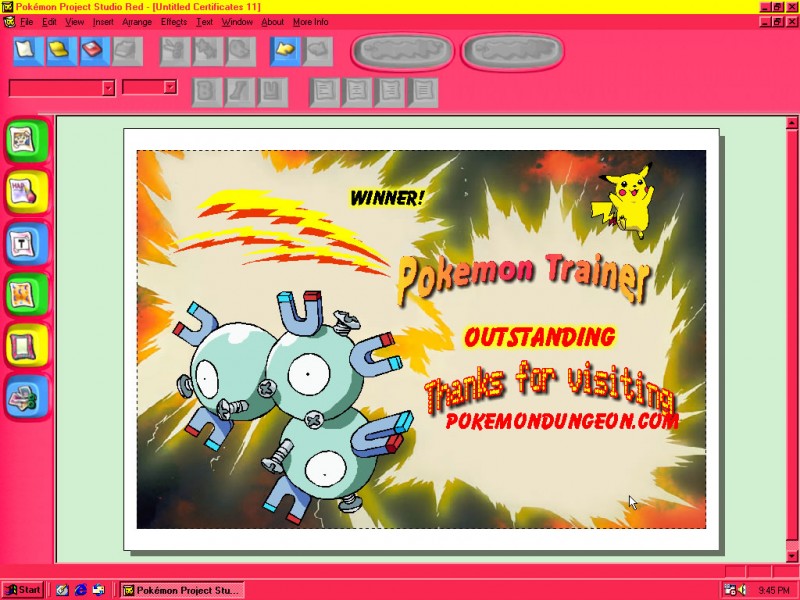
- Certificates: So you want to be a master? Just print yourself a certificate saying you’re the world’s greatest Pokémon Master and you should be sorted. Don’t want to be a master? You can print certificates for a whole variety of other stuff too. My girlfriend plays Pokémon GO under duress, so when she got a limited edition Pikachu with an Ash hat I printed her a certificate 😉
- Character Cards: Premade character cards of lots of popular Pokémon, including their pictures, basic statistics and information/descriptions. There is another category with templates that can be customised and printed as your own Pokémon Trainer ID card, used as a place tag for a table or even used as gift tags. You also have the option to start completely blank custom cards if you don’t want to customise one of the existing templates.
- Crafts: Print off a fun variety of foldable papercrafts like masks, paper airplanes and fortune tellers. Crafts are arranged into three categories: first off we have wearables, such as printable versions of all the Kanto Gym Badges, masks of popular Pokémon like Pikachu and Bulbasaur, necklaces and even tattoos. The next category is paper fun, which includes customisable airplanes and fortune tellers, and the final category is decoratives, which includes decals and keychains.
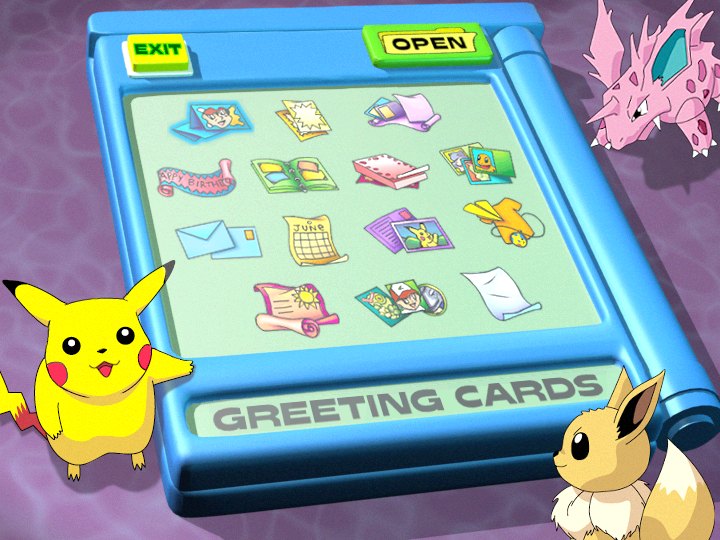
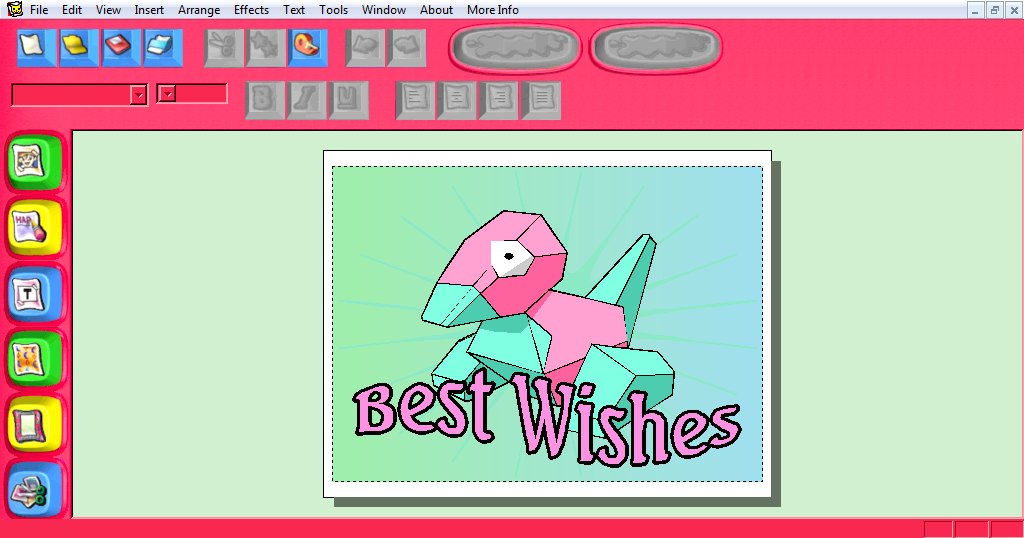
- Greeting Cards: Enables the user to print out a wide range of custom greetings cards featuring your favourite Pokémon. For every occasion you can think of: anything from Christmas and birthday cards right the way through to get well soon cards and even anniversary cards (just me?).
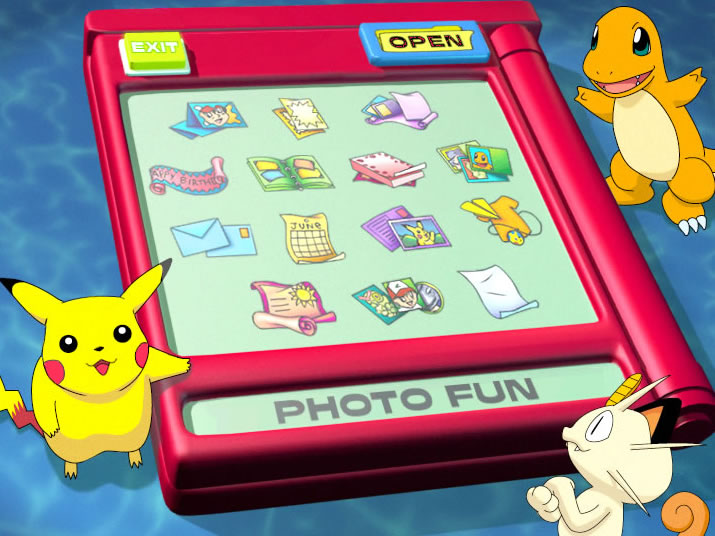
- Photo Fun: Add your own photos and add Pokémon and character art, as well as choosing from a selection of frames, etc. Not dissimilar to the photo editing feature in Camp Pokémon. There are two categories: quick prints, which enable you to print multiple different-sized versions of your photo on one sheet, or frames, which enable you to choose templated frames and replace their stock photo quickly and easily with your own.
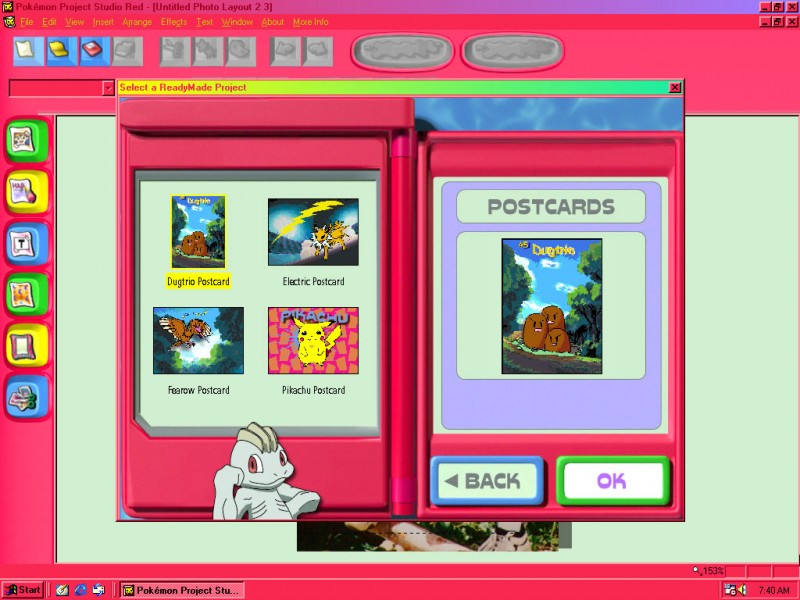
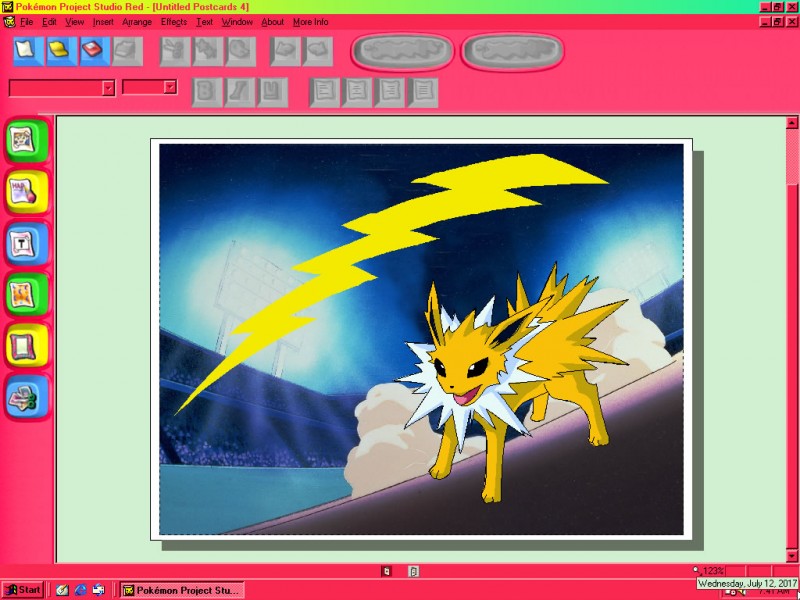
- Postcards: Print off postcards either on normal paper, or use special postcard card if you really want to push the boat out! Pokémon-themed postcards can either simply be collected or can be mailed out. You get two categories of templates to choose from in this section: firstly the announcement postcards, to proclaim important things like ‘I want to be the best there ever was’, or alternatively there are character postcards, which simply feature colourful Pokémon designs for you to customise, just because.
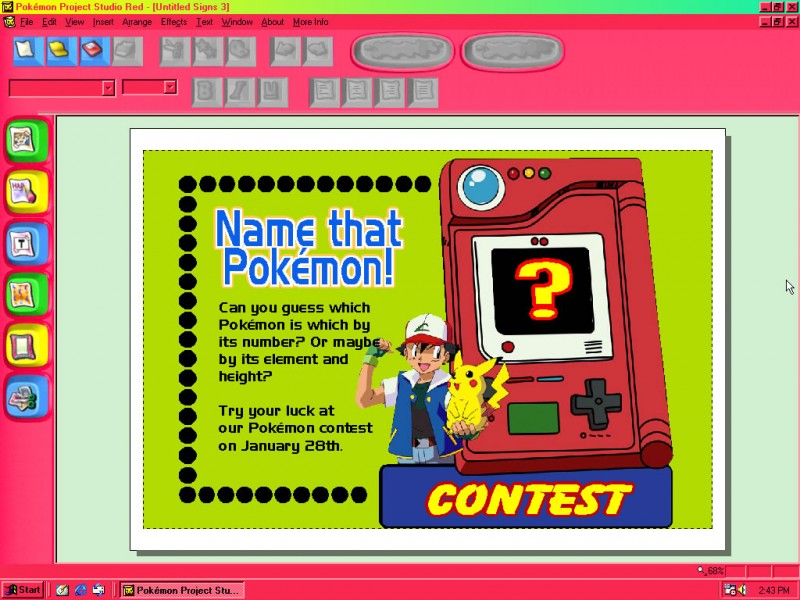
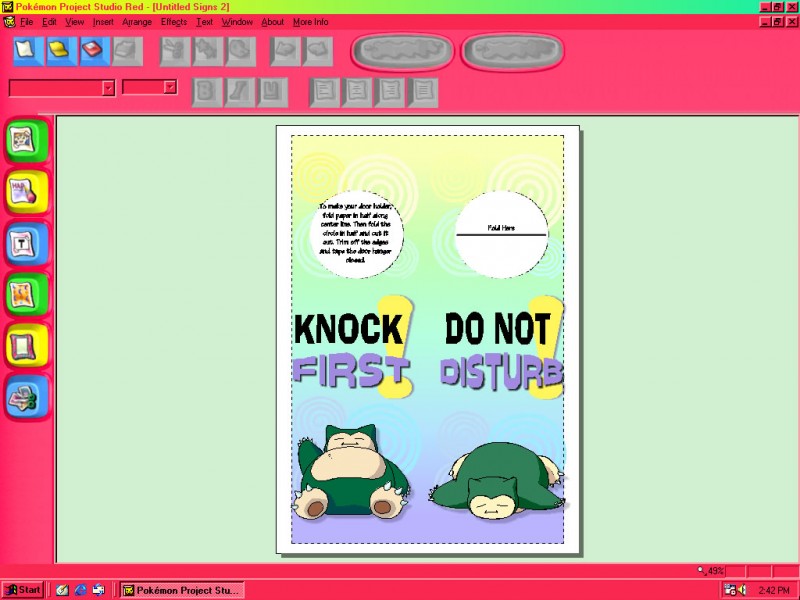
- Signs: Like banners, but they use only a single sheet. Templated signs are available in four different categories: birthday signs; event signs, such as Car Wash, Summer Party and contests; information signs, such as door hangers saying DND or Keep Out, and reminders like Don’t Forget Your Books and Don’t Forget Your Vitamins; and sale signs for things like yard sales and lemonade stalls.
- Stationery: Print your own Pokémon-themed letterheads and handwrite a letter, diary entry, etc., or alternatively type onto the template from within Project Studio and print the letter directly from the program! You can also print your own Pokémon-themed envelopes to go with them. Stationery is categorised into diary pages and letterheads, and when selecting a letterhead you have the option to select matching projects, such as stationery and a business envelope. Each category contains four options, or if you have both versions of PPS installed there will be eight in each.
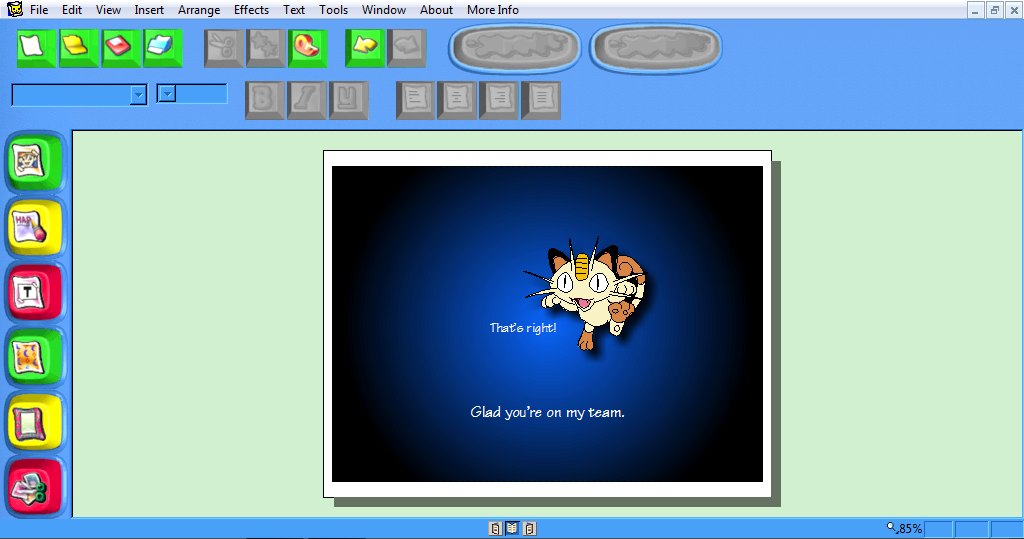
- Stickers: Using specially sized Avery sticker paper, the user could create their own stickers featuring their favourite Pokémon and characters. You can create your stickers from scratch or use the templates provided. Various sizes of general stickers are available in the templates, as well as some specially sized to fit on video tape fronts and spines (video tapes?!). After you select the label size, you get to choose from four templates for that size of sticker.
Other projects of note include bracelets, door hangers, key chains, necklaces, photo albums, photo frames, tattoos and window decals.
Inside the program
What you could make
Each box promised over 250 ready-made projects and more than 600 pieces of clip art, sorted into 13 categories plus a blank page for free-form designs. Everything was built around a late-1990s home inkjet printer, from one-page signs to banners that stretched across several sheets, and a handful of projects called for special stock: label sheets for stickers, heavier card for postcards and shrink film for jewellery, with sample sticker and shrink sheets packed in the box. Installing Red and Blue together doubled the template choice in every category.
- 250+projects on each disc
- 600+graphics on each disc
- 13project categories, plus blank pages
- 81of the 151 Pokémon on each disc
Every project category
| Category | What it prints | Notes |
|---|---|---|
| Greeting Cards | Birthday, invitation, get-well and seasonal cards | Matching envelopes available |
| Signs | Birthday, event, information and sale signs; door hangers | Single sheet |
| Birthday Kits | Invitations, banners, signs, place mats, place cards, gift wrap, thank-you cards | Matching-projects option builds a set |
| Banners | Long banners for parties and occasions | Spans several sheets |
| Photo Fun | Photo frames and multi-size photo prints | Uses your own photos |
| Stationery | Letterheads and diary pages | Type in the program or write by hand |
| Character Cards | Pokémon info cards, Trainer IDs, name badges, gift tags, place cards | Pokémon artwork with basic stats |
| Envelopes | Cut-out envelopes or prints on business-size envelopes | Template or real envelope |
| Calendars | Monthly pages or a full year on one page | Layout first, then template |
| Postcards | Announcement and character postcards | Plain paper or card stock |
| Crafts | Masks, Gym Badges, necklaces, bracelets, tattoos, paper aeroplanes, fortune tellers, decals, key chains | Shrink sheets for jewellery (samples in box) |
| Certificates | Awards and thank-you certificates | Editable wording |
| Stickers | Labels in several sizes, including VHS cassette labels | Label sheets needed (samples in box) |
| Blank page | Any free-form design | No template |
Projects from the two discs
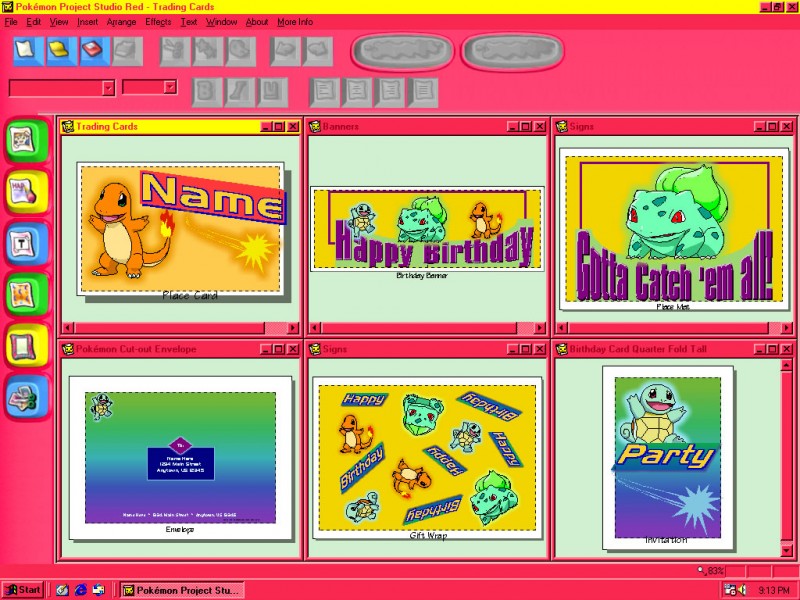
Example projects from Red and Blue, category by category:
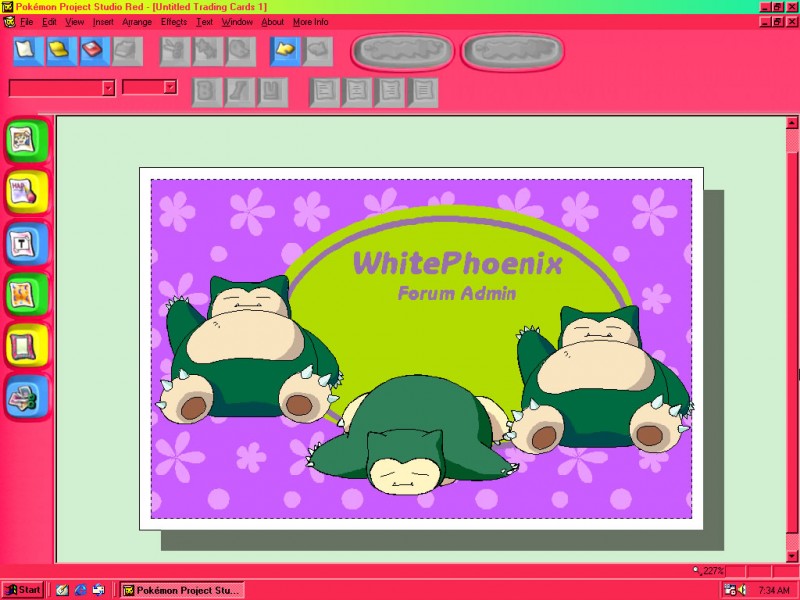
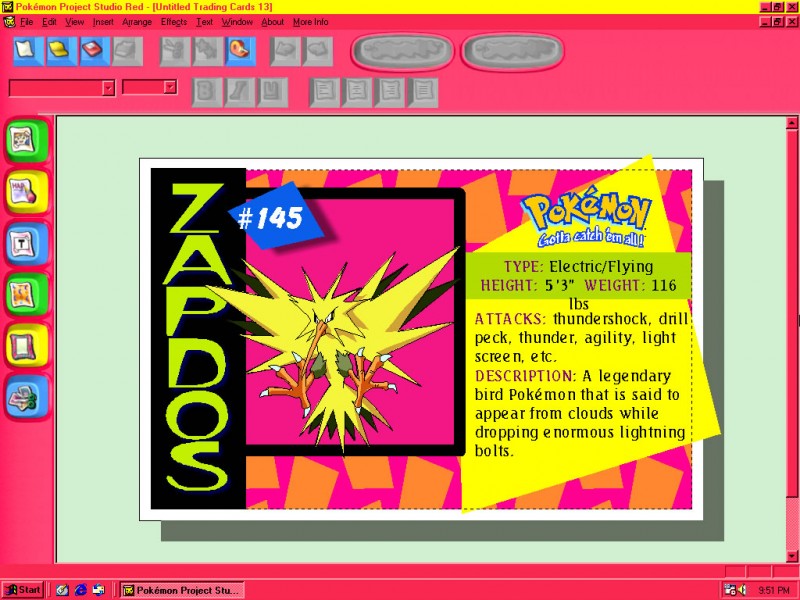
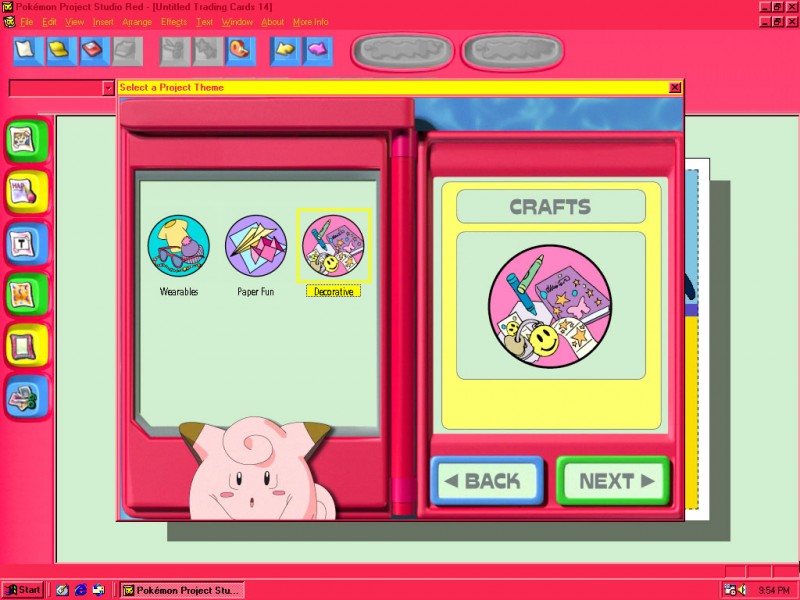
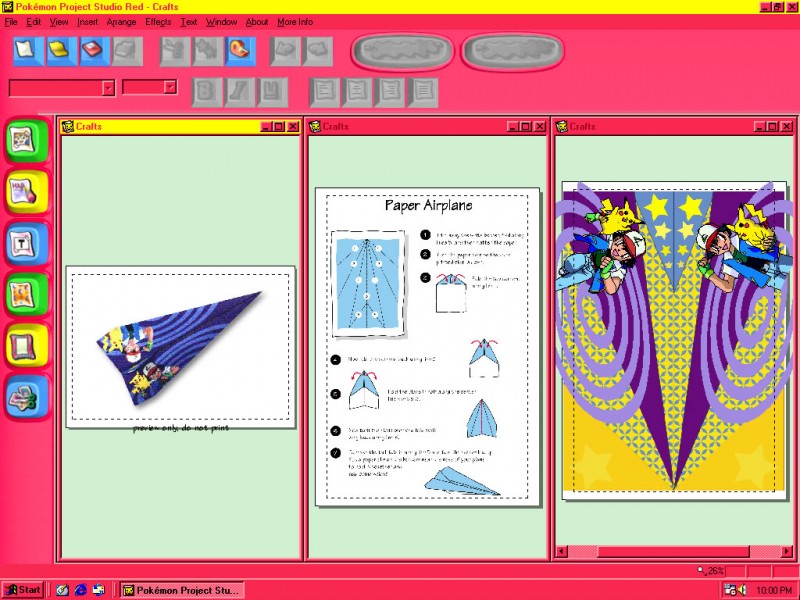
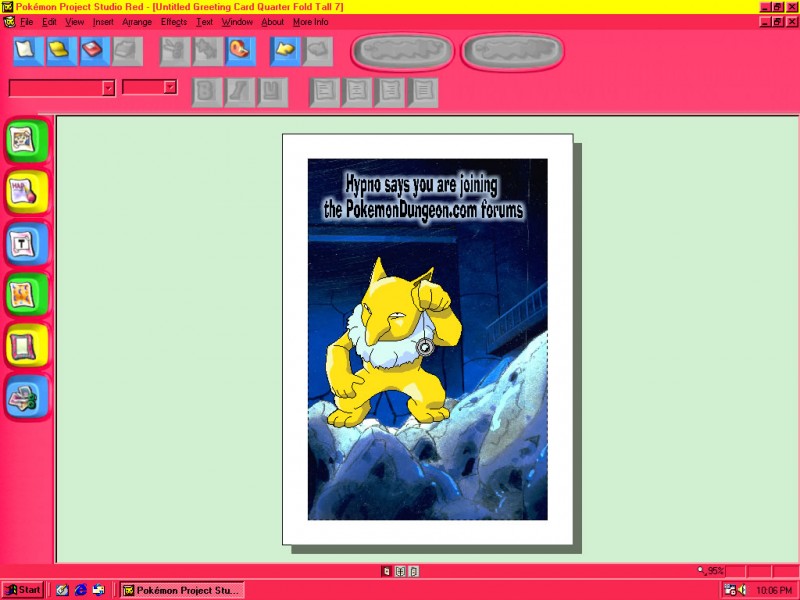
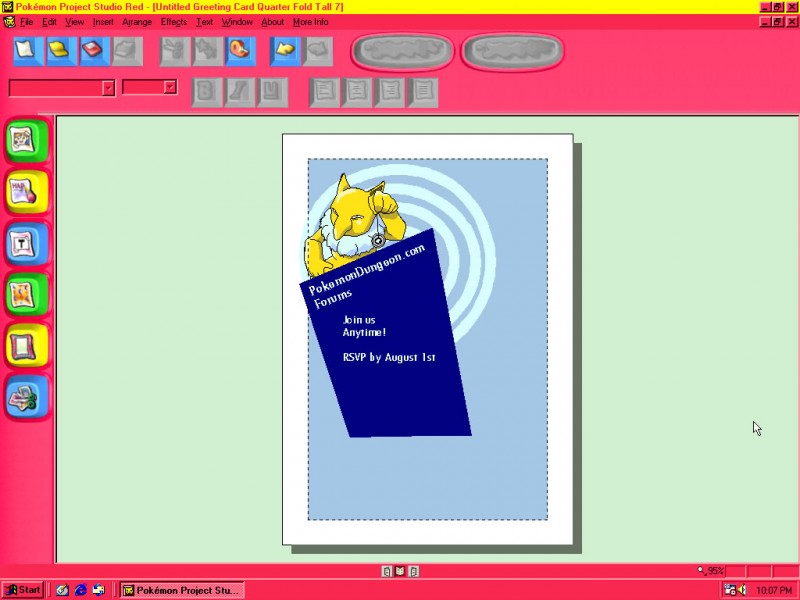
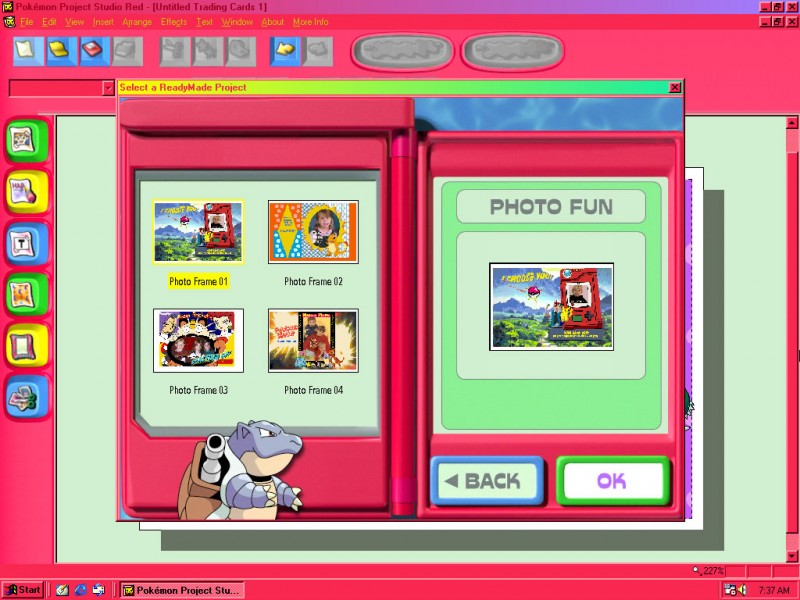
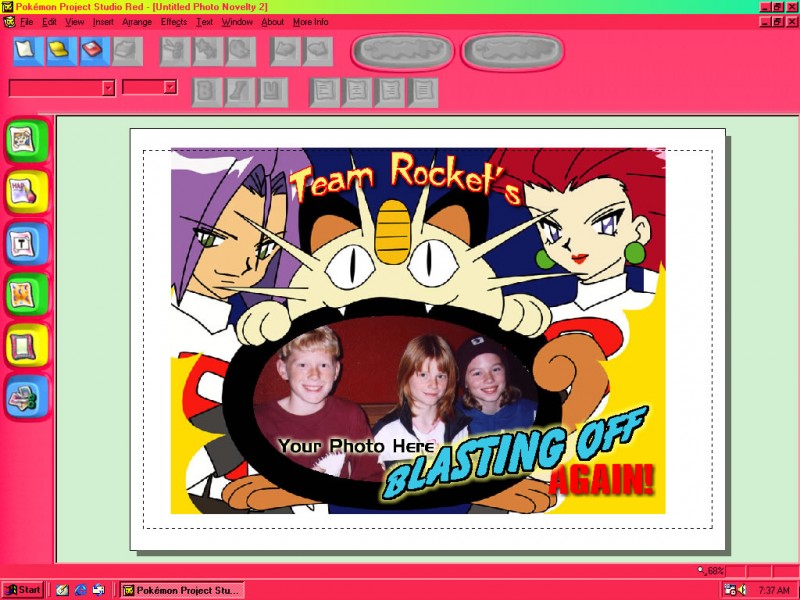
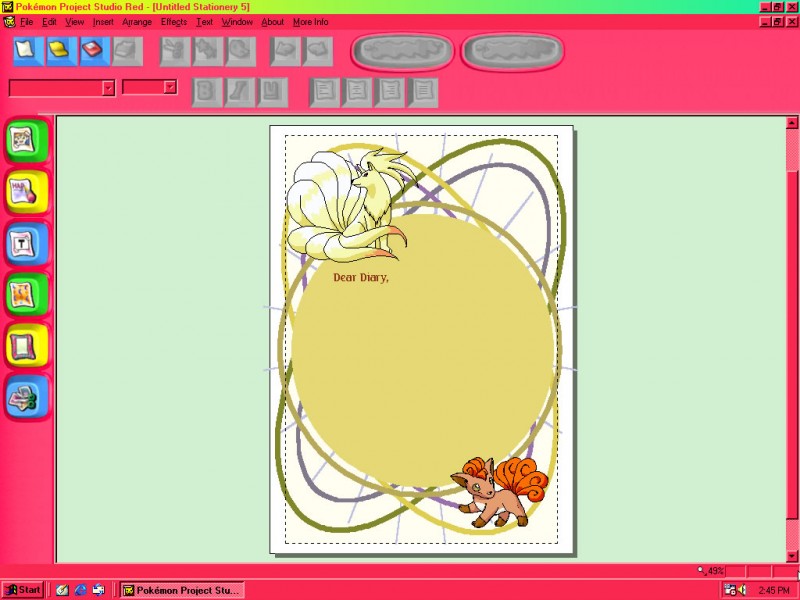
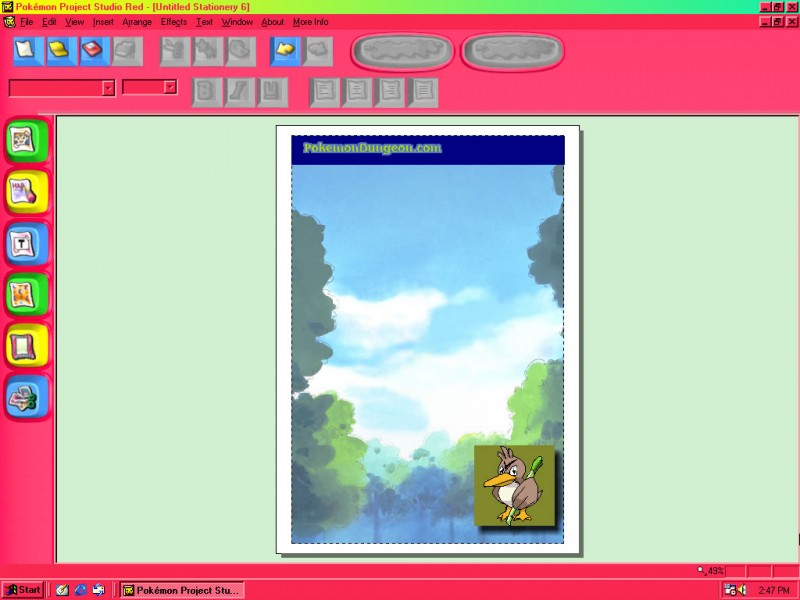
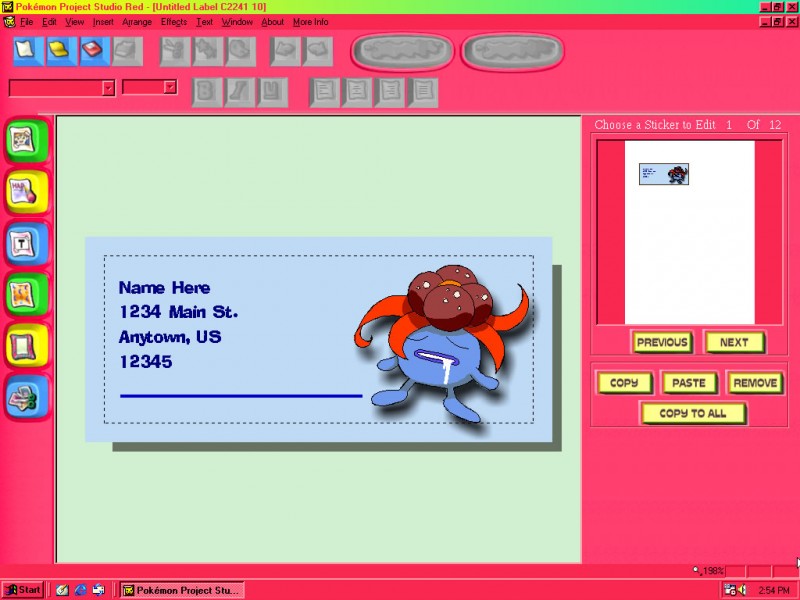
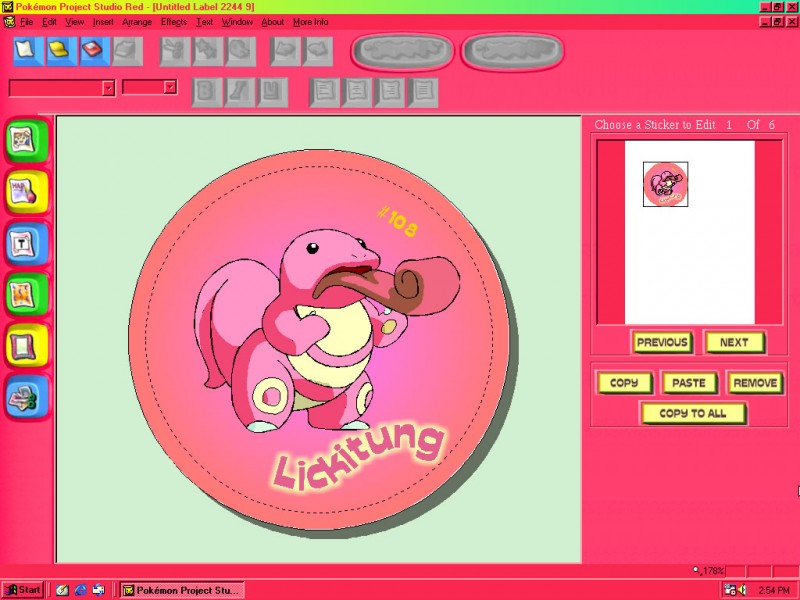
Which Pokémon are in each version?
Many of the most popular and well-known Pokémon, such as Pikachu, Meowth, the starter Pokémon and their evolutions, were released in both versions, probably so as not to make one version too much more popular than the other. Each version features artwork of 81 Pokémon, and between both versions you will have artwork for the entire first generation of Pokémon, including Mew (the only generation that had been released when this program came out). If you’re having trouble deciding which version to go for, the lists below show exactly which Pokémon are on each disc.
As you will see from the lists below, the split is quite tactical: for example, where the Red version has the Weedle evo chain, Blue has the Caterpie evo chain; likewise, Red takes the Nidoqueen chain and Blue takes the Nidoking chain. They’ve even tactically split up Jessie and James’ Pokémon, with Red taking Ekans, Arbok and Lickitung and Blue taking Koffing, Weezing, Weepinbell and Victreebel. The different versions also feature different artworks of human characters from the world of Pokémon, such as Professor Oak, Ash, Misty and Brock.
Red version exclusives
 Weedle#013
 Kakuna#014
 Beedrill#015
 Spearow#021
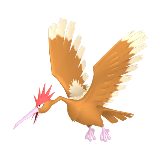 Fearow#022
 Ekans#023
 Arbok#024
 Nidoran♀#029
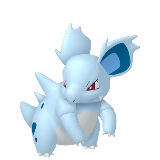 Nidorina#030
 Nidoqueen#031
 Clefairy#035
 Clefable#036
 Vulpix#037
 Ninetales#038
 Oddish#043
 Gloom#044
 Vileplume#045
 Venonat#048
 Venomoth#049
 Diglett#050
 Dugtrio#051
 Mankey#056
 Primeape#057
 Growlithe#058
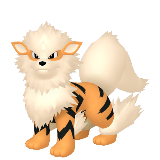 Arcanine#059
 Poliwag#060
 Poliwhirl#061
 Poliwrath#062
 Tentacool#072
 Tentacruel#073
 Slowpoke#079
 Slowbro#080
 Magnemite#081
 Magneton#082
 Farfetch’d#083
 Doduo#084
 Dodrio#085
 Grimer#088
 Muk#089
 Onix#095
 Drowzee#096
 Hypno#097
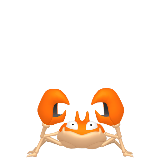 Krabby#098
 Kingler#099
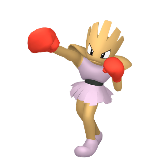 Hitmonchan#107
 Lickitung#108
 Rhyhorn#111
 Rhydon#112
 Tangela#114
 Staryu#120
 Starmie#121
 Mr. Mime#122
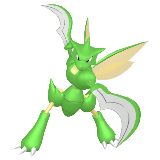 Scyther#123
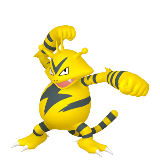 Electabuzz#125
 Tauros#128
 Magikarp#129
 Gyarados#130
 Ditto#132
 Porygon#137
 Omanyte#138
 Omastar#139
 Aerodactyl#142
 Snorlax#143
 Articuno#144
 Zapdos#145
 Dratini#147
 Dragonair#148
 Dragonite#149
 Mewtwo#150
Blue version exclusives
 Caterpie#010
 Metapod#011
 Butterfree#012
 Pidgey#016
 Pidgeotto#017
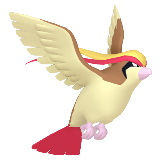 Pidgeot#018
 Rattata#019
 Raticate#020
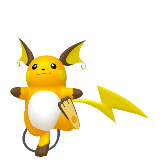 Raichu#026
 Sandshrew#027
 Sandslash#028
 Nidoran♂#032
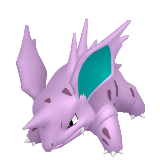 Nidorino#033
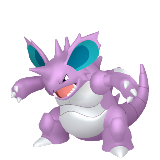 Nidoking#034
 Jigglypuff#039
 Wigglytuff#040
 Zubat#041
 Golbat#042
 Paras#046
 Parasect#047
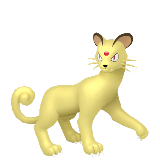 Persian#053
 Psyduck#054
 Golduck#055
 Abra#063
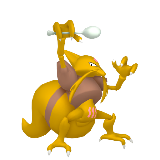 Kadabra#064
 Alakazam#065
 Machop#066
 Machoke#067
 Machamp#068
 Bellsprout#069
 Weepinbell#070
 Victreebel#071
 Geodude#074
 Graveler#075
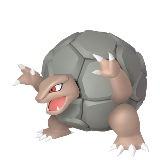 Golem#076
 Ponyta#077
 Rapidash#078
 Seel#086
 Dewgong#087
 Shellder#090
 Cloyster#091
 Gastly#092
 Haunter#093
 Gengar#094
 Voltorb#100
 Electrode#101
 Exeggcute#102
 Exeggutor#103
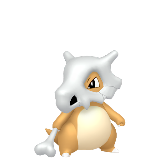 Cubone#104
 Marowak#105
 Hitmonlee#106
 Koffing#109
 Weezing#110
 Chansey#113
 Kangaskhan#115
 Horsea#116
 Seadra#117
 Goldeen#118
 Seaking#119
 Jynx#124
 Magmar#126
 Pinsir#127
 Lapras#131
 Vaporeon#134
 Jolteon#135
 Kabuto#140
 Kabutops#141
 Moltres#146
On both discs
The three starter lines, Pikachu, Meowth and Eevee are on both discs, and so is Mew, which is filed under Stuff rather than with the other Pokémon:
 Bulbasaur#001
 Ivysaur#002
 Venusaur#003
 Charmander#004
 Charmeleon#005
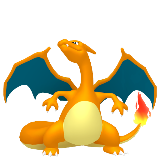 Charizard#006
 Squirtle#007
 Wartortle#008
 Blastoise#009
 Pikachu#025
 Meowth#052
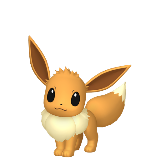 Eevee#133
 Mew#151 · in Stuff
Naturally, as a master of the Ghost type, I had to vote for the Blue version, but it is a pretty close call.
Notable splits
- Mewtwo – Red-only, the headline exclusive of that disc.
- Articuno – Red-only, like Zapdos, so Red gets two of the three Legendary birds.
- Zapdos – Red-only, and one of the Pokémon with a ready-made character card.
- Moltres – The only Legendary bird on the Blue disc.
- Raichu – Blue-only, even though Pikachu is on both discs.
- Meowth – On both discs, while its evolution Persian is Blue-only.
- Seadra – Blue-only, alongside Horsea.
- Mew – On both discs, but stored under Stuff with the Gym Badges instead of with the other Pokémon.
Regional Variations
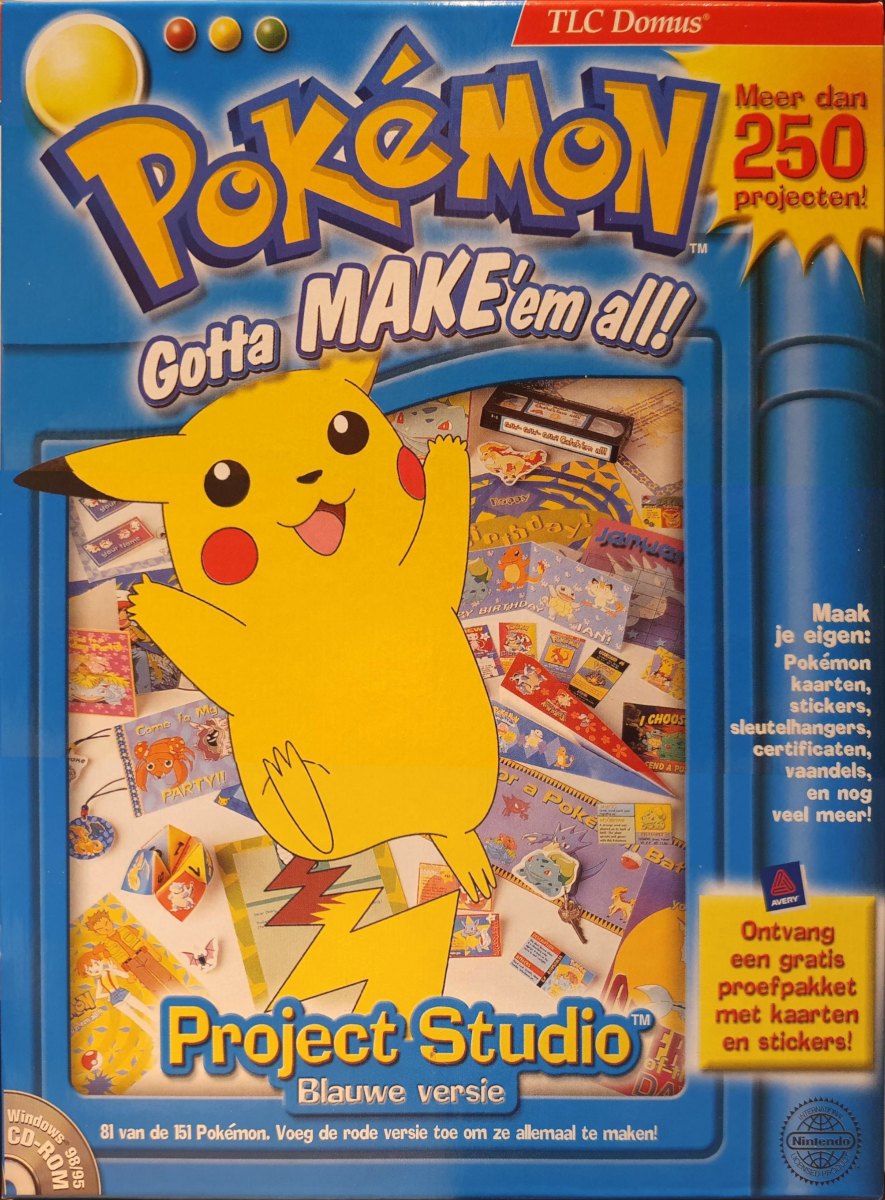
Away from North America, Project Studio was localised for Europe and Latin America, picking up new names along the way:
- The North American English versions came from The Learning Company in November 1999; the European versions were published by Mattel Interactive in 2000 and early 2001.
- Europe received the program in English, Dutch, French, German, Italian and Spanish, and a Spanish-language edition was also sold in Latin America.
- Italy retitled it Pokémon Crea e Stampa Versione Rossa e Blu, which translates as ‘Pokémon Create and Print Red and Blue Version’.
- The Dutch edition is Pokémon Project Studio Rood en Blauw, and the Spanish edition Pokémon Project Studio Versión Roja y Azul.
- In Germany the two discs were called Rote Edition and Blaue Edition and arrived on 22 January 2001; later German editions were renamed Pokémon Druckstudio.
- In Britain, Hewlett-Packard was giving the discs away free with its DeskJet 840C inkjet printer by December 2000.
- There was no Japanese or Korean release, so the program has no Japanese title.
Trivia & facts
- When you load Pokémon Project Studio Red, the Windows desktop theme will become red; likewise, when you load Blue it will become blue.
- In both titles Mew is found in the ‘Stuff’ category with the Gym Badges and miscellaneous items, and is not categorised alongside its fellow Pokémon. Poor Mew.
Further trivia
- The Learning Company’s launch slogan was ‘Gotta make ’em all!’, a play on the series’ ‘Gotta catch ’em all!’ catchphrase.
- In 2000 Nintendo ran a Pokémon ProjectROM Contest in which entrants wrote essays about two Pokémon, with both Project Studio discs among the prizes.
- It reached American shops 12 days before Pokémon Gold and Silver launched in Japan on 21 November 1999, so its roster covers only the original 151.
Legacy
What came after
- North American release of Red and Blue – 9 November 1999. Published by The Learning Company for Windows 95 and 98, one CD-ROM per version
- The Learning Company launch announcement – 17 November 1999. Press release built around the slogan ‘Gotta make ’em all’, promising over 250 customisable projects
- US top-ten PC chart placing – November 1999. Both versions ranked among the ten best-selling PC titles of the month
- Red and Blue value pack – December 1999. Both discs sold together in a single package in time for Christmas
- Nintendo Pokémon ProjectROM Contest – 2000. An essay competition about two Pokémon, with both Project Studio discs among the prizes
- European release – 2000. Mattel Interactive published localised versions, with British copies in shops by autumn 2000
- HP DeskJet 840C printer bundle – December 2000. Free copies packed in with Hewlett-Packard’s inkjet printer
- German release – 22 January 2001. Rote Edition and Blaue Edition; later German editions were retitled Pokémon Druckstudio
Where to play it today
As of October 2026 Pokémon Project Studio cannot be bought new. Neither version has been reissued in any modern form or sold as a download, so second-hand Red and Blue CD-ROMs from auction sites and car boot sales are the only legitimate copies, and boxed sets with their sample sticker and shrink sheets are scarce. Both discs were made for Windows 95 and 98, so on a current PC they are best run inside a virtual machine with an older version of Windows.
How it was made
Pokémon Project Studio was a product of The Learning Company, the educational software publisher that Mattel had taken over in May 1999, and it was made under licence from Nintendo of America. It followed the template-and-clip-art formula of the family print studio programs found on many home PCs at the time, but borrowed the Game Boy games’ biggest hook by splitting its Pokémon between a Red disc and a Blue disc, sold under the slogan ‘Gotta make ’em all!’. Press coverage at the start of November 1999 presented it as a way for parents who knew little about Pokémon to join in with their children’s obsession, and TLC’s launch announcement on 17 November promised more than 250 projects per version. Mattel Interactive handled the European editions in six languages during 2000 and early 2001, and Mattel sold The Learning Company off in late 2000.
Sales & reviews
Sales figures
No unit sales have been published for either version. Both discs did make the list of the ten best-selling PC titles in the United States in November 1999, their launch month, and by February 2000 each had a US street price of $9.99. Red and Blue were also sold together as a value pack from December 1999, and given away with Hewlett-Packard DeskJet 840C printers in Britain by December 2000.
- Top 10US PC chart, November 1999
- 4/5AllGame, both versions
- 90%FamilyPC (Blue Version)
- $9.99US street price by February 2000
Review scores
Here’s how the reviewers who covered Pokémon Project Studio rated it:
Few outlets reviewed it, as print studio software seldom reached games magazines, but the family software press was broadly positive. AllGame gave both versions four stars out of five and FamilyPC scored Blue 90%. SuperKids rated Blue 5 out of 5 for kid appeal, 4 for ease of use and 3.5 for educational value, warning that ‘younger users need guidance to do more advanced projects’ and concluding that ‘Kids will clamor for this program regardless of its merits.’ Cyber News called Red ‘a must-have CD for kids who love those Pokémon cards and toys.’ The main grumble was the split itself: PC Accelerator found it disappointing that every Pokémon could not be used without swapping CDs, and Kids Domain liked the look and easy navigation but was frustrated by limits on the ready-made content.
Media & artwork
- Box art from Pokémon Project Studio, including regional variations
- Screenshots from Pokémon Project Studio
Further reading
More PC games and Generation I links on the site: