
  |
|
| Titles | Pokémon Card Game: How to Play DS (English translation; never released in English) ポケモンカードゲーム あそびかたDS (Pokémon Kādo Gēmu Asobikata DS), often shortened to Asobikata DS |
| Platform | Nintendo DSgame card; also plays on DS Lite, DSi and Nintendo 3DS-family systems |
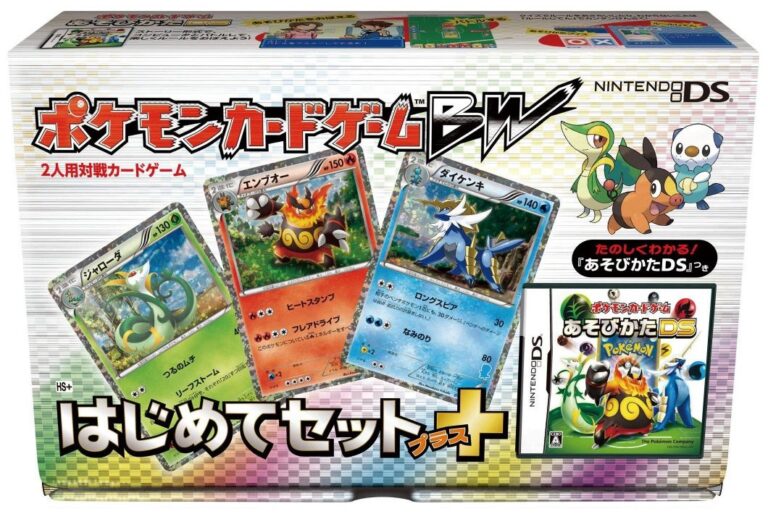
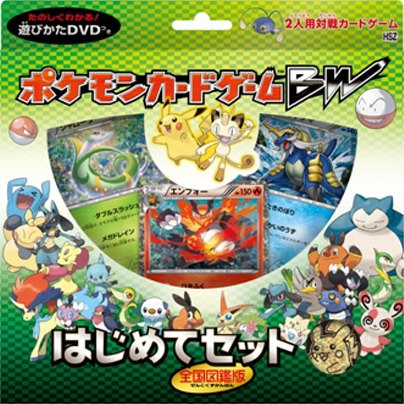
| Availability | Only inside the Pokémon Card Game BW Beginning Set + box (はじめてセット+, ¥2,980 including tax); never sold separately |
| Developer | Creatures Inc. and Zener Works |
| Publisher | The Pokémon Company |
| Players | 1 (DS Download Play sends a one-battle demo to a second DS) |
| Genre | Card game tutorial |
| Lessons | 9 story episodes, plus a 40-question quiz |
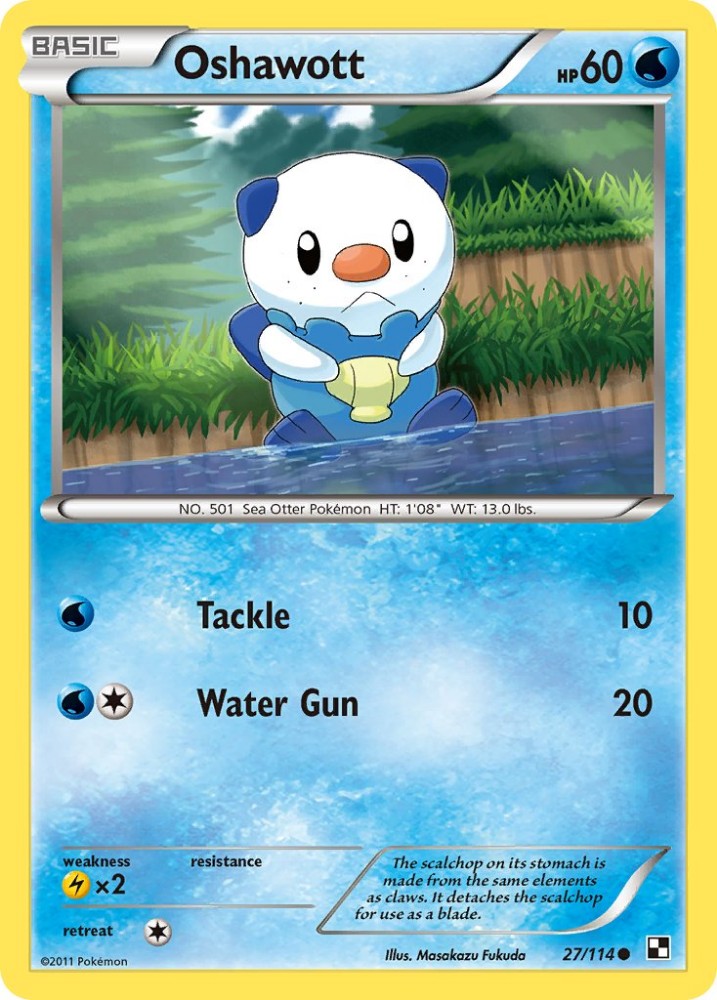
| Decks | 3 ready-made 30-card Half Decks (Snivy, Tepig and Oshawott) |
| Released | 5 August 2011 (Japan only) Free one-battle demo: Nintendo Zone and the Wii’s Minna no Nintendo Channel, summer 2011 |
| Rating | CERO A |
| Predecessor | Pokémon Card GB2: Here Comes Team GR!(Game Boy Color, 2001; the previous Pokémon TCG video game) |
| Successor | None |
| Sales | No figures published (bundled software) |
Overview
 Pokémon Card Game: How to Play DS (ポケモンカードゲーム あそびかたDS, Asobikata DS) is a Nintendo DS tutorial for the Pokémon Trading Card Game, released only in Japan on 5 August 2011. You could never buy it on its own: the game card came packed inside the Pokémon Card Game BW Beginning Set +, a ¥2,980 starter box holding three ready-made 30-card Half Decks built around Snivy, Tepig and Oshawott, where it took the place of the how-to-play DVD supplied with the original Beginning Set. Creatures Inc., the company behind the card game, developed it with the smaller studio Zener Works, and The Pokémon Company published it.
Its heart is a nine-episode story about Shun, a boy who thinks the card game is about throwing cards, and Nanami, the childhood friend from next door who teaches him to play it properly. Each episode tackles one part of the rules, from setting up and attacking through evolution, Trainer cards, Weakness, Special Conditions and Abilities to Supporters, in guided battles on the touch screen that use the very decks found in the box. Around the lessons sit a Rules Dictionary and a true-or-false quiz in four levels; finishing the story opens a Battle mode against five computer characters and a hidden coin-flicking mini-game, and DS Download Play lets you send a one-battle demo to a friend’s DS.
It was the first new Pokémon TCG video game in a decade, following Pokémon Card GB2 on the Game Boy Color in 2001, but it was designed as a teaching aid for the real cards rather than as a game in its own right. It never left Japan, offered no way for two people to battle, and was dropped after a single product: the National Beginning Set of April 2012 went back to a DVD. That makes it a short-lived experiment, and one of the more obscure Pokémon releases on the DS.
ロジックはシンプル、かつポケモンカードゲームをやる上で必要な要素が全て入ったカードで構築。1人でプレイできるから、周りに遊び方を教わる環境がない人にもオススメ!
In English: “Built from cards with simple logic that still contain every element you need to play the Pokémon Card Game. Because you can play it on your own, it’s also recommended for anyone who has nobody around to teach them how to play!”
— Product description of the Beginning Set + (with our English translation)
Quick Answers
The questions people ask most about Pokémon Card Game: How to Play DS, answered first and explained further down the page.
Was Pokémon Card Game: How to Play DS ever sold on its own?
No. The DS game card only ever came inside the Pokémon Card Game BW Beginning Set +, a starter box released in Japan on 5 August 2011 for ¥2,980 including tax. Alongside the game it held three 30-card Half Decks, damage counters, a coin, a playmat and a manual, and it cost about ¥1,000 more than the original Beginning Set, which had come with a DVD instead. More →
Was it released in English or outside Japan?
No. It came out only in Japan, entirely in Japanese, and there was never an English, European, Australian or Korean release. Its English name is simply a translation of the Japanese title, Asobikata DS, in which asobikata means “how to play”. English-speaking players got their own digital way into the card game the same year, in the Pokémon Trading Card Game Online. More →
Can you still play How to Play DS in 2026?
Yes, if you can find one. It has been out of print for years and only turns up second-hand, usually in a complete Beginning Set + box. The game card runs on any DS or 3DS-family system from any region, though every word of it is in Japanese, and it has never had a digital re-release. More →

Can two players battle each other with it?
No. There is no two-player battle mode, as staff confirmed when the game was first shown. Send to a Friend uses DS Download Play to beam a short demo to another DS, but that demo is a single guided battle against the computer, with Nanami explaining each step, and it ends with an advert for the card game. More →
How many lessons are there, and what do they teach?
Nine story episodes. In order they cover what you need to play, setting up and attacking, evolution and retreating, Trainer cards, Weakness and Resistance, Special Conditions, Abilities, a test match with a shuffled deck and, last of all, Supporter cards. Each one ends with a recap, and from the fifth episode the lessons move to the local Gym and its regulars. More →
Which decks and Pokémon does it use?
The same three Half Decks that come in the box: Snivy (Grass and Fighting), Tepig (Fire and Lightning) and Oshawott (Water and Psychic). Each has 12 Pokémon, six Trainer cards and 12 Energy, and between them they feature 27 Unova Pokémon, from the three first partners and their evolutions to Joltik, Darumaka and Bouffalant. More →
How do you unlock Battle mode and the Coin Toss Game?
At first only the story is open. Finishing episode 1 adds the Rules Dictionary, the quiz and Send to a Friend to the menu. Finishing all nine episodes unlocks Battle mode, where you can take on the five story characters again, and lets you open the hidden Coin Toss Game by pressing L and R together on the menu screen. More →
Is it a sequel to the Game Boy Pokémon Trading Card Game?
Not really. It was the first new Pokémon TCG video game since Pokémon Card GB2 in 2001, and it was billed that way when it was first shown, but it is a short tutorial built around three fixed decks, not a card-collecting adventure like the Game Boy games. Nothing followed it, either. More →
The lessons and the decks you learn with
How to Play DS teaches the card game through the story of Shun, a boy who has never played, and Nanami, the friend next door who knows the game inside out. Across nine episodes she takes him through the Black & White era rules one at a time, first one-to-one and then at the local Gym, and every battle uses one of the three Half Decks packed in the Beginning Set +. Shun swaps between them, mostly borrowing Nanami’s, so that each match shows off the rule being taught.
- 9story lessons
- 3Half Decks of 30 cards
- 27Unova Pokémon species
- 5opponents to replay in Battle mode
The nine lessons
Each episode follows on from the last, so taken in order they tell the whole story. The titles are translated from the Japanese:


The three Half Decks
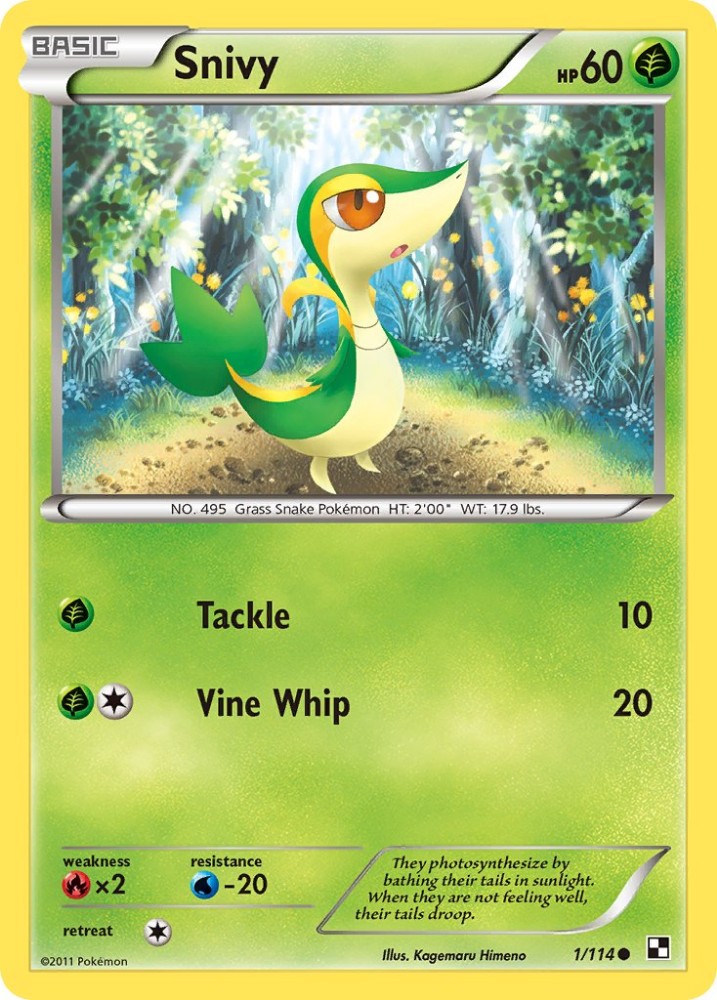
All three decks follow the same recipe: 30 cards, made up of 12 Pokémon across nine species, six Trainer cards and 12 Energy, six each of two types. Each is built around a first partner’s full evolution line, with another Pokémon of the same type, four cards for the second Energy type, a Colorless Pokémon and one of Unova’s elemental monkeys. They share a Potion, a Switch, a Pokédex and two Poké Balls, plus one Trainer card each of their own: Super Scoop Up for Snivy, Energy Retrieval for Tepig and Energy Switch for Oshawott.
| Half Deck | Energy (6 of each) | Pokémon (12 cards) | Trainer cards (6) | Played by |
|---|---|---|---|---|
| Snivy (Grass) | Grass, Fighting | Snivy ×2, Servine ×2, Serperior, Maractus, Panpour, Timburr, Sandile ×2, Krokorok, Patrat | Potion, Super Scoop Up, Switch, Pokédex, Poké Ball ×2 | Chizuru and Jay; Shun in episodes 6 and 9 (with two Cheren in place of two Grass Energy in episode 9) |
| Tepig (Fire) | Fire, Lightning | Pansage, Tepig ×2, Pignite ×2, Emboar, Darumaka, Blitzle ×2, Zebstrika, Joltik, Bouffalant | Energy Retrieval, Potion, Switch, Pokédex, Poké Ball ×2 | Nanami and Iwao; Shun in episodes 2, 3, 4, 7 and 8 (without its Item cards in episodes 2 and 3) |
| Oshawott (Water) | Water, Psychic | Pansear, Oshawott ×2, Dewott ×2, Samurott, Basculin, Woobat, Venipede ×2, Whirlipede, Lillipup | Energy Switch, Potion, Switch, Pokédex, Poké Ball ×2 | Masayoshi; Shun in episode 5 |

What came in the box
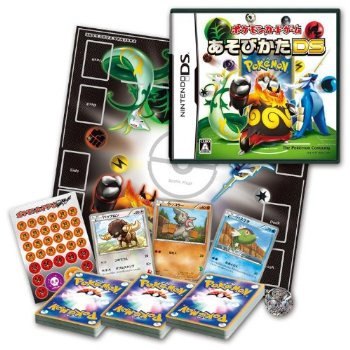
How to Play DS was never on sale by itself. The Beginning Set + box, priced at ¥2,980 including tax (¥2,839 before tax), held the three 30-card Half Decks, a sheet of damage counters and markers, a Pokémon coin in a different foil finish from the original set’s, a playmat with a redesigned reverse side, an instruction manual and the DS game card, which took the place of the original Beginning Set’s how-to-play DVD. The original box had cost ¥1,980, so the software effectively added about ¥1,000 to the price, and it came with a Club Nintendo serial code.
Its cards carry a set symbol of their own in place of the original set’s . In Japanese the box is called はじめてセット+ (Hajimete Set Plus), literally “first-time set plus”.
 in place of the original set’s
 . In Japanese the box is called はじめてセット+ (Hajimete Set Plus), literally “first-time set plus”.


Gameplay & modes
How to Play DS is built to be used alone: every mode either teaches you something or pits you against the computer, and the menu fills in as you go.
How the menu opens up
- From the start: Learn How to Play (あそびかたをおぼえる), the nine-episode story.
- After episode 1: the Rules Dictionary, the How to Play Quiz and Send to a Friend.
- After episode 9: Battle mode, and the hidden Coin Toss Game, opened by pressing L and R together on the menu screen.
Lessons on the touch screen
Battle mode, the dictionary and the quiz
Send to a Friend and Download Play
Send to a Friend (ともだちにおくる) uses DS Download Play to beam the Asobikata DS Download Version to a second DS that has no game card in it. The demo is a single battle against the computer that starts as soon as Start is pressed, with Nanami, the only character in it, explaining every step, and it ends with an advert for the Pokémon Card Game BW. It cannot be used for two people to battle each other: staff at the game’s first public showing confirmed there was no two-player link mode. The option opens after episode 1. For a limited time around launch, the same demo was also handed out at Nintendo Zone hotspots and through the Wii’s Minna no Nintendo Channel.
Characters
Six characters carry the story, all of them players at or around the local Gym. The game never came out in English, so the names are romanisations of the Japanese.
Pokémon
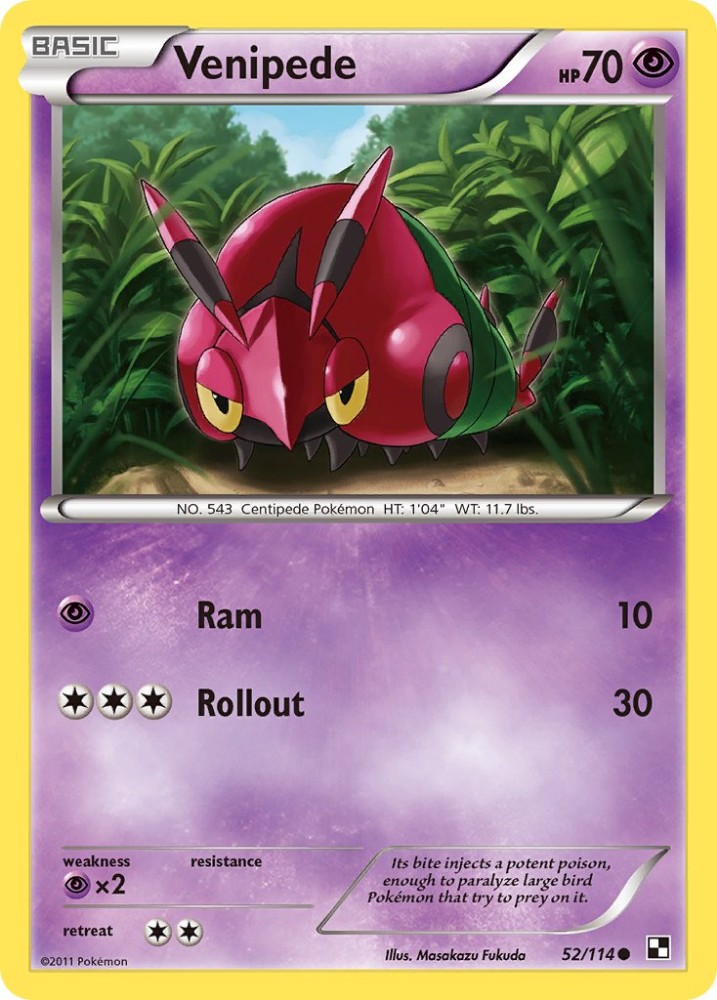
Every Pokémon in How to Play DS comes from the three Half Decks in the Beginning Set +, so the whole roster is from Unova. Each deck holds 12 Pokémon cards across nine species, 27 species in all: a first partner’s line up to its Stage 2 form, plus supporting Pokémon chosen to suit the deck’s second Energy type, such as Sandile and Krokorok for Fighting, Blitzle, Zebstrika and Joltik for Lightning, and Woobat and the Venipede line for Psychic. The same decks serve every character in the story and in Battle mode, so the cast never grows beyond these 27.
Some of them have starring roles. Tepig’s deck is the one Shun learns with, Emboar’s Flare Blitz hits for 150 damage at the cost of all the Fire Energy attached to it, and Whirlipede’s Poison Sting gives the Oshawott deck its way of inflicting Poison, the Special Condition at the heart of episode 6. Each deck’s Pokémon, with each card’s stage and how many copies the deck holds:
Snivy deck: Grass and Fighting
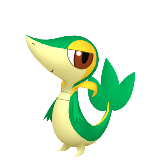 SnivyBasic ×2
 ServineStage 1 ×2
 SerperiorStage 2
 MaractusBasic
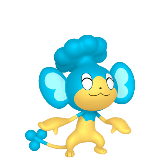 PanpourBasic
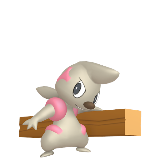 TimburrBasic
 SandileBasic ×2
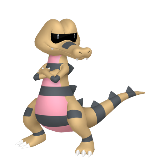 KrokorokStage 1
 PatratBasic
Tepig deck: Fire and Lightning
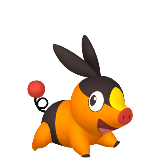 TepigBasic ×2
 PigniteStage 1 ×2
 EmboarStage 2
 PansageBasic
 DarumakaBasic
 BlitzleBasic ×2
 ZebstrikaStage 1
 JoltikBasic
 BouffalantBasic
Oshawott deck: Water and Psychic
 OshawottBasic ×2
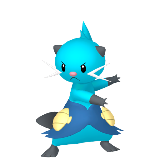 DewottStage 1 ×2
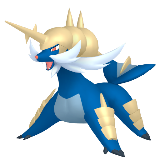 SamurottStage 2
 PansearBasic
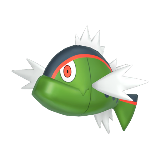 BasculinBasic
 WoobatBasic
 VenipedeBasic ×2
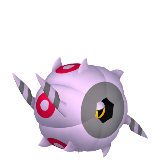 WhirlipedeStage 1
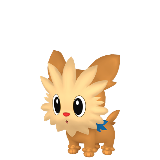 LillipupBasic
Trivia & facts
- It was the first new Pokémon TCG video game in a decade, arriving ten years after Pokémon Card GB2 on the Game Boy Color, and coverage of its first public showing billed it as exactly that.
- When the story begins, Shun is convinced that the Pokémon Card Game is a contest about throwing cards.
- Nanami loses the early practice battles on purpose to build Shun’s confidence, and only owns up after the fourth episode.
- The Coin Toss Game is teased at the very end of the story: Nanami starts to tell Shun the secret command, but he hurries her along and she never finishes, leaving players to find the L and R trick for themselves.
-

The Beginning Set for Girls (2010). The Beginning Set + cards are numbered out of 034 rather than the original set’s 037, because the three cards found only in the Beginning Set for Girls, Minccino, Audino and Alomomola, were left out.
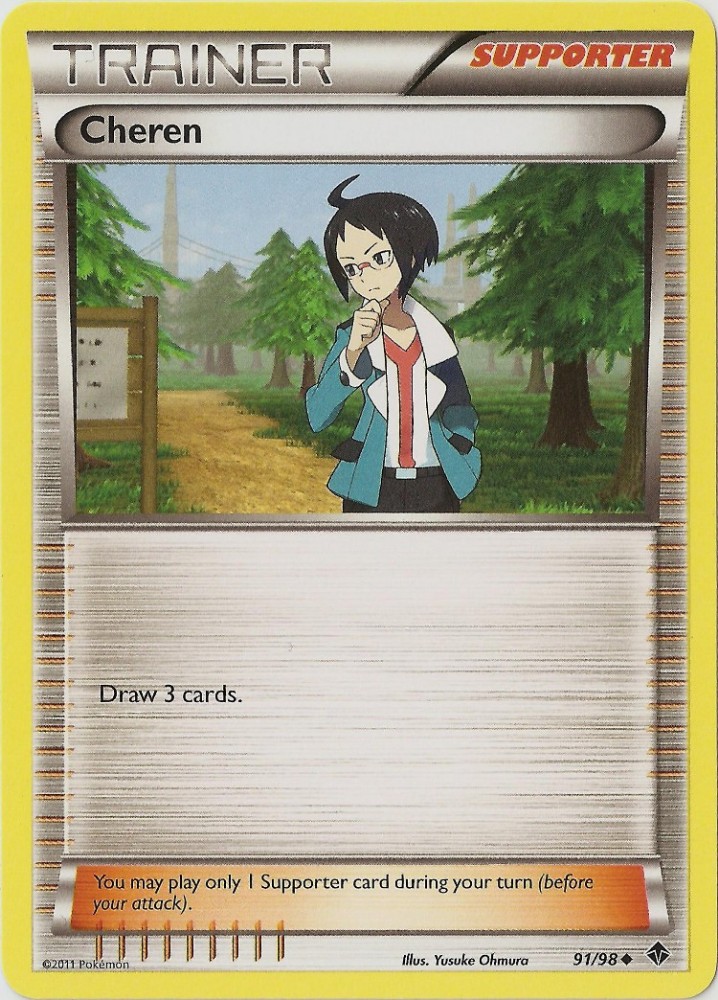
- The Supporter card Nanami gives Shun shows Cheren, one of the player’s two childhood friends in Pokémon Black and White. Its effect is simply to draw three cards; it was first printed in Japan’s White Collection expansion and reached English players in Emerging Powers.
- Each Half Deck includes one of Unova’s elemental monkeys, paired exactly as in Pokémon Black and White, where the player is given the monkey that covers their first partner’s weakness at the first Gym, in Striaton City: Panpour comes with Snivy, Pansage with Tepig and Pansear with Oshawott.
-

The Nintendo DS logo. The official copyright credit romanises the title as POKEMON CARD GAME ASOBIKATA DS, and the game card’s product code is NTR-TBWJ-JPN.
- Japanese speedrunners race the story from the start of episode 1 to the end of episode 9. The fastest time on record by August 2024, 36 minutes 53 seconds, was set on a New Nintendo 3DS.
- Nanami shares her Japanese name with Daisy Oak, the rival’s older sister in Pokémon Red and Blue, though nothing links the two characters.

Legacy
What came after
 The original Beginning Set – 29 October 2010. The first Black & White era starter box, with Snivy, Tepig and Oshawott Half Decks and a how-to-play DVD, for ¥1,980; a Beginning Set for Girls launched the same day
- Beginning Set + listed – Mid-June 2011. Japanese shops list the new box and its bundled DS software
- Announced and first shown – Early July 2011. The Pokémon Company announces the Beginning Set + with How to Play DS in place of the DVD, and a trial version is playable at the World Hobby Fair 2011 Summer
- Free demo – Summer 2011. The one-battle Download Version is handed out for a limited time at Nintendo Zone hotspots and through the Wii’s Minna no Nintendo Channel
- Release – 5 August 2011. Out in Japan inside the Beginning Set + at ¥2,980 including tax; never sold separately
 Beginning Set Pikachu Version – 18 November 2011. A Pikachu-themed starter box reuses the Beginning Set + Half Deck line-up and card numbering, adding a Pikachu promo card
 National Beginning Set – 20 April 2012. The next starter box goes back to a how-to-play DVD, leaving How to Play DS a one-off
Where to play it today
As of October 2026, the only way to play How to Play DS is on its original game card. It was never sold separately and has never been re-released, digitally or otherwise, so that means tracking down a second-hand Beginning Set + box, or a loose card from one. The card runs on any DS or 3DS-family system regardless of region, but every word of it is in Japanese. The free demo distributions ended in 2011, though the full game can still send its demo to another DS by Download Play.
How it was made
How to Play DS was made by Creatures Inc., the company behind the Pokémon Trading Card Game itself, working with the smaller developer Zener Works, and The Pokémon Company released it as part of its card range rather than as a video game in its own right. Its job was to replace the how-to-play DVD in the Beginning Set, the Black & White era starter box launched in October 2010, with something interactive that a newcomer could use alone.
The Beginning Set + first appeared on Japanese shop listings in mid-June 2011, and The Pokémon Company announced it at the start of July. A trial version was playable days later at the World Hobby Fair 2011 Summer, where staff confirmed there would be no two-player battle mode, and the game went on sale inside the box on 5 August 2011.

Reception
Sales
No sales figures were ever published for How to Play DS or for the Beginning Set + box that carried it, and as bundled software it never appeared in Japan’s video game sales charts.
What the press said
As a free extra in a card product, How to Play DS was never reviewed by the big outlets and has no review scores. The Japanese site Inside played it at launch and summed it up as 「チュートリアルソフト」, “tutorial software”, while praising its タッチ操作による直観的な操作 (“intuitive touch controls”) and the way both screens show the state of the table as it changes. Its writer also found the quiz, with its explanations, a handy way to check what had sunk in.
The main complaint was the packaging. Because the software was never sold on its own, anyone who already owned the original Beginning Set had to buy a whole new box to get it. Inside also hoped for a fuller follow-up with wireless and Wi-Fi battles and StreetPass, and its report from the World Hobby Fair wished for a true successor to the Game Boy card games that could bring back their infrared Card Pop! feature on the 3DS.
Further reading
More Pokémon card games, and other handheld spin-offs, on the site: