
  |
|
| Titles | Pokémon Trading Card Game ポケモンカードGB (Pokémon Card GB) |
| Platform | Game Boy Color – dual-mode cartridge that also runs on the original Game Boy (without infrared) |
| Developer | Hudson Soft, with Creatures |
| Publisher | Nintendo |
| Director | Kōji Arai |
| Producers | Tsunekazu Ishihara, Shinichi Nakamoto, Takehiro Izushi |
| Composer | Ichirō Shimakura |
| Players | 1–2 (Game Link Cable duels; infrared card trades and Card Pop!) |
| Genre | Digital trading card game |
| Cards | 228 (Base Set, Jungle, Fossil, early promos and 18 cards made for the game) |
| Released | 18 December 1998 (Japan) · 7 April 2000 (Australia) · 10 April 2000 (North America) · 15 December 2000 (Europe) |
| Re-releases | Nintendo 3DS Virtual Console (2014) · Nintendo Switch Online Game Boy library (8 August 2023) |
| Rating | ESRB E · OFLC G8+ (Australia) |
| Successor | Pokémon Card GB2: Here Comes Team GR! (Japan only, 2001) |
| Sales | About 3.7 million worldwide (VGChartz) |
Overview
 The Pokémon Trading Card Game for Game Boy was the first electronic version of the Pokémon TCG. It was a combined effort between Hudson Soft, Creatures and Nintendo, and its initial release came in Japan in December 1998. It was well over a year before it would be released in the West, when it finally arrived in Australia and the US in April 2000, eventually reaching Europe on December 15th, 2000.
The game had a promotional Pokémon card of Meowth shipped with it in the West, whereas in Japan they got a special Legendary Dragonite.
In Japan the Pokémon TCG GB has a sequel called Pokémon Card GB2: Here Comes Team GR (Great Rocket). We hadn’t seen the last of the Pokémon TCG GB version after the early 2000s, though: it was later re-released on the Nintendo 3DS Virtual Console in 2014, and in 2023 it joined the Game Boy library on Nintendo Switch Online. Many years later it would be superseded by the Pokémon Trading Card Game Online.
Based on the hit Wizards of the Coast card game…
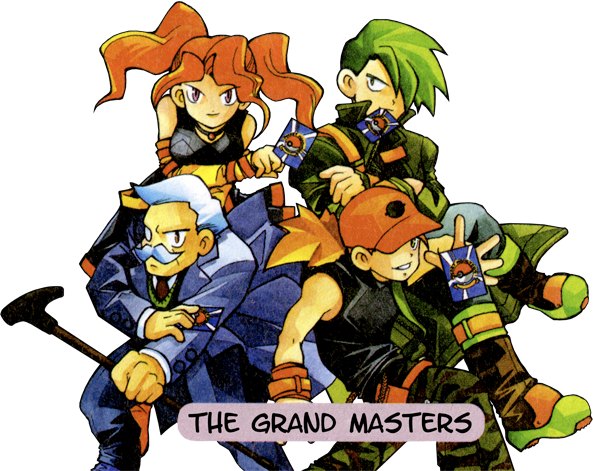
The greatest Pokémon Trading Card Game players of all time – the Grand Masters – are looking for one player worthy of inheriting the four rare, Legendary Pokémon Cards! Build new decks with the Auto Deck Machine, hone your skills on the Challenge Machine and test your ability in Challenge Hall. Expand your card collection, duel your way through 8 Club Masters and earn the right to challenge the Grand Masters in the Pokémon Dome! Shadowy figures, wise instructors and powerful opponents await in the ultimate trading card game adventure!
- Includes over 200 of your favorite Pokémon Trading Cards, plus new cards exclusive to the Game Boy game!
- Learn how to play the card game, build and manage decks and duel with other card players in step-by-step tutorials.
- Duel a friend using the Game Link cable (sold separately) or generate new cards using the Infra-Red Card Pop! feature (available with Game Boy Color only).
- Basic reading skills are needed to fully enjoy the story.
— Official description
Quick Answers
The questions people ask about the Game Boy Trading Card Game, answered first and explained further down the page.
How many cards are in Pokémon Trading Card Game on the Game Boy Color?
228 in total. The card album counts 226 regular cards, drawn from Base Set, Jungle, Fossil, early promos and 18 cards made for the game, plus two Phantom Cards, Venusaur Lv64 and Mew Lv15, which only count once you own them. A programming slip means Venusaur can never actually be obtained without cheats. More →
How do you get Mew in Pokémon Trading Card Game?
Mew Lv15 is a Phantom Card that only comes from Card Pop!, the infrared exchange between two copies of the game. Each pop has a 1 in 256 chance of a Phantom Card, and two save files cannot pop together again until both have popped with 16 others. Card Pop! works on Nintendo Switch Online but not on 3DS. More →

Is Pokémon Trading Card Game on Nintendo Switch Online?
Yes. It joined the Game Boy library on Nintendo Switch Online on 8 August 2023, launching straight after that day’s Pokémon Presents, and needs only the standard membership. This version emulates link-cable duels and the infrared features, Card Pop! included; just the Game Boy Printer option is switched off. The 3DS Virtual Console release can no longer be bought. More →
What promo card came with Pokémon Trading Card Game?
Copies sold outside Japan came with a real Meowth promo card, a card first designed for the Game Boy game and then printed by Wizards of the Coast. Japanese copies of Pokémon Card GB instead included Dragonite Lv41, one of the four Legendary Cards in the story. The Phantom Venusaur Lv64 was printed for the official guidebooks. More →
Who are the Grand Masters and how do you win the Legendary Cards?
With all eight Master Medals the Pokémon Dome opens, and you face Courtney (Moltres, Fire), Steve (Zapdos, Lightning), Jack (Articuno, Water) and Rod (Dragonite, Colorless) back to back. Your rival Ronald has also cleared the Dome, so one last duel against him decides who inherits the four Legendary Cards. More →
Was the sequel to Pokémon Trading Card Game released in English?
No. Pokémon Card GB2: GR-dan Sanjō! came out only in Japan, on 28 March 2001. It adds the villainous Team Great Rocket, a choice of boy or girl hero and well over 400 cards, but it has never had an official English release or a Nintendo Switch Online version; fans know it through unofficial translations. More →
Plot / Story
The game starts out at Dr. Mason’s Laboratory, where the player has to choose one of the three starter decks offered, similarly to choosing a starter Pokémon in the main game series. Once the player chooses either the Bulbasaur, the Charmander or the Squirtle deck, they set out on their journey to become the best trading card player and inherit the legendary cards that only a worthy card player can have. To do so they have to defeat the eight Club Masters and earn the eight Medals, then defeat the four Grand Masters, which is also similar to the Gym Leaders, their badges and the Elite Four concepts of the other games. Moreover, the player has a rival named Ronald, whom they’ll have to duel several times throughout the course of the game.
The story in full
The player, Mark, arrives at Mason Laboratory on the TCG Island hoping to become the greatest card duellist around. Dr. Mason offers a choice of three starter decks built around Charmander, Squirtle or Bulbasaur, and his assistant Sam walks the player through a practice duel. From there the island’s eight clubs await: Grass, Science, Fire, Water, Lightning, Psychic, Rock and Fighting. In each one the club members must be beaten before the Club Master will put up a Master Medal. Along the way the player keeps running into Ronald, a boy from the same neighbourhood who is chasing the same goal; they duel after the second and fifth Medals and again as the final opponent of the first two Challenge Cups. With all eight Medals the Pokémon Dome opens, where the Grand Masters Courtney, Steve, Jack and Rod guard the four Legendary Cards: Moltres, Zapdos, Articuno and Dragonite. After the player beats all four, it turns out Ronald has also conquered the Dome, and the two settle who is worthy in a final duel against his Legendary Ronald Deck. Victory makes the player champion and heir to the Legendary Cards. Afterwards Dr. Mason switches on the Challenge Machine, Challenge Cups pop up at random and the Grand Masters can be challenged again.


Gameplay & Features

The gameplay, as stated in the plot, is somewhat similar to the adventure Pokémon games. The player has to defeat the Club Masters, earn the eight Medals and then vanquish the Grand Masters. Defeating an opponent will earn the player booster packs, which provide a number of random cards, and with the game having 228 cards, the player will have to repeat the process over and over.
Booster packs can also be received as gifts in emails from Dr. Mason. There are four series of booster packs that can be earned in the game – Colosseum, Evolution, Mystery and Laboratory – plus a set of Promotional cards that are never sold in packs. Each of the series has its own unique set of cards. Earning Medals from Club Masters unlocks certain Auto Deck variations, which can be used once the player has all the listed cards in the deck.
Multiplayer features are available in the game, allowing players to trade deck configurations and cards, and also to have fun battling each other. Along with the booster packs, there are a few other ways to earn cards in the game.
There are in-game trades, in which certain characters will sometimes offer a Promotional version of the card the player gives them, or request a card different from theirs. After trading a number of cards with some characters, they might even give the player a Promotional card as a gift. The player will additionally receive cards upon beating their rival in duels.
| Card traded | Card received | Trade location | Trading character |
|---|---|---|---|
| Lapras | Arcanine | Water Club | A character sitting near the table |
| Electabuzz | Special Electabuzz | Lightning Club | Not specified |
| Clefairy | Pikachu | Grass Club | A female character located in the middle of the lobby |
| Charizard | Blastoise | ||
| Oddish | Vileplume | ||
| Clefable | Surf Pikachu | Mr. Ishihara’s House | Mr. Ishihara |
| Ditto | Balloon Pikachu | ||
| Chansey | Another Surf Pikachu card version |
Cards received after battling Ronald: Jigglypuff, Mewtwo, Super Energy Retrieval and Mew.
The Challenge Cup is another feature available in Pokémon Trading Card Game, unlocked only after the player earns 3 Medals, and then 5 Medals. These cups pit the player against three opponents that they have to battle consecutively, earning a few rare cards as a reward. The player can save in between the matches, and in the first two Cups the final match is always against their rival, who’ll put up quite a challenge.
Cards earned after winning a Challenge Cup: Pikachu, Pikachu (variation), Surf Pikachu, Surf Pikachu (variation), Balloon Pikachu, Mewtwo, Promotional Mewtwo, Mew, Jigglypuff, Super Energy Retrieval, Slowpoke, Electabuzz and Arcanine.
Similarly to the Challenge Cup, there’s another feature called the Challenge Machine, which is unlocked upon defeating the Grand Masters and is available in Dr. Mason’s Laboratory. Using this machine, the player will battle five trainers consecutively, but this time with no pause or save. All the trainers will be random ones from the game, with the first three being normal trainers from the eight Clubs, the fourth trainer being a random Club Master and the last one being a random Grand Master. The Grand Master in the final round is sometimes replaced with Dr. Mason’s assistant, Tech Aaron, or the mysterious character wearing the mouse costume, Imakuni?.
In depth: how it all works

Notable cards
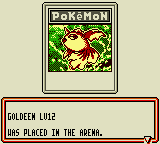
The game’s Pokémon cards cover first-generation species only, drawn from the Base Set, Jungle and Fossil expansions, the earliest promos and a batch of cards made specially for the Game Boy. Pokémon exist only as cards: each duel pits an Active Pokémon against the opponent’s, with up to five more waiting on the Bench, and they evolve when Stage 1 and Stage 2 cards are laid on top. Owning particular cards drives much of the side content, from trades to the Legendary Cards.
 Mew#151
 Venusaur#003
 Dragonite#149
 Moltres#146
 Zapdos#145
 Articuno#144
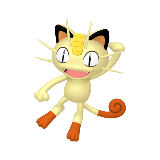 Meowth#052
 Pikachu#025
 Jynx#124
 Electrode#101
- Mew – Phantom Card Lv15 with the Mystery Attack; Card Pop! only and never printed as a real card.
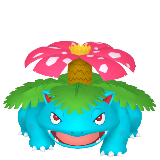
- Venusaur – Phantom Card Lv64 meant for Card Pop! but unobtainable due to a bug; the real card came with the official guidebooks.
- Dragonite – Lv41 Legendary Card of Grand Master Rod, with the Healing Wind power; packed in with Japanese copies.
- Moltres – Legendary Card at the heart of Courtney’s deck in the Pokémon Dome.
- Zapdos – Legendary Card at the heart of Steve’s deck in the Pokémon Dome.
- Articuno – Legendary Card at the heart of Jack’s deck in the Pokémon Dome.
- Meowth – Lv14 Cat Punch card created for the game; a printed version came in the box outside Japan.
- Pikachu – Several promo versions, including Flying Pikachu and two Surfing Pikachu, won from trades and Challenge Cups.
- Jynx – Base Set card recoloured from black to purple for the international release.
- Electrode – Its Base Set card, like Fossil’s Ditto, was left out and replaced by a version made for the game.
The Club Masters & Grand Masters
TCG Island has eight clubs, each run by a Club Master who hands over a Master Medal. With all eight, the doors of the Pokémon Dome open and the four Grand Masters wait with the Legendary Cards. Here’s the full line-up, in the order the clubs are usually tackled:
- Grass MedalNikki · Grass ClubGrassFlower Power Deck
- Science MedalRick · Science ClubGrass (Poison-themed)Wonders of Science Deck
- Fire MedalKen · Fire ClubFireFire Charge Deck
- Water MedalAmy · Water ClubWaterRain Dancer Deck
- Lightning MedalIsaac · Lightning ClubLightningZapping Selfdestruct Deck
- Psychic MedalMurray · Psychic ClubPsychicStrange Psyshock Deck
- Rock MedalGene · Rock ClubFighting (Rock-themed)Rock Crusher Deck
- Fighting MedalMitch · Fighting ClubFightingFirst-Strike Deck

 Grass Club: Nikki
Deck: Flower Power Deck
Japanese name Kunimi. She is not in the Grass Club at first: the player beats the club members, then finds her at Mr. Ishihara’s House and persuades her to return for the duel. Reward: Grass Medal and two booster packs.

 Science Club: Rick
Deck: Wonders of Science Deck
Japanese name Kurushima. The Science Club’s Pokémon are poison-themed but run on Grass Energy, which is why Rick counts as a Grass Master despite his club’s scientific theme. Reward: Science Medal and two booster packs.

 Fire Club: Ken
Deck: Fire Charge Deck
Japanese name Akabane. Ken will not duel a beginner: the player must beat the Fire Club members and own at least 300 cards before he accepts the challenge. Reward: Fire Medal and two booster packs.

 Water Club: Amy
Deck: Rain Dancer Deck
Japanese name Utchi; her Japanese deck is the Go-Go Rain Dance Deck. Built around Blastoise’s Rain Dance power, which lets her pile Water Energy onto her Pokémon at speed. Reward: Water Medal and two booster packs.

 Lightning Club: Isaac
Deck: Zapping Selfdestruct Deck
Japanese name Takahashi. True to its name, his deck includes Lightning Pokémon whose Selfdestruct attacks damage both sides of the table, so the Prize count can swing quickly. Reward: Lightning Medal and two booster packs.

 Psychic Club: Murray
Deck: Strange Psyshock Deck
Japanese name Miura. A Psychic specialist whose deck uses confusion and other tricks. Pappy, an old man in the Psychic Club lobby, rewards the player with a Mewtwo promo once Murray is beaten. Reward: Psychic Medal and two booster packs.

 Rock Club: Gene
Deck: Rock Crusher Deck
Japanese name Genzō. The Rock Club’s rock and ground Pokémon run on Fighting Energy, which is why its Master is listed under the Fighting type rather than a type of his own. Reward: Rock Medal and two booster packs.

 Fighting Club: Mitch
Deck: First-Strike Deck
Japanese name Yamaguchi. The English deck name mirrors the Japanese Preemptive Hit Deck, reflecting a plan to strike first and keep the opponent under pressure from the opening turns. Reward: Fighting Medal and two booster packs.
The Grand Masters of the Pokémon Dome

Pokémon Dome: Courtney
Deck: Legendary Moltres Deck
Japanese name Hiroko. The first of the four Grand Masters faced in the Dome, playing a Fire deck that favours raw power around the Legendary Moltres card. Reward: Legendary Moltres (part of the Legendary Card set).

Pokémon Dome: Steve
Deck: Legendary Zapdos Deck
Second Grand Master. His Lightning deck is built around the Legendary Zapdos and includes several Pokémon whose attacks depend on coin flips, so his duels can be streaky. Reward: Legendary Zapdos (part of the Legendary Card set).

Pokémon Dome: Jack
Deck: Legendary Articuno Deck
Japanese name Kanekōji. An ice-themed Water deck led by the Legendary Articuno, padded out with Chansey to soak up damage while Articuno does the work. Reward: Legendary Articuno (part of the Legendary Card set).

Pokémon Dome: Rod
Deck: Legendary Dragonite Deck
Japanese name Ryūdō. The final Grand Master plays a dragon-themed Colorless deck around the Legendary Dragonite, using Energy Retrieval to keep his costly attackers powered. Reward: Legendary Dragonite (part of the Legendary Card set).

Ronald’s duels
Your rival Ronald turns up five times, and every win against him carries a prize:
- First duel – Club lobby, I’m Ronald Deck. Prize: Jigglypuff promo card. Ronald ambushes the player in a club lobby after the second Master Medal. A single six-Prize duel with no second chance if the player loses.
- First challenge cup – Challenge Hall, Invincible Ronald Deck. Prize: Mewtwo promo card (Challenge Cup prize). The first Challenge Cup opens after the third Master Medal. Ronald is always the third and final opponent, so beating him means winning the Cup.
- Third duel – Club lobby, Powerful Ronald Deck. Prize: Super Energy Retrieval promo card. Another surprise lobby challenge, this time after the fifth Master Medal, again with only one chance to win the prize.
- Second challenge cup – Challenge Hall, Invincible Ronald Deck. Prize: Mew promo card (Challenge Cup prize). The second Challenge Cup runs between the fifth and sixth Medals, with Ronald once more waiting in the final round. He also turns up at random in later Cups.
- Final duel – Pokémon Dome, Legendary Ronald Deck. Prize: The four Legendary Cards: Moltres, Zapdos, Articuno and Dragonite. After the player clears the Dome, Ronald, who has beaten the Grand Masters too, plays a deck built on the Legendary Cards. Losing costs him the cards, and he cannot be challenged in the Dome again.
Imakuni?
After the player talks to a girl in the Water Club, the eccentric Imakuni? starts turning up at random in the lounges of the Fighting, Lightning, Science and Water Clubs, with his own strange music playing. He sings, urges the player to dance and then challenges them with the Imakuni? Deck. Beating him earns one booster pack from each of the four series, while the third and sixth wins pay out his own Imakuni? Trainer card instead. Appears at random after the player talks to a girl in the Water Club. He can also fill the final slot of the Challenge Machine.
Characters

Mark
A young card player who comes to the TCG Island with dreams of becoming the best duellist there is. According to the instruction manual, Mark grew up in the same neighbourhood as Ronald, and the two swapped Pokémon cards before Mark set out. His journey starts at Mason Laboratory with a choice of three starter decks and ends, if all goes well, with the four Legendary Cards.

Ronald
Known as Lando (ランド) in Japanese, Ronald is the player’s rival and the champion figure of the story. He is the only duellist in the game with no title such as Club Master. He challenges Mark after the second and fifth Medals, waits as the third opponent in the first two Challenge Cups, and makes his last stand in the Pokémon Dome with the Legendary Ronald Deck.

Dr. Mason
The head of Mason Laboratory, the player’s base throughout the adventure. He hands over the starter deck along with 30 extra cards to go with it, then keeps in touch through a run of emails that explain the game’s features, each carrying at least one booster pack. After the player becomes champion he unveils the Challenge Machine, a new way to test a single deck against a run of opponents.

Sam
One of Dr. Mason’s assistants. Sam runs the introductory practice duel that teaches the basic rules with a dedicated Practice Deck, then stays on at the laboratory as a regular opponent; duelling him, like Aaron, is an early way to pick up extra Energy cards. Another tech in the lab tops the player up with 60 Basic Energy cards if they run low.

Aaron
Another of Dr. Mason’s assistants. Aaron duels with three two-type decks: the Fire & Lightning Deck, the Water & Fighting Deck and the Grass & Psychic Deck. He is a handy early sparring partner and a source of Energy cards, and in the post-game he can occasionally take the place of the Grand Master in the fifth and final round of the Challenge Machine.

Mr. Ishihara
A friendly collector who lives in a house in the far north-west of the island map. He offers a series of trades, swapping rare Colorless cards for promotional Pikachu cards, and his bookshelf contains notes about Card Pop!. Grass Club Master Nikki is first found visiting his house. He is a cameo by Tsunekazu Ishihara, the head of Creatures and one of the game’s producers.


Imakuni?
Billed in game as a strange life-form, Imakuni? is a cameo by Tomoaki Imakuni, a Creatures staff member, card illustrator and eccentric musician who performed songs for the Pokémon anime. He appears at random in four of the clubs, sings at the player and duels with his own deck. His Trainer card, first given away by CoroCoro Comic in Japan, is his prize for the third and sixth wins.
Card Pop!

This feature is activated by connecting two Pokémon Trading Card Game cartridges’ infrared ports. It allows both players to receive a random card from the game, and it was meant to be the only way to obtain the Mew Lv 15 and Venusaur Lv 64 cards, also known as Phantom Cards – although a programming slip means Venusaur never actually turns up, so only Mew can be won. The player cannot repeat the process with the same game, as each cartridge remembers its last 16 partners, so the pair has to Card Pop with many other games first. One has to note that the Card Pop feature cannot be used with the game’s sequel, Pokémon Card GB2, as it will freeze or glitch the game, and might even damage the save data.

Connectivity
Connecting the games with the Game Link Cable allows the players to duel each other and test out the decks they’ve built so far. Furthermore, using the cartridge’s infrared feature, players can trade deck configurations and cards, and even use the Card Pop option.
Virtual Console & Nintendo Switch Online

In July 2014 the game was re-released on the Nintendo 3DS Virtual Console (first in Europe, then in North America in November and in Japan that December), with a few alterations to the gameplay. The multiplayer features were completely disabled, as the Game Link Cable doesn’t work with the 3DS. Since the Virtual Console didn’t emulate the Game Boy Color’s infrared port, obtaining the Phantom Cards was deemed impossible and the Card Pop functionality was also removed, but the Mysterious Pokémon Deck was still displayed in the Auto Deck Machine. References to the Phantom Cards were, as a result, made inaccessible in-game, like the shelf containing books about the cards in Mr. Ishihara’s house.
The 3DS version could no longer be bought once the Nintendo 3DS eShop closed in March 2023 – but by then the game had a new home. On 8 August 2023, straight after that day’s Pokémon Presents, it joined the Game Boy library on Nintendo Switch Online, where link duels and even Card Pop! are emulated; only Game Boy Printer support is switched off.
Regional Variations
Like most of the Pokémon games, Pokémon Trading Card Game was released in Japan first and then internationally, with the two versions having slight differences. The title screen and the booster pack artwork were changed in the international release, along with the back design of the cards, which was altered to the one used outside Japan. The artwork of a few cards was tweaked, like the Jynx Lv 23 card, on which Jynx’s face was changed from black to purple.


More differences between the versions
- The Paralysis status icon changed from two vertical jagged lines in Japan to a single horizontal line in other regions.
- Michael in the Grass Club originally says he dislikes duelling girls; the English script changes this to a remark that the girls in the club are too tough.
- Imakuni? sings a different song: in Japanese he refers to the anime song ‘Pokémon Ieru Kana?’ (Can You Name All the Pokémon?), while in English he mentions the PokéRap.
- Japanese default deck names include the player’s name, whereas other languages use generic names.
- The Japanese cartridge contains its own infrared hardware, so Card Pop! works on an original Game Boy, Game Boy Pocket or Game Boy Advance; the Western versions rely on the Game Boy Color’s infrared port.
- Europe received two multi-language versions, English/French/German and English/Italian/Spanish, and only the first came to the 3DS Virtual Console. The European versions also fix the ‘Ninetails’ misspelling found in the American release.
Cut and unused content
The game’s data hides a few things that never made it into the finished cartridge:
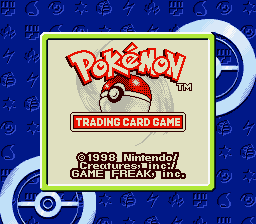
- An unused title screen survives in two copies, with its own palette, static Energy icons, no Poké Ball outline and no copyright line, in separate Game Boy Color and Super Game Boy versions.
- Developer test screens remain in the code, including a colour wheel, television colour bars and a palette display, along with unused copyright screens.
- A disabled routine would have checked the save for corruption and shown an error; its Japanese message is still marked as a to-do item.
- Several move animations and sound effects go unused, among them copies of the Thunder, Blizzard and Psychic effects and a version of Surf without screen shake.
- An unused Super Game Boy border, apparently made for testing, exists in both the Japanese and international data, and a hidden switch can turn on lowercase text in the English version.
Glitches, exploits and oddities
A missing Phantom Card, a lopsided Card Pop! check and a few smaller oddities:
The missing Phantom Venusaur
Card Pop! was meant to award two Phantom Cards, Mew Lv15 and Venusaur Lv64, but an oversight in the code means the Phantom roll can only ever produce Mew. Venusaur therefore cannot be obtained by any legitimate means, which in turn makes the Mysterious Pokémon Deck in the Pokémon Dome’s Auto Deck Machine impossible to build. Only a cheat device can add the card to the album. The sequel fixed the problem, and even sells both of the first game’s Phantom Cards in its GR Island Game Center.
One-sided Card Pop!
Each game refuses to Card Pop! with a partner who is still in its list of the last 16 players it popped with. If only one of the two games remembers the other, the check is applied unevenly: the game that is allowed to pop still receives its card, while the other player just gets a rejection message. The bug was corrected in Pokémon Card GB2.
Card Pop! with the sequel
Card Pop! is not designed to work between this game and Pokémon Card GB2. Attempting it anyway can freeze one or both games or, worse, corrupt and wipe save data, so players with both cartridges are better off keeping them apart. The sequel has its own Card Pop! and Rare Card Pop! features that only work with other copies of GB2.
The space before Ronald’s name
Every other computer-controlled duellist carries a class title such as Club Master or Grand Master, which is printed before their name when a duel begins. Ronald is the only one without a title, so the game prints an empty title followed by a space, leaving his name slightly indented at the start of each duel. It happens in every language version.
Pokémon Trader self-trade
The Pokémon Trader Trainer card is supposed to swap a Pokémon in the hand for a different one in the deck. In the game, the Pokémon put into the deck jumps to the top of the deck list, and the player can simply pick that same card straight back, leaving hand and deck unchanged. Energy Retrieval and Super Energy Retrieval do not suffer from the same loophole.
Videos & media
Pokémon Trading Card Game GB videos, including the intro and a TV commercial.
The intro and title theme.
US TV commercial.
Trivia & facts
- In the Japanese version of the game, the Surfing Pikachu card had a different artwork, as it had a train and Mt. Fuji in its background. Both the train and Mt. Fuji were removed in the international release.
- The mysterious Imakuni? character in the black mouse costume is a reference to Tomoaki Imakuni, a Japanese musician who made many Pokémon songs for the Pokémon anime series.
- Within the Challenge Hall, where the Challenge Cups are held, there’s a door that players can never go through – it’s purely there for decoration.
- In the American version of the game, the Ninetales card is misspelt ‘Ninetails’; the European versions fixed the spelling.
-

The Pokémon TCG GB logo. There are two special Super Game Boy layout borders that weren’t featured in the game, but are still present within its data files. These are thought to have been used to test the borders and correct graphical glitches.
Further trivia
- The game was among the Pokémon products banned in Saudi Arabia in March 2001, after the country’s grand mufti issued a ruling claiming that Pokémon imagery promoted Zionism.
- Pokémon Card GB was the first Japanese Pokémon game to use kanji regularly in its dialogue rather than writing everything in kana.
- It was also the first Pokémon game to let the player run around the overworld by holding the B Button, a feature the main series only adopted with Ruby and Sapphire.
- Hudson Soft is not named on the box, cartridge label or title screen; its credit as developer appears only in the ending credits.
- The Imakuni? Trainer card is the only card, apart from Card Pop! rewards, with a fixed limit: just two copies can be earned, for the third and sixth wins against him.
- Although the North American script is displayed entirely in capitals, it is stored in mixed case, and a hidden switch in the code can show it with lowercase letters; the European text is stored in capitals only.
- Dr. Mason’s first email still explains Card Pop! in the 3DS Virtual Console version, even though the feature cannot be used there.
Legacy
What came after
- Japanese release as Pokémon Card GB – 18 December 1998. Game Boy Color cartridge with built-in infrared; packed with a Dragonite Lv41 card.
- Australian release – 7 April 2000. First English-language release, ahead of North America.
- North American release – 10 April 2000. Packaged with a Meowth promo card.
- European release – 15 December 2000. Two multi-language versions: English/French/German and English/Italian/Spanish.
- Sequel: Pokémon Card GB2: GR-dan Sanjō! – 28 March 2001. Japan only; adds Team Great Rocket and GR Island. The first game published by The Pokémon Company.
- Nintendo 3DS Virtual Console – 10 July 2014. Europe first, then Australia (2014-07-11), North America (2014-11-13) and Japan (2014-12-24); link, infrared and printer features disabled.
- Nintendo 3DS eShop closes to new purchases – 27 March 2023. The Virtual Console version can no longer be bought, only re-downloaded.
- Nintendo Switch Online Game Boy library – 8 August 2023. Released straight after the August 2023 Pokémon Presents, with link play and Card Pop! emulated.
- Nintendo Classics release in Taiwan – 9 September 2025. Extends the Switch release to Taiwan.
Where to play it today
As of October 2026 the simplest legal way to play is Nintendo Switch Online, where the game has been part of the Game Boy library, now branded Nintendo Classics, since 8 August 2023. It needs only the standard membership, runs on Switch and Switch 2, and emulates both link duels and Card Pop!. The 3DS Virtual Console version can only be re-downloaded by people who bought it before March 2023, and original cartridges remain an option.
How it was made
Hudson Soft made the game with Creatures, the company behind the card game, and Nintendo published it; Hudson’s name appears in the ending credits but not on the box or title screen. Kōji Arai directed, Creatures founder Tsunekazu Ishihara produced alongside Shinichi Nakamoto and Takehiro Izushi, and Ichirō Shimakura composed the music. The team brought across nearly every card from the first three Japanese expansions, leaving out only Base Set Electrode and Fossil Ditto because their effects were awkward to recreate, and gave both Pokémon new cards instead. Ishihara and the musician Tomoaki Imakuni both appear as characters, and many other duellists are modelled on figures from the Japanese card game scene. The game was revealed in November 1998. Nintendo of America announced it as Pokémon Card in September 1999, showed it at the New York Toy Fair in February 2000 under its Pokémon 2000 banner and released it that April, a delay IGN blamed on Pokémon Stadium.
Real cards that came from the game

Sales & reviews
Sales figures
Pokémon Trading Card Game had successful sales campaigns, as the game sold around 550 thousand copies in Japan alone within the first three weeks of its release. The sales continued to increase further and further, with the game selling a total of around 1.38 million copies in Japan, 0.73 million in Europe and around 1.49 million in North America, for a global total of around 3.7 million copies sold.
Those regional figures are VGChartz estimates rather than Nintendo data. The Magic Box recorded 607,193 copies sold in Japan during 1999 alone, and its US chart credited around 1.51 million in North America in the first year.
- 3.7mworldwide (estimate)
- 1.49mNorth America
- 1.38mJapan
- 0.73mEurope
Review scores
Pokémon Trading Card Game was very well received and managed to get high scores on major review websites. Let’s take a look at these scores:
- Craig Harris from IGN really enjoyed the game, stating “I can’t tell you the excitement felt every time I won a game and got the opportunity to rip into the booster packs I’ve earned after a battle.” and rating it 9/10, the equivalent of ‘Amazing’ on the IGN scale.
- Peter Bartholow from GameSpot was also impressed by the game mechanics and thought it was “a faithful and amusing adaptation of the collectible card game”, rating it 7.6/10, which equates to ‘Good’ on the GameSpot scale.
- On GameRankings (which closed in 2019), Pokémon Trading Card Game earned a high score of 81.25% over 13 reviews.
- Overall, the game was very popular among Pokémon fans, especially those who enjoy card games, who also patiently looked forward to the sequel, which was sadly only released in Japan.
Critics in 2000 broadly agreed that the game was a faithful and approachable version of the tabletop card game. IGN found it hugely enjoyable, praising how it recreated the physical game without the expense or clutter of real cards, though it judged the story thin, the duels heavily reliant on luck and a fixed card pool no match for the real hobby. GameSpot liked the adaptation and found it addictive, but felt that collecting a few hundred virtual cards was less satisfying than catching Pokémon in the role-playing games. Print reviews from Nintendo Power, Electronic Gaming Monthly, Hyper and others were mostly positive, leaving it with an aggregate just over 80 per cent on GameRankings, and later retrospectives have kept it among the better Game Boy Color titles.
Awards and honours:
Media & artwork
- Official artwork gallery from the Pokémon Trading Card Game, including logo and supporting artwork
- Box art from the Pokémon Trading Card Game GB, including several regional variations
- Japanese box art from Pokémon Card GB, the original 1998 release
- Screenshots from the Pokémon Trading Card Game GB
Further reading
Other card game links on the site: