
  |
|
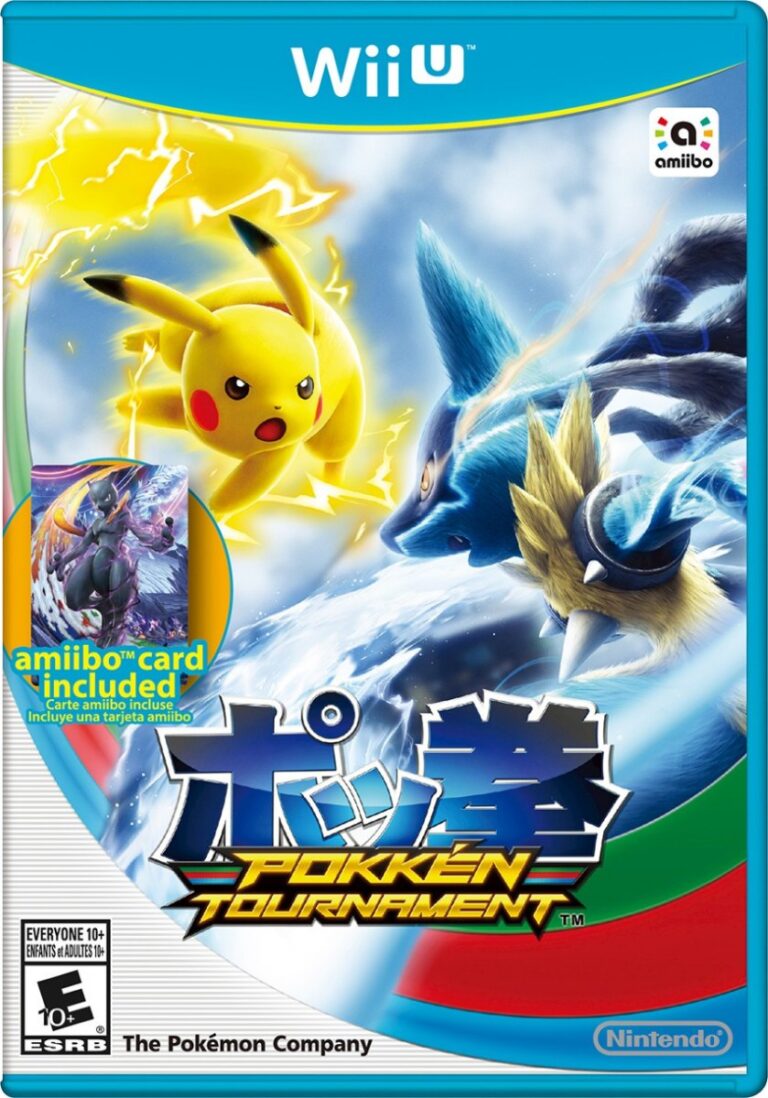
| Titles | Pokkén Tournament ポッ拳 POKKÉN TOURNAMENT (Pokken Tournament) Pokkén Tournament DX (Nintendo Switch) · Pokémon Tekken (Germany) |
| Platform | Wii U · Nintendo Switch (DX) · arcade (Japan); amiibo and the HORI Pokkén Tournament Pro Pad supported |
| Developer | Bandai Namco Studios |
| Publisher | Nintendo (The Pokémon Company in Japan); arcade: Bandai Namco Entertainment |
| Director | Haruki Suzaki (battle director Yoshinori Takahashi) |
| Producers | Masaaki Hoshino · Katsuhiro Harada · Takato Utsunomiya (The Pokémon Company) |
| Music | Hiroki Hashimoto (lead) |
| Players | 1–2 |
| Genre | Fighting |
| Generation | Generation VI (DX launched during Generation VII) |
| Battle Pokémon | 16 on Wii U · 20 in the arcade · 21 in DX, 23 with the Battle Pack |
| Supports & stages | 15 Support sets and 19 stages on Wii U · 18 sets and 21 stages in DX |
| Released | Arcade: 16 July 2015 (Japan) Wii U: 18 March 2016 (Japan) · 18 March 2016 (North America) · 19 March 2016 (Australia) · 18 March 2016 (Europe) |
| Re-releases | Pokkén Tournament DX (Nintendo Switch): 22 September 2017 (Japan, North America, Australia, Europe, Hong Kong) · 1 December 2017 (Taiwan); Battle Pack DLC 31 January and 23 March 2018 |
| Rating | ESRB E10+ · CERO A · ACB PG |
| Predecessor | None – the first Pokémon fighting game |
| Successor | Pokkén Tournament DX (Nintendo Switch, 2017), covered on this page |
| Sales | Wii U: over 1 million shipped by August 2016 (Bandai Namco) · DX: 1.16 million outside Japan by March 2018 (Nintendo) |
Overview
 Developed by Bandai Namco Studios, Pokkén Tournament is an arcade-style fighting game, very similar to Namco’s Tekken series, where two Pokémon battle each other within an enclosed arena. The battles have two phases. In the Field Phase, the players can move freely around the arena, which is mostly designed for ranged attack moves. Once one of the players lands enough hits, or certain heavy attacks, the battle switches into close-range combat: the 2D Duel Phase, where the Pokémon move along a line facing each other. Like every game in the fighting genre, it makes use of a combo system, where the player has to coordinate and link specific moves together, forming a great chain of combos that results in a high output of damage.
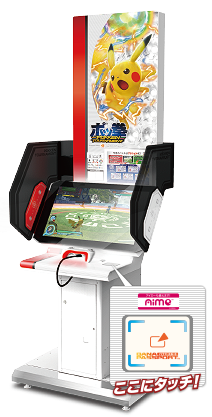
These combos, along with the Synergy orbs scattered around the arena, fill up a Synergy Gauge, allowing the use of Synergy Burst, which brings Mega Evolution for some Pokémon and a special Burst Attack. A dedicated controller, HORI’s Pokkén Tournament Pro Pad, was specially introduced with the game. The Pokkén arcade cabinet uses a pad-style controller rather than the joystick and buttons of most arcade fighting games, and the Pro Pad copies its layout, so players get the arcade feel at home and Pokémon fans who aren’t accustomed to arcade sticks won’t have a hard time getting a feel for the mechanics. The game also featured an online battle mode in which players could battle opponents from different parts of the world, with a fairly balanced ranking system. Online play on Wii U ended on 8 April 2024, but it carries on in Pokkén Tournament DX on Nintendo Switch.
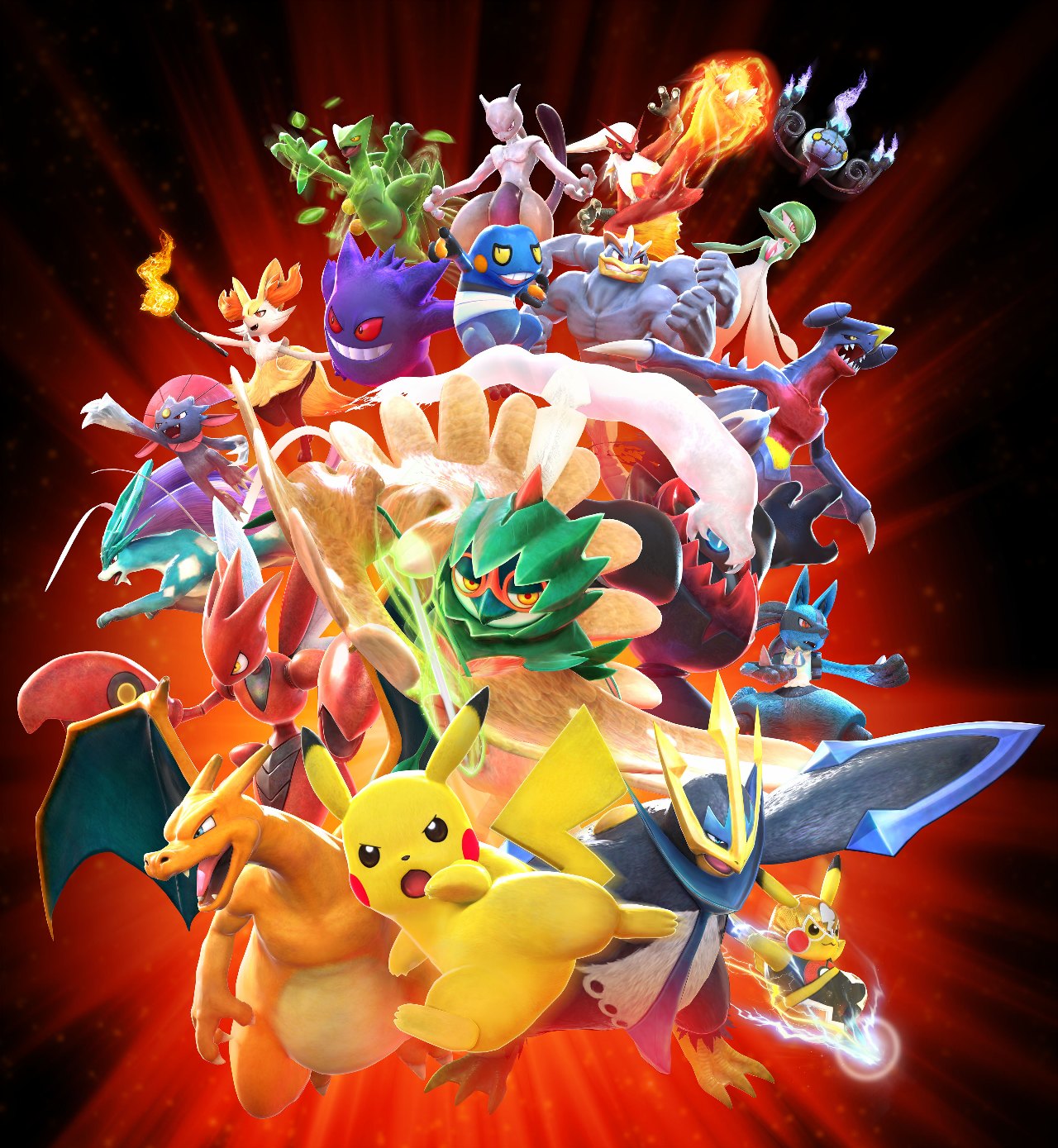
Graphics-wise, Pokkén Tournament showcased the best graphics to hit the Pokémon games at the time of its release, with highly detailed models and animations, along with very depth-focused environments. It is by far one of the best Pokémon spin-off games to be released and was very well received by the fans and the gaming community in general.
Experience a new kind of Pokémon battle in Pokkén Tournament for Wii U. In this intense fighting game, Pokémon appear more lifelike than ever before, with amazing graphics and smooth, fluid movements.
Developed in collaboration with The Pokémon Company and BANDAI NAMCO Entertainment, the developers behind the legendary fighting series TEKKEN, Pokkén Tournament brings tight gameplay and incredible control to never-before-seen battles between Pokémon. The gameplay is designed to be enjoyed by a wide range of people – even those who have never played a fighting game or an action game before can easily pick it up and play!
— Official description (Nintendo UK, Wii U game page)
Quick Answers
The questions people ask about Pokkén Tournament and Pokkén Tournament DX, answered first and explained further down the page.
How do you unlock Mewtwo and Shadow Mewtwo?
On Wii U, Mewtwo joins once you finish the Shadow Mewtwo story that follows the Red League. Shadow Mewtwo unlocks for good when you win the Chroma League; until then, the amiibo card packed with first-print copies lets you use it until you quit the game. In Pokkén Tournament DX both are available from the start. More →

How many fighters are there in each version?
The Wii U game has 16 Battle Pokémon. The Japanese arcade version grew to 20 by adding Darkrai, Scizor, Croagunk and Empoleon in 2016. Pokkén Tournament DX on Switch has those 20 plus Decidueye, and its Battle Pack DLC adds Aegislash and Blastoise, for 23 in all. More →
What is the difference between Pokkén Tournament and Pokkén Tournament DX?
DX keeps the full Wii U game, then adds the four arcade fighters, Decidueye, the Litten and Popplio support set and two stages. It also brings in three-on-three Team Battle, Daily Challenges, online Group Matches, replays, Switch-to-Switch wireless play and split-screen. Nearly everything is unlocked from the start. More →

Can you still play Pokkén Tournament online?
Not on Wii U. Nintendo ended online play for Wii U games on 8 April 2024, so ranked and friendly matches are gone, but local, single-player and LAN modes still work. Pokkén Tournament DX on Switch can still be played online with a Nintendo Switch Online membership. More →
Do you need the special Pokkén controller?
No. The Wii U game works with the GamePad, Pro Controller and other supported pads, and DX works with Joy-Con and the Switch Pro Controller. HORI’s wired Pokkén Tournament Pro Pad copies the layout of the arcade cabinet’s controller and was the standard pad for official tournaments, including the World Championships. More →
Why is it called Pokémon Tekken in Germany?
Germany is the only region that drops the name Pokkén, calling the game Pokémon Tekken and the Switch version Pokémon Tekken DX. Pokkén sounds close to the German word Pocken, meaning smallpox, which is the likely reason. The German logo still keeps the Japanese ポッ拳 lettering. More →
Story
The game’s single-player mode is the only one with a storyline. The game starts out with the player creating their customised avatar and meeting the game’s guide, Nia, who will show them the different game mechanics and help the player reach the top.

The whole story takes place in the Ferrum Region, where the Ferrum League battles, in which the player participates, are conducted. As the player progresses through the league, they inevitably encounter a strange woman with a Shadow Mewtwo, which they have to battle with their Pokémon partner. As the player progresses further, rumours start to spread that Gaia, the energy of the Synergy Stones linking Pokémon and humans, is draining away. The Ferrum League eventually gets put on hold as the rumours turn out to be true, and the mysterious woman reappears with her Shadow Mewtwo once again, but this time reveals her identity: she is Anne, a woman who was put in danger by a Shadow Synergy Stone as a child, and whom Mewtwo saved by sacrificing itself and taking the Shadow Synergy Stone’s burden.
It turns out that the Shadow Synergy Stone embedded in Mewtwo is the cause of Gaia’s drain, and Anne reveals that a large amount of energy is needed in order to purify Mewtwo and save it from the stone’s corruption. She then takes the player to the Regi Ruins, where they meet Walter, the elder of her people, who tests the player in battle with his Gengar. Walter announces that Mewtwo’s fate depends on storing enough high-level energy in the special brooch Anne has. To do so, the player and Anne start targeting very strong opponents – Nora and her Gardevoir at the Blue Dome, then Jake and his Lucario at Dragon’s Nest – but before they collect enough energy, Anne realises that time has run out and they have to act immediately. Anne, Nia and the player head to Mewtwo’s hideout within a deep forest in the north of the Ferrum Region. There, the fateful encounter takes place on the Dark Colosseum (Final) stage, as the player and their Pokémon partner fight one of the hardest battles in the game. Once Mewtwo is defeated, it faints and gets purified with the brooch’s help, and the brooch shatters. Now that it is restored to its original form, Anne thanks the player and offers Mewtwo to them, as she believes the player would take better care of it, before taking the stone home. This unlocks Mewtwo in the character list and reopens the Ferrum League. Win the Chroma League, the top of the Ferrum League, and the Shadow version of Mewtwo will finally be unlocked, along with the hidden Iron League.

Who’s who
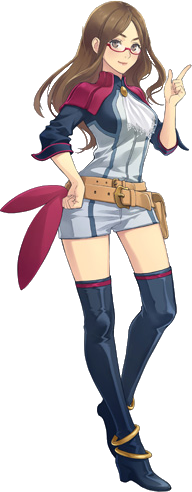
Nia
Nia is the player’s advisor throughout the game. She runs the tutorials, offers tips in Practice mode, comments on battles and powers the Cheer Skills that top up the player’s gauges between rounds. Her outfit, voice settings and how often she talks can all be changed in My Town. Her own Pokémon is Weavile. Ananda Jacobs voices her in English and Marina Inoue in Japanese.

Anne
Anne first appears as an unnamed trainer who ambushes the player with Shadow Mewtwo during the early leagues. She is later revealed as an ally: as a child she was saved by Mewtwo when it took the Shadow Synergy Stone upon itself, and she has been trying to free it ever since. She takes the purified stone home to her people after the final battle. Yui Ishikawa voices her in Japanese.
- Walter: Walter waits at the Regi Ruins and explains that Anne’s brooch has lost the power it needs to purify the Shadow Synergy Stone. He tests the player in battle with his Gengar, and that win unlocks the Regi Ruins stage. He then sends the player off to recharge the brooch through battles with other strong trainers across Ferrum.
- Nora: Nora is the first of the strong trainers the player faces to recharge the brooch. She battles with Gardevoir at the Blue Dome, warning that Gaia is draining away. The match is played without Synergy Burst, and winning it unlocks the Blue Dome stage for normal play and moves the brooch closer to full strength.
- Jake: Jake meets the player at Dragon’s Nest with his Lucario, in the last of the brooch-charging battles. Synergy Burst is still unavailable, though Support Pokémon can be used. Beating him unlocks the Dragon’s Nest stage and almost completes the brooch, but Gaia is so low by then that Anne decides the final battle with Shadow Mewtwo cannot wait.
Pokémon

There are 16 playable characters on Wii U, with two of them unlocked after finishing the story mode. There are additionally 4 characters that were added exclusively to the Arcade and the Nintendo Switch versions of the game, and three that are only on the Nintendo Switch: Decidueye at launch, then Aegislash and Blastoise in the paid Battle Pack. The game also features Duo sets of Support Pokémon a player can use within battle. One of the pair, chosen before each round, will appear in the fight and assist the player, either by attacking or hindering the opponent, or by healing the player.
Playable Pokémon: These are the playable Pokémon characters in the different versions:
The Wii U sixteen
These first 16 Pokémon can be used on the Wii U version of the game, the Switch’s DX version and the Arcade version (Mewtwo, Garchomp and Braixen only reached the arcade on 20 July 2016):
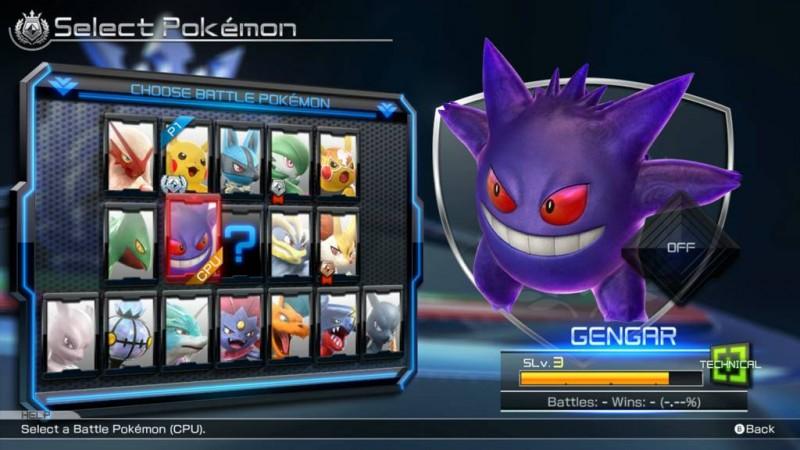
| Battle Pokémon | Style | HP | Burst Attack |
|---|---|---|---|
| Blaziken Seen alongside Lucario in the 2013 teaser footage. A kick-based brawler whose Blaze Kick, Brave Bird and High Jump Kick reward aggressive play. |
Standard | 600 | Gatling Flame Kicks (Mega Blaziken) |
| Braixen Another Wii U newcomer, added to arcades on 20 July 2016. A zoner that fights with its wand, using Psybeam, Fire Spin and Fire Blast. |
Standard | 540 | Psyfirecracker |
| Chandelure A slow-moving zoner with Will-O-Wisp, Hex and Minimize. |
Power | 510 | Final Flicker |
| Charizard A hard-hitting all-rounder of the Power class, mixing Flamethrower at range with Flare Blitz, Seismic Toss and Dragon Claw up close. |
Power | 600 | Searing Blaze (Mega Charizard X) |
| Garchomp A Wii U newcomer that only reached arcades on 20 July 2016. A heavyweight with 660 HP that tunnels with Dig and charges with Dragon Rush. |
Power | 660 | Outrage Smasher (Mega Garchomp) |
| Gardevoir A long-range specialist built around Psyshock, Moonblast, Magical Leaf and Future Sight, with Calm Mind and Stored Power rewarding patient set-up play. |
Technique | 540 | Fairy Tempest (Mega Gardevoir) |
| Gengar Uses Hypnosis and Curse to trap opponents. |
Technique | 510 | Shadow Drop (Mega Gengar) |
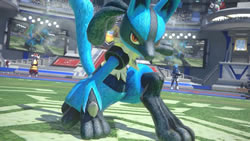
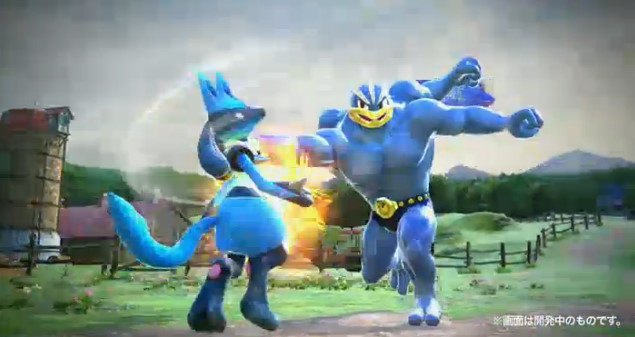
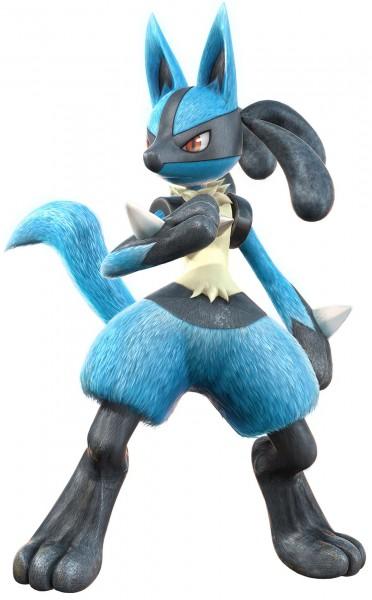
| Lucario The face of the game since the first 2013 teaser and the 2014 reveal, where Mega Lucario fought Machamp. Mixes Aura Sphere zoning with quick close-range strings. |
Standard | 600 | Aura Blast (Mega Lucario) |
| Machamp Star of the 2014 announcement trailer. A heavy grappler that uses Bulk Up to raise its attack, then punishes with Submission, Cross Chop and Close Combat. |
Power | 660 | Dynamic Fury |
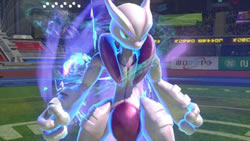
| Mewtwo Playable on Wii U first, joining the arcade in 2016. A versatile psychic with the longest move list in the game, from Psystrike to elemental punches. Unlocked on Wii U by finishing the Shadow Mewtwo story after the Red League; available from the start in DX. |
Standard | 600 | Psydisaster (Mega Evolves) |
| Pikachu Libre The wrestler costume of Cosplay Pikachu from Omega Ruby and Alpha Sapphire. A mix-up fighter using Double Team, Electroweb and its Flying Press dive. |
Speed | 570 | Thunderclap Press |
| Pikachu Small and nimble despite its Standard label, controlling space with Thunderbolt and Electro Ball before closing in with Nuzzle, Volt Tackle and Iron Tail. |
Standard | 570 | Volt Shock Fist |
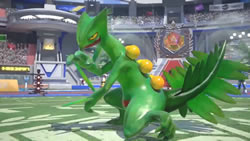
| Sceptile A fast, mobile fighter that pressures with Leaf Blade, sets Leech Seed traps and keeps its distance with Bullet Seed and Leaf Storm. |
Speed | 570 | Forest’s Flash (Mega Sceptile) |
| Shadow Mewtwo The corrupted Mewtwo at the heart of the story. A glass-cannon fighter with the lowest HP in the game (480) but powerful Miracle Eye-boosted attacks. Unlocked on Wii U by winning the Chroma League, or for one session with the Shadow Mewtwo amiibo card; available from the start in DX. |
Technique | 480 | Dark Nova (Shadow Mega Mewtwo X) |
| Suicune The only Legendary fighter available from the start on Wii U. Sturdy, with 630 HP, and good at keeping foes away with Aurora Beam, Icy Wind and Mirror Coat. |
Standard | 630 | True Sheer Cold |
| Weavile Nia’s own partner. A fragile rushdown fighter that uses Agility, Fake Out and Night Slash to keep up relentless pressure, with Icicle Crash for range. |
Speed | 540 | Sonic Slash |








Arcade and Switch fighters
Pokémon available on the Nintendo Switch (DX) and Arcade version only:
These four were added to the Japanese arcade game during 2016 and never came to Wii U. They reached home consoles in Pokkén Tournament DX, where all four are available from the start.

Arcade fighter: Darkrai
Arcade release: 20 July 2016
Burst Attack: Infinite Eclipse
The first arcade-only fighter, using Dark Void and Nightmare to put foes to sleep. Never on Wii U, it reached home consoles in Pokkén Tournament DX.
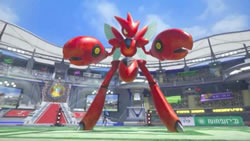
Arcade fighter: Scizor
Arcade release: 20 October 2016
Burst Attack: Iron Meteor Dive (Mega Scizor)
The second arcade-only fighter. A Bug and Steel powerhouse that stacks Swords Dance boosts, then pounces with Bullet Punch, X-Scissor, Aerial Ace and U-turn.

Arcade fighter: Croagunk
Arcade release: 10 November 2016
Burst Attack: Alter Ego Army
A tricky fighter whose Poison Jab, Venoshock and Acupressure reward close-range pressure.

Arcade fighter: Empoleon
Arcade release: 15 December 2016
Burst Attack: Deep Blue Monarch
The last arcade fighter and one of three playable Pokémon in the DX demo. A tough 630 HP fighter using Aqua Jet, Drill Peck and Waterfall.
Switch-only fighters
Pokémon available only on Nintendo Switch (DX): Decidueye at launch, followed by Aegislash and Blastoise in the paid Battle Pack.

Switch only: Decidueye
Burst Attack: Shining Feather
The only brand-new fighter in DX at launch and the first from Generation VII. Never in the arcade. A bow-wielding zoner that uses Spirit Shackle to pin opponents.
Support Pokémon
Support Pokémon: There are 15 Support Pokémon pairs available on all platforms and an additional three exclusive to the Nintendo Switch version – one at launch and two in the Battle Pack. It is important to know that Support Pokémon cannot knock out the opponent with their hits: at worst, they leave them on 1 HP.
| The Support set | Types | Their skills |
|---|---|---|
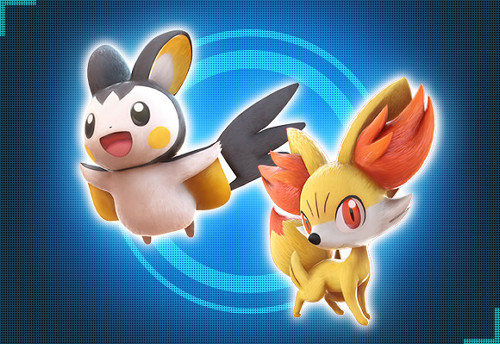
| Emolga & Fennekin | Attack & Disrupt | Emolga attacks the opponent with Shock Wave, reducing their speed. Fennekin creates a fire trap with Ember. |
| Ninetales & Mismagius | Disrupt & Attack | Ninetales launches flames in front of the player with Will-O-Wisp, lowering the attack of any opponent who touches them. Mismagius attacks the opponent with Ominous Wind, while increasing the player’s attack power. |
| Electrode & Farfetch’d | Disrupt & Attack | Electrode counters the enemy’s attack with Explosion. Farfetch’d attacks the enemy with Fury Cutter. |
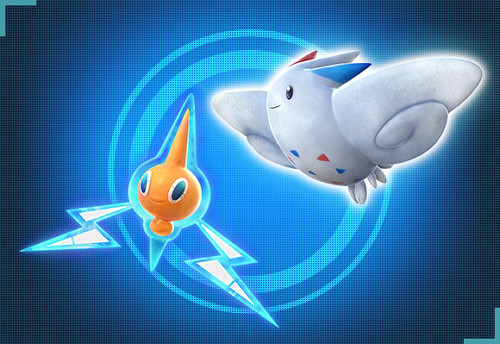
| Togekiss & Rotom | Enhance & Disrupt | Togekiss heals the player for a small amount and increases their speed with Tailwind. Rotom Thunder Shocks airborne enemies, slowing them down. |
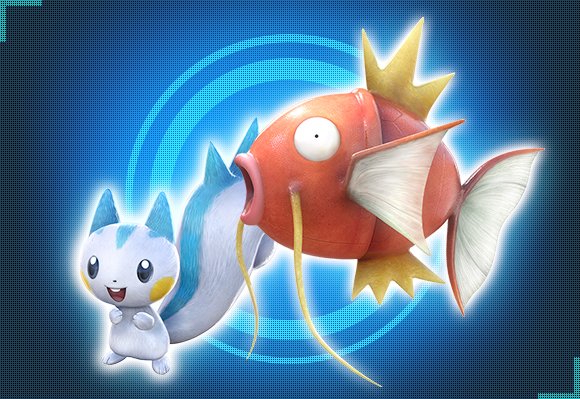
| Pachirisu & Magikarp | Disrupt & Disrupt | Pachirisu nullifies long-range attacks with Follow Me. Magikarp disrupts the enemy’s attack with Bounce. |
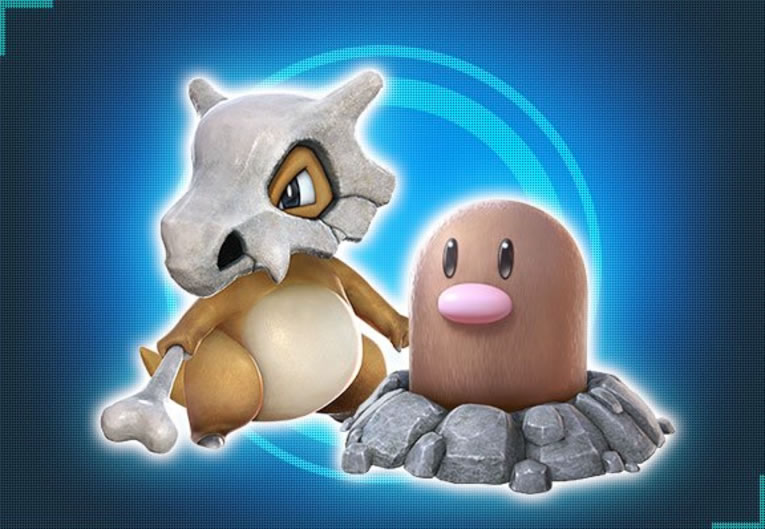
| Cubone & Diglett | Attack & Attack | Cubone attacks and pulls the opponent closer with Bonemerang. Diglett attacks the enemy from underneath with Dig. |
| Croagunk & Sylveon | Disrupt & Enhance | Croagunk attacks the enemy with Toxic, reducing their defence. Sylveon heals the player and increases their defence with Reflect. |
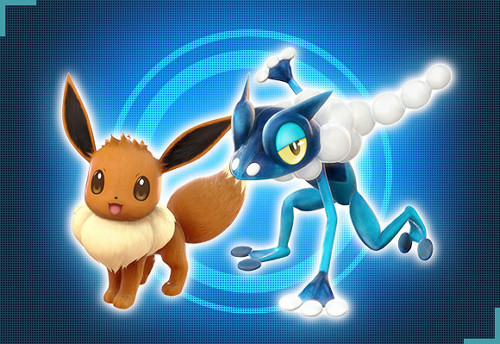
| Eevee & Frogadier | Enhance & Attack | Eevee heals the player and increases their attack for a short time with Helping Hand. Frogadier attacks the opponent from long range with Water Pulse. |
| Umbreon & Espeon | Disrupt & Enhance | Umbreon absorbs the enemy’s Synergy Gauge and stops them from landing critical hits, with Snarl. Espeon clears the player of any status problems and heals them with Morning Sun, for an amount that increases as the round gets closer to its end. |
| Quagsire & Magneton | Attack & Attack | Quagsire attacks the opponent with Mud Bomb while they’re standing on the ground. This attack cannot be blocked. Magneton launches a diagonal upward attack with Tri Attack, inflicting two random status problems. |
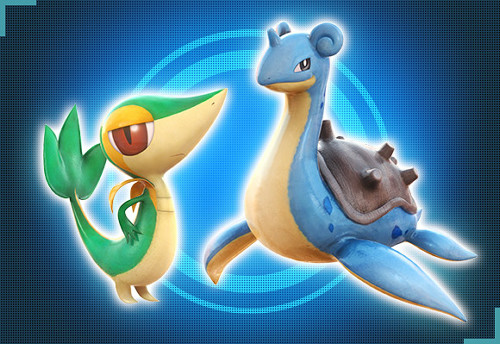
| Lapras & Snivy | Attack & Attack | Lapras attacks the enemy with Surf. Snivy attacks the opponent with Leaf Tornado, knocking them into the air. |
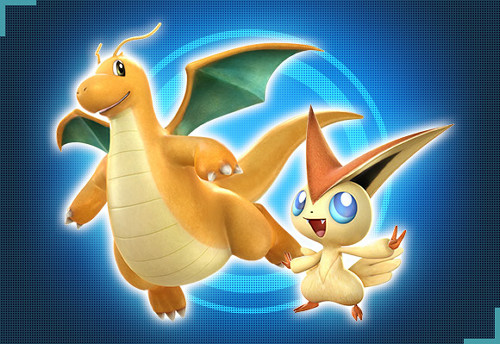
| Victini & Dragonite | Enhance & Attack | Victini forces the player’s attacks to be critical hits, increases the player’s Synergy Gauge and restores some health to them, with V-create. If Victini is below the opponent while it’s leaving the screen, it will hit them for a small amount of damage. Dragonite attacks a large area multiple times with Draco Meteor. |
| Jirachi & Whimsicott | Enhance & Enhance | Jirachi increases the player’s Synergy Burst damage, while restoring their Synergy Gauge, with Wish. Whimsicott heals the player and nullifies the enemy’s attacks with Substitute. |
| Yveltal & Latios | Attack & Disrupt | Yveltal attacks with Oblivion Wing from the sky, locking the enemy’s Synergy Burst. Latios restricts the opponent’s movements by surrounding them with attacks, with Luster Purge. |
| Cresselia & Reshiram | Enhance & Attack | Cresselia restores the player’s health and Synergy Gauge, while clearing them of all status problems, with Lunar Dance. Cresselia can only be used once each round. Reshiram launches a devastating forward attack with Blue Flare. |
Nintendo Switch exclusive sets:
| The Support set | Types | Their skills | Added |
|---|---|---|---|
| Popplio & Litten | Enhance & Attack | Popplio increases the player’s attack and allows them to use a double jump with the help of Bubble. Litten attacks the enemy with Fire Fang. This skill’s damage will increase as the player’s health decreases. | At launch, 22 September 2017 |
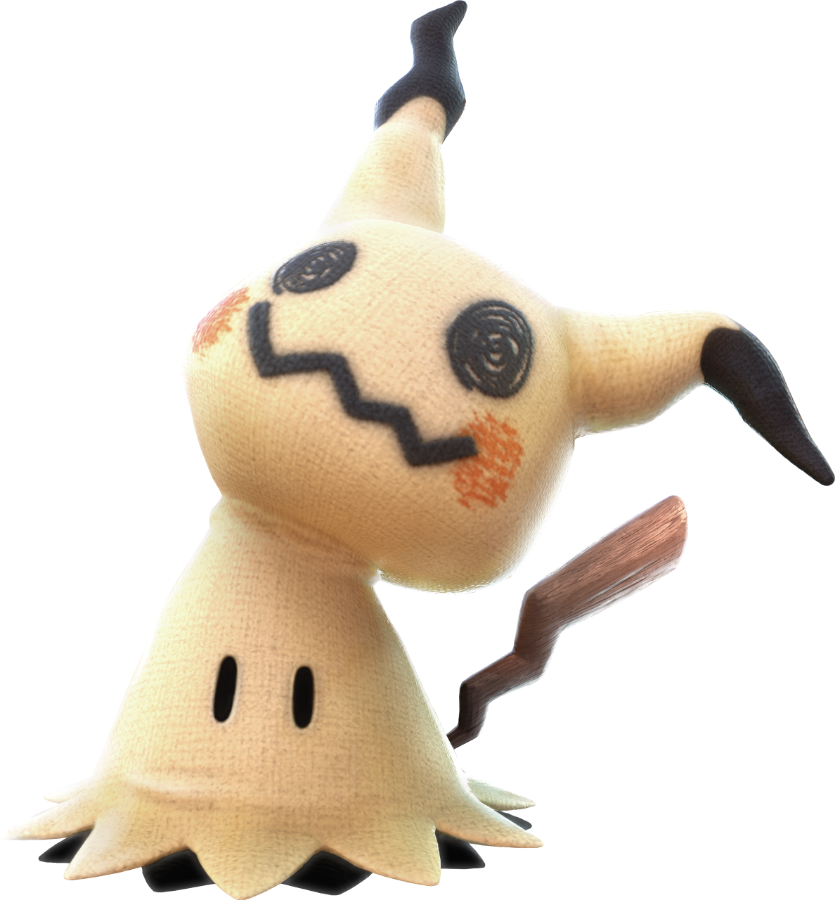
| Mega Rayquaza & Mimikyu | Attack & Disrupt | Mega Rayquaza strikes from afar with Dragon Ascent, using up the player’s Synergy Gauge, and can only be called once a round. Mimikyu attacks the opponent from behind with Play Rough, inflicting two status problems. | Battle Pack Wave 1, 31 January 2018 |
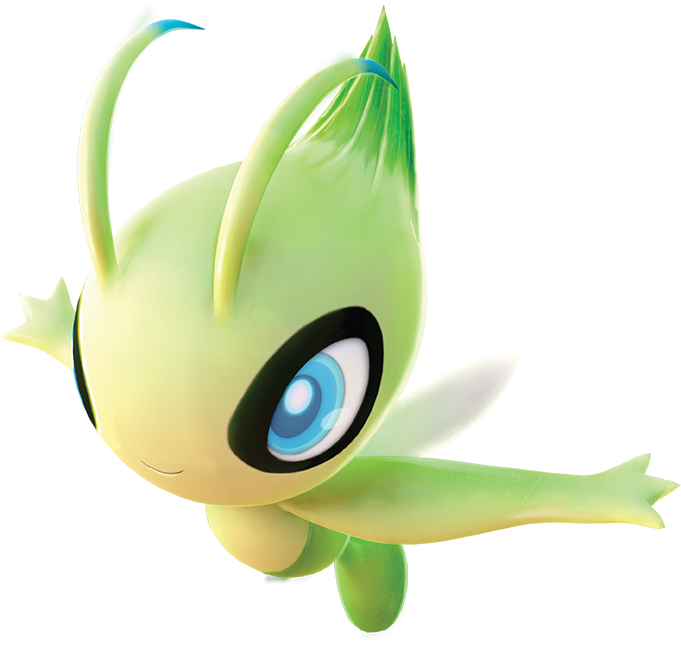
| Mew & Celebi | Enhance & Disrupt | Mew gives the player a random mix of boosts, such as Synergy and critical hits, with Miraculous Power. Celebi forces a phase change at almost any time with Time Travel. | Battle Pack Wave 2, 23 March 2018 |







Game Modes
Pokkén Tournament provides a wide range of game modes, ranging from single-player to online battles:
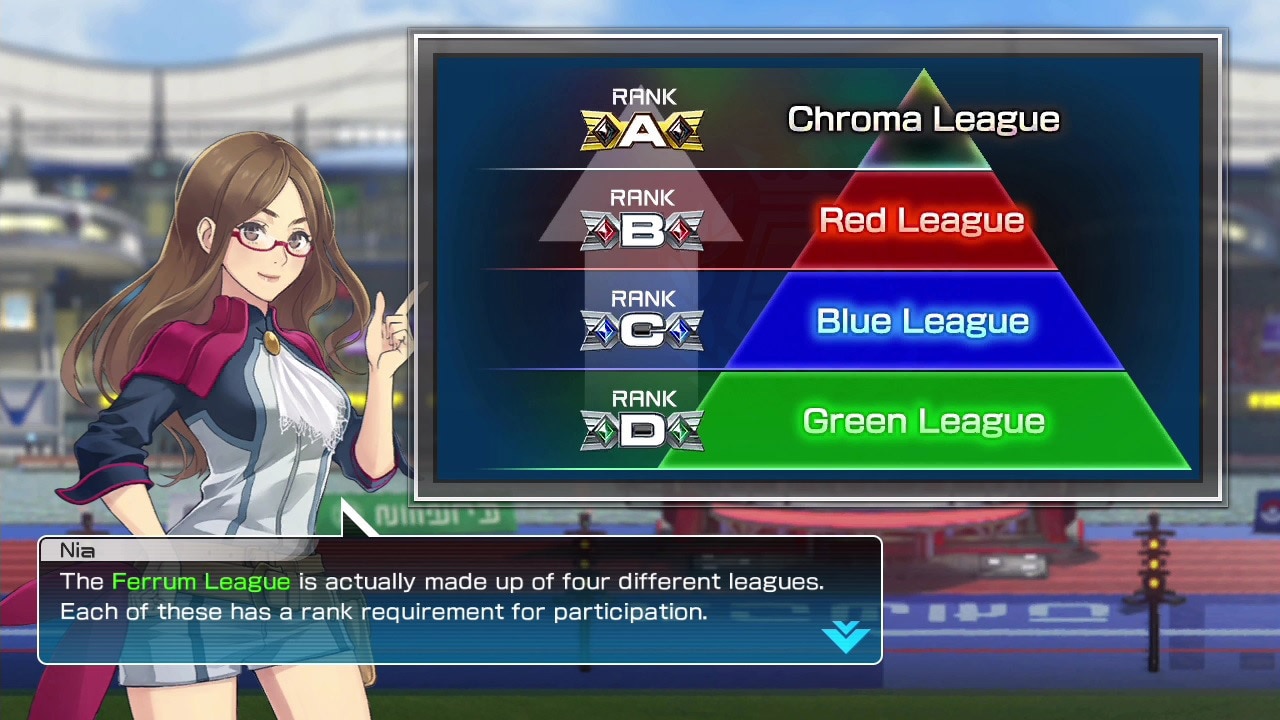
- Ferrum League: It is the game’s story mode, where the player can unlock the two Mewtwo characters. The player’s goal is to become one of the top 8 trainers within each league, allowing them to participate in the League Tournament and then battle in the Promotion Test against the current League Master, whom they have to defeat in order to move to the next rank. There are five league ranks: the Green League, the Blue League, the Red League, the Chroma League and the final hidden one, the Iron League. There are four different match sub-modes within the Ferrum League, and they are:
- Free Battle: Where the player can test themselves against a random opponent from their current league, without affecting their ranking or their records.
- League Match: Here the player will battle different trainers, and after each block of 5 matches they’ll either gain or lose rank based on their performance. Once they reach the top 8 trainers, they’ll be eligible to participate in the Tournament.
- League Tournament: Three battles are conducted in total within the knockout Tournament, and its champion gets to take the Promotion Test against the League Master.
- Promotion Test: The player will have to face the strongest opponent in their league, the League Master, and must defeat them to move up the ranks.
The League Masters
| League (rank) | League Master | Partner | What beating them does |
|---|---|---|---|
| Green (D) | Travis | Garchomp | Opens the Blue League; Shadow Mewtwo’s first ambush follows |
| Blue (C) | Keith | Suicune | Opens the Red League; Shadow Mewtwo strikes again |
| Red (B) | Elinn | Braixen | Triggers the third Shadow Mewtwo battle and the League’s suspension |
| Chroma (A) | Glenn | Machamp | After the story, unlocks Shadow Mewtwo and the Iron League |
| Iron (S) | Alyssa | Pikachu | The hidden rank’s final League Master |
- Single Battle: A casual match mode, where the player faces a random AI opponent, under either the standard rules or the item-based Extra Battle rules.
- Local Play: It lets the player face local opponents. Players can take part in this mode in two different ways. The first way is to link two Wii U consoles with a LAN cable. The second way is for one player to use the Wii U GamePad, while the other one uses any other controller linked to the TV. The first method keeps the frame rate at 60 fps, while the second one drops it to 30.
- Online Play: An online battle mode where players could face each other, in either a Ranked or a Friendly match. Friendly matches could be played against players on the friend list or those who entered the same Battle Code as the user. The Ranked battles, on the other hand, were played against random online trainers, awarding the winners ranking points that raised their ranking compared to other players. Online play for the Wii U version ended on 8 April 2024; Pokkén Tournament DX can still be played online on Nintendo Switch.
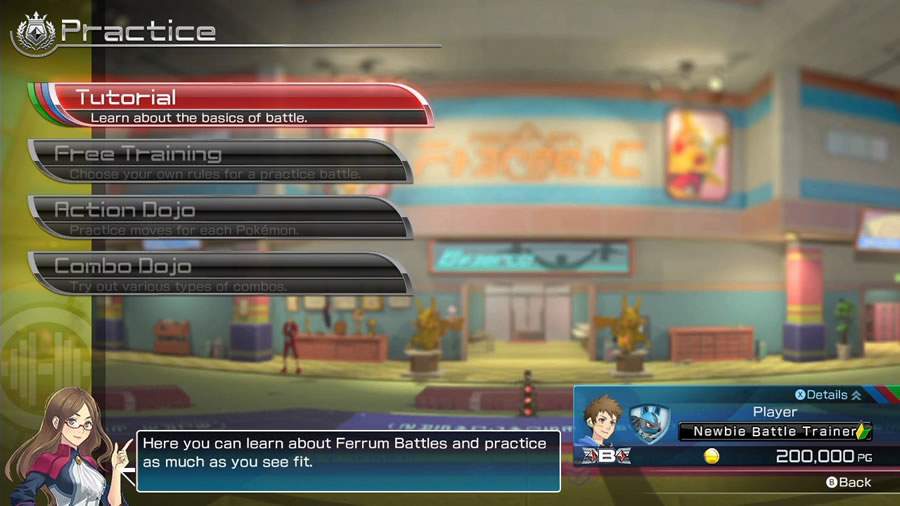
- Practice: The Practice mode is where the player can test the different Pokémon moves and skills or even learn new ones. There are four sub-modes within Practice:
- Free Training: A mode with no time restrictions, where the Pokémon have infinite health. The player can test pretty much anything here.
- Tutorial: Here the player is taught the basic mechanics of the game.
- Action Dojo: The Action Dojo shows the player new tricks and strategies that can be used in different battle situations.
- Combo Dojo: It’s where the player is taught some combos, or they can figure out new ones on their own and test them out.
- My Town: It’s where the player can access different features of the game, such as their player profile, which allows them to spend the Poké Gold they’ve earned to edit the visual appearance of their avatar, their title or even the name that they have when they’re online. They can also improve their Pokémon’s stats here with Skill Points, along with accessing the Battle Code feature, which generated a code that could be shared with another player to fight them online. Moreover, they can even edit Nia’s appearance and voice and how talkative they want her to be.
How a battle works
Modes in depth
Battle Stages
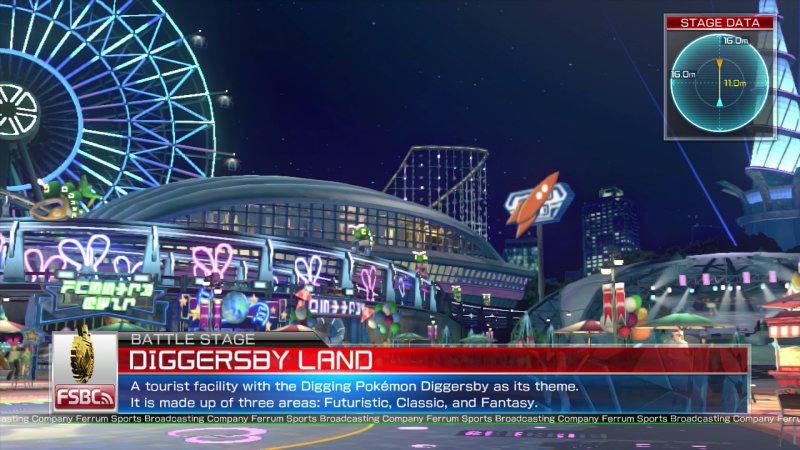
Pokkén Tournament has some of the most lively battle stages of the fighting game genre. In fact, there are 19 different stages on Wii U, with their backgrounds filled with Pokémon and various events. These stages are as follows:



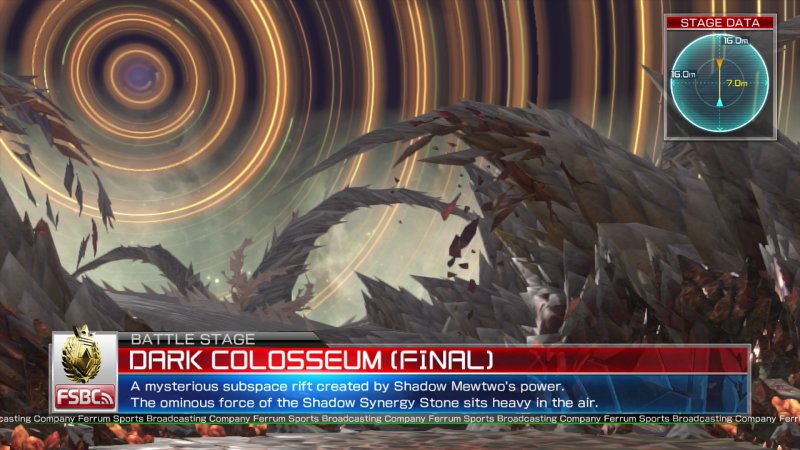


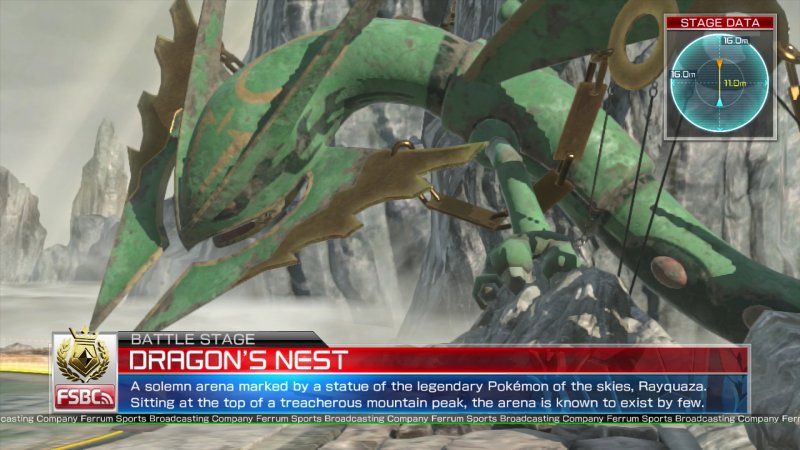
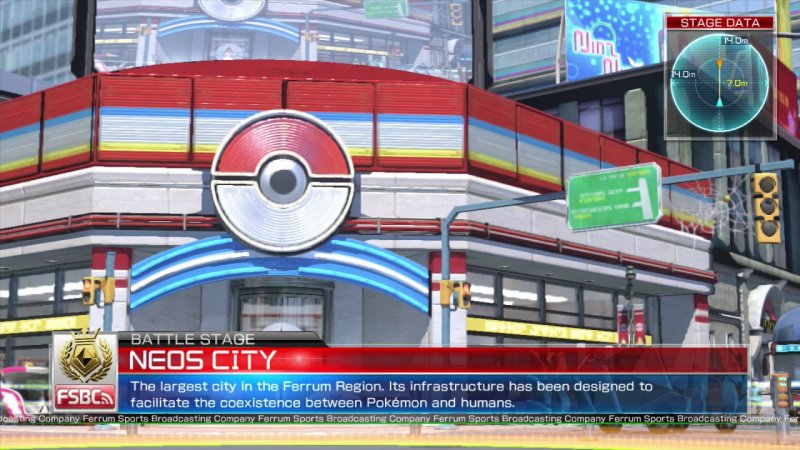

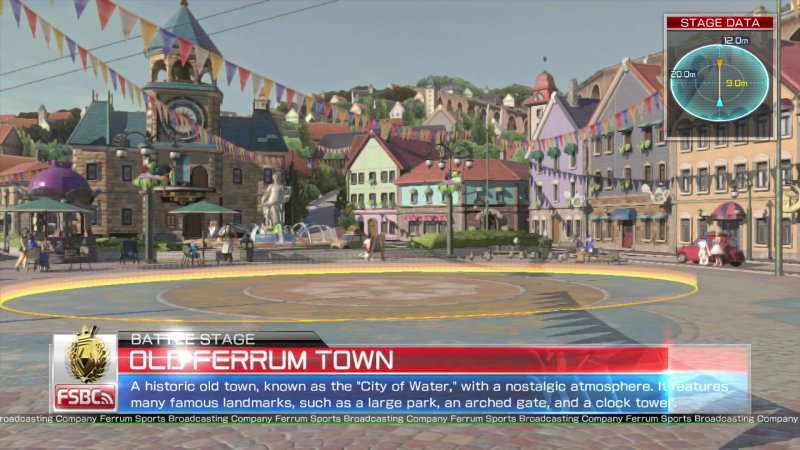
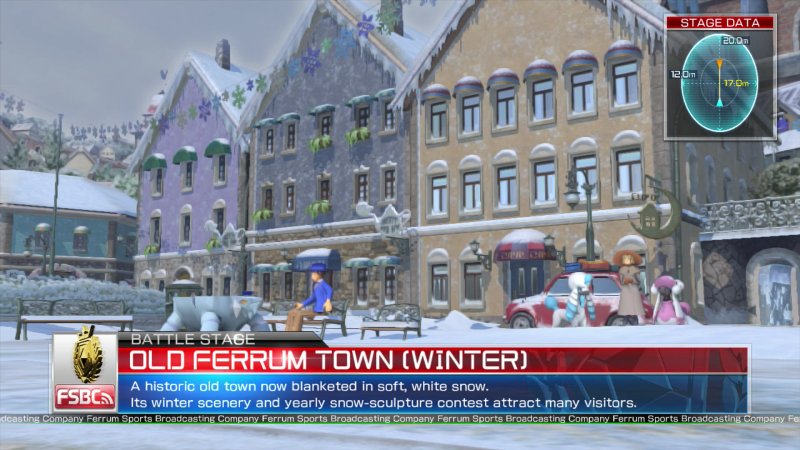

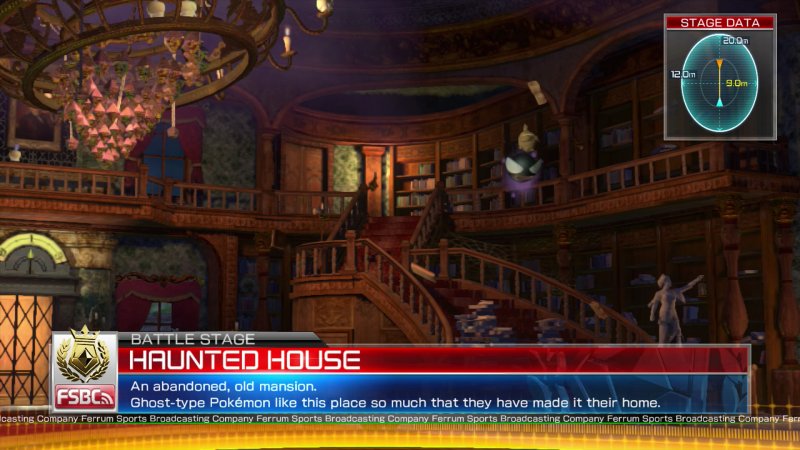


Pokkén Tournament DX adds two more stages from the arcade, for 21 in all: Snow Gift, a snowy festival town with Delibird decorations, and Thalia Beach, a resort island beach.
Extra Game Features
The game also comes with a few extra features, which include:

- The amiibo functionality: It allows the player to scan the Shadow Mewtwo amiibo card, which came with first-print copies of the game, to temporarily unlock Shadow Mewtwo until they quit the game, or to scan any other amiibo figure or card (up to five different ones a day) to randomly unlock prizes ranging from customisation items to titles and Poké Gold.
- Pokkén Link Web and Pokkén Link Web Premium: It was an online mobile web service for the arcade version, which let players who owned a Bana Passport card and account access their accounts and edit different things, like their avatar or Pokémon, away from the cabinet. The free version had several restrictions, while the paid Premium one (¥300 a month) let the player edit everything. It was only for the Japanese arcade game, not the Wii U version, and the arcade’s network service ended on 25 March 2019.
Pokkén Tournament DX

Eighteen months after the Wii U release, Pokkén came to Nintendo Switch as Pokkén Tournament DX, revealed in the Pokémon Direct of 6 June 2017 and released on 22 September 2017. It finally brought the four fighters Japanese arcade players had had to themselves, added Decidueye and a new support set, and built out the multiplayer with Team Battles, Daily Challenges, Group Matches and replays. A two-wave Battle Pack followed in 2018. DX became the version used for competitive play from 2018 onwards.
- 23Battle Pokémon with the Battle Pack
- 18Support sets
- 21stages
- 79on Metacritic (62 critics)
What DX added
| Addition | What it is | Origin | On Switch from |
|---|---|---|---|
| Darkrai | Battle Pokémon (Technique) | Arcade, 20 July 2016 | 22 September 2017 |
| Scizor | Battle Pokémon (Power) | Arcade, 20 October 2016 | 22 September 2017 |
| Croagunk | Battle Pokémon (Speed) | Arcade, 10 November 2016 | 22 September 2017 |
| Empoleon | Battle Pokémon (Standard) | Arcade, 15 December 2016 | 22 September 2017 |
| Decidueye | Battle Pokémon (Standard) | New to DX | 22 September 2017 |
| Litten & Popplio | Support set | New to DX | 22 September 2017 |
| Snow Gift, Thalia Beach | Stages | Arcade | 22 September 2017 |
| Team Battle | Three-on-three mode | New to DX | 22 September 2017 (online from 15 November 2017) |
| Daily Challenge, Mission Panels | Single-player goals | New to DX | 22 September 2017 |
| Group Match, Replays | Online features | New to DX | 22 September 2017 |
| Wireless Battle, split-screen | Local multiplayer | New to DX | 22 September 2017 |
| Aegislash; Mega Rayquaza & Mimikyu | Battle Pack Wave 1 (paid DLC) | New to DX | 31 January 2018 |
| Blastoise; Mew & Celebi | Battle Pack Wave 2 (paid DLC) | New to DX | 23 March 2018 |

The Battle Pack

Announced in a Nintendo Direct Mini on 11 January 2018, the paid Battle Pack came in two waves. Wave 1 on 31 January 2018 added Aegislash and the Mega Rayquaza and Mimikyu Support set; Wave 2 on 23 March 2018 added Blastoise and the Mew and Celebi set. Each wave also brought avatar outfits, titles and new outfits for Nia.

Battle Pack: Aegislash
Burst Attack: Underworld Ruler
Fights in both Shield Forme and Blade Forme, using King’s Shield, Sacred Sword and Shadow Sneak.
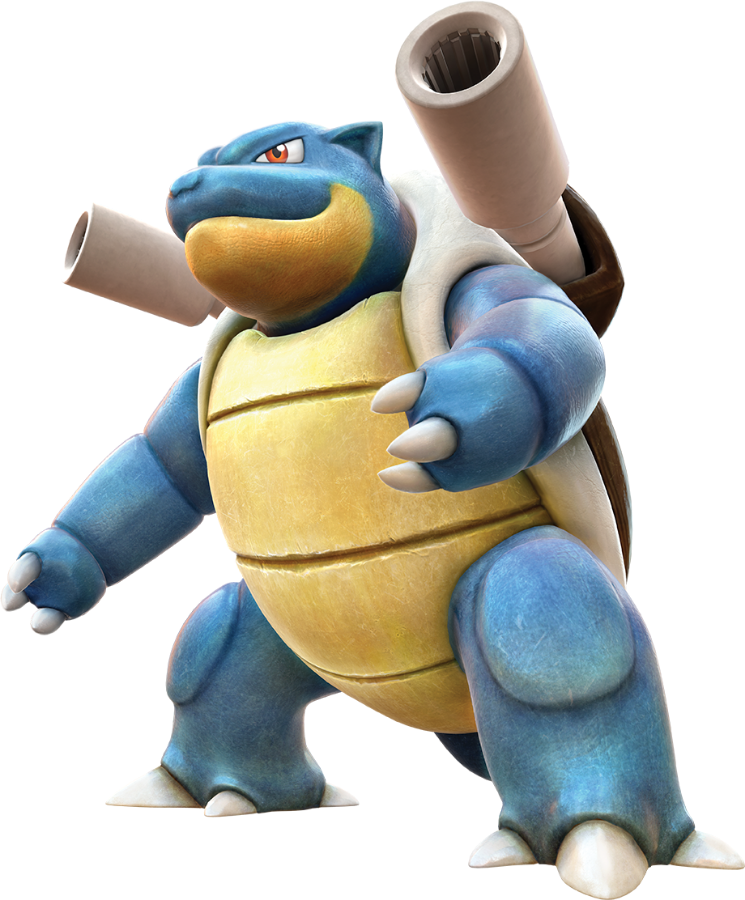
Battle Pack: Blastoise
Burst Attack: Destructive Cannon
The final fighter added to the game. A heavyweight that blasts Hydro Pump and Water Spout and spins across the arena with Rapid Spin.




Regional Variations
Pokkén reached Japan’s arcades eight months before the Wii U game came out anywhere, and only Germany changed the name:
- Germany is the only market without the name Pokkén: the games are Pokémon Tekken and Pokémon Tekken DX, probably because Pokkén sounds like Pocken, the German word for smallpox. The logo still keeps the Japanese ポッ拳 lettering.
- Every release uses the Japanese logo with its ポッ拳 characters, which is unique among Pokémon games sold outside Japan.
- The Pokémon Company published the Wii U and Switch versions in Japan, while Nintendo published them everywhere else; Bandai Namco Entertainment published the arcade game.
- The arcade version was a Japanese release, apart from a limited run at the Dave & Buster’s in Times Square, New York from 24 September 2015, so Darkrai, Scizor, Croagunk and Empoleon were Japan-only until DX.
- The Wii U version came out on 18 March 2016 in Japan, North America and Europe and a day later, on 19 March 2016, in Australia.
- Pokkén Tournament DX launched in Hong Kong alongside Japan, the West and Australia on 22 September 2017, with Taiwan following on 1 December 2017.
- The North American box of Pokkén Tournament DX was the first Pokémon game on a Nintendo console without the Nintendo logo on its front cover; Nintendo moved the logo to the spine for its Switch games.
Left in the data
- Four titles say they are earned with a Special Code, but only the code for Happy Holidays! was ever given out, so Synergy Burst!, Burst Attack! and Halloween Party cannot be obtained.
- Since online play for Wii U games ended on 8 April 2024, the Wii U version’s ranked, friendly and Battle Code features can no longer be reached.
Glitches, exploits and oddities
A floor Sceptile could fall through, a Support that forgot its move and the patches that fixed them:
Sceptile falling through the floor
In the launch version of the Wii U game, Sceptile could drop straight through the floor of the arena if Bullet Seed was used and then followed up with a hang off the wall. The bug was one of several fixed in the version 1.2 update of April 2016, which also had to be installed before players could keep battling online. The same update tightened several other wall and stage-edge interactions that had been causing odd behaviour since launch.
Pikachu Libre passing through opponents
Another launch bug let Pikachu Libre slip right through its opponent when the opponent had their back against a wall, leaving the two fighters on the wrong sides of each other. Like the Sceptile floor bug, it was fixed in version 1.2, alongside balance changes to Mewtwo, Shadow Mewtwo and the Reshiram support, whose Blue Flare had its maximum damage cut from 132 to 102.
Umbreon’s missing Snarl
If an opponent had already called Pachirisu, the Umbreon support could fail to use Snarl at all, wasting a full Support Gauge. The bug was fixed in version 1.2. The same update caused a separate problem in North America: the patch shipped with an error that stopped players there from battling opponents in other regions online, and Nintendo had to run emergency server maintenance to restore cross-region matchmaking.
Escape-proof Mewtwo and Shadow Mewtwo pressure
At launch, Shadow Mewtwo’s Miracle Eye-boosted attacks could keep a blocking opponent stuck guarding over and over, and one of Mewtwo’s move sequences was very hard to escape. Version 1.2 reduced the shield damage of Shadow Mewtwo’s boosted attacks and lengthened its recovery, and the larger version 1.3 update of 15 June 2016 fixed the Mewtwo loop and rebalanced Mewtwo, Shadow Mewtwo, Braixen and Charizard.
Videos & media
Check out these Pokkén Tournament videos, including the trailers and the intro video.
The announcement trailer for the Switch version.
A rather awesome opening / intro trailer.
The trailer for Shadow Mewtwo.
Trivia & facts
- None of the face options in character customisation have facial hair, although the shop’s face icon has a moustache.
- In the Haunted House stage, there’s a girl who resembles the Hex Maniac from Pokémon X and Y and Omega Ruby and Alpha Sapphire, frantically trying to open a locked door.
- It is notable that no Rock-type Pokémon is present in either the playable Pokémon list or the Support Pokémon one. Furthermore, none of the playable characters is a Normal type.
- Probably because ‘Pokkén’, when pronounced in German, sounds like Pocken, the German word for smallpox, the German version of the game was renamed Pokémon Tekken instead of Pokkén Tournament (and the Switch version Pokémon Tekken DX).
- The game’s trailer scene where Mega Lucario attacks and fires off an Aura Sphere can be a reference to Super Street Fighter II’s opening, where Ryu attacks and fires off a Hadouken.
-
The Japanese logo Pokkén Tournament is the only Pokémon game to use its Japanese logo in its international releases.
- Shadow Mewtwo recalls Pokémon Colosseum and Pokémon XD: Gale of Darkness, where Shadow Pokémon were introduced, although the two aren’t officially connected: Pokkén’s Shadow Mewtwo was corrupted by a Shadow Synergy Stone.
- The name Pokkén is a combination of the words Pokémon and Tekken: the 拳 (ken) in its logo is the Japanese word for fist, as in Tekken, which means ‘iron fist’.
- The combo animations are very similar to Tekken 7’s Rage Arts.
Further trivia
- Charizard is the only Battle Pokémon shown flying its trainer into the arena, and its round-win pose echoes the Japanese box art of Pokémon Red and Green.
- Gengar was added after a Japanese Twitter campaign using the #ポッ拳 hashtag in 2015, in which it was the most-requested Pokémon.
- Croagunk is the only species that is both a Battle Pokémon and a Support Pokémon.
- Chandelure and Darkrai are the only fighters that can Mega Evolve in later games but not in Pokkén, because Mega Chandelure and Mega Darkrai had not yet been created.
- Substitute dolls and Mokujin training dummies from the Tekken series can be spotted in the background of the Ferrum Dojo.
- In Tellur Town, a Trainer rides a bicycle with a Volcarona, a likely nod to the core-series trick of hatching eggs faster with a Flame Body Pokémon in the party.
- Pokkén Tournament was the last Pokémon game released on Wii U, and Pokkén Tournament DX was the first Pokémon game released on Nintendo Switch.
Legacy
What came after
- Japanese arcade launch – 16 July 2015. After location tests from 30 January 2015. Saves on Bana Passport cards, with the Pokkén Link Web service for editing a profile away from the cabinet
- Limited North American arcade run – 24 September 2015. Cabinets at the Dave & Buster’s in Times Square, New York, for a limited time
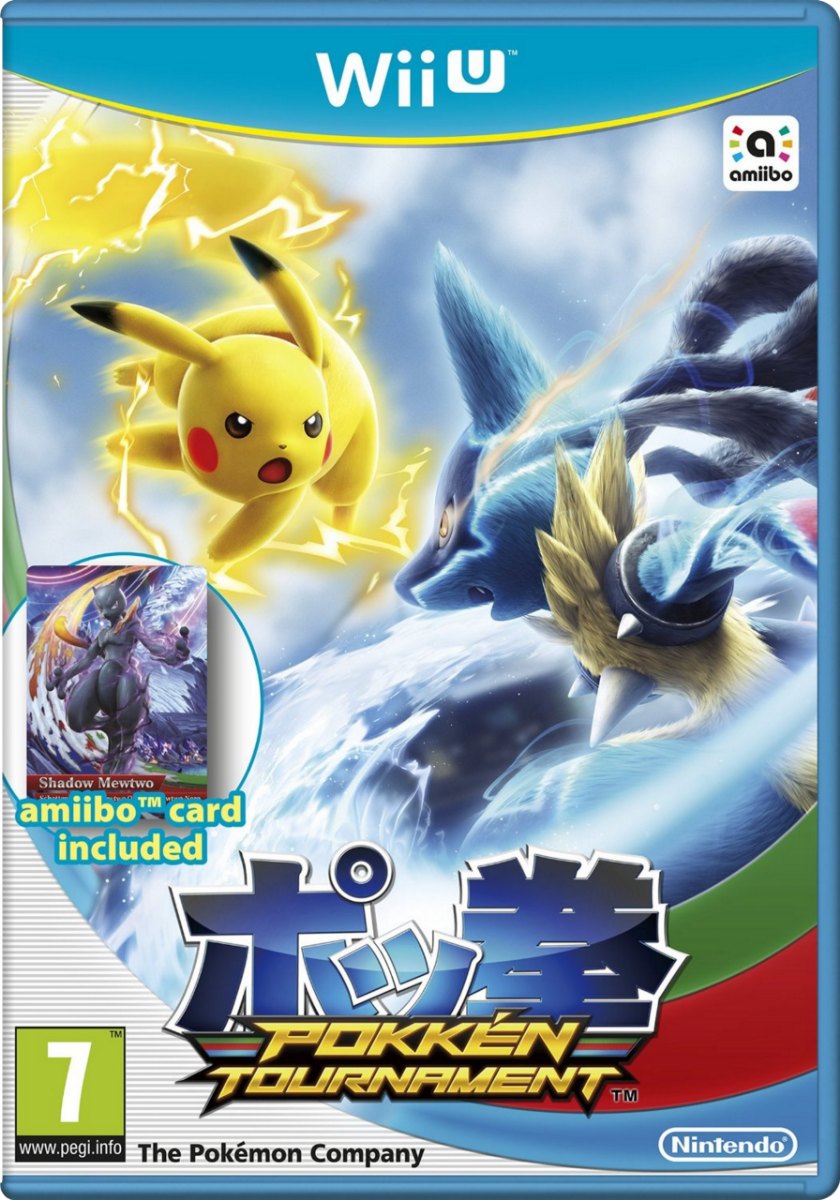
- Wii U release – 18 March 2016. Japan, North America and Europe; Australia followed on 19 March 2016. First-print copies came with the Shadow Mewtwo amiibo card
- Arcade update with Darkrai and the Wii U fighters – 20 July 2016. Darkrai, Mewtwo, Garchomp and Braixen joined the arcade, followed by Scizor (20 October), Croagunk (10 November) and Empoleon (15 December 2016)
- Pokkén Tournament DX for Nintendo Switch – 22 September 2017. Revealed in the Pokémon Direct of 6 June 2017, with a demo from 24 August 2017. Taiwan followed on 1 December 2017
- Battle Pack DLC – 31 January 2018. Announced on 11 January 2018. Wave 1 added Aegislash and Mega Rayquaza & Mimikyu; Wave 2 on 23 March 2018 added Blastoise and Mew & Celebi
- Arcade online service ends – 25 March 2019. The network service behind the Japanese arcade cabinets was switched off
- Last World Championships appearance – August 2022. Pokkén Tournament DX was a championship game at the London World Championships, after which it was dropped from the World Championships
- Wii U eShop closes – 27 March 2023. The Wii U download can no longer be bought; existing owners can still redownload it
- Wii U online play ends – 8 April 2024. Online battles in the Wii U version stopped working when Nintendo closed online services for Wii U and 3DS
Where to play it today
Pokkén Tournament DX is the version to get today. It is still sold on Nintendo Switch as a game card and on the Nintendo eShop, the Battle Pack can still be bought, and online battles work with a Nintendo Switch Online membership. The Wii U original left sale when the Wii U eShop stopped taking purchases on 27 March 2023 (owners can still redownload it), and its online modes closed on 8 April 2024. Japan’s arcade cabinets lost their network service on 25 March 2019.
How it was made
Pokkén Tournament was made by Bandai Namco Studios under licence from The Pokémon Company, pairing Tekken producer Katsuhiro Harada with Masaaki Hoshino, a Soulcalibur producer and long-standing Pokémon fan. Haruki Suzaki directed and Hiroki Hashimoto led the music. A few seconds of Lucario and Blaziken footage closed a retrospective at the Pokémon Game Show in Tokyo in August 2013, and trademarks for the name surfaced that month. The game was formally unveiled on 26 August 2014 at a Famitsu event streamed on Niconico, where Tsunekazu Ishihara joined Harada and Hoshino, and Mega Lucario fought Machamp. Ishihara originally wanted a cast made up mostly of Fighting types, but Hoshino argued for variety. The project’s code name was Ferrum, later used for the region. After a location test from 30 January 2015, the arcade game opened on 16 July 2015, and the Wii U version was announced at the World Championships in Boston on 21 August 2015.
Pokkén elsewhere


Sales & reviews
Sales figures
Pokkén Tournament was supported by many advertising campaigns even before it was released, and managed to achieve quite successful sales. Within the first three weeks of its release, the game sold an estimated 116 thousand copies in Japan, 128 thousand in Europe and over 267 thousand in the USA, with a global number of 578 thousand copies. The sales continued to increase further and further, and the game is estimated to have sold 143 thousand copies in Japan, 173 thousand in Europe and nearly 400 thousand in the USA, reaching an estimated total of 1.32 million copies around the whole globe.
Those regional numbers are third-party estimates rather than official figures, and they undercount Japan. Media Create counted 69,675 copies of the Wii U version in its first week, making it Japan’s best-selling game that week, and 182,190 by the end of 2018; Wii U hardware sales in Japan rose from about 4,000 to 13,000 units in the launch week. Bandai Namco announced in August 2016 that the Wii U game had shipped over 1 million copies worldwide, and in the United States NPD figures showed it outselling Street Fighter V by the end of April 2016. Pokkén Tournament DX also opened at number one in Japan, with 53,395 copies in its first week, and reached 366,777 there by January 2021, while Nintendo reported 1.16 million copies sold outside Japan by 31 March 2018. Neither company has published a combined lifetime total for both versions.
- 1m+Wii U copies shipped by August 2016
- 1.16mDX sold outside Japan by March 2018
- 69,675Wii U launch week in Japan, No. 1
- 76on Metacritic (74 critics)
Review scores
The game was very well received and got high scores from major review websites. Let’s take a look at these reviews:
- Darry Huskey from IGN was fascinated by the game’s graphics and especially its fighting mechanics, stating: “Pokkén Tournament does do a good job, though, at alleviating this bloat of mechanics with single-player modes to help ease into the action.” All the while, he rated the game 8/10, the equivalent of ‘Great’ on their scale.
- Tamoor Hussain from GameSpot was also impressed by how amazing the game was, which clearly shows in his statement: “Nintendo’s Wii U provides a paucity of fighting games, but Pokken Tournament has redeemed that drought by being one of the best on any platform. Frequently magnificent to look at, delicately designed, and rewarding for players across all skill levels, it’s the Pokemon fighting game deserving of a 20-year wait.” He accordingly rated the game 9/10, which equates to ‘Superb’ on the GameSpot scale.
- On GameRankings (which closed in 2019), Pokkén Tournament earned a high score of 76.91% from 47 reviews, while it scored 76 on Metacritic, from 74 critics. Pokkén Tournament DX later did slightly better, with 79 from 62 critics on Metacritic.
- Overall, and as stated by the different reviewers, Pokkén Tournament is one of the best Pokémon games ever released, successfully blending the Pokémon world and skills with the fighting genre.
Critics largely agreed that Pokkén Tournament was a genuine fighting game rather than a novelty with Pokémon attached. Reviewers liked the way battles move between the free-roaming Field Phase and the side-on Duel Phase, the easy-to-read attack triangle and a roster in which every fighter plays differently, and many singled out the lively animation and Mega Evolution flourishes. GameSpot and Nintendo Life were the most enthusiastic. Edge was the harshest major outlet at 6/10. Common complaints across reviews were a repetitive single-player league and a cast of 16 that felt small for a full-price fighter. Pokkén Tournament DX scored slightly higher, as reviewers welcomed the extra fighters, Team Battle and portability, though many noted that little had changed for owners of the Wii U game.
Awards and honours:
Media & artwork
- Official artwork gallery from Pokkén Tournament, including Pokémon, logos and supporting art
- Box art from Pokkén Tournament (Wii U), including regional variations
- Box art from Pokkén Tournament DX (Nintendo Switch), including regional variations
- Screenshots from Pokkén Tournament
Further reading
More Wii U, Shadow Pokémon and Mega Evolution links on the site: