  |
|
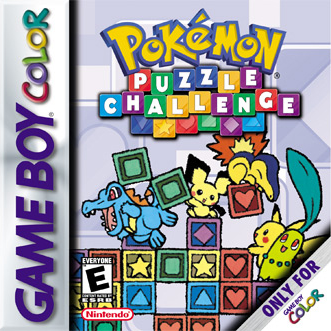
| Titles | Pokémon Puzzle Challenge ポケモンでパネポン (Pokémon de Panepon) |
| Platform | Game Boy Color (Game Boy Color only) |
| Developer | Intelligent Systems |
| Publisher | Nintendo |
| Directors | Toshihiro Nishii · Hitoshi Yamagami |
| Producers | Takehiro Izushi · Ryoichi Kitanishi · Tsunekazu Ishihara |
| Music | Taishi Senda · Minako Hamano |
| Players | 1–2 (Game Link Cable) |
| Genre | Puzzle (Panel de Pon / Puzzle League) |
| Based on | Pokémon Gold & Silver (Generation II) |
| Modes | 6 single-player modes plus Training · 3 two-player link modes |
| Pokémon | 26 – 13 playable, 13 used only by opponents |
| Released | 21 September 2000 (Japan) · 4 December 2000 (North America) · 8 June 2001 (Europe) · 15 June 2001 (Australia) |
| Re-releases | Nintendo 3DS Virtual Console: 6 November 2014 (North America), 27 November 2014 (Europe & Australia), single-player only; off sale since the 3DS eShop closed on 27 March 2023 |
| Rating | ESRB E · ACB G · PEGI 3 (3DS Virtual Console) |
| Predecessor | Pokémon Puzzle League (Nintendo 64, 2000) |
Overview
 Pokémon Puzzle Challenge for Game Boy Color is another spin-off Pokémon game based on Tetris Attack (itself the Western version of Intelligent Systems’ Panel de Pon), in which the player mostly has to clear the blocks appearing on the screen across a number of different game modes. While it’s very similar to Pokémon Puzzle League, the game offers different modes and a different small plot.
The main difference between the two games is that Pokémon Puzzle League was based on the anime, while Pokémon Puzzle Challenge is based on the second-generation Pokémon games, Pokémon Gold and Pokémon Silver. Most of the game’s music is taken from Gold and Silver, with each Gym battle using the theme of that Gym’s town in Gold and Silver.
The game features animated Pokémon portraits, with the Pokémon laughing if the player wins, or crying if their trainer loses.
Journey to Johto for the ultimate puzzle challenge!
Chikorita, Pikachu, Totodile, Pichu, and other favorite Pokémon will help you take on Johto Gym Leaders like Jasmine, Pryce, and Falkner in a quest to become the Pokémon Puzzle Champion. Use lightning fast reflexes to form chains and combos that clear the block tower, attack opposing Pokémon, and bury them in a sea of garbage!
Six puzzling modes to play! Test your scoring skills in Time Zone, clean up the mess in Garbage, then face the eight Gym Leaders in the ultimate challenge mode. Plus, with Puzzle, Line Clear, and Marathon Modes, you’ll be clearing blocks for hours on end!
Train to be the true puzzle master. Watch demos that teach you the basics of forming chains and combos, then master the techniques in a special slow-motion practice mode.
Link with friends to prove your puzzle prowess! Use the Game Link cable (sold separately) and battle your friends in three block-breaking two-player modes!
— Official description
Quick Answers
The questions people ask about Pokémon Puzzle Challenge, answered first and explained further down the page.
How do you unlock Super Hard and Intense difficulty?
Clear Challenge Mode on Hard and the game reveals a button code: highlight Hard on the difficulty menu, hold Select and press A to add Super Hard. Beat Super Hard, then highlight it and press Select and A again to open Intense, the toughest setting in the game. More →
How do you play the hidden Panel de Pon game?
On a Game Boy Color, enter Up x2, Right x4, Down, Left x10, Up x4, Right, Down x6, B on the title screen to switch into Game Boy mode. On the ‘Game Boy Color only’ screen that follows, press A 24 times and then B 24 times. On an original Game Boy, only the A and B part is needed. More →
How do you unlock Pichu and the other bonus Pokémon?
Play Challenge Mode on Normal or higher and meet a target before reaching Clair, and a bonus trainer appears; beat them to use their Pokémon. Pichu needs a match lasting four minutes, Bellossom a win inside 25 seconds, Pikachu a 6-block combo, Togepi a 10-block combo, Marill a 4-chain and Sentret a 7-chain. More →

Why didn’t I face Lance or the Elite Four?
How far Challenge Mode goes depends on the difficulty. On Easy the run ends after the eighth Gym Leader, Clair. Normal adds the Elite Four and finishes with Karen, while Hard, Super Hard and Intense carry on to a final battle against the Champion, Lance, and his Dragonite. More →
Is Pokémon Puzzle Challenge on Nintendo Switch Online?
No. As of October 2026 it has not been added to the Game Boy library on Nintendo Switch Online. The nearest option there is Dr. Mario & Puzzle League, which joined the Game Boy Advance library for Expansion Pack members in July 2026 and offers the same block-swapping formula without the Pokémon theme. More →
Can you still buy it on the 3DS Virtual Console?
Not any more. It arrived on the 3DS Virtual Console in North America on 6 November 2014 and in Europe and Australia on 27 November 2014, but new purchases ended when the 3DS eShop closed on 27 March 2023. Existing owners can still redownload it, though the download never supported two-player link play. More →
Story

Playing as a trainer called Gold (the hero of Pokémon Gold and Silver, officially named Ethan years later), the player seeks to become the Pokémon Puzzle Champion. To do so they have to defeat the eight Johto Gym Leaders, the Elite Four and the Champion, Lance – although how far the journey goes depends on the difficulty. The player will also battle other trainers along the way, who might allow the player to use their Pokémon if they manage to score a win.
The player takes the role of the young hero of Pokémon Gold and Silver, setting out across Johto with Chikorita, Cyndaquil or Totodile in a bid to become the Pokémon Puzzle Champion. Rather than Pokémon battles, every contest is settled with a race of rising blocks, and Professor Oak is on hand at the start of the adventure. The journey takes in the eight Johto Gyms in their familiar order: Falkner in Violet City, Bugsy in Azalea Town, Whitney in Goldenrod City, Morty in Ecruteak City, Chuck in Cianwood City, Jasmine in Olivine City, Pryce in Mahogany Town and Clair in Blackthorn City. Each leader fights with a single Pokémon whose health bar drains as the player builds combos and chains. Playing especially well along the way can tempt a hidden trainer into a challenge, and beating them adds their Pokémon to the player’s team. How the story ends depends on the difficulty chosen. On Easy the adventure closes with victory over Clair. On Normal the player travels on to the Pokémon League and stops after Karen of the Elite Four. On Hard and above, the player defeats Will, Koga, Bruno and Karen in turn, then overcomes the Champion, Lance, and his Dragonite to claim the title of Pokémon Puzzle Champion.
Pokémon
Pokémon Puzzle Challenge features a total of 26 Pokémon, 13 of which can be used by the player, while the other 13 can’t and will only be faced as opponents.
Starter Pokémon
At the start of the game, the player is given free use of the three starter Pokémon from the Johto region, which are Chikorita, Cyndaquil and Totodile. Plenty of other Pokémon are unlocked as the player progresses in the storyline.
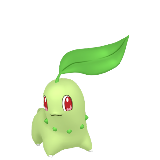 Chikorita#152
 Cyndaquil#155
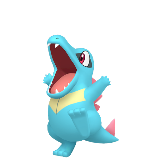 Totodile#158
Pokémon acquired through Egg hatching
During the game, the player will acquire a number of Pokémon Eggs, which hatch into four different Pokémon: Igglybuff, Elekid, Magby and Cleffa. In the second-generation games, too, all four of these Pokémon can only be obtained through Eggs. Once hatched, they can only be used in Marathon Mode.
 Igglybuff#174
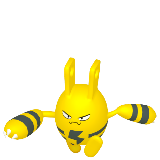 Elekid#239
 Magby#240
 Cleffa#173
Pokémon obtained by defeating Bonus Trainers
Within Challenge Mode (the main story mode), the player may encounter additional trainers after fulfilling certain conditions, on Normal difficulty or above and before reaching Clair. Each of these Bonus Trainers will battle the player in a Puzzle Match, allowing them to use their Pokémon if the player wins. If the player loses, they won’t encounter the trainer again during the same campaign, and will have to start it all over again in order to acquire the Pokémon.
| Pokémon | Bonus Trainer | Encounter event trigger |
|---|---|---|
| Bellossom | Lass | Beat any trainer or Gym Leader within 25 seconds |
| Pikachu | Gentleman | Make a combo out of 6 blocks |
| Togepi | PokéFan | Make a combo out of 10 blocks |
| Marill | Gentleman | Make a 4-chain |
| Sentret | Beauty | Make a 7-chain |
| Pichu | PokéFan | Last four minutes in a single match |
 BellossomLass
 PikachuGentleman
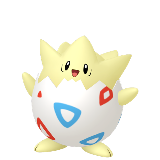 TogepiPokéFan
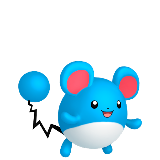 MarillGentleman
 SentretBeauty
 PichuPokéFan
Pokémon that cannot be acquired
The other 13 belong to the Gym Leaders, the Elite Four and the Champion, and can only be faced: Pidgey, Kakuna, Clefairy, Gastly, Primeape, Steelix, Seel, Dragonair, Jynx, Crobat, Hitmontop, Murkrow and Dragonite.
 PidgeyFalkner
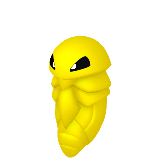 KakunaBugsy
 ClefairyWhitney
 GastlyMorty
 PrimeapeChuck
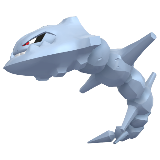 SteelixJasmine
 SeelPryce
 DragonairClair
 JynxWill
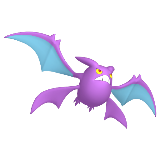 CrobatKoga
 HitmontopBruno
 MurkrowKaren
 DragoniteLance
Notable Pokémon
Twenty-six Pokémon appear. Thirteen can be played: the Johto starters Chikorita, Cyndaquil and Totodile from the outset, six more won from hidden bonus trainers in Challenge Mode, and four baby Pokémon that hatch from Eggs for use in Marathon. The other thirteen belong to the Gym Leaders, the Elite Four and the Champion, each of whom fights with a single Pokémon. Pikachu is the only playable Pokémon from the first generation; everything else on the playable roster debuted in Gold and Silver.
- Pikachu – The only Generation I Pokémon on the playable roster; won from a Gentleman after a 6-block combo
- Pichu – Unlocked by lasting four minutes in a Challenge Mode match and beating a PokéFan
- Elekid – Egg hatch, usable only in Marathon
- Primeape – Chuck’s Pokémon; also has unused menu portrait graphics in the game data
- Dragonite – Champion Lance’s Pokémon and the final opponent on Hard and above
Game Modes

Pokémon Puzzle Challenge offers three game styles at the start menu: 1-Player, 2-Players and Training. The 1-Player option features most of the game modes, while the 2-Players option lets players challenge each other in three modes – VS, Time Zone and Line Clear – by linking their games with the Game Link Cable. As for the Training option, it teaches the player the basic game mechanics and how to move the blocks around.
All the modes in 1-Player have three difficulties, which are Easy, Normal and Hard, except for Challenge Mode, where two additional difficulties can be unlocked. The Super Hard difficulty is unlocked upon clearing Challenge Mode on Hard, while the Intense difficulty becomes available after finishing the mode on Super Hard. The different game modes available in single player are as follows:
Challenge Mode
It is the mode where the story takes place, and where the player will face the eight Gym Leaders, the Elite Four and the current Pokémon Champion (the full route is played on Hard and above, while Easy ends with Clair and Normal with Karen). All of these characters use one of the Pokémon they use in the Gold and Silver games. To win against an opponent in this mode, the player has to make combos out of four or more blocks, as well as chains, causing damage to the enemy Pokémon and reducing their HP bar.
On the other hand, the enemy Pokémon will periodically spawn random blocks on the player’s puzzle screen. Once the opponent’s HP bar is depleted, the player is announced as the winner and can move on to the next opponent. Furthermore, there are additional Bonus Trainers who can be encountered, as mentioned above.
The Gym Leaders battled in Challenge Mode and their Pokémon:

 Violet Gym: Falkner
Pokémon: Pidgey
The first opponent on every difficulty. His Pidgey is the first Pokémon Falkner sends out in Pokémon Gold and Silver, setting the pattern of each leader bringing one Pokémon from their original team.

 Azalea Gym: Bugsy
Pokémon: Kakuna
Second on every difficulty. Rather than his star Scyther, Bugsy fights with Kakuna, one of the two cocoon Pokémon he opens with in Pokémon Gold and Silver.

 Goldenrod Gym: Whitney
Pokémon: Clefairy
Third on every difficulty. Whitney brings Clefairy instead of the notorious Miltank that held up so many players in Pokémon Gold and Silver, giving Goldenrod’s leader a friendlier face here.

 Ecruteak Gym: Morty
Pokémon: Gastly
Fourth on every difficulty. The Ecruteak leader’s Gastly is the first of the Ghost-type line he uses in Pokémon Gold and Silver, where his team builds up to Gengar.

 Cianwood Gym: Chuck
Pokémon: Primeape
Fifth on every difficulty. Chuck fights with Primeape, the Pokémon he leads with in Pokémon Gold and Silver alongside his ace, Poliwrath.

 Olivine Gym: Jasmine
Pokémon: Steelix
Sixth on every difficulty. Jasmine sends out Steelix, the ace of her Olivine Gym team in Pokémon Gold and Silver, making her one of the few leaders to bring their strongest Pokémon.

 Mahogany Gym: Pryce
Pokémon: Seel
Seventh on every difficulty. Seel is a pure Water type, but it opens Pryce’s Ice-themed team in Pokémon Gold and Silver ahead of Dewgong and Piloswine.

 Blackthorn Gym: Clair
Pokémon: Dragonair
The eighth Gym Leader and the final opponent on Easy. Her Dragonair comes from the trio she fields before Kingdra in Pokémon Gold and Silver. Bonus trainers can only appear before her match.
The Elite Four and the Champion:
- JynxWill · Elite Four
- CrobatKoga · Elite Four
- HitmontopBruno · Elite Four
- MurkrowKaren · Elite Four
- DragoniteLance · Champion
Marathon Mode
It’s a game mode with infinite time, where the player tries to get the highest score possible. The higher the player’s score gets, the more the game speed increases, causing the mode to become more and more challenging. The two-player equivalent is VS mode, in which the players spawn extra blocks on their opponent’s side each time they make a combo. If the blocks reach the top of a player’s screen, their opponent is declared victorious.
Line Clear Mode
The Line Clear Mode features six rounds of five stages each, where the player has to clear all the blocks above a white line drawn on screen. This can be done either by clearing the blocks with combos, or by dropping them underneath the line. Once all blocks above the line are cleared, the player moves on to the next stage, and clearing all 30 stages leads to one final battle.
Time Zone Mode
It’s a time-limited mode, where the player tries to get the highest score possible within two minutes.
Puzzle Mode
In Puzzle Mode, there are several rounds, with each round having ten stages. In each stage, the player is presented with a different puzzle, with the goal of clearing all the blocks appearing on the screen using a limited number of moves. Clearing the blocks faster results in a better score. Once all the stages within a round are clear, the player may proceed to the next one. Professor Oak can offer up to three hints to the player during each round if they press Select.
Garbage Mode
Another infinite time mode, where the player tries to get the highest score, with garbage blocks falling from the top of the screen and increasing in number as the Garbage Level climbs (the speed at which the stack rises never changes). The player loses once the blocks stack up and reach the top.
In depth: the fine print


Panel de Pon GB & Hidden Extras
Pokémon Puzzle Challenge began life as a Game Boy version of Intelligent Systems’ Panel de Pon, and an almost finished build of that game – Panel de Pon GB, complete with the original fairy characters such as Lip – is still tucked away on the cartridge. It can be played on real hardware:
- On a Game Boy Color, enter Up ×2, Right ×4, Down, Left ×10, Up ×4, Right, Down ×6, B on the title screen. The game switches into Game Boy mode.
- The ‘Game Boy Color only’ warning screen appears. Press A 24 times, then B 24 times.
- Panel de Pon GB starts. On an original Game Boy the warning screen appears straight away, so only the A and B part is needed.
The hidden build is unfinished: its VS. Com option runs a broken Garbage mode in which no garbage falls, and a Time Zone mode can only be reached by memory editing (see Glitches below).
Panel de Pon GB in action (video: LarviStar).
Left in the data
Data miners have found plenty more that never made it into the finished game:
- Three songs, track IDs 01, 04 and 1C, sit in the sound data without ever being played, alongside a large bank of unmapped Panel de Pon music including character themes, danger themes, game over and credits tracks.
- Four digitised voice clips, ‘Nintendo!’, ‘Congratulations!’, ‘Here we go!’ and ‘Hooray!’, survive in the ROM together with a playback routine that the game never calls.
- A debug screen and graphics viewer, reachable only with a cheat device, lets developers browse stage backdrops, character and Pokémon portraits, garbage block sets, Challenge Mode maps, the Pokémon League hallway, ending screens and Egg portraits.
- The Japanese ROM holds an unused title screen reading Pokémon Puzzle League, made by removing Lip’s sprites from the Panel de Pon GB title screen.
- Menu portraits for Primeape, Jynx and Hitmontop exist but never normally appear, and redrawn Panel de Pon character artwork and stage themes also remain in the data.
Regional Variations
Pokémon Puzzle Challenge changed a little from region to region, and the European cartridge saw the most changes:
- In Japan the game is called Pokémon de Panepon (ポケモンでパネポン), a play on Panel de Pon, the Intelligent Systems puzzler the series grew from; the Western title drops the reference, just as Tetris Attack had done.
- The European cartridge is multilingual, offering English, French, German, Spanish and Italian from a language select screen, whereas the North American cartridge is English only.
- The European cartridge also hides a Japanese language option, complete with its own flag, behind its language select screen; it can only be reached by memory editing, and much of its text has been replaced with English.
- In the hidden Panel de Pon GB mode, the European version renames the ‘FIREWORKS’ option to ‘SCROLL’.
- On the 3DS Virtual Console, North American systems receive only the English game, while European systems get the five-language version, even though Nintendo’s European eShop listing and website advertised English only.
- Japan received the game first, on 21 September 2000; North America followed on 4 December 2000 and Europe in June 2001, while Japan never received the 3DS Virtual Console release.

Glitches, exploits and oddities
A chain counter that gives up, a warning screen with leftovers, and a hidden game that was never finished:
Question-mark chain counter
The chain counter has a ceiling. When a player manages a chain of 30 or more links, the indicator stops showing a number and displays a question mark instead. Reaching that length takes enormous skill or very careful set-up play, so most players never see it, but recordings of 30-chains have circulated online for years as proof that it can be done on real hardware.
Game Boy Color-only screen leftovers
Switching the game into Game Boy mode, or running it on an original Game Boy, brings up the usual warning that the cartridge needs a Game Boy Color. That screen appears to reuse leftover code from Tetris Attack’s title screen, and a second, linked copy of the game may wrongly treat it as being ready for multiplayer. The same screen doubles as the gateway to the hidden Panel de Pon GB mode.
Broken modes in Panel de Pon GB
The hidden Panel de Pon GB build is unfinished, and it shows. Its VS. Com option loads the right graphics but runs a broken version of Garbage mode in which no garbage ever falls. A Time Zone mode is also present but can only be reached by memory editing; some of its graphics are damaged, the game hangs if the mode value is wrong, and it is the only mode able to end in a ‘winning’ game over.
Videos & media
Check out these Pokémon Puzzle Challenge videos, including the intro, the Virtual Console trailer and the music that went unused.
The intro / opening video for Pokémon Puzzle Challenge.
Trailer for the Virtual Console re-release.
Three different unused pieces of music which are present in the data files for Puzzle Challenge but never made it to the final release version.
Trivia & facts
-

The 3DS Virtual Console icon. The game was re-released on the Nintendo 3DS Virtual Console in 2014, with the same modes except for the multiplayer feature, since the Game Link Cable isn’t available on the 3DS.
- If the player manages to make a very long chain (30 or more), the game stops counting the chain number, showing ‘?’ instead.
- There’s a hidden, unfinished Game Boy version of Panel de Pon within Pokémon Puzzle Challenge. To reach it on a Game Boy Color, enter Up ×2, Right ×4, Down ×1, Left ×10, Up ×4, Right ×1, Down ×6, B at the title screen, then press A 24 times and B 24 times on the ‘Game Boy Color only’ screen that follows (see Panel de Pon GB above).
- The game was supposed to be released as Pokémon Attack, a working title that made it even more clearly based on Tetris Attack. It was then briefly called Pokémon Puzzle League, before that name went to the Nintendo 64 game.
- There are three songs within the game’s data files that are not used at any point in the game. Click here to listen to them at TCRF.
Further trivia
- The North American release on 4 December 2000 fell on the 35th birthday of Veronica Taylor, the English voice of Ash Ketchum at the time.
- Before details emerged, IGN guessed that Nintendo’s new Pokémon puzzle game might be an English version of Puyo Puyo Sun.
- Every Gym Leader, Elite Four member and the Champion fights with a single Pokémon, so Whitney turns up without her infamous Miltank and Lance brings one Dragonite rather than the three he uses in Gold and Silver.
- Nintendo of Europe’s own product page for the Virtual Console release lists Game Freak and Creatures as the developers, even though the game was made by Intelligent Systems.
Legacy
What came after
- Japanese release as Pokémon de Panepon (Game Boy Color) – 21 September 2000. The first release, three months ahead of North America.
- North American release (Game Boy Color) – 4 December 2000. Launched as Pokémon Puzzle Challenge after the working titles Pokémon Attack and Pokémon Puzzle League.
- European release (Game Boy Color) – 8 June 2001. Multilingual cartridge with English, French, German, Spanish and Italian text.
- Australian release (Game Boy Color) – 15 June 2001. Rated G.
- Dr. Mario & Puzzle League (Game Boy Advance) – 2005. The next handheld Puzzle League game, pairing the block-swapper with Dr. Mario; no Pokémon theme.
- Nintendo 3DS Virtual Console, North America – 6 November 2014. Single-player only; the Game Link Cable modes are disabled.
- Nintendo 3DS Virtual Console, Europe and Australia – 27 November 2014. Priced at £4.49 / €4.99 in Europe; European systems receive the five-language version.
- Nintendo 3DS eShop closes to new purchases – 27 March 2023. The Virtual Console version can no longer be bought, though existing owners can redownload it.
- Dr. Mario & Puzzle League added to Nintendo Switch Online (Game Boy Advance library) – 8 July 2026. The closest thing to Puzzle Challenge on a current Nintendo system; Puzzle Challenge itself has not been added.
Where to play it today
The original Game Boy Color cartridge remains the most complete way to play, as only it offers link-cable multiplayer, and it runs on Game Boy Color and Game Boy Advance hardware. Owners of the 3DS Virtual Console release can still redownload it, but it has not been on sale since March 2023. As of October 2026 it is not part of Nintendo Switch Online; Dr. Mario & Puzzle League in the Game Boy Advance library is the nearest substitute.
How it was made
Pokémon Puzzle Challenge was made by Intelligent Systems, the studio behind Panel de Pon, and it started life as a Game Boy version of that game: a nearly complete Panel de Pon GB is still hidden inside the cartridge. Toshihiro Nishii and Hitoshi Yamagami directed, with Takehiro Izushi, Ryoichi Kitanishi and Tsunekazu Ishihara producing, while Taishi Senda and Minako Hamano wrote the music. Game Freak’s Ken Sugimori, Junichi Masuda and Kazuhito Sekine supervised the Pokémon content. Nintendo’s Peter Main revealed the project in a webcast on 13 January 2000 under the working title Pokémon Attack, a nod to Tetris Attack. It was then briefly renamed Pokémon Puzzle League, a name that went instead to the Nintendo 64 game, before settling on Pokémon Puzzle Challenge. Nintendo considered holding it back until 2001, but the delay of Kirby Tilt ‘n’ Tumble opened a slot for a December 2000 launch in North America. Bill Trinen handled the English localisation.
Pokémon Puzzle Challenge elsewhere
Sales & reviews
Sales
No official sales figures have been published for Pokémon Puzzle Challenge, in Japan or elsewhere, so how many copies it sold is unknown. The reviews tell a clearer story.

Review scores
Pokémon Puzzle Challenge was very well received, managing to get very high scores on major review websites. Let’s take a look at these scores:
- Craig Harris from IGN, very fond of Tetris games, stated that “The overall design is an amazingly addictive and maniacal puzzle game”, rating the game 9/10, the equivalent of ‘Amazing’ on the IGN scale, along with an Editor’s Choice award.
- Frank Provo from GameSpot was also amazed by the game and gave it 8.9/10, which equates to ‘Great’ on the GameSpot scale, as a game “that does the Pokémon license proud”, in his words.
- On GameRankings (which closed in 2019), Pokémon Puzzle Challenge earned an astonishing score of 90.20% from 10 reviews. Metacritic doesn’t cover Game Boy Color games, so it has no Metacritic score.
- Timmy Petersson reviewed the title on behalf of Pokémon Dungeon, scoring it 4.5 stars out of 5. ItsJiv also reviewed it but wasn’t quite as impressed, and scored it 3 stars out of 5.
- Overall, and as the scores show, the game successfully brings the Puzzle League formula to the Game Boy Color, with fun, challenging and very addictive gameplay.
Critics broadly agreed that Intelligent Systems had squeezed the Tetris Attack formula on to the Game Boy Color with little lost. IGN’s Craig Harris found it as compulsive as ever and handed it an Editor’s Choice award, though he missed the puzzle editor of the console game. GameSpot’s Frank Provo praised the generous spread of six single-player and three link modes and felt the game honoured the Pokémon name, docking only a little for the absent Nintendo 64 extras. Nintendo Power gave it full marks and Electronic Gaming Monthly a 9, while a few voices, including the Associated Press, pointed out that it broke no new ground and that the Pokémon dressing was only skin-deep. Reviewing the 2014 Virtual Console release, Nintendo Life still rated it a strong buy for puzzle fans despite the loss of two-player play.
Awards and honours:
Media & artwork
- Box art from Pokémon Puzzle Challenge, including numerous regional variations and editions
- Screenshots from Pokémon Puzzle Challenge
Further reading
More puzzle and Game Boy Color links on the site: