  |
|
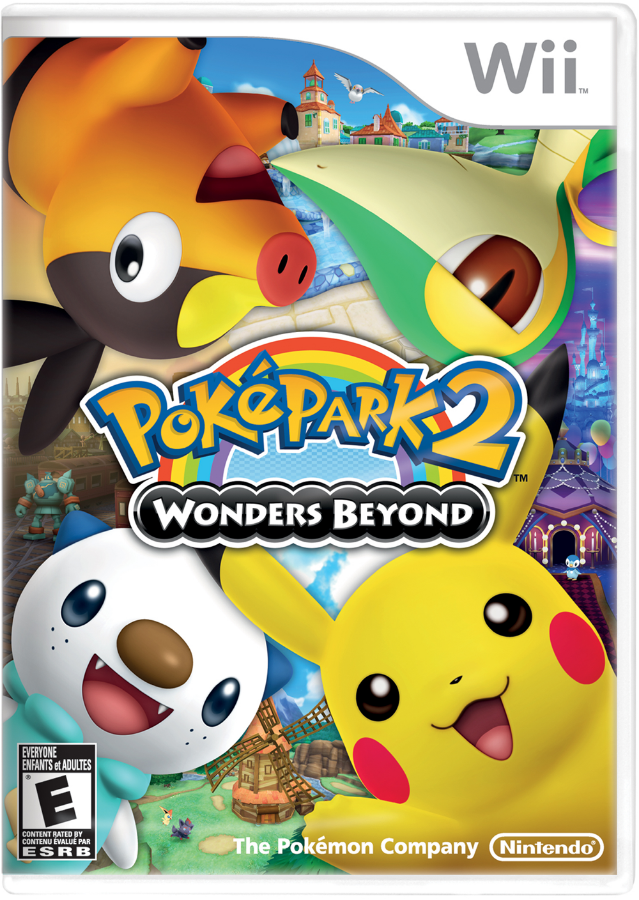
| Titles | PokéPark 2: Wonders Beyond ポケパーク2 〜Beyond the World〜 (Poképāku Tsū Biyondo za Wārudo); the logo reads ポケパーク2 BW ビヨンド・ザ・ワールド |
| Platform | Wii (Wii Remote; also plays on Wii U in Wii mode) |
| Developer | Creatures Inc. |
| Publisher | Nintendo (The Pokémon Company in Japan) |
| Director | Katsuyoshi Irie |
| Producers | Hirokazu Tanaka · Hiroyuki Jinnai · Hiroaki Tsuru · Toshio Miyahara |
| Music | Ayumu Ito · Takuto Kitsuta · Kenichi Koyano · Shigerou Yoshida |
| Players | 1 (adventure); 1–4 (attractions, one Wii Remote each) |
| Genre | Action-adventure |
| Generation | Generation V |
| Friend list | 194 Pokémon, plus the four playable Pals |
| Attractions | 4: Cake Contraption, Dance Inferno, Power Bash and Flight of Fancy |
| Released | 12 November 2011 (Japan, Hong Kong, Taiwan) · 27 February 2012 (North America) · 23 March 2012 (Europe) · 29 March 2012 (Australia) |
| Re-releases | None (the Wii disc plays on Wii U) |
| Rating | ESRB E · PEGI 7 · CERO A · ACB G |
| Predecessor | PokéPark Wii: Pikachu’s Adventure (2009) |
| Successor | None – the last Pokémon game released for the Wii |
| Sales | 164,018 in Japan by 18 December 2011 (Media Create) · about 0.76 million worldwide (estimate) |
Overview
 PokéPark 2: Wonders Beyond is an action and adventure Pokémon game released on the Wii and the sequel to PokéPark Wii: Pikachu’s Adventure. It classifies as a spin-off Pokémon game. The game uses the same mechanics as its predecessor, but with a whole different story and many new areas.
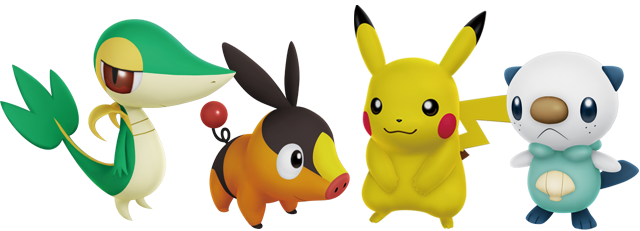
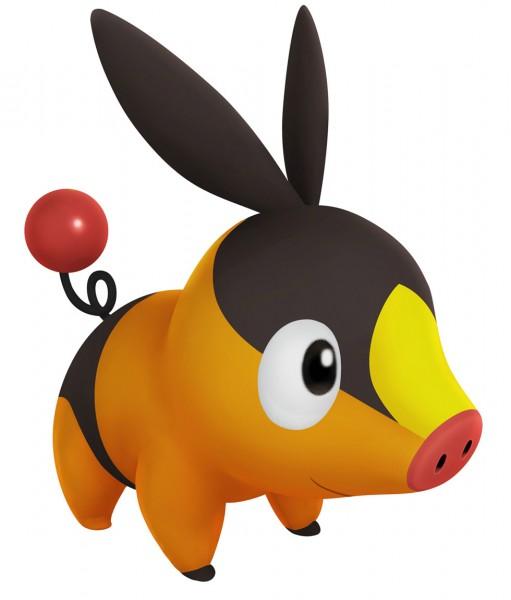
Unlike the previous game, the player can now use Pikachu along with three of his friends: Snivy, Tepig and Oshawott. The game offers the possibility to instantly switch between them, since each of the three Pokémon has special abilities, required to interact with certain objects or get through certain environments. Snivy has Leaf Tornado, which works as a double jump. Oshawott has Surf, which allows it to cross bodies of water. Tepig has Heat Crash, which activates some switches, and Flame Charge, which smashes boulders.
PokéPark 2: Wonders Beyond focuses more on befriending other Pokémon and exploring the different areas than on the actual attractions, which explains why there are fewer attractions compared to the last game. The Pokémon 3D models look adorable and are really well animated and equipped with their fitting voices from the anime series.
Join the quest with Pikachu and his friends to save the missing Pokémon and discover the mystery of an enchanting new world in PokéPark 2: Wonders Beyond for Wii. As Pikachu and his Pals, solve the mystery of the missing Pokémon and save them from Wish Park. Only you can find out who or what is behind the disappearances in order to save the rest of the Pokémon.
Control one of four Pokémon characters in PokéPark 2: Wonders Beyond, Pikachu and the Unova starter Pokémon Oshawott, Snivy and Tepig, all with unique abilities that will help you in your quest. Each of Pikachu’s Pokémon Pals’ unique skills could prove vital if you are to save the missing Pokémon from the trance of the mysterious world: Pikachu’s Electric moves can help you to activate devices on the way; Oshawott has the ability to move through water; Snivy can move faster and jump higher than the other Pokémon, and Tepig can destroy obstacles on your quest.
— Official description (Nintendo UK, Wii game page)
Quick Answers
The questions people ask about PokéPark 2: Wonders Beyond, answered first and explained further down the page.
How many Pokémon can you befriend in PokéPark 2: Wonders Beyond?
The friend list has 194 entries, from Piplup at No. 1 to Zekrom at No. 194. Pikachu, Oshawott, Snivy and Tepig are your playable Pals and sit outside that list. Pokémon from all five generations up to Black and White appear across the five PokéPark areas and Wish Park. More →
How do you get Reshiram and Zekrom?
Both are post-game. For Reshiram, collect at least 20 of the 40 Vast White Quills and use the dais on the hill in the Arcane Area. For Zekrom, befriend Tornadus, Thundurus and Landorus. Reuniclus then turns their power into the item that opens the Zekrom altar in the Wish Palace. Beat both dragons and Darkrai can become your friend. More →

Can you play PokéPark 2 with friends?
Yes, but only in the attractions. Once you clear an attraction in the story, it’s added to the multiplayer mode. There, up to four players take part, each with a Wii Remote and each playing as Pikachu, Oshawott, Snivy or Tepig. The adventure itself is single-player. The first PokéPark had no multiplayer at all. More →
Is PokéPark 2 on Nintendo Switch or Switch Online?
No. As of October 2026 the game has never been re-released and isn’t part of Nintendo Switch Online or any download service. You need the original Wii disc, which runs on a Wii or on a Wii U through its built-in Wii mode. It was the last Pokémon game made for the Wii. More →
Who are the Area Keepers and the Wish Park guardians?
Samurott keeps the Cove Area, Queen Serperior the Arbor Area, Emboar the Crag Area and Conkeldurr the Tech Area. The post-game Arcane Area has no keeper. In Wish Park, Cofagrigus runs the Cake Zone, Chandelure the Dance Zone, Gothitelle and later Haxorus the Power Zone, and Sigilyph the Flight Zone. All of them answer to Darkrai. More →
What does ‘Beyond the World’ mean, and is the Japanese version different?
In Japan the game is PokéPark 2: Beyond the World, and its initials, B and W, nod to Pokémon Black and White, whose starters join Pikachu. It came out there on 12 November 2011, over three months before America, published by The Pokémon Company rather than Nintendo. Apart from text and small interface details, the versions play the same. More →
Story

The game starts out with the two legendary dragon Pokémon Reshiram and Zekrom discussing the dark future awaiting the PokéPark. Later, Pikachu sets off for the PokéPark, accompanied by its best friend Piplup. As soon as they get to the PokéPark, they learn about the magical Wish Park, where Pokémon are said to have an infinite amount of fun. This park lies in a parallel dimension, can only be reached through Poster Portals and actually traps the Pokémon who visit it.

Piplup and Pikachu learn of this and decide to try and save the trapped Pokémon. They meet an Oshawott, who later escapes with Pikachu, while Piplup gets stuck in the Wish Park. Together the two of them learn that ringing the Wish Bell in each of the Wish Park’s zones will free the Pokémon of the PokéPark area it’s linked to. Oshawott joins Pikachu’s team, and together they successfully ring the Cake Zone’s bell, freeing the Cove Area. Pikachu then gets teleported to Reshiram’s dimension, where it gets told about the upcoming disaster and how Reshiram believes Pikachu can be the PokéPark’s saviour.
Oshawott and Pikachu then move on to the Arbor Area, where they meet Snivy, who joins the party, and there they manage to ring the Dance Zone’s Wish Bell and free the Arbor Area’s Pokémon. Afterwards, Zekrom draws Pikachu into its own dimension to warn him that the Dark Vortex has appeared. The team, now formed of three Pokémon, heads to the Crag Area, where they find Tepig stuck in a cannon and recruit him to join their ranks. There, Haxorus wrecks the Battle Tournament and carries off Victini, but the team rings the third Wish Bell, in the Power Zone, and sets Victini and the Crag Area’s Pokémon free.
Can Pikachu and his pals overcome the darkness and save Piplup and the other trapped Pokémon?
In the Tech Area, the inventor Reuniclus repairs the Poster Portal to the Flight Zone, where the final Wish Bell is rung, resulting in the opening of the path towards the Wish Palace. In the Wish Palace the Pokémon meet Darkrai, who erases Oshawott, Snivy and Tepig’s memories of Pikachu and sends Pikachu into a nightmare. Luckily, Piplup finds a way to enter the nightmare and save Pikachu. Later on, Pikachu manages to return the memories to his friends and together they defeat Darkrai, but it’s a little too late, as the Dark Vortex is about to swallow both the PokéPark and the Wish Park.
After seeing the destruction, Darkrai, driven by guilt, travels to the centre of the vortex with Reuniclus’s device, which nullifies it, sacrificing himself to save the parks. Moved by his noble act, Pikachu and his comrades later plead with the two legendary dragons to save Darkrai from the void, once peace has returned and they have proved themselves to Reshiram and Zekrom. Darkrai returns and promises to lead a worthy and good life.
Who’s who
- Reshiram: Opens the game with Zekrom, sensing a light in the coming darkness. After the Cove Area is freed, it pulls Pikachu into its dimension and tells him he can save the PokéPark. After the story it waits beyond a dais on a hill in the Arcane Area, which opens once 20 Vast White Quills are found. It is No. 193 on the friend list.
- Zekrom: Summons Pikachu to its own dimension after the Arbor Area. It warns him that the Dark Vortex has appeared and tells him that he and his Pals can save both worlds. In the post-game it is reached through the Zekrom altar in the Wish Palace, using the item Reuniclus makes from the Forces of Nature’s power. It is the last entry, No. 194.
- Reuniclus: Works in the Scientorium in the Tech Area and invented the Poster Portals in the first place. He repairs the portal to the Flight Zone, so the last Wish Bell can be rung. He then builds the device that can close the Dark Vortex. After the story he channels the power of Tornadus, Thundurus and Landorus to open the way to Zekrom.
- Victini: Greets the team in the Crag Area, asks them to find the missing Tepig and hints at the password Bastiodon wants. Haxorus snatches him during the Battle Tournament. The third Wish Bell frees him, and he tells the team that the Poster Portals were made at the Scientorium. Afterwards he stays near Emboar and can be battled to befriend him.
Pikachu and friends
For the first time in the series, Pikachu doesn’t explore alone. Oshawott, Snivy and Tepig, the three Unova starters, join him one by one as the story moves through the Cove, Arbor and Crag Areas. Once they join, you can swap to any of them at any time. Each has two battle moves: a charged attack on the 1 button and a second move you trigger by shaking the Wii Remote. Each one also has a dash attack and its own trainer in Cove Town.
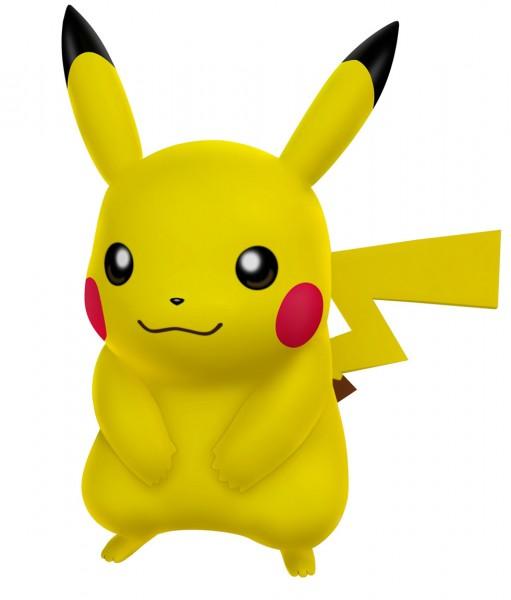
Pikachu
The all-rounder, with balanced power and speed. He charges Thunderbolt and swings Iron Tail with a shake, and he can carry items and other Pokémon. Raichu powers up all three of his attacks, three levels each.

Oshawott
The first friend to join, in the Cove Area. Oshawott is the only one who can Surf across deep water. He charges Water Gun and throws Razor Shell, his scalchop, with a shake. Dewott trains him once Cofagrigus is beaten.
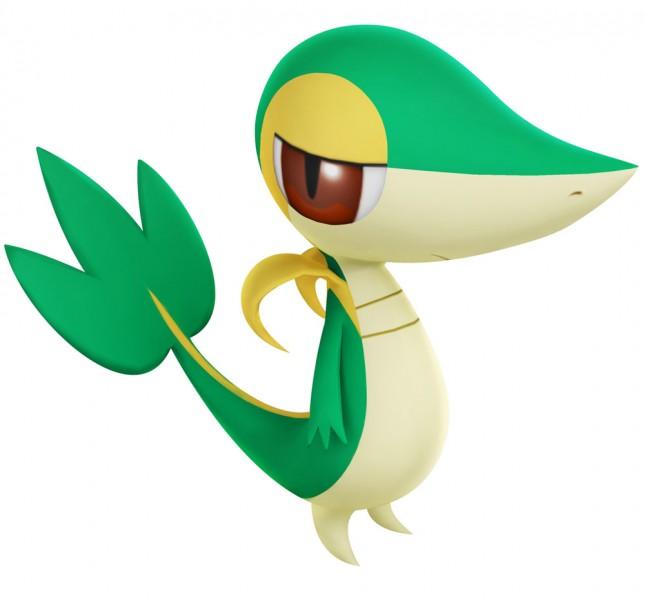
Snivy
Joins in the Arbor Area. Leaf Tornado lifts her into a double jump, so she reaches ledges the others can’t. She attacks with a charged Leaf Storm and a spinning Leaf Tornado. Servine trains her once Chandelure falls.
Tepig
The powerhouse, fired out of a cannon in the Crag Area. Flame Charge smashes boulders and Heat Crash presses heavy switches. In battle he charges Flamethrower and slams Heat Crash. Pignite trains him once Chandelure falls.
The four Pals side by side
| Pal | Joins | Charged move (1) | Shake move | In the field | Trainer in Cove Town |
|---|---|---|---|---|---|
| Pikachu | From the start | Thunderbolt | Iron Tail | Carries items and other Pokémon | Raichu, from the start |
| Oshawott | Cove Area, first to join | Water Gun | Razor Shell | Surfs across deep water | Dewott, after Cofagrigus |
| Snivy | Arbor Area | Leaf Storm | Leaf Tornado | Leaf Tornado’s double jump reaches high ledges | Servine, after Chandelure |
| Tepig | Crag Area, fired from a cannon | Flamethrower | Heat Crash | Flame Charge smashes boulders; Heat Crash presses heavy switches | Pignite, after Chandelure |
Each Pal also has a dash attack, and every move can be raised three levels by its trainer, for 100, 500 and 1,000 berries – the full price list is under Extra Features.
The friend they set out to save

Piplup
Piplup travels to the Cove Area with Pikachu and is trapped in Wish Park almost at once. After the Arbor Area bell rings, he stays behind to warn newcomers, and Gothitelle later holds him hostage. In the Wish Palace he attacks the team while dazed, then recovers and slips into Pikachu’s nightmare to wake him. He is No. 1 on the friend list.
Pokémon
The friend list
Pokémon from the first to the fifth generation are available in the game: 194 of them on the friend list, not counting Pikachu and his three playable friends. They are as follows:
For the Pokémon you battle, the last two columns show which of the four Pals’ attacks they resist (strong against) and which hurt them most (weak against).
Nos. 1–97
| No. | Pokémon | Strong against | Weak against |
|---|---|---|---|
| 1 | Piplup | Tepig, Oshawott | Pikachu, Snivy |
| 2 | Timburr | ||
| 3 | Patrat | ||
| 4 | Watchog | ||
| 5 | Sandile | Pikachu | Oshawott, Snivy |
| 6 | Krokorok | Pikachu | Oshawott, Snivy |
| 7 | Krookodile | Pikachu | Oshawott, Snivy |
| 8 | Wingull | ||
| 9 | Pelipper | ||
| 10 | Drifblim | ||
| 11 | Minccino | ||
| 12 | Cinccino | ||
| 13 | Pansage | Pikachu, Oshawott, Snivy | Tepig |
| 14 | Pansear | Snivy, Tepig | Oshawott |
| 15 | Panpour | Oshawott, Tepig | Pikachu, Snivy |
| 16 | Espeon | ||
| 17 | Munchlax | ||
| 18 | Samurott | Oshawott, Tepig | Pikachu, Snivy |
| 19 | Axew | ||
| 20 | Fraxure | Pikachu, Oshawott, Snivy, Tepig | |
| 21 | Pidove | ||
| 22 | Tranquill | ||
| 23 | Maractus | ||
| 24 | Alomomola | ||
| 25 | Frillish | ||
| 26 | Drilbur | Pikachu | Oshawott, Snivy |
| 27 | Petilil | ||
| 28 | Meowth | ||
| 29 | Misdreavus | ||
| 30 | Musharna | ||
| 31 | Blitzle | ||
| 32 | Audino | ||
| 33 | Raichu | ||
| 34 | Servine | Pikachu, Oshawott, Snivy | Tepig |
| 35 | Pignite | Snivy, Tepig | Oshawott |
| 36 | Dewott | Oshawott, Tepig | Pikachu, Snivy |
| 37 | Purrloin | ||
| 38 | Trubbish | ||
| 39 | Corphish | Oshawott, Tepig | Pikachu, Snivy |
| 40 | Emolga | ||
| 41 | Staryu | ||
| 42 | Wailord | ||
| 43 | Tornadus | ||
| 44 | Kecleon | ||
| 45 | Karrablast | ||
| 46 | Cottonee | ||
| 47 | Whimsicott | ||
| 48 | Caterpie | Snivy | Tepig |
| 49 | Scyther | Snivy | Pikachu, Tepig |
| 50 | Sudowoodo | ||
| 51 | Zorua | ||
| 52 | Zoroark | ||
| 53 | Pawniard | Snivy | Tepig |
| 54 | Bisharp | Snivy | Tepig |
| 55 | Buneary | ||
| 56 | Leafeon | ||
| 57 | Foongus | ||
| 58 | Amoonguss | Pikachu, Oshawott, Snivy | Tepig |
| 59 | Tympole | ||
| 60 | Seismitoad | Pikachu, Tepig | Snivy |
| 61 | Magikarp | ||
| 62 | Oddish | ||
| 63 | Mankey | ||
| 64 | Kakuna | ||
| 65 | Snorlax | ||
| 66 | Sewaddle | ||
| 67 | Leavanny | Pikachu, Oshawott, Snivy | Tepig |
| 68 | Lilligant | Pikachu, Oshawott, Snivy | Tepig |
| 69 | Serperior | Pikachu, Oshawott, Snivy | Tepig |
| 70 | Deerling | ||
| 71 | Vaporeon | ||
| 72 | Psyduck | ||
| 73 | Shroomish | ||
| 74 | Venipede | Snivy | Tepig |
| 75 | Whirlipede | ||
| 76 | Scolipede | ||
| 77 | Skiploom | ||
| 78 | Surskit | ||
| 79 | Basculin | ||
| 80 | Dugtrio | ||
| 81 | Ducklett | ||
| 82 | Stunfisk | ||
| 83 | Excadrill | Pikachu | Oshawott, Tepig |
| 84 | Woobat | ||
| 85 | Ferrothorn | Pikachu, Oshawott, Snivy | Tepig |
| 86 | Bronzong | ||
| 87 | Burmy | ||
| 88 | Victini | Snivy, Tepig | Oshawott |
| 89 | Bastiodon | Oshawott | |
| 90 | Darumaka | ||
| 91 | Darmanitan | Snivy, Tepig | Oshawott |
| 92 | Scraggy | ||
| 93 | Bonsly | ||
| 94 | Bellossom | ||
| 95 | Metapod | ||
| 96 | Croagunk | Snivy | |
| 97 | Dwebble | Oshawott |
Nos. 98–194
| No. | Pokémon | Strong against | Weak against |
|---|---|---|---|
| 98 | Crustle | ||
| 99 | Primeape | ||
| 100 | Ferroseed | ||
| 101 | Gible | Pikachu, Tepig | |
| 102 | Garchomp | Pikachu, Tepig | |
| 103 | Druddigon | Pikachu, Oshawott, Snivy, Tepig | |
| 104 | Emboar | Snivy, Tepig | Oshawott |
| 105 | Diglett | ||
| 106 | Flareon | ||
| 107 | Braviary | Snivy | Pikachu |
| 108 | Mandibuzz | ||
| 109 | Cubchoo | ||
| 110 | Beartic | Tepig | |
| 111 | Munna | ||
| 112 | Throh | ||
| 113 | Sawk | ||
| 114 | Delibird | ||
| 115 | Boldore | Tepig | Oshawott, Snivy |
| 116 | Vanillite | ||
| 117 | Geodude | Pikachu, Tepig | Oshawott, Snivy |
| 118 | Rhyperior | Pikachu, Tepig | Oshawott, Snivy |
| 119 | Swoobat | ||
| 120 | Glaceon | ||
| 121 | Hydreigon | Pikachu, Snivy, Tepig, Oshawott | |
| 122 | Aipom | ||
| 123 | Breloom | ||
| 124 | Lucario | Snivy | Tepig |
| 125 | Thundurus | ||
| 126 | Gurdurr | ||
| 127 | Conkeldurr | ||
| 128 | Golett | ||
| 129 | Golurk | Pikachu | Oshawott, Snivy |
| 130 | Zebstrika | ||
| 131 | Accelgor | ||
| 132 | Tyranitar | Tepig | Oshawott, Snivy |
| 133 | Salamence | Oshawott, Snivy, Tepig | |
| 134 | Murkrow | Snivy | Pikachu |
| 135 | Honchkrow | Snivy | Pikachu |
| 136 | Abra | ||
| 137 | Scizor | ||
| 138 | Escavalier | Snivy | Tepig |
| 139 | Roggenrola | Tepig | Oshawott, Snivy |
| 140 | Gigalith | Tepig | Oshawott, Snivy |
| 141 | Mawile | ||
| 142 | Voltorb | ||
| 143 | Wynaut | ||
| 144 | Kirlia | ||
| 145 | Lopunny | ||
| 146 | Eevee | ||
| 147 | Solosis | ||
| 148 | Duosion | ||
| 149 | Reuniclus | ||
| 150 | Sableye | ||
| 151 | Stunky | ||
| 152 | Joltik | ||
| 153 | Galvantula | Pikachu, Snivy | Tepig |
| 154 | Electivire | Pikachu | |
| 155 | Garbodor | Snivy | |
| 156 | Magmortar | Snivy, Tepig | Oshawott |
| 157 | Umbreon | ||
| 158 | Sneasel | Tepig | |
| 159 | Gengar | ||
| 160 | Duskull | ||
| 161 | Dusknoir | ||
| 162 | Klink | ||
| 163 | Klang | ||
| 164 | Klinklang | ||
| 165 | Mareep | ||
| 166 | Lotad | ||
| 167 | Hoppip | ||
| 168 | Swadloon | ||
| 169 | Jolteon | ||
| 170 | Charizard | Snivy, Tepig | Pikachu, Oshawott |
| 171 | Slowpoke | ||
| 172 | Squirtle | ||
| 173 | Mudkip | ||
| 174 | Azurill | ||
| 175 | Budew | ||
| 176 | Krabby | ||
| 177 | Sawsbuck | ||
| 178 | Bouffalant | ||
| 179 | Scrafty | ||
| 180 | Swanna | ||
| 181 | Landorus | Pikachu | Oshawott |
| 182 | Gothita | ||
| 183 | Gothorita | ||
| 184 | Gothitelle | ||
| 185 | Yamask | ||
| 186 | Cofagrigus | ||
| 187 | Litwick | ||
| 188 | Lampent | ||
| 189 | Chandelure | Snivy, Tepig | Oshawott |
| 190 | Haxorus | Pikachu, Oshawott, Snivy, Tepig | |
| 191 | Sigilyph | Snivy | Pikachu |
| 192 | Darkrai | ||
| 193 | Reshiram | Pikachu, Snivy, Tepig | |
| 194 | Zekrom | Pikachu, Oshawott, Snivy, Tepig |
Notable Pokémon
There are 194 Pokémon on the friend list, drawn from all five generations up to Black and White, with Unova species in the majority. Each area has its own residents, and Wish Park and the post-game Arcane Area add more. Most join after a Chase, Battle or Quiz, while others need hide-and-seek, an item or a story event. On top of the list are the four Pals you control and swap between at will: Pikachu, Oshawott, Snivy and Tepig.
 VictiniCrag Area ally, No. 88
 Darkraifinal boss, No. 192
 ReshiramArcane Area dais, No. 193
 ZekromWish Palace altar, No. 194
 TornadusSeasong Beach shrine, No. 43
 ThundurusColosseum island, No. 125
 LandorusArcane Area lake, No. 181
The legendary hunt
The PokéPark & the Wish Park
The game takes place mainly in two different places: the PokéPark and the Wish Park, its counterpart in a parallel dimension.
| Area | Area Keeper | Locations | Wish Park zone |
|---|---|---|---|
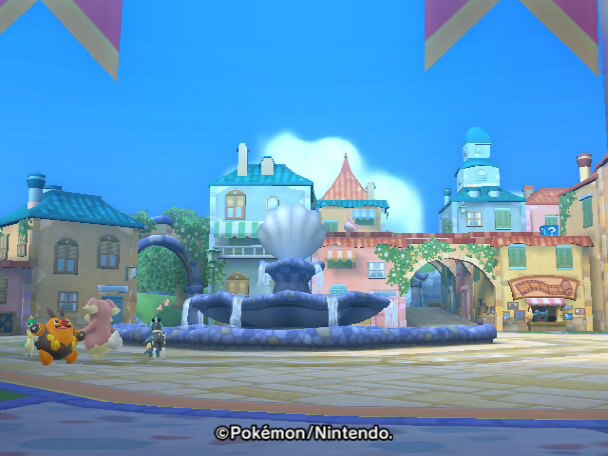
| Cove Area | Samurott | Seasong Beach, Cove Town (plus the Lighthouse 2D zone) | Cake Zone (Cofagrigus) |
| Arbor Area | Queen Serperior | Windmill Way, Verdant Court (plus the Stump 2D zone) | Dance Zone (Chandelure) |
| Crag Area | Emboar | Rockridge Fort, Colosseum (plus the Cave 2D zone) | Power Zone (Gothitelle, Haxorus) |
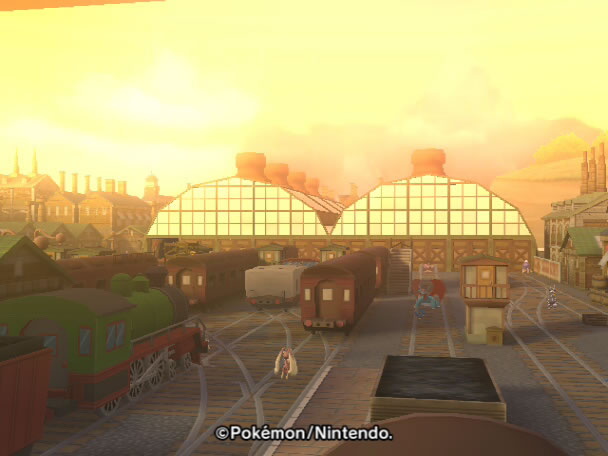
| Tech Area | Conkeldurr (formerly Honchkrow) | Train Depot, Unawarehouse, Scientorium (plus the Lab 2D zone) | Flight Zone (Sigilyph) |
| Arcane Area | None | Lakeshore (Landorus shrine, Reshiram dais) | None (post-game area above the Arbor Area) |
The PokéPark and its Area Keepers
The PokéPark: It’s a park where a variety of Pokémon live. Although the names are similar, this PokéPark is different from the previous game’s PokéPark. It is indeed situated in a new area and gives access to new areas. These areas are:

Cove Area: Samurott
An area located near the coastline and supervised by the Area Keeper Samurott. It is the first area Pikachu visits, and where the adventure starts. The Cove Area has two different locations: Seasong Beach and Cove Town.
Found: Seasong Beach, in front of the lighthouse
The Cove Area holds Cove Town, the hub where every upgrade trainer lives, and the poster on Seasong Beach that leads to the Cake Zone. A Krokorok is the one who opens that first Poster Portal.
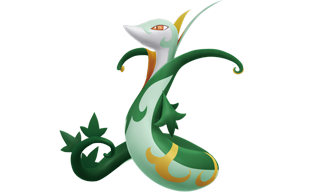
Arbor Area: Queen Serperior
A grassy land filled with trees and watched over by the Area Keeper Queen Serperior. Many Grass-type Pokémon inhabit the area. Two locations are available in this area: Windmill Way and Verdant Court.
Found: Verdant Court
The Arbor Area’s queen holds court at Verdant Court and recalls the legend of the Dark Vortex when Snivy joins. After the story, she tells the team that a dais in the Arcane Area is needed to contact Reshiram.

Crag Area: Emboar
A rocky and mountainous area where strong Pokémon train, governed by the Area Keeper Emboar. It is also the place where the Battle Tournament takes place. There are two different locations within the area: Rockridge Fort and the Colosseum.
Found: The Colosseum, where he runs the Battle Tournament
Before letting the team enter the tournament, Emboar makes them smash a rock with Tepig’s Flame Charge and fetch the Bravery Beard from the cave. Haxorus knocks him out in the first round.

Tech Area: Conkeldurr
A rather modern area filled with warehouses and trains, and led by the Area Keeper Conkeldurr. There are three locations within the area: the Train Depot, the Unawarehouse and the Scientorium.
Found: By the Train Depot
Conkeldurr took over the Tech Area from Honchkrow. He gets the team to help repair the broken rail bridge, then points them to the warehouse that leads to the Scientorium. He also turns up in the Battle Tournament’s eighth round.
- The Arcane Area: It’s located above the Arbor Area and can only be accessed after finishing the game’s story. It is the only area without an Area Keeper. Its one location is the Lakeshore.





The Wish Park and its guardians
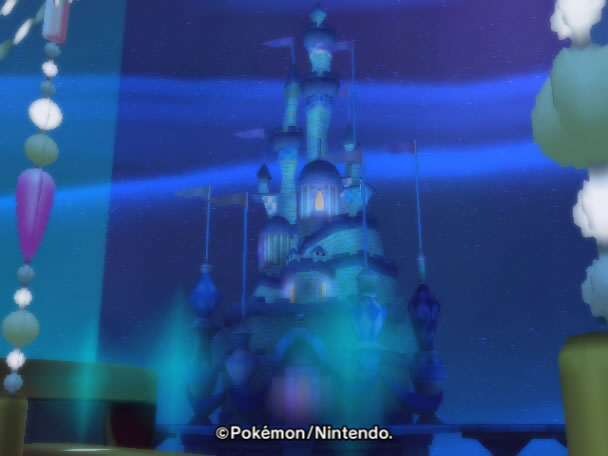
The Wish Park: A shady park where Pokémon are trapped using different attractions, hosted by Darkrai and his followers. The park has four different areas, each secured by a guardian and linked to the Wish Palace. These areas are:

Cake Zone: Cofagrigus
The Wish Park area connected to the Cove Area, where the player can take part in the Cake Contraption attraction. It is guarded by Cofagrigus.
Wish Bell: frees the Cove Area’s Pokémon
The first guardian. Beating Cofagrigus opens the way to the Arbor Area, and Dewott and Blitzle then start offering upgrades in Cove Town.
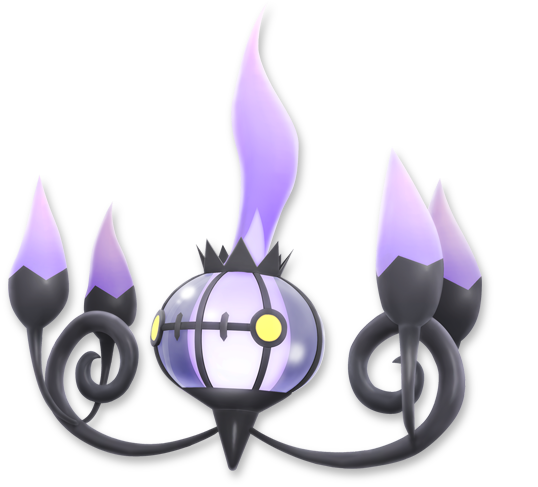
Dance Zone: Chandelure
It is connected to the Arbor Area and is the location of the Dance Inferno attraction. It is led by Chandelure.
Wish Bell: frees the Arbor Area’s Pokémon
Chandelure hosts the rhythm attraction, in which you copy Lopunny’s moves. Once Chandelure is beaten, Servine and Pignite start training Snivy and Tepig in Cove Town.
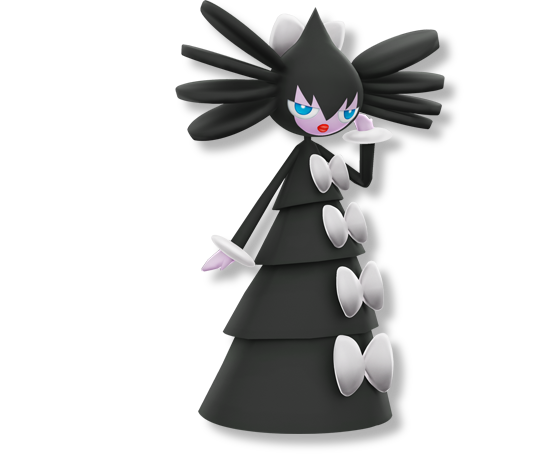
Power Zone: Gothitelle
Here, the Power Bash attraction can be played. The area is connected to the Crag Area and guarded by Gothitelle, who hosts Power Bash during the story, and by Haxorus, who takes over afterwards.
Wish Bell: frees Victini and the Crag Area’s Pokémon
Darkrai’s loyal deputy. She lets the team ring the Dance Zone’s Wish Bell even though she knows what it means for her master’s plans, later takes Piplup hostage, and is overjoyed when Darkrai returns from the void.
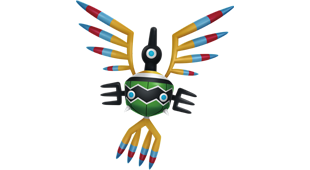
Flight Zone: Sigilyph
Connected to the Tech Area through the Scientorium’s Poster Portal and ruled by Sigilyph, the Flight Zone is the last of the four Wish Park areas and where the last Wish Bell will be rung.
Wish Bell: the last one, which merges the four zones and opens the Wish Palace
Sigilyph guards the final attraction, a three-lap race through space, reached through the Poster Portal that Reuniclus repairs in the Scientorium.

Wish Palace: Darkrai
Once all the Wish Bells in the four Wish Park areas are rung, the way to the Wish Palace is unlocked. It is a fancy palace where Darkrai resides.
Battle: in two phases – the first is easy, then Darkrai powers up and can only be hurt by projectile moves
Darkrai erases Pikachu from his friends’ memories and traps him in a nightmare. After the story, he can be befriended once Reshiram and Zekrom have been.
Haxorus: Breaks up the first round of the Battle Tournament, knocks out Emboar and escapes with Victini through a Poster Portal hidden in the arena wall. The team battles him in the Power Zone of Wish Park. After the story he takes over Power Bash from Gothitelle, and he is No. 190 on the friend list.
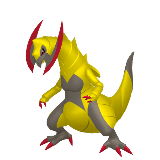 HaxorusDarkrai’s enforcer, No. 190
Side zones and the Battle Tournament

The Attractions
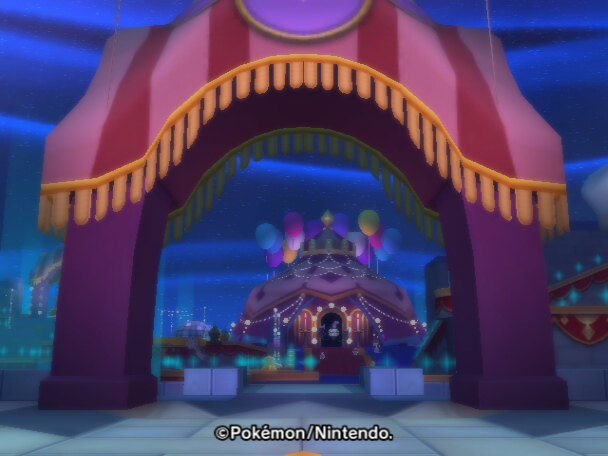
They are challenges that the player must take on in order to advance through the game. They are only found in the four areas of the Wish Park, with each area having its own attraction:

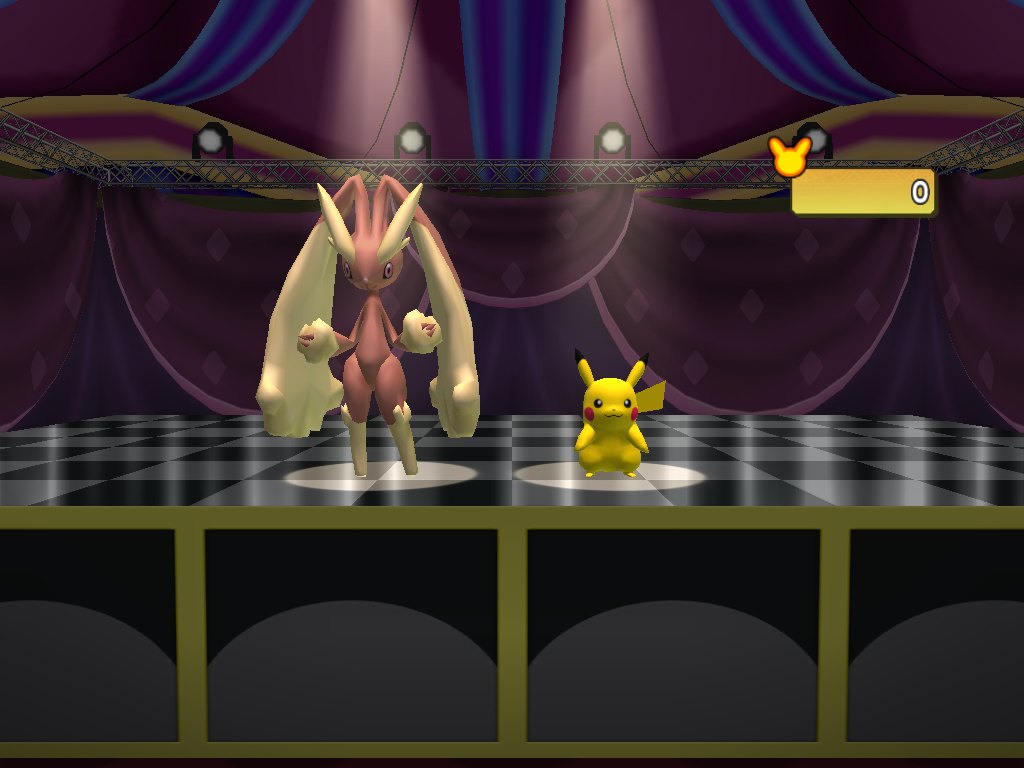


The attractions at a glance
| Attraction | Wish Park zone | Linked area | Host | Target in the story |
|---|---|---|---|---|
| Cake Contraption | Cake Zone | Cove Area | Cofagrigus | Stage one only, the first time |
| Dance Inferno | Dance Zone | Arbor Area | Chandelure, with Lopunny leading the dance | 25,000 points |
| Power Bash | Power Zone | Crag Area | Gothitelle; Haxorus after the story | 10,000 points |
| Flight of Fancy | Flight Zone | Tech Area, via the Scientorium | Sigilyph | 15,000 points |
During the story, each attraction has a score to beat before its Wish Bell can be rung. Once the story is over they become harmless fun: every attraction you’ve cleared joins the multiplayer menu, and getting the top score in all four earns Kecleon’s Attraction Elite award.



Skill Games
These are mainly a sort of mini-game that allows the player to befriend other Pokémon. The befriended Pokémon are needed when the player is trying to open an area’s Poster Portal to its counterpart in the Wish Park. The more befriended Pokémon the player has in the area, the easier the task.
- Chase: It’s a tag game where the player has to chase and capture the other Pokémon. Its mechanics are somewhat adjusted compared to the last game. The chased Pokémon can only be stunned by attacks under certain circumstances. The player can also perform special Dash moves, by shaking the Wii Remote, which may make it easier to reach the opponent. The chased Pokémon will still try to hinder the player by attacking them or setting traps.
- Battle: A battle mini-game where the player must simply reduce the opponent Pokémon’s health points as low as needed. The four Pokémon friends can be used to battle, but they cannot be switched once the battle starts. Yet, a befriended Pokémon can join the battle and aid the player, though that can only be done once.
- Quiz: A very simple quiz game where the player needs to answer all the questions correctly to befriend the Pokémon. A failed quiz can be tried again.
Extra Features
The game does offer a few extra features that enhance the fun experience and may further facilitate the story mode:
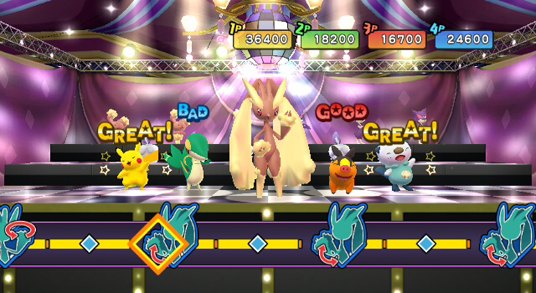
- The Multiplayer Mode: Unlike the previous game, PokéPark 2: Wonders Beyond offers the possibility to play the attractions with up to four players. Each player uses Pikachu or one of his three friends, and they compete against each other for the highest score. An attraction joins the multiplayer menu once it has been cleared in the story.
- Pokémon Upgrades: Similarly to PokéPark Wii: Pikachu’s Adventure, the player can upgrade their Pokémon’s stats and moves. These upgrades are bought with berries from different Pokémon located in Cove Town, in the Cove Area. The upgrades are as follows:
- Pikachu’s Moves Upgrades: A Raichu in Cove Town will power up Pikachu’s moves up to three times each.
- Oshawott’s Moves Upgrades: A Dewott found in Cove Town will power up the moves of Oshawott up to three times.
- Snivy’s Moves Upgrades: Snivy’s moves can also be powered up to a maximum of three times by a Servine in Cove Town.
- Tepig’s Moves Upgrades: As for Tepig, he too can get his skills powered up three times by a Pignite found in Cove Town.
- Dash Upgrade: The Dash ability can be powered up twice, for each of the four Pokémon, with the help of a Blitzle.
- Strength Upgrade: Pikachu and his friends’ health points can be improved three times with Audino’s assistance.
Upgrade prices
| Trainer | For | Powers up | Cost per level | Available |
|---|---|---|---|---|
| Raichu | Pikachu | Thunderbolt, Iron Tail, dash attack; 3 levels each | 100 / 500 / 1,000 berries | From the start |
| Dewott | Oshawott | Water Gun, Razor Shell, dash attack; 3 levels each | 100 / 500 / 1,000 berries | After Cofagrigus |
| Servine | Snivy | Leaf Storm, Leaf Tornado, dash attack; 3 levels each | 100 / 500 / 1,000 berries | After Chandelure |
| Pignite | Tepig | Flamethrower, Heat Crash, dash attack; 3 levels each | 100 / 500 / 1,000 berries | After Chandelure |
| Blitzle | All four Pals | Dash; 2 levels | 200 / 750 berries | After Cofagrigus |
| Audino | All four Pals | Strength (health); 3 levels | 100 / 500 / 1,000 berries | From the start |
Collecting and awards
Regional Variations
Japan had PokéPark 2 more than three months before North America, under a different subtitle, and a few things changed along the way:
- Titles differ by language: PokéPark 2: Beyond the World in Japan, Wonders Beyond in English, Die Dimension der Wünsche in German, Le Monde des Vœux in French, Il Mondo dei Desideri in Italian and Un mundo de ilusiones in European Spanish.
- The Pokémon Company published the game in Japan, with Nintendo as distributor; Nintendo published it everywhere else.
- The Japanese attraction names are Sweets Factory (Cake Contraption), Gorgeous Dancing (Dance Inferno), Slash Fight (Power Bash) and Wonder Flight (Flight of Fancy).
- Japanese area names differ too: Port Area (Cove), Flora Area (Arbor), Rock Area (Crag), Scrap Area (Tech) and Arcana Area. Cove Town is Minato-machi, literally ‘Port Town’.
- Score counters are formatted by region: no thousands separator in Japanese, a comma in English, a full stop in Italian and a space elsewhere. Player icons also put the ‘P’ after the number in Japanese and before it elsewhere.
- The Japanese attraction judging graphics (Good, Great, Perfect and so on) are more decorated than the simplified English ones.
- The Japanese release has 1,024 voice files against 992 in the English version.
Left in the data
- Five test maps survive in the game files, among them an early version of the Battle Tournament arena with an oversized skybox. One test map has a Mankey that can be knocked around but not spoken to.
- Textures for a photo studio in Cove Town show places such as ‘Serperior’s Peak’ and the Seasong Beach lighthouse in pictures that never appear in the finished game.
- An unused Drifblim Stop sign texture, partly carried over from the first PokéPark, is still on the disc, along with an untextured platform probably meant for the Darkrai battle.
- Unused audio includes an alternative Chase theme with a flute lead, an eight-second silent track and English voice clips such as an angry Audino, though Audino never gets angry in the game.
- Place-name text exists for Wish Park’s individual sub-areas but is never shown, probably because there are no loading points between them.
Videos & media
Check out these PokéPark 2: Wonders Beyond videos, including the launch trailer, one of the Pokémon-specific trailers (Oshawott’s) and the game’s intro/opening video.
The official launch trailer.
The ‘all about Oshawott’ trailer… you have to see it just for the music. They did these for Tepig, Snivy and Pikachu too. Check them out on our channel.
The opening / intro video, showing the premise for PokéPark 2’s story.
Trivia & facts
- There’s a Zekrom altar in the Wish Palace, which might lead some fans to question whether there’s a dark side to the game, with one of the two dragons actually being the hidden mastermind behind the Wish Park incident. That’s only a fan theory, though: in the game, the altar is simply the way to reach Zekrom after the story.
- The game is known as PokéPark 2: Beyond the World in Japan.
Further trivia
- PokéPark 2 was the last Pokémon game released on the Wii, and the only Wii Pokémon game from Generation V. All the others belong to Generation IV.
- The initials of the Japanese subtitle, Beyond the World, spell BW, a nod to Pokémon Black and White, and the logo prints the two letters.
- The launch into space in Flight of Fancy recalls the Launch Stars of Super Mario Galaxy, and one of its planets looks like one from that game.
Legacy
What came after
- Japanese release (also Hong Kong and Taiwan) – 12 November 2011. Published by The Pokémon Company at 5,800 yen. It was the last Pokémon game released for the Wii.
- North American release – 27 February 2012. Published by Nintendo as PokéPark 2: Wonders Beyond.
- European release – 23 March 2012. Localised as Le Monde des Vœux, Die Dimension der Wünsche, Il Mondo dei Desideri and Un mundo de ilusiones.
- Australian release – 29 March 2012. Rated G by the ACB.
- Wii U launch (North America) – 18 November 2012. The Wii U’s Wii mode plays the original disc, which is still the only way to run the game on newer official hardware.
- Series status – As of October 2026. No further PokéPark game has followed, and neither game has been re-released on Wii U eShop, Nintendo Switch or Nintendo Switch Online.
Where to play it today
As of October 2026, the only official way to play PokéPark 2 is the original Wii disc, on a Wii or on a Wii U in Wii mode. It was never sold as a download, never appeared on the Wii U eShop and isn’t part of Nintendo Switch Online. For the four-player attractions, each player needs a Wii Remote.
How it was made
PokéPark 2 was made by Creatures Inc., which also developed the first PokéPark, and was directed by Katsuyoshi Irie. Hirokazu Tanaka, Hiroyuki Jinnai, Hiroaki Tsuru and Toshio Miyahara are credited as producers, and the music was shared between Ayumu Ito, Takuto Kitsuta, Kenichi Koyano and Shigerou Yoshida. The game was first shown in Weekly Famitsu and formally announced in Japan on 15 September 2011 as a winter release. The pitch was Pikachu teaming up with the three Unova starters, plus a second world tied to the park by legend. In early October the release date was set as 12 November and the price as 5,800 yen. The files still carry the working title ‘PokePark Wii2’, along with test maps and placeholder art. In Japan the TV adverts were changed every Thursday, and each new one went up on the official site the next day.
Sales & reviews
Sales figures
Compared to the previous game, PokéPark 2: Wonders Beyond didn’t perform quite as well in terms of sales. The sales built up over time, with the game selling an estimated 270 thousand copies in Japan, 190 thousand in Europe and 260 thousand in North America. Overall, the game is estimated to have sold 0.76 million copies, which is deemed to be quite average compared to the rest of the Pokémon spin-off games.
Those regional figures are estimates from a sales-tracking site: neither Nintendo nor The Pokémon Company has published a lifetime total. The firmest numbers come from Media Create’s weekly charts in Japan, where the game, released at 5,800 yen, had sold 120,189 copies by 11 December 2011. It added another 43,829 the following week, finishing tenth, which took it to 164,018 copies by 18 December 2011, six weeks after launch.
- 164,018sold in Japan by 18 December 2011 (Media Create)
- 0.76mestimated worldwide
- 60Metacritic, from 18 critics
- 194Pokémon on the friend list
Review scores
PokéPark 2: Wonders Beyond received mixed reviews, scoring average marks on the major review websites. Let’s take a look at these reviews:
- Audrey Drake from IGN was impressed by the graphics and the Pokémon 3D models, yet thought the game had “too much repetition and too little depth”, grading it 6.5/10, the equivalent of “Okay” on the IGN scale.
- GameSpot’s staff didn’t review the game, but its members gave it a user score of 7.8/10 over 21 user reviews.
- On GameRankings (which closed in 2019), PokéPark 2: Wonders Beyond earned a score of 64.92%, while it scored 60 on Metacritic, from 18 critics.
- As the scores portray it, the game had its appeal, yet it’s rather advised for young Pokémon fans and the hardcore ones, as it can get repetitive.
Critics were split, much as they had been over the first PokéPark. Most liked the bright, well-animated Pokémon and the cheerful music, and IGN noted how much polish had gone into it. Nintendo Life liked that it is simple but fun and said Pikachu’s fans would find it ‘super effective’. The complaints were about depth. IGN found it shallow, Nintendo Power called the gameplay flawed and told players wanting depth to lower their expectations, and Official Nintendo Magazine thought it too similar to the first game to be essential. Gamereactor wished Nintendo had made a full Pokémon adventure for Wii instead of another minigame collection. Several reviewers felt that younger players and committed fans would get the most out of it.
Media & artwork
- Official artwork gallery from PokéPark 2: Wonders Beyond – artwork of prominent Pokémon models
- Box art from PokéPark 2: Wonders Beyond, including regional variations
- Screenshots from PokéPark 2: Wonders Beyond
Further reading
More Wii and PokéPark links on the site: