  |
|
| Titles | Pokémon Battle Revolution ポケモンバトルレボリューション (Pokémon Batoru Reboryūshon) |
| Platform | Wii (Nintendo DS as a controller in DS Battle Mode; Nintendo Wi-Fi Connection) |
| Developer | Genius Sonority |
| Publisher | Nintendo |
| Director | Manabu Yamana |
| Producers | Hiroyuki Jinnai · Hiroaki Tsuru |
| Music | Tsukasa Tawada |
| Players | 1–4 (up to four in DS Battle Mode); one-on-one online |
| Genre | Pokémon battle game (turn-based strategy) |
| Generation | Generation IV |
| Colosseums | 11, with 6 Colosseum Leaders and 4 Colosseum Masters |
| Pokémon | 493 (Generations I–IV, copied from the DS games) |
| Released | 14 December 2006 (Japan) · 25 June 2007 (North America) · 22 November 2007 (Australia) · 7 December 2007 (Europe) |
| Re-releases | None (no Virtual Console, Wii U eShop or Nintendo Switch Online release) |
| Rating | ESRB E · PEGI 7+ · CERO A · ACB G |
| Predecessor | Pokémon XD: Gale of Darkness (GameCube, 2005) |
| Successor | No direct successor – My Pokémon Ranch (2008) was the next Pokémon game on Wii |
| Sales | About 1.2 million (352,123 in Japan, Famitsu) |
Overview
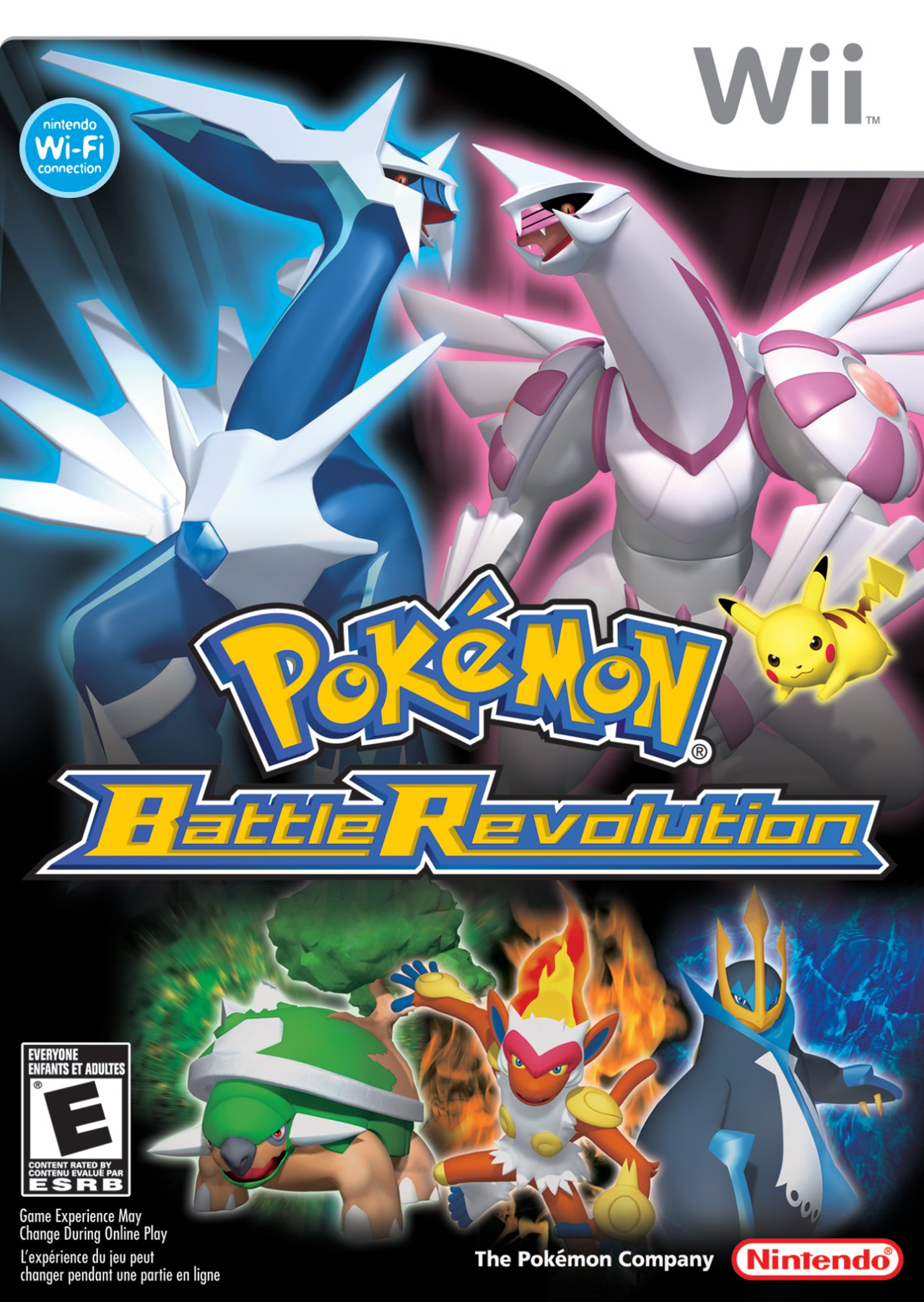
 It’s the first Pokémon game to be released on the Nintendo Wii. Pokémon Battle Revolution can be linked to fourth-generation Pokémon games on the Nintendo DS, like Pokémon Diamond and Pokémon Pearl (and later Platinum, HeartGold and SoulSilver), allowing the player to copy their Pokémon from the DS games onto the Wii and unlocking fun features, such as online Pokémon battles against friends or strangers, and turning the Nintendo DS into a controller that can be used to navigate through the game.
Pokémon Battle Revolution can be seen as a spiritual successor to the Pokémon Colosseum and Pokémon XD: Gale of Darkness series, as it was made by the same studio, Genius Sonority, and its gameplay highly resembles theirs. In fact, the game takes place on Pokétopia, an island battle theme park, where the player can take part in different Colosseums, each with its own rules and features.
The Pokémon in it are also portrayed the same way as in the mentioned Pokémon series, as they come in marvellous 3D models and with a wide variety of animations. What’s different about Pokémon Battle Revolution is that it doesn’t have any specific story like Colosseum and XD, nor does it offer the mini-games of the Pokémon Stadium games. The Pokémon’s animations are also way better, since the animation for each skill or move can vary from one Pokémon to another.
Additionally, both the attacking and defending Pokémon can be seen simultaneously within some attack animations, instead of cut scenes of the attacker’s animation alone, followed by the attacked Pokémon’s animation. The game also excels in the sound department, featuring a wide range of music and the famous announcer from the previous games, but now with a wider variety of more interesting comments. Furthermore, Pokémon Battle Revolution allows the player to customise their character. Rather than choosing a gender at the start of the game, the player picks one of two Rental Passes (the Blue Rental Pass with Nate or the Red Rental Pass with Cyndy); their own Trainer is then created from six character styles, three male and three female, and customised later on with different clothing items won in the Colosseums or bought from the game’s Shop.
BRING YOUR BATTLE TO THE BIG SCREEN!
Grab a Battle Pass, customise your Trainer and battle your way to the rank of Pokétopia Master! Or, battle against up to three friends with Pokémon Diamond or Pokémon Pearl using your Nintendo DS system as a controller!
— Official description
Quick Answers
The questions people ask about Pokémon Battle Revolution, answered first and explained further down the page.
How do you get the Pikachu that knows Surf?
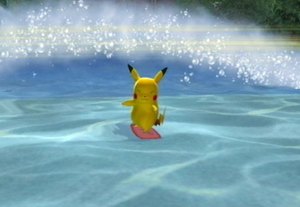
Win the Pokétopia Championship at Stargazer Colosseum by beating Mysterial for the first time. The Secret Gift then appears in the Shop’s Mystery Gift section, ready to send to a Generation IV DS game. It is a level 10 female Pikachu holding a Light Ball, knowing Volt Tackle, Surf, Tail Whip and Thunder Wave. More →
Can you still play Pokémon Battle Revolution online?
No. Random and friend battles both ran through Nintendo Wi-Fi Connection, which Nintendo switched off on 20 May 2014. Everything offline still works, though: all ten Colosseum challenges, Free Battles, copying Pokémon from a DS cartridge and DS Battle Mode, which links Nintendo DS systems to the Wii locally rather than over the internet. More →
How many Colosseums are there, and how do you unlock Level 50 battles?
There are eleven: ten used for Colosseum challenges and Lagoon Colosseum, which only hosts DS and Wi-Fi battles. Every challenge starts on the Lv. 30 Open rule. Winning the Pokétopia Championship at Stargazer Colosseum opens the Lv. 50 All rule everywhere, plus the post-game Trade, Little, Survival and Masters battles. More →
Is Pokémon Battle Revolution on Nintendo Switch Online?
No. As of October 2026 the game has never been re-released in any form: there was no Virtual Console or Wii U eShop version, and Nintendo Switch Online does not offer Wii games. The only official way to play is the original Wii disc, on a Wii or in a Wii U’s Wii mode. More →
Do the Electivire and Magmortar codes work in every version?
No. They only work in Western copies, and each language version has its own pair of case-sensitive codes, typed into Self-Introduction on the Profile screen. The American codes appeared on the official Pokémon site in September and October 2007, the European ones in February 2008. The Japanese release only offers the Pikachu gift. More →
Can I send Pokémon back to Diamond and Pearl after battling?
There is nothing to send back. Battle Revolution copies Pokémon from your DS game’s storage onto a Custom Pass and the originals never leave the cartridge, so Wii battles change nothing on the DS. The only things that travel from the Wii to the DS are Mystery Gift items and the three gift Pokémon. More →
Pokémon

All the Pokémon up to the fourth generation are featured within the game (493 in total) and can be copied over from Pokémon Diamond and Pokémon Pearl, and later from Platinum, HeartGold and SoulSilver. The player starts out with a Rental Pass of level 50 Pokémon, and as they progress through the game, more Rental Passes get unlocked.
Starter Pokémon
At the start of the game, the player gets to choose one of two Rental Passes: the Blue Rental Pass, held by the Young Boy Nate, or the Red Rental Pass, held by the Young Girl Cyndy. Each of the two passes has a different starter Pokémon team, all at level 50, and the pass the player doesn’t pick can be won later at Gateway Colosseum:
 PrinplupBlue Rental Pass
 MonfernoBlue Rental Pass
 GrotleBlue Rental Pass
 GabiteBlue Rental Pass
 StaraviaBlue Rental Pass
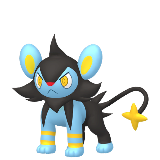 LuxioBlue Rental Pass
 WartortleRed Rental Pass
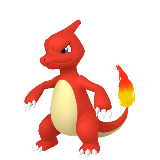 CharmeleonRed Rental Pass
 IvysaurRed Rental Pass
 DragonairRed Rental Pass
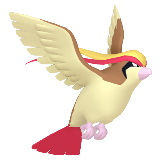 PidgeotRed Rental Pass
 RhyhornRed Rental Pass
Gift Pokémon
Three bonus Pokémon can be unlocked and sent to the fourth-generation games. A special Pikachu with the move Surf can be unlocked after beating Pokétopia Master Mysterial for the first time: it’s a level 10 female Pikachu holding a Light Ball and knowing Volt Tackle, Surf, Tail Whip and Thunder Wave. The other two are Electivire and Magmortar, which are only in the Western versions. Check out the codes on how to unlock them in the tables below:
 PikachuSecret Gift
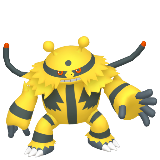 ElectivireShocking Secret Gift
 MagmortarHeated Secret Gift
Electivire: Entering the following codes in the Profile menu’s Self-Introduction option unlocks Electivire, as the Shocking Secret Gift, along with the Gold Pass design.
Magmortar: Entering the following codes in Self-Introduction, in the Profile menu, unlocks Magmortar, as the Heated Secret Gift, along with the Silver Pass design.
The codes only work in Western copies of the game, each language version has its own pair, and they are case-sensitive, so type them exactly as shown:
Electivire codes
| Version | Code |
|---|---|
| English (Europe) | tko3-9jwp-34kl |
| French | jk4i-df87-dsf9 |
| Italian | t4oi-6j8d-sb5r |
| German | 0f9-ud0g-ughj |
| Spanish | 04in-1ynj-24fv |
| English (North America) | BA16-X4SH-E2AT |
Magmortar codes
| Version | Code |
|---|---|
| English (Europe) | jl49-05kn-odnv |
| French | 13io-h4rf-1tpa |
| Italian | 97ea-78hl-jrgu |
| German | kre9-ef90-5hgn |
| Spanish | kn34-q0uc-1mbx |
| English (North America) | B416-X4HT-VTWF |
Notable Pokémon
There is nothing to catch in Battle Revolution. Sinnoh Pokémon received new models and animations, while many older species reused or refined work from Stadium, Colosseum and XD. These are some of the Pokémon with a special part to play:
- Pikachu#025
- Electivire#466
- Magmortar#467
 Kyogre#382
 Groudon#383
 Pachirisu#417
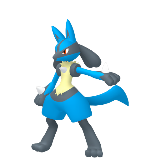 Lucario#448
 Hippopotas#449
 Rotom#479
 Arceus#493
- Pikachu – Secret Gift after beating Mysterial: level 10, Light Ball, and a Surf that rides a surfboard.
- Electivire – Shocking Secret Gift from a Western-only code; level 50, Adamant, holding a Magnet. Voldon’s costume.
- Magmortar – Heated Secret Gift from a Western-only code; level 50, Modest, holding Charcoal.
- Kyogre – Marina’s costume Pokémon; she starts sending one out from Rank 7.
- Groudon – Terrell dresses as Groudon but never uses one in battle.
- Pachirisu – Taylor’s lead Pokémon; giant Pachirisu balloons tower over Main Street Colosseum.
- Lucario – Dusty’s costume Pokémon; his team includes its pre-evolution, Riolu.
- Hippopotas – Its early name in the game’s cry files, Zimezou, suggests it began life as an elephant.
- Rotom – Rotom forms from Platinum onward revert to the normal form when copied to the Wii.
- Arceus – Can be copied from a DS game; Shiny models for all 18 forms sit in the data.
Battle Passes & Rental Passes

Everything in Pokétopia runs through a Battle Pass: a Trainer card holding a party of Pokémon, your character’s look, a title and a card design. There are two kinds. Rental Passes come ready-made with level 50 Pokémon owned by Pokétopia, while Custom Passes are built from Pokémon copied out of a Generation IV DS game. Passes can be saved to a Wii Remote to take round to a friend’s house, and swapped as Friend Passes after online battles. Six Rental Passes exist, all unlocked through Gateway Colosseum.
The two passes offered at the start are Rental Passes, Young Boy Nate’s Blue pass and Young Girl Cyndy’s Red pass, while the player’s own Trainer, built from one of six character styles, lives on a Custom Pass.
- 6Rental Passes, every Pokémon at level 50
- 34Custom Pass designs (32 in Japan)
- 6Trainer styles, three male and three female
- 2code-only designs: the Gold and Silver Passes
The six Rental Passes
Every Rental Pass, in the order the passes become available. All of their Pokémon are level 50:
| Pass | Trainer | Pokémon | How to get it |
|---|---|---|---|
| Blue Rental Pass | Nate Young Boy · Novice |
Grotle, Monferno, Prinplup, Luxio, Gabite, Staravia | One of the two starting passes |
| Red Rental Pass | Cyndy Young Girl · Sprout Trainer |
Ivysaur, Charmeleon, Wartortle, Dragonair, Rhyhorn, Pidgeot | The other starting pass; whichever one you skip can be won later at Gateway Colosseum |
| Purple Rental Pass | Tommy Cool Boy · Beginning Trainer |
Sandslash, Haunter, Metang, Bibarel, Rotom, Mightyena | Borrowed at Gateway after your first Waterfall Colosseum clear, and yours once you win a Rental Battle with it |
| Green Rental Pass | Daisy Cool Girl · New Star |
Beautifly, Golbat, Bellossom, Sneasel, Lopunny, Lumineon | Like the Purple pass: borrowed after Waterfall Colosseum, kept after a Gateway Rental Battle win |
| Gray Rental Pass | Joel Muscle Man · Rookie |
Machoke, Sudowoodo, Piloswine, Hypno, Camerupt, Muk | Reaches Gateway Colosseum once Sunny Park Colosseum has been cleared |
| Yellow Rental Pass | Natalie Little Girl · Freshwoman |
Seadra, Togetic, Pikachu, Dugtrio, Vespiquen, Cherrim | Arrives at Gateway alongside the Gray pass after Sunny Park is beaten |


Colosseums

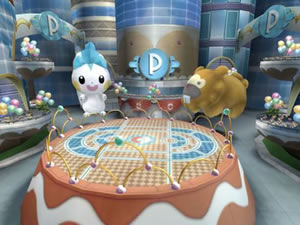
There are 11 Colosseums. Ten of them host challenges under two level rules, Lv. 30 Open and Lv. 50 All (which only opens after the Pokétopia Championship), while the eleventh, Lagoon Colosseum, is only used for DS and Wi-Fi battles. Each Colosseum has a specific battle theme and set of rules. The Colosseums have six Colosseum Leaders and four Colosseum Masters. The Colosseum Leaders wear Pokémon costumes, which the player can win by clearing their Lv. 50 All final. The Colosseums are as follows:
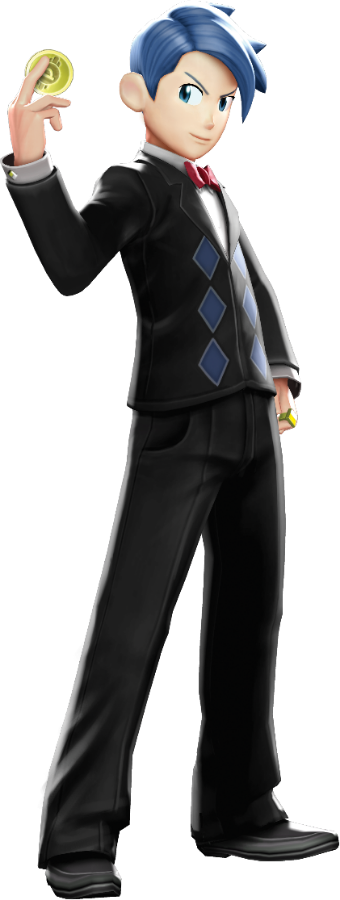
Colosseum Master: Joe
Gateway Colosseum: It’s the bright Colosseum at Pokétopia’s entrance, shining with bright lights and led by the Colosseum Master Joe. Its battles are mainly done at night and its theme is “Rental Battle”. The player has to use one of the Rental Passes to participate, either the Blue Rental Pass or the Red Rental Pass. More Rental Passes will be unlocked as the game progresses. Any Rental Pass used to win Gateway Colosseum will be automatically unlocked in the other Colosseums. Upon finishing the game and beating the Stargazer Colosseum, “Trade Battle” becomes Gateway Colosseum’s new theme. The player still has to use a Rental Pass, but they can now trade Pokémon with the Trainers they’ve beaten. Only the Pokémon that were used in the battles can be traded. Beating the Gateway Colosseum’s Lv. 30 Open unlocks the Bronze Badge, and beating its Lv. 50 All unlocks 37 new Shop items.
Team: Spinda, Drifloon, Mudkip, Torchic, Treecko, Delibird (Final, all level 50)
Rewards – Lv. 30 Open: Bronze Badge and a Gateway Colosseum Battle Pass design; Lv. 50 All: 37 pieces of gear. Every Pokémon in his arena is level 50, and Gateway is optional early on.

Colosseum Leader: Taylor
Main Street Colosseum: A Colosseum that’s located in the middle of Pokétopia’s main street and led by the Colosseum Leader Taylor (wearing a Pachirisu costume, which can be won by beating her Lv. 50 All final). The battles are mainly done in the daytime and follow the theme “Knockout Battle”. The theme doesn’t actually force any restrictions or rules on the player, as it’s the standard battle theme, where the player simply has to defeat the opponent’s Pokémon. Beating Main Street Colosseum’s Lv. 30 Open unlocks the Pikachu Badge, and beating its Lv. 50 All unlocks 24 new Shop items.
Team: Pachirisu, Luxio, Luvdisc, Jigglypuff, Kirlia, Bonsly (Final, Lv. 30 Open)
Rewards – Lv. 30 Open: Pikachu Badge and a Main Street Colosseum Battle Pass design; Lv. 50 All: 24 pieces of gear and her Pachirisu costume. Taylor is Pokétopia’s first Leader; giant Pachirisu and Bidoof balloons flank her arena, and Main Street opens the way to Waterfall Colosseum.
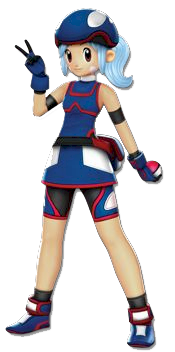
Colosseum Leader: Marina
Waterfall Colosseum: A Colosseum surrounded by the sea and mountains and led by Marina (wearing a Kyogre costume, which can be won by beating her Lv. 50 All final). Its theme is “Team Battle”, where the player has to choose 5 Pokémon to use for battle (6 in Double Battles). The player will face the opponent in one-on-one Pokémon battles, where Pokémon are sent out in the order chosen, can only battle once against each Trainer and can’t be switched. If the player’s Pokémon wins the battle, the player wins that round. The first to win 3 rounds (2 in Double Battles) wins the match. Beating Waterfall Colosseum’s Lv. 30 Open unlocks the Pikachu Facepaint, 350 Poké Coupons and 10 new Shop items, along with 2 new Rental Passes (Purple and Green) for Gateway Colosseum. Beating its Lv. 50 All unlocks 23 new Shop items.
Team: Corsola, Marill, Farfetch’d, Aipom, Wormadam (Sandy Cloak), Poliwhirl (Final, Lv. 30 Open); adds Kyogre from Rank 7
Rewards – Lv. 30 Open: Pikachu Facepaint, Waterfall Battle Pass background, 350 Poké Coupons, 10 pieces of gear and the Purple and Green Rental Passes; Lv. 50 All: 23 pieces of gear and her Kyogre costume.
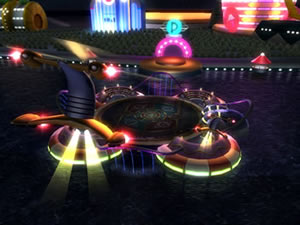

Colosseum Leader: Rosie
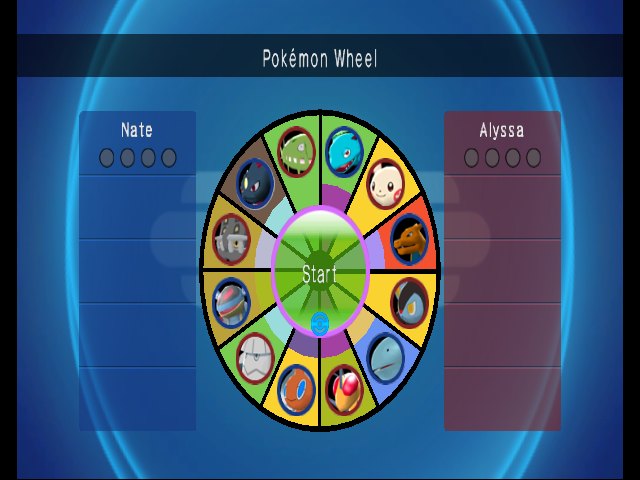
Neon Colosseum: A Colosseum built on a balcony of a casino skyscraper, decorated with many neon lights and led by the Colosseum Leader Rosie (wearing a Roserade costume, which is won by beating her Lv. 50 All final). The Colosseum follows a unique set of rules within its theme “Fortune Battle”. Both the player’s and the opponent’s Poké Balls are put into a special roulette called the Pokémon Wheel. They are then given 4 empty Poké Balls (3 in Single Battles). Shortly after that, the roulette is spun, and each one of them has to throw a Poké Ball into the roulette in turn, until all the Poké Balls are thrown. Whatever Pokémon is hit by the Poké Ball must be used by the thrower, thus allowing the player to use their opponent’s Pokémon and vice versa. It is not advised to use strong custom Pokémon copied from Pokémon Diamond or Pokémon Pearl, as they can end up in the opponent’s team. Beating the Neon Colosseum’s Lv. 30 Open unlocks a pair of Pikachu Gloves and 46 new Shop items. Beating its Lv. 50 All unlocks 24 new Shop items.
Team: Roselia, Sunflora, Skiploom, Weepinbell, Beautifly, Delcatty (Final, Lv. 30 Open)
Rewards – Lv. 30 Open: Pikachu Gloves, Neon Battle Pass background, 46 new Shop items and 325 Poké Coupons; Lv. 50 All: 24 pieces of gear and her Roserade costume. Western versions darkened her skin tone.

Colosseum Leader: Voldon
Crystal Colosseum: An underground Colosseum lit by shiny crystals and led by the Colosseum Leader Voldon (wearing an Electivire outfit, which can be won by beating his Lv. 50 All final). This Colosseum’s battle theme is “Tournament Battle”, putting 16 Trainers against each other in an elimination tournament, where the winner gets to face the Colosseum Leader. Beating the Crystal Colosseum’s Lv. 30 Open will unlock a Pikachu Bag and 9 new Shop items. Beating its Lv. 50 All will unlock 23 Shop items.
Team: Machoke, Onix, Metang, Elekid, Rotom, Carnivine (Final, Lv. 30 Open, Rank 2)
Rewards – Lv. 30 Open: Pikachu Bag, Crystal Battle Pass background, 9 new Shop items and 550 Poké Coupons; Lv. 50 All: 23 pieces of gear and his Electivire costume. Doubles is the default, with Singles opening after a first clear.
Colosseum Master: Sashay
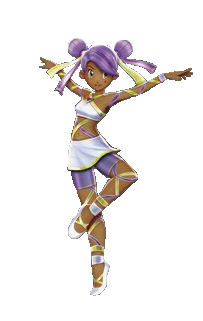
Sunny Park Colosseum: A Colosseum located on a grassy field in a family park, with a fountain and a gondola line, and led by the Colosseum Master Sashay. Its theme is “Knockout Battle”, where the player has to conduct 7 matches with the standard rules. After completing the game, its theme gets changed to “Little Battle”, where only unevolved Pokémon of level 5 or below can be used, and Rental Passes aren’t allowed.
Team: Plusle, Minun, Castform, Cherrim, Lopunny, Shuckle (Final, Lv. 30 Open)
Clearing Sunny Park adds Up-Grade, Iron Ball and TMs for Brick Break, Facade, Skill Swap, Poison Jab and Pluck to the Shop, and brings the Gray and Yellow Rental Passes to Gateway. A locally famous dancer whose fan club fills the bracket, Sashay is the only female Colosseum Master. Western versions darkened her skin tone and gave her longer, purple shorts.



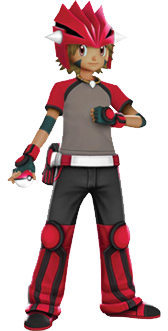
Colosseum Leader: Terrell
Magma Colosseum: A Colosseum built inside a volcano, and led by the Colosseum Leader Terrell (wearing a Groudon costume, which can be won by beating his Lv. 50 All final). The Magma Colosseum follows the “League Battle” theme, where the player with the most points gets to face the Colosseum Leader. Points are earned depending on the number of Pokémon remaining conscious in the player’s team after each match. 5 matches are conducted and then the winner is picked to face Terrell.
Team: Rank 3: Charmeleon, Quilava, Monferno, Grotle, Sandslash, Prinplup; Rank 4: Flareon, Altaria, Houndoom, Torkoal, Flygon, Camerupt
Rewards – Lv. 50 All: his Groudon costume. A lost match does not knock you out, and although he dresses as Groudon, Terrell never uses one.

Colosseum Leader: Dusty
Sunset Colosseum: A Colosseum surrounded by sea and rocky structures, and led by the Colosseum Leader Dusty (wearing a Lucario outfit, which will be earned after beating his Lv. 50 All final). The Colosseum’s theme is “Select Battle”, where both players don’t simply use their own team, but instead pick three Pokémon (four in Double Battles) from a shared list of 12, six drawn from each side. Both players can have similar Pokémon, and even identical teams.
Team: Riolu, Grovyle, Vigoroth, Luxio, Gabite, Combusken (Final, Lv. 30 Open)
Rewards – Lv. 50 All: his Lucario costume. Battles take place at dusk.

Colosseum Master: Kruger
Courtyard Colosseum: A Colosseum located within a gothic castle and led by the Colosseum Master Kruger. It follows the “Knockout Battle” theme and the winner of the battles gets to face Kruger. Upon completing the game, the Courtyard Colosseum’s theme becomes “Survival Battle”, where the player can take on up to 100 battles in a ladder-like mode. Winning a battle will advance the player to the next, while losing one ends the run and makes them start all over; the player can also retire after any win to bank their Poké Coupons.
Team: Gligar, Pupitar, Victreebel, Gabite, Swalot, Hitmontop (Final, Lv. 30 Open)
Clearing Courtyard adds TMs for Ice Beam, Thunderbolt, Psychic, Shadow Ball and Flamethrower to the Shop; Survival Battle pays 3,500 Poké Coupons at 50 rounds and 15,000 at 100, plus Battle Pass designs and the Lansat and Starf Berries. Kruger is lord of the castle whose courtyard holds the arena, and he returns every tenth round of Survival Battle.


Pokétopia Master: Mysterial
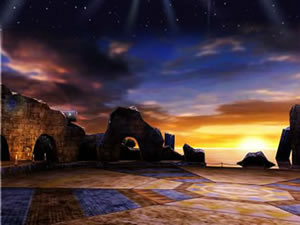
Stargazer Colosseum: The final Colosseum in the game and probably the hardest one to beat. It is built on an asteroid-like rock inside an observatory dome, surrounded by screens projecting outer space images and stars. Its theme is “Pokétopia Championship”, where battles are conducted against the six Colosseum Leaders. Beating them will allow the player to face Pokétopia Master Mysterial. Defeating Mysterial will unlock the “Masters Battle”, where the player faces eight sets of four Trainers, each set ending with one of the Colosseum Masters, including Mysterial himself. Clearing a set unlocks the next, harder one.
Championship team: Golbat, Dragonair, Whiscash, Haunter, Kingler, Chansey (Lv. 30 Open)
Rematch: In Masters Battle he returns as the Master of Masters, with level 50 teams. Set 4 rental team: Cresselia, Garchomp, Lucario, Snorlax, Empoleon, Mesprit; Set 8 rental team: Cresselia, Kyogre, Groudon, Latios, Lugia, Mewtwo; his DS-version teams lead with Palkia, Dialga, Kyogre or Groudon. Masters Battle rewards – Set 1: DeepSeaScale, DeepSeaTooth, Soul Dew, Expert Belt and TMs for Dragon Claw, Earthquake, Overheat and Trick Room; Set 4: Liechi Berry; Set 8: Enigma Berry. Mysterial’s teams change depending on whether you have copied DS Pokémon and from which version; players without any face his rental teams.
Winning the Championship unlocks the Pikachu Secret Gift, the Lv. 50 All rule and the post-game battle types, and the Salac, Ganlon, Petaya and Apicot Berries join the Shop; a first-attempt win adds the Pokétopia Master title and the Crown.. The Championship rematches all six Leaders in turn (Taylor, Marina, Rosie, Voldon, Terrell, then Dusty in the Semifinal) before Mysterial. It has no rank and can only be cleared once.
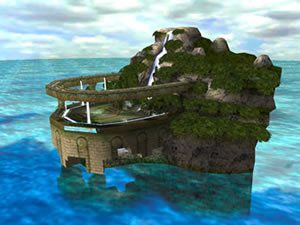
Lagoon Colosseum: A unique Colosseum located in a lagoon, on a small island. It can only be accessed in multiplayer modes, either through Nintendo Wi-Fi Connection battles or DS Battle Mode.


Post-game battles
Winning the Pokétopia Championship changes four Colosseums for good and opens Masters Battle at Stargazer:
Who’s who in Pokétopia
- Anna: Anna staffs the front desk at Pokétopia and serves as the player’s guide throughout the game. She explains how each Colosseum and battle rule works, offers strategy tips, and hands over Poké Coupons, prizes and gifts whenever a challenge is cleared. She never battles; she is the friendly face waiting between Colosseum runs.
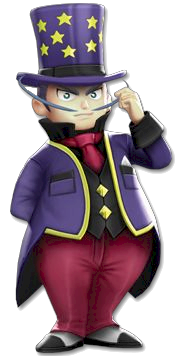
- Mysterial: A portly showman in a purple jacket, red trousers and a star-spangled top hat, with whiskers that curl at the tips, Mysterial is Pokétopia’s Champion and president of its elite Master Class. He battles like a stage magician, conjuring Poké Balls from nowhere and floating them out, and when beaten he vanishes into his hat in a puff of green smoke. He is also the last Trainer shown in the opening movie.
- The Announcer: Every battle is called by a commentator who introduces the Colosseums and reacts to moves, critical hits and knockouts as they happen. Nintendo of America’s launch press release said the battles were narrated by the same announcer heard on the Pokémon television series, and the staff credits list a narrator among the cast. He is the voice of every Colosseum, from the first Main Street match to the final showdown with Mysterial.
Online Functionality
As mentioned earlier, Pokémon Battle Revolution offers online battles: it was the first Pokémon console game with online play, and the first online Wii game in North America and Japan. When a player logs in, they can choose either to battle random people or friends online. Random battles always use the Lv. 50 All rule, and when the battle starts, the player’s Pokémon’s nicknames get reset to the default names and all the messages they added are also reset to default. Once the match is over, the player can offer to swap Friend Passes with their opponent, and if both accept, each gets a copy of the other’s pass. Friends themselves are registered with 12-digit Friend Codes. When battling a friend online, custom rules can be picked, making the matches either more complicated or way simpler. Sadly, the online functionality is no longer available, as Nintendo Wi-Fi Connection was shut down on 20 May 2014.
Shop
Beating Colosseums and progressing through the game earns the player Poké Coupons, the game’s currency, used to purchase various things at the Shop. The Shop offers:
- Character Customisation Gear: Mainly items that change the character’s appearance, such as shirts, trousers, shoes, hats, glasses, gloves, bags, badges, face paints, hair colours and eye colours.
- Mystery Gifts: Mainly items that can be sent to Pokémon Diamond and Pokémon Pearl as Mystery Gifts. These items range from Berries to TMs; check out the lists below, which also show how to unlock each item:
Mystery Gift items
Berries
| Berry | Unlock condition | Price |
|---|---|---|
| Liechi Berry | Finish Set 4 of Masters Battle | 38,400 |
| Enigma Berry | Finish Set 8 of Masters Battle | 38,400 |
| Lansat Berry | Beat 50 opponents in Survival Battle | 38,400 |
| Starf Berry | Beat 100 opponents in Survival Battle | 38,400 |
| Salac Berry | Finish the Stargazer Colosseum | 19,200 |
| Ganlon Berry | Finish the Stargazer Colosseum | 19,200 |
| Apicot Berry | Finish the Stargazer Colosseum | 19,200 |
| Petaya Berry | Finish the Stargazer Colosseum | 19,200 |
 Liechi Berry
 Enigma Berry
 Lansat Berry
 Starf Berry
 Salac Berry
 Ganlon Berry
 Apicot Berry
 Petaya Berry
Held items (some needed for evolution)
| Item | Unlock condition | Price |
|---|---|---|
| Quick Claw | None | 7,200 |
| Choice Specs | None | 7,200 |
| Leftovers | None | 7,200 |
| King’s Rock | None | 7,200 |
| Light Clay | None | 7,200 |
| Dawn Stone | None | 7,200 |
| Dusk Stone | None | 7,200 |
| Shiny Stone | None | 7,200 |
| Wise Glasses | Watch all the battle tutorials | 7,200 |
| Dubious Disc | Finish the Little Battle theme | 12,000 |
| Reaper Cloth | Finish the Little Battle theme | 12,000 |
| Protector | Finish the Little Battle theme | 12,000 |
| Up-Grade | Beat the Sunny Park Colosseum | 9,600 |
| Iron Ball | Beat the Sunny Park Colosseum | 9,600 |
| DeepSeaScale | Finish the first set of Masters Battle | 14,400 |
| DeepSeaTooth | Finish the first set of Masters Battle | 14,400 |
| Expert Belt | Finish the first set of Masters Battle | 7,200 |
| Soul Dew | Finish the first set of Masters Battle | 14,400 |
 Quick Claw
 Choice Specs
 Leftovers
 King’s Rock
 Light Clay
 Dawn Stone
 Dusk Stone
 Shiny Stone
 Wise Glasses
 Dubious Disc
 Reaper Cloth
 Protector
 Up-Grade
 Iron Ball
 DeepSeaScale
 DeepSeaTooth
 Expert Belt
 Soul Dew
Prices are in Poké Coupons.
Technical Machines (TMs)
| TM | Move | Unlock condition |
|---|---|---|
| TM02 | Dragon Claw | Finish the first set of Masters Battle |
| TM05 | Roar | None |
| TM12 | Taunt | None |
| TM13 | Ice Beam | Beat the Courtyard Colosseum |
| TM24 | Thunderbolt | Beat the Courtyard Colosseum |
| TM26 | Earthquake | Finish the first set of Masters Battle |
| TM29 | Psychic | Beat the Courtyard Colosseum |
| TM30 | Shadow Ball | Beat the Courtyard Colosseum |
| TM31 | Brick Break | Beat the Sunny Park Colosseum |
| TM35 | Flamethrower | Beat the Courtyard Colosseum |
| TM42 | Facade | Beat the Sunny Park Colosseum |
| TM48 | Skill Swap | Beat the Sunny Park Colosseum |
| TM50 | Overheat | Finish the first set of Masters Battle |
| TM56 | Fling | None |
| TM59 | Dragon Pulse | Finish the Little Battle theme |
| TM71 | Stone Edge | Finish the Little Battle theme |
| TM78 | Captivate | None |
| TM79 | Dark Pulse | Finish the Little Battle theme |
| TM81 | X-Scissor | Finish the Little Battle theme |
| TM84 | Poison Jab | Beat the Sunny Park Colosseum |
| TM87 | Swagger | None |
| TM88 | Pluck | Beat the Sunny Park Colosseum |
| TM92 | Trick Room | Finish the first set of Masters Battle |
 TM02
 TM05
 TM12
 TM13
 TM24
 TM26
 TM29
 TM30
 TM31
 TM35
 TM42
 TM48
 TM50
 TM56
 TM59
 TM71
 TM78
 TM79
 TM81
 TM84
 TM87
 TM88
 TM92
Special Pokémon
The special Pokémon unlocked can be collected here as gifts:
| Gift name | Pokémon it contains | Details | Unlocked by |
|---|---|---|---|
| Secret Gift | Pikachu | Level 10, female, holding a Light Ball; Volt Tackle, Surf, Tail Whip and Thunder Wave | Beat Mysterial in the Pokétopia Championship |
| Shocking Secret Gift | Electivire | Level 50, Adamant nature, holding a Magnet | Western-only code (see above) |
| Heated Secret Gift | Magmortar | Level 50, Modest nature, holding Charcoal | Western-only code (see above) |
 Pikachu
 Electivire
 Magmortar
Regional Variations
Japan had Battle Revolution six months before North America and a full year before Europe, and the Western releases changed a few things on the way:
- The Electivire and Magmortar Secret Gifts, and the Gold Pass and Silver Pass designs unlocked by the same codes, exist only in Western versions; the Japanese release has just the Pikachu gift.
- The codes are tied to each language version (American English, European English, French, German, Italian and Spanish), so a code from one region does not work in another.
- The Pikachu gift’s Original Trainer details differ by region: ポケトピア with ID 12146 in Japan, PKTOPIA 06257 in North America and PKTOPIA 12077 in Europe.
- Western releases added 16:9 widescreen support and upgraded models for many Kanto, Johto and Hoenn Pokémon that had previously reused older models.
- Rosie’s and Sashay’s skin tones were darkened for the international release, and Sashay’s shorts were lengthened and recoloured purple.
- Western versions have 34 Custom Pass designs (plus three unused ones) against 32 in Japan, and the US release added a skin tone option for Trainers.
Left in the data
- Bronze, White and Black Battle Pass backgrounds are in the data but cannot be obtained in the Western releases.
- An unused announcer line introduces ‘Lagoon Colosseum, Tournament Battle’, suggesting Lagoon was once meant to host single-player rules; a map description and preview image for it also survive.
- An unused music track labelled System04, probably intended for a menu.
- Pokémon cry files keep early names for Sinnoh Pokémon, such as Morigame for Torterra, Ottā for Prinplup, Mukudori for Starly and Zimezou for Hippopotas.
- Shiny versions of all 18 Arceus forms exist, although no Shiny Arceus could be obtained during the game’s lifetime.
Glitches, exploits and oddities
An online block on Legendary Pokémon, an anti-tamper lockout and other oddities:
The ‘exotic’ Pokémon block (July 2007)
On 3 July 2007, eight days after the North American launch, players found that Legendary Pokémon, which the game calls ‘exotic’, were suddenly refused in random online battles. Many took it for a bug, and a Nintendo representative put it down to a technical difficulty; a similar problem hit Diamond and Pearl’s Global Trade Station on the same date. The Darkrai given out at Toys “R” Us events in the US was caught by the block too. Both restrictions were later lifted, and Legendaries stayed usable online until Nintendo Wi-Fi Connection closed.
Anti-tamper lockout
Battle Revolution checks both itself and incoming Pokémon for tampering. If the game data has been modified, it refuses to take Pokémon from a DS cartridge until the Wii save file is deleted by hand. Pokémon that fail its legality checks, such as one with more than 510 total effort values, appear as Eggs and cannot battle. Illegal movesets slip through, possibly because the developers expected later games to widen movepools.
Forms reverting on copy
Battle Revolution was built around Diamond and Pearl, so Pokémon copied from Platinum, HeartGold or SoulSilver do not always arrive as they left. Forms added in those later games, such as Giratina’s Origin Forme and Rotom’s appliance forms, revert to their standard forms on the Wii. A Heat or Wash Rotom therefore fights as an ordinary Electric and Ghost-type Rotom, and Giratina battles in its Altered Forme.
Videos & media
Check out these Pokémon Battle Revolution videos, including the game’s intro, the official trailer, a TV commercial and more.
A Japanese TV commercial.
The unused / beta version of the title screen theme.
The official trailer.
The intro / opening video.
Trivia & facts
- Pokémon Battle Revolution is the first game to make use of Nintendo Wi-Fi Connection on Wii in Japan and North America.
- All the Pokémon on the two starting Rental Passes are evolved, except for Rhyhorn.
- Pidgeot is the only Pokémon on the starting Rental Passes to be a third evolution.
- Arceus’ name is mispronounced by the announcer as “Ar-See-Us” instead of “Ar-Key-Us”.
Further trivia
- The castle behind Courtyard Colosseum is shaped like the head of a Bastiodon, and Courtyard is the only Colosseum with its own natural weather: occasional fog that can be overwritten by other weather.
- Mysterial’s battle theme is an orchestral take on the Gateway Colosseum music and briefly quotes the Orre map theme from Pokémon XD, made by the same studio and sound team.
- Mysterial’s name changes in every language: Mysterio in Japanese, Mystérius in French, Mystikus in German, Cosmo in Italian and Incógnito in Spanish.
- Pikachu cannot learn Surf by normal means in Generation IV, so the Secret Gift Pikachu is special, and Battle Revolution gives it a surfboard animation for the move.
- The 100-round Survival Battle payout of 15,000 Poké Coupons is the largest single coupon reward in the game.
- Famitsu’s 35/40 made it the best-reviewed game in that week’s issue, but Western reviewers mostly scored it 5 or 6 out of 10.
Legacy
What came after
- Japanese release – 14 December 2006. Launched twelve days after the Wii, with Nintendo Wi-Fi Connection support from day one
- North American release – 25 June 2007. Billed by Nintendo of America as the first online Wii game in the Americas and the first Wii game to use a DS as a controller
- US Electivire code released – September 2007. Posted on the official Pokémon games website, Pokemon-Games.com; it also unlocks the Gold Pass design
- US Magmortar code released – 21 October 2007. Revealed on Pokémon.com; it also unlocks the Silver Pass design
- Australian release – 22 November 2007. PAL release, two weeks ahead of Europe
- European release – 7 December 2007. A year after Japan
- European Electivire and Magmortar codes – 22–23 February 2008. Found on Nintendo of Europe’s site ahead of a planned announcement; separate codes for English, French, German, Italian and Spanish versions
- Pokémon World Championships build – 2009. An updated, never-released version with Platinum-style Lucas and Dawn costumes and Platinum support was used at the 2009 Championships
- Nintendo Wi-Fi Connection shut down – 20 May 2014. Ended all online battles and friend matches; offline modes and DS links are unaffected
Where to play it today
Battle Revolution has never been re-released, so an original Wii disc is the only official way to play, on a Wii or in a Wii U’s Wii mode. Online play ended when Nintendo Wi-Fi Connection closed in May 2014, but the Colosseum challenges and Free Battles still work offline, and a Wii paired with a Generation IV DS cartridge can still copy Pokémon over and run DS Battle Mode.
How it was made
Battle Revolution was made by Genius Sonority, the studio behind Pokémon Colosseum and XD: Gale of Darkness. Manabu Yamana directed, Hiroyuki Jinnai and Hiroaki Tsuru produced, Satoru Iwata and Tsunekazu Ishihara were executive producers and Tsukasa Tawada led the music. Iwata announced the game at a Nintendo marketing event in Japan on 7 June 2006, using it to show how the Wii would link with the DS. The first footage, a Red versus Leaf battle on what became Neon Colosseum, had a livelier camera, on-screen HP numbers and a Groudon Hyper Beam that scarred the arena, none of which made the final game. A demo on the 2006 Nintendo World tour ran an eight-player DS tournament. The game reached Japan on 14 December 2006, priced at 5,800 yen and less than two weeks after the Wii itself.
Sales & reviews
Sales figures
The game was fairly successful when it came to sales, as it managed to sell an estimated total of 1.59 million copies.
That 1.59 million is an estimate from the tracking site VGChartz rather than an official figure, and Nintendo has never published a lifetime total. The better-documented numbers add up to about 1.2 million: Famitsu counted 352,123 copies sold in Japan, and Edge reported 850,000 across North America and Western Europe in the year to April 2008. Its Japanese launch was well below those of Colosseum and XD.
- ~1.2mworldwide (Famitsu and Edge figures)
- 352,123sold in Japan (Famitsu)
- 850,000N. America & W. Europe, to April 2008
- 53on Metacritic (34 critics)
Review scores
Pokémon Battle Revolution was a great successor to Pokémon Colosseum and Pokémon XD: Gale of Darkness with the outstanding graphics and animation it provided, but the lack of story and the repetitive gameplay affected its reviews. As a result, the game received average scores on major review websites. Let’s take a look at those scores:
- Mark Bozon from IGN was impressed by the graphics and the new animations but thought that the online mode lacked a lot of depth, summing the game up as a “$50 loyalty tax for Wii Pokemon fans”. He rated the game 5/10, which equates to ‘Mediocre’.
- Ryan Davis from GameSpot praised the DS connectivity, but felt the battles weren’t presented very dynamically and was bored by the repetitive battle gameplay, stating: “The thing about Pokemon Battle Revolution is that, without any greater context of a grand adventure, Pokemon fights are kind of boring.” He scored the game 5.5/10, the equivalent of ‘Mediocre’ on their scale.
- On GameRankings (which closed in 2019), Pokémon Battle Revolution scored an average of 53.19% from 34 reviews, and it holds 53 out of 100 on Metacritic, from 34 critics.
Japan’s Famitsu was generous, awarding 35 out of 40, but Western critics were far cooler and the game settled at 53 on Metacritic. Most reviewers liked the presentation: full 3D models, varied move animations and the excitable commentator made battles look better than ever on a television. The complaints were about everything around those battles. Reviewers missed the story modes of Colosseum and XD and the extras of the Stadium games, found the Colosseum rules repetitive once the novelty wore off, and called the online options thin, with no tournaments and little to do beyond one-off matches. Many felt the game only made sense for players already invested in Diamond and Pearl; IGN summed it up as a loyalty tax for Wii Pokémon fans, while Nintendo Power was kinder about the multiplayer.
Awards and honours:
Media & artwork
- Official artwork gallery from Pokémon Battle Revolution
- Box art from Pokémon Battle Revolution, including regional variations
- Screenshots from Pokémon Battle Revolution
Further reading
More Wii, Orre and Generation IV links on the site: