  |
|
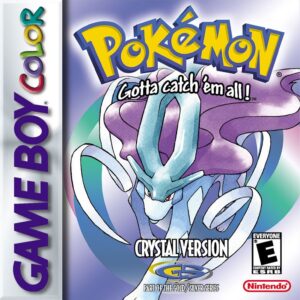
| Title | Pokémon Crystal Version ポケットモンスター クリスタルバージョン |
| Platform | Game Boy Color only – the first core game that will not run on an original Game Boy |
| Developer | Game Freak |
| Publisher | Nintendo (The Pokémon Company) |
| Directors | Satoshi Tajiri, Junichi Masuda |
| Producers | Satoru Iwata, Satoshi Yamamoto, Shigeru Miyamoto, Tsunekazu Ishihara |
| Composers | Go Ichinose, Junichi Masuda, Morikazu Aoki |
| Artist | Ken Sugimori |
| Programmers | Shigeki Morimoto, Tetsuya Watanabe, Takenori Ohta |
| Players | 1–2 (Game Link Cable; Mystery Gift over infrared; Mobile System GB in Japan) |
| Generation | Generation II – the third version |
| New Pokémon | None (251 in the Pokédex) |
| Predecessor | Pokémon Gold & Silver |
| Successor | Pokémon Ruby & Sapphire |
| Released (Japan) | 14 December 2000 |
| Released (North America) | 30 July 2001 |
| Released (Australia) | 30 September 2001 |
| Released (Europe) | 2 November 2001 |
| 3DS Virtual Console | 26 January 2018 (worldwide) |
| Rating | ESRB E (Everyone) |
| Cartridge | Battery-backed save with a real-time clock; the Japanese board carries a Suicune crest |
| Sales | About 6.39 million worldwide – the lowest of the three Johto games |
Overview
 Pokémon Crystal is the third and final game of Generation II and follows on from Pokémon Gold and Silver, although it isn’t a direct sequel as such. A third version was expected, as the first generation had already run to four: Red, Blue and Green in Japan, and then Yellow everywhere.
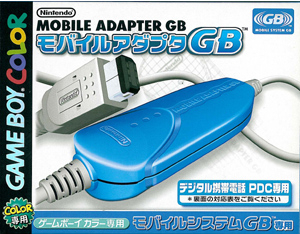
Released in 2000 in Japan and in 2001 for the rest of the world, it features a multitude of bug fixes, adjustments and new features, some of which were exclusive to Japan – most notably a far greater emphasis on mobile-phone linking through the Pokémon Mobile System GB, using a Mobile Game Boy Adapter that works with a Game Boy Color or Game Boy Advance.
Like Gold and Silver, the player starts out in New Bark Town in the Johto region and is later able to return to Kanto. The most notable addition compared with the other versions is that you can now choose your gender at the start of the game, introducing the trainer Kris to the cast of main characters.
The latest in the Gold & Silver series! Travel back to the world of Johto as the Gold & Silver series continues with brand new features! Whether you’re reading the fresh descriptions in your Pokédex, using the unique sort function to organize your Pokémon in new ways, watching the all-new battle animations, or discovering another way to capture Suicune, you’ll need all of your Poké-skills to master Pokémon Crystal on your Game Boy Color!
- Unlock the mysteries of the Unown! All-new puzzles and rewards await you in the Ruins of Alph!
- Fight through the Battle Tower, a challenging tournament featuring Johto’s best trainers!
- For the first time, play as a male or female trainer!
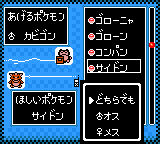
- Trade with Gold, Silver, Red, Blue, and Yellow versions to catch ’em all!
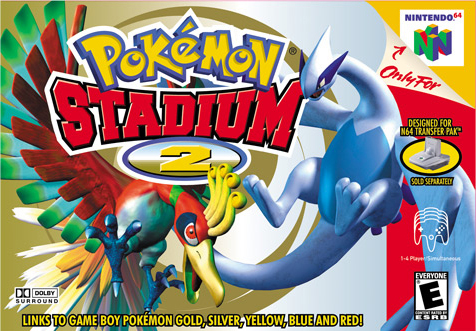
- Compatible with Pokémon Stadium 2 for the Nintendo 64!
— Official description, North American packaging
Quick Answers
The questions people ask about Crystal, answered first and explained further down the page.
What is the difference between Pokémon Crystal and Gold and Silver, and which should I play?
Crystal is the enhanced third version, so pick it if you only want one. It keeps the same Johto and Kanto but adds a girl player character, animated sprites, the Battle Tower, a Suicune storyline with Eusine, Ruins of Alph puzzles, the Odd Egg, a Move Tutor and a Dragon Shrine quiz. Ten Gold and Silver species are missing. More →
How do you catch Suicune in Pokémon Crystal?
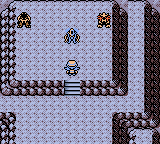
Suicune is a one-off Lv. 40 battle on the Tin Tower’s ground floor in Ecruteak City. After the beasts wake in the Burned Tower, beat Team Rocket at the Goldenrod Radio Tower and the director gives you the Clear Bell. Take it to the tower and save first: Suicune won’t flee, and knocking it out locks you out of Ho-Oh. More →

How do you get Celebi and the GS Ball in Pokémon Crystal?
On original Western cartridges you can’t: the GS Ball came only through Japan’s Mobile System GB service. On the 3DS Virtual Console (2018) you receive it after the Hall of Fame, on leaving the Goldenrod Pokémon Center. Show it to Kurt in Azalea Town, wait a day, then place it in the Ilex Forest shrine for a Lv. 30 Celebi. More →

How do you catch Ho-Oh and Lugia in Pokémon Crystal?
Both are Lv. 60 and only available after the Elite Four. For Ho-Oh, catch Raikou, Entei and Suicune in your own save; a sage in the Tin Tower then gives you the Rainbow Wing and Ho-Oh waits on the roof. For Lugia, collect the Silver Wing from an old man in Pewter City, then head to the Whirl Islands. More →
Is Pokémon Crystal on Nintendo Switch, and how can I play it today?
No. As of October 2026 there is no Switch or Switch Online release. The 3DS Virtual Console version (26 January 2018) went off sale when the 3DS eShop closed on 27 March 2023, though existing downloads still work. Otherwise you need an original cartridge on a Game Boy Color or Advance, or the DS remakes HeartGold and SoulSilver. More →
Can you play as a girl in Pokémon Crystal?
Yes. Crystal was the first Pokémon game to let you choose a boy or a girl. The girl, called Kris on the box, is a cosmetic choice: the story, rival and starters are the same, and some dialogue became gender-neutral. HeartGold and SoulSilver replaced her with Lyra, and Pokémon Masters EX first named her on screen. More →
Which Pokémon are missing from Pokémon Crystal?
Ten Gold and Silver species can’t be caught in Crystal: Vulpix, Ninetales, Mankey, Primeape, Mareep, Flaaffy, Ampharos, Girafarig, Remoraid and Octillery. As in Gold and Silver, the Kanto starters and their evolutions, the Omanyte and Kabuto lines, the three legendary birds, Mewtwo and Mew must be traded in, and Celebi needs the GS Ball event. More →
What is the Odd Egg in Pokémon Crystal, and is it shiny?
It’s a free Egg from the Day-Care Man on Route 34. It hatches at Lv. 5 into Pichu, Cleffa, Igglybuff, Smoochum, Magby, Elekid or Tyrogue, each already knowing Dizzy Punch. In Western copies there is a 14% chance the baby is shiny; the Japanese Egg, which needed a Mobile System GB Egg Ticket, was shiny half the time. More →
What is the Battle Tower in Pokémon Crystal and how does it work?
It’s the series’ first Battle Tower, at the north end of Route 40 near Olivine City. Enter three Pokémon under a level cap set in steps of ten (Lv. 50 and up after the Hall of Fame) and beat seven trainers in a row, healed between battles. Seven wins earn five of one vitamin, such as HP Up. More →

How do the Ruins of Alph puzzles work in Pokémon Crystal?
Each of the four chambers has a sliding-tile picture (Kabuto, Omanyte, Aerodactyl or Ho-Oh) that releases a group of Unown. Crystal adds hidden rooms: use an Escape Rope, Flash or a Water Stone, or lead with Ho-Oh, in the matching chamber. Catch three Unown and a researcher adds Unown Mode to your Pokédex to log all 26 forms. More →
Plot / Story

Storyline and plot changes
The plot and storyline are largely the same, but the legendary of this game is Suicune… Suicune? How? Well, it’s true, and things change so much that after visiting the Burned Tower you will be actively stalked by one, which you will come across at random points in the game. Once you have the Clear Bell you can capture it at the Tin Tower, if you can defeat it in combat.
In addition to this, Eusine, a new character, was introduced. He is actively searching for Suicune and has been for a decade. Eusine notes that Suicune has taken an interest in the player and is following them. Jealous of the attention the player is getting from Suicune, he challenges the player to a battle at Cianwood City to earn Suicune’s respect and be noticed by it.
The full route, spoilers and all:
Crystal retells the Gold and Silver adventure, so the outline is familiar. Before anything else, though, the game asks whether you are a boy or a girl; choose the girl and you play as the trainer later known as Kris. Professor Elm hands you a starter and sends you to Mr. Pokémon’s house, a red-haired boy steals a Pokémon from the lab, and the eight Johto Gyms, Team Rocket’s schemes at the Slowpoke Well, Mahogany Town and the Radio Tower, the Elite Four, Kanto and Red on Mt. Silver follow in their usual order.
What Crystal changes is the role of the legendary beasts. When you drop into the basement of Ecruteak’s Burned Tower, Raikou, Entei and Suicune wake and race off, but Suicune takes notice of you first, and you must see this before Morty will battle you. Also at the tower is Eusine, a caped researcher who has chased Suicune for ten years. From then on Suicune keeps turning up just ahead of you: in Cianwood City, where Eusine challenges you in the hope of earning its respect, outside Mt. Mortar on Route 42, and on Route 36 beside the National Park gate. After you drive Team Rocket out of the Goldenrod Radio Tower, the director gives you the Clear Bell instead of Gold’s Rainbow Wing. Take it to the Tin Tower and all three beasts gather on the ground floor; Raikou and Entei bolt again, but Suicune stays to fight at Lv. 40.
Ho-Oh becomes a post-game prize. Once you have beaten the Elite Four and caught all three beasts, a sage hands you the Rainbow Wing and the tower opens up to its roof, where Ho-Oh waits at Lv. 60; Lugia, also Lv. 60, needs the Silver Wing from Pewter City. Along the way the Ruins of Alph gain a mystery of their own, with hidden chambers and messages left by the people who built them, and in Blackthorn City Clair withholds the Rising Badge until the Master of her dragon clan has tested you with a quiz in the Dragon Shrine.
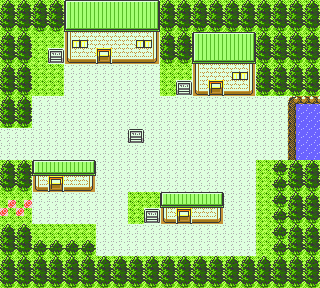

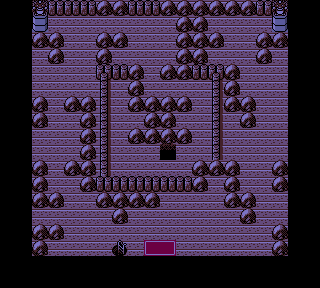


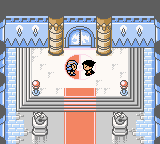
Screenshots via Bulbapedia; our own Kurt and Lance shots appear under What Crystal changes.
Where Suicune shows up
- Burned Tower basement, Ecruteak City: after the rival battle you fall into the basement, where Raikou, Entei and Suicune wake and leave; Suicune singles you out. Morty and Eusine are investigating the tower. The awakening has to happen before Morty will accept your challenge.
- Cianwood City: Suicune is seen on the town’s shore (Crystal extends Cianwood to the north) and escapes; Eusine, who saw it go, then battles you.
- Route 42, outside Mt. Mortar: Suicune appears near the mountain and bounds away when you approach.
- Route 36, beside the National Park’s east gate, near the Ice Berry tree: the last overworld sighting; it flees if you approach.
- Tin Tower 1F, Ecruteak City: with the Clear Bell in your Bag, all three beasts appear; Raikou and Entei flee and Suicune stays for a Lv. 40 battle (Leer, BubbleBeam, Rain Dance, Gust). Once it is caught or defeated it stops appearing elsewhere.
Not in Crystal: the Vermilion City and Route 14 sightings and the Cerulean Cape (Route 25) battle belong to HeartGold and SoulSilver, where Eusine follows Suicune into Kanto.
Eusine, the Suicune chaser

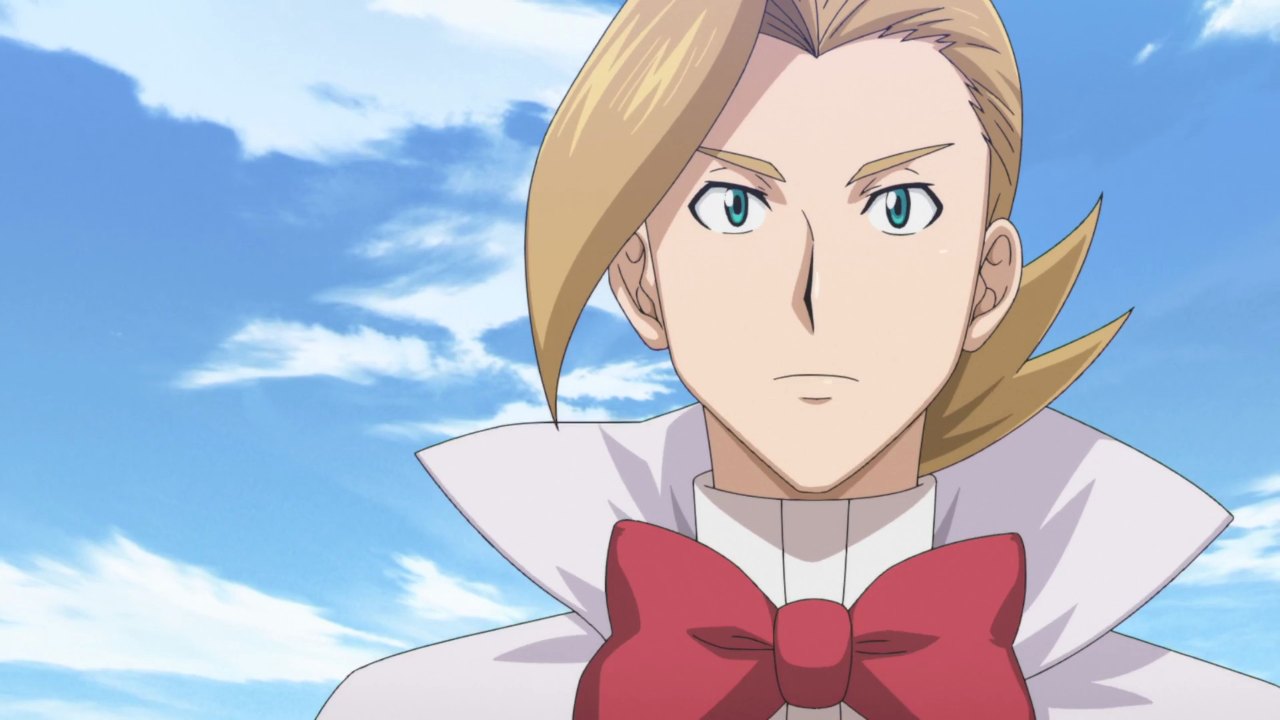
Eusine is a caped researcher of legends who has spent ten years trying to track down Suicune without success. Crystal introduces him at the Burned Tower, where he is investigating with his friend Morty. When Suicune slips away from Cianwood City in front of you both, he challenges you, hoping a good showing will earn Suicune’s respect. As a Mysticalman he uses Drowzee (Lv. 23), Haunter (Lv. 23) and Electrode (Lv. 25), relying on Hypnosis, Dream Eater, Mean Look, Curse and Thunder. After you catch Suicune he waits in the Celadon City Pokémon Center while you round up Raikou and Entei, then returns to the Tin Tower to watch for Ho-Oh. HeartGold and SoulSilver bring him back with the same team at Lv. 25–27, chasing Suicune into Kanto. His anime debut is ’For Ho-Oh the Bells Toll!’ (EP227).
Celebi and the GS Ball
In Japan the GS Ball reached Crystal players through Mobile System GB: with a Mobile Game Boy Adapter and a phone, one segment of the Pokémon News at Goldenrod’s Pokémon Communication Center handed it out. Show it to Kurt in Azalea Town and he keeps it for a day, sees it shake and hurries off because Ilex Forest has grown restless. Follow him, place the ball in the forest shrine and a Lv. 30 Celebi appears. You get one chance, and it can even be shiny. English copies contain an unused version of the event aimed at the Goldenrod Pokémon Center, so Western players had no cartridge route to Celebi. The 3DS Virtual Console release of 26 January 2018 gives everyone the GS Ball after the Hall of Fame, on leaving that Pokémon Center. Behind the scenes, the anime’s own GS Ball was meant to hold a Celebi until Pokémon 4Ever took over that story.

Silver, your rival
Nothing changes in his battles. Silver’s seven fights (Cherrygrove City, Azalea Town, the Burned Tower, the Goldenrod Underground, Victory Road, Mt. Moon and the Indigo Plateau rematch) use the same Pokémon and levels in Crystal as in Gold and Silver: the Mt. Moon party is Sneasel 41, Golbat 42, Magneton 41, Gengar 43, Alakazam 43 and his starter at 45, the Indigo Plateau rematch Sneasel 45, Crobat 48, Magneton 45, Gengar 46, Alakazam 46 and his starter at 50, and the Burned Tower battle still features Haunter (Lv. 20). The scenes in which Silver trains in the Dragon’s Den under Lance’s eye and joins a Multi Battle belong to HeartGold and SoulSilver.
Red on Mt. Silver

Red is still the last and hardest opponent, waiting silently deep inside Mt. Silver once you hold all sixteen badges. His team is the same in all three Generation II games: Pikachu Lv. 81, Espeon Lv. 73, Snorlax Lv. 75, Venusaur Lv. 77, Charizard Lv. 77 and Blastoise Lv. 77. Twitch Plays Pokémon’s 2014 Crystal run used a modified game that gave him the team the community had used to beat the Red run.
In the anime and movies
Crystal landed in the middle of the anime’s Johto years, and its additions – Suicune, Eusine, the Unown, Celebi and a girl hero – all found their way onto the screen.
In the anime
Anime seasons which loosely tie in with Crystal (in terms of locations, NPCs such as gym leaders and Pokémon):
 Season 3: The Johto Journeys1999–2000The first Johto season introduces Suicune in its opening episode, ’Don’t Touch That ’dile’ (EP117), where it vanishes into fog when Ash tries to battle it, and sends Ash to Kurt with the GS Ball in ’Going Apricorn!’ (EP143). The wandering water beast and the mysterious ball are the two threads Crystal later builds into the game.
 Season 4: Johto League Champions2000–2001Three GS Balls appear on every title card of this season, even though the ball’s story was quietly dropped once Kurt had it. Masamitsu Hidaka later explained it was meant to contain a Celebi before the fourth film took over that idea. Crystal’s GS Ball event is the games’ take on the unfinished plot.
 Season 5: Master Quest2001–2002The fifth season carries the Crystal-era thread. In ’For Ho-Oh the Bells Toll!’ (EP227) Eusine challenges Ash, who claims to have met Suicune, then works with Morty and Ash’s friends to recover the Crystal Bells that Team Rocket has stolen from the Tin Tower. Suicune appears, calms the Bug-type Pokémon and uses Roar to send Eusine’s Alakazam back into its ball before he sets off after it. The Legend of Thunder! aired in Japan between EP230 and EP231.
In the movies
 Pokémon 4Ever – Celebi: Voice of the Forest2001Celebi stars as the time-travelling guardian of the forest, which is why the anime’s GS Ball plot, meant to reveal a Celebi, was shelved, as writer Masamitsu Hidaka explained in a 2008 interview. Suicune appears in the film too, healing the forest’s lake. Crystal’s GS Ball and Ilex Forest shrine are the games’ route to the same Pokémon.
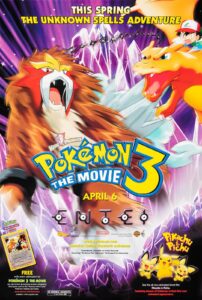 Pokémon 3: The Movie – Spell of the Unown2000The Unown at the heart of the third film are the focus of Crystal’s expanded Ruins of Alph, whose new hidden rooms and wall messages present them as part of an ancient civilisation’s story.
The Crystal episodes
The episodes that lean on Crystal’s additions:
- EP116The Rivalry Revival – Professor Oak asks Ash and Misty to take the GS Ball to Kurt in Johto.
- EP117Don’t Touch That ’dile – Suicune’s first anime appearance, vanishing into fog when Ash tries to battle it.
- EP142A Shadow of a Drought – Kurt’s first appearance in person, disguising the group as Slowpoke.
- EP143Going Apricorn! – Ash hands Kurt the GS Ball to study and learns how Apricorn balls are made.
- EP227For Ho-Oh the Bells Toll! – Eusine’s debut: the Crystal Bells, the Tin Tower and Suicune.
What Crystal changes
There were lots of changes, enhancements and new features added in Pokémon Crystal:
- Animated Pokémon: when a Pokémon enters battle, a little animation plays.
- Sprite makeover: several sprites were changed from the originals and others were recoloured to match the official artwork.
- Cable Club: the Cable Club was made simpler; it is now modern and sleek, showing off the capabilities of the Game Boy Color.
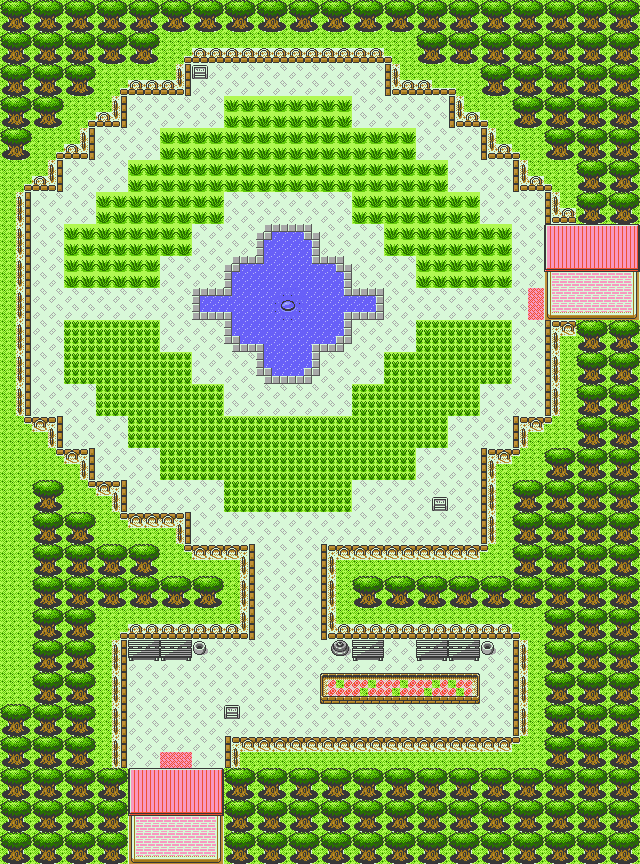
- New locations: there is a fountain in the National Park, and the inside of Mt. Mortar was heavily altered.
- New words: some trainers have had their dialogue changed.
- Growlithe grass: there is a small patch of grass on Route 36, just east of Violet City, where Growlithe spawn – so players can get a Fire Pokémon before going through Sprout Tower and the Azalea Gym.
- Legendary changes: Ho-Oh can’t be caught until all three legendary beasts have been caught.
- Unown changes: the Ruins of Alph now have a subplot, helping the player to get some nifty items and giving you more to do in the endgame.
- More words: trainers who call on the Pokégear have new dialogue, sound more realistic, and their Pokémon actually evolve; they also tell you when rare Pokémon are appearing.
- Goldenrod Sale Bonanza: some weekends there are sales on the newly added rooftop of the Goldenrod Department Store. Camper Todd will tell you about them if you have him in your Pokégear.
- Many balls: Kurt can make several balls at the same time if you give him enough Apricorns.
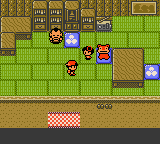
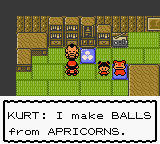
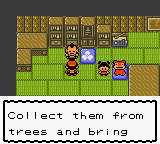


- New moves: several Pokémon have new level-up movesets.
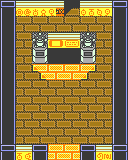
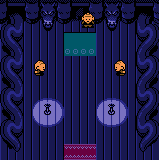
- Lance’s room: when you face Lance you will notice the design of his room has changed to a more dragon-themed look, and the statues have been replaced with Dratini.
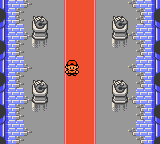


- And lastly, the way you get the Rising Badge is different. A five-question quiz has to be answered at the Dragon Shrine, and the prize is a Dratini that knows ExtremeSpeed – a very unique specimen.
In depth: what each addition actually does
Crystal is Gold and Silver with the rough edges polished and a handful of genuinely new systems. Here is each one, with the fine print.





Can I catch them all?
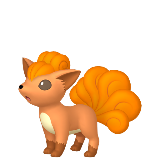
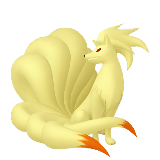
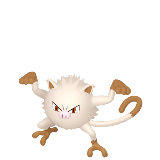
Several Pokémon cannot be obtained throughout the course of the game, but they can be obtained from the core-series predecessors. Crystal also quietly drops ten Pokémon that Gold or Silver had.
Not available in Crystal – but obtainable in Gold or Silver
In Gold or Silver, but not in Crystal
 Vulpix#037
 Ninetales#038
 Mankey#056
 Primeape#057
 Mareep#179
 Flaaffy#180
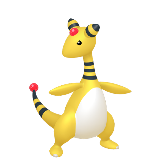 Ampharos#181
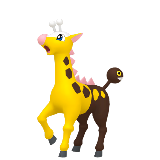 Girafarig#203
 Remoraid#223
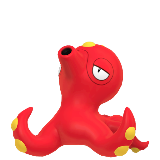 Octillery#224
Bulbapedia lists exactly these ten as found in Gold or Silver but not in Crystal. Every other version exclusive – Growlithe, Spinarak, Gligar, Teddiursa, Mantine, Meowth, Ledyba, Delibird, Skarmory, Phanpy and their evolutions – can be found in Crystal.
Not available in Crystal – but obtainable in Red, Blue and Yellow
Only from Red, Blue or Yellow (Time Capsule), or from Gold or Silver
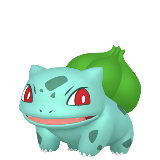 Bulbasaur#001
 Ivysaur#002
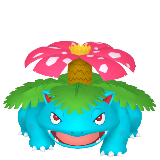 Venusaur#003
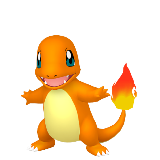 Charmander#004
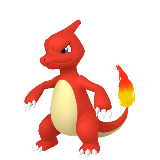 Charmeleon#005
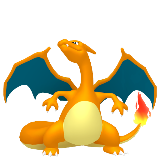 Charizard#006
 Squirtle#007
 Wartortle#008
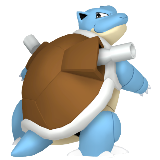 Blastoise#009
 Omanyte#138
 Omastar#139
 Kabuto#140
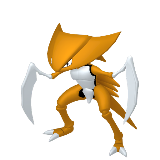 Kabutops#141
 Articuno#144
 Zapdos#145
 Moltres#146
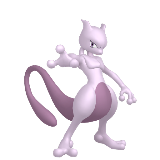 Mewtwo#150
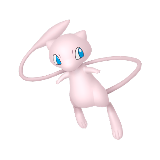 Mew#151
Aerodactyl is not on the list because the Route 14 in-game trade (a Chansey for AEROY) provides one. The ten trade evolutions need a link trade (see below).
New or easier in Crystal
- Growlithe and Arcanine – Gold-only in Gold and Silver; Crystal adds Lv. 5 Growlithe to a new grass patch on Route 36 just east of Violet City (morning and day, 10%).
- Gligar and Skarmory – Gold-only and Silver-only respectively in Gold and Silver; both appear in Crystal.
- Spinarak and Ledyba lines – One per version in Gold and Silver; Crystal has both (for example in Route 36’s grass and Headbutt trees).
- Teddiursa, Phanpy, Meowth, Delibird and Mantine lines – Gold and Silver version exclusives that Crystal makes available to everyone.
- Smeargle, Wooper and Quagsire at the Ruins of Alph – Not new species, but new Crystal-only grass encounters outside the ruins (Smeargle 10%, Wooper and Quagsire 5%).
- Celebi – Catchable in Ilex Forest via the GS Ball: in Japan through Mobile System GB, worldwide on the 3DS Virtual Console (2018). Gold and Silver have no in-game Celebi at all.
- Dratini with ExtremeSpeed – Lv. 15 gift from the Dragon Shrine quiz (Dratini itself was already catchable).
Starter Pokémon
The Johto starters are unchanged: Chikorita, Cyndaquil and Totodile from Professor Elm, with your rival taking the one that beats yours.
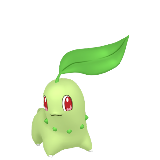 ChikoritaGrass · Bayleef (16) → Meganium (32)
 CyndaquilFire · Quilava (14) → Typhlosion (36)
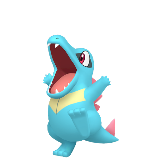 TotodileWater · Croconaw (18) → Feraligatr (30)
- Chikorita: Still the hard-mode pick against Falkner, Bugsy and Morty, but Crystal softens it: a Lv. 5 Growlithe on Route 36 gives you a Fire partner before Azalea. Your rival takes Cyndaquil.
- Cyndaquil: The comfortable all-rounder, burning through Bugsy, Jasmine’s Steel types and Pryce. Crystal’s new Growlithe matters less to you; your rival takes Totodile.
- Totodile: Reaches its final form earliest, at Lv. 30, and handles Jasmine’s Steelix, Pryce and later Brock and Blaine. Croconaw has a new sprite in Crystal; your rival takes Chikorita.
Legendary and Mythical Pokémon
 SuicuneTin Tower, Ecruteak
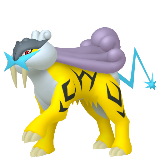 RaikouRoaming Johto
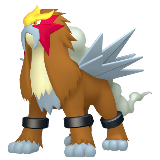 EnteiRoaming Johto
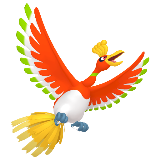 Ho-OhTin Tower roof
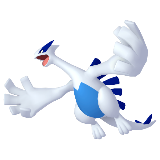 LugiaWhirl Islands
 CelebiIlex Forest shrine
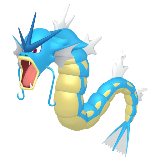 Gyarados (red)Lake of Rage
Suicune – Lv. 40, Tin Tower 1F, Ecruteak City. See the beasts wake in the Burned Tower, then beat Team Rocket at the Goldenrod Radio Tower so the director gives you the Clear Bell. With it in your Bag, Suicune appears on the Tin Tower’s ground floor and never flees (Leer, BubbleBeam, Rain Dance, Gust). Catch it rather than knock it out: Ho-Oh needs all three beasts caught in your save.
Raikou – Lv. 40, Roaming Johto after the Burned Tower awakening. Roams the routes and flees on its first turn, keeping damage between encounters. It also shows up briefly at the Tin Tower when you bring the Clear Bell, then runs again. You must catch it in your own save for Ho-Oh; trading one in does not count.
Entei – Lv. 40, Roaming Johto after the Burned Tower awakening. Works exactly like Raikou. English Crystal compares only the first five letters of the trainer name (plus the ID) when checking that you caught the beasts yourself, a check that drives Eusine’s event.
Ho-Oh – Lv. 60, Tin Tower roof, Ecruteak City. Defeat the Elite Four and catch Raikou, Entei and Suicune in the current save. A sage on the Tin Tower’s ground floor then gives you the Rainbow Wing and stairs to the upper floors appear; with the wing in your Bag, Ho-Oh waits on the roof holding Sacred Ash (Gust, Recover, Fire Blast, Sunny Day). Eusine is there to watch.
Lugia – Lv. 60, Whirl Islands, deepest chamber. Post-game only: an old man in Pewter City gives you the Silver Wing, and with it in your Bag Lugia appears in the Whirl Islands’ lowest basement (Whirlpool is needed to reach the islands).
Celebi – Lv. 30, Ilex Forest shrine (GS Ball event). Requires the GS Ball: Japan-only via Mobile System GB on cartridge, or after the Hall of Fame on the 3DS Virtual Console when you leave the Goldenrod Pokémon Center. Show it to Kurt, wait a day, follow him to Ilex Forest and place it in the shrine (Cut and the Hive Badge needed). One chance only; it may be shiny. Japan’s World Hobby Fair (January–February 2001) also gave Lv. 5 Celebi to Gold, Silver and Crystal.
Gyarados (red) – Lv. 30, Lake of Rage. A fixed story encounter that is always shiny, as in Gold and Silver; catch it or knock it out to receive the Red Scale.

Gift Pokémon, in-game trades and trade evolutions
Pokémon you are simply handed:
- Chikorita, Cyndaquil or Totodile (Lv. 5) – Professor Elm’s lab, New Bark Town. Choose one at the start, as in Gold and Silver.
- Togepi (Egg) – Violet City Pokémon Center. Mr. Pokémon’s Egg; Elm’s aide gives it to you after the Zephyr Badge (as in Gold and Silver).
- Spearow ’Kenya’ (Lv. 10) – A gatehouse near Goldenrod City. Carries Mail for a man on Route 31, who rewards you with TM50 Nightmare, as in Gold and Silver.
- Eevee (Lv. 20) – Bill’s family home, Goldenrod City. Given by Bill after you meet him at the Ecruteak Pokémon Center.
- Shuckle ’Shuckie’ (Lv. 15) – Cianwood City. Loaned by a Pokémon Mania, who later asks for it back.
- Tyrogue (Lv. 10) – Mt. Mortar. Reward from Kiyo, the Karate King, after you beat him.
- Dratini (Lv. 15) – Dragon Shrine, Dragon’s Den, Blackthorn City. Crystal only. Given by the clan’s Master after his five-question quiz; it knows Wrap, Thunder Wave, Twister and ExtremeSpeed if every answer was right, with Leer replacing ExtremeSpeed otherwise.
- Odd Egg – Day Care, Route 34. Crystal only. The Day-Care Man gives it once you have spoken to him (Japan: exchange an Egg Ticket at the Communication Center’s Trade Corner). It hatches after 20 Egg cycles into Pichu, Cleffa, Igglybuff, Tyrogue, Smoochum, Elekid or Magby knowing Dizzy Punch; Western shiny odds 14% overall (Pichu 1%, Cleffa 3%, Igglybuff 3%, Tyrogue 1%, Smoochum 2%, Elekid 2%, Magby 2%), Japanese 50%.
The in-game trades are the Gold & Silver set, with one Crystal change at Blackthorn:
| You give | You get | Where |
|---|---|---|
| Bellsprout | Onix ’ROCKY’ (male, holds a Bitter Berry; OT Kyle) | Violet City (same as Gold and Silver) |
| Abra | Machop ’MUSCLE’ (female, holds a Gold Berry; OT Mike) | Goldenrod Department Store (Gold and Silver ask for a Drowzee) |
| Krabby | Voltorb ’VOLTY’ (holds a PRZCureBerry; OT Tim) | Olivine City (same as Gold and Silver) |
| Dragonair (female) | Dodrio ’DORIS’ (female, holds a Smoke Ball; OT Emy) | Blackthorn City (Gold and Silver give Rhydon ’DON’ instead) |
| Chansey | Aerodactyl ’AEROY’ (male, holds a Gold Berry; OT Kim) | Route 14, Kanto (same as Gold and Silver) |
| Haunter | Xatu ’PAUL’ (male, holds a MysteryBerry; OT Chris) | Pewter City (Gold and Silver trade a Gloom for Rapidash ’RUNNY’) |
| Dugtrio | Magneton ’MAGGIE’ (holds a Metal Coat; OT Forest) | Kanto Power Plant (Crystal only) |
Ten Pokémon still only evolve when traded, six of them while holding an item: Kadabra into Alakazam, Machoke into Machamp, Graveler into Golem, Haunter into Gengar, Onix into Steelix (Metal Coat), Scyther into Scizor (Metal Coat), Seadra into Kingdra (Dragon Scale), Poliwhirl into Politoed (King’s Rock), Slowpoke into Slowking (King’s Rock), Porygon into Porygon2 (Up-Grade).
Our own count: 212 on a cartridge, 213 on the 3DS Virtual Console. Start from 251 species and remove the 18 Generation I-only Pokémon, the 10 Gold and Silver species Crystal lacks and Celebi (no Western cartridge route), leaving 222; then remove the 10 trade evolutions (Alakazam, Machamp, Golem, Gengar, Politoed, Slowking, Steelix, Scizor, Kingdra, Porygon2), which need a link trade. In-game NPC trades, such as Aerodactyl for a Chansey, count as obtainable, and breeding covers the Eevee and Tyrogue evolutions. On the Virtual Console the built-in GS Ball event adds Celebi.
Trading, Mystery Gift and the mobile adapter
Mystery Gift. The infrared port on your Game Boy Color can be used to exchange gifts with other players using the Mystery Gift option. You switch it on by going to Goldenrod City’s Department Store – head to the fifth floor and talk to the girl, and she’ll ask if you’d like to use Mystery Gift. After that it sits on the main menu: a click, and you get a random item from another player, up to five times a day and once per partner.
It should be noted that this feature only works on a Game Boy Color, not on earlier or later systems.
Crystal trades and battles with Gold, Silver and other Crystal cartridges over the Game Link Cable, and reaches Red, Blue and Yellow through Bill’s Time Capsule, limited to first-generation species and moves. Link battles keep the older Gold and Silver rules, even between two Crystal copies. Mystery Gift swaps items and decorations with Gold, Silver and Crystal over infrared, up to five times a day. Pokémon Stadium 2 reads Crystal through the Transfer Pak even though the English box omits it, and in Japan it plays back Mobile Stadium battles saved on Crystal. Japan alone had the Mobile Game Boy Adapter and Mobile System GB (January 2001 to December 2002) for phone trades and battles, the Trade Corner, the news and the Battle Tower’s online mode. On the 3DS Virtual Console, wireless replaces the cable, printing is disabled and Poké Transporter sends Pokémon on to Pokémon Bank. Crystal will not boot on an original Game Boy.
Johto, as Crystal changed it

Crystal’s Johto is Gold and Silver’s with a few new rooms. Each place below says only what Crystal changed there.
Place by place
New Bark Town
Crystal’s opening adds one question before Professor Oak’s familiar welcome: are you a boy or a girl? Pick the girl and you leave New Bark Town as the trainer the box calls Kris; pick the boy and you play the Gold and Silver hero. The rest of the morning is unchanged. Professor Elm offers Chikorita, Cyndaquil or Totodile and sends you off to Mr. Pokémon, and the red-haired boy lurking by the lab window becomes the thief the police ask you about. From the moment you step outside, Crystal also flashes each place’s name in a sign as you arrive, a touch every later game has kept. After the Hall of Fame, Elm’s S.S. Ticket opens the sea route to Kanto.
Pokémon of note: Chikorita, Cyndaquil, Totodile. Items: Pokégear, S.S. Ticket.

Routes 29–31 & Cherrygrove City
The first stretch plays out much as in Gold and Silver. Route 29 runs west to Cherrygrove City, Route 30 leads north to Mr. Pokémon’s house, where Professor Oak gives you a Pokédex and you collect a mysterious Egg, and the rival ambushes you on the way back. Crystal quietly reshuffles trainers on many routes, though, and gives the people who phone you real personalities, so your contacts now ring with news of evolutions, gifts and rare sightings rather than only rematch requests. Some species keep stricter hours too, which makes the morning, day and night tables matter more. Route 31 leads on to Violet City and the mouth of Dark Cave.
Pokémon of note: Pidgey, Sentret, Rattata, Hoothoot (night). Items: Mystery Egg, Pokédex.

Violet City & Sprout Tower
Violet City, home of Falkner’s Flying-type Gym, looks much as it did, though Crystal repaints the statues inside Sprout Tower, the swaying pagoda whose Elder rewards you with HM05 Flash after you beat his monks. Once you hold the Zephyr Badge, Elm’s aide meets you in the Pokémon Center with the Egg that hatches into Togepi, and Kyle still offers his Onix for a Bellsprout. The real Crystal addition sits just east of town: a new patch of grass on Route 36, north of the Ruins of Alph gate, where Lv. 5 Growlithe appear in the morning and daytime. It gives Chikorita and Totodile players a Fire type in time for Bugsy.
Pokémon of note: Bellsprout, Gastly (Sprout Tower), Onix ’ROCKY’ (trade for a Bellsprout), Growlithe (Route 36, Crystal only), Togepi (Egg). Items: HM05 Flash (Sprout Tower Elder), Togepi Egg (Elm’s aide, after the Zephyr Badge), TM31 Mud-Slap (Falkner).
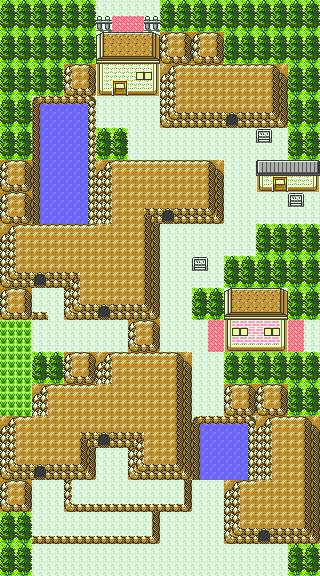
Ruins of Alph
In Gold and Silver the ruins were a curiosity; Crystal turns them into a small detective story. Researchers outside study the Unown, and in the Japanese version one wonders whether the new Communication Center’s radio waves are stirring them up. The four puzzle chambers now carry wall clues that point to hidden rooms: an Escape Rope, Flash, a Water Stone or a Ho-Oh at the head of your party opens each one, and each holds berries, herbal medicines or treasures such as a Star Piece and a Moon Stone. Below, the Unown spell out fragments of the builders’ history, about shutting out the world and learning to live alongside Pokémon. Smeargle, Wooper and Quagsire join the grass only in Crystal.
Pokémon of note: Unown (26 forms), Smeargle (Crystal only, 10%), Natu, Wooper and Quagsire (Crystal only). Items: Star Piece, Moon Stone, Mystic Water, Charcoal.

Azalea Town & Ilex Forest
Azalea still needs rescuing from Team Rocket’s tail-cutting racket in the Slowpoke Well, after which Kurt thanks you with a Lure Ball and Bugsy waits in his Gym. Crystal gives Kurt a helper, his granddaughter Maizie, and with her at his side he can turn several Apricorns of one colour into balls at once. He is also at the centre of Crystal’s most famous lost event. Show him the GS Ball and he studies it for a day before the forest to the west grows restless; place the ball in the little shrine deep in Ilex Forest and Celebi appears at Lv. 30. On original cartridges this only worked in Japan, until the 3DS Virtual Console switched it on worldwide.
Pokémon of note: Slowpoke, Celebi (GS Ball event, Lv. 30), Paras, Oddish. Items: Lure Ball (Kurt), GS Ball (event), HM01 Cut (charcoal maker), TM49 Fury Cutter (Bugsy).
Goldenrod City
Johto’s biggest city collects many of Crystal’s extras. The Radio Tower’s redesigned second floor houses Buena’s late-night Password show and her Blue Card prizes, and once you clear out Team Rocket the director gives you the Clear Bell. The Department Store gains a rooftop with occasional bargain sales, while its fifth floor is still where Mystery Gift is switched on. The flower shop has moved and been redecorated, and you now have to meet its assistant on Route 36 before the shop will hand over the Squirt Bottle. After the Hall of Fame a Move Tutor waits outside the redesigned Game Corner. In Japan the Pokémon Center was replaced by the Pokémon Communication Center.
Pokémon of note: Eevee (Lv. 20, from Bill), Machop ’MUSCLE’ (trade for an Abra), Miltank (Whitney’s ace). Items: Blue Card (Buena), Squirt Bottle (flower shop), Clear Bell (Radio Tower director).
National Park & Routes 35–37
North of Goldenrod, Crystal adds a fountain to the pond in the middle of the National Park, along with a drinking fountain, the backdrop for the Bug-Catching Contest. Route 36 links Violet City to the park, and its new grass patch near the Ruins of Alph gate is where Crystal’s Lv. 5 Growlithe live. Further along, the Squirt Bottle finally shifts the Sudowoodo blocking the way north, and a man beyond rewards you with TM08 Rock Smash. Later in the story Route 36 hosts Suicune’s last overworld sighting, beside the berry tree near the park’s east gate, before it bounds away. Arthur, one of the weekday siblings, waits here on Thursdays with a Hard Stone.
Pokémon of note: Growlithe (Route 36, Lv. 5, Crystal only), Sudowoodo, Scyther, Pinsir. Items: TM08 Rock Smash, Hard Stone (Arthur, Thursdays), Ice Berry (tree by the park gate).
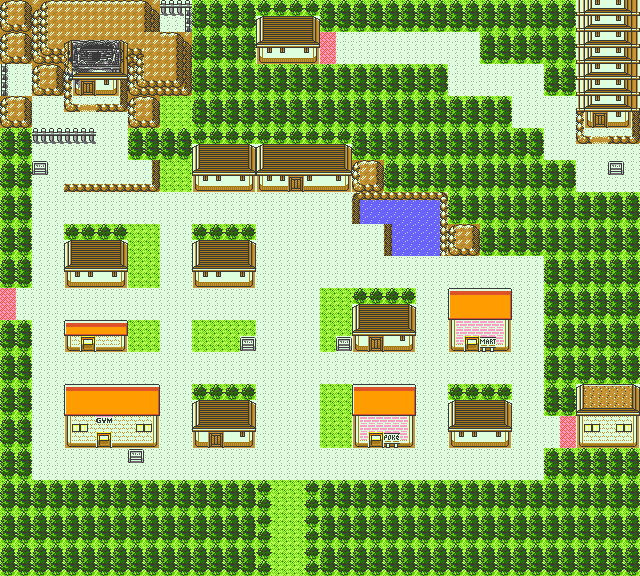
Ecruteak City
Ecruteak is where Crystal’s story turns. The Burned Tower now has a charred exterior and a darker, rearranged interior, and in its basement Raikou, Entei and Suicune wake and flee, with Suicune pausing to study you while Morty and Eusine look on; Morty won’t battle you until you have seen it. The five Kimono Girls still dance at the theatre, and beating them earns HM03 Surf, but their legendary-summoning ritual belongs to HeartGold and SoulSilver. In Crystal the Clear Bell from Goldenrod draws the three beasts to the Tin Tower’s ground floor, where Suicune finally battles. Beat the Elite Four and catch all three, and a sage hands you the Rainbow Wing for Ho-Oh on the roof.
Pokémon of note: Suicune (Tin Tower, Lv. 40), Raikou, Entei, Ho-Oh (Tin Tower roof, Lv. 60). Items: Clear Bell (brought from Goldenrod), Rainbow Wing (Tin Tower sage), HM03 Surf (after the Kimono Girls), TM30 Shadow Ball (Morty).

Olivine City & Route 40 (Battle Tower)
Olivine’s lighthouse gains a new window at the top, where Jasmine sits with Amphy, the sick Ampharos, even though Crystal’s own wild Mareep line is missing. The harbour town’s restaurant has been redecorated and Tim still swaps his Voltorb for a Krabby. The big addition is just west of town: at the northern tip of Route 40 stands the Battle Tower, the series’ first, where you take three Pokémon through seven straight battles at a level cap of your choosing and walk away with a stack of vitamins. Western players can stroll straight in; in Japan its doors stayed shut until the game had connected to Mobile System GB.
Pokémon of note: Voltorb ’VOLTY’ (trade for a Krabby), Amphy (Jasmine’s Ampharos, not catchable), Tentacool, Magnemite. Items: Five of one vitamin (Battle Tower, seven wins), TM23 Iron Tail (Jasmine).
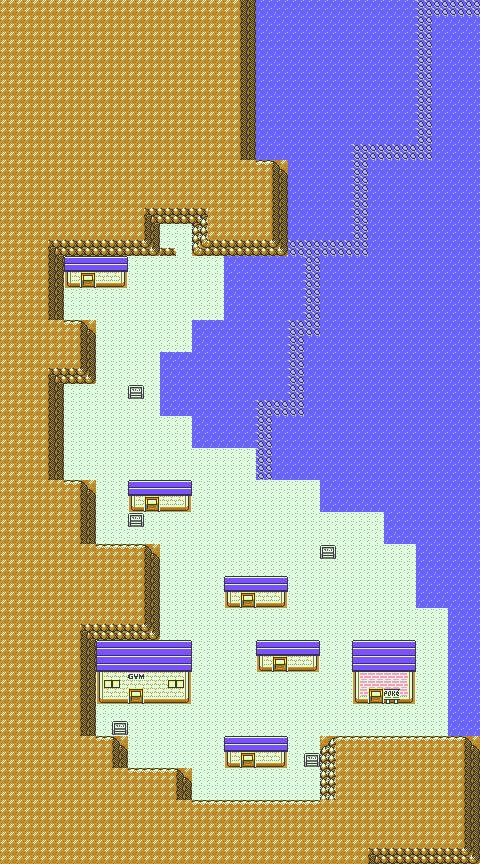
Cianwood City
Surf west from Olivine and you find a bigger Cianwood than before, with a strip of land to the north holding the Poké Seer’s house. Here Suicune makes its first appearance since the Burned Tower and slips away, and Eusine, who saw it too, challenges you, hoping a win will earn him Suicune’s respect. His Drowzee, Haunter and Electrode lean on sleep, Mean Look and Thunder, so a Pokémon that hits hard and fast is the best answer. Everything else is as you remember from Gold and Silver: Chuck’s Fighting Gym, the pharmacy’s SecretPotion for Jasmine’s Ampharos, Chuck’s wife and HM02 Fly, and the Pokémon Mania who lends you Shuckie the Shuckle.
Pokémon of note: Suicune (sighting), Shuckle ’Shuckie’ (Lv. 15, loan), Drowzee, Haunter and Electrode (Eusine’s team). Items: SecretPotion (pharmacy), HM02 Fly (Chuck’s wife), TM01 DynamicPunch (Chuck).
Route 42 & Mt. Mortar
Route 42 runs from Ecruteak to Mahogany Town around Mt. Mortar, and in Crystal it is Suicune’s second stop after Cianwood: it appears outside the mountain and leaps off before you can reach it. Mt. Mortar itself was rebuilt for Crystal with a new interior layout, and unlike in Gold and Silver you no longer need Flash to explore it. Deep inside, the Karate King Kiyo still trains alone and hands you a Tyrogue once you have beaten him, the easiest way to Hitmonlee, Hitmonchan and Hitmontop. The Apricorn trees on the route make it a regular stop for anyone keeping Kurt busy.
Pokémon of note: Suicune (sighting), Tyrogue (Lv. 10, from Kiyo), Machop, Geodude. Items: Pink, Green and Yellow Apricorn trees (Route 42, as in Gold and Silver).
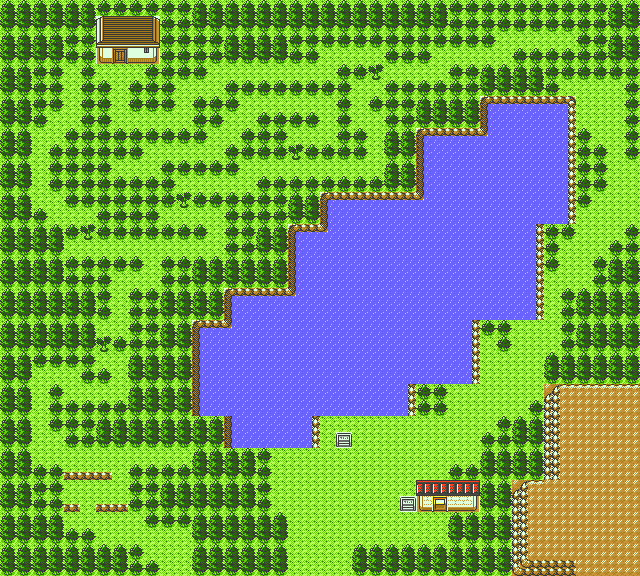

Lake of Rage & Mahogany Town
Mahogany Town and the Lake of Rage carry Gold and Silver’s Team Rocket chapter into Crystal with little change. Rocket radio signals force the lake’s Magikarp to evolve, and an enraged red Gyarados, always shiny, waits as a Lv. 30 encounter that leaves behind the Red Scale. Lance, already on the Rockets’ trail, then raids their hideout under the Mahogany souvenir shop with you and gives you HM06 Whirlpool afterwards, opening the way to Pryce’s Ice Gym. No Crystal-only scene was found in this area; Crystal’s new material in this corner of Johto is the Suicune trail on Route 42 and the rebuilt Mt. Mortar next door.
Pokémon of note: Gyarados (red, Lv. 30), Magikarp, Electrode (Rocket hideout). Items: Red Scale, HM06 Whirlpool (Lance), TM16 Icy Wind (Pryce).

Blackthorn City & the Dragon’s Den
Clair’s Gym is the same dragon-filled battle, but what follows is pure Crystal. Instead of sending you to fetch a Dragon Fang, Clair refuses the badge and points you to the Dragon Shrine in the middle of the Dragon’s Den, open for the first time. The clan’s Master tests your attitude with five questions, and passing earns the Rising Badge, TM24 DragonBreath and a Dratini that knows ExtremeSpeed if every answer was right. The Den itself gains Headbutt trees (empty of Pokémon) and new trainers, including twins with a pair of Lv. 35 Dratini. Back in town, Emy’s trade now offers a female Dodrio holding a Smoke Ball for a female Dragonair.
Pokémon of note: Dratini (Lv. 15 gift, ExtremeSpeed), Dratini and Dragonair (fishing and Surf), Dodrio ’DORIS’ (trade for a female Dragonair). Items: TM24 DragonBreath (Clair), Dragon Fang (needs Whirlpool), Calcium, Max Elixir.

Kanto, the Indigo Plateau & Mt. Silver
Crystal’s Kanto is close to Gold and Silver’s, with telling details. At the Indigo Plateau, Lance’s chamber is redecorated with a dragon theme and Dratini statues. Once you are Champion, an old man in Pewter City gives you the Silver Wing for Lugia (Lv. 60), Eusine waits at the Celadon Pokémon Center while you round up Raikou and Entei, and the Move Tutor opens back in Goldenrod. Some Kanto encounters changed, Magmar now lives only in Mt. Silver’s cave, and the Cerulean Gym fishing glitch is gone. New trades turn a Haunter into a Xatu in Pewter City and a Dugtrio into a Metal Coat-holding Magneton at the Power Plant. Red still waits on Mt. Silver.
Pokémon of note: Lugia (Whirl Islands, via the Silver Wing), Magmar (Mt. Silver), Xatu ’PAUL’ (trade for a Haunter), Magneton ’MAGGIE’ (trade for a Dugtrio), Aerodactyl ’AEROY’ (Route 14 trade for a Chansey). Items: Silver Wing (Pewter City old man), Metal Coat (held by the traded Magneton).
Maps: Crystal’s own town maps where Bulbapedia has them, otherwise the Generation II maps the three games share.
Characters
Crystal keeps the Gold and Silver cast and adds three new faces: a hero you can play as a girl, a legend-chaser in a cape, and a late-night radio DJ.

Kris, the player
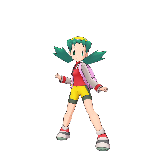
Crystal’s girl player character is the first female protagonist in the core series. In Ken Sugimori’s artwork she has teal hair in two long bunches tied with red bands, a yellow cap with a white brim, a long cropped jacket over a red top, yellow cycling shorts and chunky white trainers, plus a pink Pokégear and bag. The game never fixes her name: クリス is one of the names the Japanese game suggests for either player, which English split into Chris for the boy and Kris for the girl, the name printed on the back of the American and Australian boxes. HeartGold and SoulSilver replaced her with Lyra, although an unused Kris Pokégear icon survives in their data. Pokémon Masters EX was the first game to name her on screen, and she cameos in Pokémon Stadium 2’s credits, battling Silver’s Ho-Oh with Suicune.

Gold, the other player
Choose the boy and you get the Gold and Silver hero, unchanged in look and story. Neither player has a fixed name in Crystal: クリス is one of the Japanese suggestions for either, which English renders as Chris for the boy. The name Ethan (Hibiki in Japan) arrived only with HeartGold and SoulSilver in 2009. His red party and Fly icons are used for both players, and Kris even turns into him in the Cable Club.

Silver, your rival
The red-haired rival still steals a starter from Elm’s lab, sneers at weakness and battles you seven times, from Cherrygrove City to the Indigo Plateau, and Crystal leaves his teams exactly as they were. Kris players meet the same boy with the same lines. His slow change of heart is the same too: by the post-game rematch his Golbat has become a Crobat, a Pokémon that evolves only through friendship, a quiet sign he has started to treat his team better. His bigger redemption scenes, such as training in the Dragon’s Den with Lance’s guidance and a Multi Battle alongside you, were written for HeartGold and SoulSilver rather than Crystal.


Eusine
Eusine (Minaki in Japanese, a name partly built from the word for crystal) is the cape-wearing Suicune chaser added in Crystal. A friend and fellow researcher of Morty, he has spent a decade on Suicune’s trail. He battles you in Cianwood City, watches Suicune favour you instead, then follows the legend to the Celadon Pokémon Center and back to the Tin Tower for Ho-Oh. He returns in HeartGold and SoulSilver, the anime (EP227) and The Legend of Thunder!.

Professor Elm
Professor Elm, a former student of Professor Oak, studies how Pokémon evolve and breed in his New Bark Town laboratory. His Crystal role matches Gold and Silver: he gives you your starter, sends you to Mr. Pokémon, entrusts you with the Egg that hatches into Togepi, rings with news and hands over the S.S. Ticket after the Hall of Fame.

Kurt
Kurt (Gantetsu, from a Japanese phrase for stubbornness) is Azalea Town’s master Poké Ball maker, turning Apricorns into Level, Lure, Moon, Friend, Fast, Heavy and Love Balls. In Crystal his granddaughter Maizie helps, so he works through several Apricorns of one colour at once. He is also the key to Celebi: he studies the GS Ball for a day, senses Ilex Forest stirring and leads you to its shrine.

Bill
Bill, the Kanto inventor of the Pokémon Storage System, is in Johto building the Time Capsule. Meeting him at the Ecruteak Pokémon Center opens trades with Red, Blue and Yellow, and at his family’s home in Goldenrod he gives you a Lv. 20 Eevee. His part in Crystal is the same as in Gold and Silver.

The Kimono Girls
Five Kimono Girls perform at the Ecruteak Dance Theatre, each with a different Eevee evolution, and beating them all earns HM03 Surf from an admiring gentleman. That is still their whole job in Crystal. The idea that they dance to summon a legendary comes from HeartGold and SoulSilver, where they hold the Clear Bell and call down the version’s bird; in Crystal the Clear Bell comes from Goldenrod’s radio director and summons Suicune.
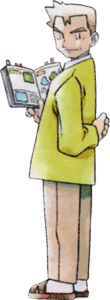
Buena
Buena (Aoi in Japanese, after the mallow plant; her English name is Spanish for ’good’) is the DJ Crystal adds to the Goldenrod Radio Tower. Her night-time Password show rewards loyal listeners with Blue Card points and prizes, and at 30 points she gives you her number. During the Rocket takeover she tells you the day’s password is HELP. (Pictured: Professor Oak, whose own show shares the airwaves.)

Lance, the Champion
Lance, the caped dragon master from Blackthorn City and Clair’s cousin, is Champion at the Indigo Plateau. As in Gold and Silver he investigates the Lake of Rage, raids Team Rocket’s Mahogany hideout with you and gives you HM06 Whirlpool. His team is unchanged in Crystal: Gyarados Lv. 44, two Dragonite Lv. 47, Aerodactyl Lv. 46, Charizard Lv. 46 and Dragonite Lv. 50, all with Hyper Beam. What Crystal changes is the setting: his chamber is redecorated with a dragon theme and Dratini statues.

Red
Red, the silent hero of the first generation, waits deep inside Mt. Silver as the final challenge once you hold all sixteen badges. Crystal keeps the Gold and Silver battle as it was: Pikachu Lv. 81, Espeon Lv. 73, Snorlax Lv. 75, Venusaur Lv. 77, Charizard Lv. 77 and Blastoise Lv. 77, the highest-levelled team in the game. He says nothing beyond a couple of ellipses, and he reappears for another battle after each new Elite Four win.
Gym Leaders, Elite Four and Champion
Crystal’s sixteen Gym Leaders, the Elite Four and Lance use exactly the teams they had in Gold and Silver – the game data has the same species, levels, moves and party order – so the full write-ups live on the Gold & Silver page. What Crystal changes is the way to two of the badges, and the room you fight the Champion in.
The eight Johto Gym Leaders

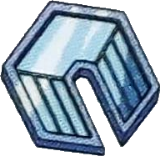
Falkner
Team: Pidgey Lv. 7, Pidgeotto Lv. 9
Mud-Slap’s accuracy drops are the real threat, so hit hard early. Rock and Electric moves work best; Kyle’s Onix (traded for a Bellsprout in Violet) shrugs off Tackle and Gust, though Mud-Slap hits it for double. Crystal’s Route 36 Growlithe is catchable before this battle but has no edge here. Reward: TM31 Mud-Slap.

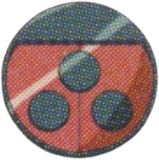
Bugsy
Team: Metapod Lv. 14, Kakuna Lv. 14, Scyther Lv. 16
Scyther’s Fury Cutter doubles with each consecutive hit, so knock it out quickly. Crystal makes this Gym easier for Chikorita and Totodile players, who can now catch a Lv. 5 Growlithe on Route 36 and train it on the way. Reward: TM49 Fury Cutter.

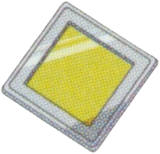
Whitney
Team: Clefairy Lv. 18, Miltank Lv. 20
Miltank’s Rollout and Milk Drink remain the classic early wall. Fighting moves help, and Crystal’s Machop ’MUSCLE’, now traded for an Abra, is female, so Attract can’t infatuate her. Fighting, Ground and Steel types resist Rollout. Reward: TM45 Attract (carried over from the Gold and Silver check).


Morty
Team: Gastly Lv. 21, Haunter Lv. 21, Gengar Lv. 25, Haunter Lv. 23
Crystal change: Team unchanged. Story change: in Crystal you must witness the legendary beasts waking in the Burned Tower before Morty will accept your challenge.
Normal and Fighting moves can’t touch Ghosts, and Mean Look traps you with Hypnosis and Dream Eater. Psychic, Ghost, Ground and Dark moves are the answers; Morty is also Eusine’s friend and fellow Suicune researcher. Reward: TM30 Shadow Ball.


Chuck
Team: Primeape Lv. 27, Poliwrath Lv. 30
Chuck still leads with Primeape even though Crystal players can’t catch one. Flying and Psychic moves win; beware Poliwrath’s Mind Reader into DynamicPunch, which can’t miss. Eusine’s battle waits in the same town. Reward: TM01 DynamicPunch.


Jasmine
Team: Magnemite Lv. 30, Magnemite Lv. 30, Steelix Lv. 35
She only returns to her Gym after you bring the SecretPotion from Cianwood for Amphy. Ground and Fire moves handle the Magnemite, and Water, Fighting, Fire or Ground work on Steelix, though Sunny Day powers up Fire against you too. Reward: TM23 Iron Tail.

Pryce
Team: Seel Lv. 27, Dewgong Lv. 29, Piloswine Lv. 31
The lowest-levelled team in the late game. Electric and Fighting moves suit Seel and Dewgong, while Piloswine is immune to Electric but weak to Fire, Water, Grass, Fighting and Steel. His Ice-floor Gym puzzle is the real obstacle. Reward: TM16 Icy Wind.


Clair
Team: Dragonair Lv. 37, Dragonair Lv. 37, Dragonair Lv. 37, Kingdra Lv. 40
Crystal change: Team unchanged. The badge now comes after the clan Master’s five-question quiz in the Dragon Shrine instead of the Dragon Fang errand, and passing also earns a Dratini that can know ExtremeSpeed.
Ice moves are the best bet against the Dragonair, whose Thunder Wave, Surf, Thunderbolt and Ice Beam cover a lot. Kingdra is weak only to Dragon in Generation II, so plan to overpower it. Reward: TM24 DragonBreath (given in the Dragon’s Den after the badge).
The eight Kanto Gym Leaders


Brock
Team: Graveler Lv. 41, Rhyhorn Lv. 41, Omastar Lv. 42, Onix Lv. 44, Kabutops Lv. 42
All five are part Rock and three part Ground, so Water and Grass dominate, though Kabutops carries Giga Drain. Crystal players can’t catch either fossil line, yet Brock still uses both.


Misty
Team: Golduck Lv. 42, Quagsire Lv. 42, Lapras Lv. 44, Starmie Lv. 47
Electric moves crush everything except Quagsire, which needs Grass. Crystal fixes the old glitch that let you fish in her Gym’s water.


Lt. Surge
Team: Raichu Lv. 44, Electrode Lv. 40, Magneton Lv. 40, Electrode Lv. 40, Electabuzz Lv. 46
Ground types are immune to his whole team’s Electric attacks. Both Electrode can use Explosion, and Magneton pairs Lock-On with Zap Cannon.


Erika
Team: Tangela Lv. 42, Jumpluff Lv. 41, Victreebel Lv. 46, Bellossom Lv. 46
Fire, Ice and Flying moves cut through, and Sunny Day boosts Fire against her. Watch for Sleep Powder and Bellossom’s SolarBeam. Reward: TM19 Giga Drain.


Janine
Team: Crobat Lv. 36, Weezing Lv. 36, Weezing Lv. 36, Ariados Lv. 33, Venomoth Lv. 39
The lowest-levelled Kanto Gym, with look-alike trainers hiding the real Janine. Psychic moves hit all five for double damage, and both Weezing can use Explosion. Reward: TM06 Toxic.


Sabrina
Team: Espeon Lv. 46, Mr. Mime Lv. 46, Alakazam Lv. 48
Dark and Bug moves are the answer; Mr. Mime’s Barrier and Baton Pass and Alakazam’s Recover drag the fight out.


Blaine
Team: Magcargo Lv. 45, Magmar Lv. 45, Rapidash Lv. 50
His Gym has moved to a cave in the Seafoam Islands. Water and Ground moves win; Magcargo is four times weak to both.


Blue
Team: Pidgeot Lv. 56, Alakazam Lv. 54, Rhydon Lv. 56, Gyarados Lv. 58, Exeggutor Lv. 58, Arcanine Lv. 58
You find him on Cinnabar Island first before he returns to Viridian. A balanced team with no shared weakness; Electric covers Pidgeot and Gyarados.
The Elite Four and Champion Lance

Will
Team: Xatu Lv. 40, Jynx Lv. 41, Exeggutor Lv. 41, Slowbro Lv. 41, Xatu Lv. 42
Every member is part Psychic, so Dark, Bug and Ghost moves are reliable. Jynx’s Lovely Kiss and the Xatus’ Future Sight and Confuse Ray are the main dangers.

Koga
Team: Ariados Lv. 40, Venomoth Lv. 41, Forretress Lv. 43, Muk Lv. 42, Crobat Lv. 44
Toxic, Spikes, Double Team and Minimize make this a battle of attrition. Fire handles Forretress and the Bug types; Psychic covers Muk and Crobat.

Bruno
Team: Hitmontop Lv. 42, Hitmonlee Lv. 42, Hitmonchan Lv. 42, Onix Lv. 43, Machamp Lv. 46
Psychic and Flying moves sweep the Fighting types, with Water or Grass for Onix. Hitmonchan’s three elemental punches cover a lot of ground.

Karen
Team: Umbreon Lv. 42, Vileplume Lv. 42, Gengar Lv. 45, Murkrow Lv. 44, Houndoom Lv. 47
Fighting moves break Umbreon and Houndoom, though Vileplume and Gengar aren’t Dark types. Beware Gengar’s Destiny Bond and Umbreon’s Mean Look.
Lance
Team: Gyarados Lv. 44, Dragonite Lv. 47, Dragonite Lv. 47, Aerodactyl Lv. 46, Charizard Lv. 46, Dragonite Lv. 50
Crystal change: Team, moves and levels unchanged. His room is redesigned with a darker dragon theme, and the statues are now Dratini.
Every member knows Hyper Beam. Ice moves are four times effective against each Dragonite and super-effective on Aerodactyl, and Electric moves are four times effective on Gyarados. His Aerodactyl’s Rock Slide and his under-levelled Dragonite are the same oddities as in Gold and Silver.
Glitches, exploits and oddities
Crystal fixed Gold and Silver’s most famous exploit and introduced a couple of its own. The cloning trick survived, Twitch played it for two weeks, and speedrunners still pick it apart.
Cloning by interrupting a save
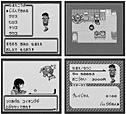
The classic cloning trick works in all three Generation II games, Crystal included. You deposit the Pokémon you want to copy, choose to change PC boxes, which forces a save, and switch off in the brief window after the save starts but before it completes, leaving the Pokémon in both your party and the box together with any held item. A second cloning method uses trades. Mistimed attempts can create ’bad clones’, nameless corrupted Pokémon that can damage save data, and those bad clones are the raw material for the Celebi Egg glitch. Back up your save before trying it.
No Coin Case glitch; Crystal’s arbitrary code execution route
The famous Coin Case glitch, a text-termination bug that runs Pokémon cry data as code, exists only in the English Gold and Silver; Crystal fixed it. Crystal’s own route to arbitrary code execution is built on a variant of the Celebi Egg glitch that also controls the Egg’s held item. Making a Pokémon hold a Key Item and then taking it back while another copy is in the Bag creates two identical stacks; swapping them corrupts the list and opens up 255 items in the Key Items Pocket. From there, careful item manipulation puts a TM outside its pocket or corrupts the Pokédex sort mode, depending on language, and using it jumps into RAM.
Celebi Egg glitch
Shared by Gold, Silver and Crystal, this exploit turns a bad clone into an Egg whose species is chosen by one of its moves. The setup breeds Sneasel that know Beat Up and then combines a bad clone with a precise sequence of PC and Day Care moves. Because Beat Up and Celebi share index number 251, the result hatches into Celebi, which is why the trick took its name; other moves produce other species. It is the way to obtain Unown Eggs, and every Unown Egg shows the ’A’ form while hatching. It is risky and can scramble names, moves and save data.
SRAM clear error (Crystal only)
Crystal has a save-clearing bug in every language. If you clear the save and then enter the Hall of Fame without having saved in between, the data in Box 2 and later boxes is corrupted. This can produce glitch Pokémon and the nameless ’?????’ entries without going through bad cloning at all, which makes it a cleaner starting point for glitch experiments than the cloning route. You only meet it by deliberately clearing a save. A related Crystal-only slip leaves 24 KB of extra work memory uncleared at start-up, because one bank is wiped seven times instead of seven banks once.
Legendary beasts’ five-letter name check (English Crystal)
Ho-Oh’s appearance and Eusine’s later scenes depend on the game confirming that you caught Raikou, Entei and Suicune yourself. In non-Japanese Crystal that check compares only the first five characters of the original trainer’s name together with the ID number. Take a trainer named CRYSTAL: a beast caught by a different save named CRYST with a matching ID would pass the check. In practice it rarely matters, because matching IDs between two saves is unlikely, and it is probably a localisation leftover: Japanese trainer names are five characters long, while English ones allow seven.
Clair’s double TM24 (Crystal only)
Crystal’s new Dragon Shrine sequence has a small reward bug. After you receive the Rising Badge, Clair is supposed to give you TM24 DragonBreath in the Dragon’s Den. If you black out from poison damage inside the Dragon Shrine at that point, you can collect the TM from the Blackthorn Gym instead; if you then stand in front of the Shrine door, Clair appears again and hands over a second TM24. Because Generation II TMs are single-use, the extra copy lets you teach DragonBreath to one more Pokémon. The glitch affects every language version of Crystal.
Smaller Crystal quirks: the Poké Seer, the Dude and version fixes
Several small bugs are unique to Crystal. The Poké Seer in Cianwood City misreports the level and time at which you met any Pokémon above Lv. 63, so a Lv. 70 Pokémon can be described as Lv. 6. In German copies the Dude’s catching tutorial can leave you with 999,999 Pokédollars, and on the German Virtual Console it freezes the game if your boxes are full. The English v1.1 revision fixed a Battle Tower trainer text glitch and a Pokédex memory address. Crystal also closed Gold and Silver’s Cerulean Gym fishing glitch, though shared bugs such as Day Care experience loss and the Time Capsule exploit remain.
Twitch Plays Pokémon Crystal (2014)
After the viral Twitch Plays Pokémon Red run (12 February to 1 March 2014), the anonymous Australian programmer behind the stream moved straight on to Crystal. The run began on 2 March 2014 and finished on 15 March after 13 days, 2 hours, 2 minutes and 55 seconds. It used a modified game with all 251 species available and replaced Red’s team on Mt. Silver with the Pokémon the community had used to beat the Elite Four in the Red run. Democracy mode now switched on automatically at the top of each hour. Viewer numbers were lower than for Red, but in-jokes like Pidgeot ’Brian’ and Feraligatr ’Lazorgator’ joined the Helix Fossil lore, and later anniversary runs returned to modified Crystals.
Speedrunning Crystal
Crystal has an active speedrunning community with its own leaderboard on speedrun.com, where any% and glitchless are the main categories, and the Glitch City wiki documents the any% route. Record times move often, so check the leaderboard rather than any figure quoted here.
Videos & media
Check out these Pokémon Crystal related videos, including TV commercials, trailers and gameplay videos.
A US TV commercial for Pokémon Crystal.
A Japanese TV commercial for Pokémon Crystal.
The music for the Mobile Center feature – unused in international releases, since we never got Mobile Center functionality.
Nintendo’s launch trailer for the 3DS Virtual Console release, January 2018.
Trivia & facts
- The Japanese version of Pokémon Crystal can be hooked up to a mobile phone to trade and battle with it.
-
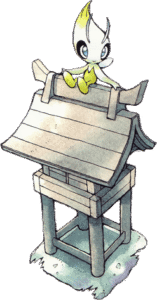
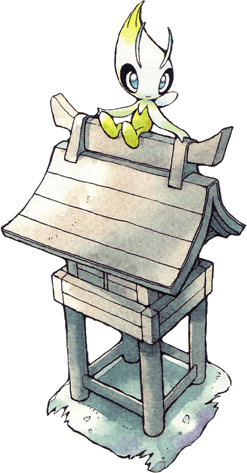
Celebi artwork from Pokémon Crystal. Thanks to this, Celebi was distributed in this fashion, leading to a whole event with the GS Ball and Ilex Forest, where it could be caught.
- Pokémon Crystal was initially called Pokémon “X” – Pocket Monsters X in Japan.
- The Japanese version of Pokémon Crystal has a Suicune emblem on its cartridge – printed on the circuit board inside the shell rather than the label.
- Pokémon Stadium 2 was built with Crystal in mind: connect the two and Stadium 2 recognises the cartridge, with a Japan-only Mobile Stadium mode on top.
- Crystal introduced the Odd Egg, the first guaranteed way to hatch a shiny: 14% in the West, 50% in Japan. (Shiny Pokémon themselves arrived in Gold and Silver, and the Masuda method is a Generation IV trick.)
- Mystery Gift, introduced in Gold and Silver, returns unchanged – Crystal’s new way to get gifts was Japan’s Mobile System GB.
- The Pokémon Center in Goldenrod City is a Pokémon Communication Center in the Japanese version of the game. It let players use Nintendo’s mobile service through a phone; the feature was never released to the rest of the world.
- This was the last title to include the “Gotta Catch ’Em All” tagline. The games that followed took the format of simply “Pokémon <Colour> Version”.
- In an early version of the game Kris had a different appearance: pre-release screenshots show a girl with a different hairstyle and outfit.
A pre-release shot of the earlier girl design.
Further trivia
- Crystal is the first core game with dedicated legendary battle music: Raikou, Entei and Suicune share their own theme.
- Gold and Silver never told you where you were; Crystal flashes each area’s name on screen as you enter, a feature later games carried forward.
- Crystal has the lowest maximum wild Pokémon level of any core game: its strongest wild encounters, Ho-Oh and Lugia, are only Lv. 60.
- It is the only Western ’third version’ in which the Gym Leaders and Champion use exactly the same Pokémon as the original pair; the Gold and Crystal game data match move for move.
- The girl player’s name was never fixed in-game. Kris first appeared on the back of the American and Australian boxes, Nintendo’s official player’s guide called her Crystal, two Game Freak website files spell it Clis, and Pokémon Masters EX finally named her on screen.
- Masuda has said the name Crystal refers to the crystals used in electronic transmission, fitting a game built to launch a mobile phone service.
- The Japanese Trade Corner, where you left a Pokémon and named the one you wanted, is the forerunner of Generation IV’s Global Trade Station, and the Battle Tower’s Room Leaders led to the Wi-Fi Battle Tower and Battle Subway.
- The Japanese title of the anime special The Legend of Thunder! begins ’Pocket Monsters Crystal’, an explicit nod to the game it was made alongside.
Legacy
Companion console game, remakes and the Virtual Console
- Pokémon Stadium 2 compatibility – 14 December 2000. Stadium 2 launched in Japan on the same day as Crystal and reads it through the Transfer Pak. The Western Stadium 2 (North America 26 March 2001, Australia 7 April 2001, Europe 10 October 2001) came out before Crystal and omits it from the box and manual, but is fully compatible. No patch is involved.
- HeartGold & SoulSilver (Nintendo DS remakes) – 12 September 2009. Japanese release date; North America followed on 14 March 2010, Australia on 25 March and Europe on 26 March. Lyra replaces Kris, Suicune’s story moves to Eusine’s chase through Kanto ending at the Cerulean Cape, the Kimono Girls’ dance summons Ho-Oh or Lugia, and Buena’s show joins the Variety Channel.
- 3DS Virtual Console – 26 January 2018. Released the same day in Japan, North America, Europe, Australia, Hong Kong and Taiwan. The GS Ball arrives after the Hall of Fame without any event, wireless replaces the Link Cable, infrared Mystery Gift works between Virtual Console copies, the printer is disabled, the clock is independent of the 3DS clock and Poké Transporter sends Pokémon to Pokémon Bank. Mobile features stay locked, so the Japanese Battle Tower and Odd Egg are unavailable there. Off sale since the eShop closed on 27 March 2023.
Where to play Crystal today
Crystal is not sold new anywhere today. The 3DS Virtual Console version (26 January 2018) left sale when the 3DS eShop closed on 27 March 2023, though existing downloads still work. No Generation II game has reached the Nintendo Switch. The realistic options are a cartridge on a Game Boy Color or Game Boy Advance (check its save battery) or the DS remakes HeartGold and SoulSilver.
How it was made
Game Freak began work on Crystal in 1999, after Gold and Silver, using Gold’s code as the base. Its working title was Pokémon X (Pocket Monsters X), a mobile-linked game first planned for April 2000. Nintendo announced the project alongside the Mobile Game Boy Adapter in December 1999, and Ken Sugimori later said Crystal was made mainly to launch the Mobile System GB service, which ran over the DION network to a Nintendo-run server. Junichi Masuda, sub-director on Gold and Silver, became lead director for the first time, sharing the credit with Satoshi Tajiri, and has said the name refers to the crystals used in electronic transmission. Crystal reached Japan on 14 December 2000, the same day as Pokémon Stadium 2, but the online service slipped to 27 January 2001. The adapter sold about 80,000 units in its first year, never launched abroad and lost its server in December 2002. Crystal was the first core game that refuses to run on the original Game Boy, the last core game for the Game Boy Color and the last Pokémon game for the system outside Japan.
Crystal in other media



Sales & reviews
Sales figures
Crystal sold around 6.39 million copies overall, making it the least sold of this generation – quite surprising for a game that many hardcore Pokémon fans herald as the one that saved the series.
Wikipedia puts worldwide sales at about 6.3 million, against 23.7 million for Gold and Silver; VGChartz’s estimate of 6.39 million (North America 2.55 million, Europe 1.56 million, Japan 1.29 million, elsewhere 0.99 million) is the figure quoted above. In Japan it sold 549,135 copies in its first week (to 17 December 2000) and about 1.55 million by the end of 2006, with later trackers putting the lifetime total nearer 1.87 million; it topped the weekly charts on release and became Japan’s second-best-selling Game Boy Color game. In the United States it sold about 600,000 copies in the two weeks after the 30 July 2001 launch, was Nintendo’s best-selling Game Boy title in January 2002 and stayed in Nintendo Power’s top ten throughout that year.
- 6.39mworldwide (VGChartz estimate)
- 549,135Japan, first week
- 1.55mJapan by the end of 2006
- 600,000United States in the first two weeks


Review scores
Reviews were warm rather than ecstatic – a polished encore rather than a new game – and the scores show it. Check out what some of the major review sites had to say below:
- IGN’s Craig Harris scored the game 9 out of 10 and commented “Nintendo offers up one last hurrah for the Pocket Monsters on the Game Boy Color”.
- GameRankings’ aggregate score was 79.86%, based on 12 reviews.
- Nintendo Power scored Pokémon Crystal 4 stars out of 5. Sadly they are now defunct and we can’t link you to that review.
- Frank Provo from GameSpot awarded Pokémon Crystal a pretty sweet 8.4 out of 10 – a “Great” rating on the GameSpot scale.
Reviews in 2001 were positive but cooler than for Gold and Silver: GameRankings averaged about 80%, roughly ten points lower. Most critics agreed the additions were well made yet modest. IGN’s Craig Harris gave 9/10 but doubted Gold and Silver owners needed it and grumbled about the reused engine. EGM’s panel split widely, with Chris Johnston arguing the extras belonged in the original games, and Game Boy Xtreme and Pocket Games saw it as a fine starting point for newcomers rather than a must-buy. GameSpot’s Frank Provo praised its timed events and smaller improvements, Nintendo Power singled out the tough Battle Tower, and Nintendo Gamer liked the female trainer, location signs and animations. Retrospectives are warmer: Eurogamer (2018) called it the best Pokémon game; GameSpot (2022) the definitive Game Boy-era entry, Nintendo Life gave the 2018 Virtual Console release 9/10, and Polygon, Wired and Syfy Wire writers have described what the gender choice meant to girls and trans players.
Awards and honours:
Media & artwork
- Official artwork gallery from Pokémon Crystal – Pokémon and characters, including Kris, Eusine and Suicune
- Box art from Pokémon Crystal including numerous regional variations + editions
- Official artwork gallery from Pokémon Gold & Silver – the Johto Pokémon Crystal shares
- Screenshots from Pokémon Crystal – 50 shots from the game
Further reading
Need the full lists? Every item, TM and HM for Gold, Silver and Crystal has a page of its own in The Library, alongside the games either side of this one: