  |
|
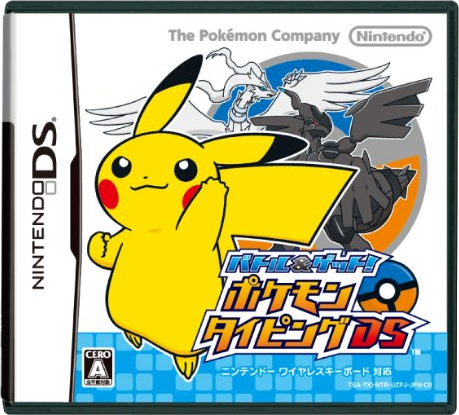
| Titles | Learn with Pokémon: Typing Adventure Battle & Get! Pokémon Typing DS (Japan) バトル&ゲット!ポケモンタイピングDS (Batoru & Getto! Pokémon Taipingu DS) |
| Platform | Nintendo DS (Game Card with a built-in Bluetooth adapter; Nintendo Wireless Keyboard included) |
| Developer | Genius Sonority |
| Publisher | Nintendo (The Pokémon Company in Japan) |
| Director | Manabu Yamana |
| Producers | Hitoshi Yamagami · Takashi Fujii · Hiroaki Tsuru |
| Music | Azusa Chiba (music director) · Masaharu Iwata · Kimihiro Abe; supervised by Hitoshi Sakimoto (Basiscape) |
| Players | Single player |
| Genre | Educational typing game |
| Pokémon | 403 to research in the Japanese version (four are missing in Europe) |
| Courses | 63 locations, one on every key except Enter; up to 60 levels and 180 medals |
| Released | 21 April 2011 (Japan) · 12 November 2011 (Japan, black keyboard bundle) · 21 September 2012 (Europe) · 10 January 2013 (Australia) · never released in North America |
| Re-releases | None – no Virtual Console, eShop or Nintendo Switch Online release (October 2026) |
| Rating | CERO A · PEGI 3 · ACB G |
| Predecessor | None – the first Pokémon typing game |
| Successor | None |
| Sales | 260,116 in Japan by December 2013 (Media Create) |
Overview
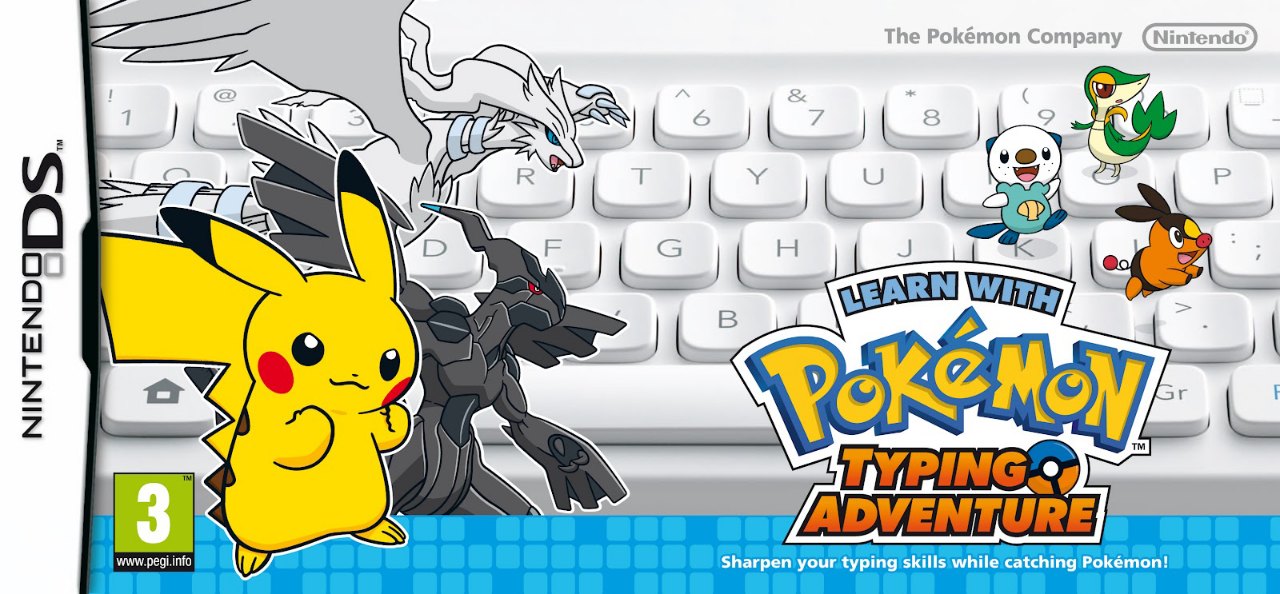
 Released on the Nintendo DS, Learn with Pokémon: Typing Adventure is a typing educational adventure game and the first spin-off for the fifth generation games. It can be played with the Nintendo Wireless Keyboard provided with it or the on-screen keyboard appearing on the touch screen. The game offers both guidance for beginners and enough challenge for expert typists.
It first came out in Japan as Battle & Get! Pokémon Typing DS on 21 April 2011, then reached Europe on 21 September 2012 and Australia on 10 January 2013. It was never released in North America, and it also plays on Nintendo 3DS systems, in 2D.
Master the keyboard and catch Pokémon in this thrilling typing adventure!
Type quickly! Type correctly! Use the Nintendo Wireless Keyboard to research over 400 Pokémon in locations such as the desert, forest, mountains, beaches and many more…
— Official description
Quick Answers
The questions people ask about Learn with Pokémon: Typing Adventure, answered first and explained further down the page.
Can you play Learn with Pokémon: Typing Adventure without the keyboard?
Yes. If the Nintendo Wireless Keyboard is lost or its batteries are flat, the game offers an on-screen keyboard on the DS touch screen, so it can still be played with the stylus. Reviewers found it much slower and fiddlier than real typing, so high scores and gold medals are far harder to earn that way. More →

Was Typing Adventure ever released in North America?
No. It came out in Japan on 21 April 2011, Europe on 21 September 2012 and Australia on 10 January 2013, but never in North America or South Korea. It is one of very few English-language Pokémon games that Americans could only get by importing a European or Australian copy. More →
How many Pokémon are in Typing Adventure?
The Japanese version has 403 Pokémon from the first five generations to type and research. Four of them, Surskit, Staravia, Ferrothorn and Heatmor, were taken out of the European versions, and a few others were moved to different courses so that the early stages stayed easy across every language. More →
How do you catch Reshiram and Zekrom in Typing Adventure?
They are the final bosses at Right Ruins, the right arrow key. Clear Function Tower to open Left Expanse, then work through Paradise Above and Dark Depths to unlock Right Ruins. Destroy their letter-covered attacks, including Fusion Flare and Fusion Bolt, and catching them completes the game and unlocks a Reshiram and Zekrom keyboard skin. More →
Does Typing Adventure work on a Nintendo 3DS, and is it on Switch?
It runs on every DS and 3DS family system, in 2D on 3DS, because the Bluetooth link to the keyboard is built into the game card itself. It has never been re-released, so there is no eShop, Virtual Console or Nintendo Switch Online version. The original boxed set is the only way to play. More →
Does the Nintendo Wireless Keyboard work with other devices?
Usually, yes. It is a standard Bluetooth keyboard, and Satoru Iwata said Nintendo staff had paired the prototype with iPhone and Android phones. Nintendo never guaranteed it would work with anything but the game, and some keys behave differently on other devices, so Nintendo published a sheet of key combinations for using it elsewhere. More →
Story
As the newest member of the Elite Typists’ Club, the player is tasked by Professor Quentin Werty and his assistant, Paige Down, to study the different Pokémon habitats, search for the Legendary Pokémon and capture them. As a travelling trainer, they’ll visit many new areas and routes, encountering several Pokémon species which they can capture in the Typing Ball by typing their names fast enough. The player will earn medals and achievements and climb the Typist Rank, paving the way to becoming a Master Typist.
From Alt Rocky Range to Right Ruins
The club helps Professor Werty and Paige study where Pokémon live, and its members do their fieldwork by typing: spell a Pokémon’s name correctly and fast enough and it is caught in a Typing Ball, so the team can research it. The club’s map is laid out like a keyboard, with every key leading somewhere new, and the rookie’s skill lets the team reach places it has never explored.
Starting on Alt Rocky Range, the player works across the letter keys, through forests, beaches, haunted mansions and volcanoes, then on to the punctuation and function keys, collecting medals, rising through the Typist Rank and earning the titles Advanced Typist and Ace Typist along the way. Powerful Pokémon guard many of the courses: Kyogre off Z Islands, Groudon on H Peak, Lugia in M Waters, Ho-Oh on No. 2 Rainbow Railroad, the shape-shifting Zoroark on L Dark Path and the Swords of Justice trio of Cobalion, Terrakion and Virizion.
The last stretch follows the arrow keys from Left Expanse through Paradise Above and Dark Depths to Right Ruins, where Reshiram and Zekrom are waiting. Catching both completes the adventure, and extra challenge courses then open for players who want to research every Pokémon and become true Master Typists.
Who’s who

Professor Quentin Werty
The professor whose study of Pokémon habitats the club supports. He sends the player out to research every species the club can find. His name is a pun on QWERTY, the standard keyboard layout. His Japanese name is Eiji (エイジ), and in the original version he helps the player investigate Pokémon they have not yet seen.

Paige Down
A member of the Elite Typists’ Club who greets the player, gives advice throughout and calls out the action during courses. Her English name is a pun on the Page Down key. In Japan she is Kii (キイ), a play on the English word “key”. Her British voice-over was recorded for the European release.

Rookie typist (boy)
A beginner typist, chosen as a boy or girl at the start, who joins the Elite Typists’ Club as its newest member. With each Pokémon caught and each medal earned, the rookie climbs the Typist Rank and picks up the titles Advanced Typist and Ace Typist on the way to facing Reshiram and Zekrom at Right Ruins and becoming a Master Typist.
Rookie typist (girl)
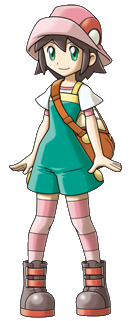
Players can start the adventure as a girl instead. Whichever rookie is chosen sets off from Alt Rocky Range on the same mission: to type, catch and research every Pokémon the club can find.
Pokémon
The Japanese version features 403 Pokémon, up to the fifth generation, and four of them (Surskit, Staravia, Ferrothorn and Heatmor) are missing from the European versions. These Pokémon appear as wild Pokémon, some of which appear as bosses at the end of the levels, while others would require some conditions to be fulfilled before even appearing.
Unova species are the most common, and most Pokémon run at the player along a course. Eleven Legendary and powerful Pokémon fight as bosses, four hide in locked buildings, four are summoned by collecting lettered coins and four only turn up after a special task. Catching every one, including all six Rotom forms, unlocks the Heart Design keyboard skin.
Pokémon bosses
 ZoroarkL Dark Path
 SerperiorE Tall Forest
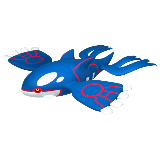 KyogreZ Islands
 GroudonH Peak
 VirizionParadise Above
 CobalionSunset Forward Slash Way
 TerrakionI Ridge
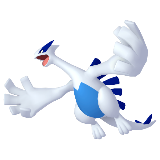 LugiaM Waters
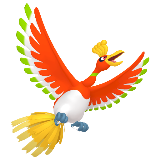 Ho-OhNo. 2 Rainbow Railroad
 ReshiramRight Ruins
 ZekromRight Ruins
| Boss | Their location | Their battle mechanics |
|---|---|---|
| Zoroark | L Dark Path | As soon as it appears, Zoroark will take the shape of one of the Pokémon in the level. The player would have to defeat it in these forms a few times before Zoroark reverts to its original form and can be captured. Its disguises show the Pokémon’s names without their first letters. |
| Serperior | E Tall Forest | Serperior will summon waves of leaves to damage the player. After defeating the leaves, Serperior can be captured. If the battle takes too long, Serperior will escape. |
| Kyogre | Z Islands | After the player heads to Z Islands, Kyogre will attack them and dive with them underwater. There the battle will take place, and Kyogre will simply use Hydro Pump to attack the player several times. |
| Groudon | H Peak | Groudon will summon waves of flames to damage the player. The flames must first be defeated before capturing Groudon. |
| Virizion | Paradise Above | Virizion will attack the player with energy beams while jumping all over the battlefield. The player must defeat the beams and then capture Virizion. |
| Cobalion | Sunset Forward Slash Way | Cobalion will surround itself with metal spheres, which the player needs to defeat before being able to capture it. |
| Terrakion | I Ridge | Terrakion will block the way with rock boulders. It will be available for capture once these boulders are removed. |
| Lugia | M Waters | Lugia will simply summon cyclones and vortexes to attack the player. |
| Ho-Oh | No. 2 Rainbow Railroad | Ho-Oh will summon many fire pillars to attack the player. Like all Pokémon attacks, these must be defeated first. |
| Reshiram | Right Ruins | Reshiram will use Fusion Flare and fireballs to attack the player. From Level 70, Zekrom joins the fight too. |
| Zekrom | Right Ruins | Zekrom will use Fusion Bolt and electric pillars to attack the player. From Level 70, Reshiram joins the fight too. |
Hidden Pokémon
Twelve more Pokémon only show up if the player does something extra on a course: completing a special task, opening a locked building or collecting every lettered coin.
 ManaphyDark Depths
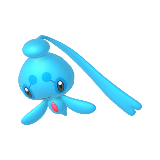 PhioneEquals Rapids
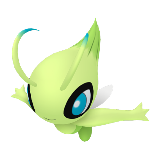 CelebiJ Shrubbery
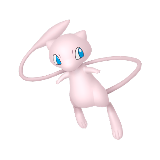 MewFull Stop Shipwreck
 VictiniV Cove
 VespiquenQ Castle
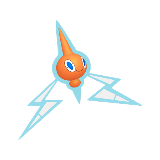 RotomNo. 0 Midnight Cabin
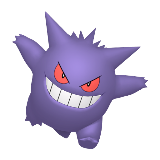 GengarG Mansion
 EmboarP Volcano
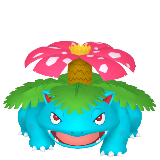 VenusaurK Wood
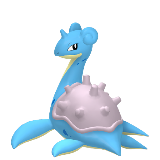 LaprasW Oasis
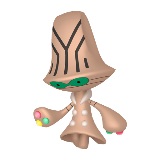 BeheeyemLeft Expanse
Pokémon with conditional appearance
These Pokémon would require the player to destroy a certain number of obstacles throughout the level, capture a high number of Pokémon or reach remarkably high scores.
| Pokémon | Location | Summon condition |
|---|---|---|
| Manaphy | Dark Depths | Many Pokémon have to be captured to keep the course lit, and a high score has to be reached. |
| Phione | Equals Rapids | The player has to destroy all the logs appearing and reach a high score. |
| Celebi | J Shrubbery | Capture as many Pokémon as required to clear the fog in the area. |
| Mew | Full Stop Shipwreck | Destroy all the boxes until a music box is played. |
Pokémon found in special buildings
Within the levels, there are special buildings which can only be unlocked by obtaining their keys. These keys are randomly dropped by a Pokémon after obtaining a fairly high score.
| Pokémon | Location | Building key |
|---|---|---|
| Victini | V Cove | Cove Key Japanese: IRIE NO KAGI |
| Vespiquen | Q Castle | Vespiquen Key Japanese: BI-QUINN NO KAGI |
| Rotom | No. 0 Midnight Cabin | Mansion Key Japanese: YAKATA NO KAGI |
| Gengar | G Mansion | Key Japanese: KAGI |
Rotom’s building holds all six of its forms, and V Cove itself only opens once the player has earned a silver medal or better at G Mansion.
Pokémon captured after collecting special coins
Throughout the level, several special coins will appear, and can be collected in a similar manner to obstacles. After all these coins are collected, a Pokémon will appear at the end of the level, giving the player a limited time to capture it.
| Pokémon | Location | Number of coins (Japanese version) |
|---|---|---|
| Emboar | P Volcano | 7 coins spelling ENNBUO- |
| Venusaur | K Wood | 10 coins spelling HUSIGIBANA |
| Lapras | W Oasis | 8 coins spelling RAPURASU |
| Beheeyem | Left Expanse | 6 coins spelling O-BEMU |
In the Japanese version the coins spell out the Pokémon’s name in rōmaji, one letter per coin, which is where these counts come from. P Volcano is a hidden course, opened by researching Porygon and Porygon-Z at Bracket Park.
Gameplay and Features
Gameplay

The whole game revolves around capturing the wild Pokémon by typing their names. Some of the Pokémon, as mentioned, are different from the others, and would require some effort to make them appear and capture them. The more Pokémon the player captures through a course, the higher their scores would be. Each course requires the player to reach a certain score or capture a certain number of Pokémon. Based on how well the player completed their task, they’ll be awarded a Bronze, Silver or Gold Medal, and with three on each of the 60 levels, there are 180 medals to collect.
Game courses
The courses in the game come in several types, each with its own mechanics and fun. The game doesn’t give these types names, so the labels below simply describe them:
- Standard courses: Within these, the player will advance through the levels, capturing Pokémon by typing their names and destroying several obstacles appearing on the screen.
- Stationary courses: Here, the player will stay stationary and the Pokémon will come at them. The player would have to capture as many Pokémon as possible before the time limit elapses.
- Appearance courses: In these courses, Pokémon cannot be captured and the player’s goal is to earn a maximum of points. In each level, there are letters on top of where Pokémon come from, and they stay the same throughout. Typing the letter as the Pokémon appears will earn the player points.
- Ball courses: Pokémon will appear on balls in the levels, and the player would need to type the letters appearing on these balls to earn points. As in Appearance courses, these Pokémon count towards the score but aren’t added to the club’s research.
- Tutorial courses: These courses are designed for beginner typists, to teach them the game basics and typing basics in general. In the English version, the practice drills are at Backslash Basics.
Where the keys lead
The map is a giant keyboard and every key except Enter leads to a location. Letter keys hold themed courses such as E Tall Forest, G Mansion and P Volcano, punctuation keys open places like Semi-Colon Cavern and Full Stop Shipwreck, and the arrow keys form the final run from Left Expanse to Right Ruins. Alt Rocky Range is the first course, Control Room and My Room act as hubs, and Backslash Basics is a practice area with seven finger-training drills. Every new Pokémon caught is added to the club’s research records, and research totals open new places, including the whole number row.
Letter keys
| Course | What’s there |
|---|---|
| Z Islands | Kyogre; opens once Space Hiking is cleared |
| S Garden | Clearing it opens E Tall Forest |
| E Tall Forest | Serperior |
| G Mansion | Gengar’s locked building; clearing it earns the Advanced Typist title |
| H Peak | Groudon; opens with the Advanced Typist title |
| V Cove | Victini; needs a silver medal or better at G Mansion |
| I Ridge | Terrakion |
| J Shrubbery | Celebi, once the fog is cleared |
| K Wood | Venusaur, for collecting every coin |
| L Dark Path | Zoroark |
| M Waters | Lugia |
| P Volcano | A hidden course; Emboar, for collecting every coin |
| Q Castle | Vespiquen’s locked building |
| W Oasis | Lapras, for collecting every coin |
Numbers, symbols and special keys
| Course | What’s there |
|---|---|
| Alt Rocky Range | The first course |
| Never-ending Tab Track | Opens at 30 Pokémon researched |
| No. 1 Berry Bazaar | Opens at 50 researched |
| No. 2 Rainbow Railroad | Ho-Oh; opens at 80 researched |
| No. 3 to No. 9 | Open at 100, 130, 150, 200, 250, 280 and 300 researched |
| No. 0 Midnight Cabin | Rotom’s locked building; opens at 320 researched |
| Equals Rapids | Phione |
| Full Stop Shipwreck | Mew |
| Bracket Park | Researching Porygon and Porygon-Z here opens P Volcano |
| Backslash Basics | Practice area with seven finger-training drills |
| Sunset Forward Slash Way | Cobalion; clearing it earns the Ace Typist title |
| Function Tower | Opens with Ace Typist; researching Cleffa and Clefairy here opens AltGr Falling Stars |
| Left Expanse | The left arrow key, opened by clearing Function Tower; Beheeyem, for collecting every coin |
| Paradise Above | The up arrow key; Virizion |
| Dark Depths | Manaphy, if the course is kept lit |
| Right Ruins | The right arrow key; Reshiram and Zekrom, the final bosses |


In depth: the fine print
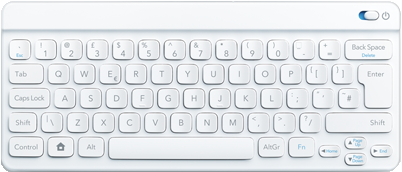
The Nintendo Wireless Keyboard
Typing Adventure came boxed with the Nintendo Wireless Keyboard, a Bluetooth keyboard that runs on two AAA batteries. Unusually, the Bluetooth hardware isn’t in the console at all but in the game card itself, so the keyboard pairs with the game rather than the system. That’s why it works on every DS, DSi and Nintendo 3DS family system, in 2D on the 3DS.
The keyboard isn’t strictly required. If it’s lost or its batteries are flat, the game offers an on-screen keyboard on the touch screen, played with the stylus, though reviewers found it far slower and fiddlier, so high scores and gold medals are much harder to earn that way. Early lessons cover where to rest the fingers and how to type accurately, and the European box adds a Nintendo DS Compact Stand, which holds any DS, DSi or 3DS model up to the 3DS XL upright while typing.
- 6keyboards, one for each language
- 2colours: white, plus black in Japan
- 2 AAAbatteries power the keyboard
- 43,118black bundles sold in Japan by 2013
White and black
Japan launched the game with a white keyboard on 21 April 2011. A black keyboard bundle, announced that October, followed on 12 November 2011, but it stayed in Japan: Europe and Australia only ever had the white one. The black bundle was a slow starter, selling just 448 copies in its first week, but Media Create had it at about 11,000 by the end of 2011 and 43,118 by the end of 2013.

A layout for every language
Because the game teaches touch-typing, each language version came with a keyboard matching the layout its players would know from a computer:
| Version | Keyboard layout | Notes |
|---|---|---|
| Japanese | Modified JIS | Pokémon names are typed in rōmaji, and several spellings are accepted |
| English (UK and Australia) | UK QWERTY | Australia kept the UK layout, even though most Australian computers use the US one |
| German | QWERTZ | – |
| French | AZERTY | – |
| Italian | Italian QWERTY | – |
| Spanish | Spanish QWERTY | – |
The keyboard theme runs through the whole game: the map itself is drawn as a keyboard, with a course behind every key except Enter.

Beyond the game
Under the hood it’s a standard Bluetooth keyboard, and it usually works with other devices too. When he presented the game to investors in January 2011, Satoru Iwata said Nintendo staff had paired prototype keyboards with iPhone and Android phones. Nintendo never guaranteed it would work with anything but the game, and some keys behave differently elsewhere, so it published a sheet of key combinations for using the keyboard with other devices.
Critics were split on the hardware itself: Nintendo Life rated the keyboard highly, while games™ mocked it as one of gaming’s least useful peripherals.
Regional Variations

Japan had Typing Adventure 17 months before Europe, and a few things changed along the way:
- Typing Adventure was never released in North America or South Korea, so it has no ESRB rating, and North American players could only import a European or Australian copy.
- The Japanese title is Battle & Get! Pokémon Typing DS. Japanese players type Pokémon names in rōmaji, and the game accepts several romanisation styles for the same name.
- Some Pokémon on the early courses were moved to other paths in the European version, because names start with different letters in each language and the tutorial difficulty had to stay even.
- In Japan the game was published by The Pokémon Company and distributed by Nintendo. In Europe and Australia Nintendo published it.
- Several Japanese voice clips have no English equivalent, such as lines for failing a light-switch stage or missing a hidden key, so these moments pass without comment in the European version.
Missing in Europe
Surskit, Staravia, Ferrothorn and Heatmor can be researched in the Japanese version but are missing from the European ones, although their Japanese announcer clips are still on the European cartridge.
 Surskit#283
 Staravia#397
 Ferrothorn#598
 Heatmor#631
Left in the data
- An unused, uncompressed DS menu banner sits in the game’s files and looks like a leftover from 100 Classic Books, another Genius Sonority title.
- Unused graphics include a “Press the Enter Key” texture and two placeholder 3D models: a simple textured house and an untextured truck.
- Japanese voice clips exist for each of Unown’s 28 forms, while the English version uses a single clip for all of them.
- Unused Japanese clips mention an “Atelier Key”, a “Room 6106” and a “Manaphy Egg”, hinting at extra locked areas and a final area that were cut. No Manaphy Egg appears in any version.
- Filenames reveal the game’s internal project name, “texas”.
Videos & media
A collection of videos for Learn with Pokémon: Typing Adventure, including English-language and Japanese TV commercials, plus the official info trailer and a trailer from Nintendo UK.
An English-language TV commercial for Learn with Pokémon: Typing Adventure.
The Japanese TV commercial for Battle & Get! Pokémon Typing DS.
The parents’ info trailer for the Nintendo DS game.
The official trailer from Nintendo UK.
Trivia & facts
- The Australian version of the game is identical to the United Kingdom one, right down to the UK keyboard layout.
- In the European versions of the game, Heatmor isn’t available, and neither are Surskit, Staravia and Ferrothorn.
- The game is the first spin-off linked to the fifth generation of Pokémon to be released, and one of the few games not to be released in North America.
Further trivia
- The two main characters’ names are keyboard puns: Professor Quentin Werty is QWERTY, and his assistant Paige Down is the Page Down key.
- Typing Adventure is one of the very few DS Game Cards with a Bluetooth adapter built in. That is how the keyboard connects, and why the game works on 3DS systems too.
- Presenting the game to investors in January 2011, Satoru Iwata said: “However, this software is not aiming to appeal only to children.”
Legacy
What came after
- Revealed at Nintendo Conference 2010 – 29 September 2010. Announced as Battle & Get! Pokémon Typing DS for a 2011 Japanese release.
- Keyboard bundle revealed by Satoru Iwata – 28 January 2011. Shown at an investor briefing with a Bluetooth keyboard and an April launch.
- Japanese release (white keyboard) – 21 April 2011. Went straight to number one in Japan, selling 59,363 copies in its first week.
- Japanese black keyboard bundle – 12 November 2011. Same game with a black Nintendo Wireless Keyboard; Japan only.
- European release as Learn with Pokémon: Typing Adventure – 21 September 2012. Five languages, each with its own keyboard layout, plus a DS Compact Stand in the box.
- Australian release – 10 January 2013. Identical to the UK version, with the UK keyboard layout.
- No digital re-release – as of October 2026. Never offered on Wii U Virtual Console, the Nintendo eShop or Nintendo Switch Online, and it never came out in North America.
Where to play it today
As of October 2026, the only way to play is with an original boxed copy. The game card contains the Bluetooth link, so it works on any DS, DSi or Nintendo 3DS family system (in 2D on 3DS) as long as the keyboard comes with it. A copy without the keyboard can still be played with the on-screen touch keyboard. It has never been on the eShop or Nintendo Switch Online.
How it was made
Typing Adventure was made by Genius Sonority, the Pokémon Colosseum studio that had also worked on Nintendo’s DS reading software 100 Classic Books. Manabu Yamana directed, and the music came from Azusa Chiba, Masaharu Iwata and Kimihiro Abe under Hitoshi Sakimoto’s Basiscape. It was first shown at Nintendo Conference 2010 in September 2010 as Battle & Get! Pokémon Typing DS, pencilled in for Japan in 2011.
At an investor briefing on 28 January 2011, Satoru Iwata revealed that it would come with a Bluetooth keyboard, set an April launch and stressed that it was not just for children. The Bluetooth hardware sits in the game card itself, and Iwata noted that staff had paired prototype keyboards with iPhone and Android phones. A black keyboard bundle was announced in October 2011. A European release with five languages and matching keyboards was confirmed in June 2012, followed by Australia in early 2013.
Sales & reviews
Sales figures
There are no official worldwide numbers on the game’s sales, but Media Create’s chart shows that the game sold 59,363 copies in Japan within the first week of its release, going straight in at number one.
Media Create’s launch week ran from 18 to 24 April 2011. A second week added 32,623 more, taking it past 90,000, and the game was back in the Japanese top ten in June 2011. By 29 December 2013 Media Create had tracked 216,998 copies of the white keyboard bundle and 43,118 of the black one, 260,116 in all. No sales figures have been published for Europe or Australia.
- 59,363first week in Japan, at No. 1
- 260,116in Japan by December 2013
- 32/40Famitsu (Gold Award)
- 69%GameRankings average
Review scores
The game had a mixed reception, with scores from 4/10 to 8/10 on major review websites and magazines. Let’s take a look at these reviews:
- On GameRankings, which closed in 2019, the game earned a score of 69.22% over 9 reviews, while it was rated 84% by the Official Nintendo Magazine, which considered it one of the top 5 spin-off Pokémon games, alongside Pokémon Conquest.
- The game wasn’t reviewed by IGN’s or GameSpot’s staff, but in Japan Famitsu’s four reviewers gave it 8/10 each, a Gold Award score of 32/40, while Pocket Gamer rated it 3.5/5 and praised it as a real aid to typing speed.
- Akwan reviewed the game on behalf of Pokémon Dungeon and gave it a solid 5-star rating due to it being extremely fit for purpose.
- Overall, Learn with Pokémon: Typing Adventure was considered fun for an educational game, but it can end up being repetitive once the player gets used to the game mechanics.
Critics split over the game. In Japan, Famitsu’s four reviewers gave it eight each, a Gold Award. Western scores ran from 4/10 to 8/10 and averaged about 69% on GameRankings. Official Nintendo Magazine found the core loop repetitive and the visuals plain, but scored it 84% because the lessons work, and put it among its five favourite Pokémon spin-offs. Pocket Gamer said the practice never felt dull and praised it as a real aid to typing speed. God is a Geek called the whole package a delight. Nintendo Life liked it more than expected and rated the keyboard highly, but said it was not essential even for keen fans. Cubed3 called it pointless and said Genius Sonority should have been making a full RPG, and games™ mocked the keyboard as one of gaming’s least useful peripherals.
Awards and honours:
Media & artwork
- Official artwork gallery from Learn with Pokémon: Typing Adventure – many of the Pokémon and characters from the game
- Box art from Learn with Pokémon: Typing Adventure, including regional editions
- Screenshots from Learn with Pokémon: Typing Adventure
Further reading
More Nintendo DS and fifth-generation links on the site: