  |
|
| Titles | Pokémon Rumble Blast Super Pokémon Rumble (Europe and Australia) スーパーポケモンスクランブル (Sūpā Pokémon Sukuranburu) |
| Platform | Nintendo 3DS Game Card; download version on the Nintendo eShop (2012–2023); StreetPass, Play Coins and Mii support |
| Developer | Ambrella |
| Publisher | Nintendo |
| Director | Norio Matsumura |
| Producers | Toshio Miyahara · Hiroaki Tsuru (executive producers Satoru Iwata and Tsunekazu Ishihara) |
| Music | Miki Obata |
| Players | 1–2 (local wireless co-op; each player needs their own 3DS and game card) |
| Genre | Action / beat ’em up |
| Generation | Generation V |
| Pokémon | 646: all of Generations I–V except Keldeo, Meloetta and Genesect |
| Toyland | 5 towns, 20 story fields and a post-game bonus field |
| Released | 11 August 2011 (Japan) · 24 October 2011 (North America) · 2 December 2011 (Europe) · 8 December 2011 (Australia) · 12 July 2012 (South Korea) |
| Re-releases | Nintendo 3DS eShop: 29 November 2012 (Europe, Australia) · 20 December 2012 (North America) · 30 January 2013 (Japan); eShop sales ended 27 March 2023 |
| Rating | ESRB E10+ · PEGI 7 · CERO A · ACB PG · GRB All |
| Predecessor | Pokémon Rumble (WiiWare, 2009) |
| Successor | Pokémon Rumble U (Wii U, 2013) |
| Sales | 1.29 million by March 2013 (Nintendo) |
Overview
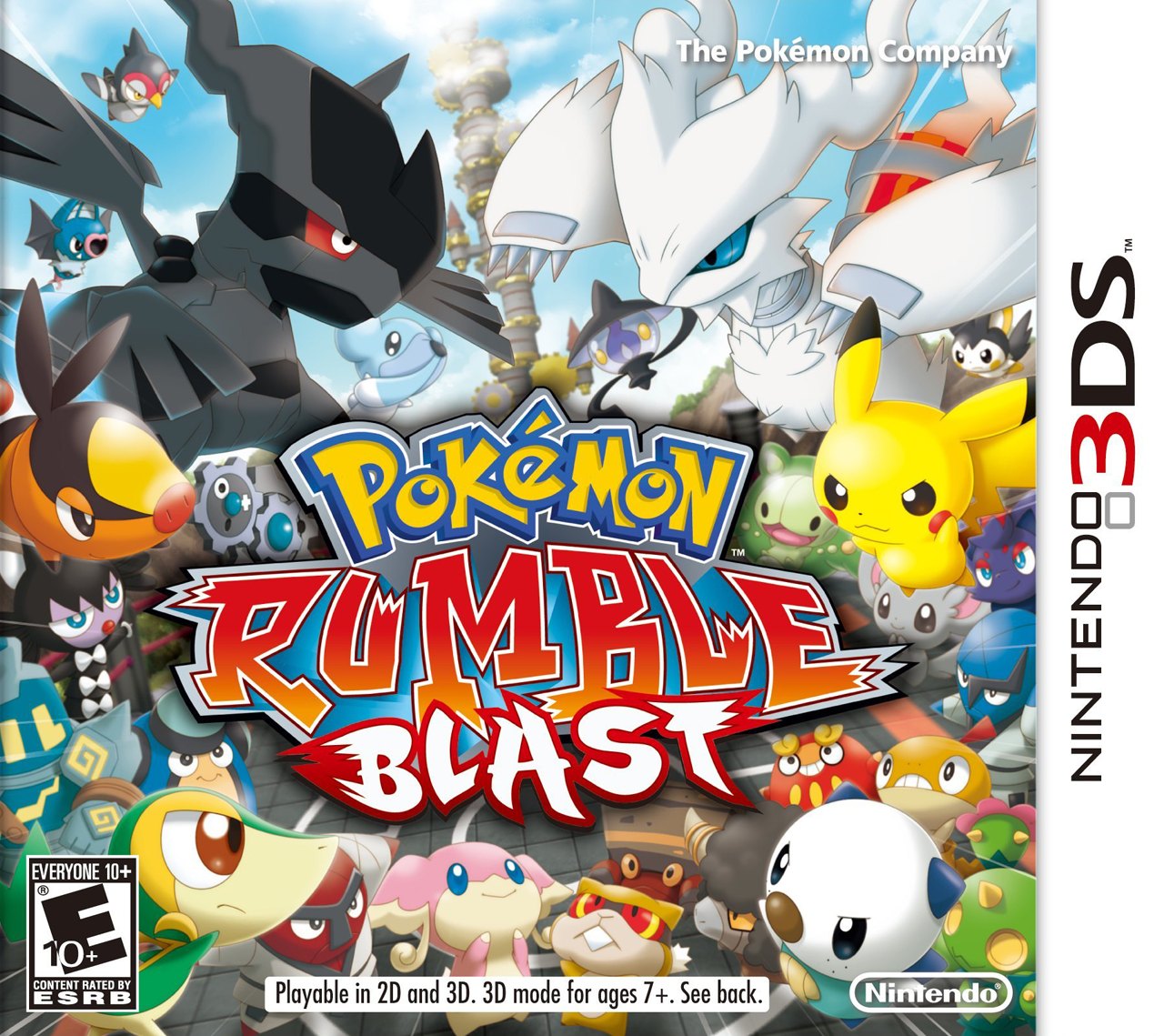
 Pokémon Rumble Blast, known as Super Pokémon Rumble in Europe and Australia, is the second beat ’em up game in the Pokémon Rumble series, and the first boxed Pokémon game to be released on the Nintendo 3DS (the free Pokédex 3D app had reached the Nintendo eShop two months earlier, in June 2011). Using toy Pokémon, the player will go through different stages and areas, battling waves of enemies and unlocking new Pokémon.
The game features Pokémon up to the fifth generation, along with various game modes, ranging from the single-player story to two-player co-op. Unlike the previous game in the Pokémon Rumble series, Pokémon Rumble Blast has a rather interesting storyline, backed by fun mechanics and 3D Mii models.
This rumble is a blast!
Discover over 600 Toy Pokémon to build an unbeatable force!
— Official description
Quick Answers
The questions people ask about Pokémon Rumble Blast, answered first and explained further down the page.
How many Pokémon are in Pokémon Rumble Blast?
646. Every species from Bulbasaur to Kyurem is available as a toy except Keldeo, Meloetta and Genesect, the three Unova Mythicals that had not yet been officially distributed in 2011. Most are befriended by beating them in the field; Legendaries and Mythicals come from shimmering catapults, Toy Shop milestones, passwords and post-game battles. More →
How do you get Legendary Pokémon in Pokémon Rumble Blast?
Mainly through the shimmering catapult. About one time in twenty, the catapult leading to an area’s boss sparkles and fires you into a Legendary battle instead, the Legendary depending on the area type. Most appear only after the credits, though Tornadus and Thundurus turn up earlier. Mewtwo, Arceus, Cobalion and Landorus need extra conditions. More →
How do you evolve Pokémon in Pokémon Rumble Blast?
Toys never level up or evolve on their own. Release seven toys of the same species together at a town’s release point and you receive one toy of the next evolution as well as some P: seven Oshawott give a Dewott, seven Dewott a Samurott. Rusty toys must be cleaned first, and Darumaka never yields Zen Mode Darmanitan. More →
Is Pokémon Rumble Blast multiplayer?
Yes, for two players over local wireless, but each player needs a 3DS and a copy of the game: there is no Download Play and no online mode. Co-op opens after the first Battle Royale and covers ordinary areas only, because Battle Royales, Team Battles and Charge Battles are single-player. StreetPass adds Toy Shop battles against passers-by. More →
Is Super Pokémon Rumble the same game as Pokémon Rumble Blast?
Yes. Super Pokémon Rumble is the European and Australian name for Pokémon Rumble Blast, and Super Pokémon Scramble is the Japanese title. The game itself is the same, but the passwords are not: Japan, North America and the PAL region each have their own set of 24 codes, typed in by talking to Munna in Easterly Town. More →
Can you still buy Pokémon Rumble Blast?
Not new from Nintendo. The download version was sold on the 3DS eShop from late 2012 until purchases closed on 27 March 2023; anyone who bought it can still redownload it. Otherwise a second-hand game card is the only route. There is no Switch version, and as the game never had online features, nothing in it has been switched off. More →
Story

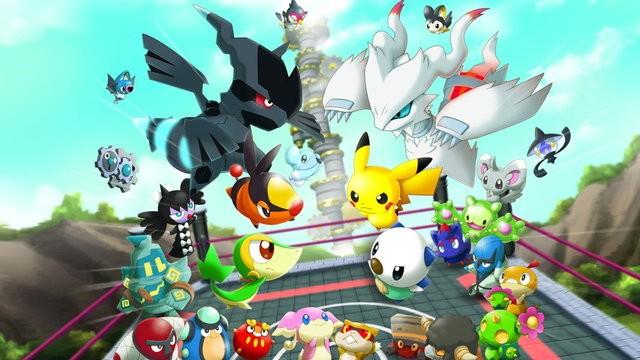
The game begins with a scene of Zekrom and Reshiram battling in toy form. The player then starts out as a toy Pikachu in Beginner’s Park, where they have to battle a bunch of Pansage, Pansear, Panpour and Unova starters. They manage to recruit Snivy, Oshawott and Tepig and face Zekrom as the stage’s boss. They inevitably lose the fight and the stage crumbles.
First Chapter: Battle Royale
The player finds themselves in Toy Town, where they meet Lillipup, who’ll familiarise them with the town and ask them to head to the meadow. As they return to Toy Town, they learn that the Glowdrops have been stolen and Pawniard is the first suspect. When the player contacts him, Pawniard states that the player won’t survive the next Battle Royale and runs away. Subsequently, the player enters the Battle Royale at Challenger’s Ground, where they beat Pawniard in the semi-final and go on to win the final. Pawniard reveals that it wasn’t him who stole the Glowdrops, but Krookodile and his gang, who will visit Easterly Town next. The player informs Toy Town’s citizens of the news and they show the player the way to Easterly Town.
Second Chapter: Stolen Glowdrops
A cutscene is played, where Cobalion addresses a group of Pokémon and demonstrates how the Glowdrops can remove rust from any object. Cobalion then orders the Pokémon to gather as many Glowdrops as possible, and the scene ends with the Pokémon moving out. The player reaches Easterly Town and witnesses Krookodile stealing its Glowdrops and defeating all the Pokémon standing in his way. The player chases the thief through different areas, until they meet a Gurdurr that informs them about the Great Glowing Fountain at Shimmering Lake, which has the power to restore the Glowdrops in the towns. The player heads toward it and encounters Cobalion there. They fight, three toys against one, and Cobalion knocks out all of the player’s Pokémon in two hits and takes the Glowdrops.
Third Chapter: Tracking Cobalion

The player visits Westerly Town and meets a Zorua there, who tells them about Cobalion’s whereabouts. The player heads toward Firebreathing Mountain, where Cobalion is supposedly hiding, and along the way comes across strange Rusty Pokémon attacking Cobalion’s minions. The player manages to defeat them and reach the last fort on Firebreathing Mountain, Cobalion’s Castle. There, Zorua reveals he’s one of Cobalion’s followers and attacks the player with Zoroark’s help. The player defeats both of them and finds Cobalion. Being too powerful, Cobalion knocks the player out again, bends their Wonder Key and proceeds north. The player wakes up badly injured and moves toward Northerly Town, as they are still determined to go after Cobalion.
Fourth Chapter: The World Axle and the Secret of the Wonder Key
Upon reaching Northerly Town, the player meets an Elgyem who suggests that they go to the Temple of Keys, after seeing their bent Wonder Key. The player enters the temple and notices that a Battle Royale is taking place there. After they win the Battle Royale, they earn the Temple Key, which replaces the Wonder Key. A Golett later reveals that the Path of Heroes leading to Cobalion will be unlocked once the player wins the four Shrine of Keys Battle Royales. Each time the player wins one of them, a portion of the path appears. The shrines lie in Everspring Valley and Sunny Seashore, which open up as the player defeats Cobalion’s two forts. After successfully winning all four Battle Royales, the Path of Heroes is completely open, and the player crosses it to Fallaway Edge, where they storm Cobalion’s Stronghold and face Cobalion once more before reaching the World Axle. A scene is then played, showing Cobalion’s minions using the Glowdrops to unlock the World Axle, but they soon start to strangely rust away. Afterwards, it is revealed that an evil Wonder Key, known as Dark Rust, is behind the rusting of toy Pokémon. This villain is causing the toy Pokémon to rust in order to gain control over them and form an army under its command. The player and Cobalion team up to battle the rusty toy Pokémon and enter the World Axle, intending to defeat Dark Rust.
Fifth Chapter: The Last Battle
The player and Cobalion reach Axle Town, where they are welcomed by a Pikachu who informs them about the area. They head to Dark Rust’s Fort, going through waves of the Dark Legion, formed of rusty Pokémon, on the levels of the World Axle. At the fort, they face more and more enemies, with Dragonite, Groudon, Palkia and Zekrom guarding its chambers, until they finally get to Dark Rust itself. At first, Dark Rust appears to be protected by a strong barrier, but Cobalion manages to destroy it with a devastating attack. The group takes on Dark Rust and manages to defeat it. With the evil Wonder Key defeated, things go back to normal and the World Axle starts providing the towns with Glowdrops again.
Who’s who

Pikachu
The toy the player’s Mii winds up at the very start. It battles alone through Beginner’s Park until Snivy, Tepig and Oshawott join it, then takes a beating from Zekrom. Any befriended toy can lead afterwards. A separate Pikachu later welcomes the team to Axle Town and explains the World Axle.

Dark Rust
An evil Wonder Key that spreads rust through Toyland, turning toys into Rusty Pokémon to build its Dark Legion. Dark Rust waits behind an impenetrable barrier at the bottom of the World Axle, guarded by Dragonite, Groudon, Palkia and Zekrom, until Cobalion breaks the shield.
 LillipupToy Town guide
 PawniardBattle Royale rival
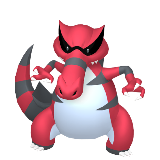 KrookodileGlowdrop thief
 GurdurrInformant
 CobalionAntagonist turned ally
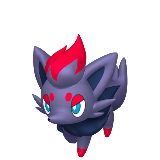 ZoruaCobalion’s agent
 ZoroarkCobalion’s agent
 ElgyemNortherly Town guide
 GolettTemple of Keys guide
- Lillipup: The first friendly face after the fall from Beginner’s Park. Lillipup shows the newcomers around Toy Town and sends them out to the nearby meadow for their first proper outing. On their return, the town is in uproar because its Glowdrops have gone missing.
- Pawniard: Toy Town’s prime suspect for the stolen Glowdrops. Instead of explaining itself, Pawniard predicts the player will never survive the coming Battle Royale. It appears as a rival in the Challenger’s Ground semi-final, and after losing it clears its name by pointing to Krookodile’s gang.
- Krookodile: Leader of the gang that steals Easterly Town’s Glowdrops, knocking aside every Pokémon that tries to stop it. The chase runs through the fields beyond the town, and Krookodile waits in the final chamber of the Mysterious Fort at Sun-Dappled Bank, backed by Sandile and Krokorok.
- Cobalion: The Iron Will Pokémon has its followers gather Glowdrops because they can strip away rust. Cobalion beats the player at the Great Glowing Fountain and on Firebreathing Mountain, bending the Wonder Key, and fights again at the World Axle Front. Once Dark Rust’s plot is exposed, it joins the player and shatters the villain’s barrier in the final battle.
- Zorua and Zoroark: In Westerly Town a helpful Zorua tells the player that Cobalion is hiding on Firebreathing Mountain. It is a trap: at the last stronghold, Cobalion’s Castle, Zorua reveals its loyalty to Cobalion and attacks alongside Zoroark, which guards the castle’s final chamber.
- Gurdurr: Met during the pursuit of Krookodile through Easterly Town’s fields, Gurdurr tells the player about the Great Glowing Fountain, a spring holding enough Glowdrops to restore every town. Its tip sends the player to Shimmering Lake and straight into the first confrontation with Cobalion.
- Elgyem: Elgyem spots the player’s bent Wonder Key as soon as the battered team limps into Northerly Town. It recommends a visit to the Temple of Keys to the east, where winning the Battle Royale earns a Temple Key to replace the damaged Wonder Key.
- Golett: Met at the Temple of Keys, Golett explains how to follow Cobalion: by proving their strength in the Shrine of Keys Battle Royales, the player raises the Path of Heroes piece by piece. Once all four arenas are won, the path stretches all the way to the World Axle.
Pokémon
The game features 646 Pokémon, up to the fifth generation: every species except Keldeo, Meloetta and Genesect. Most of them can be befriended through the various game stages, while others require special methods to be unlocked.

Legendary Pokémon
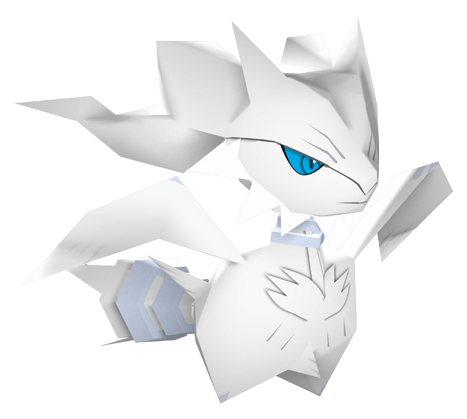
After completing the main story, there’s a 5% chance at the end of each stage that the catapult sending the player to the boss battle will shimmer and send them to a Legendary Pokémon battle instead; Tornadus and Thundurus can even appear before the ending. This means that the player might have to revisit the stages several times in order to access the Legendary Pokémon battles. The Legendary depends on the type of area, a few have extra conditions, and a beaten Legendary is always befriended, unless a confused enemy lands the final blow:
| Pokémon | Area type | When it appears |
|---|---|---|
| Mewtwo | Factories | After winning Battle Royale EX-6 |
| Lugia | Beaches | After the credits |
| Ho-Oh | Autumnwood | After the credits |
| Latias | Meadows | After the credits |
| Latios | Meadows | After the credits |
| Kyogre | Beaches | After the credits |
| Groudon | Lavas | After the credits |
| Rayquaza | Towers | After the credits |
| Deoxys (all four Formes) | Factories | After the credits |
| Dialga | Caves | After the credits |
| Palkia | Lakes | After the credits |
| Heatran | Lavas | After the credits |
| Regigigas | Deserts | After the credits |
| Giratina | Hauntyards | After the credits |
| Giratina (Origin Forme) | Hauntyards | After the credits |
| Cresselia | Treetops | After the credits |
| Darkrai | Hauntyards | After the credits |
| Arceus | Towers | After clearing Team Battle EX-6 |
| Cobalion | Caves | After the credits, once Terrakion and Virizion have been beaten |
| Terrakion | Canyons | After the credits |
| Virizion | Forests | After the credits |
| Tornadus | Autumnwood / Volcanic Slope | Also before the ending; must be met three times before it will battle |
| Thundurus | Autumnwood / Firebreathing Mountain | Also before the ending; must be met three times before it will battle |
| Reshiram | Caves | After the credits |
| Zekrom | Caves | After the credits |
| Landorus | Autumnwood | After the credits, once Tornadus and Thundurus have been beaten |
Pokémon unlocked through passwords
Some special Pokémon can only be obtained through the use of certain passwords; most of them are ordinary species carrying a Special Trait. The passwords are entered by talking to Munna in Easterly Town, and each one makes its Pokémon appear in a certain area, where it has to be beaten to be befriended. Every region has its own set of codes, and the European codes also work in Australian copies:
| Pokémon | Location | Europe & Australia | North America | Japan |
|---|---|---|---|---|
| Lugia post-game |
Shimmering Lake | 3467-3843 | 0442-4822 | 6079-2900 |
| Moltres post-game |
Sunny Seashore | 6284-2344 | 8714-7361 | 6301-6557 |
| Zapdos post-game |
Everspring Valley | 1566-6140 | 1675-4459 | 3060-1785 |
| Articuno post-game |
Frozen Tundra | 2704-0204 | 2364-4610 | 7322-0927 |
| Pikachu | Volcanic Slope | 7580-5216 | 7746-3878 | 6715-6555 |
| Snivy | Soothing Shore | 4941-6440 | 0835-7338 | 8590-9413 |
| Serperior post-game |
Trailhead Field | 8047-7639 | 7111-4427 | 3791-0580 |
| Tepig | Misty Edgewater | 5487-0833 | 2061-8332 | 1906-5834 |
| Emboar post-game |
Echo Valley | 6306-9222 | 5662-7748 | 8902-7356 |
| Oshawott | Shimmering Lake | 8084-8937 | 7403-2240 | 1432-2751 |
| Samurott post-game |
Seabreeze Trail | 3791-9675 | 2452-2129 | 9418-1517 |
| Victini | Sun-Dappled Bank | 9082-7838 | 6699-8898 | 7267-3443 |
| Dialga post-game |
Challenger’s Ground | 3681-9208 | 3402-6485 | 9752-8353 |
| Tornadus | Volcanic Slope | 9816-6460 | 0250-7321 | 5155-4087 |
| Thundurus | Firebreathing Mountain | 1189-0516 | 8819-8699 | 2751-4887 |
| Groudon post-game |
Firebreathing Mountain | 7132-9643 | 0681-1611 | 7415-3319 |
| Audino post-game |
Sun-Dappled Bank | 7462-8687 | 0176-1458 | 1975-5256 |
| Zoroark | Frozen Tundra | 6150-1893 | 2153-6742 | 0120-8652 |
| Garchomp post-game |
Rugged Flats | 1027-9741 | 1959-4010 | 6067-1831 |
| Gallade | Everspring Valley | 4291-0125 | 3535-6928 | 9616-8485 |
| Unfezant post-game |
Misty Edgewater | 0632-6305 | 4713-9936 | 3654-9185 |
| Eelektross post-game |
Volcanic Slope | 6491-6130 | 2159-4650 | 1562-5492 |
| Gliscor | Sunny Seashore | 7182-4825 | 9625-7845 | 7442-3671 |
| Stunfisk post-game |
Soothing Shore | 4074-7455 | 6482-3610 | 4000-2108 |
Pokémon marked post-game only appear in their area once the main story is finished.
Pokémon obtained by releasing

Within each town, there’s a facility that allows the player to release some of their Pokémon. The player will earn currency in exchange for the Pokémon released, but they may also earn the Pokémon’s next evolution if they release seven of a Pokémon species at once.
This makes it possible to obtain Pokémon evolutions which are hard to find in the fields. If the player releases seven toys of one species in a single batch, they’ll unlock its next evolution. Repeating the process with seven of that evolution unlocks the third stage, which means releasing 49 of the first stage if the player owns none of the middle one. Rusty toys don’t count until they have been cleaned.
Pokémon obtained from the Toy Shop
After a certain number of customers visit the player’s Toy Shop, some Pokémon are unlocked and will appear in specific locations:
| Pokémon | Location | Area type | Number of customers |
|---|---|---|---|
| Uxie | Sun-Dappled Bank | Lake | 2 |
| Mesprit | Soothing Shore | Lake | 5 |
| Azelf | Shimmering Lake | Lake | 10 |
| Phione | Rugged Flats | Beach | 20 |
| Manaphy | Rugged Flats | Beach | 20 |
| Jirachi | Firebreathing Mountain | Tower | 40 |
| Celebi | Everspring Valley | Forest | 60 |
| Mew | Sunny Seashore | Factory | 80 |
| Shaymin (Land Forme) | World Axle – B2F | Glacier | 100 |
| Shaymin (Sky Forme) | World Axle – B1F | Forest | 120 |
| Victini | World Axle – B2F | Tower | 150 |
Unlocked Pokémon can vanish if they aren’t beaten quickly, but leaving and re-entering the area brings them back.
Notable Pokémon
 Pikachu#025
 Zekrom#644
 Reshiram#643
 Victini#494
 Arceus#493
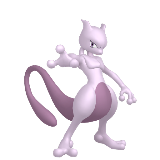 Mewtwo#150
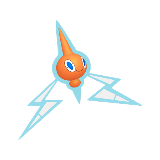 Rotom#479
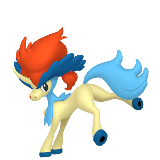 Keldeo#647
- Pikachu – The player’s first toy; a password Pikachu carries the Electric Boost trait.
- Zekrom – Unbeatable prologue boss in Beginner’s Park, later a Dark Rust’s Fort chamber boss and a post-game Cave Legendary.
- Reshiram – Leads the Ruined Battlefield under the World Axle and appears from shimmering catapults in Cave areas after the credits.
- Victini – Unlocked at 150 Toy Shop customers on World Axle – B2F, or by password at Sun-Dappled Bank; also the rival of Battle Royale EX-1.
- Arceus – Final boss of Team Battle EX-6, then a Tower-area Legendary.
- Mewtwo – Rival in Battle Royale EX-6 alongside all four Deoxys Formes; afterwards found in Factory areas.
- Rotom – All six forms gather in the post-game Rotom Hideout on Firebreathing Mountain, open for a limited time.
- Keldeo – One of the three Unova Mythicals, with Meloetta (648) and Genesect (649), missing from the game.
Gameplay & Features
Gameplay
Throughout the game, the player will have to go through different areas, spread across five towns and their fields. Within each area, they’ll battle waves of wild Pokémon and a final boss at the end. Some of the beaten Pokémon fall over as toys, which the player can pick up to recruit and befriend them. Each Pokémon has one or two moves, and new ones can be learned from the Move Vendors and Move-a-majigs located in towns. Key items won in Battle Royales, such as the Team Catapult and the Charge Flags, also open up new places to battle as the player travels.


Townships
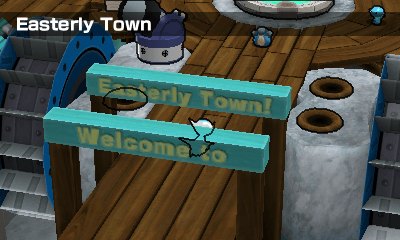
There are five towns in the game: Toy Town, Easterly Town, Westerly Town, Northerly Town and Axle Town. These towns function as hubs, where the player can benefit from several facilities, such as the Glowing Fountain, whose Glowdrops heal the Pokémon, or the Move Vendor and Move-a-majig that teach new moves. Each town also provides shortcuts to the other towns. Within the towns, the player can also find many Pokémon that will help them with their quest. Every town and its fields are covered in Toyland below.
Toy Shop
The Toy Shop is owned by the player and is where their Pokémon will appear on display. Each day, customers might visit the player’s shop to buy Pokémon toys. The player will unlock some Pokémon based on the number of customers visiting their shop. The shop is also the place where most StreetPass features take place.
Game Modes

Similarly to the previous game in the series, Pokémon Rumble Blast provides several game modes, each with its own unique fun.
- The story: It is the main game mode, where the story takes place. Here, the player will go through different levels and adventures, battling wild Pokémon and bosses and unlocking new playable characters. This mode can be played either in single player, or by two players over local wireless, each with their own 3DS and copy of the game.
- StreetPass battles: If the player walks past another player who has the game, their data will be transferred to each other’s games. They can later battle the passer-by’s strongest toys in their Toy Shop, led by the Pokémon the passer-by was using.
- Team Battles: Within this mode, the player will use three different Pokémon at the same time: they control one, while the computer controls the other two, and they can’t switch between them. Team Battles take place in forts, each a series of chambers guarded by bosses.
- Charge Battles: This mode allows the player to control a whole army of Pokémon. The player will face other Pokémon armies, building up charge power by mashing buttons or spinning the Circle Pad to break through rounds led by Leader Pokémon. Each battlefield needs a special flag (the Charge Flag, Charge Flag+ or Charge Flag++), won as a prize in Battle Royales.
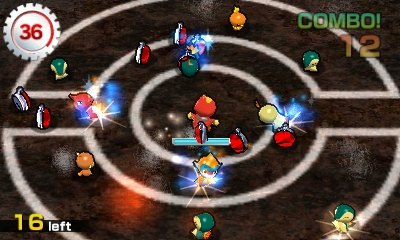
- Battle Royales: The Battle Royale takes place in a closed ring, where the player will have to knock out every Pokémon before time runs out. As the player defeats a wave, another will come at them, with stronger Pokémon, and the toughest rivals arrive last.
- Rumpus Rooms: From Chapter 3, a catapult will sometimes face the wrong way, transporting the player to a special room instead of the next part of the level. In the Rumpus Rooms, the player will have to either defeat a crowd of ordinary Pokémon, or defeat four boss-sized Pokémon backed by endless reinforcements, before a trampoline takes them back.
- Battle Locale: After finishing the main story, the Rattata in Easterly Town will tell the player that the Battle Locale is unlocked. Within this mode, the player will enter a random area and won’t be able to use any of their own Pokémon. Instead, they’ll be given a Rattata that only knows Tackle as their sole Pokémon, and they can collect more Pokémon throughout the level, who will help the player finish it. A win pays 10,000P, plus 5,000P more for each consecutive win, and the player keeps the Pokémon they collect.
Toyland: Towns, Fields and Bosses
Rumble Blast’s world, Toyland, is a chain of five towns, each a hub for a handful of fields. Every field mixes ordinary areas, each ending in a boss, with optional Battle Royale arenas, Team Battle forts and Charge Battle battlefields that open as key items are won. The story runs through 20 fields, from Trailhead Field to the bottom of the World Axle, with a bonus field of EX battles waiting after the credits. Shimmering-catapult Legendaries depend on the area type rather than the field.
- 5towns, from Toy Town to Axle Town
- 20story fields, plus a bonus field
- 14area types, from Meadow to Factory
- 26Legendary bosses from the shimmering catapult
The five towns



Field by field
Fields are numbered 1-1 to 4-4 by town, and the levels of the World Axle beneath Axle Town are listed by name. Area bosses are given with the type of area they guard, and the last column lists the Legendary and Mythical Pokémon, Toy Shop unlocks and password Pokémon met in each field.
| Field | Area bosses | Battle Royales, forts and battlefields | Legendary, Mythical and special encounters |
|---|---|---|---|
| Beginner’s Park Prologue |
Zekrom (scripted defeat) | – | Zekrom |
| 1-1 Trailhead Field Toy Town |
Meadow: Pignite; Forest: Servine | Battle Royale (rivals Axew, Scraggy) | Password: Serperior |
| 1-2 Seabreeze Trail Toy Town |
Meadow: Herdier; Beach: Dewott | Battle Royale (rivals Throh, Sawk) | Password: Samurott |
| 1-3 Echo Valley Toy Town |
Forest: Simisage; Beach: Simipour; Cave: Simisear | Grass, Water and Fire Battle Royales (Generation I–IV starters) | Password: Emboar |
| 1-4 Challenger’s Ground Toy Town |
Forest: Liepard; Meadow: Zebstrika; Beach: Swanna; Tower: Gothorita | Story Battle Royale semi-final (Pawniard, Vullaby, Deino) and final (Serperior, Emboar, Samurott) | Password: Dialga |
| 2-1 Sun-Dappled Bank Easterly Town |
Treetops: Archen; Lake: Tirtouga | Mysterious Fort (Krookodile) | Uxie (2 customers); passwords: Victini, Audino |
| 2-2 Misty Edgewater Easterly Town |
Forest: Whimsicott; Cave: Swoobat; Hauntyard: Lampent | Ghost Battle Royale (rival Spiritomb; Team Catapult); Filthy Fort (Garbodor) | Passwords: Tepig, Unfezant |
| 2-3 Soothing Shore Easterly Town |
Tower: Scrafty; Lake: Stunfisk; Treetops: Leavanny | Bug Battle Royale (Pinsir, Heracross; High Gear); Greenleaf Fort (Bisharp) | Mesprit (5 customers); passwords: Snivy, Stunfisk |
| 2-4 Shimmering Lake Easterly Town |
Treetops: Lilligant; Lake: Seismitoad; Cave: Excadrill | Eeveelution Battle Royale (Charge Flag); Waterside Battlefield (Scolipede); Cobalion at the Great Glowing Fountain | Azelf (10 customers); passwords: Lugia, Oshawott |
| 3-1 Rugged Flats Westerly Town |
Beach: Feraligatr; Desert: Sigilyph; Canyon: Braviary; Cave: Cofagrigus | Normal Battle Royale (Windup Energy Magnet); Dragonbellow Fort (Druddigon) | Phione and Manaphy (20 customers); password: Garchomp |
| 3-2 Volcanic Slope Westerly Town |
Autumnwood: Meganium; Canyon: Mandibuzz; Lava: Darmanitan | Rock Battle Royale (Swaparound); Foreboding Fort, all Rusty (Metagross) | Tornadus; passwords: Tornadus, Eelektross |
| 3-3 Firebreathing Mountain Westerly Town |
Lava: Typhlosion; Factory: Galvantula; Autumnwood: Sawsbuck; Tower: Reuniclus | Battle Royale (Eelektross, Conkeldurr; Charge Flag+); Mountain Path Battlefield (Gigalith); Cobalion’s Castle (Zoroark), then Cobalion | Thundurus; Jirachi (40 customers); passwords: Thundurus, Groudon; Rotom Hideout (post-game) |
| 4-1 Frozen Tundra Northerly Town |
Glacier: Beartic; Tower: Gothitelle | Temple of Keys Battle Royale (rival Golurk; Temple Key); Cobalion’s Fort 1 (Escavalier) and Fort 2 (Accelgor) | Regice (post-game); passwords: Articuno, Zoroark |
| 4-2 Everspring Valley Northerly Town |
Forest: Venusaur; Meadow: Staraptor; Lake: Blastoise; Hauntyard: Gengar; Cave: Charizard | Shrine of Keys Battle Royales (Poison; Flying) | Celebi (60 customers); passwords: Zapdos, Gallade; Unown Hideout (post-game) |
| 4-3 Sunny Seashore Northerly Town |
Desert: Torterra; Beach: Empoleon; Factory: Lucario; Canyon: Machamp; Lava: Infernape | Shrine of Keys Battle Royales (Ground; Fighting) | Mew (80 customers); Regirock, Registeel (post-game); passwords: Moltres, Gliscor |
| 4-4 Fallaway Edge Northerly Town |
– | Fallaway Battlefield (Hydreigon); Cobalion’s Stronghold (Haxorus); Cobalion at the World Axle Front | Cobalion |
| World Axle – Underground Entry Axle Town |
Dark Legion Base | – | Cobalion joins the team |
| World Axle – B1F Axle Town |
Beach: Samurott; Lava: Emboar; Hauntyard: Chandelure; Meadow: Haxorus; Forest: Serperior | Rusty Battlefield (Darkrai); Rusty Fort (Cresselia, Giratina) | Shaymin Sky Forme (120 customers); Moltres, Raikou (post-game) |
| World Axle – B2F Axle Town |
Treetops: Archeops; Lake: Carracosta; Factory: Klinklang; Glacier: Vanilluxe; Tower: Hydreigon; Cave: Volcarona | Starter Battle Royale (rivals Tornadus, Thundurus, Landorus); Ruined Battlefield (Reshiram) | Shaymin Land Forme (100 customers), Victini (150 customers); Suicune, Entei, Articuno (post-game) |
| World Axle – Shaft Axle Town |
Dark Legion Base | – | – |
| World Axle – Deepest Level Axle Town |
– | Dark Rust’s Fort (Dragonite, Groudon, Palkia, Zekrom, Dark Rust) | Groudon, Palkia, Zekrom |
| World Axle – Upper Levels Axle Town (post-game) |
– | Battle Royale EX-1 to EX-6; Team Battle EX-1 to EX-6 | Mewtwo and Deoxys (Battle Royale EX-6); Arceus (Team Battle EX-6) |


Forts, battlefields and Battle Royales
The story’s set-piece battles, in the order they are met, from the scripted defeat by Zekrom to the post-game EX battles on the World Axle’s Upper Levels:
| Battle | Field | Line-up | Prize |
|---|---|---|---|
| Zekrom Story boss |
Beginner’s Park | Solo boss The prologue boss is designed to beat the player: the stage collapses and drops the toys into Toy Town. Zekrom returns as a Dark Rust’s Fort boss and as a post-game Legendary. |
None |
| Challenger’s Ground Battle Royale Battle Royale |
Challenger’s Ground (Toy Town) | Semi-final rivals Pawniard, Vullaby, Deino; final rivals Serperior, Emboar, Samurott The first story Battle Royale. Beating it clears Pawniard’s name, opens Easterly Town and unlocks two-player mode and the Shopscope. |
500P (semi-final), 1,000P (final) |
| Mysterious Fort Fort (Team Battle) |
Sun-Dappled Bank (Easterly Town) | Chamber bosses Watchog, Boldore, Amoonguss, Krookodile The first fort of the game. Krookodile, the Glowdrop thief chased out of Easterly Town, guards the final chamber with Sandile, Krokorok and Purrloin. |
1,500P |
| Filthy Fort Fort (Team Battle) |
Misty Edgewater (Easterly Town) | Chamber bosses Swoobat, Beheeyem, Gardevoir, Garbodor Entry requires the Team Catapult, the prize for winning the Ghost-type Battle Royale in the same field, whose rival is Spiritomb. Garbodor waits in the final chamber. |
2,000P |
| Greenleaf Fort Fort (Team Battle) |
Soothing Shore (Easterly Town) | Chamber bosses Sunflora, Cherrim, Ludicolo, Bisharp Another fort that needs the Team Catapult. Its Grass-heavy chambers end with Bisharp, backed by Poochyena, Mightyena, Baltoy and its own pre-evolution, Pawniard. |
2,200P |
| Waterside Battlefield Battlefield (Charge Battle) |
Shimmering Lake (Easterly Town) | Round leaders Patrat, Watchog, Whirlipede, Scolipede The first Charge Battle, opened by the Charge Flag from Shimmering Lake’s Eeveelution Battle Royale. Clearing it leads to the Great Glowing Fountain. |
Story progress |
| Cobalion (Great Glowing Fountain) Story boss |
Shimmering Lake (Easterly Town) | Solo boss against the player’s three toys A fight the player is meant to lose: Cobalion knocks the team out in two hits and makes off with the Glowdrops, and the story resumes in Westerly Town. |
None (scripted defeat) |
| Dragonbellow Fort Fort (Team Battle) |
Rugged Flats (Westerly Town) | Chamber bosses Fearow, Tropius, Lickilicky, Druddigon Opened with the Windup Energy Magnet, the prize for Rugged Flats’ Normal-type Battle Royale. Its final chamber holds Deino, Zweilous and Baltoy, with Druddigon as boss. |
3,000P |
| Foreboding Fort Fort (Team Battle) |
Volcanic Slope (Westerly Town) | Chamber bosses Salamence, Garchomp, Tyranitar, Metagross Every Pokémon inside is Rusty, an early sign of Dark Rust’s influence, and each chamber ends with one of the pseudo-Legendary dragons or Metagross. |
3,500P |
| Mountain Path Battlefield Battlefield (Charge Battle) |
Firebreathing Mountain (Westerly Town) | Round leaders Crustle, Boldore, Excadrill, Gigalith A four-round Charge Battle against Dwebble, Crustle and Rock and Ground allies. It requires Charge Flag+, the prize from Firebreathing Mountain’s Battle Royale, whose rivals are Eelektross and Conkeldurr. |
Story progress |
| Cobalion’s Castle Fort (Team Battle) |
Firebreathing Mountain (Westerly Town) | Chamber bosses Bastiodon, Archeops, Cradily, Zoroark Zorua springs its ambush here with Zoroark in the final chamber. Afterwards Cobalion beats the player again, bends the Wonder Key and heads north. |
4,000P |
| Temple of Keys Battle Royale Battle Royale |
Frozen Tundra (Northerly Town) | Unown, Golett, Elgyem, Beheeyem; rival Golurk Winning replaces the bent Wonder Key and starts the hunt for the Shrine of Keys Battle Royales that form the Path of Heroes. |
4,000P and the Temple Key |
| Cobalion’s Fort 1 and Fort 2 Fort (Team Battle) |
Frozen Tundra (Northerly Town) | Fort 1: Beartic, Abomasnow, Delibird, Escavalier; Fort 2: Sudowoodo, Vespiquen, Gyarados, Accelgor Clearing Fort 1 opens Everspring Valley and Fort 2 opens Sunny Seashore, the two fields that hold the four Shrine of Keys Battle Royales. |
4,500P and 5,000P |
| Fallaway Battlefield Battlefield (Charge Battle) |
Fallaway Edge (Northerly Town) | Round leaders Deino, Zweilous, Escavalier, Accelgor, Hydreigon A five-round Charge Battle that needs Charge Flag+. Cryogonal fill the ranks while the Leaders build up to Hydreigon, on the last field before the World Axle. |
Story progress |
| Cobalion’s Stronghold and the World Axle Front Fort and story boss |
Fallaway Edge (Northerly Town) | Chamber bosses Donphan, Steelix, Seismitoad, Haxorus, then Cobalion one-on-three The last stand of Cobalion’s forces. After the stronghold, Cobalion fights alone against three toys before the World Axle opens and Dark Rust’s plot comes to light. |
7,000P (stronghold); no P for Cobalion |
| Rusty Battlefield Battlefield (Charge Battle) |
World Axle – B1F (Axle Town) | Round leaders Sableye, Houndoom, Weavile, Honchkrow, Darkrai A five-round Charge Battle against a Dark-type army of Sableye, Houndoom, Weavile and Honchkrow. It needs Charge Flag+, and the Legendary Darkrai leads the final round. |
Story progress |
| Rusty Fort Fort (Team Battle) |
World Axle – B1F (Axle Town) | Chamber bosses Starmie, Dusknoir, Cresselia, Giratina A story fort on the first World Axle level. Starmie and Dusknoir lead the first two chambers, and the Legendaries Cresselia and Giratina guard the last two. |
8,000P |
| Ruined Battlefield Battlefield (Charge Battle) |
World Axle – B2F (Axle Town) | Absol, Tyranitar, Salamence, Garchomp; Leader Reshiram The toughest story Charge Battle. It needs Charge Flag++, and challenging it without that flag always ends in defeat. Reshiram commands the army. |
Story progress |
| Dark Rust’s Fort Final fort (Team Battle) |
World Axle – Deepest Level (Axle Town) | Chamber bosses Dragonite, Groudon, Palkia, Zekrom, Dark Rust The final Team Battle of the story, needing the Team Catapult. Cobalion fights alongside the player and breaks Dark Rust’s barrier in the final chamber. |
10,000P on repeat clears |
| Battle Royale EX-6 Post-game Battle Royale |
World Axle – Upper Levels | Articuno, Zapdos, Moltres, Raikou, Entei, Suicune, Regirock, Regice, Registeel, Latias, Latios, Uxie, Mesprit, Azelf, Regigigas; rivals Deoxys (all four Formes) and Mewtwo The hardest Battle Royale. Beating it rolls the credits again and makes Mewtwo available from the shimmering catapult in Factory areas. |
500,000P and the Hero’s Key |
| Team Battle EX-6 Post-game Team Battle |
World Axle – Upper Levels | Chamber bosses Lugia and Ho-Oh, Rayquaza, Kyurem, Arceus The final Team Battle ends with a Normal-type Arceus; clearing it makes Arceus appear from shimmering catapults in Tower areas. |
500,000P |
Upper Levels EX battles: After the story, World Axle – Upper Levels offers Battle Royale EX-1 to EX-6 and Team Battle EX-1 to EX-6, with prizes from 60,000P to 500,000P. Battle Royale EX-6 ends with Mewtwo and Deoxys and awards the Hero’s Key; Team Battle EX-6 finishes with Arceus.
Regional Variations
Rumble Blast went by three names, and its passwords, pre-order extras and release dates changed from region to region:
- The game is Pokémon Rumble Blast in North America, Super Pokémon Rumble in Europe and Australia, and Super Pokémon Scramble (スーパーポケモンスクランブル) in Japan; a Korean edition followed on 12 July 2012.
- Passwords are region-locked: Japan, North America and the PAL region each have their own 24 eight-digit codes for the same 24 Pokémon, entered via Munna in Easterly Town.
- Japan got the game first, on 11 August 2011, after a short delay announced on 26 July; North America followed on 24 October, Europe on 2 December and Australia on 8 December 2011.
- The download versions arrived in the opposite order: the European and Australian eShops on 29 November 2012, North America on 20 December 2012 and Japan on 30 January 2013.
- Pre-order bonuses differed: GameStop in the US offered a six-pin set and Amazon US a Tornadus password, while Japanese pre-orders came with passwords for Groudon, Pikachu, Victini and Tepig, a Pokédex 3D AR marker and a Pikachu papercraft.
- Age ratings varied from CERO A in Japan and PEGI 7 in Europe to E10+ from the ESRB and PG in Australia.


Left in the data
- A leftover testModel folder holds placeholder geometry: eight test cubes (cube_0 to cube_7), exclamation and question-mark symbols, and objects named icon_stop and item_smell_ball.
- Three unused duplicate Pokémon models remain in the files: KOKODORA_fourleg (a copy of Aron), KOKUUN_bound (Kakuna) and a generic model.bcres file that duplicates Shieldon.
- A triangular piece of geometry called z0plane, textured with a blue and yellow checkerboard, is also left in the data.
- A testCamera folder contains leftover camera data from development, and four further test files (gateTest, gateToppa, eff and defoliation_particle) also remain.
Glitches, exploits and oddities
A scripted defeat that refuses to stay beaten, a Rumpus Room that heals itself and a cap on the toy box:
Beating the unbeatable Cobalion
Cobalion’s early encounters are scripted defeats, but a well-built team can drain its HP anyway. The game does not let the win stand: when the player takes Cobalion down in a fight they are meant to lose, it immediately knocks the player’s toy out in a single hit and the story carries on exactly as written, with Cobalion walking away with the Glowdrops.
The Audino Rumpus Room
Some Rumpus Rooms are filled with four boss-sized Audino. Wild Audino in Rumble Blast only ever use Heal Pulse, so the four keep restoring one another’s HP faster than most teams can wear them down. Because the escape trampoline only appears once every boss is beaten, the room is close to impossible to clear, and most players simply return to town to escape it.
The 2,500-toy ceiling
Rumble Blast caps the collection rather than letting it grow without limit. After finishing an area with more than 2,500 toys befriended, the player cannot enter any new area until enough toys have been released to bring the total back below 2,500. Collectors who never visit a release point can therefore find their progress suddenly blocked, and the only way forward is a trip to a town’s release point.
Videos & media
Check out these videos from Pokémon Rumble Blast, including the game’s opening cinematic, a Japanese TV commercial and the trailer.
A Japanese TV commercial for Pokémon Rumble Blast.
The intro / opening video.
The official trailer.
Trivia & facts
- Pokémon Rumble Blast is the first boxed Pokémon game to be released on the 3DS, although the free Pokédex 3D app came out on the Nintendo eShop in June 2011, two months before it.

The title screen.
Further trivia
- Releasing seven Darumaka gives an ordinary Darmanitan; Zen Mode Darmanitan cannot be obtained that way.
- After the credits, a Rotom Hideout gathers all six Rotom forms and an Unown Hideout holds all 28 Unown, each open only for a limited time.
- The Arceus that ends Team Battle EX-6 is Normal type the first time it is fought.
Legacy
What came after
- Japanese launch as Super Pokémon Scramble – 11 August 2011. Nintendo 3DS Game Card, after a delay announced on 26 July 2011.
- North American launch as Pokémon Rumble Blast – 24 October 2011. GameStop and Amazon pre-order bonuses (pins and a Tornadus password).
- European launch as Super Pokémon Rumble – 2 December 2011. Shares PAL passwords with the Australian release.
- Australian launch – 8 December 2011. Released as Super Pokémon Rumble.
- South Korean launch – 12 July 2012. Korean-language edition.
- Nintendo 3DS eShop release (Europe and Australia) – 29 November 2012. Download version of the full game.
- Nintendo 3DS eShop release (North America) – 20 December 2012
- Nintendo 3DS eShop release (Japan) – 30 January 2013
- Successor Pokémon Rumble U – 2013. Wii U eShop game using NFC figures; followed by Pokémon Rumble World (3DS, 2015) and Pokémon Rumble Rush (mobile, 2019).
- Nintendo 3DS eShop purchases end – 27 March 2023. The download version can no longer be bought; existing owners can still redownload it.
Where to play it today
Pokémon Rumble Blast is no longer sold new. The game card has long been out of production, and the download version, sold on the Nintendo 3DS eShop from late 2012, could no longer be bought after 27 March 2023, although owners can still redownload it. The game never had online features, so StreetPass, two-player local play and the passwords are unaffected by Nintendo’s server closures. It has not been released on Nintendo Switch, leaving second-hand game cards as the main way in.
How it was made
Rumble Blast was developed by Ambrella, the studio behind the 2009 WiiWare game Pokémon Rumble, with Norio Matsumura directing, Toshio Miyahara and Hiroaki Tsuru producing, and Satoru Iwata and Tsunekazu Ishihara as executive producers. Wataru Kawashima wrote the scenario, Miki Obata wrote the music and Nintendo’s Mario Club handled debugging, while the English version’s localisation is credited to Mikiko Ryu, Satomi Honda, David Numrich and Yasuhiro Usui. The game was unveiled in Japan in early June 2011 as Super Pokémon Scramble. Compared with the download-only original, it added a full story, five towns, Mii-based StreetPass features and stereoscopic 3D, and widened the cast to 646 species including the new Unova Pokémon. In mid-July Nintendo of America set a 24 October date, and on 26 July Nintendo announced that the Japanese launch had slipped to 11 August.
Pokémon Rumble Blast elsewhere


Sales & reviews
Sales figures
Within the first three weeks of its release, the game managed to sell around 135 thousand copies in Japan, and an estimated 44 thousand in Europe and about 75 thousand in the USA. Sales continued to rise, reaching an estimated 346 thousand copies in Japan, 262 thousand in Europe and 432 thousand in the USA, for an estimated global total of 1.15 million copies sold around the world.
The European and American figures, and the regional totals, are third-party estimates. Nintendo’s own figures put the game at 1.08 million units worldwide by 31 March 2012, 0.32 million of them in Japan and 0.76 million overseas, which made it one of the company’s million-sellers that year; by 31 March 2013 the total had reached 1.29 million. In Japan, Media Create recorded 86,294 copies in the launch week, when it was the second best-selling game, then 134,201 after three weeks, 254,908 by 1 January 2012 and 342,990 by 28 December 2014.
- 1.08msold by March 2012 (Nintendo)
- 1.29msold by March 2013 (Nintendo)
- 342,990sold in Japan by 2014 (Media Create)
- 56on Metacritic (36 critics)
Review scores
The game received mixed reviews, earning scores ranging from bad to good on major review websites. Let’s take a look at these reviews:
- Audrey Drake from IGN found the game far more interesting than its predecessor, as it offers “more to do, way more Pokemon to collect and far more areas to explore”. She rated it 6.5/10, the equivalent of ‘Okay’ on the IGN scale.
- Heidi Kemps from GameSpot wasn’t satisfied with the game at all, thinking it was mindless and monotonous, and rated it 4.5/10, which equates to ‘Poor’ on the GameSpot scale.
- On GameRankings (which closed in 2019), the game received a middling score of 57.86% over 22 reviews, while it earned 56 on Metacritic, over 36 critics.
- Overall, Pokémon Rumble Blast offers some quite fun and unique features, but can become repetitive at certain points.
Japanese critics were warm, with Famitsu’s four reviewers giving eight apiece, but Western reviews were lukewarm. Metacritic’s 56 from 36 reviews includes only one positive verdict, Nintendo Power’s 7.5. Most critics agreed the 3DS game was bigger than its WiiWare predecessor, with a story, far more Pokémon and the frantic Charge and Team Battles, yet felt it played almost exactly the same. IGN’s Audrey Drake called it a step forward that did not go far enough, Nintendo Life liked it but noted the cheaper download original offered much the same, and Official Nintendo Magazine found it too thin for a full-price release. GameSpot’s Heidi Kemps was harshest, attacking the simplistic, repetitive combat, sparse stage variety, weak bosses and computer-controlled team-mates, though the cute toy designs earned praise almost everywhere.
Awards and honours:
Media & artwork
- Official artwork gallery from Pokémon Rumble Blast, featuring many of the Pokémon and characters
- Box art from Pokémon Rumble Blast, including numerous regional variations and editions
- Screenshots from Pokémon Rumble Blast
Further reading
More Rumble, Unova and 3DS links on the site: