
  |
|
| Titles | Pokémon Art Academy ポケモン アートアカデミー (Pokémon Āto Akademī) |
| Platform | Nintendo 3DS (Game Card; also sold on the Nintendo eShop until March 2023) |
| Developer | Headstrong Games (London), with Nintendo SPD |
| Publisher | Nintendo |
| Creative director | Tancred Dyke-Wells |
| Producers | Benedict Wilkins & Alys Elwick (Headstrong Games) · Keisuke Terasaki & Hitoshi Yamagami (Nintendo) |
| Music | Masaru Tajima |
| Players | 1 |
| Genre | Art training / educational drawing |
| Generation | Generation VI |
| Lessons | 40 (3 Starter, 17 Novice, 10 Apprentice, 7 Graduate, 3 Bonus), plus 14 Quick Sketches |
| Templates | 111 in Free Paint, plus 7 limited-time downloads |
| Released | 19 June 2014 (Japan) · 4 July 2014 (Europe) · 5 July 2014 (Australia) · 24 October 2014 (North America, Hong Kong & Taiwan) · 23 April 2015 (South Korea) |
| Re-releases | None (no Nintendo Switch version) |
| Rating | ESRB E · PEGI 3 · CERO A · GRB All · GSRR 0+ |
| Predecessor | Art Academy: SketchPad (Wii U, 2013); on handheld, New Art Academy (3DS, 2012) |
| Successor | Art Academy: Home Studio (Wii U, 2015) · Disney Art Academy (3DS, 2016) |
| Sales | 167,240 in Japan by the end of 2017 (Media Create) |
Overview
 Released on Nintendo 3DS, Pokémon Art Academy is a crossover between the Art Academy series and Pokémon. This spin-off will teach the player how to draw, using a variety of tutorials which gradually increase in difficulty.
Alongside the drawing lessons, the game showcases a few additional fun features, such as the Free Paint mode and its Miiverse functionality, which let players share their drawings online until Miiverse closed in November 2017.
Grab your stylus and start your Pokémon-drawing journey in Pokémon Art Academy, only on Nintendo 3DS family systems! This Pokémon-themed iteration of the Art Academy series offers budding illustrators and Pokémon fans alike 40 lessons to learn how to paint, sketch and draw with beloved Pokémon characters. Along the way, students of Pokémon Art Academy can pick up actual illustration skills that they can transfer onto real canvas or paper, or share their digital masterpieces with the world.
— Official description (Nintendo UK, Nintendo 3DS game page)
Quick Answers
The questions people ask about Pokémon Art Academy, answered first and explained further down the page.
How many lessons are there in Pokémon Art Academy?
There are 40 in total. Three starter exercises lead into the Novice course (17 lessons counting mini-lessons and the test), the Apprentice course (10) and the Graduate course (7), followed by three bonus lessons on Mega Pokémon. The 14 Quick Sketches are a separate mode and sit outside that count. More →

Who is the teacher in Pokémon Art Academy?
Professor Andy, a Pokémon card illustrator who runs the academy, guides every lesson step by step and adds facts about each Pokémon. He is the brother of Vince, the tutor of the earlier Art Academy games, whose portrait hangs in Andy’s office. A classmate, Lee or Lily, takes the same lessons. More →
How do you unlock the Mega Evolution lessons?
Pass the Graduate Test at the end of the third course. That opens three bonus lessons on Mega Charizard, Mega Mewtwo and Mega Lucario, which use all eight drawing tools. Finishing every lesson, mini-lesson and Quick Sketch after that earns the top rank, the Grand Master academy card. More →
Can you still download the extra templates?
No. Seven downloadable templates were offered through Free Paint for short windows between June 2014 and April 2015: Groudon, Kyogre, Shiny Mega Gengar, Gourgeist with Mismagius, Rayquaza, Cosplay Pikachu and Hoopa. Every window closed long ago, so only templates already saved on a system can still be used. More →
Can you still share your drawings online?
Not from inside the game. Its Miiverse posting stopped working when Miiverse shut down in November 2017. Finished pictures can still be exported to the SD card as 1024 by 768 JPEG files and copied to a computer, and sharing with a nearby 3DS over local wireless still works. More →
Is Pokémon Art Academy on Nintendo Switch?
No. It has only ever been released on Nintendo 3DS and is not part of Nintendo Switch Online. The 3DS eShop stopped selling it on 27 March 2023, so new players need a second-hand Game Card, while anyone who bought the download earlier can still redownload it. More →
Gameplay and Features
In this educational drawing game, the player will join the Pokémon Art Academy, aiming to become a great Pokémon card illustrator. There, Professor Andy, a professional card illustrator and the one managing the academy, will take care of the player and teach them all they need to know about drawing, while a classmate – Lee if the player is a girl, Lily if the player is a boy – takes every lesson alongside them. The player will go through many tutorials and lessons, which will get harder and harder every time.
The academy is a castle-like school standing at a busy city crossroads. On the first day, Professor Andy has the player sign a student ID card – the signature later appears on every card they finish – and then sets an entrance exercise, which earns them a place at the academy.
Lessons
The lessons will teach the player the required skills for drawing and give them a lot of tips on how to do it the right way. There are 40 in all, and they fall under five categories: Starter Lessons, Novice Lessons, Apprentice Lessons, Graduate Lessons and Bonus Lessons. Each of these categories has a number of lessons, using a variety of drawing tools. Each main lesson in the Novice, Apprentice and Graduate courses, too, has one to three mini-lessons within it, which aim to restudy the techniques introduced in the main lesson with less guidance. Every lesson and mini-lesson unlocks its picture as a template for the Free Paint mode once it’s fully completed. After finishing the lessons in the Novice, Apprentice and Graduate courses, the player will have to pass the course test in order to move on to the next one.
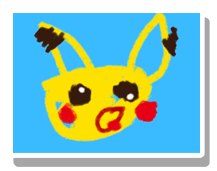
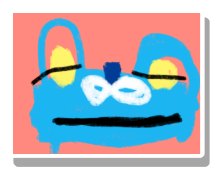
- Starter Lessons: There are three in total – Pikachu, Froakie and Piplup, all drawn with pastels – in which the player will learn the very basics. They need to complete one of them to unlock the Novice Lessons.
- Novice Lessons: These will also teach the player about more basic drawing techniques and tools, across four main lessons, twelve mini-lessons and the Novice Test.
- Apprentice Lessons: These deal with slightly more advanced drawing techniques, across three main lessons, six mini-lessons and the Apprentice Test.
- Graduate Lessons: These deal with the advanced techniques that are the hardest to master, across three main lessons, three mini-lessons and the Graduate Test.
- Bonus Lessons: These lessons will make use of all the features and techniques introduced in the previous lessons, in order to draw complicated and advanced drawings. There are three, featuring Mega Charizard, Mega Mewtwo and Mega Lucario, and they open once the Graduate Test is passed.
Every lesson, with its Pokémon, mini-lessons and tools, is listed in the lesson table further down.


Quick Sketch
Quick Sketch is a separate set of 14 short drawings done alongside the classmate. Seven, from Ditto and Diglett to Swirlix, are open from the start, and seven more, including Wailmer, Dratini, Gastly and Darumaka, open after the Novice course. The tool is fixed for each one, often just the marker or a single brush, and some start with construction shapes on the bottom screen. Finishing a sketch for the first time adds it to the Free Paint templates.
 DittoFrom the start
 DiglettFrom the start
 OddishFrom the start
 HoppipFrom the start
 OmanyteFrom the start
 LitwickFrom the start
 SwirlixFrom the start
 WailmerAfter the Novice course
 DratiniAfter the Novice course
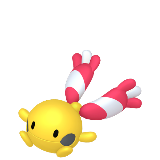 ChinglingAfter the Novice course
 SpewpaAfter the Novice course
 PetililAfter the Novice course
 GastlyAfter the Novice course
 DarumakaAfter the Novice course
Free Paint Mode

This mode allows the player to freely draw anything, using all the material they’ve unlocked in the game, from templates to images. The player may select an image as a guide or as a background, or they might simply continue with the free painting. It is also possible to use photos taken with the 3DS Camera.
Unlike the lessons, Free Paint opens every tool and colour whatever the player’s progress, and unfinished work can be saved and picked up again later.
Miiverse Functionality
This feature allowed players to connect to Miiverse, a special social network designed for Nintendo 3DS and Wii U users. There, players could share the images they drew with the community, communicate with other community members and join special contests organised by The Pokémon Company. Miiverse closed on 8 November 2017, and the game’s online sharing closed with it.
The contests and the promo cards their winners received are covered in Art Academy competitions below.
Academy Card
Similarly to the main Pokémon game series, where the player has a Trainer Card, Pokémon Art Academy offers the player an Academy Card, which gives details about the number of lessons they’ve completed. The card will vary in design and colour as the player completes more lessons:
- Entry Card: The very first card the player is given, which doesn’t require any lesson to be completed.
- Novice Course: Requires the completion of one of the Starter Lessons.
- Apprentice Course: Requires the completion of the Novice Lessons.
- Graduate Course: Requires the completion of the Apprentice Lessons.
- Illustration Master: Requires the completion of the Graduate Lessons.
- Grand Master: Requires the completion of all the lessons, mini-lessons and Quick Sketches available in the game.
Image Album
This feature functions as storage for the images the player has completed and saved. The images are saved on Pokémon trading cards, each showing the Pokémon’s type and the player’s signature, and can be edited within the Free Paint mode, shared to the Miiverse community (while it was running), exported to the SD card as 1024 by 768 JPEG files, named or even deleted.
Downloadable Content
The game’s Free Paint mode had an option allowing the download of new templates, featuring many new Pokémon. They were free, but each could only be downloaded during a short window, and the last one closed on 17 April 2015. The templates offered were:
| Template | When and where it could be downloaded |
|---|---|
| Groudon | From 19 June 2014 in Japan; July and August 2014 in Europe; 20 to 30 November 2014 in North America |
| Kyogre | July and August 2014 in Europe; 1 to 14 December 2014 in North America |
| Shiny Mega Gengar | 13 September to 14 October 2014 in Japan and Europe |
| Gourgeist and Mismagius | 15 October to 13 November 2014 (to 5 November in North America) |
| Rayquaza | November to December 2014 |
| Cosplay Pikachu | Japan only, 13 December 2014 to 1 February 2015 |
| Hoopa | Japan only, 20 February to 17 April 2015 |
The lessons
Pokémon Art Academy’s 40 lessons climb from a simple pastel Pikachu to fully shaded Mega Evolutions. Three starter exercises lead into the Novice, Apprentice and Graduate courses, each made of main lessons, shorter mini-lessons and a closing test, before three bonus lessons open at the end. Professor Andy introduces one technique at a time and adds a new tool every few lessons, and every picture completed becomes a template for Free Paint. The table lists each lesson in order with its subject, tools and skill.
- 40lessons in five categories
- 14Quick Sketches outside the course
- 111Free Paint templates
- 8drawing tools
Every lesson, course by course
| Course | Lesson | Main Pokémon | Mini-lessons | Tools | What it teaches |
|---|---|---|---|---|---|
| Starter | Starter exercises (choose one) | Pikachu, Froakie or Piplup | – | Pastel | The very basics, following step-by-step guidance. |
| Novice | Lesson 1 | Oshawott | Tepig, Chespin, Squirtle | Outline pen, marker, eraser | Teaches the basics of portrait drawing. |
| Novice | Lesson 2 | Fennekin | Torchic, Minccino, Meowth | Outline pen, marker, eraser | Teaches line thicknesses and making drawings from several angles. |
| Novice | Lesson 3 | Togepi | Gengar, Pichu, Pachirisu | Outline pen, marker, eraser | Teaches the use of outline colours while drawing. |
| Novice | Lesson 4 | Inkay | Charmander, Victini, Bulbasaur | Outline pen, marker, pencil, eraser | Teaches the player how to use construction shapes in drawing. |
| Novice | Novice Test | Chespin, Fennekin, Froakie | – | Outline pen, marker, pencil, eraser | Tests the player on all the different material presented in the Novice Lessons. |
| Apprentice | Lesson 1 | Voltorb | Pumpkaboo, Chimchar | Outline pen, marker, pencil, eraser | Teaches about shading techniques. |
| Apprentice | Lesson 2 | Fletchling | Snivy, Eevee | Pencil, eraser | Teaches about hatching and using a pencil in drawing. |
| Apprentice | Lesson 3 | Jirachi | Chandelure, Lugia | Pencil, paintbrush, eraser | Teaches the player about opacity and the use of paint. |
| Apprentice | Apprentice Test | Braixen, Frogadier, Quilladin | – | Pencil, paintbrush, eraser | Tests the player on the techniques introduced in the Apprentice Lessons. |
| Graduate | Lesson 1 | Vulpix | Sylveon | Pencil, pastel, smudge stick, eraser | Teaches about smudging and pastels. |
| Graduate | Lesson 2 | Lapras | Lucario | Outline pen, marker, pencil, eraser | Teaches the player about automatic shading and doing outlines using the pen. |
| Graduate | Lesson 3 | Charizard | Mewtwo | Pencil, marker, paintbrush, eraser | Teaches more about lighting and shading in drawings. |
| Graduate | Graduate Test | Chesnaught, Delphox, Greninja | – | All eight tools, including the airbrush | Tests the player on all the features introduced in the Graduate Lessons. |
| Bonus | Bonus lessons 1 to 3 | Mega Charizard, Mega Mewtwo, Mega Lucario | – | All eight tools | Complex, fully finished illustrations. |
The Pokémon listed for each test are the subjects it is built around, and passing the test unlocks them as Free Paint templates. Chespin appears twice, as a Novice Lesson 1 mini-lesson and again in the Novice Test.
Drawings from the first lessons
The three starter exercises, then Novice Lesson 1’s Oshawott part-way through and finished, and two more Novice-course drawings:


Professor Andy and the classmates
Professor Andy teaches every lesson, and Lee or Lily draws the same subjects beside the player. A fourth character only watches from the wall: Vince, Andy’s brother and the tutor of the earlier Art Academy games, appears here just as a portrait in Andy’s office.

Professor Andy
A professional Pokémon card illustrator who runs the academy and teaches every lesson personally, explaining each tool, commenting on each part of a drawing and sharing facts about the species being drawn. He is patient and encouraging with mistakes.

Lee
A cheerful student who enrolled before the player and wants to become a famous Pokémon card illustrator, with Professor Andy as his favourite. His drawings tend to be rushed and full of errors, but he bounces back quickly after Andy’s corrections. He naps and asks about snacks during lessons, plays Water- and Ice-type Pokémon in his own games and falls for the smudge stick in the Vulpix lesson.

Lily
Lee’s counterpart, with the same ambition of illustrating Pokémon cards and the same admiration for Professor Andy. Like Lee she works fast and makes plenty of mistakes, is embarrassed when Andy points them out and then carries on undaunted. She calls Charizard her absolute favourite Pokémon and Gengar her favourite Ghost type.
- The player: A newcomer who joins the academy to train as a Pokémon card illustrator. The player chooses a name and a gender, which decides whether Lee or Lily becomes the classmate, but never appears on screen. Their progress is shown on the Academy Card, and the signature they write on day one is printed on every card they finish.
Pokémon to draw
Around a hundred species appear as drawing subjects. The 40 lessons feature 40 different pictures, the 14 Quick Sketches add more, and Free Paint holds 111 templates in all, some showing the same Pokémon in new poses. Every generation up to the sixth is represented, with the Kalos first partners and their evolutions anchoring the course tests and three Mega Evolutions saved for the bonus lessons. Seven more templates were handed out as limited-time downloads in 2014 and 2015.
 Pikachu#025
 Froakie#656
 Piplup#393
 Oshawott#501
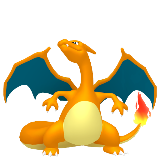 Charizard#006
 Mewtwo#150
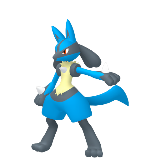 Lucario#448
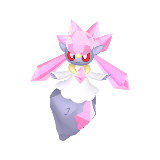 Diancie#719
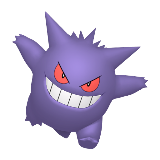 Gengar#094
 Hoopa#720
- Pikachu – One of the three starter exercises and the subject of five separate templates.
- Froakie – A starter exercise subject; its evolution line runs through all three course tests.
- Piplup – The third starter exercise choice, drawn with pastels.
- Oshawott – Subject of Novice Lesson 1, the first proper lesson.
- Charizard – Graduate Lesson 3; one Mega Charizard form is a bonus lesson and the other a Free Paint template.
- Mewtwo – Graduate mini-lesson; one Mega Mewtwo form is a bonus lesson and the other a Free Paint template.
- Lucario – Graduate mini-lesson and, as Mega Lucario, one of the three bonus lessons.
- Diancie – Starting template and one of the two subjects of the Pokémon Get☆TV contest in Japan.
- Gengar – Novice mini-lesson; a Shiny Mega Gengar template was a limited download in autumn 2014.
- Hoopa – Japan-only downloadable template in 2015, tied to a contest for the Hoopa film.
Art Academy competitions
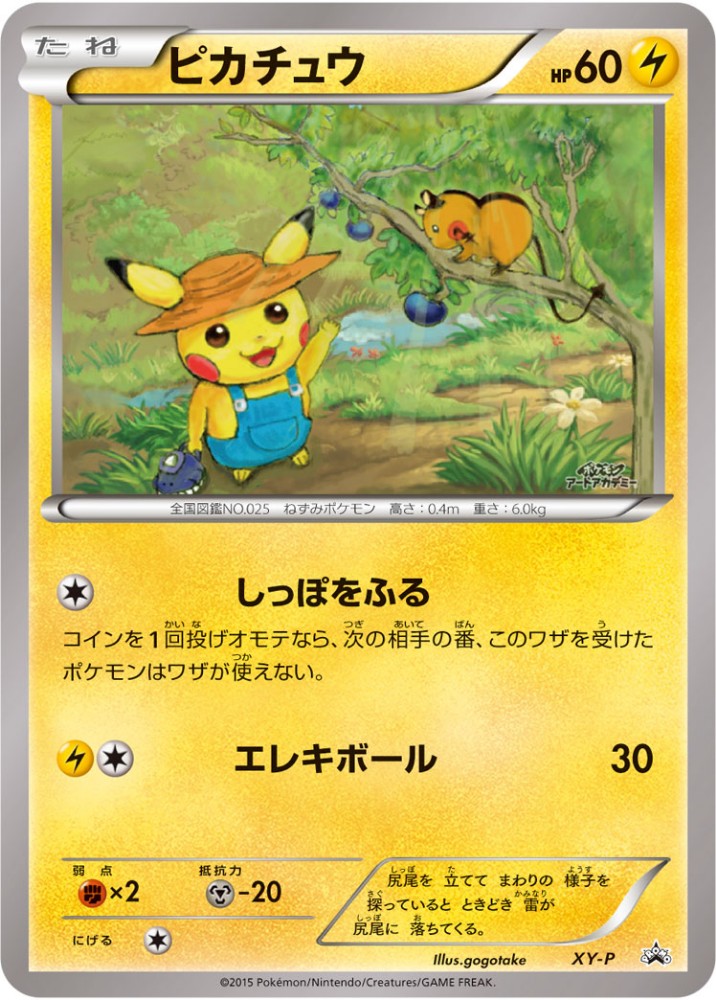
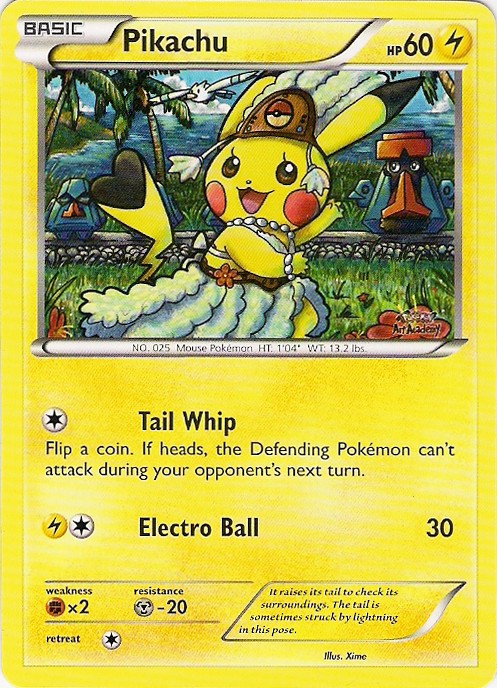
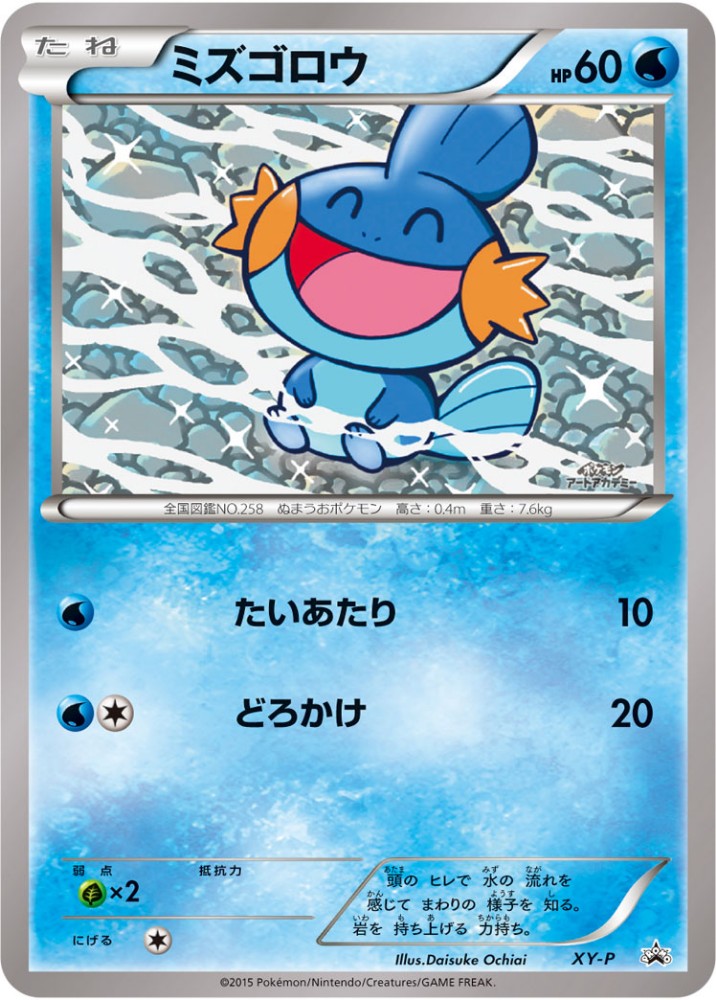
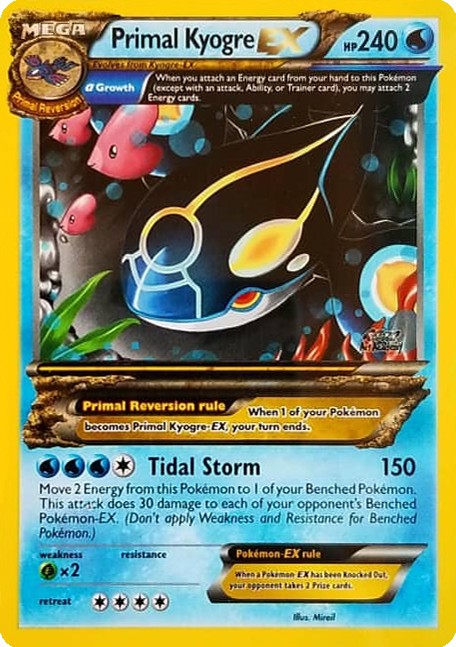
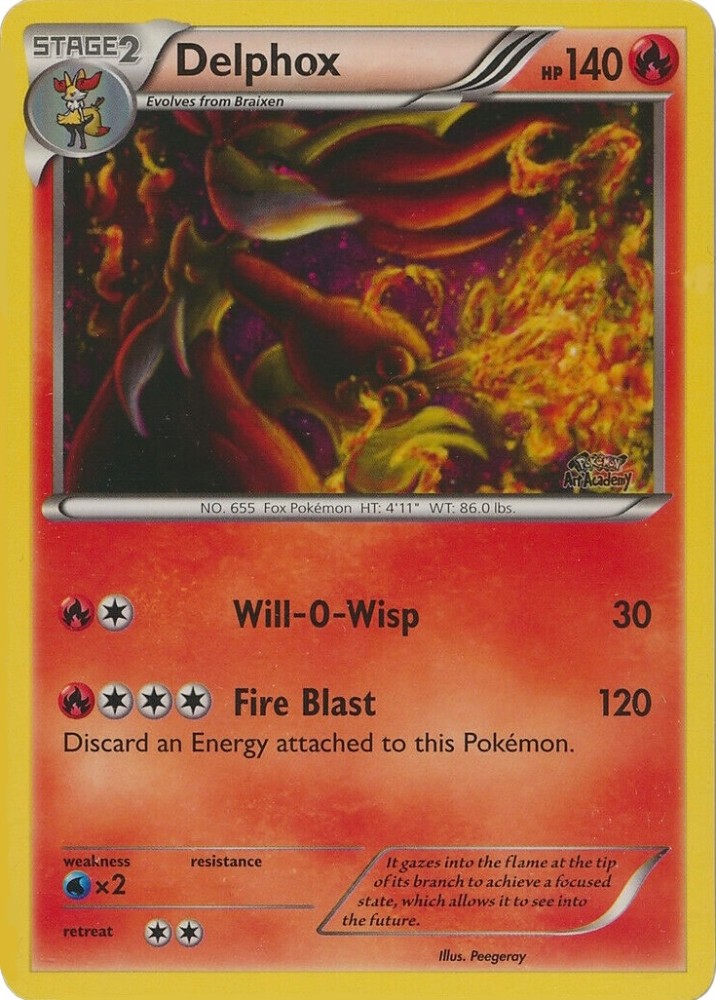
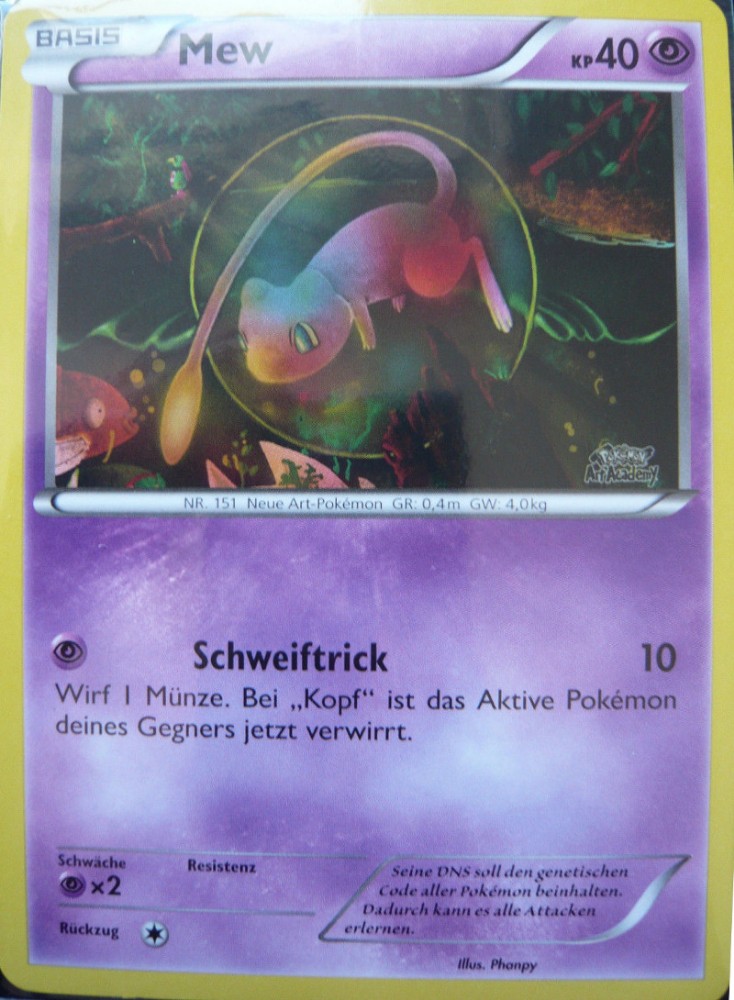
Pokémon Art Academy’s Miiverse community hosted a run of drawing contests between June 2014 and April 2015. The biggest were the Art Academy competitions run with the Pokémon Trading Card Game, first in Japan and then in North America, Europe and Oceania, whose winners saw their own drawings printed as official promo cards.
The winning cards
The eight cards below cover both categories, from costumed Pikachu to the winners’ own favourite Pokémon. Each was a real Trading Card Game card, printed with the winner’s drawing:


Regional Variations
Pokémon Art Academy came out over ten months, from Japan in June 2014 to South Korea in April 2015, and a few things changed from region to region:
- The Japanese title, Pokémon Āto Akademī, breaks from the series’ usual Japanese branding: the other Art Academy games are sold in Japan as Egokoro Kyōshitsu.
- North America waited more than four months longer than Europe, getting the game on 24 October 2014; South Korea followed on 23 April 2015.
- The Cosplay Pikachu and Hoopa download templates were offered only in Japan.
- Download windows differed by region: Groudon and Kyogre came to Europe in July and August 2014 but not to North America until November and December 2014.
- Japan had its own Miiverse contests, including a Pokémon Get☆TV tie-in whose winners were exhibited in Tokyo, and a Hoopa film contest; the international Art Academy competition ran separately from February to March 2015 and excluded Italy.
- The tutor and classmates have different names in other languages: Professor Andy becomes Albrecht in German and Raffaello in Italian; Lee is Jon in Japanese, Marc in German and Lucas in French; and Lily is Emily in German, Léa in French and Lisa in Italian.
- Version 1.1, released on 17 September 2014 in Japan and Europe, fixed outline-pen colours on Miiverse uploads before the game reached North America.


Glitches, exploits and oddities
One bug made it into the launch release in Japan and Europe:
Outline pen turns black on Miiverse
In the launch release of the Japanese and European versions, pictures uploaded to Miiverse lost the colour of any lines drawn with the outline pen: every outline was saved as plain black, whatever shade the player had picked. Coloured outlines are the whole subject of Novice Lesson 3, so the fault was easy to spot. Nintendo fixed it with version 1.1, released on 17 September 2014, before the North American launch.
Videos & media
Check out the official trailer for Pokémon Art Academy.
The official trailer.
Trivia & facts
- Pokémon Art Academy was promoted as the first 3DS game with Miiverse functionality built into the game itself; Miiverse had already been on the 3DS HOME Menu since December 2013.
- It is the first game in the Pokémon series to be developed in the United Kingdom – though not the first made outside Japan, as Pokémon Puzzle League (2000) came from Nintendo Software Technology in the USA.
- The game is also the first licensed spin-off in the Art Academy series, later followed by Disney Art Academy (2016).
- The “Eight Rules of Drawing Pokémon”, found in the Extras menu, feature illustrations from official Pokémon Trading Card Game cards.
Further trivia
- Andy’s Japanese name is a nod to Andy Warhol; the German release renames him after Albrecht Dürer and the Italian one after Raphael.
- One European winner’s Pikachu card was printed in Spanish because of where the winner lived.
- Undo, on the L Button, made its Art Academy debut here; the earlier games deliberately avoided it to feel more like real paper and paint.
Legacy
What came after
- Japanese launch – 19 June 2014. Debuted at No. 1 on the Media Create chart with 31,080 copies; Groudon download template offered the same day.
- European launch – 4 July 2014. Followed by Australia and New Zealand on 5 July 2014.
- Version 1.1 update – 17 September 2014. Japan and Europe; fixed outline-pen colours in Miiverse uploads.
- North American launch – 24 October 2014. Same day in Hong Kong and Taiwan.
- Art Academy x Pokémon Card Game competitions – December 2014 to 29 March 2015. Japan first, then North America, Europe and Oceania; winning pictures printed as promo cards.
- Last downloadable template ends – 17 April 2015. The Japan-only Hoopa template closed the run of seven downloads.
- South Korean launch – 23 April 2015. Released as 포켓몬 아트 아카데미.
- Disney Art Academy – May 2016 (North America). Headstrong’s next licensed Art Academy game on 3DS.
- Miiverse closes – 8 November 2017. 06:00 UK time (the evening of 7 November in the Americas); in-game sharing stopped.
- 3DS eShop purchases end – 27 March 2023. Download copies can no longer be bought; redownloads remain available.
Where to play it today
Pokémon Art Academy can no longer be bought new from Nintendo. The Nintendo 3DS eShop stopped selling games on 27 March 2023, though anyone who bought the download can still redownload it. Otherwise a second-hand Game Card is the way in, and it runs on any 3DS or 2DS system. The lessons, Quick Sketches, Free Paint and local wireless sharing all work offline, but Miiverse posting ended in November 2017, the template downloads finished in 2015, and there is no Switch version.
How it was made
Pokémon Art Academy was made by Headstrong Games, the London studio that began as Kuju London and took the name Headstrong Games in 2008, and that had built the Art Academy series from the DSiWare original of 2009 onwards. Nintendo’s software planning team oversaw the project, with Keisuke Terasaki and Hitoshi Yamagami as producers and Shinya Takahashi as general producer. At Headstrong, Tancred Dyke-Wells was creative director, Justin Cheadle led the design and Jason Howard was art director. Masaru Tajima composed the music under sound supervisor Kenji Yamamoto. The lesson pictures came from Creatures Inc.’s Trading Card Game illustrators, among them Atsuko Nishida, Kouki Saitou, Kanako Eo, Takashi Yamaguchi and 5ban Graphics, while The Pokémon Company supplied development consultants. Nintendo announced the game at the end of April 2014, less than two months before its Japanese launch, and showed it again at E3 that June.


Sales & reviews
Sales figures
Within the first three weeks of its release, the game sold nearly 57 thousand copies in Japan, with an estimated 56 thousand in Europe and around 16 thousand in the USA. The sales increased slowly, reaching about 167 thousand copies sold in Japan by the end of 2017, with an estimated 123 thousand in Europe and approximately 165 thousand in the USA, for an estimated global total of around 0.5 million copies.
Only the Japanese figures are official chart data. Media Create counted 31,080 copies in the launch week – enough for No. 1, and about 70% of the stock shipped to shops – then 56,456 after three weeks, 130,090 by the end of 2014 and 167,240 by 31 December 2017. Nintendo has never published sales for Europe or North America, so the figures for those regions, and the worldwide total, are third-party estimates.
- 167,240sold in Japan by the end of 2017 (Media Create)
- No. 1in Japan in its launch week (31,080)
- 56,456in Japan in its first three weeks
- 76on Metacritic (22 critics)
Review scores
The game was quite well received, as it managed to obtain good scores on major review websites. Let’s take a look at these scores:
- On Metacritic, the game scored 76 out of 100 from 22 critics, and it received a 77% score from the Official Nintendo Magazine.
- Although GameSpot didn’t review the game, most of the fans’ reviews gave it above-average scores: Metacritic users rate it 7.8 out of 10.
- In Japan, Famitsu’s four reviewers gave it 31 out of 40, earning it a Silver Award, while Nintendo Life and Nintendo World Report both scored it 8/10.
Critics were broadly warm, with most scores landing around eight out of ten. Reviewers liked how gently the step-by-step lessons build real technique, the encouraging tone of Professor Andy, the generous number of lessons and templates, and digital touches such as undo that the earlier Art Academy games lacked. Nintendo Life argued that Pokémon Art Academy is no gimmicky spin-off and said it would suit curious newcomers as much as long-standing fans. The Official Nintendo Magazine enjoyed it as both a challenge and a lesson, but felt the jump from very simple early drawings to advanced techniques came without enough explanation of proportion or expression, and warned that experienced artists might find the tool set limiting. Later North American reviews were a little cooler, Slant Magazine among the least impressed.
Awards and honours:
Media & artwork
- Official artwork gallery from Pokémon Art Academy
- Box art from Pokémon Art Academy, including numerous regional variations and editions
- Screenshots from Pokémon Art Academy
Further reading
More 3DS spin-offs, Kalos and creative Pokémon links on the site: