
  |
|
| Titles | Pokémon Dream Radar ポケモンARサーチャー (Pokémon AR Sāchā, “Pokémon AR Searcher”) |
| Platform | Nintendo 3DS – Nintendo eShop download (205 blocks), using the outer cameras and gyro sensor |
| Developer | Creatures Inc. |
| Publisher | Nintendo |
| Directors | Yasunori Isari · Takao Unno · Masafumi Sato |
| Producers | Hirokazu Tanaka · Hiroyuki Jinnai · Junichi Masuda · Hitoshi Yamagami |
| Sound | Takuto Kitsuta · Ayumu Ito · Wataru Ishiyama · Hitomi Sato |
| Players | 1 |
| Genre | Augmented-reality first-person shooter |
| Generation | Generation V |
| Pokémon | 26, eight of them Legendary |
| Extensions | 17 search extensions, plus three Development Lab upgrades |
| Released | 23 June 2012 (Japan) · 7 October 2012 (North America) · 11 October 2012 (Australia) · 12 October 2012 (Europe) · 8 November 2012 (South Korea) |
| Price | US$2.99 · £2.69 · €2.99 at launch |
| Re-releases | None – off sale since the Nintendo 3DS eShop stopped selling software on 27 March 2023 (owners can still redownload it) |
| Rating | ESRB E · PEGI 3 · CERO A · ACB G |
| Companion to | Pokémon Black 2 & White 2 (2012) |
| Sales | Never published (download only) |
Overview
 Pokémon Dream Radar classes as a first-person shooter that makes use of augmented reality and is a single-player download application for the Nintendo 3DS, sold on the Nintendo eShop until purchases there ended in March 2023. The app is known as Pokémon AR Searcher in Japan. The game works by moving your 3DS around (making use of its motion sensors) in order to take aim at Dream Clouds using a light beam and hit the target to get a reward. The title enjoys compatibility with the Generation V games Pokémon Black Version 2 and White Version 2, meaning items and Pokémon can be transferred from Dream Radar to these titles (it’s a one-way trip). It also reads the Generation IV Game Cards for Diamond, Pearl, Platinum, HeartGold and SoulSilver to unlock extra Legendary Pokémon.
Chase down Pokémon in a brand new way with Pokémon Dream Radar for Nintendo 3DS and Nintendo 3DS XL, downloadable from Nintendo eShop. This fun 2D experience challenges players to catch Pokémon and items by using the unique features of Nintendo 3DS and Nintendo 3DS XL, including Augmented Reality technology, the Nintendo 3DS cameras and motion controls.
In the game you’ll be taking on the role of an assistant who works for Professor Burnet – a scientist studying the Interdream Zone. Move your Nintendo 3DS system around in this motion-controlled action game and take aim to shoot your light beam at the Dream Clouds and collect your rewards! This game is fun for anybody, and a fact-filled accompaniment to Pokémon Black Version 2 and Pokémon White Version 2. Any caught Pokémon or items you pick up in Pokémon Dream Radar can be transferred to Pokémon Black Version 2 and Pokémon White Version 2, which is very useful, since the Pokémon you catch might have hidden abilities not available for those games, and some items that can’t normally be found either. Try to fill up your Pokédex as much as you can!
— Official description (Nintendo UK, Nintendo eShop page)
Quick Answers
The questions people ask about Pokémon Dream Radar, answered first and explained further down the page.
How do you catch Tornadus, Thundurus and Landorus in Pokémon Dream Radar?
Collect 400 Dream Orbs in total to unlock Eureka Extension α, where Tornadus appears in Therian Forme. Gather 1,000 more Orbs after catching it to open Eureka Extension β for Thundurus, then 1,600 more after Thundurus to open Eureka Extension γ for Landorus. Each one can be caught only once per save file. More →

How do you send Pokémon from Dream Radar to Black 2 and White 2?
Put a Black 2 or White 2 Game Card into the same 3DS, choose to send your research data in Dream Radar, then load the DS game and pick Unova Link, then Nintendo 3DS Link, to collect everything. Up to six Pokémon go at a time, and the batch must be collected before you can send another. More →
How do you unlock Dialga, Palkia, Giratina, Ho-Oh and Lugia?
Once you have caught Landorus, press Start on the title screen with a Diamond, Pearl, Platinum, HeartGold or SoulSilver Game Card in the 3DS slot. That unlocks the Temporal, Spatial, Renegade, Rainbow or Diving Extension respectively, where the matching Legendary can be caught once. Game Cards from any region work. More →
What are the Dream Radar secret codes for Beldum, Slowpoke and Hoothoot?
On the Start menu of English and European copies, enter Up, Right, Down, Left, X, R, L for Special Extension A (Beldum); Up, Down, Right, Left, Y, R, L for Special Extension B (Slowpoke); or R, L, Y, X, Left, Right, Y, X for Special Extension C (Hoothoot). Japanese copies use different sequences. More →
What level are Dream Radar Pokémon, and do they have Hidden Abilities?
Their level is set by the Badges in the Black 2 or White 2 save receiving them: level 5 with no Badges, then 10, 20, 30 and 40 as you earn more. Every Pokémon except Rotom comes with its Hidden Ability, and all of them arrive in a Dream Ball. More →
Can you still download and play Pokémon Dream Radar in 2026?
Only if you already bought it. The Nintendo 3DS eShop stopped selling software on 27 March 2023, but owners can still redownload it on a 3DS or 2DS. The app needs no internet connection, so sending Pokémon to a Black 2 or White 2 Game Card still works. More →
Gameplay

Professor Burnet is a key character within the game. She’s studying the Interdream Zone, but in order to continue her research she needs the player to collect Dream Orbs so that she can study them further. Under the guidance of Professor Burnet the player enters the Interdream Zone and begins the process of harvesting Dream Orbs, which is done by moving the 3DS around in order to aim the light beam at the Dream Clouds and destroy them.
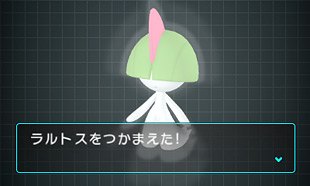
Dream Clouds come in two varieties; here’s a bit more info so you can differentiate them:
- Pink Dream Clouds – These clouds get larger and smaller intermittently. Hit one of these and it’ll break up into 3 Dream Orbs, but if the cloud was at its largest when destroyed you’ll get 4 or 5 Dream Orbs instead.
- Stormy Clouds – These grey clouds will sometimes glow yellow. They hold 4 Dream Orbs, but sometimes these clouds will contain a Pokémon or an item instead of Dream Orbs.

When a player hits a Pink Dream Cloud at its largest and it breaks into 4 or 5 Dream Orbs, the last one you hit will cause it to break into a further 3, and the last one of those will again break into a further three. Each time this is repeated the Dream Orbs have a lower duration, however, so you have to be quick to maximise this.
When all the Dream Orbs have been harvested
Once the player has successfully harvested all of the Dream Orbs, they can then leave the Interdream Zone and the clouds begin to regenerate, ready for the player’s next visit. The first cloud regenerates instantly, whereas the other clouds regenerate at a rate of one every five minutes. The player can return to the Interdream Zone whenever the clouds have come back, harvesting more Dream Orbs and increasing their chances of finding Pokémon. Players who don’t wish to wait for all the clouds to regenerate can use 5 Play Coins to instantly restore all of the Dream Clouds, up to a maximum of three times per day. Said Play Coins are accrued when the player walks with their Nintendo 3DS console: the system’s pedometer counts the number of steps you take and gives you one coin for every 100 steps, up to ten a day. No putting the 3DS on the top of the washing machine, please, guys.
The Forces of Nature
If you are lucky enough to capture Tornadus, Thundurus or Landorus, this will have an effect on a number of things:
- After capturing Tornadus the Dream Orbs alternate between pink and green
- When Thundurus is caught, orange will be added to the colour rotation
- Capturing Landorus will add blue to the rotation
In addition to this, the game will begin to keep count of how many Dream Orbs of each colour you collect during a search, and the colour you collect the most of will have an effect on the type of Pokémon you encounter in your next search.

Encountering Pokémon in the Clouds

Sometimes when you hit a Dream Cloud you’ll find that instead of breaking into Dream Orbs, it reveals a Pokémon that has become trapped in the Interdream Zone. At this point the Dream Orbs will disappear and the Pokémon will be in a glowing sphere, except for Tornadus, Landorus and Thundurus, who will appear in their Therian Forme.
A timed battle with the Pokémon will then take place: the Pokémon will shoot projectiles at you and every successful hit on you will reduce the time remaining to capture it. In the meantime the player needs to keep hitting the centre of the sphere with the light beam until the capture gauge is full, at which point you’ll be able to catch that Pokémon, or it’ll at the least give you an item. The Pokémon or item’s data will then contribute to Professor Burnet’s research, which can then be transferred to Pokémon Black 2 or White 2 if its Game Card is present in the system.
Auto Saving
As the player plays the game the app utilises an auto-save feature at each milestone, a good little insurance policy if you’ve had a day of Orb grinding.
The story
The player works as an assistant to Professor Burnet, a researcher studying the Interdream Zone, a hidden space lying between dreams and the waking world. Using a beam device and the Visoscope, the assistant searches the real surroundings for Dream Clouds and harvests the Dream Orbs inside them, energy that Burnet needs for her studies and that pays for new equipment. Pokémon that have strayed into the Interdream Zone can also be caught and handed over as research data. As the Orb tally climbs, Burnet builds the Eureka Extensions to track down mysterious Pokémon detected in the zone. These turn out to be the Forces of Nature, Tornadus, Thundurus and Landorus, appearing in a new shape, the Therian Forme. The assistant catches all three in turn, and capturing Landorus brings the investigation to a close and rolls the credits. Afterwards Burnet offers Simulators that recreate the battles with each Force of Nature, and discovers that Generation IV Game Cards can open paths to other Legendaries: Dialga, Palkia, Giratina, Ho-Oh and Lugia. Everything caught can be sent on to the player’s Pokémon Black 2 or White 2 adventure.

Professor Burnet
A researcher studying the Interdream Zone and the Pokémon living there, and a former colleague of Unova’s dream scientist Fennel. She designs every extension and upgrade the player uses, paid for with Dream Orbs. Megumi Mizutani designed her: goggles, a black jumpsuit and an open lab coat. She is the only new character in the app, and she returned in Pokémon Sun and Moon as Professor Kukui’s wife.
Pokémon
These are the 26 different Pokémon you can obtain via Pokémon Dream Radar, all of which have their own Hidden Ability with the exception of Rotom. All of the Pokémon are encountered in their spheres with the exception of the Forces of Nature trio, who will be free flying.
 SwabluFrom the start
 DrifloonFrom the start
 RioluFrom the start
 MunnaFrom the start
 SigilyphFrom the start
 IgglybuffAfter Tornadus
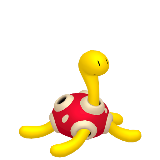 ShuckleAfter Tornadus
 StaryuAfter Thundurus
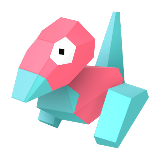 PorygonAfter Thundurus
 RaltsAfter Thundurus
 BronzorAfter Thundurus
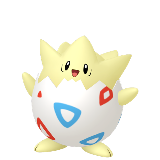 TogepiAfter Landorus
 SmoochumAfter Landorus
 SpiritombAfter Landorus
 RotomAfter Landorus
 Tornadus (Therian)Eureka α
 Thundurus (Therian)Eureka β
 Landorus (Therian)Eureka γ
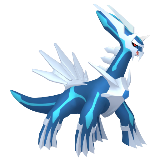 DialgaWith Diamond
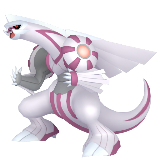 PalkiaWith Pearl
 GiratinaWith Platinum
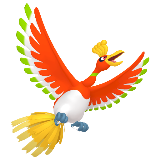 Ho-OhWith HeartGold
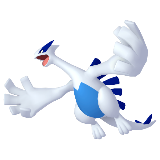 LugiaWith SoulSilver
 BeldumCode A
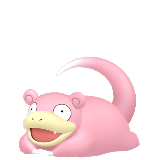 SlowpokeCode B
 HoothootCode C
Fifteen ordinary species appear as glowing spheres from stormy clouds, with more joining the pool as each Force of Nature is captured. Three more come from secret Special Extensions. Tornadus, Thundurus and Landorus fly freely in Therian Forme, and five Generation IV Legendaries are unlocked by DS Game Cards. Every one of them, with its Ability and exactly how to find it, is in the table further down.
What level will Pokémon be when I transfer them?
How strong the Pokémon you capture are once transferred to Black 2 or White 2 will depend on how many Badges the Trainer had at the time of transfer:
- Trainer has no Badges: You’ll get a level 5 version of the Pokémon
- Trainer has 1–2 Badges: You’ll get a level 10 version of the Pokémon
- Trainer has 3–4 Badges: You’ll get a level 20 version of the Pokémon
- Trainer has 5–6 Badges: You’ll get a level 30 version of the Pokémon
- Trainer has 7–8 Badges: You’ll get a level 40 version of the Pokémon
The Pokémon all dwell within Dream Balls, even when transferred, and if you view their info it’ll show the location you met them in as ‘Pokémon Dream Radar’.
 Dream Balls, even when transferred, and if you view their info it’ll show the location you met them in as ‘Pokémon Dream Radar’.
Legendary Pokémon
In terms of Legendary Pokémon, you are limited to one of each Legendary Pokémon per PDR save game; likewise, you are limited to one inbound transfer of each Legendary from PDR per Pokémon Black 2 or White 2 save game. Deleting Dream Radar’s save lets you catch them afresh, but a Black 2 or White 2 save that has already received a species will not accept it again.
Items
These are the items that can be obtained from Pokémon in PDR.
| Availability | Items |
|---|---|
| Available from the start of the game | Red Shard, Blue Shard, Yellow Shard, Green Shard, PP Up, Leppa Berry, Revive |
| Available once Tornadus is caught | Max Revive, Sun Stone, Moon Stone |
| Available once Thundurus is caught | Fire Stone, Water Stone, Thunderstone, Leaf Stone |
| Available once Landorus is caught | Sacred Ash, Rare Candy |
| Available using Simulator α | Star Piece, Heart Scale, PP Up, Max Revive, Rare Candy, Life Orb |
| Available using Simulator β | Star Piece, Heart Scale, Rare Candy, Dawn Stone, King’s Rock, Focus Sash |
| Available using Simulator γ | Star Piece, Heart Scale, Rare Candy, Life Orb, Focus Sash, Eviolite |
 Red Shard,
 Blue Shard,
 Yellow Shard,
 Green Shard,
 PP Up,
 Leppa Berry,
 Revive
 Max Revive,
 Sun Stone,
 Moon Stone
 Fire Stone,
 Water Stone,
 Thunderstone,
 Leaf Stone
 Sacred Ash,
 Rare Candy
 Star Piece,
 Heart Scale, PP Up, Max Revive, Rare Candy,
 Life Orb
 Dawn Stone,
 King’s Rock,
 Focus Sash
 Eviolite
Extensions & the Development Lab
There are lots of different types of extensions for your search, capture and research equipment; each has its own place and will be more useful in certain situations:
Extensions: their effects and purposes and how to get them
| Name | Cost (Dream Orbs) | How to unlock | What it does |
|---|---|---|---|
| Basic Extension | 0 | It’s there by default | A balanced searching device |
| Retrieval Extension | 100 | Harvest 200 Dream Orbs | This extension is better at finding Pokémon |
| Eureka Extension α | 0 | Harvest 400 Dream Orbs | The alpha version of an extension geared at finding mystery Pokémon |
| Dowsing Extension | 100 | Harvest a further 200 Dream Orbs after catching Tornadus | This extension reacts to Pokémon that are holding items |
| Eureka Extension β | 0 | Harvest a further 1,000 Dream Orbs after catching Tornadus | The beta version of an extension geared at finding mystery Pokémon |
| Eureka Extension γ | 0 | Harvest a further 1,600 Dream Orbs after catching Thundurus | The gamma version of an extension geared at finding mystery Pokémon |
| Simulator α | 400 | Capture Landorus and watch the credits | An extension created to research Tornadus’s traits |
| Simulator β | 600 | Capture Landorus and watch the credits | An extension created to research Thundurus’s traits |
| Simulator γ | 800 | Capture Landorus and watch the credits | An extension created to research Landorus’s traits |
| Temporal Extension | 0 | Press Start on the title screen while Pokémon Diamond is inserted, after catching Landorus | An extension created during an experiment about time |
| Spatial Extension | 0 | Press Start on the title screen while Pokémon Pearl is inserted, after catching Landorus | An extension created during an experiment about space |
| Renegade Extension | 0 | Press Start on the title screen while Pokémon Platinum is inserted, after catching Landorus | An extension developed especially for research on alternate worlds |
| Rainbow Extension | 0 | Press Start on the title screen while Pokémon HeartGold is inserted, after catching Landorus | An extension developed to research light and happiness |
| Diving Extension | 0 | Press Start on the title screen while Pokémon SoulSilver is inserted, after catching Landorus | An extension developed to research the sea’s quiet and rage |
| Special Extension A | 0 | Enter the secret code on the Start menu: ↑ → ↓ ← X R L (international versions; the Japanese code differs) | An extension developed to research magnetism |
| Special Extension B | 0 | Enter the secret code on the Start menu: ↑ ↓ → ← Y R L (international versions; the Japanese code differs) | An extension developed while thinking about a calm shore |
| Special Extension C | 0 | Enter the secret code on the Start menu: R L Y X ← → Y X (international versions; the Japanese code differs) | An extension developed to research the planet’s rotation |
 Basic Extension
 Retrieval Extension
 Dowsing Extension
 Every Eureka, Simulator, Generation IV and Special Extension shares this yellow icon in the game; only the Basic, Retrieval and Dowsing Extensions have icons of their own. The Eureka and Generation IV Extensions vanish from the list once their Legendary has been caught, and the Simulators replay the battles with the Forces of Nature, who can’t be caught a second time.
The Development Lab
The Development Lab is an area in which your equipment can be upgraded in order to become more powerful; you can also purchase standalone inventions by Professor Burnet in exchange for Dream Orbs – some of these will be permanent whereas some things are single use only.
Upgrades
All of these upgrades can be performed to a max of level 5.
| Feature name | Upgrade name | Description |
|---|---|---|
| Beam | Beam Upgrade | Makes your beam more powerful, enabling you to catch Pokémon quicker |
| Energy Pack | Energy Upgrade | Increases the amount of time you get to capture a Pokémon |
| Visoscope | Scope Upgrade | Increases the number of Dream Clouds that can be found |
 Beam Upgrade
 Energy Upgrade
 Scope Upgrade
Levels
Check out the differences to the Beam, Energy Pack and Visoscope at each level of upgrade:
| Level | Cost (Dream Orbs) | Beam colour (Beam) | Capture time (Energy Pack) | Dream Clouds (Visoscope) |
|---|---|---|---|---|
| Level 1 | Default | Yellow | 120 | 10 |
| Level 2 | 100 | Green | 150 | 15 |
| Level 3 | 500 | Red | 180 | 20 |
| Level 4 | 1,000 | Purple | 210 | 25 |
| Level 5 (MAX) | 1,500 | Blue | 240 | 30 |
Support items (one-time use)
Multiple units of these items can be carried at any one time.
| Name | Cost (Dream Orbs) | Description |
|---|---|---|
| Vortex Charge | 100 | Holds Pokémon in place, making them easier to catch |
| Dragnet Charge | 50 | Slows down a Pokémon’s movements temporarily |
| Energy Recharge | 50 | Restores the energy that was used to capture a Pokémon |
 Vortex Charge
 Dragnet Charge
 Energy Recharge
Research Data
Every Pokémon you catch and item you obtain gets stored as research data. In the research data storage facility a player is allowed to stack 6 different items and 6 different Pokémon for storage at any one time; Legendary Pokémon are kept in a separate row of their own, so they don’t take up any of those six Pokémon slots. If a player already has 6 item stacks or 6 Pokémon and they then get another, they’ll be prompted to replace something that’s already stored. If the player is at capacity when they click the Start search button, a warning will be shown.
Transfers to Pokémon Black 2 & White 2
A maximum of six Pokémon can be transferred to Pokémon Black 2 or White 2 at any one time; where there are more than six stored, Legendary Pokémon will take priority and will always be transferred. Once the mons are transported from Dream Radar to Black 2 or White 2, the player must access the Unova Link in order to receive them in-game. A player must load up Black 2 or White 2 and receive the Pokémon before any additional ones can be sent.
In Black 2 and White 2 all received Pokémon will be put into storage in the current PC Box, or wherever the first Box with free space is after that. Items will automatically land in the player’s Bag.
Sending Pokémon to Black 2 & White 2

Dream Radar exists to feed Pokémon Black 2 and White 2. Everything you catch or pick up is stored as research data and beamed across to a Black 2 or White 2 Game Card in the same 3DS through Nintendo 3DS Link, then collected in the DS game from the Unova Link menu. All 26 Pokémon arrive in Dream Balls, at a level set by your Badges, and all but Rotom carry their Hidden Ability. The process works entirely offline, so it is unaffected by the closure of Nintendo’s online services.
Step by step
- Make sure your Black 2 or White 2 save has reached the point where you receive the Pokédex, as that is when the Unova Link transfer becomes usable.
- Put the Black 2 or White 2 Game Card into the slot of the 3DS or 2DS that has Dream Radar on it.
- In Dream Radar, choose to send your research data while the DS card is inserted.
- Start Black 2 or White 2, open Unova Link from the main menu and choose Nintendo 3DS Link to receive the batch.
- Pokémon go into your PC Boxes and items straight into the Bag. Collect each batch before sending the next one.
- 26Pokémon to send
- 8Legendaries, one of each per save
- 6Pokémon per transfer
- 5–40level on arrival, set by Badges
All 26 Pokémon and how to find them
Every Pokémon Dream Radar can catch and send, in the order they become available. Orb levels are the colour of Dream Orb you collect most of in a search:
| Pokémon | Type (Generation V) | Ability | Where to get it |
|---|---|---|---|
| Swablu #333 | Normal / Flying | Cloud Nine | Available from the beginning on pink and green Orb levels |
| Drifloon #425 | Ghost / Flying | Flare Boost | Available from the beginning on pink and green Orb levels |
| Riolu #447 | Fighting | Prankster | Available from the beginning on pink and green Orb levels |
| Munna #517 | Psychic | Telepathy | Munna is available from the beginning on pink Orb levels |
| Sigilyph #561 | Psychic / Flying | Tinted Lens | Sigilyph is available from the beginning on pink and green Orb levels |
| Igglybuff #174 | Normal | Friend Guard | Catch Tornadus and you can get Igglybuff on pink and green Orb levels |
| Shuckle #213 | Bug / Rock | Contrary | Catch Tornadus and you can get Shuckle on pink and green Orb levels |
| Staryu #120 | Water | Analytic | Catch Thundurus and you can get Staryu on pink and orange Orb levels |
| Porygon #137 | Normal | Analytic | Catch Thundurus and you can get Porygon on pink and orange Orb levels |
| Ralts #280 | Psychic | Telepathy | Catch Thundurus and you can get Ralts on green and orange Orb levels |
| Bronzor #436 | Steel / Psychic | Heavy Metal | Catch Thundurus, then Bronzor will be available on pink and green Orb levels |
| Togepi #175 | Normal | Super Luck | Catch Landorus and you can get Togepi on green Orb levels |
| Smoochum #238 | Ice / Psychic | Hydration | Catch Landorus and you can get Smoochum on blue Orb levels |
| Spiritomb #442 | Ghost / Dark | Infiltrator | Catch Landorus, then Spiritomb will be available on pink and blue Orb levels |
| Rotom #479 | Electric / Ghost | Levitate (no Hidden Ability) | Catch Landorus, then Rotom will be available on pink and orange Orb levels |
| Tornadus #641 · Therian Forme | Flying | Regenerator | Complete the Eureka Extension α objective, which opens once you have acquired a total of 400 Dream Orbs |
| Thundurus #642 · Therian Forme | Electric / Flying | Volt Absorb | Complete the Eureka Extension β objective, which opens once you have acquired a further 1,000 Dream Orbs after catching Tornadus |
| Landorus #645 · Therian Forme | Ground / Flying | Intimidate | Complete the Eureka Extension γ objective, which opens once you have acquired a further 1,600 Dream Orbs after catching Thundurus |
| Dialga #483 | Steel / Dragon | Telepathy | After catching Landorus, play PDR while a Pokémon Diamond Game Card is in the system and press Start on the title screen to open the Temporal Extension |
| Palkia #484 | Water / Dragon | Telepathy | After catching Landorus, play PDR while a Pokémon Pearl Game Card is in the system and press Start on the title screen to open the Spatial Extension |
| Giratina #487 · Altered Forme | Ghost / Dragon | Telepathy | After catching Landorus, play PDR while a Pokémon Platinum Game Card is in the system and press Start on the title screen to open the Renegade Extension |
| Ho-Oh #250 | Fire / Flying | Regenerator | After catching Landorus, play PDR while a Pokémon HeartGold Game Card is in the system and press Start on the title screen to open the Rainbow Extension |
| Lugia #249 | Psychic / Flying | Multiscale | After catching Landorus, play PDR while a Pokémon SoulSilver Game Card is in the system and press Start on the title screen to open the Diving Extension |
| Beldum #374 | Steel / Psychic | Light Metal | Enter these buttons on the Start menu to open Special Extension A – international versions: Up, Right, Down, Left, X, R, L; Japanese version: Up, Right, Down, Left, L, R, X |
| Slowpoke #079 | Water / Psychic | Regenerator | Enter these buttons on the Start menu to open Special Extension B – international versions: Up, Down, Right, Left, Y, R, L; Japanese version: Up, Down, Right, Left, L, R, Y |
| Hoothoot #163 | Normal / Flying | Tinted Lens | Enter these buttons on the Start menu to open Special Extension C – international versions: R, L, Y, X, Left, Right, Y, X; Japanese version: X, Y, L, R, Left, Right, Y, X |
The Forces of Nature in Therian Forme
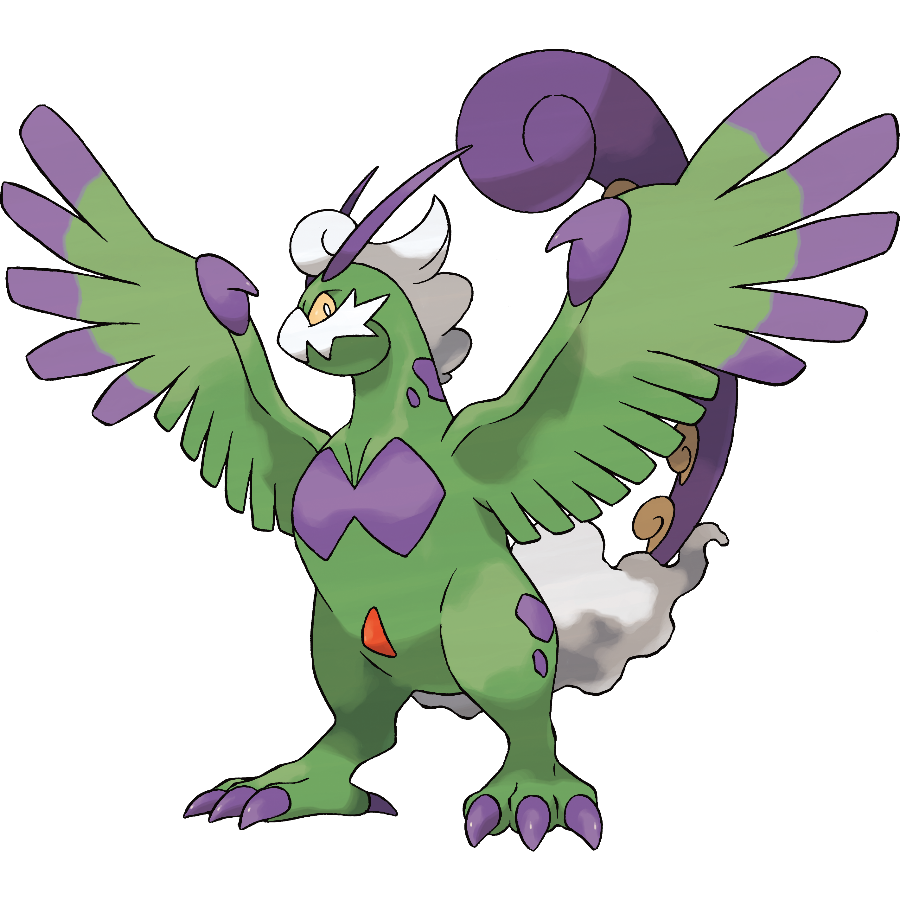

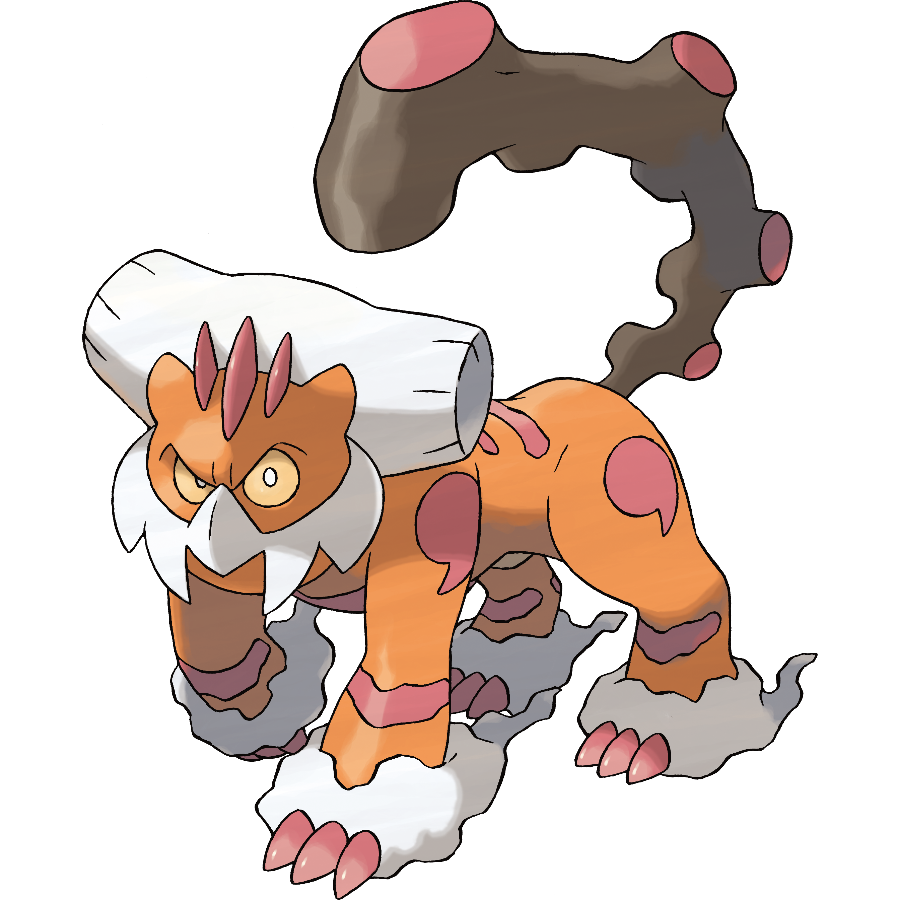
 The Reveal GlassBlack 2 and White 2 have no wild Tornadus, Thundurus or Landorus; their Therian Formes come only from Dream Radar, in either version. Bring Therian Landorus to the Abundant Shrine and a man there gives you the Reveal Glass, which swaps all three between Formes. Black and White needed Tornadus and Thundurus in the party to meet Landorus there; Black 2 and White 2 want only the Therian Landorus.
Regional Variations
Dream Radar came out in five regions in 2012, each time on the same day as Black 2 and White 2, and a few details changed along the way:
- Japan received the app on 23 June 2012 as Pokémon AR Searcher, more than three months before the English versions in October.
- The three Special Extension button codes differ: Western copies use the same buttons as the Japanese ones but with the last three presses (or, for Special Extension C, the first four) in reverse order.
- Generation IV Game Cards from any region unlock the Legendary extensions, so a Japanese Diamond works with an English Dream Radar and vice versa.
- The South Korean version followed on 8 November 2012, matching the Korean launch of Black 2 and White 2.
- Launch prices were US$2.99 in North America, £2.69 in the UK and €2.99 in the eurozone.
- Localised names include Pokémon Traumradar in German; the Interdream Zone became the Traumkluft in German and Interstice du rêve in French.
Glitches, exploits and oddities
Rather than bugs, Dream Radar’s best-known quirks come from its transfer rules:
Level 5 Legendaries
Because a transferred Pokémon’s level depends only on the Badges in the receiving save, sending a Legendary to a Black 2 or White 2 file with no Badges gives you a level 5 Tornadus, Dialga or Lugia. Almost no other official method hands out these Legendaries at such a low level, so Dream Radar is one of the few ways to raise one from the very start. The low level is a side effect of the transfer rules rather than a bug, and the Pokémon is otherwise normal.
Therian Formes locked out of trades
The Therian Forme did not exist in the original Black and White, so Black 2 and White 2 refuse to trade Tornadus, Thundurus or Landorus while they are in that form. This stops them being sent to a Black or White cartridge that could not display them. To trade one, you first need to turn it back into its Incarnate Forme with the Reveal Glass, which is itself only obtainable by showing a Therian Forme Landorus from Dream Radar at the Abundant Shrine.
Videos & media
Check out the videos below, including the USA, UK and Japanese trailers for Pokémon Dream Radar.
The USA trailer.
The UK eShop trailer.
The Japanese trailer.
Trivia & facts
- Pokémon Dream Radar had the exact same global release dates as Pokémon Black Version 2 and White Version 2, region by region.
Further trivia
- Until Generation VIII, Dream Radar was the only way to obtain Dialga, Palkia, Giratina, Ho-Oh and Lugia in a Dream Ball.
- Professor Burnet is one of very few characters to debut in a spin-off and later join the core series, returning in Pokémon Sun and Moon as Professor Kukui’s wife.
-
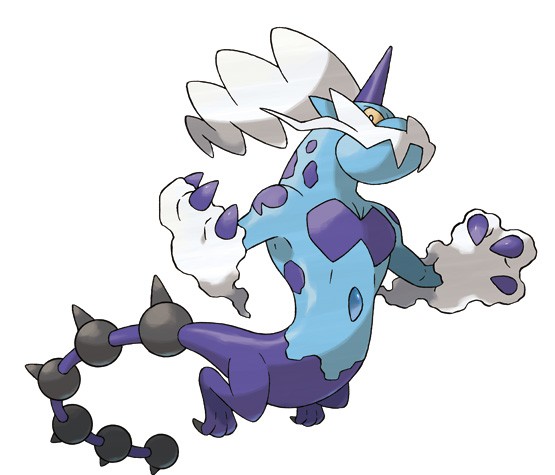
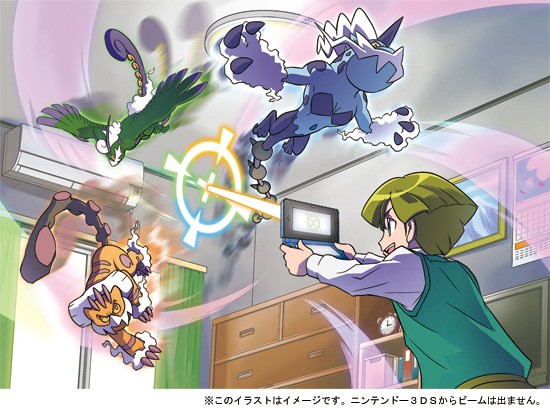
Thundurus, one of the Forces of Nature In Generation V, Therian Forme Tornadus, Thundurus and Landorus could only be obtained by catching them in Dream Radar and sending them to Black 2 or White 2.
- Scientists at the Dimensional Research Lab in Sun and Moon still mention the Interdream Zone, Burnet’s research subject from Dream Radar.
- The Japanese names for the game’s currency and targets are yumedama (Dream Orbs) and yumegumo (Dream Clouds), and the Interdream Zone is Yume no Hazama.
- Hitoshi Ariga, who has drawn many official Pokémon illustrations and Nintendo 3DS themes, produced the Japanese promotional art of the three Forces of Nature in their Therian Formes.
Legacy
What came after
- Japanese release – 23 June 2012. Launched on the Nintendo eShop the same day as Pokémon Black 2 and White 2
- North American release – 7 October 2012. Released as Pokémon Dream Radar for US$2.99, alongside Black 2 and White 2
- Australian and European releases – 11 October 2012 (Australia), 12 October 2012 (Europe). Priced at £2.69 in the UK and €2.99 in the eurozone
- South Korean release – 8 November 2012. Arrived with the Korean versions of Black 2 and White 2
- Save backup support – June 2013. A 3DS system update allowed Dream Radar’s save to be backed up, so deleting and redownloading no longer wiped progress
- Professor Burnet joins the core series – 18 November 2016. Burnet returned in Pokémon Sun and Moon, running the Dimensional Research Lab and handing over the Reveal Glass
- Pokémon HOME launches – 12 February 2020. Dream Radar Pokémon moved from Black 2 or White 2 through Poké Transporter and Pokémon Bank can now reach Switch games
- Nintendo 3DS eShop closes for purchases – 27 March 2023. Dream Radar can no longer be bought; existing owners can still redownload it
Where to play it today
Pokémon Dream Radar has been off sale since 27 March 2023, when the Nintendo 3DS eShop stopped selling software. Players who bought it can still redownload it on any 3DS or 2DS family system, and because it needs no internet connection, everything still works: searching, catching and sending Pokémon and items to a Black 2 or White 2 Game Card. It has never been re-released on Nintendo Switch or any other platform, so a 3DS with the app already purchased is the only way to play.
How it was made
Dream Radar was made by Creatures Inc., one of The Pokémon Company’s three owners and the studio behind the Trading Card Game, PokéPark Wii and later Detective Pikachu. Yasunori Isari, Takao Unno and Masafumi Sato directed, and the producers included Creatures president Hirokazu Tanaka and Game Freak’s Junichi Masuda; Satoshi Tajiri, Satoru Iwata and Tsunekazu Ishihara were executive producers. Megumi Mizutani was the sole character designer and created Professor Burnet. The app resembles the camera-and-gyro shooting of the 3DS’s built-in Face Raiders and was planned as a companion to Black 2 and White 2, launching on the same day as those games in every region. It was also where the new Therian Formes could be caught.
Professor Burnet elsewhere
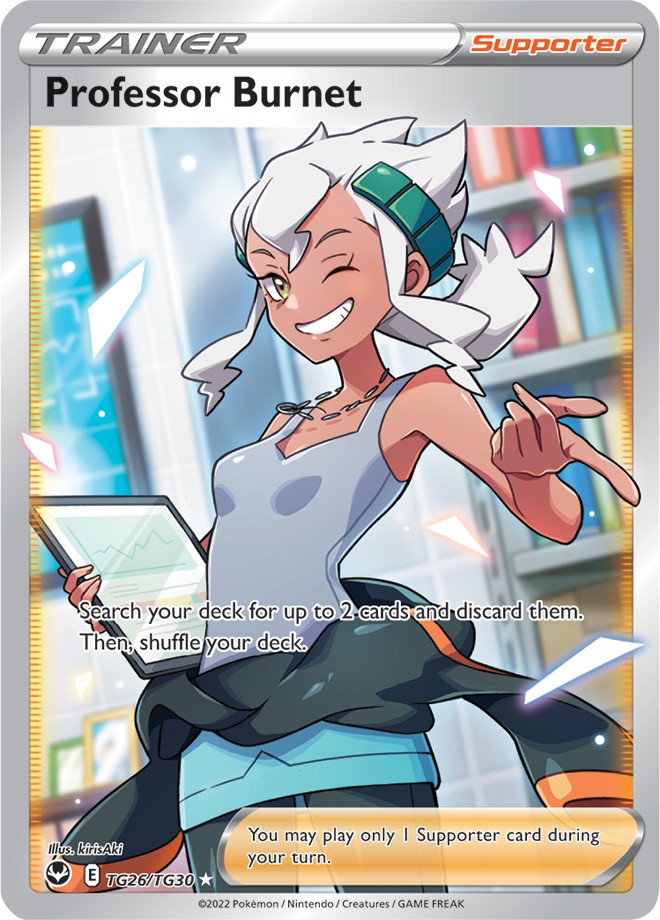
Sales & reviews
Sales & price
Nintendo and The Pokémon Company have never published download figures for Dream Radar, and as an eShop-only release it never appeared in Media Create’s retail charts. It launched at US$2.99 in North America, £2.69 in the UK and €2.99 in the eurozone, a pocket-money price for a companion to Black 2 and White 2.
- US$2.99launch price in North America
- £2.69launch price in the UK
- 54on Metacritic (13 critics)
- 2023off sale since the eShop closed for purchases
Review scores
Pokémon Dream Radar received a lukewarm reception with mediocre scores and a few mentions of tedium; here’s how it did at some of the major review outlets.
- Over at Metacritic PDR comes out with a score of 54/100 across 13 critic scores and has a user rating of 5.9/10 from 36 ratings.
- Joe Walker from Nintendo Life scored the game 6 out of 10, equating to ‘Not Bad’ on the Nintendo Life scale and stating: “Pokémon Dream Radar is a fun diversion for Pokémon fans that ties in well with the newly released Black and White 2.”
- GameSpot didn’t see fit to formally review Dream Radar.
- I think a major part of the problem was that unless you were avidly into Pokémon Black 2 or White 2 at the time you played Dream Radar, there is/was limited point to the app as a standalone, and I completely understand how it would become tedious. However, if you were actively playing Black 2 or White 2, it’s a really cool little add-on.
Critics were broadly agreed that Dream Radar only made sense as an accessory to Black 2 and White 2. Almost every outlet landed around six out of ten, praising the slick, reliable augmented-reality shooting and the chance to pick up Hidden Ability Pokémon and the brand-new Therian Formes for pocket money. The complaints were just as consistent: there is little game beyond pointing and firing, the real-time wait for clouds to regenerate felt like a social-network timer, and the novelty wore off well before the grind was over. Nintendo World Report warned anyone without the new main-series games that there was nothing in it for them, while Official Nintendo Magazine found the rare Pokémon could not hide the tedium. GamesMaster was harshest at 30%, and the Metacritic average settled at 54.
Media & artwork
- Official artwork from Pokémon Dream Radar, including the Japanese logo, Thundurus and Landorus
- Screenshots from Pokémon Dream Radar
Further reading
More Generation V and Nintendo 3DS links on the site: