
  |
|
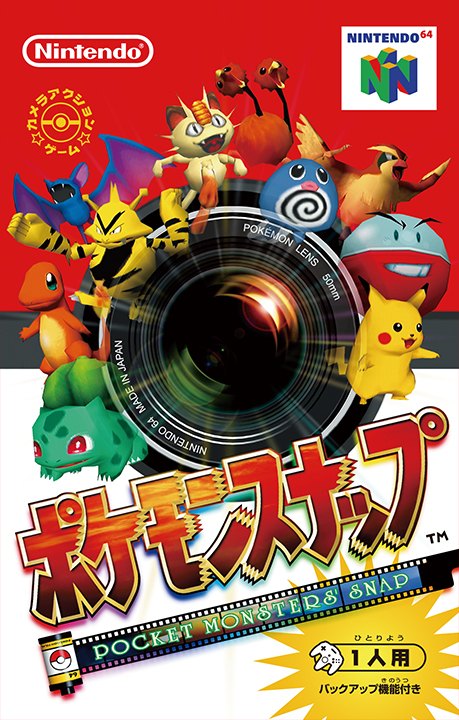
| Titles | Pokémon Snap ポケモンスナップ (Pokémon Sunappu) |
| Platform | Nintendo 64 |
| Developer | HAL Laboratory, with Pax Softnica |
| Publisher | Nintendo |
| Producers | Satoru Iwata · Shigeru Miyamoto · Kenji Miki |
| Music | Ikuko Mimori |
| Players | Single player |
| Genre | On-rails photography |
| Pokémon | 63 species on seven courses, plus six Pokémon Signs |
| Released | 21 March 1999 (Japan) · 26 July 1999 (North America) · 23 March 2000 (Australia) · 15 September 2000 (Europe) |
| Re-releases | Wii Virtual Console (2007) · Wii U Virtual Console (2016–17) · Nintendo Switch Online + Expansion Pack (24 June 2022) |
| Rating | ESRB E · PEGI 3 · ACB G |
| Successor | New Pokémon Snap (Nintendo Switch, 2021) |
| Sales | About 3.63 million worldwide |
Overview
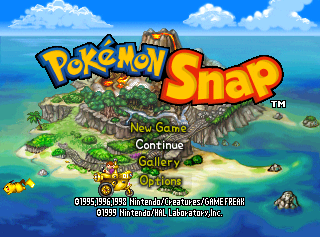
 Pokémon Snap is a first-person photography spin-off released on the Nintendo 64 (and later on the Wii and Wii U Virtual Console and Nintendo Switch Online), showing the Pokémon in 3D in their natural habitats. The game offers a completely different style of gameplay from the rest of the Pokémon games, which mainly focus on battling and catching Pokémon. In Pokémon Snap, the famous Professor Oak asks the Pokémon photographer Todd Snap to help with his Pokémon Report by taking pictures of the different Pokémon species living on Pokémon Island.
At Professor Oak’s research lab, the player selects the level they’ll explore. As Todd Snap, the player travels through the levels in an amphibious buggy, the ZERO-ONE, which has three different forms for air, land and water travel and moves them in a fixed direction, just like a rail shooter, while Todd takes pictures of the Pokémon in the area. Todd starts out with only his camera, but gains new items as the game progresses. These items affect the Pokémon in different ways and are the key to unlocking alternative routes and hidden Pokémon, so the player has to revisit some of the levels to catch photo opportunities they missed for lack of items. Up to 60 pictures can be taken per level.
Once a level is finished, the player selects the best picture of each Pokémon. These pictures are then rated by Professor Oak and added to his Pokémon Report. The rating depends on factors such as how well the Pokémon is framed, and the Pokémon’s pose and size. In fact, capturing a Pokémon doing a special pose, like the surfing Pikachu, earns the player extra points. The game also lets the player mark pictures with the ‘Album Mark’ feature, which adds them to a personal album they can show to their friends later. As well as Pokémon pictures, Todd is asked to photograph the different Pokémon Signs around the island. Collecting all the signs unlocks the location of the rarest Pokémon on the island.
Pokémon Island is home to more than 60 different species spread out over several distinct biomes, from a piping-hot volcano to a relaxing river. You’ll find certain Pokémon unique to each location, like a Lapras going for an ocean swim or a Koffing lurking in a cave. You’ll have to keep your eyes open because Pokémon could be anywhere! To make your Pokémon Island photo safari easier, you’ll travel around on the ZERO-ONE, an all-terrain vehicle that will allow easy access over ground, water, and air so you can get close enough to snap a photo of the Pokémon.
— Official description
Quick Answers
The questions people ask about Pokémon Snap, answered first and explained further down the page.
How do you unlock the Rainbow Cloud in Pokémon Snap?
Photograph all six Pokémon Signs and show them to Professor Oak: Kingler Rock on the Beach, Pinsir Shadow in the Tunnel, Koffing Smoke at the Volcano, Cubone Tree on the River, Mewtwo Constellation in the Cave and Mt. Dugtrio in the Valley. Oak spots matching constellations in the sky and sends Todd up to the Rainbow Cloud, home of Mew. More →

When do you get the Pokémon Food, Pester Ball and Poké Flute?
Professor Oak hands each one over when your Pokémon Report reaches a points total: Pokémon Food at 24,000, Pester Balls at 72,500 and the Poké Flute at 130,000. The flute also needs the Dash Engine, which arrives after you open the Valley’s floodgate route. New items are only awarded when Oak checks your photos at the lab. More →
How many Pokémon are in Pokémon Snap?
There are 63 species to photograph, all from the original 151, spread over seven courses, with Mew hidden away in the secret Rainbow Cloud. Four more (Kingler, Pinsir, Cubone and Mewtwo) appear only as Pokémon Signs, and Ekans was cut during development, which would have taken the total to 64. More →
Can you play Pokémon Snap on Nintendo Switch?
Yes. Pokémon Snap joined the Nintendo 64 library of Nintendo Switch Online + Expansion Pack on 24 June 2022, and the same Nintendo Classics app also runs on Nintendo Switch 2. The older Wii and Wii U Virtual Console versions can no longer be bought, because both of those download shops have closed. More →
What was a Pokémon Snap Station?
A kiosk containing a Nintendo 64 and a printer, placed in Blockbuster video stores in the US and Lawson convenience stores in Japan. Players plugged in their own cartridge, chose their favourite photos and printed them as a sheet of 16 stickers for about $3 or 300 yen. The Wii version swapped printing for Wii Message Board sharing. More →
Was Pokémon Snap a 64DD game?
It was planned as one. Nintendo announced Pokémon Snap as a 64DD disk title at Space World ‘97, then moved it to an ordinary cartridge in 1998, partly because the add-on kept slipping and Snap had to launch before Gold and Silver. It never came out on 64DD, which only reached Japan in December 1999. More →
Characters
Professor Oak
A major character in the Pokémon world, who’s mentioned or present in nearly all the Pokémon games. He’s a Pokémon Professor from the Kanto region who works at the research lab in Pallet Town. Professor Oak is passionate about studying the relationship between Pokémon and humans. In Pokémon Snap, he entrusts Todd Snap with the mission of gathering perfect Pokémon pictures from Pokémon Island for his report. He also gives Todd different items as the game progresses.

Todd Snap
He’s an ambitious Pokémon photographer who prefers catching Pokémon with his lens rather than Poké Balls. Todd is also the main character of Pokémon Snap, journeying across Pokémon Island and capturing photos of Pokémon in their natural habitat, as requested by Professor Oak. Todd also featured in the <a href=”/pokemon-animated-series/”>Pokémon animated series</a> in both the first and fourth seasons, and came back in 2022 in <em>Partners in Time!</em>.


Items

- Pokémon Food: Unlocked when the player’s Pokémon Report reaches 24,000 points in total. It looks like apples, is unlimited and has different uses. Todd can use Pokémon Food to lure Pokémon to a different spot, since they’ll follow the food and gladly eat it. If the food hits a Pokémon, it may make it flinch, faint or even get upset.
- Pester Balls: Unlocked by reaching 72,500 points in the Pokémon Report. Although they look like normal Poké Balls, they don’t catch Pokémon – instead they release a Pokémon repellent that helps stun Pokémon or knock them out of the way. Pester Balls don’t appear in any other Pokémon game.
- Poké Flute: Unlocked on reaching 130,000 points in the Pokémon Report, once the Dash Engine has been earned. There are three different songs that can be played on the Poké Flute, and each has a different effect on Pokémon: it can wake a sleeping Pokémon, make a Pokémon pose or even make it dance for the player.
- The Dash Engine: Earned by opening the Valley’s alternative floodgate route. It’s an upgrade to the ZERO-ONE that lets it burst forward at speed while the R button is held; on releasing the button, the ZERO-ONE returns to its usual speed. The Dash Engine lets the player catch up with Pokémon that usually outpace the ZERO-ONE, making it possible to photograph them.


Can I Catch ‘Em All?
Pokémon Snap features 63 Pokémon species, as follows:
 Bulbasaur#001
 Charmander#004
 Charmeleon#005
 Charizard#006
 Squirtle#007
 Metapod#011
 Butterfree#012
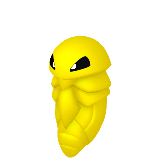 Kakuna#014
 Pidgey#016
 Pikachu#025
 Sandshrew#027
 Sandslash#028
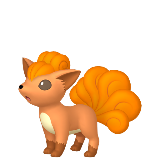 Vulpix#037
 Jigglypuff#039
 Zubat#041
 Vileplume#045
 Diglett#050
 Dugtrio#051
 Meowth#052
 Psyduck#054
 Mankey#056
 Growlithe#058
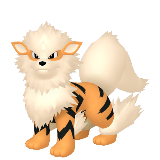 Arcanine#059
 Poliwag#060
 Weepinbell#070
 Victreebel#071
 Geodude#074
 Graveler#075
 Rapidash#078
 Slowpoke#079
 Slowbro#080
 Magnemite#081
 Magneton#082
 Doduo#084
 Grimer#088
 Muk#089
 Shellder#090
 Cloyster#091
 Haunter#093
 Electrode#101
 Koffing#109
 Chansey#113
 Kangaskhan#115
 Goldeen#118
 Staryu#120
 Starmie#121
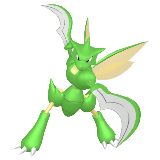 Scyther#123
 Jynx#124
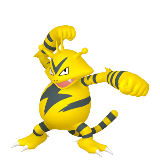 Electabuzz#125
 Magmar#126
 Magikarp#129
 Gyarados#130
 Lapras#131
 Ditto#132
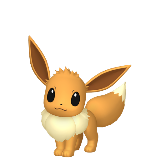 Eevee#133
 Porygon#137
 Snorlax#143
 Articuno#144
 Zapdos#145
 Moltres#146
 Dratini#147
 Dragonite#149
 Mew#151
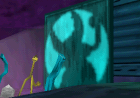
There are six Pokémon that appear on signs: Kingler, Pinsir, Dugtrio, Koffing, Cubone and Mewtwo. Only Dugtrio and Koffing are physically present in the game, while the rest of the Pokémon featured on the signs aren’t.



Notable Pokémon
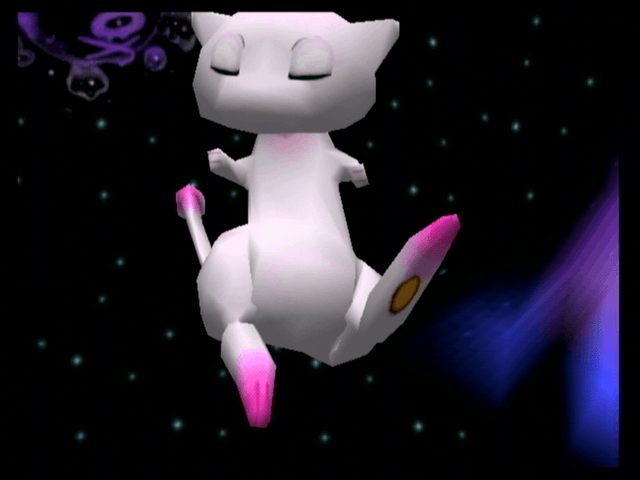
- Mew – The final subject, found only in the secret Rainbow Cloud behind a bubble shield.
- Pikachu – Appears on the Beach, Tunnel, River and Cave courses and stars in the most bonus shots, including surfing and floating on balloons.
- Magikarp – Turns up on all six main courses and evolves into Gyarados when sent up the Valley waterfall.
- Zapdos – Hatches from a giant egg in the Tunnel and brings the power plant back to life.
- Moltres – Hatches when its egg is knocked into the Volcano’s lava.
- Articuno – Hatches in the Cave after Jynx dance to the Poké Flute.
- Slowpoke – Evolves into Slowbro when a Shellder bites its tail, the only evolution in the game shown the way the Pokédex describes it.
- Magnemite – Three gathered together with Pokémon Food merge into a Magneton in the Tunnel.
- Ditto – Disguised as Bulbasaur in the Cave until a Pester Ball reveals it.
- Ekans – Seen in early 64DD-era footage but cut from the finished game.
Locations

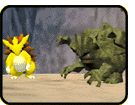
The game takes place on Pokémon Island. Although there are signs that the island was once inhabited by people, only wild Pokémon live there now, including the three legendary birds and Mew. On the island, the player can venture through six different locations and a final hidden one:


In depth: the fine print


Snap Stations: Printing Your Photos

Pokémon Snap stations were set up in Blockbuster video stores across the US (with a similar promotion at Lawson convenience stores in Japan). They allowed players to plug their cartridge into the Snap Station and print off sheets of stickers of their photos.
Each kiosk was a Nintendo 64 with a printer on the fourth controller port, a special printing cartridge and an adaptor for switching between Snap and Pokémon Stadium, which could save pictures of the player’s own Pokémon for printing too. A sheet of 16 stickers cost about $3 in the US and 300 yen in Japan. When the game came to the Wii, sticker printing was replaced by sending a photo to the Wii Message Board once a day.
Regional Variations
Europe waited 18 months for Pokémon Snap, and the versions differ in a few small ways:
- The Japanese version came out in March 1999, North America followed in July 1999, and Europe waited until September 2000.
- For the English release most Pokémon cries were replaced with voices from the English dub of the anime, although some, including Metapod, Diglett, Dugtrio, Psyduck and Porygon, kept their original Japanese voices.
- The international versions redraw some menu art: the Camera Check screen uses a new font and repositions Bulbasaur, and the Pokémon Report sign gains bolts, a blue frame and glowing lettering.
- Sticker printing was handled by Lawson convenience stores in Japan at 300 yen a sheet and by Blockbuster video stores in the US at about $3.
- Todd Snap is Tōru in Japanese, Todd in German and French, Snap in Portuguese and Todd Snap in English, Spanish and Italian.
- The Virtual Console versions recolour Jynx’s face from black to purple to match its modern design, and replace the sticker option with sending a photo to the Wii Message Board once a day.
Left in the data
- Ekans was meant to be photographable and can be seen in early 64DD-era footage in a grassy clearing, but it was removed, leaving 63 species instead of 64.
- That early footage shows a test course unlike any in the final game, with plains, woodland, savannah and bridges, plus poses that never made it in, such as Snorlax posing for the camera and Pidgey standing on the ground.
- A track called “Fantasic Horror” was cut along with a planned Ghost-type course and its own boss theme; concept art of a gloomy field with spiralling rocks may show the scrapped level.
- Leftover graphics include a placeholder kanji meaning “temporary” (仮), Japanese “Start Game” text that still sits in the US version’s data, and an unseen blinking animation for Dratini.
Glitches, exploits and oddities
A hidden crash screen and a recolour that wasn’t quite finished:
Hidden crash debugger
Pokémon Snap contains a crash screen left in by the developers. If the game crashes, pressing Z+R+L, D-Pad Up with C-Up, A with D-Pad Left, B with D-Pad Right, and D-Pad Down with C-Down in turn brings up a debug display, and Z+R+L flips between its pages. Only the register values and stack trace can actually be read, because the routine for the third page is missing and the debugger itself crashes when it tries to move past the second.
Half-finished Jynx recolour
When Pokémon Snap came to the Wii Virtual Console in 2007, Jynx’s black face was changed to purple to match the redesign used everywhere else in the series. The edit missed Jynx’s hands, which stayed black in the Virtual Console versions, leaving the pair of Jynx dancing around Articuno’s egg in the Cave with a purple face but mismatched black hands. The Nintendo Switch Online release, which also uses the purple design, corrects the oversight.
Videos & media
Check out these Pokémon Snap videos, including the game’s trailer, TV commercials and more.
Get N or Get out! The official trailer for Pokémon Snap on the Nintendo 64, 1999.
Moville Media showing us his very own Pokémon Snap Station – these were kiosks in Blockbuster stores that let people print the snaps they had taken in the game.
A US TV commercial for Pokémon Snap featuring the Pokémon Snap Station – $3.00 per printed page of 16 stickers!
A Japanese TV commercial for Pokémon Snap.
Trivia & facts
- The Rainbow Cloud is the only area where Magikarp cannot be found.
- Todd is the only spin-off game character to be featured in Pokémon Adventures.
-
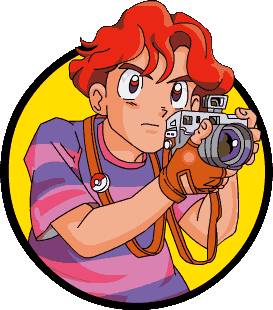
Todd Snap. Todd has two different names in the English dub of the series: he’s called Todd in the TV versions and Snap on the DVD/VHS releases. Making Snap Todd’s surname was the remedy for the name problem.
- Todd and Kellyn are the only player characters in the spin-off games who don’t wear any headgear or accessory.
- Pokémon Snap was first announced for the Nintendo 64DD at Space World ‘97, but moved to an ordinary cartridge in 1998 – it never came out on the 64DD, which only launched in Japan in December 1999.
- Even though legendary Pokémon are genderless, and so can’t lay eggs, the three legendary birds hatch from giant eggs in the game (it came out before breeding existed in the core series).
- In the game, three Magnemite have to gather for them to evolve into a Magneton – a nod to the Pokédex, which describes Magneton as linked Magnemite, rather than the level-up evolution of the core games.
- 64 Pokémon were planned for the game, the missing one being Ekans, which appears in early footage but was removed.
Further trivia
- Pokémon Snap was the first Pokémon game released on the Virtual Console, the only Nintendo 64 Pokémon game on the Wii U Virtual Console, and the first Pokémon game on Nintendo Switch Online.
- The game’s animators did not copy the anime: developer Benimaru Itoh acted out the Pokémon’s movements himself, with colleagues standing in when he was busy.
- Todd’s Japanese name, Tōru, comes from the Japanese verb toru (撮る), meaning to take a photograph.
- The voices of Professor Oak and Todd were added at the very last minute of development.
- To promote the Wii Virtual Console release, Yahoo! Kids in Japan streamed Todd’s anime episodes from 14 December 2007 to 14 January 2008.
- An iQue software copyright filing from December 2003 gave the game a Chinese title meaning “Pokémon – Photo Studio”, although it never came out in mainland China.
Legacy
What came after
- Japanese release on Nintendo 64 – 21 March 1999. Launched alongside a Lawson sticker-printing promotion at 300 yen a sheet.
- North American release – 26 July 1999. Backed by Blockbuster’s Snap Stations; over 1.5 million sold in the US by the end of 1999.
- European release – 15 September 2000. Arrived 18 months after Japan; debuted at No. 9 in the UK chart.
- Wii Virtual Console – 4 December 2007. Japan first, then North America on 2007-12-10 and Europe and Australia on 2007-12-11 for 1,000 Wii Points; the first Pokémon game on the Virtual Console, with Wii Message Board photo sharing.
- Wii U Virtual Console – 6 April 2016. Japan first, then Europe 2016-08-18, Australia 2016-08-19 and North America 2017-01-05; the only Nintendo 64 Pokémon game on the Wii U Virtual Console.
- Wii Shop Channel closes – 30 January 2019. The Wii version could no longer be bought.
- New Pokémon Snap – 30 April 2021. Bandai Namco Studios’ Nintendo Switch sequel, set in the Lental region, with Todd Snap returning.
- Nintendo Switch Online + Expansion Pack – 24 June 2022. Added to the Nintendo 64 library worldwide; the first Pokémon game on the service. Taiwan followed on 2025-09-09.
- Wii U eShop closes – 27 March 2023. The Wii U Virtual Console version was removed from sale.
Where to play it today
As of October 2026 the easiest way to play is the Nintendo 64 – Nintendo Classics app, included with a Nintendo Switch Online + Expansion Pack membership on Nintendo Switch and Nintendo Switch 2. The Wii and Wii U Virtual Console versions are no longer sold. Original Nintendo 64 cartridges are common on the second-hand market, but there is no way to print stickers any more.
How it was made
Pokémon Snap was made by HAL Laboratory, with help from Pax Softnica, and was produced by Satoru Iwata, Shigeru Miyamoto and Kenji Miki. It grew out of a team recruited through a 1994 Famitsu advert and nicknamed Jack and Beans, whose 1995 photography project, “Jack and the Beanstalk”, was inspired by the 64DD’s ability to write data to disk. Iwata later admitted the original idea lacked a clear goal, so by summer 1997 the setting was swapped for Pokémon. Announced as a 64DD title at Space World ‘97 in November 1997, the game moved to a standard cartridge in 1998, partly because the add-on kept slipping and because it had to come out before Pokémon Gold and Silver. Low-polygon models let many Pokémon share the screen, and Benimaru Itoh acted out their movements for the animators. Printing tests with the Game Boy Printer looked poor, so HAL technician Masayoshi Tanimura used a video printer, the idea behind the Snap Stations.
HAL Laboratory released Snap in the same year as its Nintendo 64 crossover fighter, Super Smash Bros. (1999).
Pokémon Snap elsewhere


Sales & reviews
Sales figures
Thanks to the heavy promotional campaign run by Nintendo and Blockbuster, the game was tremendously successful. In fact, Pokémon Snap sold in excess of 151,000 copies in the US within the first three days of its release. Pokémon Snap was the most-rented game in the US until late October 1999, and it was among the top ten best-selling games in the US in November 1999. The game has sold around 3.63 million copies overall, and is the perfect example of well-targeted promotion.
That worldwide total is a VGChartz estimate; the firmest figure is more than 1.5 million in the US by the end of 1999, which made it the sixth best-selling video game of the year there. In Japan it entered the chart at No. 4.
- 3.63mworldwide (estimate)
- 1.5m+US by end of 1999
- 151kUS, first three days
- No. 6US best-sellers, 1999
Review scores
Pokémon Snap was very well received, getting really great scores on the major review sites. Let’s take a look at those scores:
- Lucas M. Thomas of IGN appreciated the game’s 2007 Virtual Console release and scored it 7.5/10, the equivalent of ‘Good’ on their scale (IGN’s original 1999 review gave it 7.8).
- Peter Bartholow from GameSpot reviewed the game and scored it 8/10, which equates to ‘Great’ on the GameSpot scale. He even wrote “In keeping with Nintendo’s highest production standards, Pokemon Snap sports some of the best graphics and sound the N64 has to offer. The character models are detailed and full of personality.”, showing he really enjoyed it.
- Pokémon Snap reached a score of 75.48% on GameRankings (which closed in 2019) and has 77/100 on Metacritic – a rather great score, fitting for one of the best-selling Pokémon spin-offs.
Critics were charmed by how different Pokémon Snap felt from the battling games. Reviewers singled out the detailed, characterful Pokémon models, the lively environments and the use of cries taken from the anime, and many found the simple loop of returning to courses with new tools for a better shot surprisingly addictive. GameSpot called it a refreshingly unique game for a console that badly needed one, while Famitsu’s panel praised its relaxed, peaceful atmosphere. The common complaint was length: six main courses and a final stage can be finished in a few hours, and the 63-species roster left some fans wanting more. Later Virtual Console reviews agreed that it remained a gentle, enjoyable curiosity, though a short one, and the game has since gained a devoted cult following.
Awards and honours:
Media & artwork
Further reading
More Nintendo 64 Pokémon games on the site: