
  |
|
| Title | Pokémon Puzzle League (never released in Japan) |
| Platform | Nintendo 64 |
| Developers | Nintendo Software Technology · Intelligent Systems |
| Publisher | Nintendo |
| Director | Yukimi Shimura |
| Producers | Yukimi Shimura · Takehiro Izushi |
| Music | Arrangements of the English anime soundtrack |
| Players | 1–2 |
| Genre | Puzzle (Panel de Pon / Puzzle League) |
| Characters | 16 playable trainers, each with three Pokémon |
| Released | 25 September 2000 (North America) · 2 March 2001 (Europe) · also released in Australia |
| Re-releases | Wii Virtual Console (May 2008) · Nintendo Switch Online + Expansion Pack (15 July 2022) |
| Rating | ESRB E · PEGI 3 (Wii Virtual Console) |
| Handheld counterpart | Pokémon Puzzle Challenge (Game Boy Color, 2000) |
| Sales | About 450,000 (estimate) |
Overview
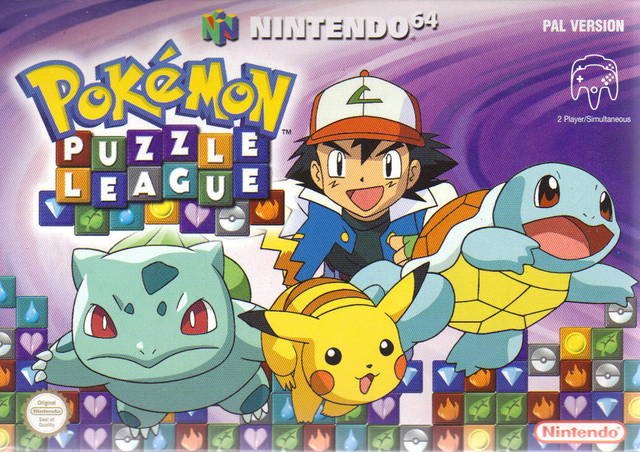
 Released on the Nintendo 64, Pokémon Puzzle League brings the Pokémon world to a game very similar in style to Tetris Attack. The game is based on the anime series, with all the characters taken from the anime. It was also among the few Nintendo 64 games to include full-motion video, with cut-scenes very much like the anime. In the game, the player faces different Pokémon Trainers in puzzle matches.
The main goal of the matches is to clear the blocks by lining up three or more matching ones, horizontally or vertically, while new rows of blocks keep rising from the bottom of the playing field. The player whose blocks reach the top of the screen loses. Unlike classic puzzle games, which focus only on clearing blocks, Pokémon Puzzle League also lets players hinder their opponent’s progress: successful chains and combos drop garbage blocks onto the opponent’s side, which makes quick thinking and speed crucial for beating the game.
Pokémon Puzzle League also introduced, for the first time, a 3D mode, in which the player’s field becomes a cylinder with blocks all around it, making the game far more challenging. Although the game offers a variety of trainers to play as, with different Pokémon, this has no effect on the actual gameplay and is purely cosmetic. The game takes place in Puzzle Village, where eight different modes can be played.
Master a new challenge!
Discover the most frantic, frenzied, fun-filled Pokémon challenge ever – Pokémon Puzzle League! Line up three or more blocks of the same type to clear them off the screen. Create chains and combos to send garbage to your opponent. Collect badges from other Pokémon trainers to earn the right to enter the ultimate competition… a battle against the mysterious Puzzle Master!
- A puzzle game with a Pokémon theme! Ash and Pikachu are off to the Pokémon Puzzle League Tournament to defeat the mysterious Puzzle Master.
- Six different modes in 2-D or 3-D! Train at Professor Oak’s Lab or Mimic Mansion, then challenge a friend or the computer in the Main Stadium. Build endurance in the Marathon Field. Solve puzzles at the Puzzle University, race against the clock in the Time Zone, and battle Team Rocket at the Spa.
- Defeat all 15 Pokémon trainers! Win all their badges to become the Pokémon Puzzle Master!
— Official description
Quick Answers
The questions people ask about Pokémon Puzzle League, answered first and explained further down the page.
How do you play as Mewtwo in Pokémon Puzzle League?
Only in the 2P Stadium, and only with a code. On the Select Trainer screen, hold Z on controller 1 and press B, Up, L, B, A, Start, A, Up, R, which spells BULBASAUR. Mewtwo’s stage loads with player 1 locked to Ash and player 2 as Mewtwo, who fights with his cloned Pikachu, Squirtle and Bulbasaur. More →
How do you get the real ending and fight Mewtwo?
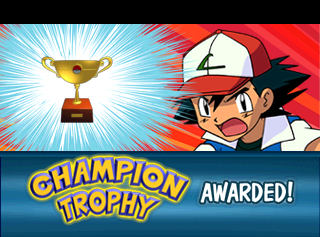
Play the 1P Stadium on Very Hard or Super Hard. Easy stops at Giovanni, Normal at Bruno and Hard at Gary, but on the two top levels winning the Champion Trophy from Gary leads to a final match against Mewtwo, the Puzzle Master. Beat him and Ash wakes up back on holiday with Mewtwo’s trophy. More →
How do you unlock Very Hard and Super Hard?
Both are hidden settings on the 1P Stadium difficulty screen. Hold Z and press L, L, A, B to add Very Hard, or hold Z and press R, L, A, B for Super Hard. A separate title-screen code, holding Z and pressing A, B, R, A, A, B, R, A (ABRA twice), opens every difficulty and every Puzzle University puzzle. More →
Is Pokémon Puzzle League on Nintendo Switch Online?
Yes. It joined the Nintendo 64 library of Nintendo Switch Online + Expansion Pack on 15 July 2022, so it needs the higher membership tier. The library now sits under the Nintendo Classics banner and also runs on Nintendo Switch 2. It is the English version, and it has never been offered in Japan. More →
How many characters are in Pokémon Puzzle League?
Sixteen. Ash, Gary, Brock, Misty, Lt. Surge, Erika, Koga, Sabrina, Blaine, Tracey and Team Rocket are available straight away. Giovanni, Ritchie, Lorelei and Bruno are hidden, and holding L, R and Z on both controllers at the 2P trainer select reveals them. Mewtwo needs his own code. Each trainer brings three Pokémon, purely for show. More →

What is the difference between Pokémon Puzzle League and Pokémon Puzzle Challenge?
Puzzle League is the Nintendo 64 game, based on the Kanto episodes of the anime with Ash as the hero, FMV cut-scenes and a 3D cylinder mode. Puzzle Challenge is the Game Boy Color game by Intelligent Systems, based on Gold and Silver and the Johto Gym Leaders. Puzzle Challenge came out in Japan; Puzzle League never did. More →
Story
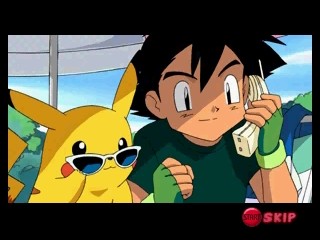
While enjoying the holidays, Pikachu and Ash Ketchum get a call from Professor Oak, who tells Ash that he has had the honour of being selected for the Official Puzzle League Tournament. Ash hurries to Puzzle Village, where all the action takes place, with the ultimate goal of becoming the Puzzle Champion. There he has to face all eight Kanto Gym Leaders and earn their Badges, allowing him to face the Elite and then finally battle the actual Champion.
Throughout his quest for Badges, Ash is interrupted by different trainers, including Tracey and Team Rocket. When he faces the last Gym Leader, Giovanni, he is lied to and told that Giovanni is the Puzzle League Champion – but Ritchie shows up and tells him that Giovanni has never even met the real Champion. Ash then faces the Elite, starting with Ritchie.
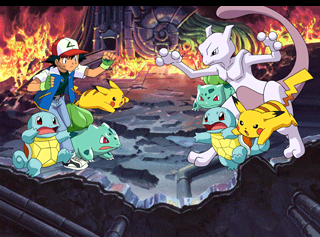
After beating all of them, he faces the final challenge, the Puzzle League Champion, who turns out to be none other than his rival Gary. After defeating Gary, he earns a trophy and the title of Champion. But Ash’s adventure isn’t over yet, as he and Pikachu are teleported away by Mewtwo, who claims to be the Puzzle Master and the mastermind who secretly organised the tournament in order to find a worthy opponent. Just after Mewtwo is defeated, Ash and Pikachu are teleported again, back to where the game began, with Ash waking up to find a trophy beside him – a prize from Mewtwo. (The full story only plays out on Very Hard or Super Hard.)


Game Modes
There are eight different modes that can be played in Puzzle Village:
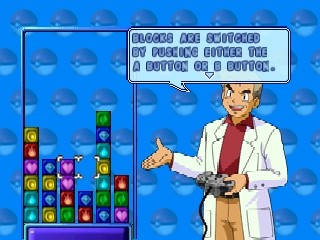
- Professor Oak’s Lab: A tutorial mode, where the player learns the controls and the concept of the game.
- The One Player Stadium: The main mode, in which the story takes place. Ash is on his quest for the Puzzle League Champion title, facing the Kanto Gym Leaders, the Elite and the Champion himself. There are five difficulty levels in this mode, and they end with different final opponents: on Easy the last opponent is Giovanni, on Normal it’s Bruno, on Hard it’s Gary, and on the hidden Very Hard and Super Hard levels it’s Mewtwo.
- The Two Players Stadium: Mainly a versus mode, where two players can face each other (Time Zone and Spa Service can be played by two as well).
- The Time Zone: A two-minute score attack, in which the player tries to score as many points as possible before time runs out.
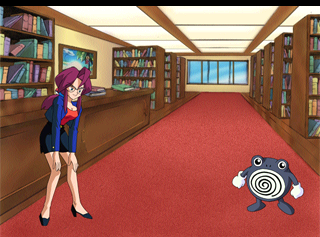
- The Puzzle University: A practice mode with three classes. In the first class, taught by Ritchie, the player has to clear the blocks within a set number of moves. Clearing the first class gives access to the second and third, taught by Lorelei and Brock respectively.
- The Mimic Mansion: Another practice mode, where Tracey demonstrates techniques for the player to copy.
- The Marathon: A record-chasing mode, where the player tries to score as many points as possible as the screen keeps filling with blocks, endlessly, until they finally reach the top.
- Spa Service: Team Rocket steal Squirtle and Bulbasaur, and Ash chases them through six rounds of line-clearing stages.


In depth: the fine print



Characters
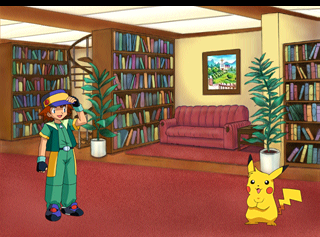
There are 16 playable characters in total, though only Ash can be played in the One Player mode. Some of the characters have their own theme songs from the anime, and some are only unlocked after meeting certain conditions.

Ash Ketchum
The main protagonist of the Pokémon series and many Pokémon games. At the very start of his adventure, Ash befriends Pikachu and sets off on a long journey with it to become the ultimate Pokémon Master. In both the anime series and the game, Ash has great adventures across the Pokémon world. In Pokémon Puzzle League, he’s the protagonist and the only playable character in the One Player mode, striving to claim the Champion title. In the game, Ash uses three Pokémon: Pikachu, Squirtle and Bulbasaur.

Gary Oak
The grandson of Professor Oak and Ash’s childhood friend and rival, present in both the animated series and some Pokémon games. Gary always seemed ahead of Ash in every way, yet Ash somehow manages to defeat him. As his rival, he’s the Champion of Pokémon Puzzle League (the final opponent on Hard). He uses Krabby, Growlithe and Nidoran♀, which evolve into Kingler, Arcanine and Nidoqueen for the Champion match.

Tracey Sketchit
A character from the anime series, one of the people who travelled with Ash. He idolises Professor Oak and has a habit of drawing Pokémon. In the game he uses Marill, Venonat and Scyther.
Team Rocket (Jessie, James and Meowth)
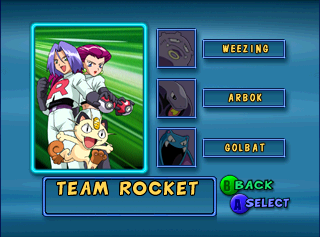
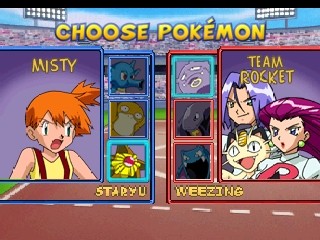
The infamous bad guys of the Pokémon series, present in both the anime and the games. The trio of Jessie, James and Meowth is the group Ash faces most often on his adventures, as their main goal is to snatch Pikachu and offer it as a gift to their leader Giovanni. In Pokémon Puzzle League, they use Weezing, Arbok and Golbat.
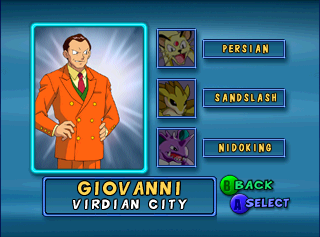
Giovanni
The leader of Team Rocket and an evil trainer who tries to spread havoc. He’s also the Viridian Gym Leader. He uses Sandslash, Persian and Nidoking.

Ritchie
One of Ash’s loyal friends, and the first member of the Elite he faces. He uses Sparky (Pikachu), Zippo (Charmander) and Happy (Butterfree).

Mewtwo
A legendary Pokémon created from Mew’s DNA by scientists who tried to duplicate Mew but ended up creating something even more powerful. Mewtwo is known for its human-like intelligence and its ability to communicate telepathically with humans, and the anime portrays it as one of the most powerful Pokémon. In the game, it’s the Puzzle Master who arranged the whole tournament just to find a trainer worth facing, and it fights with clones of Ash’s Pikachu, Squirtle and Bulbasaur.
The Gym Leaders and the Elite:
- Brock: The Rock-type Pokémon user and Pewter Gym Leader. He’s one of Ash’s companions in the anime series. In the game, he uses Vulpix, Geodude and Zubat.
- Misty: Also one of Ash’s companions in the anime. She’s a Water-type Pokémon user and the Cerulean Gym Leader. She uses Horsea, Psyduck and Staryu.
- Lt. Surge: The Vermilion Gym Leader and an Electric-type Pokémon user. He uses Jolteon, Raichu and Magneton.
- Erika: The Celadon Gym Leader and a Grass-type Pokémon user. She uses Tangela, Weepinbell and Gloom.
- Koga: The Fuchsia Gym Leader and a Poison-type Pokémon user. He uses Venomoth, Voltorb and Golbat.
- Sabrina: The Saffron Gym Leader and a Psychic-type Pokémon user. She uses Abra, Hypno and Alakazam.
- Blaine: The Cinnabar Gym Leader and a Fire-type Pokémon user. He uses Arcanine, Charmeleon and Magmar.
- Lorelei: A member of the Elite and an Ice-type Pokémon user. She uses Cloyster, Dewgong and Poliwhirl.
- Bruno: One of the Elite and a Fighting-type Pokémon user. He uses Onix, Hitmonchan and Primeape.


The One Player Stadium, match by match
| # | Opponent | Role | Pokémon | Prize |
|---|---|---|---|---|
| 1 | Gary | Rival (stage 1) | Krabby, Growlithe, Nidoran♀ | – |
| 2 | Brock | Gym Leader | Vulpix, Geodude, Zubat | Boulder Badge |
| 3 | Misty | Gym Leader | Horsea, Psyduck, Staryu | Cascade Badge |
| 4 | Lt. Surge | Gym Leader | Jolteon, Raichu, Magneton | Thunder Badge |
| 5 | Erika | Gym Leader | Tangela, Weepinbell, Gloom | Rainbow Badge |
| 6 | Koga | Gym Leader | Venomoth, Voltorb, Golbat | Soul Badge |
| 7 | Sabrina | Gym Leader | Abra, Hypno, Alakazam | Marsh Badge |
| 8 | Blaine | Gym Leader | Arcanine, Charmeleon, Magmar | Volcano Badge |
| 9 | Tracey | Interrupting rival | Marill, Venonat, Scyther | – |
| 10 | Team Rocket | Interrupting rivals | Arbok, Weezing, Golbat | – |
| 11 | Giovanni | Gym Leader and Team Rocket boss | Persian, Sandslash, Nidoking | Earth Badge |
| 12 | Ritchie | Elite | Sparky (Pikachu), Zippo (Charmander), Happy (Butterfree) | Ritchie Elite Medal |
| 13 | Lorelei | Elite | Cloyster, Dewgong, Poliwhirl | Lorelei Elite Medal |
| 14 | Bruno | Elite | Onix, Hitmonchan, Primeape | Bruno Elite Medal |
| 15 | Gary | Champion | Kingler, Arcanine, Nidoqueen | Gary Champion Trophy |
| 16 | Mewtwo | Puzzle Master (final boss) | Cloned Pikachu, Squirtle and Bulbasaur | Mewtwo’s trophy |


Giovanni, Ritchie, Lorelei and Bruno are hidden in the Two Players Stadium until unlocked, and Mewtwo needs a code (see Trivia).
The Anime Connection: Songs, Voices & Cut-scenes
Pokémon Puzzle League is the most anime-flavoured Pokémon game of its era. Its story is told in full-motion video cut-scenes in the style of the show, the 4Kids dub cast voice the trainers, and every match is set to a song from the English soundtrack – mostly from the 1999 album Pokémon 2.B.A. Master.
| Trainer | Match song | English voice |
|---|---|---|
| Ash | 2.B.A. Master | Veronica Taylor (Pikachu: Ikue Ōtani) |
| Gary | Pokémon World | – |
| Brock | Viridian City | Eric Stuart |
| Misty | Catch Me If You Can (from Pikachu’s Vacation) | Rachael Lillis |
| Lt. Surge | – | Maddie Blaustein |
| Erika | What Kind of Pokémon Are You? | Leah Applebaum |
| Koga | – | Stuart Zagnit (also Professor Oak) |
| Sabrina | Everything Changes | Lisa Ortiz |
| Blaine | My Best Friends | Michael Haigney |
| Tracey | – | Ted Lewis |
| Team Rocket | Double Trouble | Rachael Lillis, Eric Stuart, Maddie Blaustein |
| Giovanni | – | Ted Lewis |
| Ritchie | Together Forever | Tara Sands |
| Lorelei | Pokémon (Dance Mix) | – |
| Bruno | – | Maddie Blaustein |
The final battle borrows from Mewtwo Strikes Back: as in the first film, Mewtwo gathers trainers under false pretences to test them, and fights with clones of Ash’s Pokémon – its first clone is the Pikachu clone seen in the film. Lorelei also goes by her game name here, even though the English anime of the time called her Prima.
Releases & Regions
- Pokémon Puzzle League was never released in Japan, not on the Nintendo 64, not on the Wii Virtual Console and not on Nintendo Switch Online. Japan got the game it started as instead: Panel de Pon 64, with its fairy cast, in the GameCube’s Nintendo Puzzle Collection in 2003.
- North America got it first, on 25 September 2000. Europe followed on 2 March 2001, more than five months later and late in the Nintendo 64’s life, which helps explain modest European sales.
- A Brazilian release followed around October 2000, sold with a Portuguese-language manual.
- The Wii Virtual Console release reached North America on 5 May 2008 and Europe on 30 May 2008, priced at 1,000 Wii Points in both regions.
- The Nintendo Switch Online + Expansion Pack release on 15 July 2022 covered North America, Europe, Australia and South Korea, but not Japan.
Left in the data
- The North American ROM hides two developer voice recordings, love messages left by staff for their partners. One is in Japanese, a non-native speaker saying “エミちゃん、いつも愛してる。” (“Emi-chan, I’ll always love you.”), and the other is a flat English “I love you, Liz.” The data sits at offset 0x1D38180.
- The game is a localisation of the unreleased Nintendo 64 Panel de Pon, and the original cast of fairies was swapped out for the anime’s characters. An early prototype still branded Panel de Pon was found by the YouTuber GamersManual, but as of 2026 it reportedly has not been dumped, so its contents are unknown.
Glitches, exploits and oddities
A few faults and slips, none of them serious:
Endless blocks
A known fault can leave blocks appearing endlessly, so that the player can neither make combos nor lose. While it lasts the match cannot finish normally: the stack never tops out, and the player cannot clear it either, so the only way out is to quit the match or reset the console. It is one of the few bugs in the game that actually affects play rather than just the presentation.
Scrambled profile demos
Go to the Pokémon Center profiles and press R until you reach Mewtwo at the end of the list. Hold Z and press A, B and R, then return to the title screen and wait for the trainer profile demos to run. The trainers’ pictures are replaced by copies of the title screen, which get more garbled with each profile shown. The effect lasts until the console is switched off.
Victory screen freeze
After a two-player match, the results screen is not meant to be left alone. If it stays on screen for a while, the whole game locks up and the console has to be reset to carry on. It only happens on the screen shown after a 2P Stadium game, so moving on from the victory screen straight away avoids it.
Small slips in the presentation
The trainer profile demos misspell the home towns given for Giovanni and Bruno. There is also a mismatch at the very end: in the cut-scene after Mewtwo is beaten, the trophy is engraved on one side only, but the congratulations screen that follows shows it engraved on both sides. Neither affects play, but both are easy to spot once you know about them.
Videos & media
Check out these videos of Pokémon Puzzle League, including the trailer, the intro cut-scene and a TV commercial.
A US TV commercial for Pokémon Puzzle League.
The opening cinematic / intro for Pokémon Puzzle League.
The official trailer.
Trivia & facts
-

Play as Mewtwo in Pokémon Puzzle League. It is possible to play as Mewtwo in the Two Players mode by entering a code (hold Z on controller 1 at the Select Trainer screen and press B, Up, L, B, A, Start, A, Up, R – it spells BULBASAUR), but the first player is forced to play as Ash.
- The story is revealed gradually as the player advances through the game. In fact, the game ends after defeating Giovanni on Easy, without even reaching the Elite.
- Pokémon Puzzle League was the first game released outside Japan to feature Generation II Pokémon (Marill and Togepi), weeks before Gold and Silver reached North America – although the Pokémon in this game are only for show.
- A question mark is displayed when a player achieves an enormous chain. This can be replaced with the word ‘Special’ in the settings at the Pokémon Center.
- The working title ‘Pokémon Attack’, a nod to Tetris Attack, belonged to its Game Boy Color counterpart, Pokémon Puzzle Challenge; Puzzle League itself began life as Panel de Pon 64.
- The AI is much weaker in the 3D mode than in 2D; it even makes serious mistakes that lead to its defeat.
- The 3D mode can be played against the computer or by two players, and it also turns up in Marathon, Time Zone and Spa Service.
- It is the only Nintendo 64 Pokémon game – and the only Pokémon home-console game – never released in Japan.
Further trivia
- The game started out as Panel de Pon 64 and was reskinned with the Pokémon cast because development was dragging on. The finished fairy-themed version came out years later in Japan, in Nintendo Puzzle Collection on the GameCube (2003).
- Several cheat codes spell out Pokémon. The Mewtwo code is B, Up, L, B, A, Start, A, Up, R (BULBASAUR), and the unlock-everything code on the title screen is A, B, R, A, A, B, R, A (ABRA twice).
- Several trainers have Pokémon they never owned in the anime. Jessie and James have a Golbat, Gary has a Kingler, and Lt. Surge, Sabrina, Blaine, Giovanni and Lorelei all carry at least one newcomer.
- On top of its usual block designs, the game can switch to the classic Panel de Pon/Tetris Attack blocks from the Pokémon Center options.
Legacy
What came after
- Nintendo 64 release in North America – 25 September 2000. Launched three weeks before Pokémon Gold and Silver reached North America.
- Pokémon Puzzle Challenge (Game Boy Color), the handheld counterpart, in North America – 4 December 2000. Intelligent Systems’ Johto-themed puzzler, released in Japan on 21 September 2000 as Pokémon de Panepon.
- Nintendo 64 release in Europe – 2 March 2001. PAL release more than five months after North America.
- Nintendo Puzzle Collection (GameCube, Japan) – 7 February 2003. Includes Panel de Pon, the finished version of the Panel de Pon 64 project Puzzle League was built from.
- Wii Virtual Console in North America – 5 May 2008. 1,000 Wii Points.
- Wii Virtual Console in Europe – 30 May 2008. 1,000 Wii Points, rated PEGI 3.
- Wii Shop Channel closes – 30 January 2019. The Virtual Console version can no longer be bought; existing owners can still re-download it.
- Nintendo Switch Online + Expansion Pack (Nintendo 64 library) – 15 July 2022. Added in North America, Europe, Australia and South Korea; not in Japan.
- Nintendo Classics branding and Nintendo Switch 2 – 2025. The Nintendo 64 library, Puzzle League included, carries on under the Nintendo Classics name and plays on Switch 2.
Where to play it today
The easiest way is the Nintendo 64 library in Nintendo Switch Online + Expansion Pack, now under the Nintendo Classics name, on Switch or Switch 2. It has been there since July 2022 and supports local two-player and online play. The Wii Virtual Console version can only be re-downloaded by people who already bought it, so otherwise it means an original Nintendo 64 cartridge. A Japanese release still does not exist.
How it was made
Pokémon Puzzle League began as Panel de Pon 64, an N64 follow-up to Intelligent Systems’ 1995 Super Famicom puzzler, which had come to the West as Tetris Attack. Magazines in 1999 first named it Panel de Pon 64, and it was co-developed by Intelligent Systems and Nintendo Software Technology, Nintendo’s in-house studio in Redmond. NST artist Ken Christiansen told Time Extension in 2026 that work was dragging on, until the producer suggested reskinning the almost finished engine as a Pokémon game to get it shipped. NST drew the first character profiles, block icons and pose sketches, then the Pokémon side redrew the final art over about six months, and the new art dropped straight into the existing engine. Yukimi Shimura directed and co-produced with Takehiro Izushi. The 4Kids voice cast recorded new lines, and anime-style FMV cut-scenes were added. The original fairy-themed Panel de Pon 64 finally came out in Japan in 2003, inside the GameCube’s Nintendo Puzzle Collection.
Sales & reviews
Sales figures
The game sold an estimated 0.45 million copies, which is considered an ‘okay’ amount, not as high as the rest of the Pokémon games. This was probably because a) it was a spin-off, b) it was only released in the West – and in Europe not until March 2001, late in the Nintendo 64’s life – and perhaps c) puzzle games seemed to have passed their peak, sales-wise, in general.
Those are VGChartz estimates: about 360,000 in North America, 80,000 in Europe and 10,000 elsewhere. Nintendo has never published a figure.
- 450kworldwide (estimate)
- 360kNorth America (estimate)
- 82.65%GameRankings
- 16playable trainers
Review scores
Pokémon Puzzle League was very well received and earned high marks on the major review sites. Let’s take a look at those scores:
- Fran Mirabella III got quite addicted to the game and scored it 8.9/10, which equates to ‘Great’ on IGN’s scale, saying “I’m totally addicted and thrilled with Pokémon Puzzle League. To be fair we have to deduct points for some of the technical shortcomings, but I feel it’s my mission to let you know how great this game is”.
- Ryan Davis from GameSpot was also quite pleased with the game, rating it 7/10, the equivalent of ‘Good’ on the GameSpot scale.
- The game also had a very high score on GameRankings (which closed in 2019), 82.65%, and has 81/100 on Metacritic – fitting scores for such a great game.
Reviewers mostly agreed that a Pokémon makeover had not damaged one of the best puzzle formulas around. IGN’s Fran Mirabella III called himself hooked and gave it 8.9, and EGM’s panel was even keener. GameSpot’s Ryan Davis praised the presentation, with its anime clips and crisp sound, but felt that neither the 3D mode nor the licence justified buying it over earlier versions, and he grew tired of the trainers’ repeated shouts. GamePro’s two reviewers pitched it at younger players as well as puzzle fans, and Next Generation thought it fun, if a little cute. For most critics the Pokémon trimmings mattered less than the tried-and-tested block-swapping underneath. When the game reached the Wii Virtual Console in 2008, critics still called it Panel de Pon in Pokémon clothes, and still recommended it.
Awards and honours:
Media & artwork
- Box art from Pokémon Puzzle League, including numerous regional variations and editions
- Screenshots from Pokémon Puzzle League
Further reading
More puzzle and Nintendo 64 links on the site: