 |
|
| Titles | Pokémon GO ポケモン ゴー (Pokémon Gō) |
| Platform | iOS & Android (App Store, Google Play, Samsung Galaxy Store) · optional Pokémon GO Plus, Poké Ball Plus and Pokémon GO Plus + accessories |
| Developer | Niantic, Inc. (2016–2025) · now Scopely Explore, part of Scopely |
| Publisher | Niantic, Inc. (2016–2025) · Scopely since 29 May 2025 · The Pokémon Company (partner; the Pokémon licence) |
| Director | Tatsuo Nomura |
| Music | Junichi Masuda (part of the score) |
| Official sites | pokemongo.com · Scopely Explore (Niantic’s old site, nianticlabs.com, now redirects there) |
| Players | 1 (online) · raids for up to 20 Trainers · Party Play and Max Battles for up to 4 · Gigantamax battles for up to 40 (100 since August 2025) |
| Genre | Free-to-play location-based augmented-reality game |
| Generation | Generations I–IX (Generation I only at launch) |
| Pokémon | About 959 of the 1,025 species released or announced (October 2026) |
| Level cap | 40 (2016) · 50 (from late 2020) · 80 (from 15 October 2025) |
| Released | 6 July 2016 (Australia, New Zealand and US) · 14 July 2016 (UK; Germany 13 July) · 15–16 July 2016 (most of Europe) · 22 July 2016 (Japan) · 24 January 2017 (South Korea) |
| Re-releases | None – one live app, updated continuously since July 2016 |
| Rating | CERO A · ESRB E · PEGI 7 · ACB PG · App Store 9+ |
| Predecessor | None (built on the real-world map of Niantic’s Ingress) |
| Successor | None – links to Pokémon: Let’s Go, Pikachu! and Let’s Go, Eevee! (2018), Pokémon HOME (2020) and Pokémon Scarlet and Violet (2023) |
| Sales | Free to play · 1 billion+ downloads by 2019 · an estimated US$6.5 billion in player spending to February 2023 |
Overview

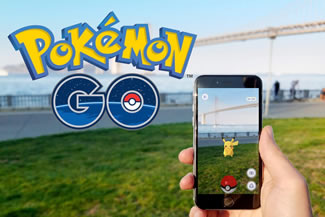
Pokémon GO is an open-world adventure featuring augmented-reality mons that you can encounter and capture in real-world locations. It’s a free-to-play game essentially, but if you really want to strive to be a Pokémon master there are premium upgrades that can help you level up faster and catch more Pokémon. The game is playable in most of the world on both iOS and Android.
It’s without doubt that Pokémon GO has been the most talked-about game in the last couple of decades, with July 2016 seeing Pokémon fans old and new, alongside people who had never even played the core series games, walking the streets with their heads stuck in their phones like something out of The Walking Dead. The game very much brought back a 90s level of Pokémania to the fore and put Pokémon back in the mainstream public eye; it also rendered people unable to log into their social media feeds without seeing a picture of an Abra on the toilet, a Bellsprout in a flowerbed or a Machop riding someone’s cat.
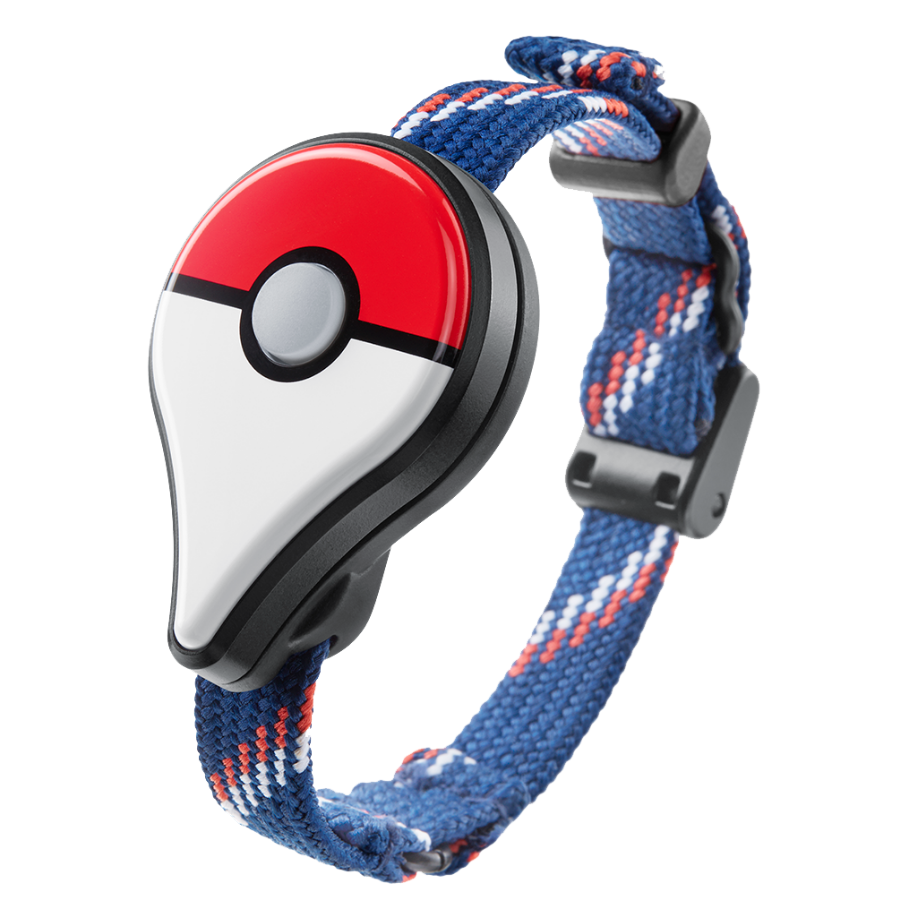
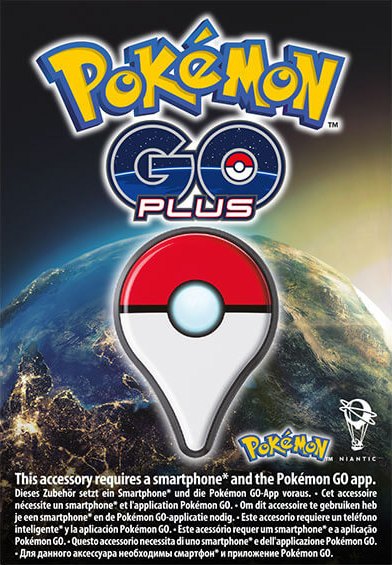
There is an official Pokémon GO accessory called the Pokémon GO Plus, which enables players to catch Pokémon, spin PokéStops and rack up kilometres without having their phones out (the phone stays in a pocket, running the app). It came out on 16 September 2016, and the Pokémon GO Plus + followed on 14 July 2023.
Venusaur, Charizard, Blastoise, Pikachu, and many other Pokémon have been discovered on planet Earth!
Now’s your chance to discover and capture the Pokémon all around you—so get your shoes on, step outside, and explore the world. You’ll join one of three teams and battle for the prestige and ownership of Gyms with your Pokémon at your side.
Pokémon are out there, and you need to find them. As you walk around a neighborhood, your smartphone will vibrate when there’s a Pokémon nearby. Take aim and throw a Poké Ball… You’ll have to stay alert, or it might get away!
Search far and wide for Pokémon and items
Certain Pokémon appear near their native environment—look for Water-type Pokémon by lakes and oceans. Visit PokéStops, found at interesting places like museums, art installations, historical markers, and monuments, to stock up on Poké Balls and helpful items.
Catching, hatching, evolving, and more
As you level up, you’ll be able to catch more-powerful Pokémon to complete your Pokédex. You can add to your collection by hatching Pokémon Eggs based on the distances you walk. Help your Pokémon evolve by catching many of the same kind.
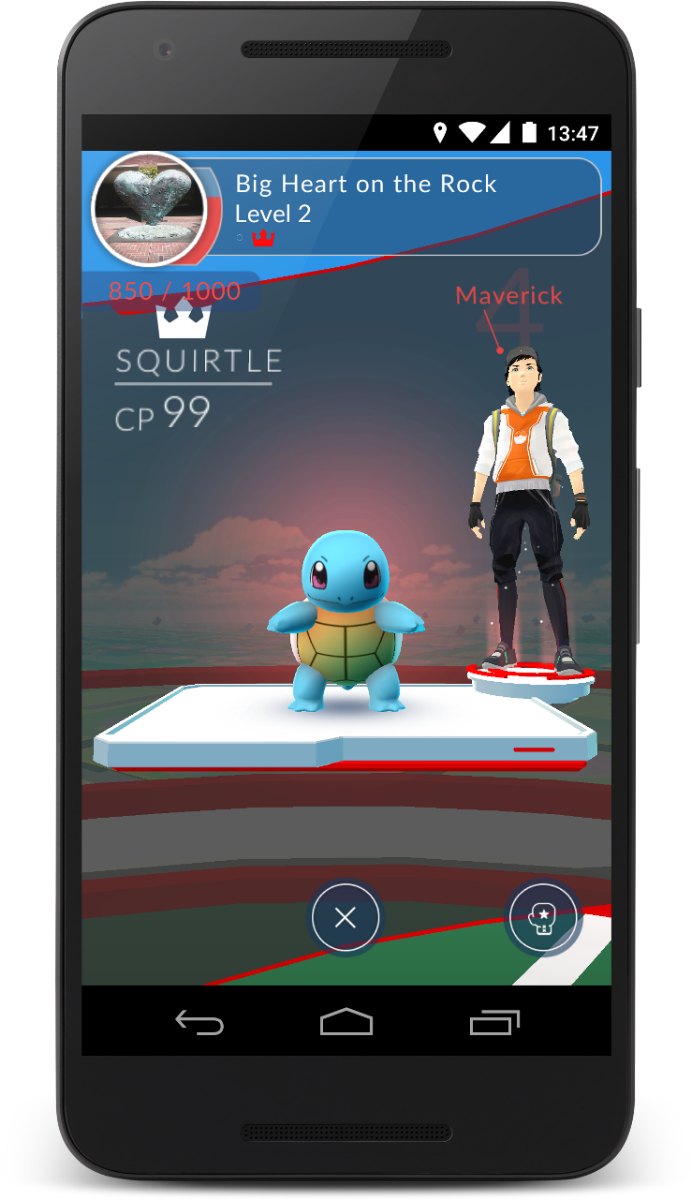
Take on Gym battles and defend your Gym
As your Charmander evolves to Charmeleon and then Charizard, you can battle together to defeat a Gym and assign your Pokémon to defend it against all comers. It’s time to get moving—your real-life adventures await!
Note: This app is free-to-play and is optimized for smartphones, not tablets.
— Official description (the 2016 app-store listing)
Quick Answers
The questions people ask about Pokémon GO today, answered first and explained further down the page.
Who makes Pokémon GO now?
Scopely does. Niantic built and ran the game from 2016, but on 12 March 2025 it agreed to sell its games business, Pokémon GO included, to Scopely for US$3.5 billion. The deal closed on 29 May 2025, and the studio, now part of Scopely, has since dropped the Niantic name and trades as Scopely Explore, which publishes the app. More →
What is the maximum Trainer level in Pokémon GO?
Level 80. The cap stayed at 40 from launch until the GO Beyond update of late 2020 raised it to 50, and a rebalance on 15 October 2025 lifted it to 80 while cutting the XP needed for earlier levels: level 40 now takes 3,953,000 XP rather than 20 million. Levels above 40 also have their own research tasks. More →
How many Pokémon are in Pokémon GO?
Just under 960. By October 2026 about 959 of the 1,025 known species were in the game or announced for it, covering all nine generations from Kanto to Paldea, plus regional forms, Mega Evolutions, Shadow Pokémon and Dynamax and Gigantamax forms. At launch in 2016 only Kanto Pokémon appeared, and Ditto and the Legendaries were missing. More →
How do Remote Raid Passes work now?
A Remote Raid Pass lets you join a raid you can see on the map, or one a friend invites you to, without standing at the Gym. Added in April 2020, it rose from 100 to 195 PokéCoins (three for 525) on 6 April 2023, with a five-a-day limit on remote raids; since 13 May 2025 the limit is ten. More →
Can you change your team in Pokémon GO?
Yes, but only once a year. The Team Medallion, added to the Shop on 26 February 2019, costs 1,000 PokéCoins and can be bought once every 365 days. Using it moves you to Instinct, Mystic or Valor straight away, although any Pokémon you have defending Gyms at the time won’t earn coins when they come home. More →

Can you send Pokémon from Pokémon GO to Pokémon HOME or the Switch games?
Yes. Since 10 November 2020 the GO Transporter has sent Pokémon to Pokémon HOME, using Transporter Energy that refills over time or with PokéCoins, and from HOME they can move to compatible Switch games. Kanto Pokémon and Meltan can also go to Let’s Go, Pikachu! and Let’s Go, Eevee! through the GO Park, and Scarlet and Violet accept GO postcards. More →
Gameplay

Like in the core series games, the player is introduced to the game by a Pokémon Professor, this time in the form of Professor Willow, who will allow you to choose between the traditional three first-generation starter Pokémon: Charmander, Squirtle and Bulbasaur (or Pikachu, if you walk away from them). Once the Trainer has taken their first Pokémon, the game is essentially played by loading the app on your mobile phone and walking around the real world. The types of places you go have some influence on the types of wild Pokémon you will encounter: for example, if you are near bodies of water you are more likely to encounter Water types, while Grass and Bug types might be a little more inclined to spring out and attack you in parks and fields.

Professor Willow
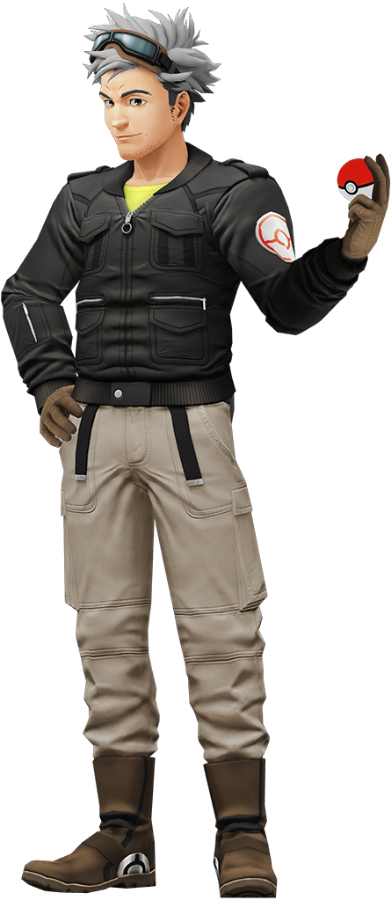
Willow greets new players, hands over the first Pokémon and gives a Candy for every Pokémon transferred to him. He studies how Pokémon live alongside people and narrates most Special Research storylines, and he received a refreshed design in 2022. In the build-up to GO Tour: Sinnoh in 2024 he went missing, and players had to follow the clues he left behind.
Catching Pokémon, Stardust and Candy
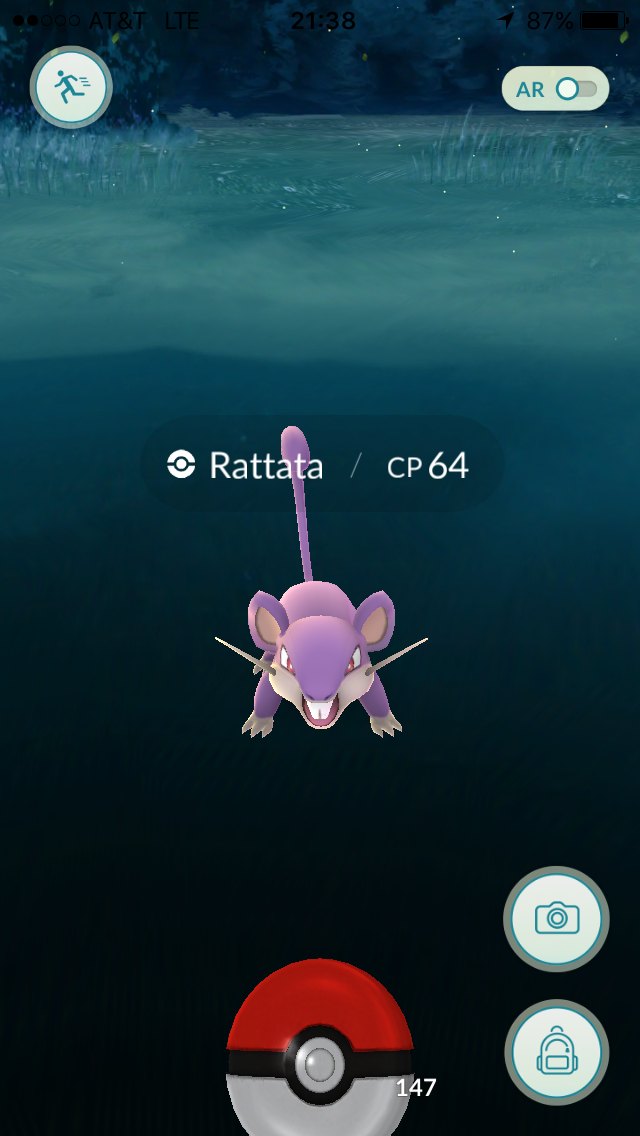
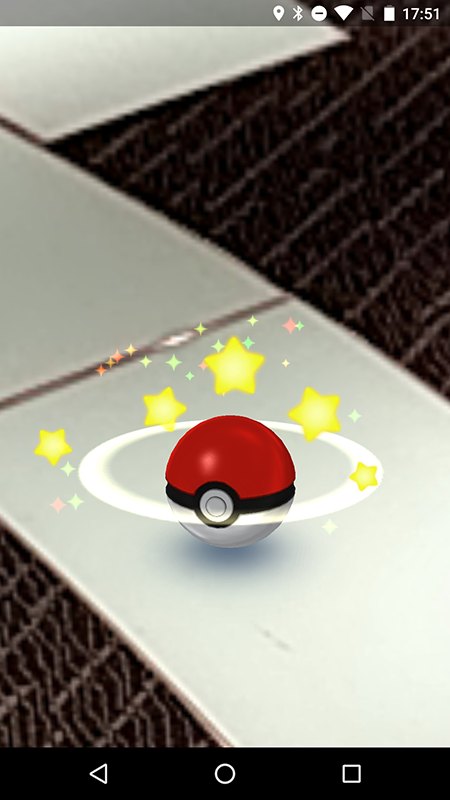
As the player walks around, their phone will vibrate when a wild Pokémon appears, and clicking/tapping on the Pokémon will begin a confrontation with that Pokémon and give you the chance to throw some Poké Balls at it in an attempt to capture it for your team. The higher the Pokémon’s CP level, the more difficult it may be to catch. How difficult a Pokémon will be to catch is indicated by the colour of the ring around the Pokémon just before you throw the ball, with a red ring indicating that it’s very unlikely you’ll catch it, a yellow ring being 50/50 and a green ring indicating it shouldn’t put up too much of a fight.
As the player levels up and progresses in the game, they’ll get hold of Berries and better-quality Poké Balls such as Great Balls and Ultra Balls to make higher-level Pokémon easier to catch. The higher the player’s level, the stronger the Pokémon they will encounter in the wild.
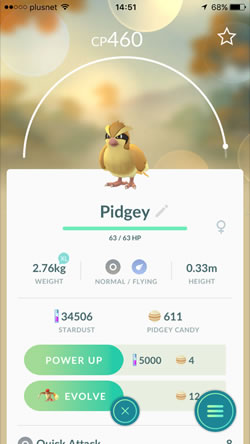
Once a Pokémon is caught, not only do you add that Pokémon to your Pokédex and team, but you also gain Stardust and Candies. Stardust is used in conjunction with Candies to power up a Pokémon and help raise its CP (Combat Power). Raising a Pokémon’s CP will in turn result in a raise of its vital stats like HP, attack power, defence and so on. A little bit more of an explanation on how Candies work: each Pokémon has its own kind of Candy, so catching a Pidgey will give you Pidgey Candy, catching a Scyther will give you Scyther Candy and so on.

The number of Candies you get from a catch depends on the level of evolution the target Pokémon was at. An unevolved Pokémon will award three Candies, a Pokémon in its middle evolutionary stage will give five and a fully evolved Pokémon such as a Pidgeot will give ten. When the game first launched, all levels of Pokémon simply awarded three Candies regardless of evolutionary state. Additionally, transferring any Pokémon to Professor Willow will grant another Candy.
Evolving Pokémon
So, as I mentioned above, you can use Stardust and Candies to power up a Pokémon’s CP level. Candy on its own, however, can be used to evolve Pokémon; the cost of those evolutions can be as little as 12 Candies for basic evolutions such as Pidgey to Pidgeotto or Caterpie to Metapod, and goes right the way up to 400 Candies for the most advanced evos like Magikarp into Gyarados.


PokéStops
PokéStops are essentially real-world landmarks which appear as a blue marker on your map. These could be anything from statues to public houses, restaurants and supermarkets, and you can tap them in-game and spin the PokéStop’s image to receive items such as Poké Balls, Berries and even Pokémon Eggs. The PokéStops are refreshed and can be reused every five minutes.
Hatching Pokémon from Eggs
Every player starts the game with an Egg Incubator that can be used an infinite number of times but can only incubate one Egg at a time. If the player is lucky enough to get a Pokémon Egg from a PokéStop, they can put the Egg into the incubator and walk a certain distance to hatch it. Eggs come in 2 km, 5 km and 10 km versions, and the version you have will affect what Pokémon you can get from it. 10 km Eggs have the potential to hatch the rarest and most powerful Pokémon… and I should think so too if you have to walk 10 kilometres to hatch them!
2 km Eggs have the chance to hatch common Pokémon like Rattata, Pidgey and so on, but also have the chance to hatch the starter Pokémon, which are all fairly sparse in-game, so don’t discount these Eggs entirely. 5 km Eggs offer fairly mid-range Pokémon. Each time an Egg hatches you not only have a new Pokémon for your team, but you’ll also get a big batch of Stardust and the relevant Pokémon’s Candy.
Gyms
Like PokéStops, Gyms will often be found at real-world landmarks, and players will fight to control the Gyms in order to obtain PokéCoins. A player is also rewarded with a basic level of XP for fighting for control of a Gym or training at a friendly Gym.
The new-style Gym system (June 2017)
On 22 June 2017 (23 June in some time zones), Pokémon GO launched its overhauled Gym system and added the Raids feature. No longer do Gyms work on prestige levels; instead, defending Pokémon have a motivation level. Each time they are defeated they will become less motivated and weaker in battle until they are eventually knocked out. Motivation will also slowly decay over time even if no one is attacking the Gym. Trainers who have a Pokémon stationed at a friendly Gym can visit their Pokémon and feed them Berries to keep their motivation and combat abilities up.
They also changed the way you claim your Defender Bonus (our 2017 guide) and set a maximum limit of 50 PokéCoins per day. The maximum garrison in a Gym is now six Pokémon, as opposed to the ten it was previously. Additionally, Gyms also act as PokéStops, so you can obtain items from them exactly as you would a normal PokéStop, except that if your team controls the Gym you get a Team Bonus and receive some additional items.

The introduction of the Raids feature means every so often a higher-than-normal CP Pokémon of varying difficulty levels will spawn at a Gym, and it will often take multiple players to bring it down. All three teams can work together during these battles to bring down the most powerful mons. Want to know more? Click here for our guide to raids in Pokémon GO, written in 2017.
How Gyms used to work

When a player sparred with the Pokémon at a friendly Gym, the Gym’s level of prestige was raised; the more prestige a Gym had, the more Pokémon could be stationed there from one team to defend it. Every 21 hours the Trainers who had a Pokémon stationed at a Gym could claim a Defender Bonus by clicking the icon in the top right of the Shop. This Defender Bonus consisted of 10 PokéCoins and 500 Stardust per Gym you had a Pokémon stationed at, up to ten Gyms. A maximum of ten Pokémon could be stationed at a Gym at once.
Buddy Pokémon
This feature is something else that wasn’t around when the game was initially released (it arrived in September 2016): you can now choose a buddy Pokémon who will travel around by your side on your adventures, and every 1 km, 3 km or 5 km walked (depending on the Pokémon type) it will find a Candy, with Legendary and a few other Pokémon needing 20 km. It’s best to have a rare Pokémon, or a Pokémon you particularly want to evolve and power up, as a buddy, as they’ll find their own Candy type as you walk around.
Medals
Medals are a form of in-game achievements that you display on your in-game profile. Whilst many of the medals are purely for vanity, some of them do come with benefits, a couple of examples of which are:
- Bird Keeper – Catch 200 Flying-type Pokémon. This awards a +3 Flying-type catch bonus, meaning you have a better chance of catching high-level Flying Pokémon you encounter in the wild.
- Bug Catcher – Catch 200 Bug types. Again the same sort of bonus as above, but for Bugs.
- Hiker – Catch 200 Rock-type Pokémon. You get the idea…
Whilst medals aren’t something you can really proactively go out and decide to get hold of, basically every Pokémon you catch will contribute toward a medal of some kind.
Character customisation
Pokémon GO offers a range of character customisation options. When you initially set up your character you can choose your hair, face and so on, but there are further options in-game to choose from, including hats, glasses, tops, bags, gloves, bottoms, socks and footwear. There are some things you can wear for free, but other bits will cost PokéCoins, for example tops which have your team’s logo on etc… they aren’t cheap!
Our Pokémon GO guides: how to raid, which Pokémon hatch from 2 km, 5 km and 10 km Eggs and the best gym defenders and attackers. They were written in 2017, and each one has a note on what has changed since.
Can I catch them all?
Well, in short, no you can’t. When Pokémon GO first launched back in July 2016, it was only first-generation Pokémon in the game, and even then not all of them… it’s one year on and, as I write this, there have been no Legendary or Mythical Pokémon caught so far – that changed with the first Legendary raids, straight after GO Fest on 22 July 2017. Ditto, for example, was not initially available but was slipped into the game on 23 November 2016. Ditto can’t be found as itself and often takes on the guise of common, unsuspecting Pokémon such as Pidgey, Rattata, Zubat and Magikarp, and your best chance of catching one comes simply from farming these more common mons.
Less than a month later, Gen II baby Pokémon were added to the game in the form of possible Egg hatches. This included Cleffa, Elekid, Igglybuff, Magby, Pichu, Smoochum and Togepi.
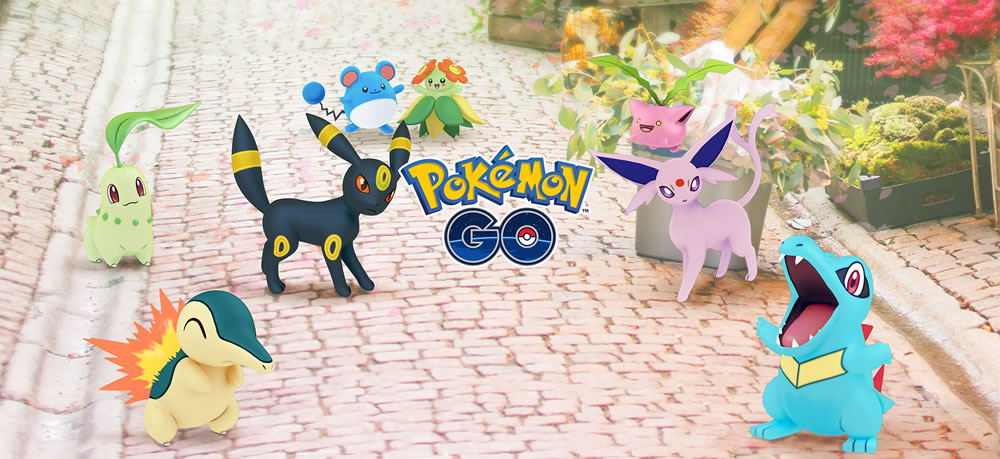
Pokémon GO’s implementation of Gen II mons was completed on 16 February 2017, when the vast majority of Gen II were introduced into the wild. This update also enabled the evolution of any Pokémon from Gen I that cross-evolves into Gen II (Scyther to Scizor, Golbat to Crobat, for example) to occur. Additionally, Togetic can now be caught in the wild, but in most places is ultra rare.
Shiny Pokémon made it to the game on 22 March 2017, when Shiny Magikarp was introduced; Shiny Gyarados is also possible if you evolve the Shiny Karp when you have enough Candies. Based on very limited research during the 2017 Water Festival, it looks as though the odds of you getting hold of a Shiny Magikarp are about 1 in 400.
Don’t be disheartened that you can’t catch them all just yet… it’s without doubt that Legendary and Mythical Pokémon will be saved for special world events such as anniversaries etc. And I dare say Gen III is in the pipeline already.
Pokémon in GO today

Pokémon GO launched with Kanto Pokémon only, minus Ditto, the Legendary birds, Mewtwo and Mew, and four Kanto species locked to particular continents. Johto followed in 2016 and 2017, and each later generation has been drip-fed through events, with Paldea’s starters arriving in September 2023. By October 2026 roughly 959 of the 1,025 known species were in the game or announced for it, alongside regional forms, Shiny variants, Shadow Pokémon, Mega Evolutions, Fusions and Dynamax and Gigantamax forms. Many rarer species are tied to raids, research or ticketed events.
 Pikachu#025
 Ditto#132
 Articuno#144
 Mewtwo#150
 Mew#151
 Lugia#249
 Necrozma#800
 Meltan#808
 Wooloo#831
 Gimmighoul#999
- Pikachu – Can be chosen as a starter by walking away from the first three, and starred in the first Community Day on 20 January 2018.
- Ditto – Added on 23 November 2016, disguised as common Pokémon; it can only be identified once caught.
- Articuno – The first Legendary raid boss (July 2017) and, on 20 January 2025, the first Dynamax Legendary.
- Mewtwo – First EX Raid boss from 31 August 2017; Mega Mewtwo X and Y debuted in May 2026.
- Mew – Reward for the first Special Research story, A Ripple in Time, from 30 March 2018.
- Lugia – Raid boss unlocked alongside Articuno after Pokémon GO Fest in Chicago in July 2017.
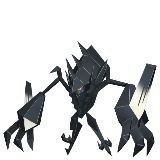
- Necrozma – Its Dusk Mane and Dawn Wings forms introduced Fusion to GO on 30 May 2024.
- Meltan – A brand-new species first seen in Pokémon GO in September 2018, later obtained from the Mystery Box.
- Wooloo – With Skwovet, the first Dynamax Pokémon when Max Battles began on 4 September 2024.
- Gimmighoul – Its Roaming Form is tied to GO, and the Coin Bag from a first postcard to Scarlet and Violet helps find it.
Guide: how to evolve Eevee into each Eeveelution, including the nickname trick.
The Teams
At level five every Pokémon Trainer will stop being in harmony with the world and will be approached by the leaders of the three real-world Pokémon teams, Team Instinct, Team Valor and Team Mystic, who will present you with an intro to their team and try to entice you to join them. Here’s a little bit about each team and their intros:

Team Instinct: Spark
Team Instinct is the Yellow Team and is led by Spark. The team’s sigil features the Legendary bird Zapdos.
“Hey! The name’s Spark — the leader of Team Instinct. Pokémon are creatures with excellent intuition. I bet the secret to their intuition is related to how they’re hatched. Come and join my team! You never lose when you trust your instincts!” – Spark
Since 2017: Spark appraises Pokémon, runs Battle Training and beat the Team GO Rocket Leader Sierra in November 2019.
The most easy-going of Willow’s assistants, he appears as a Supporter card in the Pokémon GO TCG expansion of 2022.

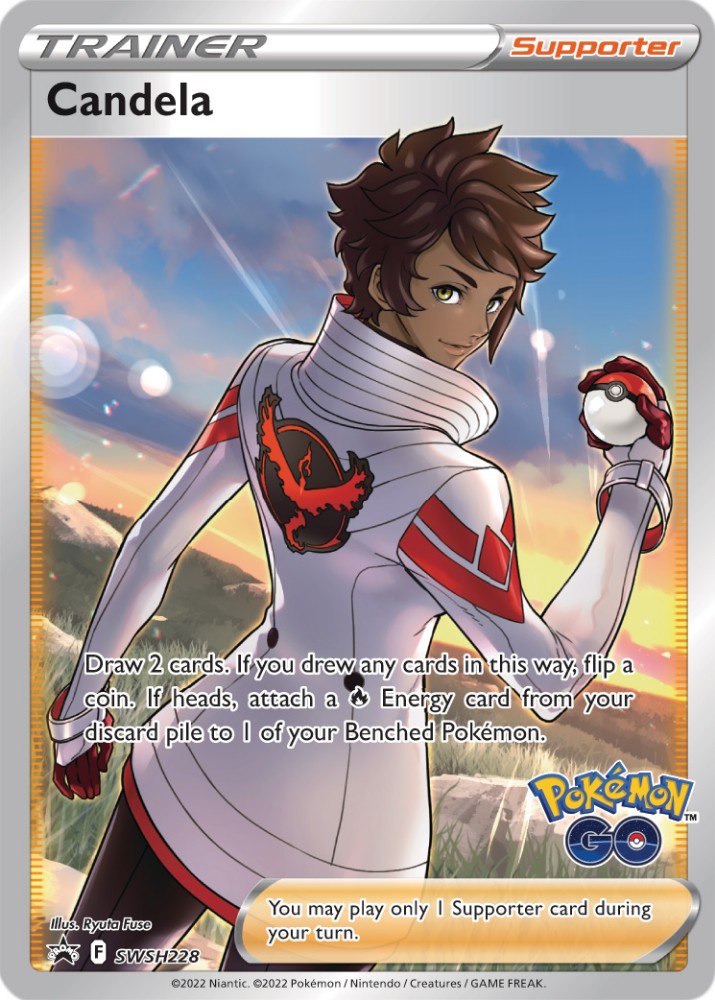
Team Valor: Candela
Team Valor is the Red Team and is led by Candela. Moltres is the chosen Legendary bird for their team’s sigil.
“I’m Candela — Team Valor’s leader! Pokémon are stronger than humans, and they’re warmhearted, too! I’m researching ways to enhance Pokémon’s natural power in the pursuit of true strength. There’s no doubt that the Pokémon our team have trained are the strongest in battle! Are you ready?” – Candela
Since 2017: Candela appraises Pokémon, takes on players in Battle Training and defeated the Team GO Rocket Leader Arlo in November 2019.
Her updated 2022 look accompanied a refresh of all three leaders, and she too has Pokémon TCG cards.

Team Mystic: Blanche
Team Mystic is the Blue Team and is led by Blanche, and the Legendary bird which represents the team is Articuno.
“I am Blanche, leader of Team Mystic. The wisdom of Pokémon is immeasurably deep. I am researching why it is that they evolve. With our calm analysis of every situation, we can’t lose!” – Blanche
Since 2017: Blanche appraises Pokémon, offers Battle Training and defeated the Leader Cliff in the November 2019 Team GO Rocket story.
Blanche later appeared as a Supporter card in the 2022 Pokémon GO TCG expansion.
Which team to choose depends not only on how you feel about each of the leaders’ descriptions, as well as which colour and Legendary bird you like best, but I’d also recommend taking a look at your area: which team controls all the Gyms? In some areas it can be pretty one-sided, where others can be hotly contested by all three teams. If there is an obvious dominance in your immediate area from any one team, it might be better as a new player to join ’em rather than end up isolated and bitter like me 😉
Once you’ve chosen a team it was permanent when this page was first written, so be careful; since 26 February 2019, though, a Team Medallion (1,000 PokéCoins, once every 365 days) lets you switch. So let’s say you join Team Instinct: when you next go to a Gym, if it’s already under your team’s control you can battle/spar at that friendly Gym to gain a little XP but also to level up the Gym’s prestige level, whereas if it’s an enemy Gym controlled by Valor or Mystic you will want to battle the Gym, and for every Pokémon you beat that Gym will lose prestige until it becomes neutral, enabling you to take the Gym over for your team. That was the prestige system Gyms used until June 2017.
Another time when you’ll be working with your team’s leader is when you want your Pokémon appraised. You can lean on the expertise of your team leader to provide you with information on your Pokémon’s stats, combat abilities and attributes. Why would you want to do this? Well, let’s say you have two Pokémon of roughly the same CP level and can’t decide which to evolve: the best course of action is to appraise both and evolve the one with the better combat ability appraisal. This is especially important if you are intending to be involved in Gym battles.
Appraisals
So we touched on appraisals above, but they’re pretty important, so let’s check them out in more detail. There are two things Pokémon are appraised on in Pokémon GO. Firstly, the team leader will give you one of four ratings based on the Pokémon’s overall statistics, and secondly they’ll rate the Pokémon’s best stat, again from a selection of four different levels. Let’s take a look at the appraisals and what they mean:
Overall stat analysis – giving a good overall impression of your Pokémon’s combat abilities. Specific stat analysis – this appraisal will tell you how much of a stat bonus the mentioned Pokémon has for its best stat.
Team Instinct – Spark
 Team Instinct – Spark
Overall stat analysis
| Appraisal | IV range |
|---|---|
| “Overall, your [Pokémon Name] looks like it can really battle with the best of them!” | 82.2–100% |
| “Overall, your [Pokémon Name] is really strong!” | 66.7–80% |
| “Overall, your [Pokémon Name] is pretty decent!” | 51.1–64.4% |
| “Overall, your [Pokémon Name] has room for improvement as far as battling goes.” | 0–48.9% |
Specific stat analysis
| Appraisal | Stat bonus |
|---|---|
| “Its stats are the best I’ve ever seen! No doubt about it!” | 15 |
| “Its stats are really strong! Impressive.” | 13–14 |
| “It’s definitely got some good stats. Definitely!” | 8–12 |
| “Its stats are all right, but kinda basic, as far as I can see.” | 0–7 |
Team Mystic – Blanche
 Team Mystic – Blanche
Overall stat analysis
| Appraisal | IV range |
|---|---|
| “Overall, your [Pokémon Name] is a wonder! What a breathtaking Pokémon!” | 82.2–100% |
| “Overall, your [Pokémon Name] has certainly caught my attention.” | 66.7–80% |
| “Overall, your [Pokémon Name] is above average.” | 51.1–64.4% |
| “Overall, your [Pokémon Name] is not likely to make much headway in battle.” | 0–48.9% |
Specific stat analysis
| Appraisal | Stat bonus |
|---|---|
| “Its stats exceed my calculations. It’s incredible!” | 15 |
| “I am certainly impressed by its stats, I must say.” | 13–14 |
| “Its stats are noticeably trending to the positive.” | 8–12 |
| “Its stats are not out of the norm, in my opinion.” | 0–7 |
Team Valor – Candela
 Team Valor – Candela
Overall stat analysis
| Appraisal | IV range |
|---|---|
| “Overall, your [Pokémon Name] simply amazes me. It can accomplish anything!” | 82.2–100% |
| “Overall, your [Pokémon Name] is a strong Pokémon. You should be proud!” | 66.7–80% |
| “Overall, your [Pokémon Name] is a decent Pokémon” | 51.1–64.4% |
| “Overall, your [Pokémon Name] may not be great in battle, but I still like it!” | 0–48.9% |
Specific stat analysis
| Appraisal | Stat bonus |
|---|---|
| “I’m blown away by its stats. WOW!” | 15 |
| “It’s got excellent stats! How exciting!” | 13–14 |
| “Its stats indicate that in battle, it’ll get the job done.” | 8–12 |
| “Its stats don’t point to greatness in battle.” | 0–7 |
The appraisal system wasn’t originally in the release version and was added in update 0.35.0, on 23 August 2016. As well as combat abilities, your team leader will also comment on how big or small your Pokémon is, but it’s unclear as to whether the size/weight of a Pokémon has any effect on anything as yet.
Gaining XP and Levelling Up
In Pokémon GO it’s the player that earns XP and levels up, as opposed to his/her Pokémon. Naturally, most Trainers are going to want to get stronger quickly in order to encounter and command more powerful Pokémon. The level cap sat at 40 when this was written (it rose to 50 in late 2020 and to 80 on 15 October 2025), and it takes a colossal amount of XP to get there. Here are some basic tips on where you are going to get that XP from.
Catching Pokémon
You gain 100 XP for every Pokémon you catch. If it’s a new entry to your Pokédex you get a further 500 XP. Additionally, you also get a further XP bonus for different types of throws, as detailed in the next section.
Throw bonuses
Throw bonuses: 2017 values and now
 Throw bonuses: 2017 values and now
| Throw | XP in 2017 | XP now |
|---|---|---|
| Catch a Pokémon with the first throw of your Poké Ball | 50 XP | 50 XP |
| Catch a Pokémon with a Curveball | 10 XP | 20 XP |
| Catch a Pokémon with a Nice Throw | 10 XP | 20 XP |
| Catch a Pokémon with a Great Throw | 50 XP | 100 XP |
| Catch a Pokémon with an Excellent Throw | 100 XP | 1,000 XP |
The first throw, Curveball and one of the Nice, Great or Excellent XP bonuses do stack. So, for example, if you throw a Curveball for your first catch and it hits inside the targeting circle for a Nice Throw, you’ll get 50 XP + 10 XP + 10 XP = 70 XP throw bonus in addition to the usual 100 XP for catching a Pokémon.
Evolving Pokémon
If you’re really serious about getting that level up, the short story is that you want to catch as many Pidgey, Caterpie and Weedle as possible. The reason you want these is because a) they’re really common and easy to find in large quantities in most places and b) it only takes 12 Candies to evolve them. Each evolution will award you 500 XP, and if it evolves into a Pokémon you didn’t have in your Pokédex that’ll net you another 500 XP, so 1,000 XP total – not bad, eh?
A common tactic for levelling up quickly is to farm lots of Pidgey, Caterpie and Weedle, then pop a Lucky Egg, which doubles your XP for 30 minutes, and evolve them all. This makes it up to 1,000 XP per evolution. I would recommend holding onto as many Pidgey and as much Pidgey Candy as possible; wait for special events and festivals in-game where they have a double XP bonus, drop a Lucky Egg then and you are talking 2,000 XP per Pidgey evolved.
Hatching Pokémon from Eggs
Each Pokémon you hatch from an Egg will award XP (as well as Candies and Stardust):
Egg hatch XP: 2017 values and now
 Egg hatch XP: 2017 values and now
| Egg | XP in 2017 | XP now |
|---|---|---|
| 2 km Egg hatch | 200 XP | 500 XP |
| 5 km Egg hatch | 500 XP | 1,000 XP |
| 10 km Egg hatch | 1,000 XP | 2,000 XP |
| 7 km Egg hatch – Gift Eggs, added in 2018 | – | 1,000 XP |
| 12 km Egg hatch – Team GO Rocket Leader Eggs | – | 4,000 XP |
Like with evolutions, if the Pokémon you hatched is a new addition to your Pokédex, you’ll also get another 500 XP bonus on top for a new discovery.
Daily bonuses
Daily bonuses: 2017 values
First catch of the day. The first Pokémon you catch each day will award a 500 XP bonus; complete this daily mission seven days in a row and on the seventh day that bonus goes up to 2,500 XP. As an additional bonus you’ll also get 600 Stardust per day for the first six days, and then 3,000 Stardust on the seventh day.
First PokéStop of the day. The first PokéStop you visit each day will award a 500 XP bonus and lots of items; visit at least one PokéStop a day for seven consecutive days and get a 2,500 XP bonus on the seventh day, as well as a special item and lots of Poké Balls and Berries.
Winning Gym battles
Gym XP under the original system, until June 2017
 Gym XP under the original system, until June 2017
You also gained XP by attacking Gyms held by enemies to lower their prestige, or by sparring at a friendly Gym to raise its prestige level. Here’s the XP you could gain:
- Defeat one Pokémon at a Gym – 150 XP
- Defeat two Pokémon at a Gym – 250 XP
- Defeat three Pokémon at a Gym – 350 XP
- Defeat four Pokémon at a Gym – 450 XP
- Defeat five Pokémon at a Gym – 550 XP
Special events
Watch out for special events. Most of the events we’ve seen in the first year of Pokémon GO have featured XP bonuses of some kind, be that a generic overall double XP bonus, a big bonus on catching Pokémon with good throws etc. These events can help you decide when to play more actively and when to blow those Lucky Eggs and evolve new types etc.
Guide: every level’s XP and rewards are in our level rewards and XP chart, written when the cap was 40. It is 80 today.
PokéCoins
The currency in Pokémon GO is PokéCoins. PokéCoins can be earned by occupying Gyms: under the original Gym system you claimed your daily Defender Bonus (ten PokéCoins per Gym occupied at the time of claim), and these coins could only be claimed once every 21 hours in this manner. Since June 2017, Pokémon defending a Gym have earned one coin for every ten minutes they spend there, up to 50 a day. PokéCoins can also be purchased with real-world money. Check out the prices for PokéCoins below: if we look at how these currencies convert, some countries certainly get a better deal than others.
PokéCoin prices in 2017
| PokéCoins | UK | USA | Australia | New Zealand | Europe | Japan |
|---|---|---|---|---|---|---|
| 100 | £0.99 | $0.99 | $1.49 | $1.49 | €0.99 | ¥120 |
| 550 | £4.99 | $4.99 | $7.99 | $7.49 | €4.99 | ¥600 |
| 1,200 | £9.99 | $9.99 | $14.99 | $14.99 | €9.99 | ¥1,200 |
| 2,500 | £19.99 | $19.99 | $30.99 | $29.99 | €19.99 | ¥2,400 |
| 5,200 | £39.99 | $39.99 | $62.99 | $59.99 | €39.99 | ¥4,800 |
| 14,500 | £99.99 | $99.99 | $159.99 | $149.99 | €99.99 | ¥11,800 |
 100
 550
 1,200
 2,500
 5,200
 14,500
Guide: how gym coins work since the June 2017 gym rework.
Items
A list of all the items in Pokémon GO in 2017, what they do and where you can obtain them. I’ve split the tables into categories, i.e. battle items, Berries, special items etc.
Potions and Revives
Medical items for reviving and healing your Pokémon after a Gym encounter.
| Item | Level required (2017) | What it does | Obtained at |
|---|---|---|---|
| Potion | Level 5 | A spray-type medicine for treating wounds. It restores the target Pokémon’s HP by 20 points. | PokéStops |
| Super Potion | Level 10 | A spray-type medicine for treating wounds. It restores the target Pokémon’s HP by 50 points. | PokéStops |
| Hyper Potion | Level 15 | A spray-type medicine for treating wounds. It restores the target Pokémon’s HP by 200 points. | PokéStops |
| Max Potion | Level 25 | A spray-type medicine for treating wounds. It fully recovers the target Pokémon’s HP. | PokéStops |
| Revive | Level 5 | A medicine which can resuscitate a fainted Pokémon and restore 50% of its HP. | PokéStops |
| Max Revive | Level 30 | A medicine which can resuscitate a fainted Pokémon and fully restore its HP. | PokéStops |
 Potion
 Super Potion
 Hyper Potion
 Max Potion
 Revive
 Max Revive
Poké Balls
There were three types of Poké Ball for everyday catching in Pokémon GO when this was written. Standard Poké Balls are the only ones which can be purchased in the Shop, whereas the other two balls must be obtained from PokéStops.
| Item | Level required (2017) | What it does | Obtained at |
|---|---|---|---|
| Poké Ball | None | A device for catching wild Pokémon. It’s thrown like a ball, comfortably encapsulating its target. | PokéStops, Shop |
| Great Ball | Level 12 | A high-performance Ball with a higher catch rate than a standard Poké Ball. | PokéStops |
| Ultra Ball | Level 20 | An ultra-performance Ball with a higher catch rate than a Great Ball. | PokéStops |
 Poké Ball
 Great Ball
 Ultra Ball
Berries
Berries can help you capture Pokémon more easily or increase the Candy reward. Nanab Berries are best used on aggressive Pokémon or ones that dart about quickly, such as Zubat.
| Item | Level required (2017) | What it does | Obtained at |
|---|---|---|---|
| Razz Berry | Level 8 | Feed this to a Pokémon and it will be easier to catch on your next throw. | PokéStops |
| Nanab Berry | Level 14 | Feed this to a Pokémon to calm it down, making it less erratic. | PokéStops |
| Pinap Berry | Level 18 | Feed this to a Pokémon to receive more Candy when you catch it. | PokéStops |
 Razz Berry
 Nanab Berry
 Pinap Berry
The Nanab and Pinap Berries arrived with the Generation II update on 16 February 2017.
Special items
These special items are received if you complete your daily PokéStop visit for seven consecutive days. On the seventh day your first PokéStop will award one of the below items, as well as the usual abundance of standard items and XP.
| Item | Level required (2017) | What it does | Obtained at |
|---|---|---|---|
| Dragon Scale | Level 10 | A scale that can make certain species of Pokémon evolve. It is very tough and inflexible. | PokéStops |
| King’s Rock | Level 10 | A rock that can make certain species of Pokémon evolve. It looks like a crown. | PokéStops |
| Metal Coat | Level 10 | A coating that can make certain species of Pokémon evolve. It is a special metallic film. | PokéStops |
| Sun Stone | Level 10 | A peculiar stone that can make certain species of Pokémon evolve. It burns as red as the evening sun. | PokéStops |
| Up-Grade | Level 10 | A transparent device that can make certain species of Pokémon evolve. It was produced by Silph Co. | PokéStops |
 Dragon Scale
 King’s Rock
 Metal Coat
 Sun Stone
 Up-Grade
These five evolution items were also added on 16 February 2017. Seven-day PokéStop streaks still give one, and research tasks now hand them out too.
Premium items
These items can sometimes be obtained for free by hitting certain milestone levels, but for the most part if you want ’em, you gotta get your hands in your pockets! Players who have been spending money on the game hit level 40 a long time ago by combining 9x Incubators and the use of a Lucky Egg just before the nine Eggs were due to hatch, for huge XP bonuses. It should be noted that all players start with one Egg Incubator that can be used an infinite number of times.
| Item | Level required (2017) | What it does | Obtained at |
|---|---|---|---|
| Egg Incubator | None | A device that incubates an Egg as you walk until it is ready to hatch. Breaks after 3 uses. Cost: 150 PokéCoins each. | Milestone levels, Shop |
| Lucky Egg | None | A Lucky Egg that’s filled with happiness! Earns double XP for 30 minutes. Cost: 80 PokéCoins for 1, 500 PokéCoins for 8 or 1,250 PokéCoins for 25. | Milestone levels, Shop |
| Lure Module | None | A module that attracts Pokémon to a PokéStop for 30 min. The effect benefits other people nearby. Cost: 100 PokéCoins for 1, 680 PokéCoins for 8. | Milestone levels, Shop |
| Incense | None | Incense with a mysterious fragrance that lures wild Pokémon to your location for 30 minutes. Cost: 80 PokéCoins for 1, 500 PokéCoins for 8 or 1,250 PokéCoins for 25. | Milestone levels, Shop |
| Bag Upgrade | None | Increases the max number of items you can carry by 50. Cost: 200 PokéCoins. | Shop |
| Storage Upgrade | None | Increases the max number of Pokémon you can carry by 50. Cost: 200 PokéCoins. | Shop |
 Egg Incubator
 Lucky Egg
 Lure Module
 Incense
 Bag Upgrade
 Storage Upgrade
Limited-edition Shop items
These gift box items are seasonal, limited-time items. I would expect that they will return for Christmas again this year in one form or another – and holiday and event boxes have indeed returned every year since.
| Item | Level required (2017) | What it does | Obtained at |
|---|---|---|---|
| Special Box | None | 10 Great Balls, 2 Egg Incubators. Cost: 250 PokéCoins. Was available: 25 to 30 December 2016. | Shop (seasonal) |
| Great Box | None | 20 Great Balls, 2 Incense, 4 Egg Incubators. Cost: 550 PokéCoins. Was available: 25 to 30 December 2016. | Shop (seasonal) |
| Ultra Box | None | 20 Ultra Balls, 25 Incense, 6 Egg Incubators. Cost: 1,500 PokéCoins. Was available: 25 to 30 December 2016. | Shop (seasonal) |
| Bronze Box | None | 100 Poké Balls, 8 Lure Modules. Cost: 460 PokéCoins. Was available: 25 to 30 December 2016. | Shop (seasonal) |
| Silver Box | None | 8 Incense, 8 Lucky Eggs, 8 Lure Modules. Cost: 980 PokéCoins. Was available: 25 to 30 December 2016. | Shop (seasonal) |
| Gold Box | None | 50 Great Balls, 25 Incense, 25 Lucky Eggs, 16 Lure Modules. Cost: 2,480 PokéCoins. Was available: 25 to 30 December 2016. | Shop (seasonal) |
 Special Box
 Great Box
 Ultra Box
 Bronze Box
 Silver Box
 Gold Box
Items added since 2017
The bag has filled up a lot since these tables were made. These are the main additions, roughly in the order they arrived:
| Item | Added | What it does |
|---|---|---|
| Premier Ball | June 2017 | Handed out after a raid win, and used only to catch the raid boss. |
| Premium Raid Pass | June 2017 | A paid pass for an extra raid, now called the Premium Battle Pass (100 PokéCoins). |
| Golden Razz Berry | June 2017 | Greatly raises the catch rate, and fully restores a Gym defender’s motivation. |
| Super Incubator | August 2017 | Hatches Eggs 1.5 times faster than a normal incubator; 200 PokéCoins. |
| EX Raid Pass | August 2017 | An invitation to an EX Raid, starting with Mewtwo; EX Raids have been suspended since March 2020. |
| Silver Pinap Berry | 2018 | Raises the catch rate and gives extra Candy for the catch. |
| Sinnoh Stone | November 2018 | Evolves certain older Pokémon into their Sinnoh evolutions. |
| Team Medallion | 26 February 2019 | Switches you to another team; 1,000 PokéCoins, once every 365 days. |
| Unova Stone | September 2019 | Evolves certain Pokémon into their Unova evolutions. |
| Remote Raid Pass | April 2020 | Lets you join a raid from a distance; 195 PokéCoins since 6 April 2023. |
| Max Particle Pack | 2024 | Max Particles, spent at Power Spots on Dynamax and Gigantamax battles. |
| Master Ball | In the code since launch | Guarantees a catch; handed out as a Special Research reward. |
 EX Raid Pass
 Remote Raid Pass
Rare Candy, Fast and Charged TMs, Mega Energy and the Magnetic, Mossy, Glacial and Rainy Lure Modules, some of which are needed to evolve particular Pokémon, have joined them along the way.
Pokémon GO since 2017
When this page was first written, Pokémon GO was a year old, had just gained raids and was still waiting for its first Legendary. Nine years on it is a different game. Every generation from Kanto to Paldea has arrived, Trainers can trade, battle each other online, fight Team GO Rocket and Mega Evolve, the level cap has doubled to 80, and Niantic has sold the game to Scopely. Here are the biggest changes, year by year.


- 9generations, Kanto to Paldea
- ~959of 1,025 species released or announced
- 15languages, up from six at launch
- 10years live, July 2016 to July 2026
2017: raids and Hoenn
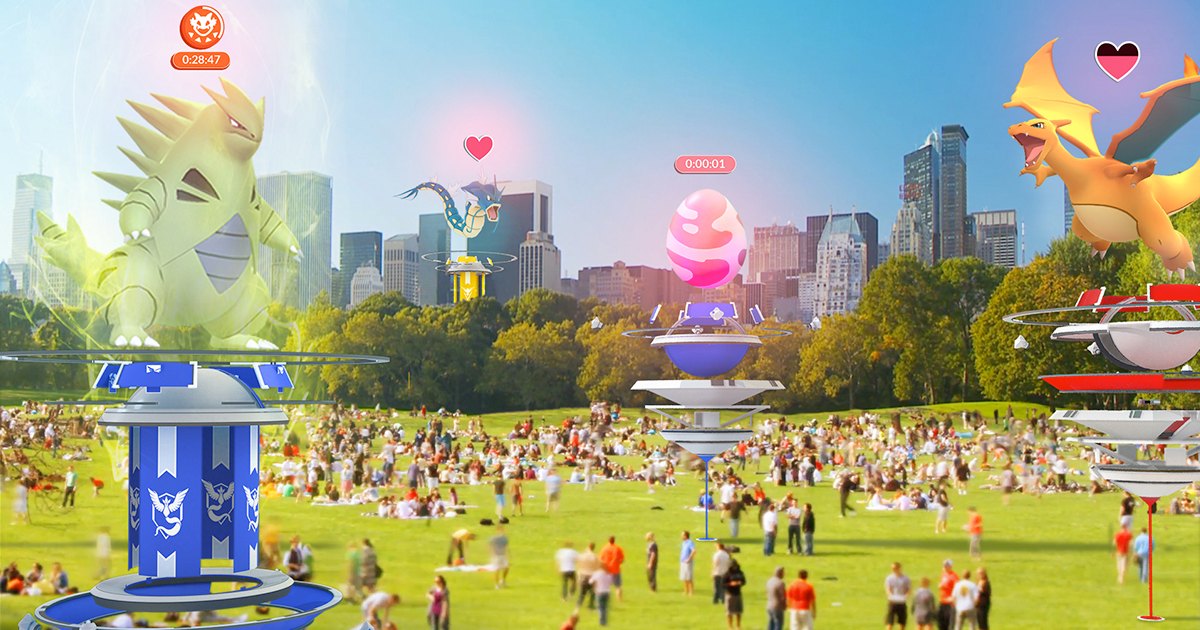
Gyms were switched off on 19 June and returned within days with motivation, Gym badges and Raid Battles. Lugia and Articuno raids followed the troubled GO Fest in Chicago on 22 July, EX Raids began with Mewtwo on 31 August, and Hoenn Pokémon arrived from October, with the main wave and real-world weather on 8 December.
| Date | Milestone |
|---|---|
| 24 January 2017 | Launch in South Korea |
| 16 February 2017 | Most of Johto (Generation II) added, with evolution items and new berries |
| 19 to 22 June 2017 | Gyms taken offline, then relaunched with motivation, Gym badges and Raid Battles |
| 22 July 2017 | Pokémon GO Fest Chicago; Lugia and Articuno raids begin |
| 31 August 2017 | EX Raid field test begins with Mewtwo |
| 8 December 2017 | Main Hoenn (Generation III) wave and dynamic weather |
2018: research, friends and trading

Community Day began with Pikachu on 20 January. Field and Special Research arrived on 30 March, leading to Mew, and friends, Gifts and trading on 18 June. Meltan appeared in September, the first Sinnoh Pokémon in October, the Let’s Go link in November and Trainer Battles in December.
| Date | Milestone |
|---|---|
| 20 January 2018 | First Community Day (Pikachu) |
| 30 March 2018 | Field Research and Special Research (Mew) |
| 18 June 2018 | Friends, Gifts and trading |
| September 2018 | Meltan appears; Lucky Pokémon introduced |
| October 2018 | First Sinnoh (Generation IV) Pokémon |
| 16 November 2018 | Link with Pokémon: Let’s Go, Pikachu! and Let’s Go, Eevee! |
| December 2018 | Trainer Battles and Battle Training |

2019: Team GO Rocket and Unova
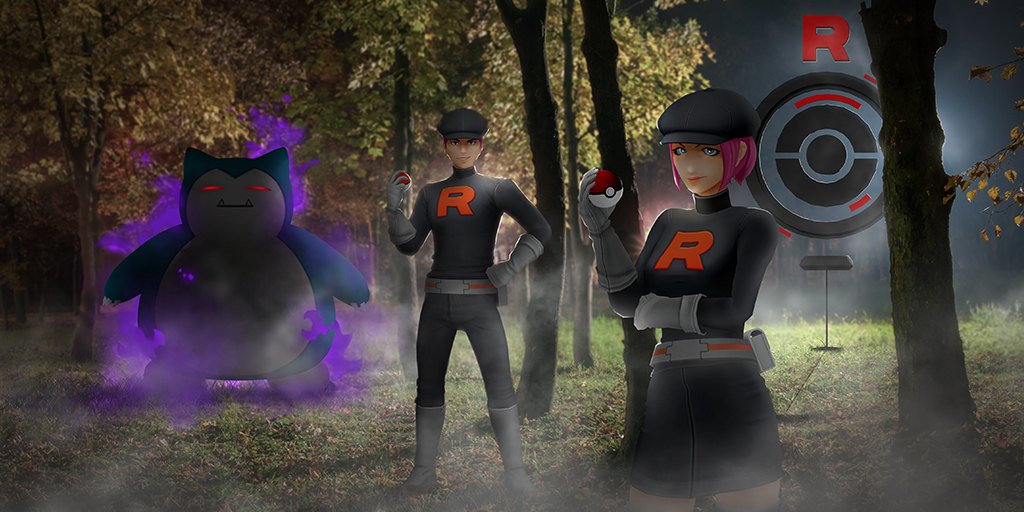
The Team Medallion let players switch team once a year from 26 February. Team GO Rocket invaded PokéStops on 22 July, introducing Shadow Pokémon, Unova Pokémon arrived in September, and the Leaders Cliff, Arlo and Sierra followed in November with Giovanni close behind. Downloads passed one billion during the year.
| Date | Milestone |
|---|---|
| 26 February 2019 | Team Medallion lets players change team |
| 22 July 2019 | Team GO Rocket and Shadow Pokémon |
| September 2019 | Unova (Generation V) Pokémon |
| November 2019 | Team GO Rocket Leaders, then Giovanni |

Team GO Rocket’s line-up
| Opponent | Pokémon | Notes |
|---|---|---|
| Team GO Rocket Grunts | Three Shadow Pokémon; each Grunt’s opening line hints at its type | Found at invaded PokéStops and on balloons. Beating Grunts gives Mysterious Components, a Shadow Pokémon to rescue and progress in Team GO Rocket research. |
| Cliff | Three Shadow Pokémon from a line-up that rotates every few months | Chance to rescue his first Shadow Pokémon. Introduced in November 2019, when Blanche defeated him in the accompanying story. His three-Pokémon line-ups are changed regularly with each Team GO Rocket update, so counters have to be rethought each time. |
| Arlo | Three Shadow Pokémon from a rotating line-up | Chance to rescue his first Shadow Pokémon. Arrived with Cliff and Sierra in November 2019 and was defeated by Candela in the accompanying storyline. Like the others, he can also be met in Team GO Rocket takeover events with special line-ups. |
| Sierra | Three Shadow Pokémon from a rotating line-up | Chance to rescue her first Shadow Pokémon. The third Leader, beaten by Spark in the November 2019 story. During GO Fest 2020 the three Leaders briefly used Shadow versions of the Legendary birds Articuno, Zapdos and Moltres. |
| Giovanni | Persian, then two more Shadow Pokémon ending with a Shadow Legendary | Tracked down with a Super Rocket Radar, earned through Special Research that changes every few months, each wave bringing a different Shadow Legendary. Beating him gives a chance to catch it, and he is the main source of Shadow Legendary Pokémon outside Shadow Raids. |
2020: battle league, Megas and level 50
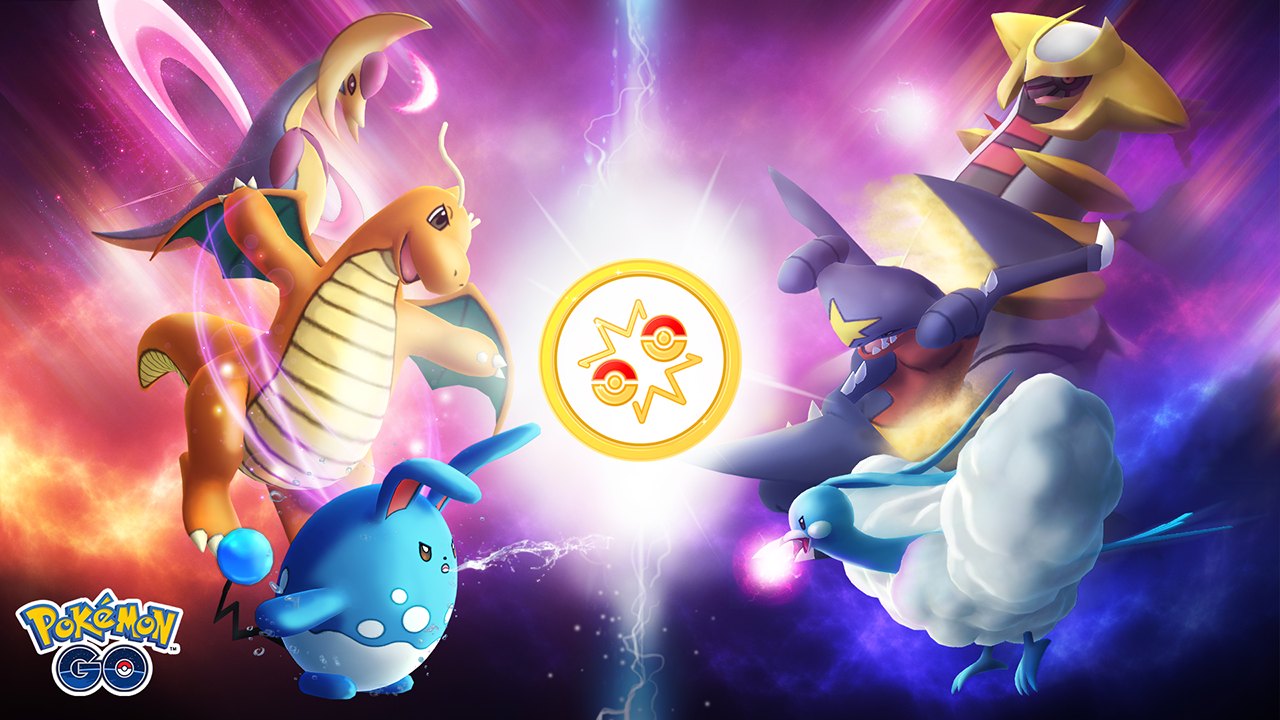
The GO Battle League opened on 28 January, Remote Raid Passes arrived in April as the pandemic kept people at home, and GO Fest went virtual in July. Mega Evolution followed on 27 August, the Pokémon HOME link on 10 November and the GO Beyond update from 30 November, raising the cap to 50 and launching Seasons and Kalos Pokémon.
| Date | Milestone |
|---|---|
| 28 January 2020 | GO Battle League pre-season |
| April 2020 | Remote Raid Passes |
| 27 August 2020 | Mega Evolution |
| 10 November 2020 | Pokémon HOME link (GO Transporter) |
| 30 November 2020 | GO Beyond: level cap 50; Seasons begin 1 December; Kalos (Generation VI) from 2 December |
2021 and 2022: Seasons and Alola
The game settled into three-month Seasons with themed spawns and storylines. Turkey received it in June 2021. In 2022 the Season of Alola finally brought the Alola Pokémon on 1 March, the game was withdrawn in Russia and Belarus on 10 March, Mega Evolution was overhauled with Mega Levels in April and Elite Raids began in October.
| Date | Milestone |
|---|---|
| 1 March 2022 | Season of Alola brings Alola (Generation VII) Pokémon |
| 10 March 2022 | Removed from Russia and Belarus |
| April 2022 | Mega Evolution overhaul with Mega Levels |
2023: remote raid limits, Routes and Paldea

Remote Raid Passes rose to 195 coins and were limited to five a day from 6 April, prompting a backlash from players. Shadow Raids arrived in May, the Pokémon GO Plus + on 14 July, Routes on 20 July and Paldea’s starters on 5 September, while Party Play let groups of four play together.
| Date | Milestone |
|---|---|
| 27 February 2023 | Postcards to Pokémon Scarlet and Violet |
| 6 April 2023 | Remote Raid Pass price rise and five-a-day limit |
| 22 May 2023 | Shadow Raids |
| 14 July 2023 | Pokémon GO Plus + (Europe 21 July) |
| 20 July 2023 | Routes |
| 5 September 2023 | Paldea (Generation IX) starters |

2024: new avatars, Fusion and Max Battles

An April avatar overhaul with new body and hair options drew criticism over its look. Fusion arrived with Necrozma on 30 May, Dynamax and Power Spots on 4 September, Saudi Arabia joined on 12 October, and Gigantamax battles for up to 40 players started on 26 October.
| Date | Milestone |
|---|---|
| April 2024 | Avatar overhaul |
| 30 May 2024 | Fusion (Necrozma) |
| 4 September 2024 | Dynamax, Power Spots and Max Battles |
| 26 October 2024 | Gigantamax battles |

2025: Scopely and level 80
Niantic announced the US$3.5 billion sale of its games business, Pokémon GO included, to Scopely on 12 March, and the deal closed on 29 May. The remote raid limit rose to ten on 13 May, the level cap went up to 80 with a rebalanced XP curve on 15 October, and Remote Trades arrived on 8 December.
| Date | Milestone |
|---|---|
| 12 March 2025 | Niantic agrees to sell its games business to Scopely |
| 29 May 2025 | Scopely deal completed |
| 15 October 2025 | Level cap 80 and XP rebalance |
| 8 December 2025 | Remote Trades for Forever Friends |
2026: ten years of GO
Super Mega Raids and new Megas from Pokémon Legends: Z-A arrived on 20 February, GO Tour: Kalos held its global event on 28 February and 1 March, and Mega Mewtwo debuted in May. GO Fest visited Tokyo, Chicago and Copenhagen before its global weekend on 11 and 12 July, and the game turned ten on 6 July. Its studio, part of Scopely, now trades as Scopely Explore.
| Date | Milestone |
|---|---|
| 20 February 2026 | Super Mega Raids |
| 28 February 2026 | GO Tour: Kalos global event |
| 6 July 2026 | Tenth anniversary of the launch |
Regional Variations
Pokémon GO rolled out country by country, and where you live still changes what you can catch:
- Launch was staggered: Australia, New Zealand and the US on 6 July 2016, Germany on 13 July, the UK on 14 July, most of Europe on 15 and 16 July, Japan on 22 July and France on 24 July after a delay following the Nice attack.
- Later markets included India and South Asia in December 2016, South Korea on 24 January 2017, Russia on 11 September 2018, Turkey on 3 June 2021 and Saudi Arabia on 12 October 2024; the game has never launched in mainland China.
- Some Pokémon are region-locked: at launch Tauros appeared only in North America, Mr. Mime in Europe, Kangaskhan in Australia and New Zealand and Farfetch’d in Asia, and every later generation has added more exclusives.
- The game was removed and deactivated in Russia and Belarus on 10 March 2022, and in Vietnam it was pulled from Google Play in September 2022 and from the App Store on 5 November 2025.
- Six languages were supported at launch (Japanese, English, German, Spanish, French and Italian); Korean, Traditional Chinese and Brazilian Portuguese followed in 2017, then Thai and Russian (2020), Turkish and Indonesian (2022), Hindi (2023) and Latin American Spanish (2024), for 15 in all.
- Sponsored PokéStops and Gyms vary by country: Globe in the Philippines (October 2016 to March 2018), Sprint and Starbucks in the US (December 2016), Jio in India (December 2016) and Unibail-Rodamco shopping centres in Europe (February 2017).
- Japan uses the same Latin-script Pokémon GO logo as everywhere else; a localised Chinese logo was trademarked in 2020 and granted in 2021 despite there being no mainland Chinese release.
Left in the data
- The 2016 data contained an icon for Honey, the mainline series item that summons a wild Pokémon, which was never used.
- Four extra berry icons were present at launch, two resembling the Razz Berry, before any berry other than the Razz Berry was in the game.
- The Master Ball existed in the code from launch and, if hacked into play, caught with 100% success; its texture was refined in version 0.31.0, years before it was handed out through research.
- A placeholder photo called ModelViewerSamplePhoto, stretched on iOS and squashed on Android, sat among the files.
- The Kanto medal originally counted every Pokédex entry; version 1.27.2, the Johto update of February 2017, changed it to count only Pokémon first discovered in Kanto.
Glitches, exploits and oddities
A tracker that stuck on three steps, a Grimer that froze Android phones and other oddities:
The three-step tracker
At launch the Nearby list showed footprints, one to three, to suggest how far away each Pokémon was. Within days the display stuck on three steps for everything, so players had no idea whether a Pokémon was round the corner or streets away. Rather than fix it, Niantic removed the footprints altogether on 30 July 2016, while also cutting off third-party tracking sites. A new Nearby and Sightings tracker, which ties Pokémon to nearby PokéStops, replaced the old system over the following months.
Grimer freeze
On Android, encountering or hatching a Grimer frequently froze the game in the summer of 2016, forcing a restart and sometimes losing the catch or the hatch animation. The fault was specific to the Grimer encounter and was patched in version 0.31.0. It was one of several early stability bugs that fuelled complaints during the game’s first weeks, when crashes and server outages were the most common criticism in reviews.
The last Premier Ball
A long-standing raid oddity: when a player is down to their final Premier Ball, the raid boss always breaks out after half a shake unless the throw triggers a critical catch. Niantic acknowledged the behaviour in 2017, and it has never been changed, which has led many raiders to treat the last ball as a wasted throw and to use berries and Excellent Throws on the earlier attempts instead.
Zorua morphing
Zorua, which disguises itself as the player’s buddy Pokémon in the wild, caused trouble in October 2022. When it was caught automatically with a Pokémon GO Plus or Poké Ball Plus, it sometimes failed to reveal itself, leaving the player with a copy of their buddy’s species carrying the wild Zorua’s CP and IVs. Niantic temporarily disabled the Bluetooth accessories while it investigated, and the bug was then fixed.
Videos & media
Check out these Pokémon GO videos and trailers, from the 2015 reveal to the Legendary birds.
The official launch trailer for Pokémon GO: “Get Up and Go!”
December 2016 announcement trailer for Togepi and Pichu being added to the game.
The July 2017 launch trailer for the Legendary birds.
The original reveal trailer from September 2015.
Trivia & facts
-
Pokémon’s 20th anniversary. The game launched during Pokémon’s 20th anniversary year.
- The idea for the game was conceived in 2013 by Tatsuo Nomura of Google Maps as an April Fools’ Day collaboration with The Pokémon Company called Pokémon Challenge, released on 1 April 2014. Nomura has since moved to Niantic, where he became the director of Pokémon GO.
- Unlike the games in the Pokémon core series, players don’t have to battle a wild Pokémon before capturing it.
- In September 2015 Ishihara gave a speech announcing Pokémon GO, which he dedicated to Iwata, who had sadly passed away two months before.
-

The Pokémon GO Plus (2016). It was decided to create the Pokémon GO Plus accessory rather than add an app to smartwatches, because that would have limited the player base to those that could afford smartwatches. Or it would’ve certainly given them an unfair advantage.
- A Japanese-exclusive beta test was announced on 4 March 2016 for Pokémon GO in an effort to eliminate bugs etc. from the game prior to its full release.
- When the game released in the first few countries it was so popular that the servers were regularly overloaded, and John Hanke, Niantic’s CEO, said release to the remaining regions would be delayed while they fixed the issues.
- Within 24 hours of its release in the USA, Pokémon GO had topped all App Store charts for free games and top-grossing apps.
- The incredible popularity of Pokémon GO resulted in a 10% share price increase for Nintendo straight after launch, and the shares kept climbing: by 14 July they were up by as much as 50%, and by 19 July they had more than doubled, before falling 18% on 25 July when Nintendo said the game would have a limited effect on its profits.
- Within two days of release Pokémon GO had been downloaded to more than 5% of all Android devices in the USA, on SimilarWeb’s figures. Even more than Tinder.
- Also within two days of release, Pokémon GO had raised safety concerns with emergency services, because people were putting themselves in dangerous positions by a) trespassing where they shouldn’t to look for Pokémon and b) not even looking up from their mobile phones to cross the roads. The Northern Territory Police, Fire and Emergency Services issued a statement to players to “look up, away from your phone and both ways before crossing the street”.
- Stats provided by SimilarWeb say that over 60% of people who downloaded Pokémon GO in the USA are/were using it daily.
- Within days of launch, a player in Wyoming wandered off the beaten track in search of Pokémon and was walking alongside a river when they discovered a dead body.
- Meanwhile, in O’Fallon, Missouri, police arrested four suspects who had used in-game lures to attract Pokémon, and thus Pokémon GO players, to an isolated spot, and linked them to a series of armed robberies across St Louis and St Charles counties.
- Plays of the theme song from the Pokémon animated series soared across the globe following the game’s release, with Spotify reporting a 630% rise in listeners that month.
- Some of Pokémon GO’s soundtrack was composed by Junichi Masuda.
- To celebrate the first anniversary of Pokémon GO, Niantic announced the game’s first major event: Pokémon GO Fest in Chicago. The event was held in Grant Park on 22 July 2017 and very much didn’t go to plan, with huge queues to get into the arena due to single-file security searches, followed by major technical difficulties and thousands of fans booing Niantic CEO John Hanke pretty badly when he came on stage. Niantic refunded tickets and gave attendees $100 in PokéCoins and a Lugia, but some fans even saw fit to file a lawsuit against Niantic in the wake of the disastrous event.
- In the wake of the disaster that was Pokémon GO Fest, Niantic appeased fans somewhat with the release of Legendary raids. The first Legendary raids began on 22 July 2017 (23 July in some time zones) with Articuno and Lugia; Articuno was chosen from the original trio of Legendary birds due to Team Mystic contributing the most to a global catch ’em all event on 22 July. Articuno was only around for a week, with its final appearance coming on 31 July 2017.
- Moltres was available from 1 August 2017 to 8 August 2017 and was followed by Zapdos until 14 August, after which all three birds and Lugia appeared in raids until 31 August.
- The Legendary dogs were released on 1 September 2017: Entei, Raikou and Suicune were all available in raids across the globe, but on a rotation system. Europe and Africa got Entei first, the Asia-Pacific region began with Suicune and the Americas got Raikou. Each mon stayed in its starter region for a month before rotating, until 30 November 2017, so that all regions had a chance to obtain all three of the Legendary dog trio.
Further trivia
- No Pokémon spawn in the UN buffer zone that divides Cyprus, because the game treats the strip as a military area.
- On 27 July 2019 Team GO Rocket invaded every PokéStop in New York City as a publicity stunt, and the next day every PokéStop in each time zone for an hour.
- Apple Watch support was added on 22 December 2016 and withdrawn on 1 July 2019, when Adventure Sync took over step counting.
- Pokémon GO Fest moved online in 2020 and 2021; the in-person festival returned in 2022 with Berlin, Seattle and Sapporo, and the 2026 events were held in Tokyo, Chicago and Copenhagen.
- GO Tour 2027 will celebrate Alola, with in-person events in Kaohsiung and Los Angeles from 19 to 21 February 2027 and a global event on 27 and 28 February.
Legacy
What came after
- Field tests in Japan, then Australia and New Zealand, then the US – 29 March 2016. All three tests closed on 30 June 2016
- Worldwide launch begins in Australia, New Zealand and the US – 6 July 2016. UK on 14 July, Japan on 22 July 2016
- Pokémon GO Plus accessory released – 16 September 2016. Delayed from late July 2016
- GO Park link with Pokémon: Let’s Go, Pikachu! and Let’s Go, Eevee! – 16 November 2018. Kanto Pokémon and Meltan can be sent to the Switch games
- GO Transporter link with Pokémon HOME – 10 November 2020. First transfer unlocks a Melmetal able to Gigantamax
- Removed and deactivated in Russia and Belarus – 10 March 2022. Russia had received the game in September 2018
- Pokémon GO Plus + released – 14 July 2023. Europe on 21 July 2023; also works with Pokémon Sleep
- Scopely completes its purchase of Niantic’s games business – 29 May 2025. Announced on 12 March 2025 at US$3.5 billion
- Level cap raised to 80 – 15 October 2025. XP curve rebalanced at the same time
- Tenth anniversary – 6 July 2026. Still live with weekly events
Where to play it today
As of October 2026 Pokémon GO is still live and free to download from the App Store and Google Play, and from the Samsung Galaxy Store, with optional PokéCoin purchases. Scopely has owned it since May 2025, and its studio, now called Scopely Explore, still runs weekly events and three-month Seasons. iPhones need iOS 15 or later. The game is unavailable in mainland China and has been withdrawn in Russia, Belarus and Vietnam.
How it was made
Pokémon GO grew out of Google Maps’ Pokémon Challenge, an April Fools’ Day stunt released on 1 April 2014 that hid Pokémon around the world map. It was created by Google engineer Tatsuo Nomura, who later moved to Niantic and directed Pokémon GO. Niantic, founded inside Google in 2010 and the maker of the location-based game Ingress, worked with The Pokémon Company, whose president Tsunekazu Ishihara was an Ingress player. The game was announced in Tokyo on 10 September 2015, when Ishihara dedicated his presentation to Satoru Iwata, who had died that July. Niantic became independent of Google in October 2015 with up to US$30 million from Google, Nintendo and The Pokémon Company. Field tests ran in Japan, Australia, New Zealand and the US between March and June 2016. GO was the first Pokémon game built on the Unity engine, and Junichi Masuda composed some of its music.
Pokémon GO elsewhere



Sales & reviews
Downloads and revenue
Pokémon GO is free to play, so it has no sales as such, and no official lifetime totals have been published; the figures here are analytics-firm estimates. Players were estimated to have spent about US$950 million in 2016, passing US$1 billion in total by February 2017, and the yearly figure rose to a peak of about US$1.92 billion in 2020, the first year of the pandemic, with lifetime spending reaching roughly US$6.5 billion by February 2023. Downloads passed 100 million by the end of July 2016, 500 million by September 2016, 750 million by June 2017 and 1 billion in 2019, and SuperData estimated 147 million monthly players in May 2018. No separate total has been published for Japan, although its players have been estimated to spend more per head than any other country’s, at about 2,900 yen.
- 1bn+downloads by 2019
- ~US$6.5bnestimated player spending to February 2023
- US$206.5mfirst-month revenue, a Guinness record
- 69on Metacritic, iOS (37 critics)
Review scores
There’s no doubting that Pokémon GO is a unique and pioneering title which added a real-world social experience to a popular gaming franchise… in the beginning at least. And whilst it is difficult to review Pokémon GO in the same way you would review a traditional Pokémon title, due to the fact it’s a) a free game and b) constantly being worked on, here’s what the major review sites and critics had to say:
- Kallie Plagge from IGN scored the game 7 out of 10 and described it as “A simple collection game made memorable by its community experience.”
- The Guardian’s Kat Brewster described it as “it may not be a good game, but it’s a great experience” and scored it 2 stars out of 5.
- Metacritic had Pokémon GO at a score of 68 across its aggregation of 36 critics’ scores (true on 16 June 2017); it now stands at 69 from 37 critics. The game also topped Metacritic’s lists of the most discussed and most shared games of the year.
- GameSpot’s Miguel Concepcion gave Pokémon GO a 7 out of 10 in his review and commented “When it works, Pokemon Go feels like a natural evolution for the series”.
It should be noted that these reviews are from July 2016 when the game launched; if they were to be written now I think they’d be different, as most of the consensus of the reviews is that the game is bad, buggy, broken and the servers can’t cope, but the social experience when it worked was great. The situation now as I write this a year on is that a lot of stuff has been fixed, the game has been enhanced, but the novelty social experience that was associated with the game at launch has diminished. It would be interesting to see what the same reviewers would score the game a year on.
Opinions on Pokémon GO remain mixed due to issues with massive dominance of certain teams in some areas and a Gym system which further contributes to this misery; an abundance of spoofers who cheat their way to the best Pokémon etc. have contributed to a reduction in player base since the game launched. However, since launch Niantic have introduced various improvements and special events to make the game more enjoyable for those who still play it (the analytics firm Apptopia estimated that around 60 million people were still playing a year after launch).
Critics in July 2016 struggled to separate the game from the phenomenon around it. Most agreed the catching itself was shallow, the Gym battles were little more than frantic tapping and the launch was plagued by crashes, server outages, battery drain and a broken tracker. What lifted the scores was the experience: strangers meeting at PokéStops, families walking for miles and the thrill of finding a Pokémon in a familiar street. GameSpot felt it was a natural next step for the series when it worked, while The Guardian rated it poorly as a game but called it a great experience. The iOS version settled at a mixed Metacritic score in the high 60s, yet the industry’s own awards that winter treated it as the year’s defining mobile game.
Awards and honours:
Media & artwork
- Official artwork from Pokémon GO
- Pokémon GO box art, logos and app icons
- Screenshots from Pokémon GO
- Official Pokémon artwork galleries from across the series
Further reading
Alright, so this article gave you the basics on Pokémon GO; check out the links below for more advanced stuff and other special articles to help you on your way.