
  |
|
| Titles | Pokémon Smile ポケモンスマイル (Pokémon Sumairu) |
| Platforms | iOS & iPadOS (App Store) · Android (Google Play); needs a front-facing camera and an internet connection |
| Developer | The Pokémon Company, with development support from LITALICO (programming) and NASU (interface design) |
| Publisher | The Pokémon Company |
| Producers | Yosuke Oshino (producer; planning and direction) · Tsunekazu Ishihara (executive producer) |
| Music | Reo Uratani |
| Players | 1 (up to three profiles per device) |
| Genre | Educational tooth-brushing game with augmented reality |
| Business model | Free, with no in-app purchases and no adverts |
| Pokémon | 254: all 251 Pokémon of Kanto and Johto, plus Ludicolo, Mime Jr. and Dedenne (151 at launch) |
| Partners & habitats | 8 partner Pokémon · 7 habitats |
| Languages | 12 (nine at launch; Thai and Indonesian added in 2020, Hindi in 2021) |
| Released | 17 June 2020 (worldwide, in more than 150 countries and regions, including Japan, North America, Europe, Australia and South Korea) |
| Latest version | 2.0.12 (17 March 2026), which needs iOS/iPadOS 15 or Android 8.0 |
| Rating | ESRB E · PEGI 3 · ACB G · GRB ALL · App Store 4+ |
| Predecessor | None (a stand-alone app) |
| Successor | None – Pokémon Sleep (2023) is a later everyday-habit app, not a sequel |
| Downloads | About 629,000 in the first month (Pocket Gamer.biz estimate) · 1 million+ on Google Play |
Overview
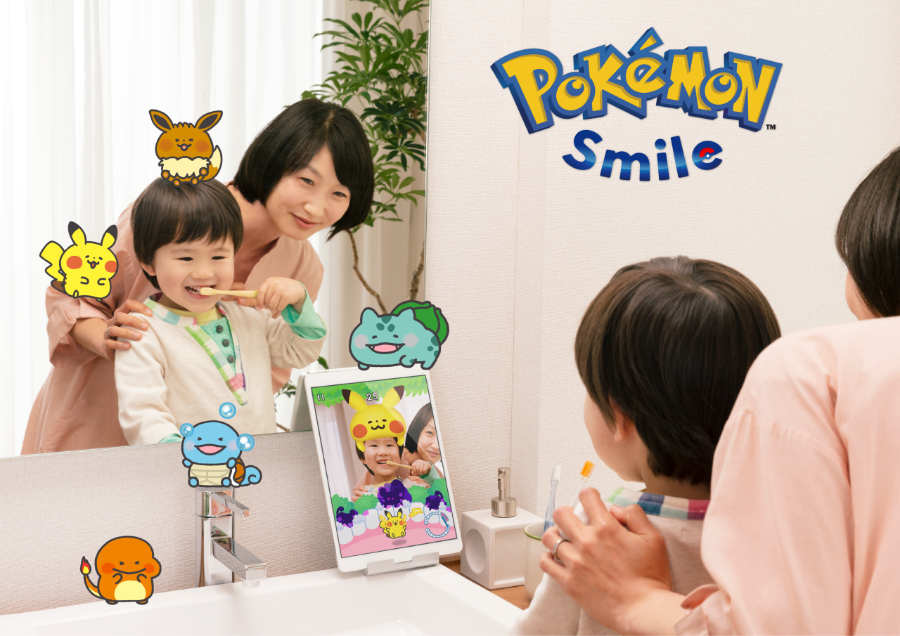 Pokémon Smile is a free tooth-brushing app for iPhone, iPad and Android phones and tablets, published by The Pokémon Company and built with the Japanese firm LITALICO, whose own camera-based brushing app, Hamigaki Yusha, gave it a technical head start. It was revealed in the very first Pokémon Presents on 17 June 2020 and went live the same day in more than 150 countries and regions. It is made for young children, and for the parents who battle to get them to the sink every morning and night, and it has no in-app purchases and no adverts.
While the child brushes, the phone’s front camera films them and puts a Pokémon Cap on their head in augmented reality. On screen, purple cavity-causing bacteria crawl across a cartoon set of teeth, and their partner Pokémon blasts them away in time with the brushing. Halfway through each one-, two- or three-minute session a Pokémon smothered in bacteria turns up: scrub it clean and you get a chance to catch it, with a Master Ball for a spotless session. Catches fill a Pokédex sorted into seven habitats, while caps, stickers and Brushing Awards reward a steady routine. A four-hour lock between sessions stops anyone brushing for Pokémon all afternoon.
Smile belongs to the franchise’s family of everyday-habit apps, alongside Pokémon GO, which turns walking into play, and Pokémon Sleep (2023), which does the same for a night’s rest. It stands out among Pokémon games for being built around children’s health rather than play for its own sake: the tips it shows after each session were prepared with the Japan Dental Association, it won a Good Design Award in 2021, and in Japan city councils such as Fukuoka’s have built school dental campaigns around it.
The Pokédex has grown from the 151 Kanto Pokémon of launch day to 254, taking in the whole of Johto plus Ludicolo, Mime Jr. and Dedenne, and more than six years on, the app is still being updated.
Brush together with Pokémon!
Pokémon Smile helps make toothbrushing a fun habit with Pokémon!
Turn toothbrushing into a fun and exciting adventure with Pokémon Smile! Players can partner up with some of their favorite Pokémon to defeat the cavity-causing bacteria and save captured Pokémon. Only by consistently brushing their teeth can they save all the Pokémon, earning the chance to catch them.
Thorough toothbrushing is the key to catching Pokémon!
Some unlucky Pokémon have been captured by the cavity-causing bacteria inside your mouth! By brushing your teeth, you can defeat these bacteria and save the Pokémon. If you do a great job brushing, you’ll be able to catch the Pokémon you save, too!
— Official description
Quick Answers
The questions parents and players ask most about Pokémon Smile, answered first and explained further down the page.
Is Pokémon Smile free, and is there anything to buy?
Yes, it is completely free. There are no in-app purchases, no adverts and nothing to unlock with money: every Pokémon, cap, sticker and award is earned by brushing. The developers said they left payments out on purpose, so that nothing would get between children, parents and the brushing habit the app is meant to build. More →
Can you still download and play Pokémon Smile in 2026?
Yes. In October 2026 it is still a free download on the App Store and Google Play, and the latest version, 2.0.12, arrived in March 2026. That update raised the minimum requirement to iOS or iPadOS 15 and Android 8.0, so some older phones and tablets that once ran the app can no longer install it. More →

Is Pokémon Smile on Nintendo Switch?
No. It has only ever been released for iPhone, iPad and Android devices, because it needs a front-facing camera to watch you brush and to put a Pokémon Cap on your head. There is no Switch, PC or console version, and none has been announced since the app launched in 2020. More →
How many Pokémon are in Pokémon Smile?
254. The app launched with the original 151 Kanto Pokémon, added Smeargle, Ludicolo, Mime Jr. and Dedenne in November 2021, and completed the Johto Pokédex in June 2022. That covers everything from Bulbasaur to Celebi plus three later species, filed under seven habitats from Beach to Mountain. More →
How do you get a guaranteed catch with the Master Ball?
Brush well enough to clear the bacteria from both the teeth and the trapped Pokémon before the timer runs out. A normal session ends with a single throw whose chances depend on how well you brushed, but a spotless clean swaps the ball for a Master Ball, and that catch cannot fail. More →

Why can’t I start another brushing session straight away?
Pokémon Smile locks for four hours after every session, so it cannot be played back to back. The wait ties the app to real brushing times, morning and evening, instead of letting children brush for Pokémon all afternoon. Parents can also set up to three reminders a day to prompt each session. More →
Does Pokémon Smile connect to Pokémon HOME or other Pokémon games?
No. Pokémon caught in Pokémon Smile stay in its own Pokédex and cannot be sent to Pokémon HOME, Pokémon GO or the main series. The only transfer feature, added in version 1.0.5 in September 2020, moves your save data from one phone or tablet to another. More →
Can you change your partner Pokémon?
Yes, since version 2.0.0 in June 2022. Before that you picked Bulbasaur, Charmander, Squirtle, Pikachu or Eevee once, when setting up. The update added Chikorita, Cyndaquil and Totodile to the line-up and let players swap partners later on. The partner is the Pokémon that fights the bacteria with you in every session. More →
How the brushing game works
Pokémon Smile turns two minutes at the sink into a rescue mission. Cavity-causing bacteria have trapped Pokémon inside the player’s mouth, and only good brushing will set them free. Every session feeds several reward loops at once, from catching Pokémon to unlocking caps, stickers and Brushing Awards, and the tips shown at the end were written with the help of the Japan Dental Association. In Japan the app has gone further still, becoming the centrepiece of school brushing campaigns run by city councils and local dentists.
- 254Pokémon to rescue and catch
- 7habitats in the Pokédex
- 1–3minutes a session, set by parents
- 4 hourswait between sessions
One session, start to finish
A session runs like this, and once the brushing begins nothing needs to be pressed or tapped:
- Choose who is brushing. Each child has a profile, up to three to a device, and a partner Pokémon to brush with.
- Smile for the camera. The front camera shows the child on screen wearing a Pokémon Cap, and a guide in the corner points to the next part of the mouth to clean.
- Fight the bacteria. Purple, cavity-causing bacteria creep across a cartoon set of teeth, and the partner Pokémon attacks them as the child brushes.
- Free a Pokémon. Around halfway through, a Pokémon covered in bacteria arrives, and steady brushing scrubs it clean.
- Throw a ball. When time is up, one throw decides whether the rescued Pokémon is caught. Better brushing means better odds, and a spotless clean brings out a Master Ball, which never misses.
- Decorate a photo. The app takes four snapshots during the session; the child picks one, dresses it up with stickers and frames, and saves it.
- Read a tip. A short piece of brushing advice rounds off the session.
- Wait four hours. The app then locks until the next brushing time comes round.
The balls on the catch screen are drawn in the same soft, rounded style as the Pokémon:




Caps, awards and stickers
Catching Pokémon is only one of the rewards. Three other collections run alongside the Pokédex, each giving a child another reason to come back to the sink twice a day:
Seven habitats
Rather than one long list, the Pokédex files every Pokémon under one of seven habitats, based on where the species lives in the wild. Beach is the biggest, with 51 residents, followed by Forest (48), Cave (44), Town (38), Field (36), Volcano (20) and Mountain (17). Tapping a habitat shows who lives there, and each entry gives the Pokémon’s National Pokédex number, type, height and weight. Every habitat has its own illustrated scene, which becomes the backdrop whenever one of its Pokémon is caught.







How the Pokédex grew
Launch day offered the 151 Kanto Pokémon. The first content update, version 1.1.0 in November 2021, added four outsiders: Smeargle from Johto, Ludicolo from Hoenn, Mime Jr. from Sinnoh and Dedenne from Kalos. Version 2.0.0 in June 2022 then brought in the other 99 Johto Pokémon, taking the total to 254 and putting Chikorita, Cyndaquil and Totodile on partner duty.
| Version | Date | Pokémon added | Total | Other additions |
|---|---|---|---|---|
| 1.0.0 | 17 June 2020 | All 151 Kanto Pokémon | 151 | Five partner choices, caps, stickers, Brushing Awards |
| 1.1.0 | November 2021 | Smeargle, Ludicolo, Mime Jr., Dedenne | 155 | New Pokémon Caps; per-profile session length and photo settings |
| 2.0.0 | 2 June 2022 | The remaining 99 Johto Pokémon | 254 | Chikorita, Cyndaquil and Totodile as partners; partner switching; new caps, stickers and frames |



Made with dentists, used in schools
Gameplay
Here are the finer points of a brushing session, and the settings parents can use to shape it.
On the brushing screen
Detection and parental settings
Price and connectivity
Pokémon Smile is free to download and stays free. There are no in-app purchases and no adverts, a deliberate choice by The Pokémon Company, so every Pokémon, cap, sticker and award is earned by brushing alone. The app keeps itself to itself, too: caught Pokémon cannot be sent to Pokémon HOME or any other game, and the only transfer option, added in version 1.0.5 in September 2020, moves save data to a new phone or tablet.
Pokémon
Pokémon Smile has 254 Pokémon to catch: every one from Kanto and Johto, 251 in all, plus three later arrivals in Ludicolo, Mime Jr. and Dedenne. Legendary and Mythical Pokémon such as Mewtwo, Lugia and Celebi are part of the Pokédex too, each filed under a habitat like any other species. The illustrator Kanahei drew every one of them in a soft, rounded style, smoothing out spiky designs such as Voltorb so that they would not frighten the youngest players.
Partner Pokémon
Every session is fought alongside a partner Pokémon, whose attacks on the bacteria are powered by the player’s brushing. Five were on offer at launch, and version 2.0.0 added the three Johto starters and, for the first time, let players switch partner after setting up:

Bulbasaur
One of the five launch partners, and No. 1 in the app’s Pokédex, just as in the National Pokédex. Its entry is filed under the Forest, the second-largest habitat with 48 residents.

Charmander
A launch partner whose Pokédex entry sits in the Volcano, one of the smallest habitats with only 20 residents. Version 2.0.0 gave it a Johto neighbour there in Cyndaquil.

Squirtle
A launch partner filed under the Beach, the biggest habitat in the app with 51 Pokémon. Totodile joined it there, and on the partner list, in version 2.0.0.

Pikachu
Pokémon’s mascot was among the five partners on offer at launch. Its Pokédex entry sits in the Forest habitat, alongside Bulbasaur’s.

Eevee
The fifth launch partner, filed under the Town habitat. Version 2.0.0 brought two of its evolutions, Espeon and Umbreon, into the app with the rest of Johto.

Chikorita
The first of the three Johto starters added to the partner line-up in version 2.0.0, in June 2022. The same update made partners changeable, so long-standing players could pick it too.

Cyndaquil
Joined the partner roster in version 2.0.0. The Pokédex files it under the Volcano habitat, which it shares with its fellow fire starter Charmander.

Totodile
The third Johto partner from version 2.0.0, filed under the Beach with Squirtle. Its arrival took the partner roster to eight.
Pokémon of note
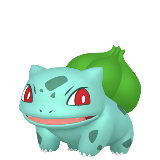 BulbasaurFirst in the Pokédex
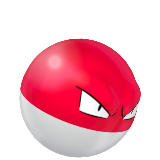 VoltorbRedrawn rounder
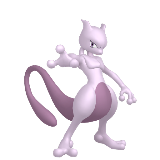 MewtwoLegendary
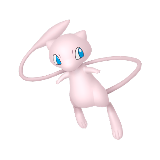 MewEnd of the launch list
 SmeargleJohto, added early
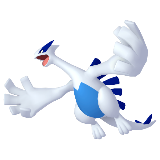 LugiaLegendary, added in 2.0.0
 CelebiCompleted Johto
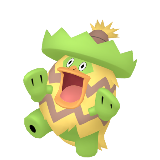 LudicoloOnly one from Hoenn
 Mime Jr.Only one from Sinnoh
 DedenneOnly one from Kalos
Updates & events
Pokémon Smile has been through 27 versions since launch: two big content updates, three new languages, save transfer between devices and a long run of fixes and compatibility releases. These are the milestones, along with the campaigns and tie-ins that grew up around the app:
2020 and 2021
| Date | What happened |
|---|---|
| 17 June 2020 | Revealed in the first Pokémon Presents and released worldwide as version 1.0.0 |
| 19 June 2020 | Version 1.0.2 (iOS on 21 June) fixes a grey, frozen camera on some Android devices |
| 22 June 2020 | Version 1.0.3 retunes when the bacteria start attacking the teeth |
| 3 September 2020 | Version 1.0.5 improves brushing detection and adds save transfer between devices |
| 5 November 2020 | Version 1.0.7 adds Thai and Indonesian |
| 30 November 2020 | Fukuoka City, its dental association and The Pokémon Company sign a dental-health partnership |
| Early 2021 | Version 1.0.9 adds Hindi, the twelfth language |
| 27 July 2021 | Version 1.0.11 improves brushing-motion detection again |
| November 2021 | Version 1.1.0, the first content update: Smeargle, Ludicolo, Mime Jr., Dedenne and new caps |
| 8 November 2021 | Shogakukan publishes the tie-in picture book Kosutte Asoberu! Pokémon Hamigaki |
2022 to 2026
| Date | What happened |
|---|---|
| 2 June 2022 | Version 2.0.0 completes Johto (254 Pokémon) and adds the Johto partners, partner switching, caps, stickers and frames |
| 3 February 2023 | Version 2.0.2 adds new post-brushing advice |
| 11 April 2023 | Lotte launches Pokémon Smile packaging for its Xylitol Ramune sweets in Japan |
| 24 April 2024 | Version 2.0.7 stamps the date on in-game photos |
| 22 October 2025 | Version 2.0.10, the first update in almost a year |
| 17 March 2026 | Version 2.0.12 sets a time limit on decorating and requires iOS/iPadOS 15 or Android 8.0 |
Regional Variations
Pokémon Smile launched on the same day almost everywhere, under the same name, but a few things vary from country to country:
- It is available in more than 150 countries and regions, but not in mainland China, Vietnam, Iran, Bangladesh, Kenya, Monaco, San Marino, Vatican City and 28 other territories.
- It launched in nine languages. Thai and Indonesian followed in November 2020 and Hindi in early 2021, making 12 in all. The title is Pokémon Smile everywhere, written ポケモンスマイル in Japan.
- In Japanese the bacteria are called mushibakin, literally “cavity germs”, and the brushing tips are credited to the Japan Dental Association; the English store listings say only that they are based on advice from dental professionals.
- The municipal brushing campaigns, Shogakukan’s picture book and Lotte’s Xylitol Ramune packaging have all been Japan-only.
Glitches, exploits and oddities
A finger that passes for a toothbrush, and two camera problems from the early days:
Brushing with a finger
Because the app watches for movement near the mouth rather than recognising the toothbrush itself, a finger waggled from side to side in front of the teeth counts as brushing. The same leniency is why clear and uncoloured brushes work, despite the advice to use a coloured one. Nor can the camera tell which part of the mouth is really being cleaned: Kotaku’s reviewer noticed that the area prompts are taken on trust, and chose not to tell his children.
Grey camera freeze on Android
At launch some Android phones showed a grey camera feed and froze as a session began, leaving the app unusable on those devices. Version 1.0.2, released for Android on 19 June 2020 and for iOS two days later, fixed the fault along with other launch bugs. It was the second of three patches in the app’s first week; the third, on 22 June, adjusted when the bacteria start their attacks.
Face lost in low light
On some phones the picture darkens in a dim bathroom and the app cannot find the player’s face, so no cap appears and the brushing is not counted. Nintendo Life’s reviewer ran into the problem at launch and hoped a patch would follow. The Pokémon Company’s advice is to brush in a well-lit room with a brightly coloured toothbrush, and the updates of September 2020 and July 2021 improved motion detection.
Videos & media
The reveal, the English launch trailer and the Japanese introduction video:
The first Pokémon Presents, on 17 June 2020, where Pokémon Smile was revealed and released.
The English launch trailer, with a full brushing session, caps and catching.
The Japanese introduction video from launch day.
Trivia & facts
- Pokémon Smile was announced and released on the same day, 17 June 2020, during the first-ever Pokémon Presents.
- Before joining The Pokémon Company, producer Yosuke Oshino directed Super Mario Maker at Nintendo, and UI designer Takashi Maeda spent around 15 years at Nintendo, mostly in advertising, so the two were old colleagues.
- Composer Reo Uratani, formerly of Capcom, recorded the music in his own studio on instruments that children know from nursery and primary school.
- The partner you choose does not count towards the Pokédex at first: it has to be rescued and caught in a session like any other Pokémon before its entry fills in.
- At launch the developers reckoned that catching every Pokémon would take two to three months of regular brushing. The later updates pushed that target much further out.
- In August 2020 the developers said no feature updates were planned; the first new Pokémon arrived nearly 18 months after launch, in November 2021.
- Ludicolo, Mime Jr. and Dedenne are the only Pokémon in the app from beyond the first two generations.

Ludicolo (Hoenn) 
Mime Jr. (Sinnoh) 
Dedenne (Kalos) - Two Pokémon lend a hand with the photos: when decorating, a Diglett button swaps the background scenery and a Koffing button wipes away every sticker.

Diglett: new scenery 
Koffing: clear stickers - Shogakukan timed its tie-in picture book for 8 November, Good Teeth Day in Japan, because the numbers 11 and 8 can be read as “ii ha”, meaning “good teeth”.
Legacy
What came after
- Revealed in the first Pokémon Presents and released worldwide – 17 June 2020. Free on the App Store and Google Play in more than 150 countries and regions
- An estimated 629,000 downloads in the first month – June to July 2020. Roughly 326,000 on the App Store and 302,000 on Google Play
- Fukuoka City dental-health partnership – 30 November 2020. The first such agreement between a Japanese local authority and The Pokémon Company
- Good Design Award – 2021. One of Japan’s best-known design prizes
- First content update, version 1.1.0 – November 2021. Smeargle, Ludicolo, Mime Jr. and Dedenne, nearly 18 months after launch
- Version 2.0.0 completes Johto – 2 June 2022. The Pokédex reaches 254 and the Johto starters become partners
- Lotte Xylitol Ramune collaboration – 11 April 2023. Five packaging designs using the app’s artwork, sold across Japan
- Version 2.0.12, the latest update – 17 March 2026. Minimum requirements rise to iOS/iPadOS 15 and Android 8.0
Where to play it today
Pokémon Smile is still live and supported in October 2026. It is a free download, with no in-app purchases, from the App Store for iPhone and iPad and from Google Play for Android in more than 150 countries and regions, though not in mainland China, Vietnam and a few dozen other territories. The current version, 2.0.12 from 17 March 2026, needs iOS or iPadOS 15 or Android 8.0 or later, plus an internet connection, so some older phones and tablets can no longer install it. There has never been a Switch or other console version.
How it was made
Pokémon Smile was developed by The Pokémon Company itself, with support from two outside firms. Yosuke Oshino, a former Nintendo developer, handled planning and direction as producer, with Tsunekazu Ishihara as executive producer. The idea grew out of a problem every parent knows, children who refuse to brush, and the company teamed up with LITALICO, maker of the camera-based brushing app Hamigaki Yusha. LITALICO programmers Yoshiyuki Higo and Kengo Yokoyama adapted that app’s engine, reworking much of it, including the way the AR caps are drawn. Planning began in July 2019, and full development was under way by September.
The illustrator Kanahei drew the Pokémon and backgrounds and suggested the sticker feature, Reo Uratani created the music and sound effects, and Takashi Maeda of NASU designed menus for people who rarely play games. The brushing advice was prepared with the Japan Dental Association. The finished app was announced and released on the same day, 17 June 2020, in the first Pokémon Presents.
Pokémon Smile elsewhere
Sales & reviews
Downloads
As a free app with no in-app purchases or adverts, Pokémon Smile has no sales or revenue to report, and The Pokémon Company has never announced a download total. Pocket Gamer.biz put its first month at about 629,000 downloads, roughly 326,000 on the App Store and 302,000 on Google Play, and by October 2026 Google Play alone listed more than a million installs.
- ~629,000estimated downloads in the first month
- 1m+installs on Google Play
- 4.2/5player rating on both app stores
- Freeno in-app purchases or adverts
Review scores
Pokémon Smile was reviewed by only a handful of outlets, too few for a Metascore, and most of them judged it as a parenting aid rather than a game. Nintendo Life called it “a light-hearted, free way of trying to inject a little fun into an otherwise mundane task”, with a warning: “Just bear in mind that it can be a little harsh when it comes to judging your brushing”. Kotaku’s Luke Plunkett, whose two children had long resisted the toothbrush, wrote that “this game is the one thing that has managed to break their resistance”.
Plunkett went on to call it one of the most important games to enter his home in years, despite its being barely a game at all, as his children began racing to brush twice a day. Nintendo Life’s Chris Scullion warmed to it as a cheerful way to brighten a chore but found it a strict judge, failing to catch a Pokémon on three of his four nights, and he was caught out by the dim-light bug that stopped the camera finding his face. Polygon’s Karen Han enjoyed it but eventually gave up over its strict brushing check, while Mashable’s Alexis Nedd found that the challenge was exactly what kept her coming back. Players rate it well: it holds 4.2 out of 5 on both the App Store and Google Play, and 9.2 out of 10 from Metacritic users.
Awards and honours:
- Good Design Award 2021 (Japan Institute of Design Promotion)
Media & artwork
Further reading
More mobile apps, everyday-habit games and Kanto and Johto links on the site: