  |
|
| Titles | Pokémon Battle Trozei (Japan and North America) · Pokémon Link: Battle! (Europe and Australia) ポケモンバトルトローゼ (Pokémon Batoru Torōze) |
| Platform | Nintendo 3DS family (Nintendo eShop download; download cards were also sold in Japan) |
| Developer | Genius Sonority |
| Publisher | The Pokémon Company (Japan) · Nintendo (North America, Europe and Australia) |
| Director | Manabu Yamana |
| Producers | Shusaku Egami · Takato Utsunomiya · Hitoshi Yamagami |
| Art | Yoshinori Obishaku |
| Music | Tsukasa Tawada |
| Players | 1–4 (local wireless co-op; each player needs a system and a copy) |
| Genre | Puzzle (match-three battles) |
| Business model | Paid download, no in-app purchases (¥800 in Japan, $7.99 in North America) |
| Pokémon | 718, from Bulbasaur to Zygarde |
| Zones | 13: ten main zones of six stages, plus Safari Jungle, Island of Haste and Infinite Ruins |
| Released | 12 March 2014 (Japan) · 13 March 2014 (Europe) · 14 March 2014 (Australia) · 20 March 2014 (North America) |
| Off sale | 27 March 2023, when the Nintendo 3DS eShop closed (re-downloads only) |
| Rating | ESRB E · PEGI 3 · ACB G |
| Predecessor | Pokémon Trozei! (Nintendo DS, 2005; Pokémon Link! in Europe) |
| Successor | None – Genius Sonority’s next Pokémon puzzle game was Pokémon Shuffle (2015) |
| Sales | No figures published (download only) |
Overview
 Pokémon Battle Trozei is a match-three puzzle game for the Nintendo 3DS, released only as a download from the Nintendo eShop. It was made by Genius Sonority, the studio behind Pokémon Colosseum, Pokémon XD: Gale of Darkness and the original Pokémon Trozei! on the Nintendo DS, and published by The Pokémon Company in Japan and by Nintendo everywhere else. In Europe and Australia it goes by the name Pokémon Link: Battle!, after the DS game’s European title, Pokémon Link!
The game was unveiled in a Nintendo Direct on 13 February 2014 and arrived barely a month later: in Japan on 12 March 2014, in Europe on 13 March, in Australia on 14 March and in North America on 20 March, where it cost $7.99.
Each stage is a short battle played across both screens. Wild Pokémon line up on the top screen, while the touch screen holds the Trozei Box, a grid of Pokémon icons. Drag the icons around with the stylus to make lines of three or more of the same species and they clear, turning into attacks on the wild Pokémon above; chain clears together for a combo, and a long enough chain sets off a Trozei Chance, when a pair is all it takes. The type matchups of the main series decide how hard every hit lands, so the right icon at the start of a chain matters. Bring a wild Pokémon’s HP down to zero and it is caught, ready to be taken into later stages as a Support Pokémon, while the opposition fights back by draining your energy and dropping into the grid to block your matches.
Where Pokémon Trozei! was a pure tile-matching game, Battle Trozei builds a whole collecting adventure around the idea. All 718 Pokémon known at the time, from Bulbasaur to Zygarde, are spread across thirteen zones full of Legendary and Mythical bosses, secret appearance conditions and post-game areas, and up to four players can team up over local wireless. A year later Genius Sonority took its catch-by-puzzle formula further with Pokémon Shuffle. Since the 3DS eShop closed on 27 March 2023, Battle Trozei can no longer be bought, although anyone who already owns it can still download it again.
Players battle Pokémon to capture them through fast-paced puzzles.
Pokémon Link: Battle! is a Nintendo 3DS game available to download exclusively from the Nintendo eShop.
— Official description
Quick Answers
The questions people ask about Pokémon Battle Trozei, answered first and explained further down the page.
Can you still buy Pokémon Battle Trozei in 2026?
No. It was only ever sold as a Nintendo 3DS eShop download, and new purchases ended when the 3DS eShop closed on 27 March 2023. Anyone who bought it before then can still download it again on a 3DS or 2DS system for as long as Nintendo’s re-download service runs, and the game itself needs no internet connection. More →
Is Pokémon Battle Trozei on Nintendo Switch or mobile?
No. It has only been released for the Nintendo 3DS family and has never been ported to Nintendo Switch, smartphones or Nintendo Switch Online. Its closest relative is Genius Sonority’s Pokémon Shuffle, which launched on 3DS in February 2015 and later came to iOS and Android as Pokémon Shuffle Mobile. More →
How many Pokémon are in Pokémon Battle Trozei?
All 718 species that existed at launch, running from Bulbasaur (#001) to Zygarde (#718), including every Pokémon introduced in Pokémon X and Y. Each species counts as a single type in battle. Diancie, Hoopa and Volcanion, which were revealed later, do not appear. More →
Does Pokémon Battle Trozei have Mega Evolution?
No. It arrived a few months after Pokémon X and Y introduced Mega Evolution, but Battle Trozei leaves the mechanic out: there are no Mega Stones and no Mega-evolved opponents. Its showpiece battles are Legendary and Mythical bosses such as Xerneas, Yveltal and Zygarde instead, and Mega Evolution only came to this style of game with Pokémon Shuffle in 2015. More →
How do you unlock Stages 5 and 6 in each zone?
Clearing Stage 4 opens the next zone, but each zone’s last two stages have their own conditions. Typical ones are catching particular Pokémon in earlier stages, earning an A or S rank on all of Stages 1 to 4, or catching a Legendary such as Rayquaza, Darkrai, Giratina or Arceus with a single attack. More →
How do you catch Mewtwo in Pokémon Battle Trozei?
Mewtwo is the alternative boss of Mountain of Order Stage 6, which opens once Articuno, Zapdos and Moltres have been caught in Stage 5. On a first visit the boss is Mew, with 3,000 HP. Once Mew is in your collection, replaying the stage brings out Mewtwo instead, with 5,000 HP. More →
Does Pokémon Battle Trozei have online multiplayer?
No. Up to four players can battle co-operatively through local wireless play, but every player needs their own 3DS system and their own copy of the game. The only other connectivity is StreetPass, which swaps play data and a chosen favourite Pokémon with other players you pass. More →
Is there a sequel to Pokémon Battle Trozei?
There is no Battle Trozei 2. The game is itself the sequel to the Nintendo DS game Pokémon Trozei!, released in Europe as Pokémon Link! Genius Sonority’s next Pokémon puzzle game was Pokémon Shuffle in 2015, a free-to-play 3DS and mobile title that kept the idea of catching Pokémon through match-three battles. More →

Zones, stages & Legendary encounters
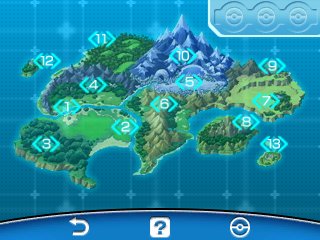
The single-player game is laid out as thirteen zones on one island map, each a run of short stages that ends in a boss. The ten main zones make up the adventure, and every main zone from Colossal Forest’s four Regis onwards is headlined by Legendary and Mythical Pokémon. Three bonus zones then add a safari that changes with the day of the week, an island where everything happens at double speed and a set of ruins that never end.
- 13zones: ten main areas and three bonus zones
- 60stages in the main zones, six apiece
- 718Pokémon to catch, Bulbasaur to Zygarde
- 4,000HP for Zygarde, the main game’s final boss
| Zone | Japanese name | How it opens | Stages | Legendary & Mythical encounters |
|---|---|---|---|---|
| 1. Renegade Meadow | ランボウそうげん | Available from the start | 6 | None: the Kalos first partners, Tyrantrum and Raichu |
| 2. Blade-and-Shield Path | けんとたてのみち | Clearing Renegade Meadow Stage 4 | 6 | None: the Kanto first partners, Aegislash and Wigglytuff |
| 3. Colossal Forest | きょだいなもり | Clearing Blade-and-Shield Path Stage 4 | 6 | Regirock, Regice, Registeel and Regigigas |
| 4. Sky-High Ruins | てんくうのいせき | Clearing Colossal Forest Stage 4 | 6 | Kyogre, Groudon, Rayquaza, Latios and Latias; Jirachi at 50% Pokédex completion |
| 5. Mysterious Fountain | しんぴのいずみ | Clearing Sky-High Ruins Stage 4 | 6 | Cresselia; Uxie, Mesprit and Azelf; Shaymin at 60% completion |
| 6. Pitch-Black Cavern | あんこくどうくつ | Clearing Mysterious Fountain Stage 4 | 6 | Heatran, Darkrai and Deoxys |
| 7. Sacred Plains | せいなるこうや | Clearing Pitch-Black Cavern Stage 4 | 6 | Cobalion, Terrakion, Virizion and Keldeo; Tornadus, Thundurus and Landorus; Meloetta at 70% completion |
| 8. Distortion Island | やぶれたしま | Clearing Sacred Plains Stage 4 | 6 | Dialga and Palkia, Giratina, Arceus, Manaphy and Phione |
| 9. Dragon Hill | ドラゴンのおか | Clearing Distortion Island Stage 4 | 6 | Reshiram or White Kyurem, Zekrom or Black Kyurem, Kyurem and Victini; a Shiny Genesect at 80% completion |
| 10. Mountain of Order | ちつじょのやま | Clearing Dragon Hill Stage 4 | 6 | Xerneas, Yveltal and Zygarde; Articuno, Zapdos and Moltres; Mew or Mewtwo |
| 11. Safari Jungle | サファリジャングル | One stage each after Stage 4 of Colossal Forest, Pitch-Black Cavern and Dragon Hill | 3, with a new line-up every day | None: daily bosses and all 28 Unown forms |
| 12. Island of Haste | ときのしま | Beating Zygarde in Mountain of Order Stage 4 | 6, at double speed | Raikou, Entei, Suicune, Ho-Oh, Lugia and Celebi |
| 13. Infinite Ruins | えいえんのいせき | Beating Zygarde in Mountain of Order Stage 4 | 3, endless | None: endless loops capped by Gardevoir, Rhyperior and Dragonite |
How the zones open
Legendary and Mythical encounters



The bonus zones
No Mega Evolution
Mega Evolution had made its debut in Pokémon X and Y only months earlier, but Battle Trozei leaves it out entirely: there are no Mega Stones, no Mega-evolved icons and no Mega bosses, so its showpiece battles are built around Legendaries and the hidden conditions that summon them. Genius Sonority brought Mega Evolution into its match-three battles a year later in Pokémon Shuffle, where the Pokémon in the lead slot can Mega Evolve partway through a stage.
Gameplay
Stages rarely last more than a few minutes, but there is a lot going on underneath the matching. Here is how the pieces fit together:
Special abilities
Some species carry one of eight fixed special abilities, and knowing which ones to bring can turn a hard stage around:
- Transform (Ditto): stands in for any Pokémon in a match, which makes Ditto the ideal supporter for the Zygarde battle.
- Healer (Chansey, Blissey and Happiny): restores the Trozei Box’s energy.
- Flinch Attack (Garchomp, for one): stops wild Pokémon from acting for a moment.
- Power of Five (Lugia, for one): strengthens matches of five.
- Power of Six: strengthens matches of six.
- Builder (Alakazam, Mr. Mime and Cresselia): repairs damage to the box’s walls.
- True Strength: raises damage while your energy is at half or less.
- Brute Force (Nidoking, Arceus and Landorus): deals normal damage to types that would usually resist it.
 Transform (Ditto): stands in for any Pokémon in a match, which makes Ditto the ideal supporter for the Zygarde battle.
 Healer (Chansey, Blissey and Happiny): restores the Trozei Box’s energy.
Local co-op and StreetPass
From Pokémon Trozei! to Battle Trozei
Nine years separate the two games, and the 3DS sequel changes almost everything except the idea of clearing Pokémon from a grid. Here is how it compares with Pokémon Trozei!:
| Pokémon Trozei! (DS) | Pokémon Battle Trozei (3DS) | |
|---|---|---|
| Moving the pieces | Slide whole rows and columns | Drag any icon onto another to swap them |
| A match needs | Four in a line, then fewer during a Trozei Chance | Three in a line, or a pair during a Trozei Chance |
| The aim | Clear Pokémon to rescue them for SOL | Clear Pokémon to attack wild Pokémon and catch them |
| Pokémon types | No part in play | The main series’ type chart decides damage |
| Pokémon | 386, Bulbasaur to Deoxys | 718, Bulbasaur to Zygarde |
| Single player | Adventure Mode: Lucy Fleetfoot against the Phobos Battalion | Thirteen zones of boss stages on an island map |
| Multiplayer | Two players: Battle and Pair modes | Up to four players in local co-op, plus StreetPass |
| Format | Nintendo DS game card (2005) | Nintendo 3DS eShop download (2014) |
Boss battles
Every stage builds to a boss, from a 100-HP Chespin in the opening battle to Legendaries with thousands of HP that tower over the whole grid. The cards below cover the headline fights; the tables after them list every stage in every zone, with the hidden Pokémon to look out for and what each stage opens.

Renegade Meadow: Greninja
The first big set piece. Stage 5 of the opening zone stays locked until Quilladin, Frogadier and Braixen have all been caught, which means finishing each Kalos first partner in Stages 1 to 3 during a combo of 15 or more. The reward is a fight against all three final evolutions at once.
Alongside: Chesnaught (600 HP) and Delphox (600 HP)
The default board of Chespin, Fennekin, Froakie, Pancham and Pikachu can hit all three foes super-effectively.

Blade-and-Shield Path: Charizard
The Kanto version of the same idea. Ivysaur, Charmeleon and Wartortle only appear when Bulbasaur, Charmander and Squirtle are finished with a super-effective hit, and the boards in Stages 1 to 3 have no such answer, so this fight usually waits until Support Pokémon are unlocked in Colossal Forest. Charizard is the first opponent big enough to span three columns of the grid.
Alongside: Venusaur (1,000 HP) and Blastoise (1,000 HP)
Reward: all three final Kanto first-partner evolutions.

Colossal Forest: Regirock
The game’s first Legendary boss opens a run of four Regi stages: Regice and Registeel also have 600 HP, and Regigigas tops the set with 650. Clearing Regirock’s stage unlocks Support Pokémon, so from here on you can add a caught Pokémon of your choice to the board before each stage.
Also in the stage: The Oshawott line, on a board of Archen, Blitzle, Grimer, Joltik and Rufflet
Regigigas’s stage, Stage 4, opens both Sky-High Ruins and the first Safari Jungle stage.
Sky-High Ruins: Rayquaza
The last of the Hoenn weather trio after Kyogre (800 HP) and Groudon (900 HP), and the first Legendary that has to be caught a particular way: finishing Rayquaza with a single attack is the only route into Stage 5, where Latios and Latias wait.
Also in the stage: Flabébé, Axew, Chansey and Druddigon
Clearing the stage opens Mysterious Fountain, the Sinnoh-flavoured fifth zone.

Distortion Island: Giratina
Distortion Island’s Stage 3 sends Dialga and Palkia back to back, each filling a four-by-four block with 1,700 HP, but Giratina is bigger again, spread across four columns with 2,500 HP. Its stage hides two extra Pokémon that need the right type of supporter: Spiritomb a Ghost-type, Rotom an Electric-type.
Hidden extras: Spiritomb and Rotom, with the right supporters
A single-attack catch opens Stage 5; clearing the stage opens Dragon Hill.

Distortion Island: Arceus
Arceus fills a four-by-four block with 3,600 HP and only appears once Giratina has been caught with a single attack. Catching Arceus in one blow in turn opens Stage 6, home to Manaphy and, on a return visit with Manaphy as a supporter, Phione.
To unlock: Catch Giratina with a single attack in Stage 4
Once caught, Arceus brings the Brute Force ability to your side, so its matches deal normal damage even to types that would resist them.

Dragon Hill: Kyurem
Dragon Hill revolves around Kyurem. Its stage opens once Reshiram and Zekrom have each been caught with a single attack, and once Kyurem is yours, taking it back into Stages 3 and 4 as a supporter replaces those two with White Kyurem and Black Kyurem, 4,000 HP apiece. Only one of each pair appears on a given run, so finishing the zone takes repeat visits.
Also in the stage: Golbat, with Crobat appearing when every Golbat falls at once
Catching both fused forms opens Stage 6, home to Victini and, at 80 per cent completion, a Shiny Genesect.

Mountain of Order: Zygarde
The final battle of the main game comes after Xerneas and Yveltal, 2,500 HP each, in the same stage. When Yveltal falls, Zygarde fills the whole screen and the board’s Pokémon are replaced by Dialga, Palkia, Giratina, Groudon and Kyogre. Ditto is the supporter to bring, because leftover icons from the original board can only be cleared with its help.
Before it: Xerneas and Yveltal, after Inkay, Malamar, Hawlucha, Sliggoo and Goodra
Victory rolls the credits, unlocks three Support slots and opens Island of Haste and Infinite Ruins.

Mountain of Order: Mewtwo
The last stage of the main zones opens once Articuno, Zapdos and Moltres have all been caught in Stage 5. A first visit brings out Mew with 3,000 HP; with Mew in your collection, replaying the stage brings out Mewtwo instead, spread across four columns with 5,000 HP.
Also in the stage: Slowpoke, Slowbro and Slowking (2,500 HP)
Mewtwo replaces Mew rather than following it, so the stage has to be played at least twice.
After the credits

Island of Haste: Lugia
Island of Haste opens after the credits and runs everything at double speed. Its bosses are Gyarados, the three Legendary beasts with 2,000 HP each, Ho-Oh and finally Lugia, both with 3,000 HP. Lugia counts as a Psychic-type here and carries the Power of Five ability, which strengthens its five-in-a-row matches.
Also in the stage: Gothorita, Solosis, Duosion, Carvanha and Sharpedo
Take Ho-Oh and Lugia back to Stage 1 as supporters to bring out Celebi.
Every stage, zone by zone
Each table gives the boss with its type and HP, then the other opponents, the hidden Pokémon and the conditions that bring them out, and what clearing the stage opens.
1. Renegade Meadow
| Stage | Boss | Also look out for |
|---|---|---|
| 1 | Chespin Grass · 100 HP |
Skiddo and Gogoat; finish Chespin in a 15+ combo to bring out Quilladin (200 HP) |
| 2 | Froakie Water · 130 HP |
Finneon and Lumineon; Frogadier (200 HP) after a 15+ combo on Froakie |
| 3 | Fennekin Fire · 130 HP |
Bunnelby and Litleo; Braixen (200 HP) after a 15+ combo on Fennekin |
| 4 | Tyrantrum Rock · 250 HP |
Tyrunt and the Scatterbug line, with Spewpa and Vivillon after super-effective finishes. Opens Blade-and-Shield Path |
| 5 | Greninja Water · 800 HP |
Chesnaught and Delphox (600 HP each). Opens once Quilladin, Frogadier and Braixen are caught |
| 6 | Raichu Electric · 700 HP |
An all-Electric line-up of Pichu, Pikachu, Helioptile and Heliolisk; Dedenne (400 HP) with Pikachu as Support. Needs A or S ranks on Stages 1–4 |
2. Blade-and-Shield Path
| Stage | Boss | Also look out for |
|---|---|---|
| 1 | Bulbasaur Grass · 300 HP |
Pansage, two Pancham and Pangoro (beat both Pancham at once); Ivysaur (400 HP) after a super-effective finish on Bulbasaur |
| 2 | Charmander Fire · 300 HP |
Pansear, Weedle and Kakuna; Charmeleon (400 HP) after a super-effective finish on Charmander |
| 3 | Squirtle Water · 300 HP |
Panpour, Zigzagoon and Linoone; Wartortle (400 HP) after a super-effective finish on Squirtle |
| 4 | Aegislash Steel · 300 HP |
Two Binacle, Barbaracle (beat both Binacle at once), two Honedge and Doublade. Opens Colossal Forest |
| 5 | Charizard Fire · 1,000 HP |
Venusaur and Blastoise (1,000 HP each). Opens once Ivysaur, Charmeleon and Wartortle are caught |
| 6 | Wigglytuff Fairy · 600 HP |
Crowds of Spritzee, Igglybuff and Jigglypuff with Swirlix and Happiny; Sylveon with Eevee as Support. Needs A or S ranks on Stages 1–4 |
3. Colossal Forest
| Stage | Boss | Also look out for |
|---|---|---|
| 1 | Regirock Rock · 600 HP |
The Oshawott line. Clearing the stage unlocks Support Pokémon |
| 2 | Regice Ice · 600 HP |
Darumaka, Cryogonal, Mamoswine and the Tepig line, including Pignite |
| 3 | Registeel Steel · 600 HP |
Maractus, Bronzor, Klang and the Snivy line, including Servine |
| 4 | Regigigas Normal · 650 HP |
Timburr, Gurdurr, Scraggy, Scrafty and Ambipom. Opens Sky-High Ruins and Safari Jungle Stage 1 |
| 5 | Serperior Grass · 1,000 HP |
Emboar (1,000 HP) and Samurott (1,500 HP). Opens once Dewott, Pignite and Servine are caught |
| 6 | Eevee Normal |
Vaporeon, Jolteon and Flareon (500 HP each), summoned by finishing the foe before with Water, Electric and Fire attacks. Needs A or S ranks on Stages 1–4 |
4. Sky-High Ruins
| Stage | Boss | Also look out for |
|---|---|---|
| 1 | Dusknoir Ghost · 500 HP |
Drifloon, Mismagius, Tropius and the Treecko line, with Chansey on the board |
| 2 | Kyogre Water · 800 HP |
Tranquill, Noibat and the Carracosta line |
| 3 | Groudon Ground · 900 HP |
Krokorok, Darmanitan and the Torchic line; Solrock from 6am to 6pm, Lunatone overnight |
| 4 | Rayquaza Dragon · 800 HP |
Flabébé, Axew, Chansey and Druddigon. A single-attack catch opens Stage 5; clearing it opens Mysterious Fountain |
| 5 | Latios Dragon · 1,000 HP |
Latias (1,000 HP) at its side and an all-Flying board; a 20+ combo on Nincada puts Shedinja in a free Support slot |
| 6 | Ditto Normal · 300 HP |
Bagon, Shelgon and Salamence on a board of Unown A to E; Jirachi (500 HP) at 50% Pokédex completion. Needs A or S ranks on Stages 1–4 |
5. Mysterious Fountain
| Stage | Boss | Also look out for |
|---|---|---|
| 1 | Honchkrow Dark · 650 HP |
Two Piplup; Prinplup (400 HP) when both fall together |
| 2 | Lucario Fighting · 650 HP |
Two Turtwig and Grotle; with Tyrogue as Support, Hitmontop appears, and a 15+ combo on it brings Hitmonlee and Hitmonchan |
| 3 | Cresselia Psychic · 900 HP |
Chimchar, Monferno (beat every Chimchar at once), Natu and Xatu (a single attack on Natu) |
| 4 | Mesprit Psychic · 550 HP |
Uxie (650 HP) and Azelf (550 HP); Porygon after a 15+ combo on Furret, Porygon2 after a 30+ combo on Porygon. Opens Pitch-Black Cavern |
| 5 | Infernape Fire · 700 HP |
Empoleon and Torterra (650 HP each). Opens once Prinplup, Grotle and Monferno are caught |
| 6 | Garchomp Dragon · 1,000 HP |
Shaymin’s Land Forme (200 HP) at 60% completion, then its Sky Forme after a 20+ combo. Opens once Uxie, Mesprit and Azelf are each caught with a single attack |
6. Pitch-Black Cavern
| Stage | Boss | Also look out for |
|---|---|---|
| 1 | Skuntank Poison · 600 HP |
Scyther; Scizor (800 HP) after a 30+ combo on it |
| 2 | Heatran Fire · 1,000 HP |
Lairon; Aggron (900 HP) after a 30+ combo or a single attack on it |
| 3 | Chandelure Ghost · 550 HP |
Haunter; Gengar (800 HP) after a 35+ combo on it |
| 4 | Darkrai Dark · 1,200 HP |
A single-attack catch opens Stage 5. Opens Sacred Plains and Safari Jungle Stage 2 |
| 5 | Totodile Water · 200 HP |
Croconaw and Feraligatr, each after a super-effective finish on the form before. Opens once Darkrai is caught with a single attack |
| 6 | Deoxys Psychic · 2,500 HP |
The first boss to fill a four-by-four block. Needs A or S ranks on Stages 1–4 |
7. Sacred Plains
| Stage | Boss | Also look out for |
|---|---|---|
| 1 | Haxorus Dragon · 1,000 HP |
Boldore, and Gigalith after a 30+ combo on one; Keldeo (1,100 HP) with Cobalion, Terrakion and Virizion as Support |
| 2 | Cobalion Steel · 1,400 HP |
Klink; Klinklang (600 HP) when every Klink falls together |
| 3 | Terrakion Rock · 1,400 HP |
Zweilous; Hydreigon (950 HP) after a 20+ combo on it |
| 4 | Virizion Grass · 1,400 HP |
Cottonee, Whimsicott (a super-effective finish on a Cottonee), Whirlipede and Scolipede (a 20+ combo on Whirlipede). Opens Distortion Island |
| 5 | Thundurus Electric |
Tornadus (3,000 HP); Landorus (4,000 HP) with Tornadus and Thundurus as Support. Opens once Keldeo is caught; foes here can smash the box’s top wall in one hit |
| 6 | Blissey Normal · 1,400 HP |
Meloetta (200 HP) at 70% Pokédex completion |
8. Distortion Island
| Stage | Boss | Also look out for |
|---|---|---|
| 1 | Togekiss Fairy · 900 HP |
Espeon (650 HP) from 6am to 6pm, or Umbreon (600 HP) overnight |
| 2 | Magnezone Electric · 800 HP |
Elekid; Electabuzz after a one-hit finish on Elekid, then Electivire (900 HP) after another on Electabuzz |
| 3 | Dialga, then Palkia Steel and Water · 1,700 HP each |
Fought back to back; Mantine (beat both Mantyke at once) and Flygon (a single attack on Vibrava) along the way |
| 4 | Giratina Ghost · 2,500 HP |
Spiritomb with a Ghost-type supporter, Rotom with an Electric-type one. A single-attack catch opens Stage 5; clearing it opens Dragon Hill |
| 5 | Arceus Normal · 3,600 HP |
Fills a four-by-four block. Catch it with a single attack to open Stage 6 |
| 6 | Manaphy Water · 700 HP |
Phione (700 HP) on a return visit with Manaphy as Support |
9. Dragon Hill
| Stage | Boss | Also look out for |
|---|---|---|
| 1 | Ferrothorn Grass · 1,100 HP |
Two Bouffalant; Audino if both fall together to a Normal-type attack |
| 2 | Kingdra Water · 1,600 HP |
Yamask; Cofagrigus (850 HP) when every Yamask falls together |
| 3 | Reshiram Dragon · 3,000 HP |
Golett, and Golurk after a single attack on it; with Kyurem as Support, White Kyurem (4,000 HP) takes Reshiram’s place |
| 4 | Zekrom Dragon · 3,000 HP |
The Vanillite line, each form appearing when the group before falls to one attack; Black Kyurem (4,000 HP) with Kyurem as Support. Opens Mountain of Order and Safari Jungle Stage 3 |
| 5 | Kyurem Dragon · 3,200 HP |
Golbat; Crobat when every Golbat falls together. Opens once Reshiram and Zekrom are each caught with a single attack |
| 6 | Victini Psychic · 900 HP |
A Shiny Genesect (1,400 HP) at 80% Pokédex completion. Opens once White and Black Kyurem are caught |
10. Mountain of Order
| Stage | Boss | Also look out for |
|---|---|---|
| 1 | Snorlax Normal · 3,000 HP |
Nine waves first, among them Furfrou, Kangaskhan (a 30+ combo on Furfrou), Slurpuff, Aromatisse, Dewgong, Cloyster, Clefairy and Clefable |
| 2 | Alakazam Psychic · 800 HP |
Espurr, male and female Meowstic and Pyroar, Pumpkaboo, Gourgeist and Talonflame; Arcanine with Growlithe as Support |
| 3 | Avalugg Ice · 1,200 HP |
Bergmite, Skrelp, Graveler, Golem, Weezing and Amaura; Dragalge after a single super-effective attack on Skrelp, Aurorus with Amaura as Support |
| 4 | Xerneas, Yveltal, Zygarde 2,500, 2,500 and 4,000 HP |
Inkay, Malamar, Hawlucha, Sliggoo and Goodra first, plus Noivern with Noibat as Support. Beating Zygarde rolls the credits |
| 5 | Articuno Ice · 3,000 HP |
A one-hit finish on Articuno summons Zapdos, and another on Zapdos summons Moltres (3,000 HP each). Needs A or S ranks on Stages 1–4 |
| 6 | Mew or Mewtwo Psychic · 3,000 or 5,000 HP |
Slowpoke, Slowbro and Slowking (2,500 HP); Mewtwo replaces Mew once Mew is caught. Opens once all three birds are caught |
The bonus zones, stage by stage
Safari Jungle’s three stages open one at a time, after Stage 4 of Colossal Forest, Pitch-Black Cavern and Dragon Hill, and each has a different boss for every day of the week. Unown forms are scattered through the waves, and two days hide an Eevee evolution behind a Support condition: Glaceon in Friday’s Stage 2 and Leafeon in Tuesday’s Stage 3.
| Day | Stage 1 | Stage 2 | Stage 3 |
|---|---|---|---|
| Monday | Vigoroth and Slaking | Machamp | Throh and Sawk |
| Tuesday | Tangrowth | Krookodile | Mandibuzz |
| Wednesday | Banette | Lapras | Milotic |
| Thursday | Ludicolo | Kabutops | Skarmory |
| Friday | Beartic | Nidoking | Ampharos |
| Saturday | Granbull | Braviary | Altaria |
| Sunday | Crustle | Vespiquen | Galvantula |
12. Island of Haste (double speed)
| Stage | Boss | Also look out for |
|---|---|---|
| 1 | Gyarados Water · 1,500 HP |
Celebi (700 HP) with Ho-Oh and Lugia as Support |
| 2 | Raikou Electric · 2,000 HP |
A three-column boss, like its fellow beasts |
| 3 | Entei Fire · 2,000 HP |
Fletchinder among the opponents |
| 4 | Suicune Water · 2,000 HP |
Two Tentacool and a Tentacruel before the boss |
| 5 | Ho-Oh Fire · 3,000 HP |
Taillow, Swellow, Yanma and Yanmega |
| 6 | Lugia Psychic · 3,000 HP |
Gothorita, Solosis, Duosion, Carvanha and Sharpedo |
13. Infinite Ruins (endless)
| Stage | Boss | Also look out for |
|---|---|---|
| 1 | Gardevoir Psychic · 1,000 HP |
Ends each 20-Pokémon loop, which restarts with Purrloin; Zangoose, Bouffalant and Porygon-Z join the board |
| 2 | Rhyperior Ground · 1,200 HP |
Ends each loop, which restarts with Frillish; Kecleon, Miltank and Exploud join the board |
| 3 | Dragonite Dragon · 1,500 HP |
The toughest loop, from a board of Dunsparce, Eevee, Meowth, Porygon and Rattata; Lickitung, Tauros and Snorlax join later |
Pokémon
Battle Trozei has room for all 718 Pokémon that existed when it launched, from Bulbasaur to Zygarde, including the whole Kalos Pokédex from Pokémon X and Y; Diancie, Hoopa and Volcanion were revealed too late to appear. Every species is a square icon in the Trozei Box and counts as a single type, and anything you catch can be taken into later stages as a Support Pokémon.
A few variants add to the count: all 28 Unown letters hide in Safari Jungle, Meowstic and Pyroar come in separate male and female versions, Shaymin has both its Land and Sky Formes, and Kyurem appears in its standard, White and Black forms. These are some of the Pokémon with a special part to play:
 DittoTransform
 ChanseyHealer
 Zygardefinal boss
 Mewtwo5,000 HP
 ArceusBrute Force
 Genesectthe only Shiny
 Shedinjanever battled
 Kyuremthree forms
 Keldeoneeds three supporters
 Unown28 forms
 Pikachubrings Dedenne
 Celebineeds Ho-Oh & Lugia
Hidden Pokémon and the supporters that summon them
Plenty of Pokémon never show up on a first visit. These only appear when the right Support Pokémon comes along:
| Pokémon | Where | Bring as Support |
|---|---|---|
| Dedenne | Renegade Meadow, Stage 6 | Pikachu |
| Sylveon | Blade-and-Shield Path, Stage 6 | Eevee |
| Hitmontop, then Hitmonlee and Hitmonchan | Mysterious Fountain, Stage 2 | Tyrogue (the other two need a 15+ combo on Hitmontop) |
| Keldeo | Sacred Plains, Stage 1 | Cobalion, Terrakion and Virizion |
| Landorus | Sacred Plains, Stage 5 | Tornadus and Thundurus |
| Spiritomb | Distortion Island, Stage 4 | Any Ghost-type |
| Rotom | Distortion Island, Stage 4 | Any Electric-type |
| Phione | Distortion Island, Stage 6 | Manaphy |
| White Kyurem, in place of Reshiram | Dragon Hill, Stage 3 | Kyurem |
| Black Kyurem, in place of Zekrom | Dragon Hill, Stage 4 | Kyurem |
| Arcanine | Mountain of Order, Stage 2 | Growlithe, found on Island of Haste |
| Aurorus | Mountain of Order, Stage 3 | Amaura |
| Noivern | Mountain of Order, Stage 4 | Noibat |
| Celebi | Island of Haste, Stage 1 | Ho-Oh and Lugia |
 Pikachu
Regional Variations

The game reached every region within eight days in March 2014, but the European and Australian release came with a new name, and Japan had a few extras of its own:
- Europe and Australia received the game as Pokémon Link: Battle!, and its terms change to match: the Trozei Box becomes the Link Box and a Trozei Chance becomes a Link Chance.
- The release order was Japan on 12 March 2014, Europe on 13 March, Australia on 14 March and North America on 20 March.
- Only Japan sold a physical download card, which reached shops on 8 March 2014 at ¥762 plus tax and could be redeemed from launch day.
- The Pokémon Center lottery, the Trozei merchandise and the prize Nintendo 3DS XL systems were all exclusive to Japan.
- The Pokémon Company published the game in Japan; Nintendo published it everywhere else.
- The European release can be played in English, French, German, Italian and Spanish.
Left in the data
- An unused audio stream,
stream_dummy.dspadpcm, holds a short jingle from The Denpa Men, another series Genius Sonority was making for the 3DS. - The game’s files also contain other music that is never played.
Glitches, exploits and oddities
One known bug can trip up the game’s carefully set appearance conditions:
Skipped Scatter Attacks
If a line of six forms at the same moment as a separate match of three or four, the game can count only the smaller match and drop the Scatter Attacks the six should have produced. Because so many hidden Pokémon depend on exactly how an opponent is finished, the bug can quietly wreck a stage’s conditions, stopping a conditional Pokémon from appearing or forcing through attacks you never intended and spoiling a carefully planned one-hit capture.
Videos & media
Trailers for Pokémon Battle Trozei from Nintendo and The Pokémon Company, in English and Japanese.
Nintendo of America’s announcement trailer, first shown in the Nintendo Direct of 13 February 2014.
The official English trailer from The Pokémon Company, made for the North American release.
The official trailer for Europe and Australia, under the Pokémon Link: Battle! name.
Part one of the Japanese “Sugoize! Movie” clips from the official Japanese Pokémon channel.
Part three of the same Japanese series of short promotional films.
Trivia & facts
- Despite being a 3DS game, Battle Trozei never uses the system’s stereoscopic 3D.
-

Genesect, the 80 per cent reward. The Genesect that turns up at 80 per cent Pokédex completion is the game’s only Shiny Pokémon, and its icon is the only animated one in the game.
-

Shedinja’s in-game icon. Shedinja is never fought. Beat Nincada with a combo of 20 or more and Shedinja simply slips into an empty Support slot, a nod to the way it fills a spare party slot when Nincada evolves in the main series.
- With every species limited to one type, some fight as types you might not expect: Palkia is a pure Water-type, Ferrothorn a Grass-type and Lugia a Psychic-type.
- A boss isn’t always the toughest Pokémon in its stage. Samurott has 1,500 HP to Serperior’s 1,000 in Colossal Forest Stage 5, and Gengar has 800 HP to Chandelure’s 550 in Pitch-Black Cavern Stage 3.
- Colossal Forest Stage 6 can’t be fully cleared on a first run. Every Pokémon on its board is Normal-type, so summoning Vaporeon, Jolteon and Flareon takes three Support Pokémon, which only become available after the credits.
- In Sky-High Ruins Stage 6 the whole board is made up of Unown, in the letters A to E.
- Japan’s download card went on sale on 8 March 2014, four days before the game itself, so fans could buy it early but had to wait for launch day to play.
- A short jingle from The Denpa Men, Genius Sonority’s other 3DS series of the time, sits unused among the game’s audio files.
- The European and Australian name, Pokémon Link: Battle!, follows the lead of the DS original, which was released in Europe as Pokémon Link!
Legacy
What came after
- Announcement – 13 February 2014. Revealed in a Nintendo Direct with a trailer and its North American release date.
- Japanese download card and Pokémon Center campaign – 8 March 2014. Download cards went on sale in Japanese shops, redeemable from launch day, and a Pokémon Center lottery ran until 6 April.
 Japanese release – 12 March 2014. Out on the Japanese Nintendo eShop as Pokémon Battle Trozei, priced at ¥800.
- European release – 13 March 2014. Released on the Nintendo eShop as Pokémon Link: Battle!
- Australian release – 14 March 2014. Also released as Pokémon Link: Battle!
- North American release – 20 March 2014. Released on the Nintendo eShop for $7.99.
- Battle Trozei Nintendo 3DS XL prizes – March 2014. Black and white Battle Trozei-themed systems were unveiled in Japan as Pokémon Daisuki Club competition prizes.
- Pokémon Shuffle – 18 February 2015. Genius Sonority’s next Pokémon puzzle game launched on 3DS as a free-to-play title with Mega Evolution, and later came to smartphones.
- Nintendo 3DS eShop closes – 27 March 2023. New purchases ended; owners can still download the game again.
Where to play it today
As of October 2026, Pokémon Battle Trozei can’t be bought anywhere. It never had a cartridge release, and new purchases ended when the Nintendo 3DS eShop closed on 27 March 2023, which also ended the redemption of download codes such as Japan’s download cards. Anyone who bought it can still download it again on a Nintendo 3DS or 2DS system for as long as Nintendo keeps its re-download service running, and because the game has no online features, local co-op and StreetPass still work as they always did. It has never been released on Nintendo Switch or any other platform.
How it was made
Battle Trozei was developed by Genius Sonority, the studio behind Pokémon Colosseum, Pokémon XD: Gale of Darkness and the original Pokémon Trozei!; at the time it was also making The Denpa Men series for the 3DS. Manabu Yamana directed the game, with Shusaku Egami, Takato Utsunomiya and Hitoshi Yamagami producing, Yoshinori Obishaku handling the art and Tsukasa Tawada writing the music. Nintendo revealed it in the Nintendo Direct of 13 February 2014, barely a month before release, together with its North American date and $7.99 price. The design kept the 2005 game’s central idea of capturing Pokémon by clearing them from a puzzle grid, but swapped row-sliding for free drag-and-swap movement, brought in the main series’ type matchups and spread the catching across a zone-based campaign covering every species up to Pokémon X and Y. The finished download comes in at just under 50MB.
Prizes and merchandise in Japan

Sales & reviews
Sales figures
As a download-only release, Battle Trozei never appeared in Japan’s weekly retail charts, and neither Nintendo nor The Pokémon Company has published how many copies were downloaded. What is on record is the price: ¥800 including tax on the Japanese eShop (or a download card from shops at ¥762 plus tax) and $7.99 in North America, with nothing more to buy inside the game.
- 70on Metacritic (23 critics)
- 68%GameRankings average (the site closed in 2019)
- 8/10from Nintendo Life and NWR’s European review
- $7.99launch price in North America (¥800 in Japan)
Review scores
Reviewers enjoyed Battle Trozei without calling it essential. Neal Ronaghan of Nintendo World Report called it “an idiosyncratic puzzle game that makes great use of the Pokémon concept”, Pocket Gamer found it “different enough from the throng of competitors to justify its existence”, and Damien McFerran of Nintendo Life, who gave it 8/10, still felt “the lack of online multiplayer feels like a missed opportunity”. Here is how the main reviews scored it:
Critics took to Battle Trozei as a likeable, if modest, eShop puzzler, and it settled at 70 on Metacritic from 23 reviews. The change they praised most was its use of the main series’ type chart, which gave a simple matching game real tactical weight and made each stage feel like a Pokémon battle rather than a themed puzzle. The brisk, combo-driven pace and the sheer number of Pokémon to collect also went down well, and several reviewers thought it ideal for short bursts of play. The recurring complaints were the lack of online multiplayer, a reliance on one dominant strategy of building long combos, repetition over longer sessions and unlock conditions that could feel obscure, while IGN felt the game told newcomers too little about type matchups. European outlets were slightly warmer than American ones, with Nintendo Life and Nintendo World Report’s European review both giving it 8/10.
Media & artwork
Further reading
More puzzle games and Genius Sonority spin-offs on the site: