  |
|
| Titles | New Pokémon Snap New ポケモンスナップ (Nyū Pokémon Sunappu) |
| Platform | Nintendo Switch (game card and Nintendo eShop download; TV, tabletop and handheld modes, optional motion aiming) |
| Developer | Bandai Namco Studios |
| Publishers | The Pokémon Company (Japan) · Nintendo (elsewhere) · Nintendo with Tencent (mainland China edition) |
| Director | Haruki Suzaki |
| Producer | Tsunekazu Ishihara (executive producer) |
| Players | 1 (online photo sharing and rankings with Nintendo Switch Online) |
| Genre | On-rails photography |
| Pokémon | 234 (214 at launch, 20 added in Version 2.0.0) |
| Locations | 15 on six islands (12 at launch); 30 courses counting day, night, evening and Illumina Spot versions |
| Released | 30 April 2021 (Japan, North America, Europe, Australia, South Korea, Hong Kong, Taiwan) · 16 July 2024 (mainland China) |
| Updates | Version 2.0.0, free (3 August 2021) · latest Version 2.0.1 (15 September 2021) |
| Rating | ESRB E · PEGI 3 · CERO A · ACB G · GRAC ALL · GSRR 0+ · CADPA 8+ |
| Predecessor | Pokémon Snap (Nintendo 64, 1999) |
| Successor | None announced |
| Sales | 2.40 million outside Japan (Nintendo, to 31 March 2022) |
Overview
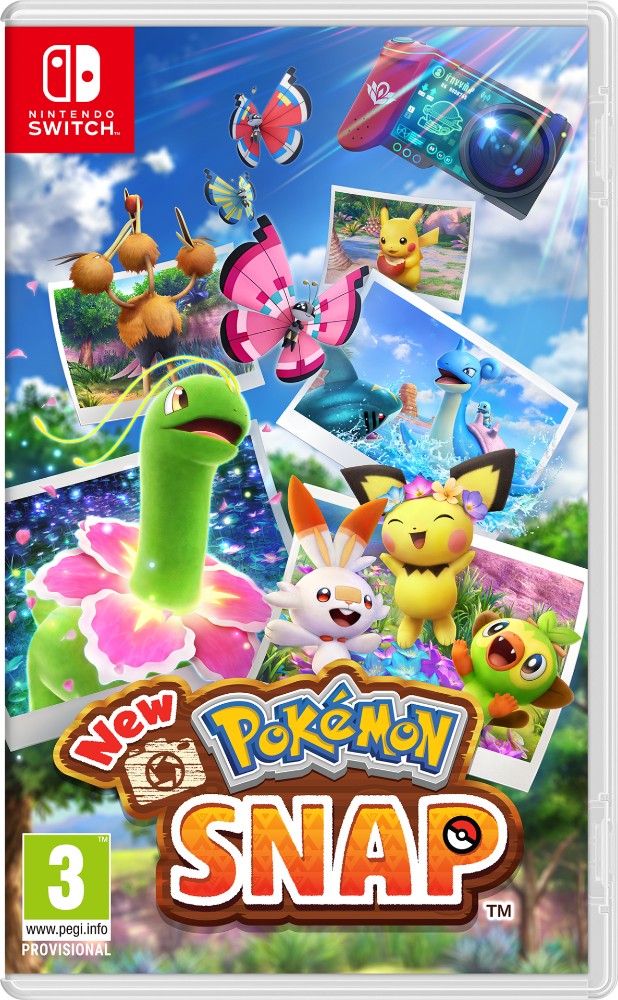
 New Pokémon Snap is a photography game for Nintendo Switch and the first full sequel to the Nintendo 64’s Pokémon Snap, released worldwide on 30 April 2021, more than two decades after the original. There is no battling and no catching: you ride through the wild with a camera and try to capture Pokémon doing something worth seeing. It was developed by Bandai Namco Studios, the team behind Pokkén Tournament, under director Haruki Suzaki, and published by The Pokémon Company in Japan and by Nintendo everywhere else.
The setting is the Lental region, a sunny archipelago of six islands where Professor Mirror runs a research lab devoted to the Illumina phenomenon, a mysterious glow that sometimes settles on the local Pokémon and plants. Each expedition is a ride aboard the NEO-ONE, an automated pod that glides along a fixed track while you turn the camera freely, through beaches and reefs, jungles and deserts, a volcano and a snowfield, with night-time versions of many courses.
Fluffruit, Illumina orbs, a melody player and a scanner tease out new behaviour, and Professor Mirror rates every photo you submit from one to four stars, with a points score for size, pose and framing on top. Points raise each course’s Research Level, which brings in new Pokémon, routes and surprises, while the best photo of every species at every star rank goes into the Photodex. Favourite shots can be touched up in Re-Snap, dressed up with filters, frames and stickers, and shared online.
The game launched with 214 Pokémon from all eight generations, and a free update on 3 August 2021 added three new locations and 20 more species, for 234 in all. Critics loved its lively habitats and photo tools, if not always its repetitive loop, and Nintendo had sold 2.40 million copies outside Japan by March 2022. A mainland Chinese edition followed in July 2024, and more than five years on it remains the only modern revival of the Snap formula.
Explore lush scenery on unknown islands to snap photos of Pokémon in their natural habitats
This new game brings the gameplay of the 1999 Pokémon Snap game for the Nintendo 64™ system to life on the Nintendo Switch system with unknown islands to discover and different Pokémon to see! Photograph lively wild Pokémon in their natural habitats as you research and explore unknown islands. Hop in your trusty travel pod, the NEO-ONE, and journey through a variety of environments such as beaches, jungles, and deserts to capture previously-unseen Pokémon behaviors. You can even play a melody or toss Pokémon a delicious fluffruit to catch their attention.
A free update includes 3 new areas to explore, each with Day and Night versions, and 20 more Pokémon to photograph! Keep your eyes—and camera lens—peeled as you explore the rocky cliffs in the Barren Badlands, ride the rapids of the Mightywide River, or shrink down to a tiny size to explore the Secret Side Path.
— Official description
Quick Answers
The questions people ask most about New Pokémon Snap, answered first and explained further down the page.
Can you still buy and play New Pokémon Snap in 2026?
Yes. It is still sold as a boxed Nintendo Switch game and as a download from the Nintendo eShop, and it can be played on Nintendo Switch 2 as well. The whole adventure works offline; only uploading photos, browsing other players’ shots and the online rankings need a Nintendo Switch Online membership. More →
How many Pokémon are in New Pokémon Snap?
There are 234 Pokémon to photograph. The game launched with 214 species from all eight generations, and the free Version 2.0.0 update of August 2021 added 20 more, from Shroomish to Zeraora. Every species has four Photodex slots, one for each star rating Professor Mirror can award. More →
Is the update free, and how do you unlock the new courses?
Yes, Version 2.0.0 is a free download. Mightywide River and Barren Badlands open once the main story has been finished, and each has day and night courses. Secret Side Path is reached by scanning a particular tree beside the lake on Florio Nature Park’s daytime course, after which the NEO-ONE shrinks to explore it. More →
Do you need Nintendo Switch Online to play?
No. Every course, the story, the Photodex and the photo editor are fully playable offline. A Nintendo Switch Online membership is only needed to upload photos to the in-game gallery, view and award Sweet! Medals to other players’ photos, and take part in the worldwide score rankings. More →
What are Illumina Pokémon and how do you photograph them?
They are six Pokémon that glow permanently because of Lental’s Illumina phenomenon: Meganium, Milotic, Wishiwashi, Volcarona, Steelix and Xerneas. Each lives in its island’s Illumina Spot. Most must first be lured or uncovered with fluffruit, then hit with Illumina orbs to trigger their full glowing state for a high-scoring shot. More →
How is it different from the original Pokémon Snap?
It is far bigger: 234 Pokémon instead of 63, six islands, night courses and Research Levels that change each course as you revisit it. The Pester Ball is gone, its role absorbed by fluffruit, and new tools include Illumina orbs and scanning. Photos can be edited in Re-Snap and shared online, and Todd Snap returns as an adult. More →
Is there multiplayer?
No. New Pokémon Snap is a single-player game with no co-operative or competitive modes. Its social side is asynchronous: players can post photos online, browse other people’s shots, award them Sweet! Medals and compare scores in the worldwide rankings, all through Nintendo Switch Online. More →
Is there a sequel to New Pokémon Snap?
Not as of October 2026. No follow-up has been announced, and the game’s last update, Version 2.0.1, arrived in September 2021. Its only later release was a mainland Chinese edition, published with Tencent in July 2024. More →
Story
The player arrives in Lental at the invitation of Professor Mirror and his assistant Rita, who run the Laboratory of Ecology and Natural Sciences (L.E.N.S.) on Florio Island. Mirror wants help surveying the region’s Pokémon and, above all, the Illumina phenomenon that the explorer Captain Vince described a century earlier in his Lental Travelogue. Early runs through Florio Nature Park turn up a glowing Meganium, the first Illumina Pokémon seen in a hundred years. Todd Snap, the hero of the original game, joins the survey, and Phil, an eager young photographer at the lab, wastes no time in declaring the player his rival.
Once the player has photographed a lit crystabloom in Founja Jungle, Mirror hands over Illumina orbs, and the survey spreads to the Maricopia Islands, to Voluca Island and back to Belusylva’s Elsewhere Forest, where Wishiwashi, Volcarona and Milotic complete the set of Illumina Pokémon recorded in the travelogue. Then an unexplained energy reading draws the team to icy Durice Island, which Vince never reached. In Outaway Cave the player photographs an Illumina Steelix and finds a mural of five Illumina Pokémon shielding Lental from the Tellur Meteorite, which struck about 2,000 years ago, with a sixth figure hidden at its centre.
Mirror’s first theory is that the meteorite caused the phenomenon, but the trail ends on Aurus Island at the Ruins of Remembrance, where lighting the ruins’ crystablooms opens the way to Xerneas, the apparent heart of it all. After its photo is taken, Xerneas returns to its dormant tree form, and the team concludes that the Illumina Pokémon came out of hiding because they sensed the player’s affection for Pokémon.
Finishing the story opens Maricopia Reef’s evening course and brings Legendary and Mythical Pokémon to earlier courses, and since Version 2.0.0 it also unlocks Mightywide River and Barren Badlands.
The Lental Region & the Illumina Phenomenon

Lental is a tropical archipelago of six islands, each with a climate of its own: the parkland of Florio, the jungle and fog-bound forest of Belusylva, the beaches and reefs of Maricopia, the desert and volcano of Voluca, the frozen tundra of Durice and the ancient ruins of Aurus. Since the free update it holds 15 locations, which become 30 courses once the day, night, evening and Illumina Spot versions are counted. Tying it all together is the Illumina phenomenon, the glow that settles on certain Pokémon and plants and drives the whole story.
- 6islands, each with its own climate
- 15locations (12 at launch)
- 30courses, counting day, night, evening and Illumina Spot versions
- 6Illumina Pokémon, one per island

 Illumina orbsProfessor Mirror hands these over once the player has photographed a lit crystabloom in Founja Jungle. The supply is unlimited, and any Pokémon or crystabloom an orb hits briefly enters the Illumina state. Many of the rarest scenes depend on them, from Drampa swooping in with Bulbasaur and Pancham to Tyranitar smashing through a rock wall.
Every location in Lental
All 15 locations, island by island, with the courses each one offers, how many Research Levels each course has, and a few of the Pokémon worth looking out for:
| Location | Island | Courses (Research Levels) | Pokémon to look for | Illumina Pokémon |
|---|---|---|---|---|
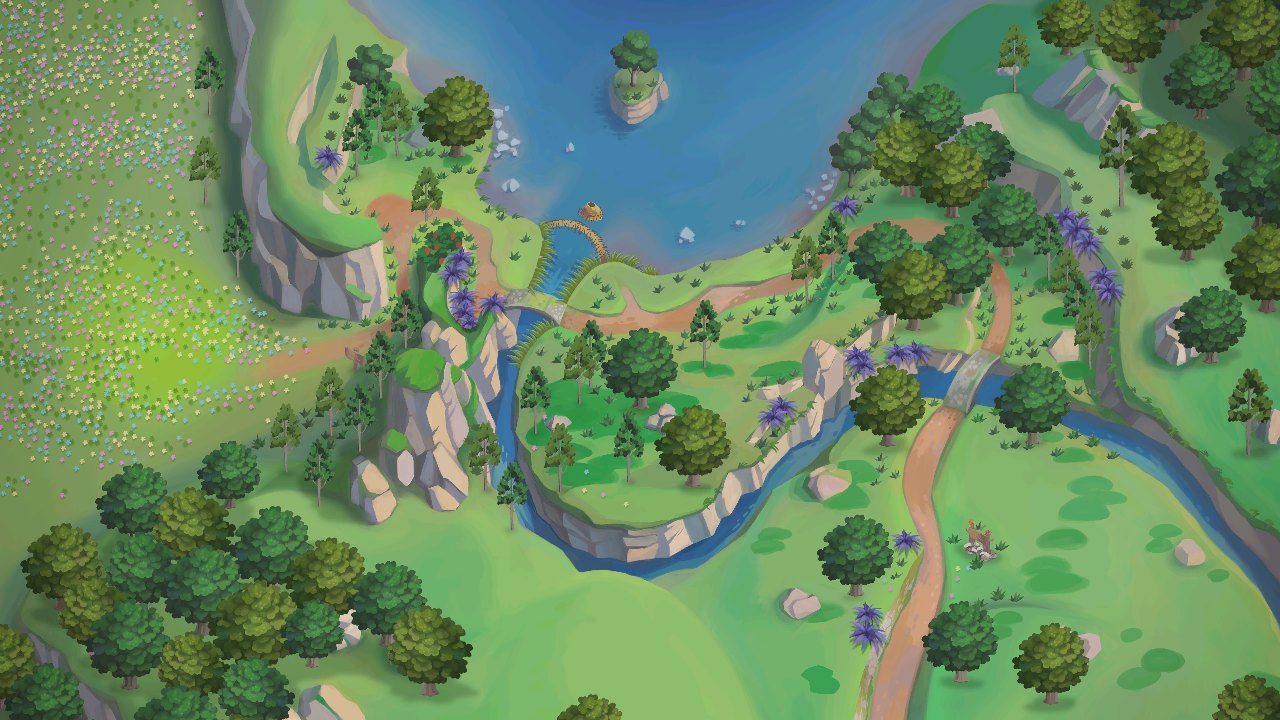
| Florio Nature Park | Florio | Day (3) · Night (2) · Illumina Spot (2) | Pichu, Grookey, Scorbunny, Bidoof, Eevee, Pikachu, Shaymin | Meganium |
| Secret Side Path Version 2.0.0 |
Florio | Day · Night | Shroomish, Snorlax, Foongus, Torterra, Dodrio, Caterpie | – |
| Research Camp | Florio | Single course | Eevee, Pikachu, Meowth, Dedenne, Audino, Sudowoodo | – |
| Founja Jungle | Belusylva | Day (3) · Night (2) | Sobble, Venusaur, Leafeon, Swampert, Slaking, Mew (post-game) | – |
| Elsewhere Forest | Belusylva | Forest (3) · Illumina Spot (2) | Bulbasaur, Espeon, Gardevoir, Ninetales, Drampa, Celebi (post-game) | Milotic |
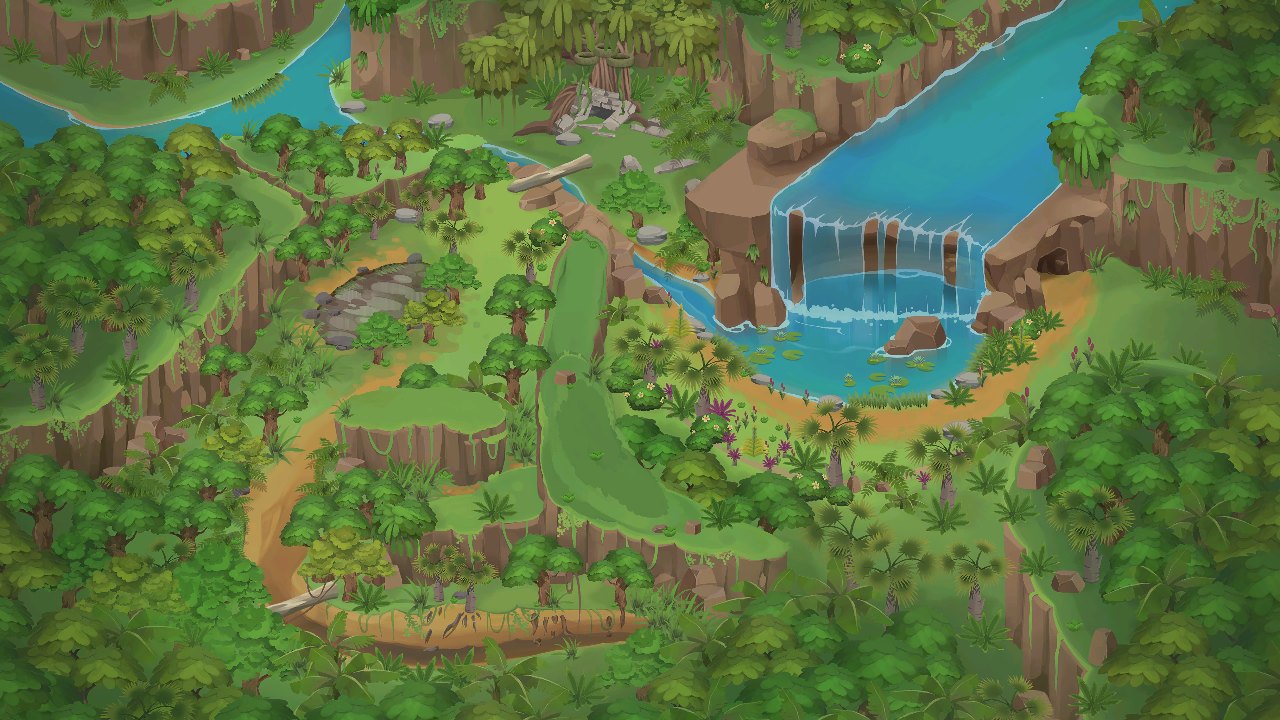
| Mightywide River Version 2.0.0 |
Belusylva | Day (3) · Night (2) | Psyduck, Feraligatr, Tropius, Ursaring, Cleffa, Gyarados | – |
| Blushing Beach | Maricopia | Day (3) · Night (2) | Alolan Raichu, Stunfisk, Bellossom, Primarina, Blastoise, Lapras (post-game) | – |
| Maricopia Reef | Maricopia | Day (3) · Evening (2) | Wailord, Sharpedo, Mantine, Vaporeon, Manaphy (evening, post-game) | – |
| Lental Seafloor | Maricopia | Undersea (3) · Illumina Spot (2) | Lanturn, Clawitzer, Golisopod, Luvdisc, Starmie, Lugia | Wishiwashi |
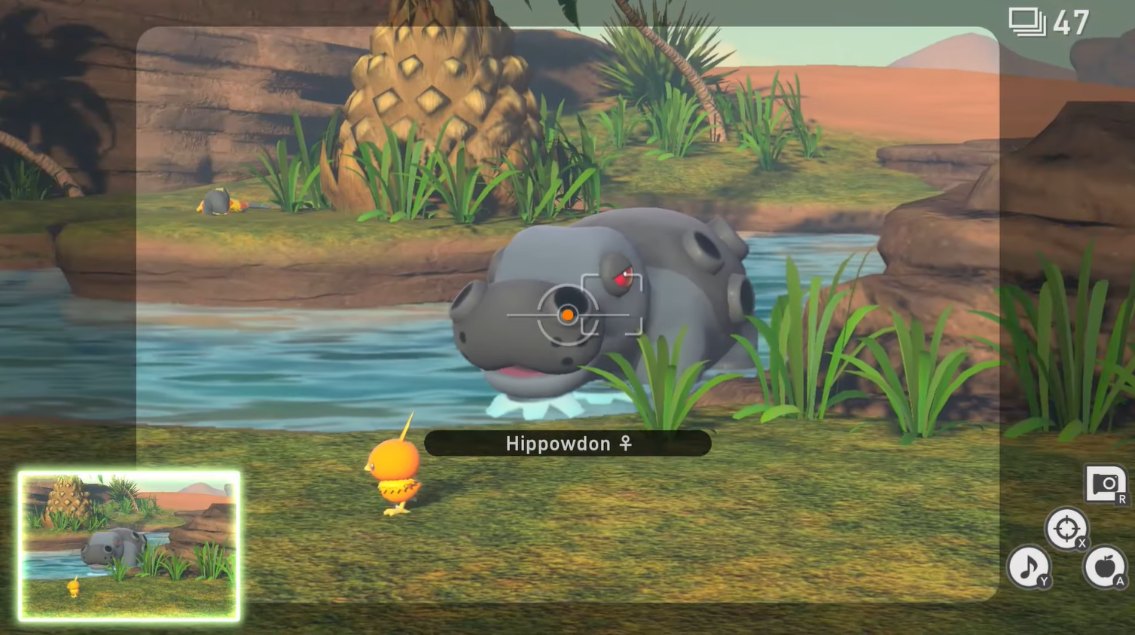
| Sweltering Sands | Voluca | Day (3) · Night (2) | Torchic, Hippowdon, Flygon, Tyranitar, Kangaskhan, Minior | – |
| Fireflow Volcano | Voluca | Volcano (3) · Illumina Spot (2) | Charmander, Charizard, Typhlosion, Tyrantrum, Flareon, Ho-Oh (post-game) | Volcarona |
| Barren Badlands Version 2.0.0 |
Voluca | Day (3) · Night (2) | Tepig, Diglett, Rockruff, Salazzle, Gliscor, Zeraora | – |
| Shiver Snowfields | Durice | Day (3) · Night (2) | Piplup, Alolan Vulpix, Mamoswine, Glaceon, Aurorus, Suicune (post-game) | – |
| Outaway Cave | Durice | Cave (3) · Illumina Spot (2) | Gengar, Clefairy, Goodra, Hydreigon, Jolteon, Diancie | Steelix |
| Ruins of Remembrance | Aurus | Ruins (3) · Illumina Spot (2) | Absol, Golurk, Chandelure, Noivern, Umbreon, Jirachi (post-game) | Xerneas |


Gameplay
Every expedition follows the same rhythm: ride a course, take as many photos as you like, then submit the best for Professor Mirror to grade. The depth comes from the way the courses, the tools and the scoring feed into one another:


Sharing photos online
With a Nintendo Switch Online membership, players can upload edited photos to an in-game gallery, browse other people’s shots and award them Sweet! Medals, the game’s version of a like. Scores can also be entered into in-game rankings to compare results with photographers around the world, and Version 2.0.0 improved the search options for browsing other players’ photos. There is no co-operative or competitive multiplayer: the story, every course, the Photodex and the photo editor all work offline, and the game’s community side is built entirely around sharing photographs.
Compared with the 1999 original
The 1999 Pokémon Snap set the template. The sequel keeps its on-rails heart and builds out almost everything around it:
| Pokémon Snap (1999) | New Pokémon Snap (2021) | |
|---|---|---|
| Platform | Nintendo 64 | Nintendo Switch |
| Developer | HAL Laboratory | Bandai Namco Studios |
| Setting | Pokémon Island | The Lental region, six islands |
| Pokémon | 63 | 214 at launch, 234 after the free update |
| Courses | Seven, including the hidden Rainbow Cloud | 15 locations and 30 courses, with day, night and evening versions |
| Vehicle | The ZERO-ONE, an amphibious buggy | The NEO-ONE, a hover pod based on it that can even shrink |
| Photo judge | Professor Oak | Professor Mirror |
| Grading | Points for size, pose and framing | One to four stars for behaviour, plus points for technique |
| Tools | Pokémon Food, Pester Ball, Poké Flute, Dash Engine | Fluffruit, Illumina orbs, melody player, scan |
| Sharing | Album, plus sticker prints from Snap Stations | Re-Snap editor, online gallery, Sweet! Medals and rankings |
| Todd Snap | The player character | A grown-up photographer helping the survey |
Characters

The player
A young photographer invited to Lental to help with Professor Mirror’s survey, available as a boy or a girl with a choice of hair and eye colours. The game never names them outright; English pre-release material called them Jamie and River, and the boy’s Japanese name is Ren. In the end it is their affection for Pokémon that draws the Illumina Pokémon out of hiding.

Professor Mirror
Lental’s resident professor and the leading expert on the Illumina phenomenon. He founded the research lab on Florio Island and grades every photo, much as Professor Oak did in the original. He spent his childhood hunting Illumina Pokémon with Captain Vince’s travelogue as his guide, and he built the NEO-ONE with Todd’s help. His Japanese name, Kagami, means mirror.

Rita
The daughter of one of Mirror’s close friends, Rita spends her school holidays helping at the lab. Kind and caring, she acts as a big sister to Phil and the player, although she and Phil bicker often. Her blue hair and green eyes echo Goodra.
Phil
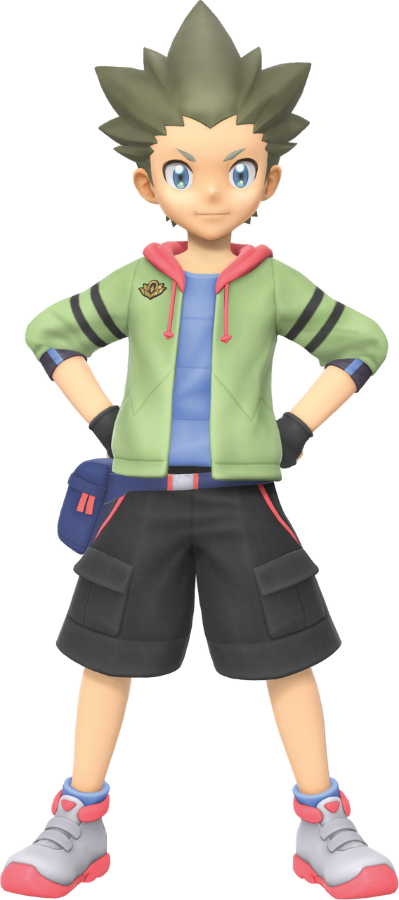
A spiky-haired, impatient young photographer who has dreamed of being the world’s best ever since he saw Todd’s pictures. He calls himself Todd’s number one student and treats the player as his rival. He quietly lets the player try the NEO-ONE’s shrinking function without Mirror’s permission, and the waterfall drops on Mightywide River make him nervous.

Todd Snap
The hero of the 1999 game returns as a grown-up and celebrated photographer. He helps with the Lental survey and worked with Mirror on the NEO-ONE, which is based on his old ZERO-ONE. He never asked Phil to be his pupil, but he is quietly flattered and glad that Phil has found a rival.
Captain Vince belongs to Lental’s past. The adventurer encountered an Illumina Pokémon as a child about 100 years before the game, went on to seek out others across the islands and wrote it all down in the Lental Travelogue that inspires Mirror’s research. In Japanese he is Captain Viktor; both names come from Latin words connected with winning.
Voice cast
The main cast in each language:
| Character | English | Japanese |
|---|---|---|
| Professor Mirror | Ben Lepley | Ryōtarō Okiayu |
| Rita | Anairis Quiñones | Manami Numakura |
| Phil | Erica Mendez | Makoto Koichi |
| Todd Snap | Griffin Burns | Kappei Yamaguchi |
Illumina Spots: the Six Illumina Pokémon
Each island has an Illumina Spot, a short special course built around one of the six Illumina Pokémon. These stages play like boss encounters. Each poses a puzzle, whether that means stripping away Volcarona’s flames with fluffruit, tempting Steelix out of the tunnel walls or lighting up enough lone Wishiwashi to form a school, before Illumina orbs push the Pokémon into its full glowing state. Photographing them moves the story on and opens up the next part of the region.
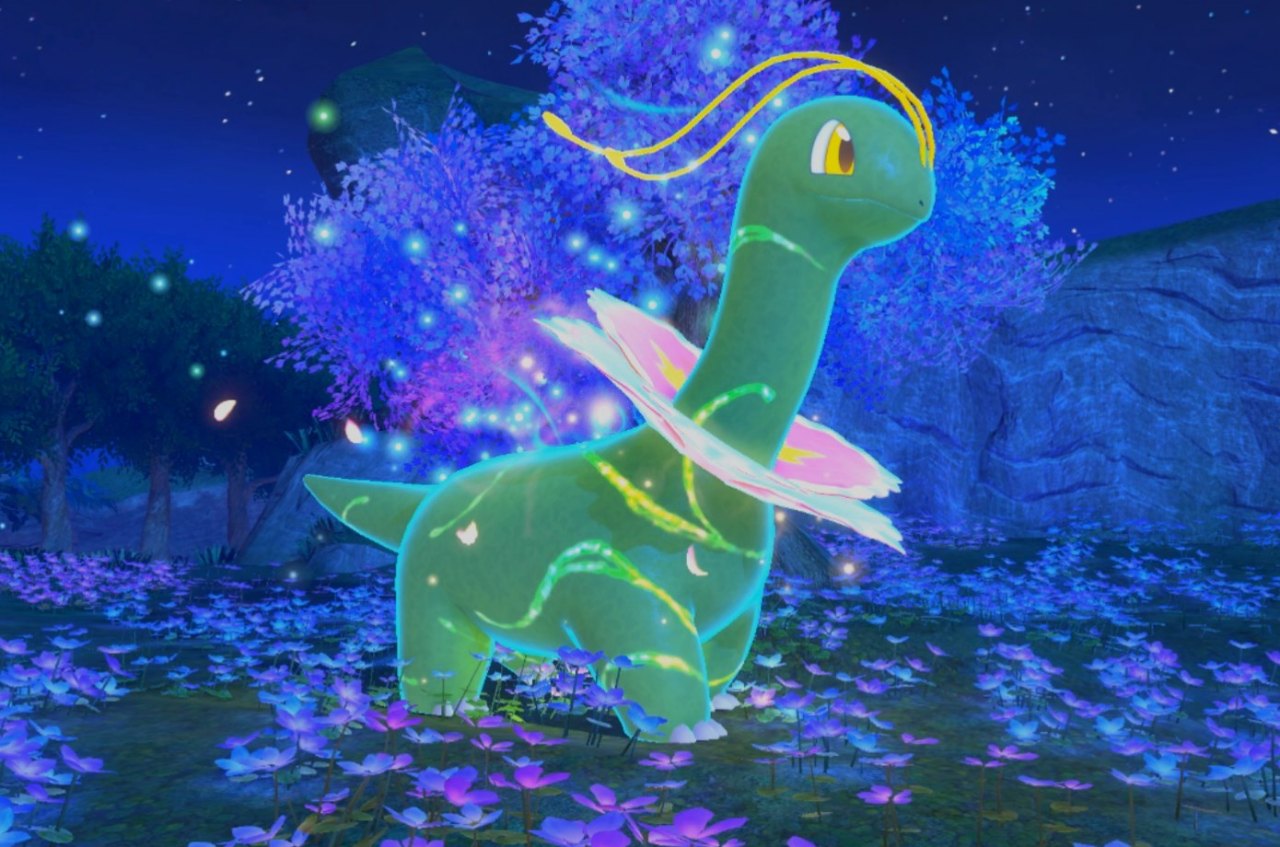
Florio Island: Meganium
The first Illumina Pokémon anyone has seen in a hundred years, and the only one that can be photographed before Professor Mirror hands over the Illumina orbs. It follows the NEO-ONE through a flower field on the hilltop.
How to light it up: Return at Research Level 2, when several Illumina orbs trigger its full Illumina state.
Pikachu and Eevee also turn up in its field. Clearing the spot opens Founja Jungle on Belusylva Island.

Belusylva Island: Milotic
Milotic lies hidden underwater in a lake deep in the forest, surfacing near a Trevenant and a Ninetales once the NEO-ONE has passed a large root.
How to light it up: Fluffruit brings it to the surface; Illumina orbs then make it leap and whip up twisters.
An extra orb after the first twister creates a second, larger one, good for a four-star shot.

Maricopia Islands: Wishiwashi
Once schooled, the glowing fish can whip up whirlpools, loop around the pod, chase off a Wailord or even swallow the NEO-ONE whole.
How to light it up: Hit the lone Solo Form fish with Illumina orbs until enough of them glow to merge into School Form.
A lone Solo Form Wishiwashi does not count as an Illumina Pokémon photo.

Voluca Island: Volcarona
Two Volcarona wait deep in the volcano, each wrapped in fire that has to be dealt with before the orbs can do anything.
How to light it up: Fluffruit clears the flames, then Illumina orbs take effect.
Once both are lit they inspect a crystabloom together, and lighting that crystabloom makes one wreathe itself in fire and dance: two four-star chances from Research Level 1.

Durice Island: Steelix
Captain Vince never reached Durice Island, so this Illumina Pokémon was unknown to Professor Mirror. It tunnels through the walls of Outaway Cave, and its chamber holds the mural of five Illumina Pokémon guarding Lental from the Tellur Meteorite.
How to light it up: Lure it out of the holes in the cave walls with fluffruit; it takes several Illumina orbs to make it glow.
A four-star shot catches it roaring at Crobat that are chasing Noibat. Clearing the spot opens the Ruins of Remembrance on Aurus Island.

Aurus Island: Xerneas
The apparent source of the Illumina phenomenon, Xerneas roams the ruins as a ball of light until the player draws it out.
How to light it up: One Illumina orb makes it appear in full; a second briefly puts it into its Illumina state.
At Research Level 2 it can be led to the mural and, with two Houndoom and a scan, made to use Geomancy. Photographing it completes the main story and opens the post-game.
Pokémon
New Pokémon Snap launched with 214 Pokémon to photograph, drawn from all eight generations and more than three times the 63 of the 1999 original, and the free Version 2.0.0 update raised the total to 234. The developers chose them from almost 900 candidates according to which habitats and behaviours suited Lental. Each species lives on particular courses, and many appear only at higher Research Levels, at night or after the story ends. Regional forms such as Alolan Raichu, Sandslash and Vulpix are in the mix, along with several Vivillon patterns, and Pikachu turns up in Florio Nature Park, the Research Camp and on Blushing Beach, where it can ride a Stunfisk.
Legendary and Mythical Pokémon
 MewFounja Jungle
 SuicuneShiver Snowfields
 LugiaLental Seafloor
 Ho-OhFireflow Volcano
 CelebiElsewhere Forest
 JirachiRuins of Remembrance
 ManaphyMaricopia Reef
 ShayminFlorio Nature Park
 XerneasRuins of Remembrance
 DiancieOutaway Cave
 ZeraoraBarren Badlands
Many of them only appear once the story is over. Mew teleports around Founja Jungle as a pink light, Lugia sleeps on the seafloor until the crystablooms around it are lit, Ho-Oh is summoned in Fireflow Volcano’s final chamber after three feathers have been illuminated, and Zeraora, the very last Photodex entry, is found battling a Tyranitar in Barren Badlands.
Starter Pokémon and their evolutions
Lental is generous with starter Pokémon. These are the ones listed in the course guide above, with one place to find each:
 BulbasaurElsewhere Forest
 VenusaurFounja Jungle
 CharmanderFireflow Volcano
 CharizardFireflow Volcano
 BlastoiseBlushing Beach
 MeganiumFlorio Illumina Spot
 TyphlosionFireflow Volcano
 FeraligatrMightywide River
 TorchicSweltering Sands
 SwampertFounja Jungle
 TorterraSecret Side Path
 PiplupShiver Snowfields
 TepigBarren Badlands
 PrimarinaBlushing Beach
 GrookeyFlorio Nature Park
 ScorbunnyFlorio Nature Park
 SobbleFounja Jungle
Eevee and its evolutions
Eevee wanders around the Research Camp and Florio Nature Park, and its evolutions each have a home that suits them:
 EeveeResearch Camp
 VaporeonMaricopia Reef
 JolteonOutaway Cave
 FlareonFireflow Volcano
 EspeonElsewhere Forest
 UmbreonRuins of Remembrance
 LeafeonFounja Jungle
 GlaceonShiver Snowfields
Version 2.0.0 & Updates
New Pokémon Snap is a full-price game with no in-game purchases or paid downloadable content. Its one content update, Version 2.0.0, was announced with a trailer on 29 July 2021 and arrived free on 3 August. It added three locations, each with day and night courses, and 20 more Pokémon, along with new research titles, profile icons, filters, stickers and frames.

Six of the 20 new arrivals
 Psyduck#054
 Gyarados#130
 Snorlax#143
 Shroomish#285
- Tepig#498
- Zeraora#807
Update history
| Date | Version | What changed |
|---|---|---|
| 29 April 2021 | Version 1.1.0 | Day-one patch with general fixes. |
| 26 May 2021 | Version 1.2.0 | Fixed the Proud Warrior LenTalk request, which could not be completed. |
| 29 July 2021 | Announcement | The free content update is revealed with a trailer. |
| 3 August 2021 | Version 2.0.0 | Secret Side Path, Mightywide River and Barren Badlands, 20 more Pokémon, new research titles and profile icons, and more filters, stickers and frames. |
| 15 September 2021 | Version 2.0.1 | A small follow-up patch, and the last update so far. |
| 16 July 2024 | Mainland China edition | Released through Nintendo and Tencent with Simplified Chinese text. |
Regional Variations
Apart from the later mainland Chinese edition, the versions of New Pokémon Snap differ very little:
- The Pokémon Company publishes the game in Japan and Nintendo everywhere else, and it launched on the same day, 30 April 2021, in Japan, the Americas, Europe, Australia, South Korea, Hong Kong and Taiwan.
- Text is available in nine languages (English, French, German, Italian, Spanish, Japanese, Korean and both Simplified and Traditional Chinese), and cutscene voices in English or Japanese.
- The Korean title is New 포켓몬 스냅 and the Traditional Chinese one New 寶可夢隨樂拍; the mainland Chinese edition renders even the word New in Chinese, as 新宝可梦随乐拍.
- The mainland China edition of 2024 offers Simplified Chinese text only, though Japanese and English voices can still be chosen.
- That edition also drops the All Languages photo ranking and the option to report other players’ photos in the online gallery.
- Latin-script text such as No., m and kg is replaced with Chinese there too, and sun-shaped icons are redrawn with dots or rectangles in place of triangular rays.
- In Mexico the game carries an A (Todo Público) rating, the equivalent of ESRB E.
Left in the data
- A text file in the game’s data lists all 898 Pokémon species that existed at the time, far beyond the 234 that actually appear.
- A placeholder line in the general text file still asks whether to follow the template for the legal lines.
- Static artwork exists for every Pokémon in the Photodex, even though the finished Photodex shows animated 3D models instead.
- Before Version 2.0.0, twenty Photodex entries already sat in the data as blank black squares, later filled by the update’s new Pokémon.
- Twelve research title graphics have no names or unlock conditions. They seem to have been meant for feats such as throwing a set number of fluffruit or Illumina orbs, using the melody player, or recording every crystabloom and ruin.
Glitches, exploits and oddities
Only one bug was serious enough to need a patch of its own:
Proud Warrior request bug
In Version 1.1.0, the patch installed at launch, the LenTalk request Proud Warrior could not be completed: a photo of Braviary that met its conditions simply was not recognised, so the request stayed unfinished for anyone chasing a full set. The fix came in Version 1.2.0 on 26 May 2021, and it was the only change listed in that update’s notes.
Videos & media
The reveal, two trailers from the run-up to launch and the announcement of the free update:
The full Japanese broadcast of the Pokémon Presents of 17 June 2020, in which New Pokémon Snap was first revealed.
The February 2021 overview trailer, walking through photo scoring, Illumina orbs and the photo editor.
Nintendo of America’s tour of the NEO-ONE, the research tools and the islands of Lental.
The July 2021 trailer announcing the free Version 2.0.0 update and its three new locations.
Trivia & facts
- Twenty-two years separate the two Snap games: the original reached Japan on 21 March 1999, and New Pokémon Snap launched on 30 April 2021.
- The region’s Japanese name, Lentil, blends lens, the heart of any camera, with the lentil, and the pun runs deeper than it looks: the Latin word lens originally meant lentil.
- Several names are photography puns. Rita comes from retouch, Phil suggests film or filter, and Todd’s Japanese name, Toru, echoes a Japanese word meaning to take a photograph.
- Shroomish was shown in pre-release footage but was nowhere to be found in the finished game until Version 2.0.0 added it.
-

Mightywide River by day. Todd remarks that Mightywide River feels nostalgic, a nod to the rapids and waterfall of the original game’s Valley course.
-

Outaway Cave’s Illumina Spot. The ancient mural in Outaway Cave shows five Illumina Pokémon with a sixth figure obscured at its centre, quietly foreshadowing Xerneas.
-

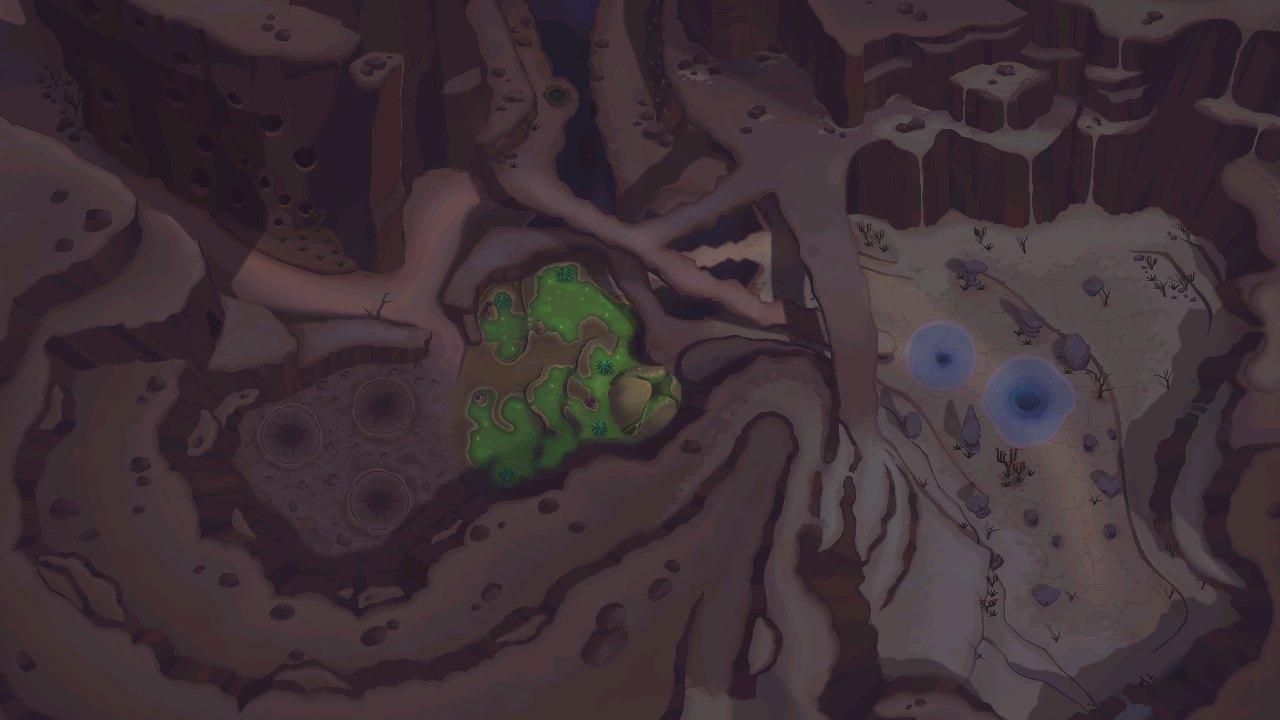
Shiver Snowfields at night. Before Version 2.0.0, Shiver Snowfields was the course with the most Pokémon; Florio Nature Park overtook it once the Secret Side Path brought new arrivals to the island.
- Bidoof and Wurmple, both hard to miss in Florio Nature Park, became popular memes among fans after launch.
- Lighting a crystabloom is often the key to a four-star scene, but a photo of the glowing flower itself earns no score at all.


Legacy
What came after
- Announcement – 17 June 2020. Revealed during a Pokémon Presents broadcast, more than 21 years after the original
- Release date announced – 14 January 2021. A new trailer set the launch for 30 April 2021
- Worldwide launch – 30 April 2021. Released on the same day in Japan, the Americas, Europe, Australia and East Asia
- Version 2.0.0 – 3 August 2021. A free update with three new locations, 20 more Pokémon and new editing options
- Golden Joystick Awards – 23 November 2021. Nominated for Nintendo Game of the Year; Metroid Dread won
- The Game Awards – 9 December 2021. Nominated for Best Family Game; It Takes Two won
- 2.40 million overseas – 31 March 2022. Nintendo’s list of million-sellers put sales outside Japan at 2.40 million
- The original on Nintendo Switch Online – 24 June 2022. The 1999 Pokémon Snap joined the Nintendo 64 library of Nintendo Switch Online + Expansion Pack, so both games can be played on the same console
- Mainland China edition – 16 July 2024. Released through Nintendo’s partnership with Tencent, with Simplified Chinese text
Where to play it today
New Pokémon Snap is still on sale in October 2026, both as a Nintendo Switch game card and as a download from the Nintendo eShop, and the free Version 2.0.0 content, including all three extra locations, arrives through a software update. Like almost every Switch game, it can also be played on Nintendo Switch 2. The story and every course work offline; uploading photos, browsing the online gallery, awarding Sweet! Medals and entering the rankings need a Nintendo Switch Online membership. Players in mainland China have their own edition, on sale since July 2024.

How it was made
New Pokémon Snap was made by Bandai Namco Studios, picked for the job partly on the strength of its work on Pokkén Tournament. Haruki Suzaki directed, with earlier credits including Pokkén Tournament, Soulcalibur V and Tekken 5: Dark Resurrection, and The Pokémon Company’s Tsunekazu Ishihara was executive producer. A follow-up to the 1999 game had been talked about through several console generations, including the GameCube and Wii years, and HAL Laboratory, maker of the original, was consulted at the outset.
Work began around 2018, as downloadable content for Pokkén Tournament DX was winding down, and took just under three years. The team weighed up other concepts, at one point even an outer-space setting, before settling on an expanded take on the original formula for players used to smartphones and social media. Nearly 900 candidate species were trimmed to just over 200 on the basis of habitat and behaviour, and the Pester Ball was retired, its job folded into fluffruit. The game was revealed in a Pokémon Presents on 17 June 2020, given its release date on 14 January 2021 and showcased again in February 2021, on the eve of Pokémon’s 25th anniversary.
New Pokémon Snap elsewhere


Sales & reviews
Sales figures
Nintendo’s figures count only sales outside Japan, where The Pokémon Company publishes the game, and by 31 March 2022 they stood at 2.40 million, enough for a place on Nintendo’s list of million-selling first-party titles. In Japan, Famitsu counted 194,385 physical copies in the launch week, which made it the country’s best-selling boxed game that week, and more than 312,000 by the end of 2021. In the UK, launch-week boxed sales were reported at around four times those of the 1999 original.
- 2.40msold outside Japan by March 2022 (Nintendo)
- 194,385physical copies in Japan’s launch week (Famitsu)
- 79on Metacritic (116 critics)
- 34/40from Famitsu
Review scores
Reviews were warm, with most outlets settling on eight out of ten and both Metacritic and OpenCritic averaging 79. Two of the most enthusiastic verdicts:
- In his 8/10 review for Nintendo Life, Jon Cartwright wrote: “The original has gone down in history possibly as Pokémon’s greatest spinoff, and it may have just been dethroned.”
- GameSpot’s Jenae Sitzes, who also scored it 8/10, listed among its strengths: “Dynamic environments feel truly alive and immersive, offering new encounters and secrets to find with subsequent visits”, and summed it up simply: “New Pokemon Snap was worth the wait.”
Most critics came away charmed. They singled out how alive the habitats feel, the sheer number of Pokémon and the way Research Levels keep revealing new encounters and secrets on courses already visited. The photo editor, Re-Snap and online sharing were widely praised as smart modern additions, as were the motion controls and the relaxed mood, and many writers felt it improved on the 1999 original. The main complaints concerned repetition, since progress depends on replaying the same tracks, and a scoring system that some found opaque and that did not always reward the photos reviewers thought their best. Unclear signposting in parts of the story, the absence of evolution and the boss-like Illumina encounters also divided opinion, and a minority found the whole thing pleasant but rarely exciting.
Awards and honours:
Media & artwork
Further reading
More Switch spin-offs and Snap history on the site: