Reader reviewGame Boy
Pokey-man!? That's right, and it's still going strong today.
Review by Sour18 August 2017 · 6 min read
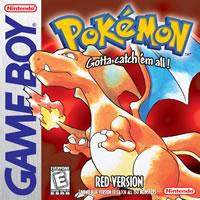
Pokémon Red and Blue took the world by storm. Using a different colored cartridge to differentiate between the two games, Nintendo’s clever marketing gimmick would prove to be successful as it required you to have one version and another person with the other version to work together to complete the game to the fullest. Pokémon Blue Version was released alongside Red Version simultaneously in an effort to rake in the dough. And it worked. Both versions are pretty much the same game, it’s just that some Pokémon appear in one version and don’t appear in the other, meaning you have to trade with a friend to get them all. Pokémon Red and Blue were such large successes that it would prompt Nintendo to bring the Pokémon franchise into every medium of entertainment. Movies, trading card games, plushies, Happy Meal toys, an anime, everything. You couldn’t turn around without seeing some sort of Pokémon related ad. And here’s why.
Story: 10/10: The world has been long inhabited by small (although some of them reach huge sizes) animal-like creatures called “Pokémon” (Short for “Pocket Monsters”). Humans would become the dominant species of the planet, however, and began to figure out how to capture Pokémon and make them fight. Each Pokémon has it’s own power, often related to the real-life animals that most of them represent. For instance, the turtle Pokémon, Squirtle has water attacks. Humans would capture these creatures and make them fight in an arena for their entertainment. Scientists in the modern day would figure out more effective ways of capturing the creatures, the most notable being Professor Oak, a Pokémon philanthropist and researcher. He invented the Poke-ball, which captures the Pokémon by storing it as energy. Oak’s protege is the main character of he series, who wants to become a Pokémon master by capturing all 150 Pokémon and defeating the Elite Four (The four greatest Pokémon trainers in the world), all the while dodging his rival and the large criminal organization, Team Rocket. Team Rocket steals and coerces Pokémon into doing what they want, essentially committing animal abuse. In addition to becoming the Pokémon master, you’ll have to take down Team Rocket and whoever stands in your way.
On the character’s way to the Elite Four, he’ll have to go up against other Pokémon trainers and the leaders of Pokémon gyms. There are eight gyms in total and your character will have to defeat all of them to gain access to Victory Road and the Elite Four. You’ll be given badges by the gym leaders as proof of your victory. Upon obtaining all of them, you’ll be granted access to Victory Road, a Pokémon rich cave environment that leads to the Elite Four. In addition there are four legendary Pokémon that can be found along the way that you can engage in a one-time battle with, and you’ll have to capture them as well to fill up your Pokédex (a hand held encyclopedia of Pokémon) and become the world’s Pokémon master.
Gameplay: 10/10: The game takes place from a bird’s-eye view as you traverse across the world map. While traveling you may find yourself in a pokemon-inhabited area such as caverns or tall grass, or even a body of water. Upon traveling through these areas you’ll be thrusted into a random battle against one of the many or few Pokémon that inhabit that area. The first Pokémon in your roster gets priority, making that Pokémon go first. You’ll have four actions to select from in a turn-based battle system. “Fight” allows you to choose from that Pokémon’s abilities and have them attack using said ability. “Item” allows you to select an item to use in battle such as a potion or a poke-ball. “Run” will allow you to flee the battle and “PKMN” will allow you to switch to a different Pokémon if you think the current one is incapable of taking down the enemy. Upon defeating or capturing a Pokémon, the Pokémon that fought in battle will gain experience points and eventually level up, eventually to the point of evolving into a stronger version of itself.
Once in a battle, you can either defeat the Pokémon totally, or, if you want to capture the Pokémon, you must deplete their health bar to near-empty. Doing so will strengthen your chances of capturing a Pokémon if you throw a poke-ball. The Pokémon may or may not escape depending on how much they are weakened. If you put the Pokémon to sleep first and attempt to catch them, it will also increase your chances. There are stronger poke-balls than the standard variety and you may have to use the more powerful poke-balls to capture more powerful Pokémon, especially for the legendary Pokémon, where it’s almost required that you use the second strongest poke-ball in the game to capture them. This can take several tries so don’t get discouraged.
Nintendo’s clever profit-making scheme comes into play here, as all 150 Pokémon are not in each game. To acquire them all, you’ll have to get a link cable and trade Pokémon with a friend or sibling who has the other version. Using the link cable, you can also do battle with a friend if you wish to see who’s the better Pokémon Trainer. Not only did players have to sink money into the games but they’d also have to buy a link cable, lining Nintendo’s pockets more. And let’s face it, we ate it all up. We wanted every Pokémon and didn’t care how we got them. And parents cared less and less about the cost as kids would just not stop nagging them. It was such a successful and profitable scheme for Nintendo that the tradition continues until this day.
Graphics: 10/10: For 8-bit graphics, they’re done very well. The animations that do occur are smooth and the game as a whole is very detailed, visually. To top if off, when playing on a Gameboy Color you can enter different button combination’s at the “GAMEBOY” screen to add a different tint or color-style. This was a fairly cool feature as most Gameboy games at the time were in all black and white. The default color for Pokémon Blue Version gives most of the game a heavy blue tint. Again, you can play around with the different color styles and have fun with it if you so desire. The Pokémon are drawn and rendered very well as well. All in all, a great feat for a Gameboy game, though it should be noted that it was a very late game.
Audio: 10/10: Pokémon Blue Version (as well as Red Version) offers a really catchy soundtrack. You may often find yourself humming the tunes to certain towns or even the battle theme. Also when say a Pokémon uses a fire move, it sounds like something is burning. Or when a water Pokémon uses a large water move, it sounds like waves crashing against a shore. The battle cries for the Pokémon are kind of a screech, but everything else makes up for it in spades. So much so that it’s not even worth taking off half of a point. The Gameboy and Gameboy Color were limited and the developers did the best they could do with what they had.
Verdict
Sour’s overall score for Pokémon Red & Blue.
10/10
OutstandingHow our scores workMore reader reviews of Pokémon Red & Blue
- “A Game So Classical, It's Music To My Ears.”by AC_Fanatic9/10
- “You've got to be the best!”by Sour10/10
- “It's red, it's blue, and now it has you.”by nastynate31189/10
- “You certainly won't be feeling blue after playing this game.”by nastynate31189/10
Every review of Pokémon Red & Blue →About the game →All reader reviews →Played it? Write your own review →